Cleaning
The post-construction cleaning checklist: three cleans, the dust rules, and a sign-off that holds up
A post-construction cleaning checklist is the room-by-room list of tasks a cleaning crew works through in three phases, the rough clean, the final clean and the touch-up clean, to remove construction dust, debris and residue so a new or renovated building can be handed over and occupied.
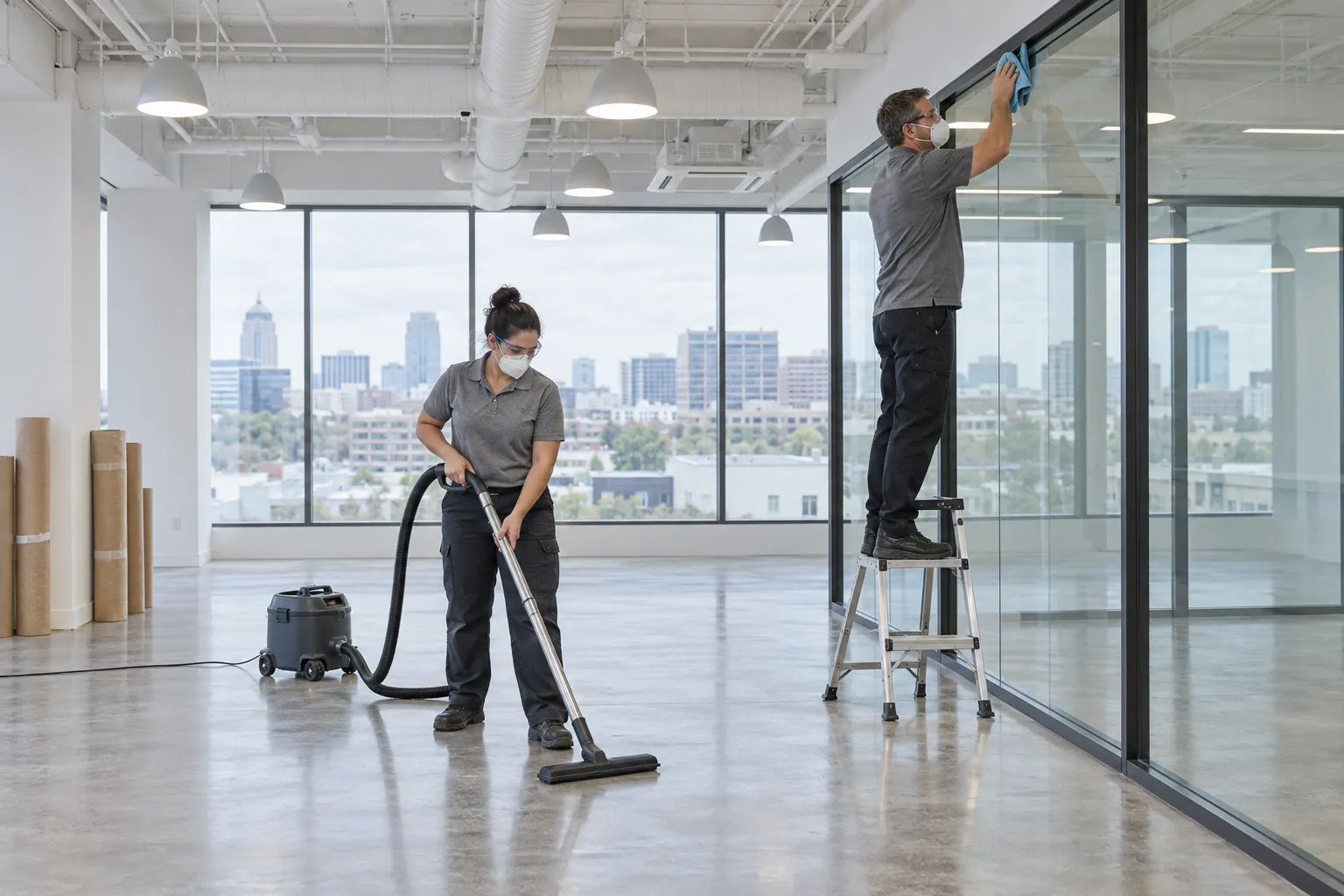
In commercial work the clean is usually part of the construction contract and the closeout, and the owner, the architect or the general contractor's superintendent decides when it is done. Construction dust is not ordinary dust: OSHA restricts dry sweeping and compressed air where they could add to workers' exposure to crystalline silica, and in pre-1978 child care centers, preschools and kindergarten classrooms EPA's lead rules set the cleanup method and the test. This guide covers where the duty comes from, a checklist for each phase, the order of work, the dust rules, and the record that gets a clean signed off.
01
What post-construction cleaning is, and where the duty comes from
Post-construction cleaning (also called construction cleanup or the final clean) takes a building from a jobsite to a place people can use. A commercial construction project usually has three cleaning passes. The rough clean happens while trades are still working and takes out debris, scrap and the worst of the dust. The final clean happens when the trades are done: every surface, fixture and floor cleaned thoroughly, top to bottom. The touch-up clean comes after the punch list work, just before move-in, to catch the dust and marks the last repairs left behind.
No federal law is titled "post-construction cleaning." The duty comes from three places:
- The construction contract. On federal projects, FAR 52.236-12, Cleaning Up says: "The Contractor shall at all times keep the work area, including storage areas, free from accumulations of waste materials." It goes on: "Upon completing the work, the Contractor shall leave the work area in a clean, neat, and orderly condition satisfactory to the Contracting Officer." Private contracts set their own terms in their general conditions and specifications, so read both before you price or plan the clean.
- The specifications. The cleaning standard is usually written into Division 01 of the project manual. The military's guide specification, UFGS 01 78 00, Closeout Submittals (August 2026), is a public example: it calls for final cleaning in accordance with ASTM E1971, a submitted listing of the completed final clean-up items, and premises left "broom clean."
- OSHA's housekeeping rules. During the work, 29 CFR 1926.25, Housekeeping requires that "form and scrap lumber with protruding nails, and all other debris, shall be kept cleared from work areas, passageways, and stairs, in and around buildings or other structures," that combustible scrap and debris be removed at regular intervals, and that containers be provided for the collection and separation of waste, trash, oily and used rags and other refuse.
Which set of OSHA standards covers the cleaning crew depends on the work. Under 29 CFR 1910.12, Construction work, the construction standards in part 1926 apply to every employee engaged in construction work, defined as "work for construction, alteration, and/or repair, including painting and decorating." Which rules apply to a clean turns on whether it is part of that construction, alteration or repair; routine cleaning of a building in use falls under general industry. In the 21 states and Puerto Rico that run an OSHA-approved State Plan covering private employers, the state's rules apply instead, and they must be at least as effective as federal OSHA.
02
The post-construction cleaning checklist, phase by phase
A post-construction cleaning checklist that works follows the three phases and, inside each one, the route a crew walks: top to bottom, back of the room to the door. Adapt it to the scope in your contract, the finishes in the building and what the trades have left.
Rough clean, while trades are still on site:
- Remove large construction debris, scrap and packaging from rooms, corridors and stairs to the general contractor's dumpsters.
- HEPA-vacuum or wet-sweep floors, and avoid dry sweeping where silica dust is present (see below).
- Take down the heavy dust from ledges, beams, window frames and the tops of door frames.
- Scrape loose drywall mud, overspray and spills off floors before they are walked in.
- Leave floor protection, corner guards and door covers in place for the trades still working.
Final clean, once the trades are finished:
- High work first: light fixtures and lenses, diffusers, return grilles and vents, exposed ductwork and pipes, sprinkler heads (dust only, never sprayed or knocked), tops of cabinets and partitions.
- Walls, partitions and baseboards: dust, spot-clean marks and fingerprints, wipe light switches and outlet covers, and remove tape, stickers and paint spatter without damaging the finish.
- Windows and glass: interior and exterior glass exposed to view, mirrors, window frames and tracks, window sills, with temporary labels and protective film removed.
- Doors and hardware: faces, edges, kick plates and frames wiped down.
- Restrooms: fixtures, partitions, dispensers, tile and grout lines cleaned, caulk residue and sealant smears removed, floor drains cleared, everything left in a sanitary condition.
- Kitchens and break rooms: inside and outside cabinets, drawers, appliances and sinks.
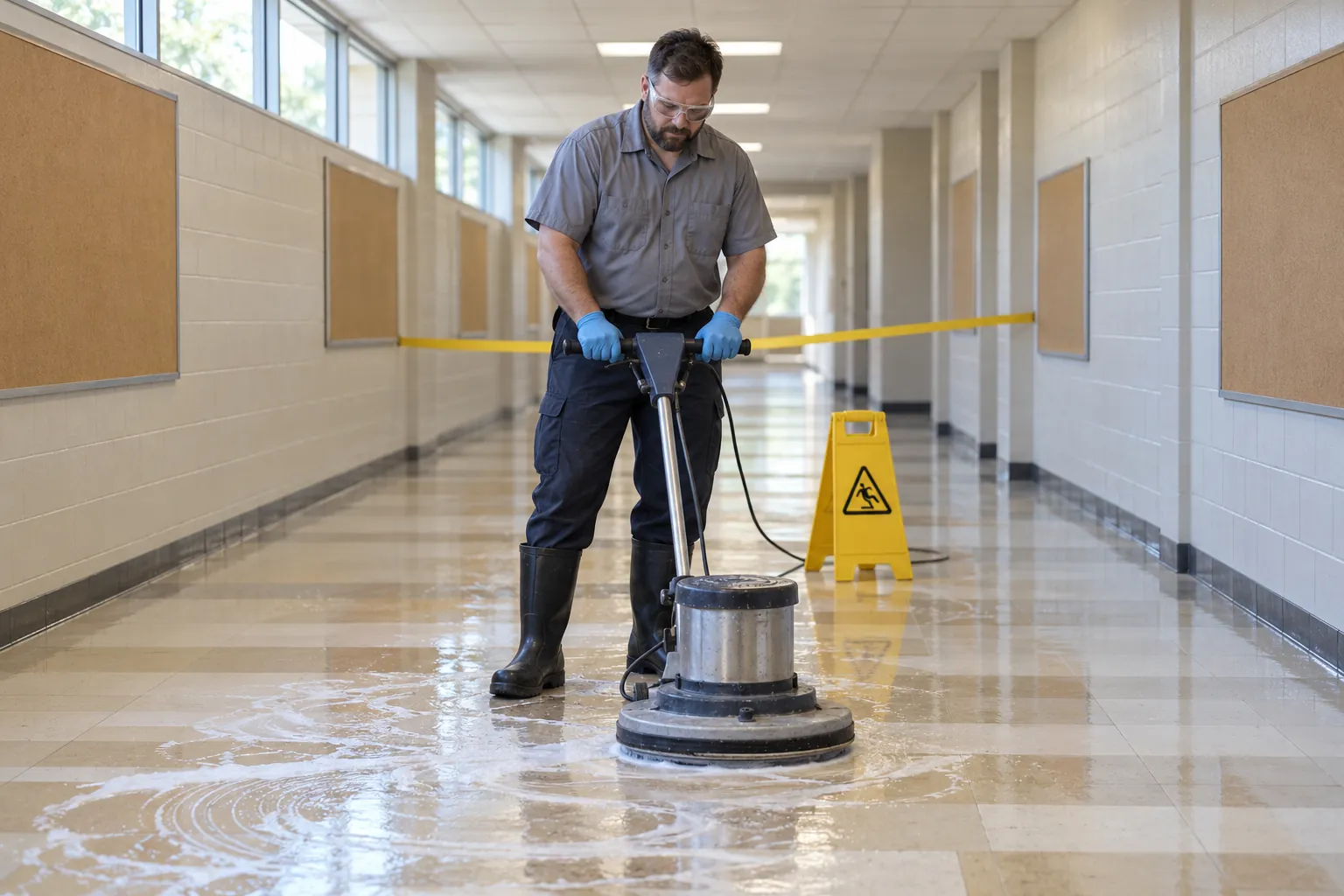
- Floors last: vacuum carpet, clean resilient and hard floors to the finish manufacturer's instructions so the cleaning does not damage a new finish, and leave any first scrub or coating to whoever the specification names.
- Building systems: filters of operating equipment cleaned or replaced as the specification says, and under the indoor air quality management plan where the project has one.
- Outside: sweep paved areas and entries, and clear debris from planting beds.
Touch-up clean, after the punch list and before move-in:
- Re-dust horizontal surfaces, since fine construction dust settles for days after the work stops.
- Clean up after every punch list repair: paint touch-ups, ceiling tile swaps, hardware adjustments.
- Re-vacuum and spot-clean floors walked by the inspection party and the movers.
- Check every room against the final walk-through list.
What do I need for post-construction cleaning?
HEPA-filtered vacuums, damp cloths and wet mopping equipment come first, because OSHA's silica standards restrict dry sweeping, dry brushing and compressed air where construction dust could contribute to exposure. Add scrapers, extension tools for high dusting, glass tools and the floor equipment the finish manufacturer allows, and ask the general contractor for the exposure control plan before you start.
03
Construction dust: OSHA's silica rules and EPA's lead-safe cleanup
Concrete, masonry, tile, stone and drywall work leaves respirable crystalline silica in the dust, and the way a crew cleans it up can put it back in the air. OSHA's construction standard, 29 CFR 1926.1153, Respirable crystalline silica, applies to "all occupational exposures to respirable crystalline silica in construction work," except where employee exposure will remain below 25 micrograms per cubic meter of air as an 8-hour time-weighted average under any foreseeable conditions. Its permissible exposure limit is 50 micrograms per cubic meter, and its housekeeping paragraph, 1926.1153(f), sets two rules every post-construction crew should know:
- "The employer shall not allow dry sweeping or dry brushing where such activity could contribute to employee exposure to respirable crystalline silica unless wet sweeping, HEPA-filtered vacuuming or other methods that minimize the likelihood of exposure are not feasible."
- Compressed air may not be used to clean clothing or surfaces where it could contribute to exposure, unless it is used with a ventilation system that effectively captures the dust cloud, or no alternative method is feasible.
The standard also requires the employer's written exposure control plan to include "a description of the housekeeping measures used to limit employee exposure to respirable crystalline silica," and a competent person "to make frequent and regular inspections of job sites, materials, and equipment to implement the written exposure control plan." A crew cleaning after silica-generating work should follow the housekeeping part of that plan.
Once a building is handed over, the general industry standard, 29 CFR 1910.1053, Respirable crystalline silica, carries the same rule in its housekeeping paragraph, 1910.1053(h). On either side of the handover, the safe method is HEPA vacuums and damp or wet methods for construction dust, and no compressed air or blowers in a dusty room.
04
The order of work, and who does what
Most failed final cleans are cleans done at the wrong time: the floor finished before the ceiling grid was dusted, or the restrooms detailed before the plumber came back for the punch list. A sequence that works on most commercial projects:
- Walk the job with the superintendent. Agree on the scope, checked against the contract and the specifications, and on which areas are ready and which trades are still due back.
- Get the hazard information. Ask about the dust risks: whether silica or lead work has been done in each area and what the exposure control plan says about housekeeping.
- Rough clean area by area as the trades release them, with HEPA vacuums and wet methods from the start.
- Final clean, top down, once each area is trade-complete: high dusting, walls, glass, fixtures, then floors last, working toward the exit so nothing is walked on afterward.
- Inspect each room with your own supervisor before calling the area ready, and fix what they find.
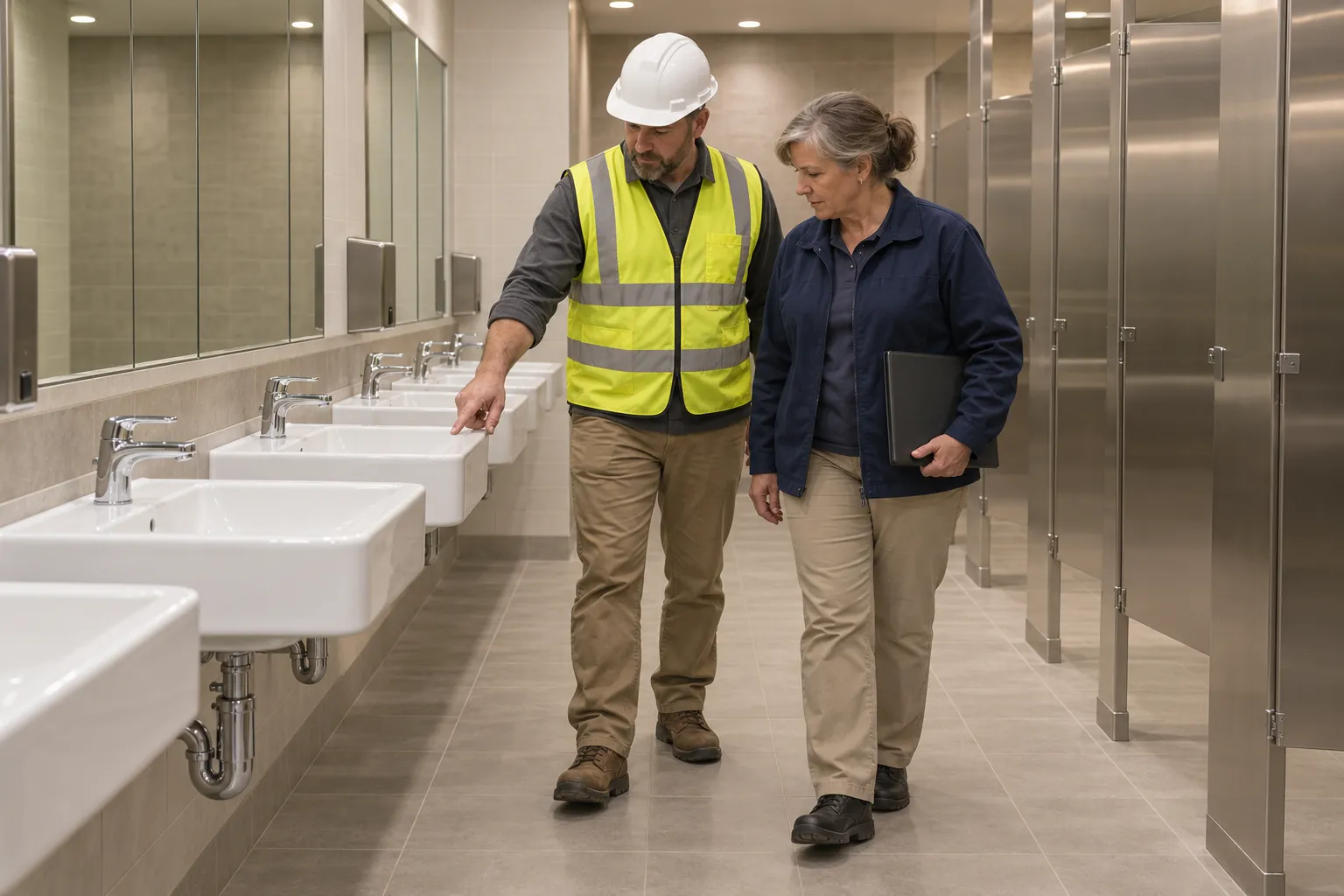
- Walk the area with the owner's side, the superintendent, the architect or the owner's representative, and write down every cleaning item they raise, separately from construction defects.
- Touch-up clean after the punch list work, then hand over.
The general contractor owns the site, the dumpsters and the schedule, and usually holds the cleaning obligation under the prime contract even when a cleaning subcontractor does the work. The architect or owner's representative decides whether the clean meets the specification. Put who signs each area off in writing before the final clean begins.
05
What a good sign-off record looks like
A post-construction clean is accepted, or argued about, at the walk-through. The record a cleaning contractor needs is the one that shows each area was finished, checked and handed over, and what was raised afterward. UFGS 01 78 00 asks for part of that record: an electronic copy of the listing of completed final clean-up items. Whatever your contract asks, these habits make a clean easy to sign off:
- Room by room, not building by building. One signature for the whole floor tells nobody which restroom was missed.
- Named and timed. Who cleaned each area, when it was finished, and who checked it, recorded at the time and not filled in at the end of the job.
- Photos at handover of each area as it was left, so a mark found three days later can be judged against them.
- Cleaning items kept apart from construction defects. Paint on the glass is a cleaning item; a chipped countertop is the trade's. Mixing them on one punch list delays both.
- Re-cleans recorded: what was raised at the walk-through, who fixed it, and when it was checked again.
- The acceptance: who accepted each area and on what date.
A checklist ticked in one pen and signed once on the last day tells the owner that a form was filled in. A record with names, times and photos for each room tells them the clean was done, and protects the contractor when the movers scuff the corridor a week later.
06
Where the record fails, and what SiteClara does about it
The final clean sheet is signed for the whole floor on Friday, although half the restrooms were finished on Monday after the plumber came back. The photos are on the crew lead's phone and the cleaning items are mixed in with the construction defects. When the tenant finds drywall dust on the windowsills after move-in, nobody can show which rooms were checked, by whom, or when.
SiteClara records routine checks at the locations of a building in use, which is where a post-construction clean ends: tenant improvement work on one floor of an occupied office, or the first weeks after a new building opens with the dust still settling. A printed QR poster, with an optional NFC tag behind it, sits at each location, such as a restroom, a corridor or a break room. Staff scan the code or tap the tag on their own phone, with no app to install, see the checks set for that location and mark each one done or say what stopped them, with a photo when one is asked for. The time and the named person are recorded as it happens. A problem found there, such as paint on the glass, is reported with a photo and goes onto the team's list of jobs until someone closes it.
The supervisor sees what is due, done and missed, and records why a check was missed. Each day they review and approve a report that goes to nominated management or client contacts at 8 a.m. the next day, showing what was reported, what was completed, what is still open, and how the scheduled checks went.
07
Questions people ask
What should I include in a post-construction cleaning checklist?
Every surface the building's users will see or touch, in the three phases, plus the items your specification names. The military's guide specification, UFGS 01 78 00, Closeout Submittals, is a useful model: it asks the contractor to clean interior and exterior glass exposed to view, remove temporary labels, stains and foreign substances, polish transparent and glossy surfaces, vacuum carpeted and soft surfaces, clean equipment and fixtures to a sanitary condition, clean or replace filters of operating equipment, clean debris from roofs, gutters, downspouts and drainage systems, sweep paved areas, rake landscaped areas and remove waste and surplus materials. It also calls for nonhazardous cleaning materials and a listing of the completed final clean-up items.
What license do I need for post-construction cleaning?
No federal license covers post-construction cleaning as such, so check your state's and city's business and contractor licensing rules. The exception is lead: EPA's Lead Renovation, Repair and Painting Program Rules require firms performing renovation, repair and painting projects that disturb lead-based paint in homes, child care facilities and kindergartens built before 1978 to be EPA- or state-certified and to use certified renovators who follow specific work practices, and the cleanup is one of those practices.
How much do construction cleaners make per hour?
The Bureau of Labor Statistics does not publish a separate figure for post-construction cleaners. Its Occupational Outlook Handbook: Janitors and Building Cleaners gives a median hourly wage of $17.71 for janitors and building cleaners in May 2025, or $36,840 a year.
08
Where to read more, and a list to take away
Start with your own contract: the cleaning-up clause in the general conditions and the final cleaning section of the specifications. For the federal model, read FAR 52.236-12 and UFGS 01 78 00. For the dust rules, read OSHA's construction silica standard, 29 CFR 1926.1153, and its general industry counterpart, 29 CFR 1910.1053, and check whether your state runs its own OSHA plan. For pre-1978 child-occupied facilities, such as child care centers, preschools and kindergarten classrooms, read EPA's Small Entity Compliance Guide to Renovate Right. Once the building is open, our guide to the janitorial scope of work picks up where the final clean ends.
Before an area is handed over, check that:
- the scope, the specification's cleaning standard and who signs off each area were agreed before the final clean started;
- silica and lead work in each area was known, and the crew used HEPA vacuums and wet methods, with no dry sweeping or compressed air;
- high work, walls, glass, fixtures, restrooms and kitchens were done before the floors;
- filters of operating equipment were cleaned or replaced as the specification requires;
- each room has a name, a time and a photo against its completion and its check;
- cleaning items from the walk-through are listed apart from construction defects, with each re-clean recorded;
- where EPA's lead rules apply, the certified renovator's cleaning verification is done and recorded before the final clean is signed;
- the acceptance of each area is in writing, with the date.
Sources
Every document this guide quotes or links to, in the order it first cites them.
- FAR 52.236-12, Cleaning Up acquisition.gov
- UFGS 01 78 00, Closeout Submittals (August 2026) wbdg.org
- 29 CFR 1926.25, Housekeeping osha.gov
- 29 CFR 1910.12, Construction work osha.gov
- 29 CFR 1926.1153, Respirable crystalline silica osha.gov
- 29 CFR 1910.1053, Respirable crystalline silica osha.gov
- Lead Renovation, Repair and Painting Program Rules epa.gov
- Small Entity Compliance Guide to Renovate Right (March 2026) epa.gov
- Occupational Outlook Handbook: Janitors and Building Cleaners bls.gov
Related guides
 CleaningJanitorial scope of work: what it should say, and how to show it is metWhat a janitorial scope of work should cover, how to set cleaning frequencies by room type, output versus input standards, and how to show the work is being done.
 CleaningCommercial cleaning checklist: area by area, and how to use itA commercial cleaning checklist for offices, lobbies, restrooms and shared areas, area by area, with the OSHA rules behind it and how a supervisor checks the work.
 CleaningJanitorial quality control: how to inspect, score and fix the cleaningHow janitorial quality control works: QA versus QC, building a cleaning inspection checklist, APPA appearance levels, sampling, scoring and corrective action.
 CleaningFloor stripping and waxing: how to do it, how often, and how to show it was doneFloor stripping and waxing for janitorial teams: the step-by-step procedure, how often VCT needs it, OSHA rules on chemicals, asbestos tile and wet floors.