Premises and facilities management
Restaurant opening and closing checklist: what to check, place by place
A restaurant opening checklist is the list of checks the opening manager and crew complete before the doors open, covering cold holding at 41°F or below, stocked handwashing sinks, tested sanitizer, exits unlocked and clear, and the hood and its fire system ready, while the closing checklist puts the kitchen, bar and dining room back into that state at the end of the night.
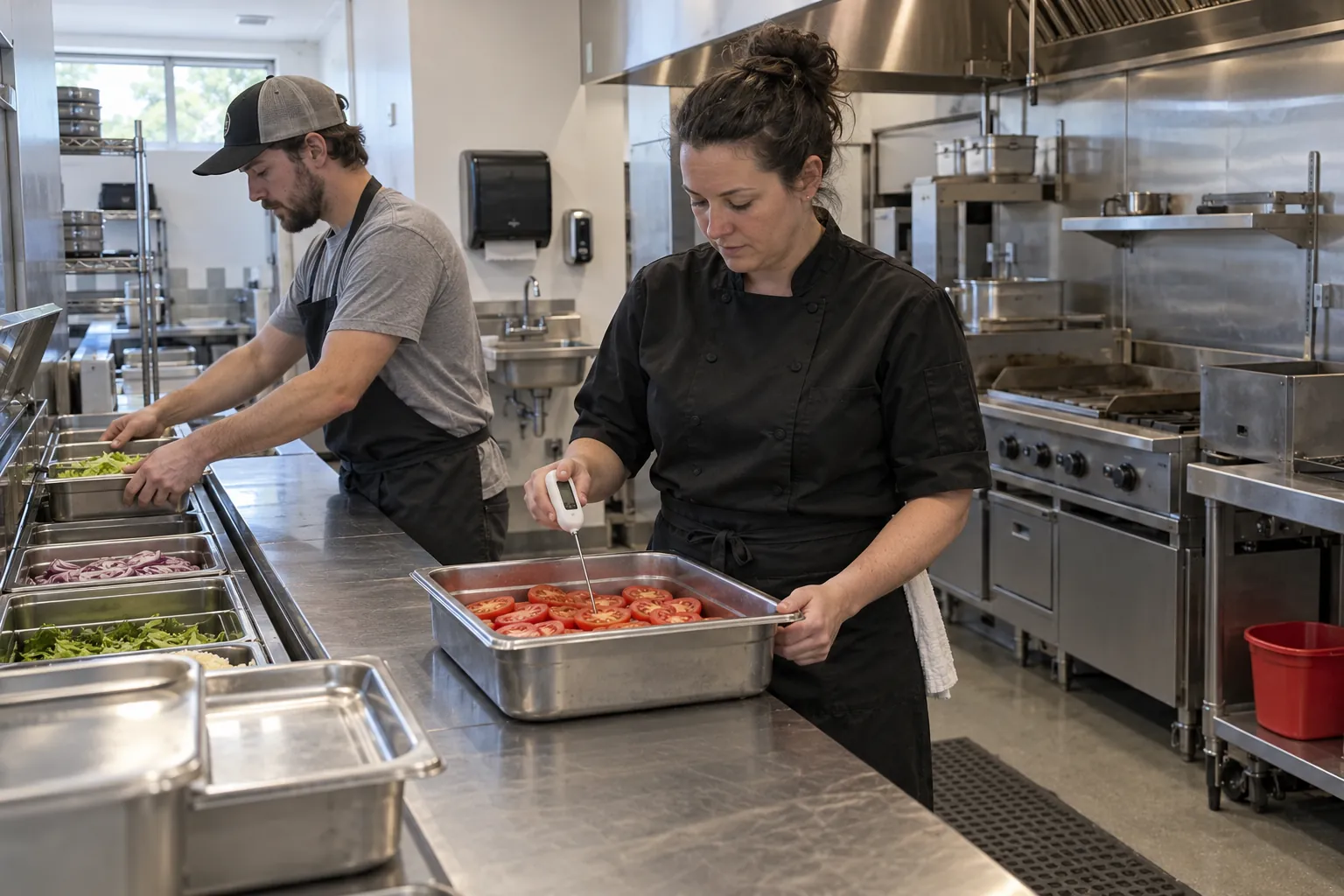
Most of the items come from the food code your state or county has adopted, the OSHA exit route rules and the fire code, not from habit. This guide sets out a daily opening and closing list for a working restaurant or bar, by place and by role, and shows which checks need a reading rather than a tick. It is about running the restaurant each day, not about launching a new one.
01
Whose rules sit behind a restaurant opening and closing checklist
No single law tells a restaurant what to put on its opening checklist. The checks come from three places: the retail food code enforced by the state or local health department, the workplace safety rules on exit routes, and the fire code adopted by the authority having jurisdiction (AHJ). A good checklist turns each into something someone can see or measure at a named place.
The food code behind most health inspections is based on the FDA Food Code 2026, a model that FDA offers for adoption by state, local, tribal and territorial governments. It becomes law only when a jurisdiction adopts it, often with amendments, and many enforce an older edition: FDA's adoption report found that, as of 2024, 11 state agencies in 7 states had adopted the 2022 edition, and 30 state agencies in 24 states one of the two most recent editions. The section numbers below are from the 2026 model; check them against the code your inspector uses.
Two Food Code duties shape the daily routine. Under Section 2-101.11 of the model, the permit holder must ensure that a person in charge is present during all hours of operation. Under Section 2-103.11, that person maintains active managerial control of the foodborne illness risk factors, including checking that food delivered during non-operating hours came from approved sources and was stored correctly, daily oversight of hot and cold holding temperatures, and routine monitoring of sanitizing. An opening checklist is how the opening manager shows that oversight happened before the first ticket.
The doors fall under OSHA's exit route standards, 29 CFR 1910.36 and 29 CFR 1910.37, or the equivalent rule where one of the 22 OSHA-approved State Plans covering private-sector workers applies. The hood and its fire-extinguishing system fall under the fire code, which usually brings in NFPA 96, Standard for Ventilation Control and Fire Protection of Commercial Cooking Operations. NFPA lists the 2027 edition as current, but the edition that applies is the one your jurisdiction adopted.
02
The restaurant opening checklist, place by place
Write the opening checklist in the order the opener walks the building, so nothing depends on memory, and have the opener arrive early enough to finish it before the first shift starts. The list below suits a full-service restaurant with a bar; a quick-service kitchen will drop some places and add others.
Back door, alarm and arrival:
- Disarm the alarm and check the back door and receiving area for a break-in, a delivery left outside or signs of pests.
- Check any delivery received during non-operating hours: approved source, put away at the right temperature, protected from contamination (Section 2-103.11(F) of the model code).
- Read the closing notes from last night: equipment faults, 86'd items, a cooler running warm, a repair booked for today.
- Count the cash drawers out of the safe into the registers and lock the safe again, as the restaurant's cash procedure says.
Kitchen (back of house):
- Walk-in cooler, walk-in freezer and every reach-in: read the thermometer and write the figure down. The model code requires time/temperature control for safety food held cold at 41°F or less (Section 3-501.16).
- Handwashing sinks: stocked with soap and paper towels or a working hand dryer (Sections 6-301.11 and 6-301.12), and not blocked by a rack or bus tub: Section 5-205.11 says a handwashing sink must always be accessible for employee use and used for nothing else.
- Sanitizer: mix the buckets for wiping cloths and the third compartment of the three-compartment sink, and test each with the test kit before use (Section 4-501.116).
- Dish machine: run up to temperature and checked against its data plate.
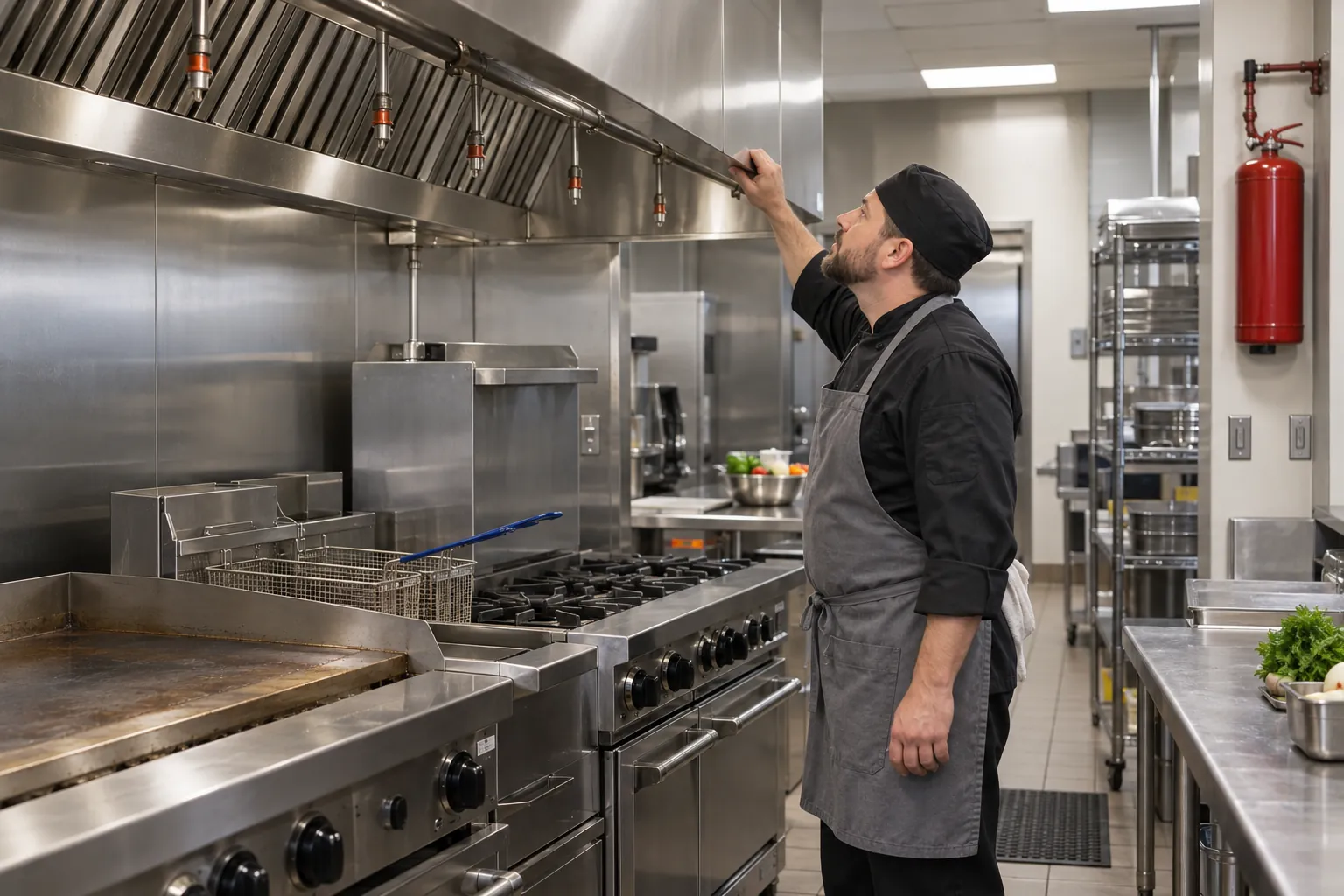
- Line: hood exhaust fans on before burners and fryers are lit, hood filters in place, fire-extinguishing nozzle caps on, the manual pull station and the Class K extinguisher clear and visible.
- Line stations: each cook's station stocked with the prepped ingredients, utensils and clean towels the shift needs.
- Prep and storage: date marks on ready-to-eat food, anything past its date thrown out, chemicals stored apart from and never above food (Section 7-201.11).
Dining room, restrooms and entrance (front of house):
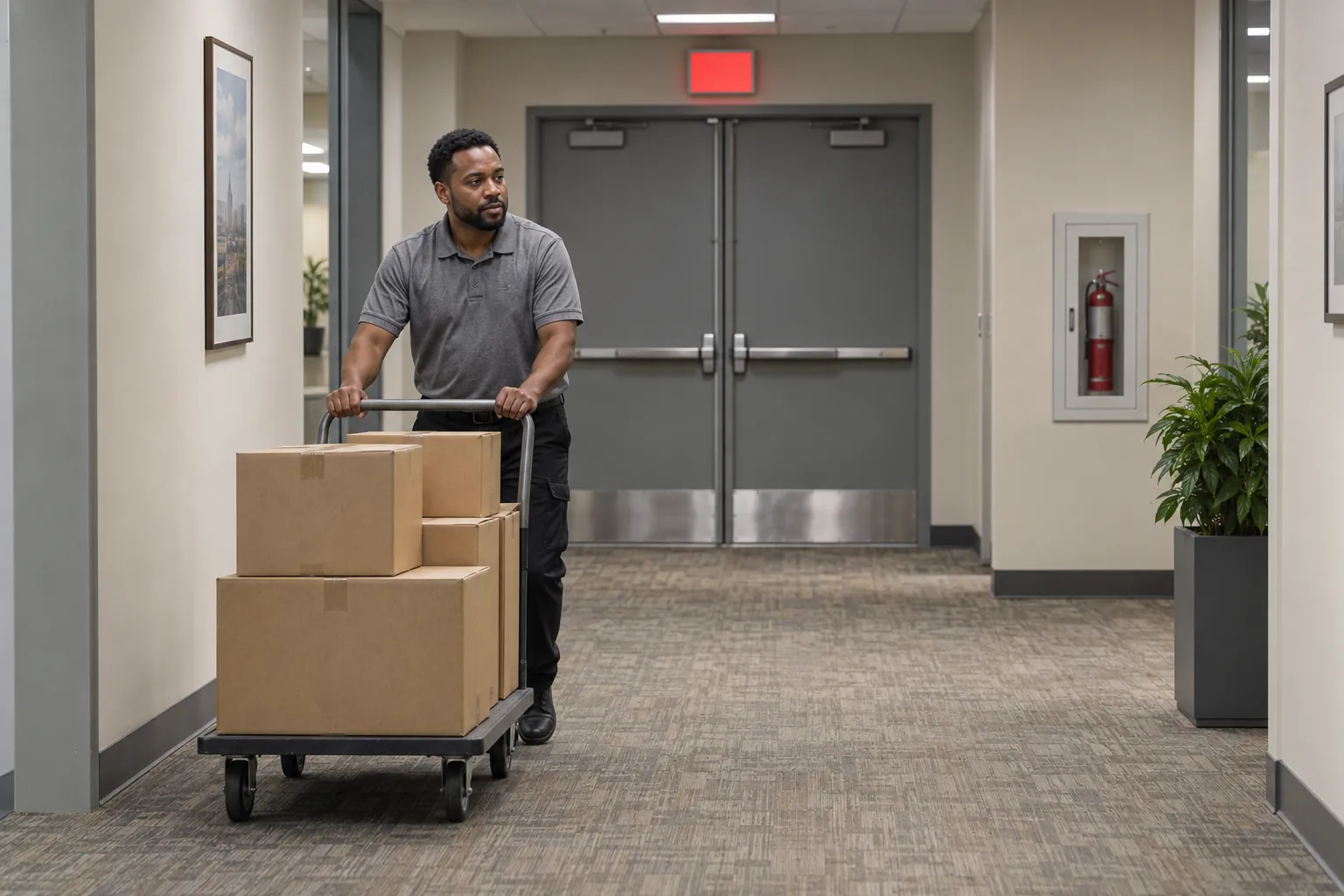
- Exits: every exit door opens from the inside without a key, the route to it is clear of high chairs, stacked tables and deliveries, and the exit signs are lit.
- Host stand: reservations and the floor plan checked against the staff on the schedule, menus clean and complete.
- Dining room: tables, chairs and booths clean and set, aisles kept open once the floor plan is arranged, no spills or loose mats at the entrance.
- Restrooms: clean, stocked with soap, towels and toilet paper, toilets and sinks working, the baby changing station clean.
Bar:
- Ice bin clean and filled with ice from the machine, with the scoop in its holder, not left in the ice.
- Glass washer or bar sinks set up and the sanitizer tested, the same as in the kitchen.
- Beverage gun and soda nozzles clean, garnishes cut and kept cold, the bar handwashing sink stocked and clear.
03
The restaurant closing checklist: kitchen, bar, dining room and lockup
The closing checklist finishes the day's food safety and cleaning work and leaves the building safe and ready for the opener. Split the closing duties across the team the same way as the opening ones, so each person's closing tasks are completed and signed for before they leave.
Kitchen closing checklist:
- Food put away covered, labeled and dated; hot food that will be kept cooled by the restaurant's cooling method, not left on the line.
- Cooking equipment cleaned. The model code requires the food-contact surfaces of cooking and baking equipment, and the cavities and door seals of microwave ovens, to be cleaned at least every 24 hours (Section 4-602.12), with a separate rule for hot oil cooking and filtering equipment.
- Prep tables, cutting boards and slicers washed, rinsed and sanitized; wiping cloths laundered, since cloths held in sanitizer must be laundered daily (Section 3-304.14).
- Dish machine drained and cleaned, floors swept and mopped, drains cleared, mop heads hung to dry away from food.
- Trash, food waste and recycling out, the dumpster lid closed, no food left out to draw pests. The model code expects the premises to be routinely inspected for pests (Section 6-501.111), and closing is the natural time to look.
- Line equipment off and gas valves set as the restaurant's procedure says, hood fans set as the restaurant's procedure says, the walk-in door shut and its thermometer read once more.
Bar closing checklist:
- Ice bin emptied and cleaned or covered, as the restaurant's procedure says; garnishes and mixers that need cold holding back in the cooler.
- Beverage nozzles and the gun holder cleaned. Under Section 4-602.11(E) of the model code, beverage dispensing nozzles, ice bins and ice makers are cleaned at the frequency the manufacturer specifies or, where the manufacturer specifies none, often enough to stop soil or mold building up.
- Glass washer drained, bar mats and drain boards washed, the bar handwashing sink cleared of glasses.
Dining room, restrooms and lockup:
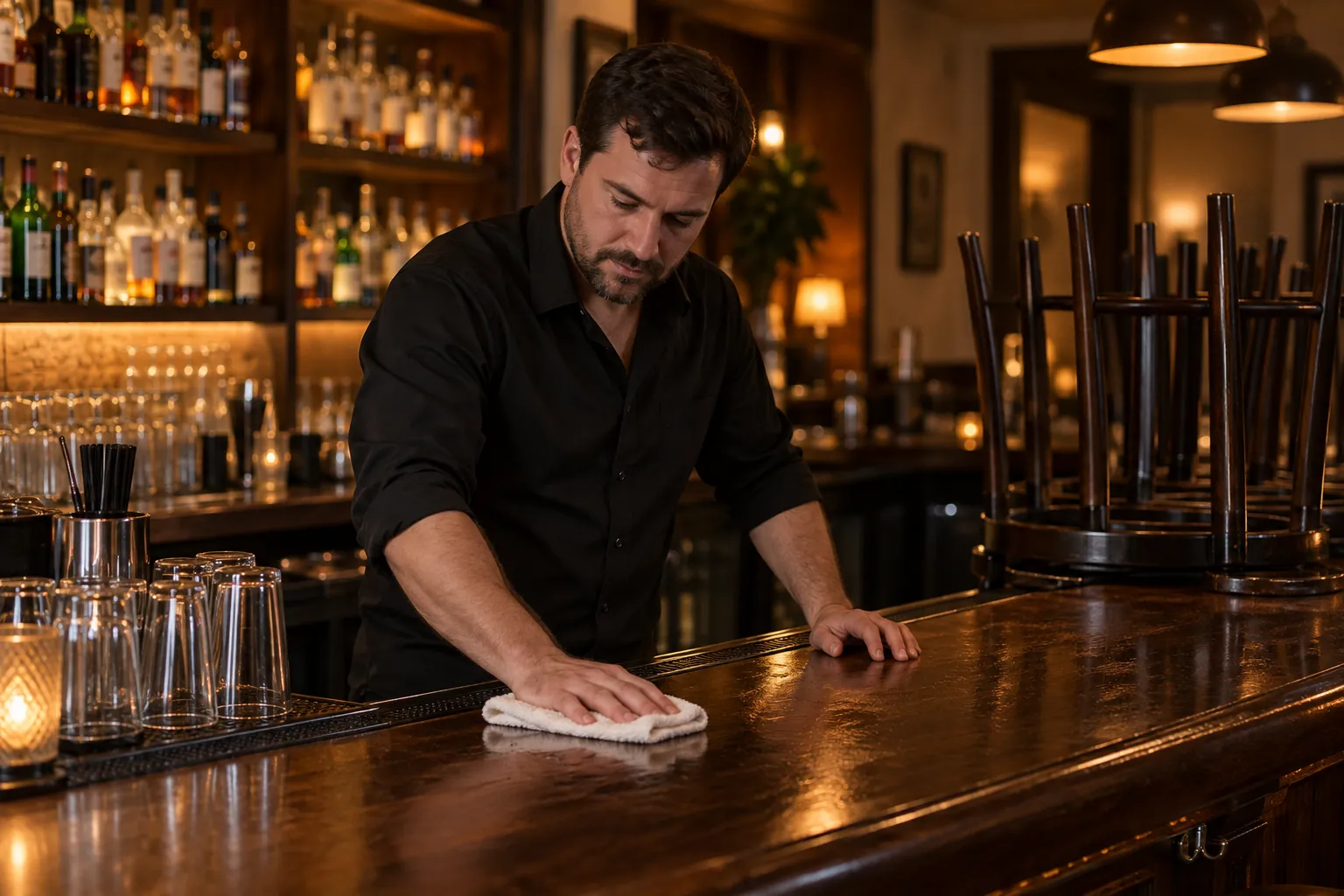
- Tables wiped, chairs up if the floors are being cleaned, condiments, menus and to-go supplies restocked.
- Cash drawers counted, the deposit prepared and the safe locked, as the restaurant's cash procedure says.
- Restrooms cleaned and restocked, any fault such as a running toilet or a broken dispenser written up for the opener.
- Floors swept and mopped, or left clear for the night janitorial crew, with the crew's tasks agreed in writing.
- A last walk of the building: nobody in the restrooms or the walk-in, candles out, back door shut and secure, the security alarm set by the last person out.
The lockup has a trap. Staff often stay an hour after the doors close, and a back door chained or padlocked from inside while they are still there breaks the exit rules. Lock the building when the last person leaves, not before.
04
Who opens, who closes, and what the sign-off means
Split the restaurant checklist by role and by place, so the responsibilities are clear to the whole team. One long sheet signed by the closing manager tends to mean the manager signed for work other people did, or did not do. Give the opening manager the doors, deliveries and cooler readings; the cooks the line, dates and cold holding; the dishwasher the dish machine and sanitizer; servers and the bartender the dining room, restrooms and bar; and the night janitorial crew or day porter the tasks its contract names, with its own sign-off. The manager on duty walks the building and reads the exceptions, and restaurant management looks over the week's sheets for the items that keep coming back.
The person in charge does not have to do every check, but they must know the answers. The model code (Section 2-102.11) expects the person in charge to demonstrate knowledge of foodborne disease prevention during inspections, for example by being a certified food protection manager. That is what lets the opener see that 44°F in the walk-in is a problem, not a box to tick.
A signature should mean that the person looked at the stated place and found the stated result. Write the reading where there is one, and leave room for "not done" with a reason, because a blank is read as done. A stack of sheets with the same handwriting and the same temperatures is the record an inspector stops trusting first.
The handoff between the closing and opening staff is where a known fault most easily gets lost. A cooler running warm at midnight or a dish machine that would not reach temperature is a known fault with an owner if the closer writes it down and the opener reads it first. On a sheet nobody reads, the opener finds it in the lunch rush.
05
The checks that need a reading, and the work a checklist does not replace
Some items are visual: the floor is dry, the soap is stocked, the exit is clear. Others are only true when someone measures them, and the checklist should ask for the figure.
- Cold and hot holding: 41°F or less cold and 135°F or above hot in the model code (Section 3-501.16). Under Section 4-204.112, the thermometer in a refrigerated unit measures the warmest part of the unit and must be easy to read.
- Sanitizer: the concentration has to be accurately determined with a test kit or other device, used as its manufacturer directs (Section 4-501.116). Record the test strip reading against the range on the product label.
- Handwashing water: the 2026 model requires a handwashing sink to supply water at a temperature of at least 85°F through a mixing valve or combination faucet (Section 5-202.12). Check the figure in the edition your health department adopted.
- Dish machine: wash and final rinse temperatures, or the chemical sanitizer reading, against the machine's data plate.
The hood and its fire system need a daily look, not a daily service. NFPA's own restaurant fire protection overview, written against the 2021 edition of NFPA 96, names discharge nozzle caps taken off for day-to-day use as a common issue: the caps keep grease out of the nozzles and blow off when the system activates. It also says that hoods are typically inspected for grease buildup semiannually but more or less often depending on the type and volume of cooking, and that the fire-extinguishing system must be maintained at least every six months. Those visits belong to the service contractor; the opening check is whether the system looks ready. The kitchen hood cleaning guide covers the rest.
OSHA requires portable fire extinguishers to be visually inspected monthly and to get an annual maintenance check (29 CFR 1910.157). The monthly look can be a line on the first opening checklist of the month.
Under 29 CFR 1910.36(d)(1), employees must be able to open an exit route door from the inside at all times without keys, tools or special knowledge; a panic bar that locks only from the outside is permitted on exit discharge doors. Under 1910.37(a)(3), exit routes must be free and unobstructed, and no materials or equipment may be placed in them, even temporarily. NFPA's overview names the same failures in restaurants: tables and chairs cutting down the aisles, and secondary exits locked, blocked or obstructed by storage.
06
Where the opening and closing record fails
The familiar failure is the laminated checklist by the time clock, ticked by whoever closes, in one color of ink, at 11:58 p.m. It shows the manager had the sheet in hand, not whether anybody stood at the walk-in, looked into the restrooms or tried the back door. Then the closing note about the slow dish machine goes unread, and the night crew and the closing servers each assume the other did the restrooms.
SiteClara is built for the place-by-place part of this. Each place on the list (the walk-in, the line, the bar, the restrooms, the back door) gets a tag behind a small poster, and staff scan its QR code or tap its NFC tag with their own phone, without installing an app. They answer that place's checklist, or report a problem such as a running toilet or a warm cooler with a note and a photo. A check can have a due window, such as before opening or after close, and a worker can record why a check could not be done. The record shows who was at which place and when, and the supervisor reviews the day's checks and open problems before approving a daily report that the restaurant's managers, or a janitorial contractor's client, can read the next morning.
07
Questions people ask
What are the key points on a restaurant opening checklist?
Start with the ones the food code names. Section 2-103.11 of the FDA Food Code 2026 requires the person in charge to ensure, among other things, that food delivered during non-operating hours came from approved sources and was put into storage at the required temperatures, that employees are effectively cleaning their hands, that hot and cold holding temperatures get daily oversight, and that sanitizing is routinely monitored. Your state or local code may number these differently.
What are the typical closing procedures for a restaurant?
Putting food away, cleaning, and locking up, and the model code sets some of the cleaning frequencies. Under Section 4-602.12 of the FDA Food Code 2026, the food-contact surfaces of cooking and baking equipment, and the cavities and door seals of microwave ovens, are cleaned at least every 24 hours; under Section 4-602.11(E) on the same page, ice bins and beverage dispensing nozzles are cleaned as often as the manufacturer specifies or, where the manufacturer specifies none, often enough to stop soil or mold building up. Section 3-304.14 of the FDA Food Code 2026 requires wiping cloths held in sanitizer to be laundered daily.
What is the chain of command in a restaurant?
Each business sets its own, but the model food code requires one role to be filled whenever the restaurant is operating. Under Section 2-101.11 of the FDA Food Code 2026, the permit holder is the person in charge or designates one, and must ensure that a person in charge is present during all hours of operation, so every opening and closing shift needs a named person in charge.
Can a restaurant lock its back door while staff are inside?
Not so that it cannot be opened from inside. Under OSHA's exit route standard, 29 CFR 1910.36, paragraph (d)(1), employees must be able to open an exit route door from the inside at all times without keys, tools or special knowledge; a panic bar that locks only from the outside is permitted on exit discharge doors.
What should the opener do if the power went off overnight?
Treat it as a possible imminent health hazard. Section 8-404.11 of the model code requires the permit holder to immediately discontinue operations and notify the regulatory authority if an imminent health hazard may exist because of an emergency such as an extended interruption of electrical or water service. An area of the establishment the hazard does not affect may keep operating, and the authority may agree to continued operation only if a written emergency operating plan has been approved, immediate corrective action is taken and the authority is informed when the plan is put into effect. Section 8-404.12 requires approval before operations resume.
08
Official guidance and a list to take away
Start with your health department: ask which edition of the Food Code it enforces and whether it publishes its own inspection form. The full text of the FDA Food Code 2026 holds every section cited here. For the doors, read OSHA's Emergency Exit Routes fact sheet. For the hood, ask your fire marshal which edition of NFPA 96 applies, and keep the hood cleaning and fire system service reports where the opener can find the next due date.
- Name a place and a result on every line, not a vague task.
- Ask for the reading where there is one: cooler, sanitizer, dish machine, handwashing water.
- Split the list by role so each person signs for their own places.
- Check exits are unlocked from inside and clear at opening, and lock up only when the last person leaves.
- Make the closing note the first thing the opener reads.
Review the checklist when the menu, the equipment or the floor plan changes, after an inspection finding, and whenever the same item keeps coming back as not done. If you start from a downloaded restaurant opening and closing checklist template, rewrite it against your own floor plan, stations and equipment before the first shift uses it.
Sources
Every document this guide quotes or links to, in the order it first cites them.
- FDA Food Code 2026 fda.gov
- FDA's adoption report fda.gov
- Section 2-101.11 fda.gov
- 29 CFR 1910.36 osha.gov
- 29 CFR 1910.37 osha.gov
- OSHA-approved State Plans osha.gov
- NFPA 96, Standard for Ventilation Control and Fire Protection of Commercial Cooking Operations nfpa.org
- Restaurant fire protection overview nfpa.org
- 29 CFR 1910.157 osha.gov
- Emergency Exit Routes fact sheet osha.gov
Related guides
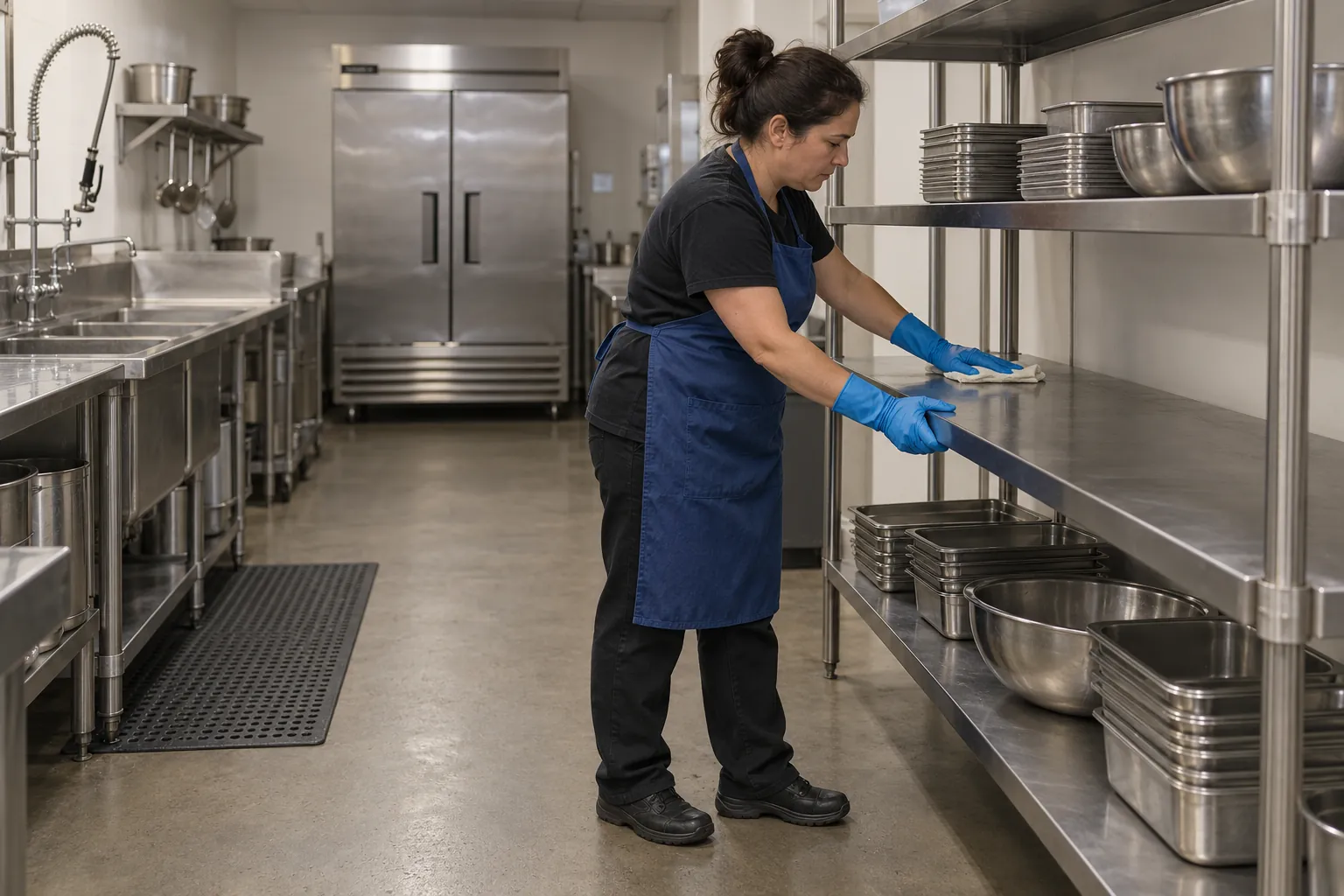 CleaningRestaurant cleaning checklist: kitchen, dining room and closing checksA US restaurant cleaning checklist for opening, service and closing, with commercial kitchen tasks, food-contact cleaning, periodic work and supervisor checks.
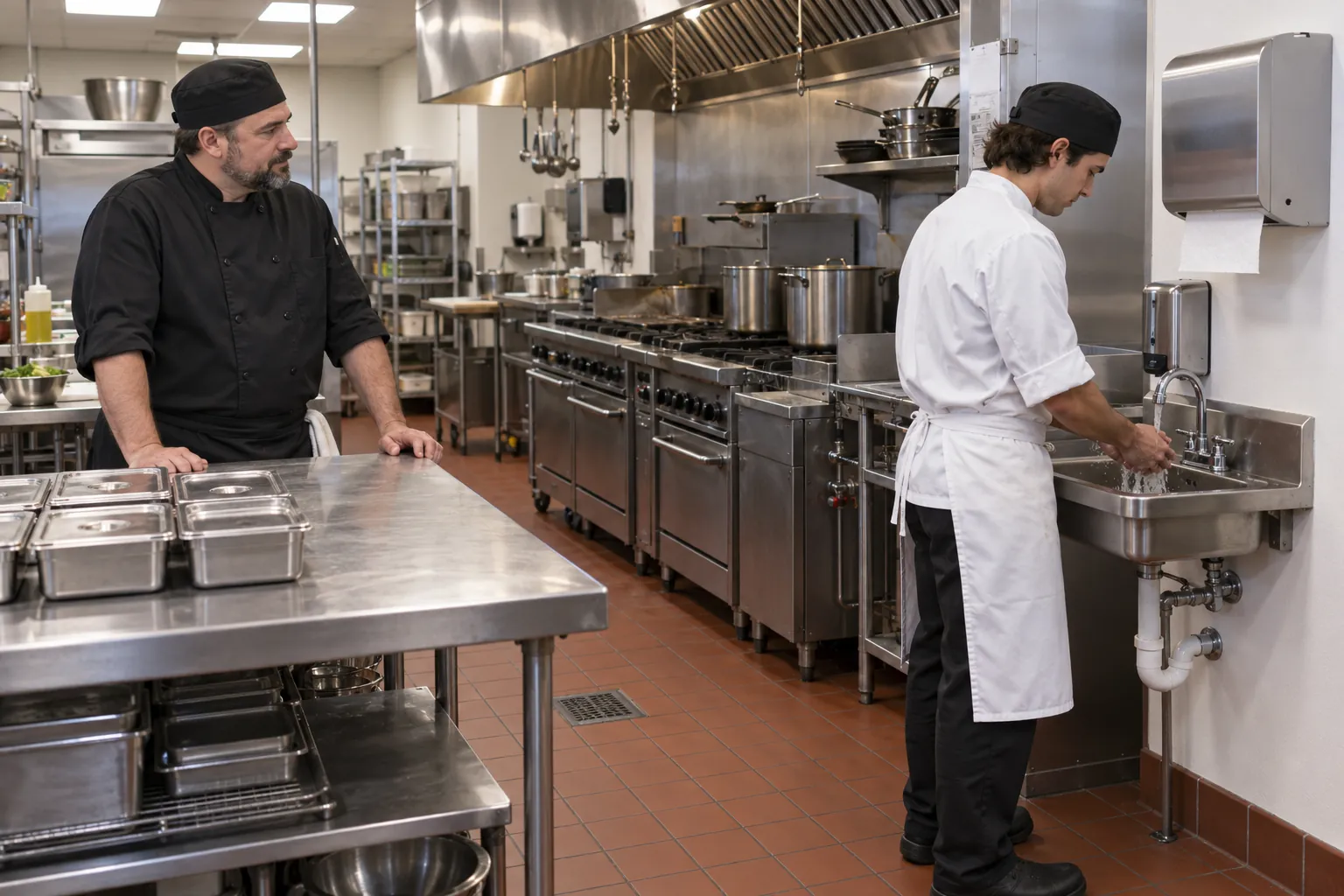 CleaningHealth inspection checklist: what the health inspector looks for, and the records behind itWhat a US health inspector checks in a restaurant or food service kitchen, how priority and core violations are fixed, and the records to have ready.
 Fire and water checksKitchen hood inspection: grease, cleaning and the fire suppression systemHow commercial kitchen hood inspection works under NFPA 96: grease buildup, cleaning, the six-month suppression service, daily checks and the records to keep.
 Fire and water checksOSHA exit sign and exit route requirements, and how to keep every route clearWhat OSHA 1910.36 and 1910.37 require of exit routes, exit doors and exit signs, how the fire code fits in, and how to check and record that routes stay clear.