Cleaning
Restaurant cleaning checklist: kitchen, dining room and closing checks
A restaurant cleaning checklist assigns cleaning tasks by area and by when they must be done, including food-contact cleaning during service as well as opening, closing and periodic work.
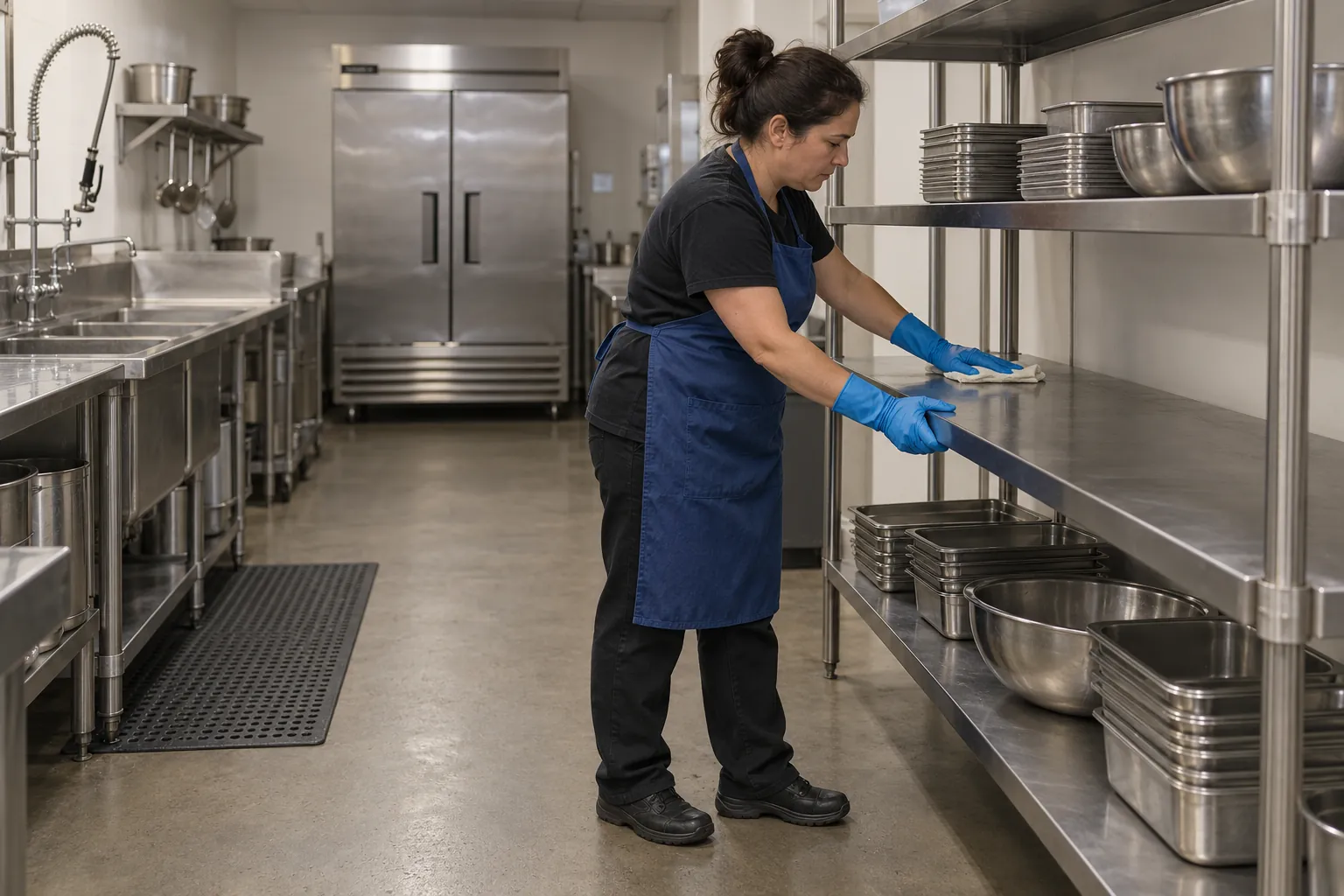
The right checklist follows the health rules adopted where the restaurant operates, the equipment instructions and what actually becomes dirty during service. Use the examples below to build a commercial kitchen cleaning checklist and a front-of-house list, with clear methods, responsibilities and a record of anything left unresolved.
01
Where the restaurant cleaning rules come from
The FDA Food Code 2026 is a model offered for adoption by state, local and other jurisdictions. It is not a single nationwide restaurant cleaning law. Identify the food code edition and amendments your health department enforces before using a checklist, and confirm any particular permit conditions with the department. The code examples use the 2026 model; check local adoption before using these starting points.
The model's Section 6-501.12 on cleaning physical facilities calls for premises to be kept clean and, apart from spills or accidents, for cleaning to take place when food exposure is lowest. That makes after-service floor cleaning sensible, but it does not mean a spill can wait until closing. Other provisions set triggers for food-contact equipment, so the cleaning plan needs both timed tasks and tasks triggered by use.
Separate three operations in the instructions. Cleaning removes soil and food residue. Sanitizing is a distinct treatment of clean food-contact surfaces using an approved method. Disinfecting is appropriate to particular nonfood areas or incidents under the product instructions and your procedures. A bottle described as a disinfectant is not automatically suitable for food-contact use.
This guide covers the restaurant's dining room, bar, restrooms, kitchen, storage and waste areas. It does not set food temperatures, employee-health rules or every duty in a food safety program. A restaurant shift checklist also has a different purpose from a food plant's periodic master sanitation schedule: keep it short enough for the people opening, cooking, serving and closing to use.
02
What belongs on a restaurant cleaning checklist
Build the restaurant kitchen cleaning and dining-area lists in the order work is done. Group the cleaning tasks by station so staff can find the right procedure during a busy service. Include the hidden surfaces that staff can safely reach and the equipment parts covered by the manufacturer's cleaning instructions. Identify jobs needing shutdown, disassembly or a specialist separately.
- Food preparation: counters, cutting boards, utensils, slicers and other preparation equipment, sinks and the accessible food-contact parts of each station.
- Cooking and warewashing: approved cleaning of grills, ranges, ovens and fryers; dishwasher and sink checks; clean storage for utensils and racks.
- Refrigeration and storage: shelves, door seals, handles, accessible surfaces, dry-store floors and areas beneath movable equipment. Avoid contaminating exposed or stored food.
- Bar and beverage service: countertops, glasswashing areas, beverage nozzles and ice equipment, each following its own procedure.
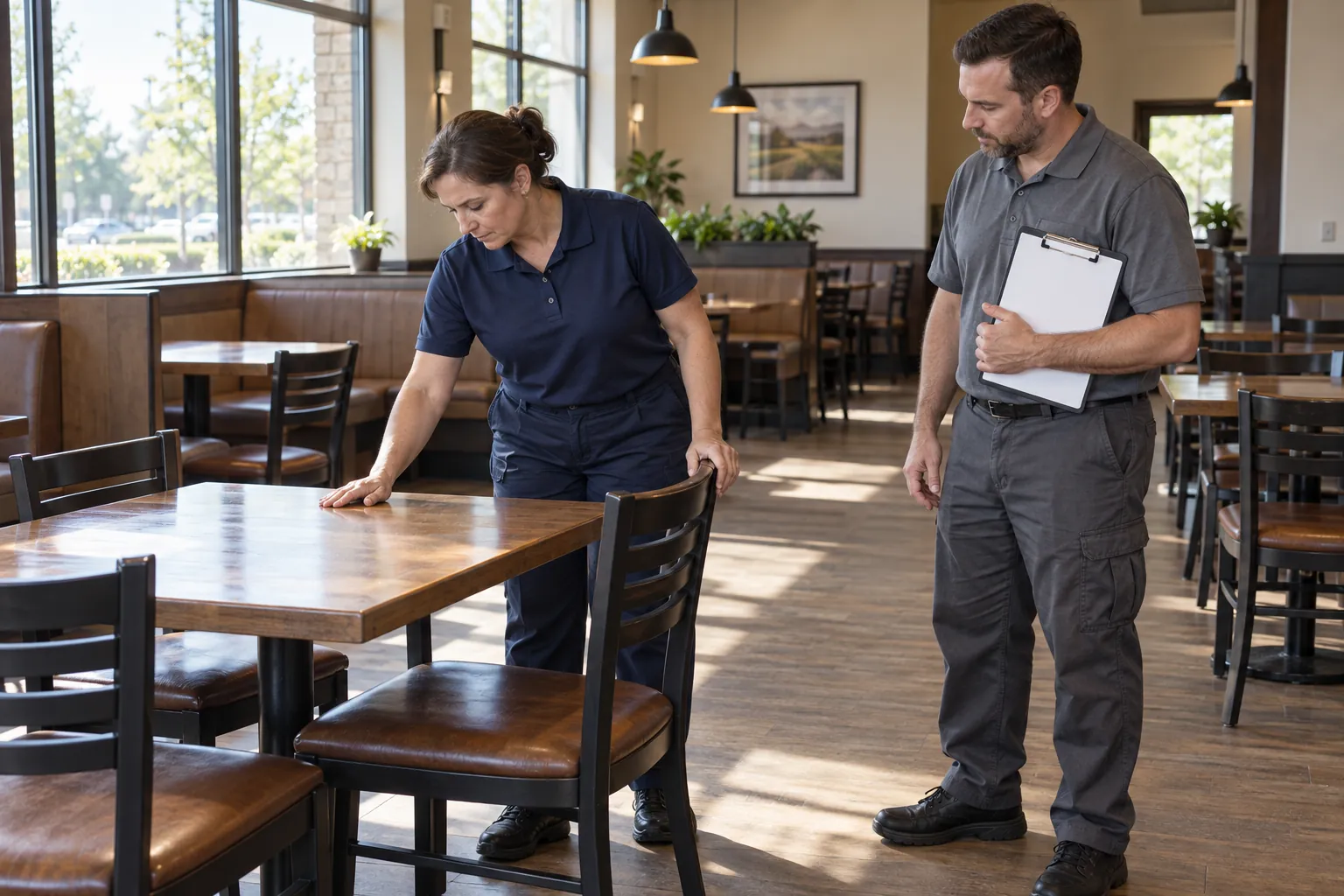
- Front of house: dining tables, chairs and booths, menus where reusable, service stations, entrance glass, floors, accessible routes and customer touch points.
- Restrooms and staff areas: toilets, sinks, fixtures, floors, supplies and break areas, using tools separated from food-preparation cleaning.
- Waste and outside areas: indoor trash and recycling bins, the route used to move waste, dumpster surroundings and signs of pests.
Give each task an area, an action, a method reference, its timing or trigger, the responsible role and a result. “Clean kitchen” is too broad; “prep counter, follow procedure K2, before ready-to-eat preparation” tells the next person what is intended. Make space for done, not needed with a reason, and not completed with an explanation. A blank box should not be interpreted as done.
Assign restaurant kitchen cleaning tasks to the people trained for that equipment and front-of-house tasks to a named shift role. Agree the boundaries with any cleaning service: who moves furniture, who empties food-waste bins, who cleans equipment and who checks after the contractor leaves. If everybody assumes somebody else cleans the beverage station, it will be absent from every list.
03
A daily checklist for opening, service and closing
Use these lists as an editable template. The suggested shift timings are management choices, not universal legal intervals. Add more checks where a busy service makes an area dirty sooner, and follow any more specific local rule or equipment instruction.
Opening:
- Inspect the kitchen and food-contact stations for remaining residue, cleaning chemical containers and anything requiring re-cleaning before use.
- Check that sinks and handwashing facilities are usable and stocked with soap and the approved hand-drying supplies, such as single-use towels, and that the cleaning supplies specified for the shift are available.
- Check the dishwasher or manual warewashing setup using its operating procedure; prepare and test chemical sanitizer where used.
- Check dining tables, booths, bar surfaces, entrance routes and restrooms before customers arrive.
- Check bins and the waste area; report pest evidence or damaged surfaces rather than merely wiping around them.
During service:
- Clean and sanitize food-contact surfaces at the required changes of use, contamination events and time intervals; do not leave this work to the closing crew.
- Wipe and clean tables between parties using the approved method for the material; remove food debris and spills from chairs and beneath the table.
- Remove floor spills promptly with the area controlled while it is wet. Keep dirty cleaning tools away from food and clean utensils.
- Check restrooms and replenish supplies often enough for use, recording any extra cleaning required.
- Remove trash and recycling before accumulation interferes with work; wash hands as required after the task and before returning to food handling.
Closing:
- Protect and store food before cleaning around it. Complete the approved cleaning of food-contact equipment, cooking surfaces and utensil storage.
- Wipe and clean the dining room and bar surfaces, including spill areas and accessible edges missed during service. Sanitize food-contact parts using their approved procedure.
- Clean kitchen and dining floors using the site's selected dustless method, such as wet cleaning or suitable vacuum cleaning, keeping clean equipment and food protected. The model's Section 6-501.13 specifies dustless methods and a separate exception for spills or drippage between normal cleaning times. Include floor edges and accessible areas beneath equipment.
- Clean restrooms with their designated tools; empty and clean bins as required by the procedure, and complete the waste-area check.
- Clean and store reusable tools so they are ready for the next shift. Record equipment that could not be cleaned safely or a fault that needs attention.
A closing signature means the person checked the stated result, not that every surface anywhere in the restaurant was cleaned. Where the list covers two teams, use separate completion fields. Have the incoming team see unresolved items before it starts work.
04
Cleaning and sanitizing commercial kitchen equipment
In the 2026 model, equipment food-contact surfaces and utensils used with time/temperature control for safety food fall under Section 4-602.11(C): cleaning throughout the day at least every four hours, subject to the exceptions in paragraph (D). Check those exceptions against the actual equipment and use. Changes of use and contamination can require earlier cleaning. This is not a rule to change every sanitizer bucket every four hours; bucket checks follow the solution's condition, concentration and the relevant procedure.
Use an equipment-specific procedure. For a conventional manual food-contact cleaning sequence, remove loose debris, wash with the specified cleaner, rinse, sanitize by the approved method, and allow the item to dry or drain as the procedure requires. A commercial dishwasher uses its own operating cycle; do not substitute a handwashing sequence for its manufacturer's instructions.
In that model, Section 4-702.11 calls for food-contact surfaces and utensils to be sanitized before use after cleaning. For warewashing solutions, Section 4-501.116 calls for chemical sanitizer concentration to be determined accurately with a test kit or other device used as its manufacturer directs. Section 4-901.11 provides for air-drying or the specified adequate draining and restricts cloth drying. Put these checks in the method, rather than assuming a visibly clean surface has been sanitized correctly.
Use the product label for permitted surfaces, dilution, application and contact time. Do not disinfect a food-contact surface with a product that is unsuitable for that use. Supply the correct test strips or test device and train staff to read them. Stronger is not automatically better. Keep cleaning products labeled and separated from food; use the protective equipment and handling precautions required for the product. Do not mix chemicals or decant them into food containers.
For a slicer, mixer or other powered equipment, distinguish a wipe of the external surface from opening or cleaning parts that expose workers to moving components or stored energy. Have the responsible manager approve the safe cleaning and shutdown method. Staff should not remove guards or reach into equipment merely to complete a checklist.
A useful check records the actual observation: “prep counter re-cleaned after raw chicken task; sanitizer test within the specified range,” with the result required by the site procedure. Avoid an unexplained tick called “sanitized” if the concentration was never checked. For more detail, use the guide to chemical dilution control alongside the equipment instructions.
05
Weekly, monthly and deep-clean work
Create a separate periodic list for work that cannot be done safely during a short closing shift. Weekly and monthly headings help organize the work, but the actual intervals come from use, accumulated soil, local requirements, equipment instructions and the service arrangement. Increase frequency when the checks show buildup before the scheduled date.
- Accessible walls, ledges and storage: inspect for splashes and dust, clean without exposing food, and check underneath safely movable items.
- Refrigeration: clean accessible shelves, seals and internal surfaces using a plan that protects the food and maintains safe storage. Servicing coils or refrigerant equipment is a separate job.
- Beverage and ice equipment: follow the model-specific disassembly and cleaning schedule; use the ice machine cleaning guide to distinguish routine cleaning from servicing.
- Hoods and exhaust: distinguish staff cleaning of accessible surfaces and removable filters from specialist exhaust-system inspection and cleaning. Confirm the required program with the appropriate authority and contractor.
- Floors, drains and waste areas: arrange access and suitable tools for the deeper work, while preventing splash or dust from contaminating food areas.
- Equipment condition: report a cracked surface, failed seal, loose fitting or inaccessible residue. A recurring cleaning difficulty may need repair rather than another stronger chemical.
Pay attention to grease buildup near a fryer or grill and to splashes on nearby walls. Staff should prevent cross-contamination by keeping restroom tools out of food areas and following the approved equipment sequence. Food residue left on a surface creates a different problem from dust on a dining-room ledge; do not treat every cleaning task as the same quick wipe. The list should help staff prevent residue from being carried to clean equipment and keep work surfaces ready throughout the day.
Before a deep clean, list the areas, food-protection arrangements, shutdowns, chemicals, equipment and access controls. Agree who will restore the area and check it before production resumes. Schedule specialized tasks with people trained and equipped for them; working at height, electrical servicing and grease-exhaust work do not become ordinary closing duties because they appear on a template.
The manager's check should sample the finished result and read every exception. Inspect a rotating set of accessible surfaces, check sanitizer or warewashing results where the procedure requires them, and confirm that an unfinished task has a responsible person and next action. Visual cleanliness is useful evidence, but it does not establish that every microbiological or allergen control worked.
Review the daily kitchen cleaning checklist and the periodic schedule regularly. Keep an example completed record with the blank template so new staff can see the difference between a task being planned, completed and verified. Review the checklist after equipment changes, a different menu or service pattern, repeated misses, or an inspection finding.
06
Where the cleaning record loses the actual result
A sheet signed at the end of the shift cannot explain a food-contact cleaning event that was needed halfway through lunch. Another gap appears when a contractor's “kitchen done” signature and a cook's closing signature each leave equipment cleaning to the other. Keep trigger-based work visible and record exceptions rather than filling the entire sheet in advance.
SiteClara can record routine checks at tagged locations. Staff scan a QR code or tap an NFC tag behind a poster on their phone, without installing an app, and answer the location's checklist or report an issue with a note and optional photos. Simple checks can have a due window; a worker can record what prevented completion. A saved photo is separate evidence and does not itself mark a cleaning task done.
The supervisor can review the work and unresolved reports before approving a provider-led daily report for management or client contacts. The report records what the team entered; it does not turn a tick into a laboratory result.
07
Questions people ask
What should I include on my commercial kitchen deep clean checklist?
Include the equipment and areas that need access beyond the normal shift clean, with the approved method, food protection, shutdown arrangements and a check before reuse. The 2026 model Food Code Sections 4-602.13 and 6-501.12 address equipment soil and clean premises; they do not provide one universal weekly or monthly deep-clean interval.
What do you need to clean a commercial kitchen?
You need the cleaners and approved sanitizing method specified for the equipment, suitable tools, required protective equipment, and the test kit or device used to check chemical sanitizer concentration. Follow the equipment procedure and product label instead of a generic recipe.
08
Official food guidance and a list to take away
Start with the health department that inspects the restaurant and the food code it has adopted. FDA's Food Code 2026 page provides the current model; the full 2026 Food Code contains the equipment and physical-facility provisions discussed here. Earlier editions may still be the locally adopted code. Use the instructions supplied for every dishwasher, slicer, cooking appliance, beverage unit and ice machine.
- Split opening, during-service, closing and periodic tasks.
- Add food-contact cleaning triggers as well as time intervals.
- Name the area, method, responsible role and required result.
- Distinguish cleaning, sanitizing and disinfecting in the instructions.
- Record a failed check or unfinished task with its next action.
- Have the manager check the result and pass unresolved work to the next shift.
Keep the editable checklist available beside the procedures it refers to. A printable or spreadsheet template is only useful when its tasks match the actual restaurant; replace broad headings with the stations and equipment your team works on.
Sources
Every document this guide quotes or links to, in the order it first cites them.
- FDA Food Code 2026 fda.gov
- Section 6-501.12 on cleaning physical facilities fda.gov
Related guides
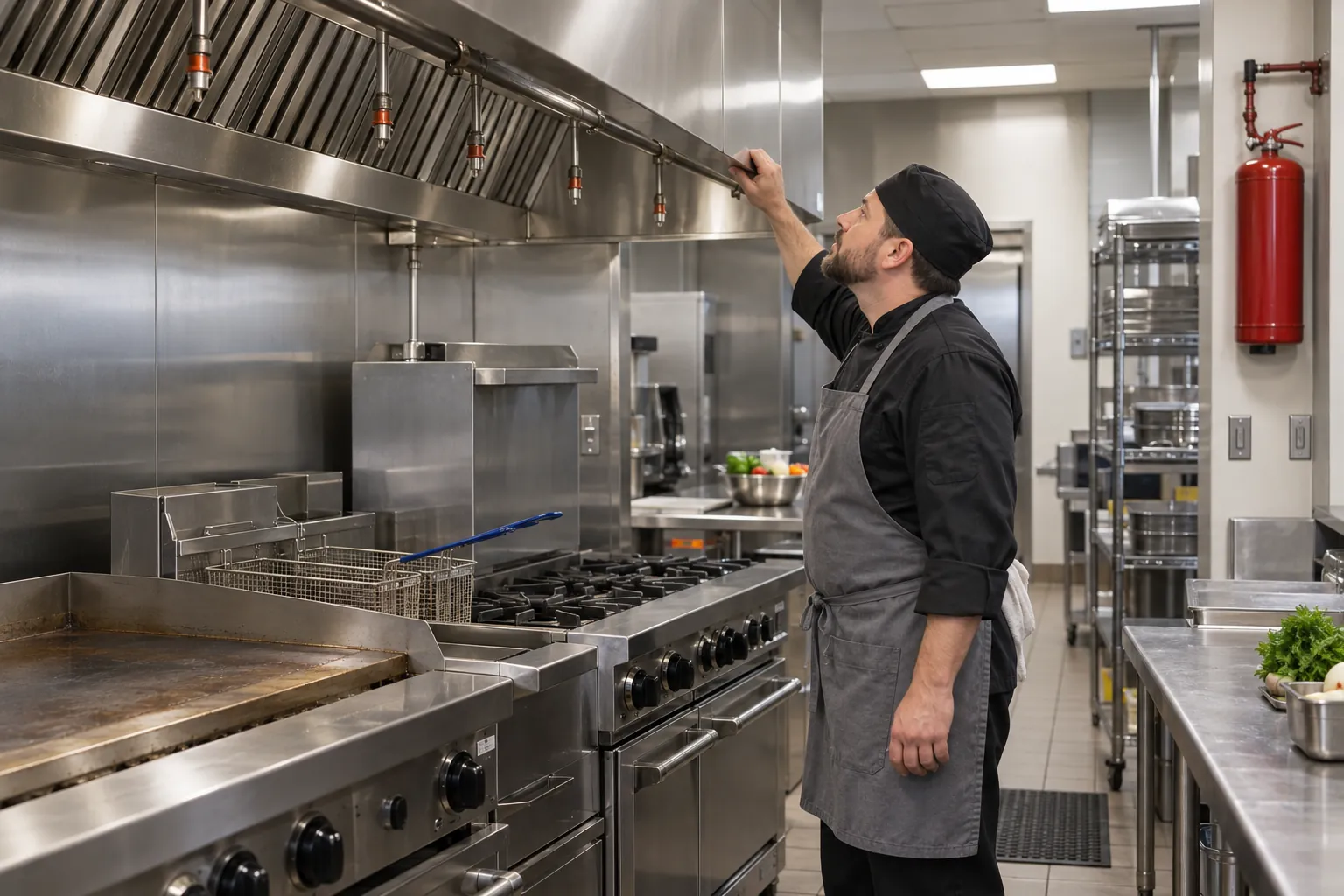 Fire and water checksKitchen hood inspection: grease, cleaning and the fire suppression systemHow commercial kitchen hood inspection works under NFPA 96: grease buildup, cleaning, the six-month suppression service, daily checks and the records to keep.
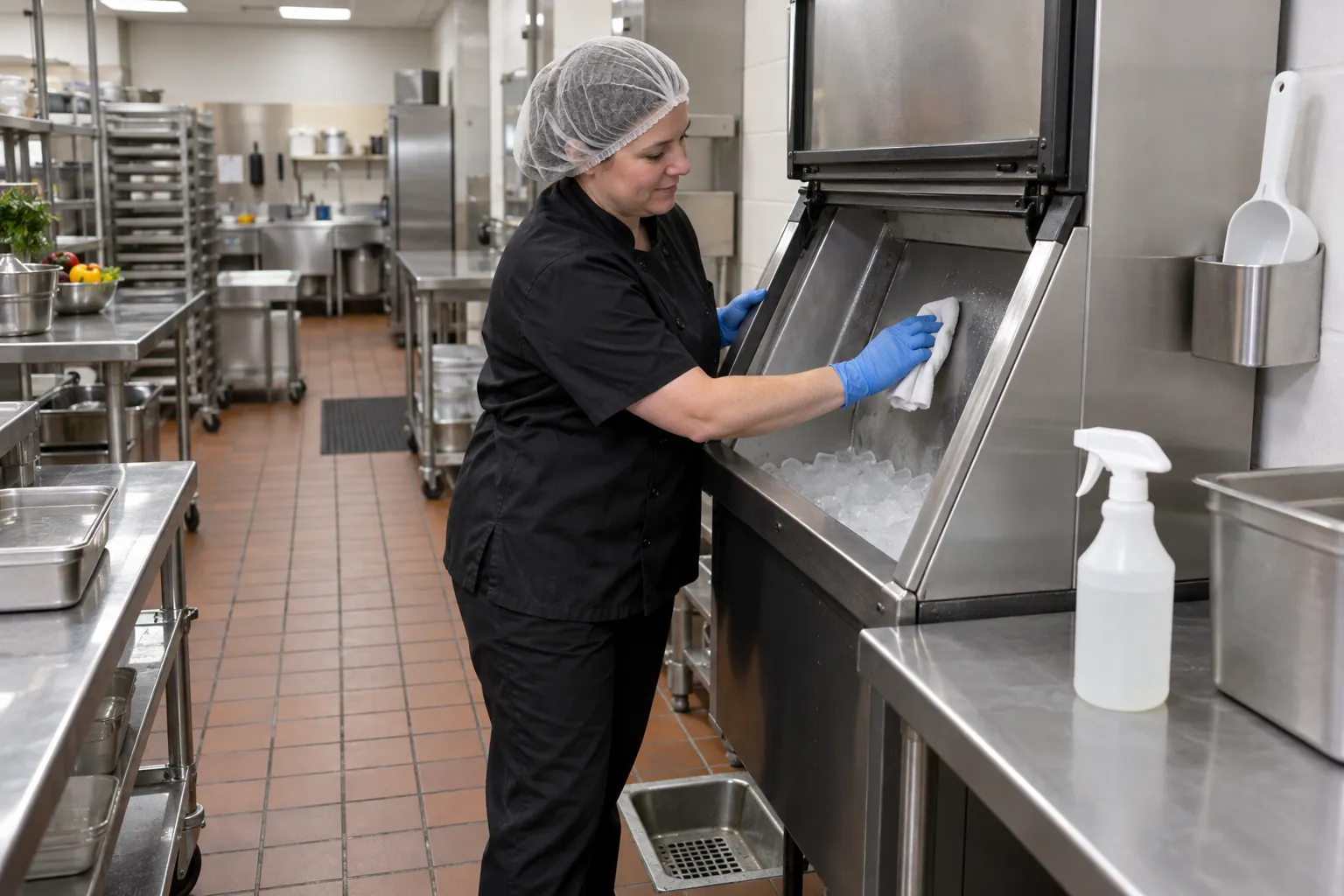 CleaningIce machine cleaning schedule: how often, who does it, and proving it was doneHow often to clean an ice machine under FDA Food Code 4-602.11 and the manufacturer's manual, who does each task, CDC guidance for hospitals, and keeping the log.
 CleaningChemical dilution control: getting the mix right, every bottle, every shiftHow a chemical dilution control system works, what OSHA HazCom and EPA labels require, how to check dispensers and bottles, and what the record should show.
 CleaningRestroom cleaning log: what to record, and how to make it believableWhat a restroom cleaning log should record, how often to check, the OSHA and Food Code rules behind it, and how to keep a log a client or inspector will believe.