Premises and facilities management
Integrated pest management for schools: running the program day to day
Integrated pest management (IPM) for schools is a written program that keeps pests out of school buildings and grounds mainly through sanitation, repairs and regular monitoring, and uses a pesticide only when monitoring shows it is needed, applied by a certified applicator with the least risk to children.
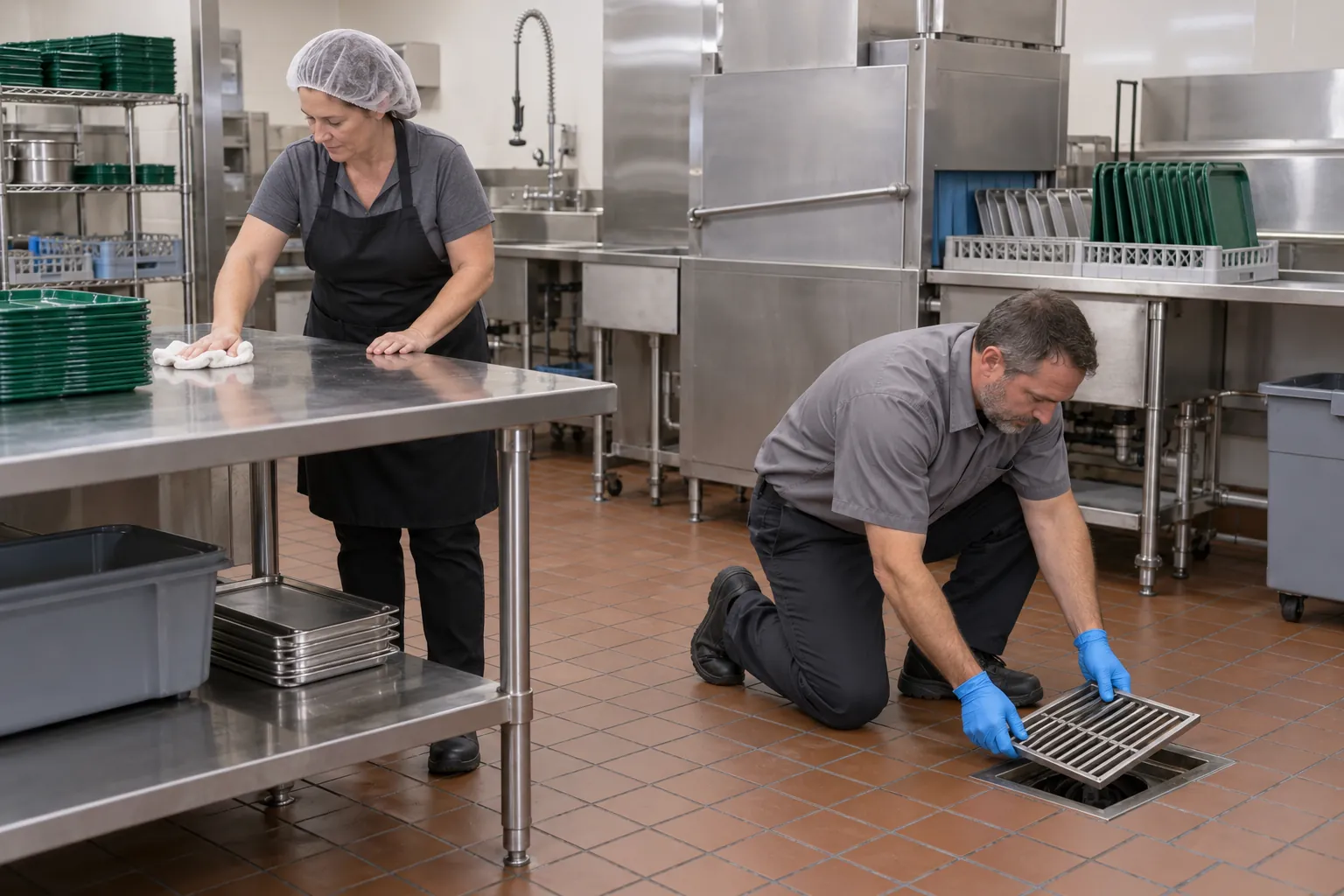
The EPA recommends that every school district consider it, and some states, among them California and Texas, require it by law. The program lives or dies on the daily routine: custodians, cafeteria staff and maintenance workers reporting what they see, a coordinator who acts on it, and records that show the building was watched. This guide covers the EPA's six steps, who does what, what to monitor and record, and the California and Texas rules.
01
What integrated pest management for schools is, and whose rule it is
The EPA's booklet Pest Control in the School Environment: Implementing Integrated Pest Management (EPA 735-F-17-004, May 2017) describes integrated pest management (IPM) as "a smart, sensible, and sustainable approach to managing pests" and puts the idea simply: "Pests need food, water and shelter, and the goal of IPM is to deny them these necessities." It does not ban pesticides; it keeps them for when they are needed, choosing those "that pose the least risk to people and the environment."
Schools get special attention because of children. The booklet notes that children may "suffer asthma when exposed to cockroach and rodent allergens" and "are more likely to experience adverse health effects than adults" from pests and pesticides alike. It recommends "that all school districts consider implementing programs that promote integrated pest management", and it asks districts to give up calendar-based spraying, treating on a fixed schedule whether or not pests are present, in favor of treatment only where monitoring finds a problem. The booklet's case is that IPM creates a safer learning environment "by reducing children's exposure to both pests and pesticides", and that healthier schools "enable children to learn and produce more in the classroom." Since "children are at the greatest risk for pesticide exposure", a school program weighs every treatment against that risk.
The federal guidance is a recommendation. The booklet says it "contains informative guidance only and does not supersede federal, state, tribal or local requirements, where those requirements are more specific or stringent." Whether your school must run an IPM program, and what it must record, post and report, is set by your state:
- California. The Healthy Schools Act of 2000 applies to public K-12 schools and child care centers. Food and Agricultural Code section 13181 defines IPM as "a pest management strategy that focuses on long-term prevention or suppression of pest problems", using pesticides "only after careful monitoring indicates they are needed according to pre-established guidelines and treatment thresholds."
- Texas. The Texas Department of Agriculture's School Integrated Pest Management page states that "Texas law requires all school districts to adopt an integrated pest management program (IPM)", under Title 4, Chapter 7, sections 7.201 to 7.205 of the Texas Administrative Code.
- Other states set their own rules, if any: ask your state's pesticide regulator before adopting a plan written for another state.
02
What a school IPM program covers: the six steps and the places
The EPA booklet sets out six steps that it calls "essential pillars that support IPM in schools":
- Develop an official IPM policy statement and plan, including "monitoring, inspections, pest thresholds, who can apply pesticides, how pest problems should be reported" and how parents and staff are told before an application.
- Designate pest management roles for everyone, from the superintendent to students.
- Set pest management objectives by site and activity: the booklet's examples are a safe playing surface on an athletic field, buildings protected from termites and a cafeteria free of pests and unnecessary pesticide residues.
- Inspect, monitor and identify: "Actively monitor vulnerable areas for pests and pest conducive conditions. Document and report pest activity and any contributing conditions."
- Implement pest prevention strategies as part of daily work, including "posting pest logs for staff to report problems".
- Evaluate results and keep records, to see whether the objectives are being met.
The booklet names the places in a school that need regular attention:
- Food preparation and serving areas: the cafeteria kitchen and dining room, the teachers' lounge, vending machines and food storage.
- Areas with plumbing: restrooms, locker rooms, dishwashing rooms, science labs, pools and maintenance areas, where even small leaks feed pests.
- Maintenance areas: boiler and mechanical rooms, custodial closets, IT rooms and pipe chases.
- Classrooms and offices, including class pets, plants, lockers and storage closets.
- Entryways: exterior doors, windows, gaps around pipes and HVAC penetrations.
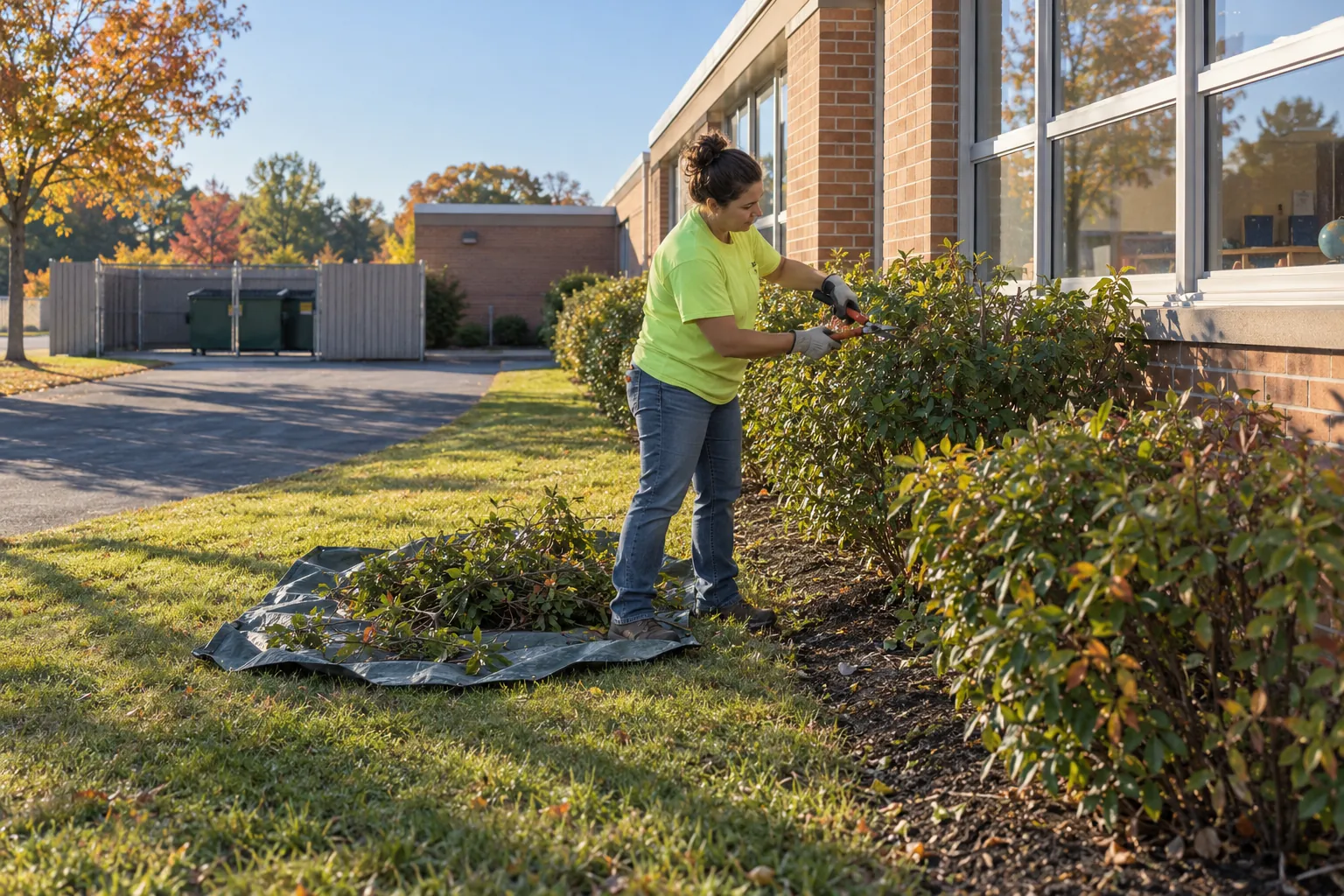
- Outside: dumpster pads, recycling and cooking-oil containers, playgrounds, athletic fields and planting beds.
03
Who does what: the coordinator, custodians, cafeteria and maintenance
The "integrated" in IPM, the booklet says, means the program is built into "the daily routines" of custodial, facilities, cafeteria and grounds work. Its roles:
- The IPM coordinator. The EPA suggests a district-wide coordinator for the day-to-day running of the program, trained in IPM, pesticide safety, contract oversight and record keeping, and recommends "a minimum of six (6) to eight (8) contact hours of training annually". California law calls the role the school designee or IPM coordinator; Texas requires one in every district.
- Custodial staff have "a responsibility to remedy sanitation and solid waste management practices that attract and feed pests": trash out, liners in, floor drains clean, mops hung to dry, cardboard out of the building.
- Food service staff keep food sealed, crumbs swept, leaks reported and waste removed between services.
- Maintenance and facilities staff "seal the building to prevent pests from entering, identify and repair water leaks immediately", remove construction debris, and report pest sightings in places the public never sees, such as boiler rooms and crawl spaces.
- Teachers, office staff and the school nurse reduce clutter, keep food in designated areas, and report what they see; the school nurse, whom the booklet calls the school's environmental health expert, assesses pest-related health risks such as asthma and advises the program.
- The pest management professional, whether a contractor or a licensed employee, inspects, identifies and treats, and is the only person who applies pesticides.
Reporting is everyone's job: "Pest sighting logs can be placed near pest vulnerable and community use areas throughout the school for students, staff, and others to report pest sightings and conducive conditions." It is equally clear that staff "should not bring pesticides from home": every pesticide, even a store-bought spray, is for "designated and certified personnel" only.
04
Monitoring, thresholds and the IPM logbook
Monitoring happens every day, mostly by people who are not pest professionals. The booklet describes it as "inspecting vulnerable areas for pest evidence – such as entry points, food, water, and places where pests live – along with estimating pest population levels." For rodents that means droppings, gnaw damage, runways, rub marks, urine stains, sounds and odors, with conducive conditions recorded whether or not a rodent is found.
Thresholds decide what a sighting sets off. The EPA's IPM principles define an action threshold as "a point at which pest populations or environmental conditions indicate that pest control action must be taken." The schools booklet gives the practical version: "A single ant in the classroom should not trigger anything other than diligent sanitation." But "the signs or sighting of an individual rodent in the cafeteria" often calls for immediate action by a pest management professional. Write thresholds into the plan by place and pest.
Routines with a fixed frequency belong on a schedule:
- Mechanical traps and glue boards in food areas "must be checked daily", and killed or trapped rodents disposed of "within 24 hours".
- Floor drains in food areas "should be cleaned weekly to remove grease and accumulated food waste."
- Trash cans in food areas emptied at the end of each day, and outdoor trash cans "serviced daily, with no waste allowed to stay overnight."
- Bulk waste receptacles placed "50 feet or more from building exteriors", vegetation and mulch kept 12 inches or more from the walls, and tree branches trimmed to at least 6 feet from the building.
The record holds it together. The booklet says "A complete and accurate pest management log should be maintained for each property and kept in the office of the IPM coordinator or school facility manager", containing the IPM policy and plan; pesticide use and service schedules; the label and Safety Data Sheet for each pesticide used; pest surveillance data sheets with the "date, number, location, and rodent species trapped or carcasses removed"; diagrams of pest-vulnerable areas with trap and bait station locations; sensitive areas where pesticide use must be avoided or limited; applicators' certifications; and pest management contracts.
05
The California Healthy Schools Act and the Texas school IPM rules
In pest management, "healthy schools act" means California's law, not Arizona's Healthy Schools Act, Arizona House Bill 2164 of 2025, which is about ultraprocessed food served on public school campuses and has nothing to do with pest control.
California. The Healthy Schools Act (HSA), Assembly Bill 2260 of 2000, amended in 2005, 2006 and 2014, sits in Education Code sections 17608 to 17614 and Food and Agricultural Code sections 13180 and following; the California Department of Pesticide Regulation (DPR) publishes the full text of the Healthy Schools Act. The DPR's one-page Healthy Schools Act requirements for public K-12 schools and child care centers lists eight duties:
- Identify an IPM coordinator "who will make sure the requirements of the HSA are met."
- Train: "Provide annual Healthy Schools Act training to all teachers, staff, and volunteers who use any pesticides, including exempt pesticides." The DPR offers free training, including an online course, on its Healthy Schools Act Training page.
- Notify all parents, guardians and staff each year of the pesticides expected to be applied.
- Register those who want to be told "72 hours in advance of individual pesticide applications."
- Plan: publish an IPM plan on the school, district or child care center website or, if there is no website, include it in the annual written notification.
- Post warning signs where a pesticide will be applied "at least 24 hours before and 72 hours after the application." Under Education Code section 17612(d) the sign reads "Warning/Pesticide Treated Area".
- Record pesticide applications and keep the records "for at least 4 years". Section 17611 lets a school do this by keeping a copy of each warning sign with the amount used written on it.
- Report pesticide use by school staff to the DPR by January 30 for the previous year.
Section 17610.5 takes self-contained baits and traps, gels and pastes used as crack and crevice treatments, pesticides the EPA exempts from FIFRA regulation, and antimicrobials "including sanitizers and disinfectants" out of the record-keeping, notification and posting sections. Custodians who use disinfectants still take the annual training.
Texas. Under 4 TAC 7.201, as the TDA summarizes it, every district's program needs "A school board approved IPM policy", "A monitoring program with established thresholds to justify corrective action", "A system to maintain records of all pest control related activities" and "A plan for educating and informing school district employees of their roles in the IPM program." The district's IPM coordinator completes approved training within six months of appointment and six hours of continuing education every three years. Pesticides used must be "categorized as 'Green', 'Yellow', or 'Red'", and the TDA's School IPM FAQs explain that for a yellow product the applicator "provides justification and approval to the IPM Coordinator". IPM records are kept for two years and made available to a TDA inspector on request, and the TDA's Structural Pest Control Service "may routinely, or in response to a complaint, investigate a school district" for compliance.
06
Where the record fails, and what SiteClara does about it
School IPM programs rarely fail on paper; the daily part fails. The pest sighting log hangs in the cafeteria office, so the night custodian who finds droppings in a second-floor storage closet tells whoever is around and it never reaches the coordinator. The glue boards that "must be checked daily" are checked when somebody remembers. The door sweep behind the kitchen is noted once and never fixed, so the same mouse appears in the log every month and the contractor treats it every month.
SiteClara works on that routine part: checks and reports at a place in the building. A printed QR poster, with an optional NFC tag behind it, goes at each location that matters, such as a cafeteria kitchen, a dumpster pad, a restroom or a custodial closet. Staff scan the code or tap the tag on their own phone, with no app to install, and sign in with a link. They see the checks due at that location, such as the daily trap check in the kitchen or the weekly floor drain clean, and mark each one done, or say what stopped them, with a photo when the check asks for one. A pest sighting or a conducive condition, such as droppings, a leak or a gap under a door, is reported on the spot with a photo, carrying the place, the time and the person, and goes onto the team's list of jobs until someone closes it.
The supervisor sees what is due, done and missed, and can record the reason a check was missed. A job that needs the building manager can be escalated to them to answer. Each day the supervisor reviews and approves a report that goes to nominated management or client contacts at 8 a.m. the next morning, showing what was reported, completed and still open. The coordinator gets a dated record of sightings and checks, by place, for the contractor's next visit.
07
Questions people ask
What are the 5 steps of integrated pest management?
The EPA's schools booklet, Pest Control in the School Environment, lists five parts of the IPM process: developing pest management goals and objectives; actively monitoring for pests and pest conducive conditions; identifying the pest and knowing its biology; selecting and implementing multiple, sustainable strategies, such as sanitation, maintenance, exclusion and habitat modification; and recording and continually evaluating results. The EPA's general Integrated Pest Management (IPM) Principles page groups the same ideas into four: set action thresholds, monitor and identify pests, prevention, and control.
What is the goal of IPM in schools?
In the words of the EPA booklet Pest Control in the School Environment: "Pests need food, water and shelter, and the goal of IPM is to deny them these necessities." The booklet adds that reducing unnecessary exposure to pests and pesticides "improves health and attendance", and it keeps pesticides for when monitoring shows they are needed, choosing those that pose the least risk.
What is the Arizona Healthy Schools Act?
It is a food law, not a pest law. Arizona House Bill 2164, titled the "Arizona Healthy Schools Act", says that from the 2026-2027 school year a school in a federally funded or assisted meal program "shall not serve, sell or allow a third party to sell ultraprocessed food on the school campus during the normal school day", with a compliance form posted by the state Department of Education. California's Healthy Schools Act is the one about pesticides and IPM.
08
Where to read the official guidance, and a list to take away
Start with the EPA's Pest Control in the School Environment (May 2017) for the six steps, the roles and the logbook, and the EPA's IPM principles for the four-step basics. In California, read the DPR's Healthy Schools Act pages, the one-page requirements sheet and the full text. In Texas, read the TDA's school IPM page and FAQs. Elsewhere, ask your state's pesticide regulator.
- Adopt a written IPM policy and plan, and name one coordinator who owns it.
- Put a way to report pests near every pest-vulnerable area: kitchens, restrooms, custodial closets, entrances and dumpster pads.
- Write thresholds by place and pest, so staff know which sightings go straight to the coordinator.
- Schedule the fixed routines: daily trap checks in food areas, weekly floor drain cleaning, daily trash removal.
- Keep each sighting open until the leak, gap or clutter behind it is fixed.
- Leave every pesticide, including store-bought sprays, to a certified applicator approved by the coordinator.
- Keep the logbook: plan, pesticide records, labels and SDSs, surveillance sheets, trap diagrams and contracts.
- Check your state's notification, posting, training and record-retention rules, and review the program every year.
Sources
Every document this guide quotes or links to, in the order it first cites them.
- Pest Control in the School Environment: Implementing Integrated Pest Management epa.gov
- School Integrated Pest Management texasagriculture.gov
- EPA's IPM principles epa.gov
- Arizona House Bill 2164 azleg.gov
- Full text of the Healthy Schools Act cdpr.ca.gov
- Healthy Schools Act requirements for public K-12 schools and child care centers cdpr.ca.gov
- Healthy Schools Act Training cdpr.ca.gov
- School IPM FAQs texasagriculture.gov
- Healthy Schools Act cdpr.ca.gov
Related guides
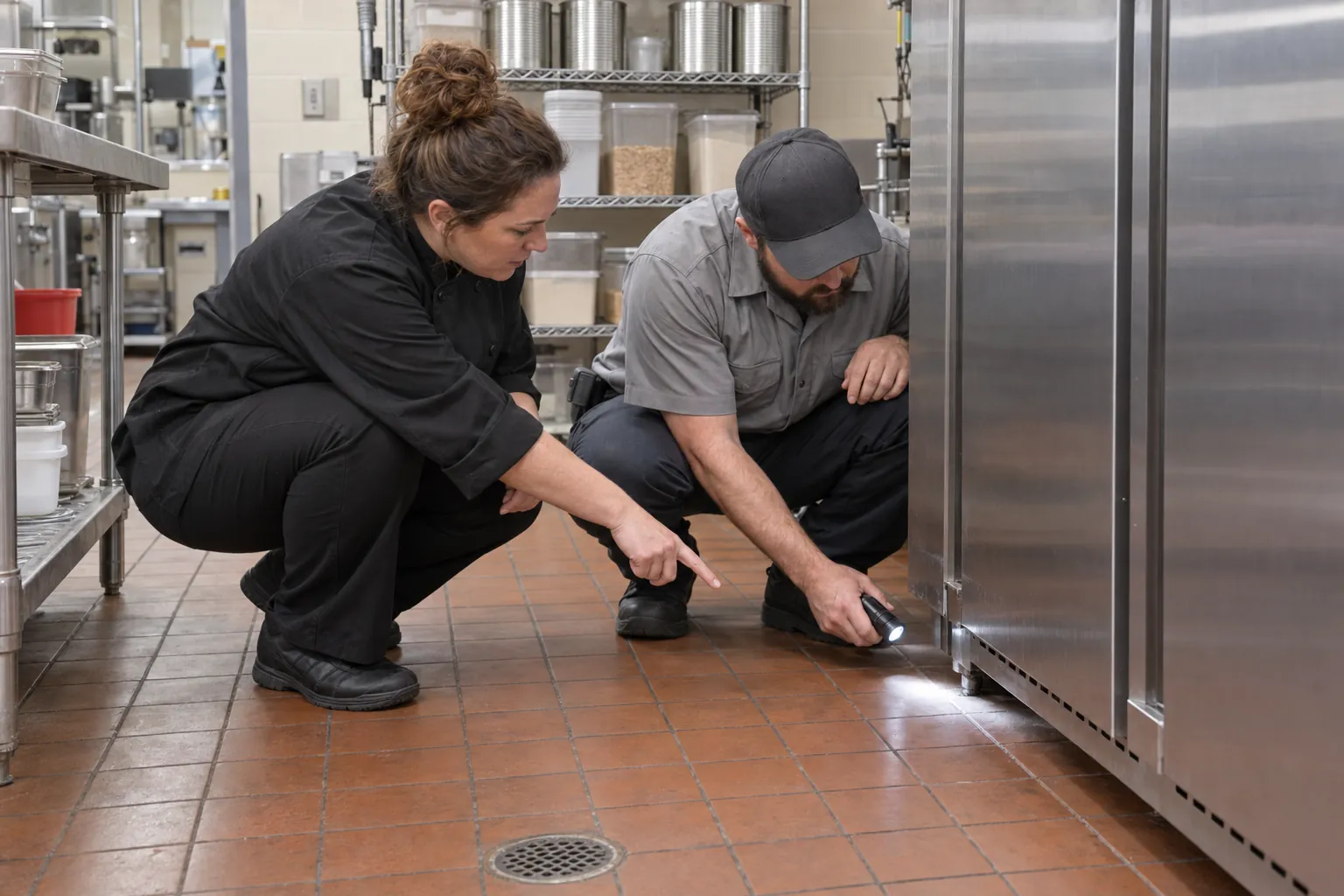 Premises and facilities managementPest sighting log: recording pest activity so it gets dealt withWhat a pest sighting log should record, who fills it in, how sightings reach your pest control provider, and the US rules behind it: FDA Food Code, OSHA and CMS.
 Premises and facilities managementCustodian duties: what the job involves, and how to show it was doneCustodian duties in schools, offices, churches and public buildings: cleaning, restrooms, opening and locking, safety checks, OSHA rules and a record of the work.
 Premises and facilities managementAHERA periodic surveillance: the six-month asbestos check, done and recordedWhat AHERA's six-month periodic surveillance requires of schools under 40 CFR 763.92, who can walk it, what to record, and how to keep the management plan current.
 Premises and facilities managementPest control in hospitals: running an IPM program that protects patientsHow pest control in hospitals works in the US: the CMS and CDC basis, integrated pest management, high-risk areas, who does what and the records to keep.