Premises and facilities management
Custodian duties: what the job involves, and how to show it was done
Custodian duties are the daily work of keeping a building and its grounds clean, safe and in good order: cleaning floors and surfaces, cleaning, sanitizing and restocking restrooms, emptying trash, opening and locking up, spotting hazards and reporting what needs fixing.
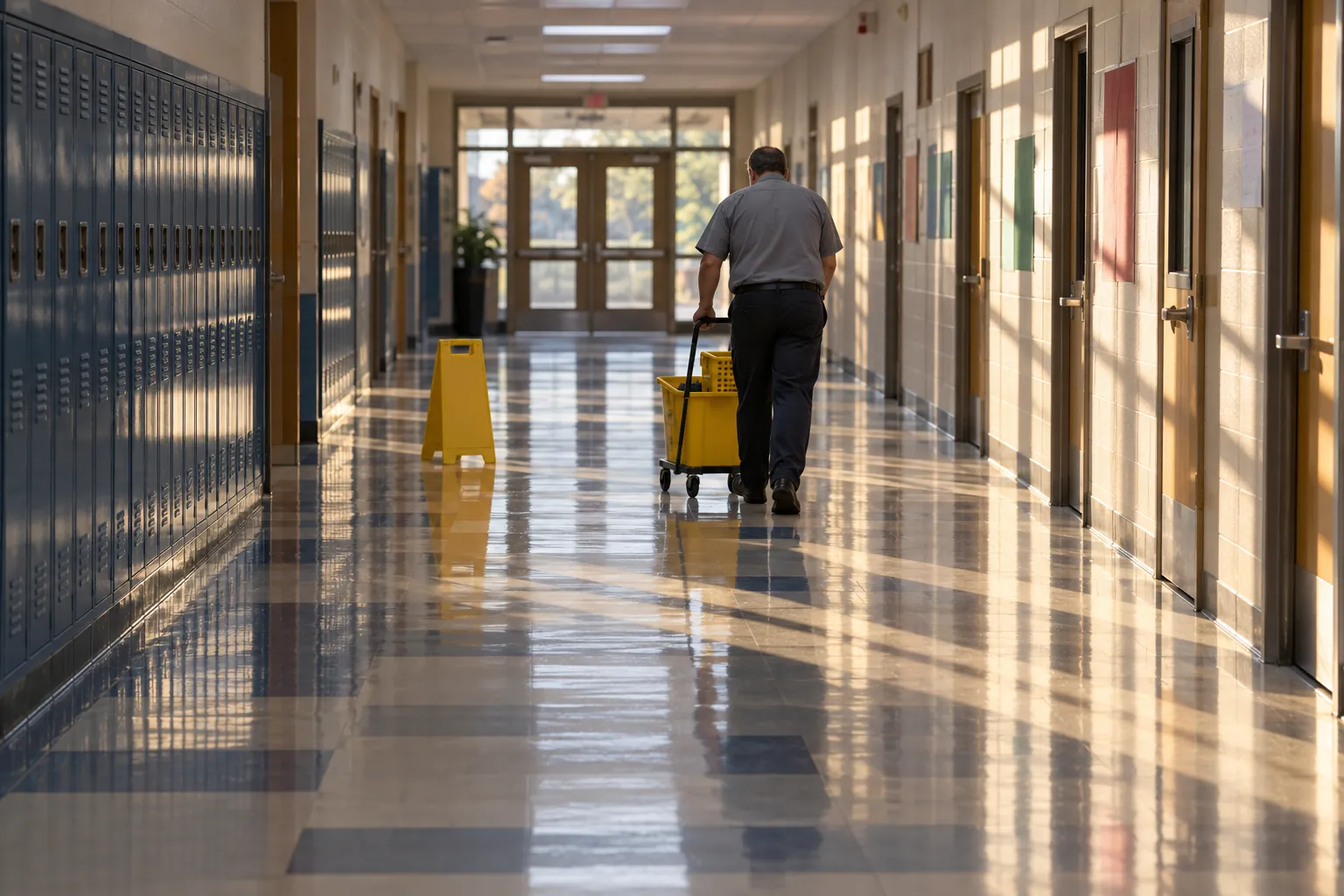
This guide covers custodian duties in schools, offices, churches and other public buildings, the federal rules behind the job, the routine checks, and how the work can be recorded so it can be shown.
01
What a custodian is, and the rules behind the job
A custodian is the person who looks after the day-to-day condition of a building for whoever owns or runs it. The titles overlap: custodian, janitor, custodial worker, building custodian, head custodian or lead custodian for the person who runs a team, and building superintendent in apartment buildings. The Bureau of Labor Statistics groups them in its Occupational Outlook Handbook entry for janitors and building cleaners, which describes custodians as the people who maintain institutional facilities such as schools and hospitals. In practice the word is most used in school districts, colleges, churches, libraries and government buildings.
The Handbook lists the core of the work: gathering and emptying trash; sweeping, mopping or vacuuming floors; cleaning restrooms and stocking them with supplies; washing windows, walls and glass; and locking doors to secure buildings. Some janitors also work outdoors, mowing lawns, sweeping walkways and removing snow. Most work full time, and many work evening hours, because offices are often cleaned while they are empty; where a building such as a hospital needs cleaning around the clock, shifts may include nights, weekends or holidays.
Most of the legal duties a custodian carries out belong to the employer, not to the custodian personally. The custodian is how those duties get done on the floor. For a private employer under federal OSHA, the main ones are in 29 CFR Part 1910:
- 29 CFR 1910.22, Walking-working surfaces: general requirements, which requires that places of employment, passageways, storerooms and service rooms are kept "in a clean, orderly, and sanitary condition", that floors are kept clean and, as far as feasible, dry, and that surfaces are kept free of hazards such as "leaks, spills, snow, and ice";
- 29 CFR 1910.37, Maintenance, safeguards, and operational features for exit routes, which requires exit routes to be "free and unobstructed" and emergency safeguards such as fire doors, alarm systems and exit lighting to be in proper working order;
- 29 CFR 1910.1200, Hazard Communication, for the cleaning chemicals a custodian uses;
- 29 CFR 1910.23, Ladders, for changing lamps, reaching high dusting and anything else off the floor;
- 29 CFR 1910.1030, Bloodborne pathogens, where a custodian's assigned duties include cleaning up blood or other potentially infectious materials.
02
Custodian duties and responsibilities in practice
A custodian job description usually includes most of these:
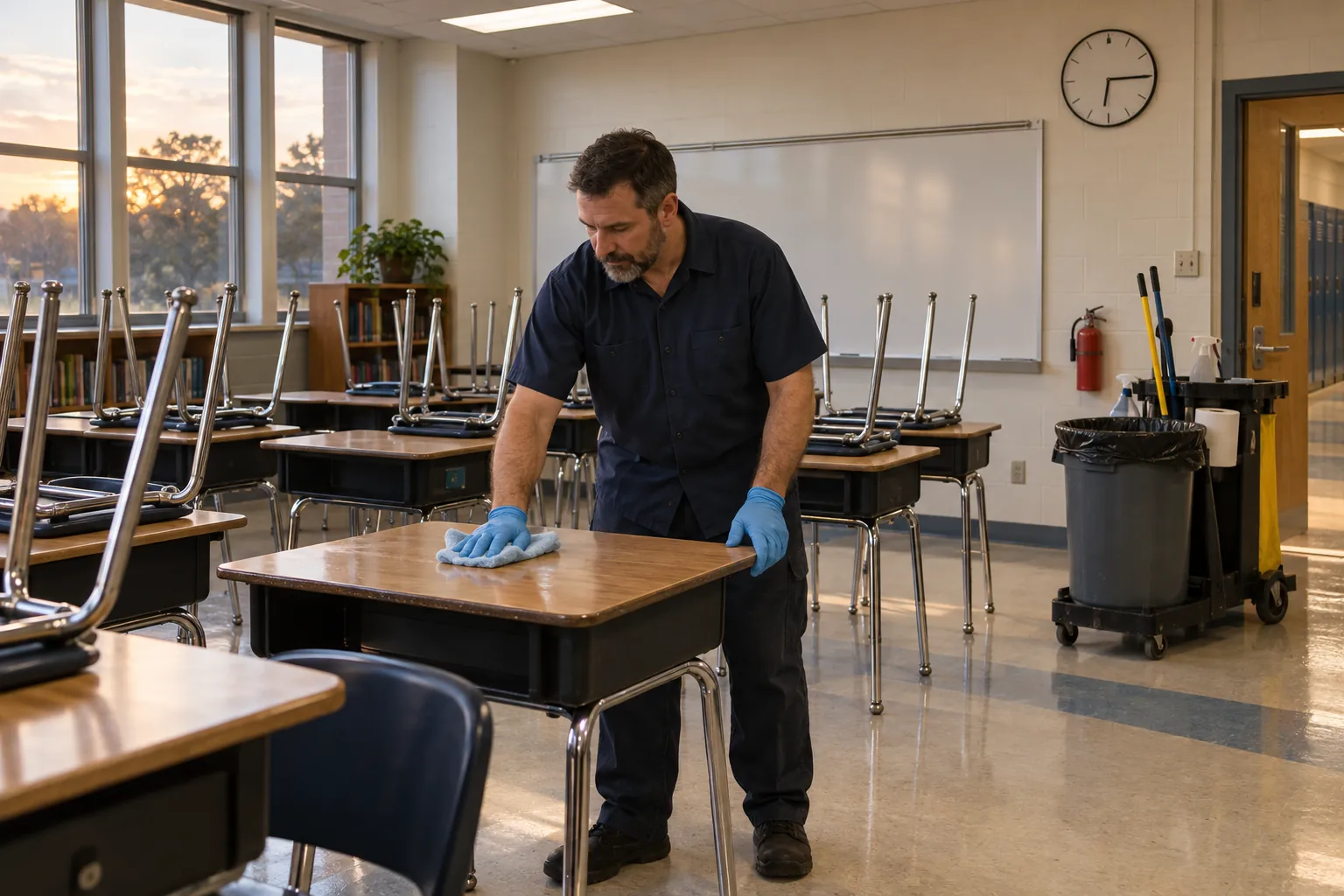
- Cleaning: sweeping, dust mopping, damp mopping and vacuuming; dusting and wiping desks, counters and high-touch surfaces such as door handles, railings and elevator buttons; spot cleaning glass and walls; and periodic floor care such as scrubbing, burnishing, stripping and refinishing.
- Restrooms: cleaning and disinfecting fixtures, refilling soap, paper towels and toilet paper, emptying sanitary bins, and reporting leaks, running toilets and broken dispensers.
- Trash and recycling: emptying containers, replacing liners, taking bags to the dumpster or compactor, and keeping the dumpster enclosure tidy.
- Opening and locking up: unlocking at the start of the day or before an evening event, disarming and arming the alarm, walking the building at close to check doors, windows and lights, and keeping keys under control.
- Safety checks: exits and corridors clear, spills dealt with and wet floors signed, damaged furniture or flooring taken out of use and reported, and snow and ice cleared from entrances and walks.
- Minor maintenance: changing lamps, replacing ceiling tiles, tightening hardware, unclogging a drain, and entering a work order for anything beyond the custodian's skills.
- Setups: tables, chairs and staging for meetings, assemblies, services, elections and rentals, and putting them away afterward.
- Deliveries and contractors: receiving supplies, letting vendors in, and showing them where they are working.
- Grounds: litter pickup, sweeping entrances, and in many jobs mowing, leaf removal and snow shoveling.
What a custodian should not do matters as much. Electrical work beyond changing a lamp, gas and boiler work, roof work, and anything that disturbs asbestos-containing material belong to a licensed contractor or to specially trained staff. A good job description says so, and says who the custodian reports problems to.
03
How the job differs from building to building
The core of custodial work is the same everywhere, but each kind of building adds its own.
- K-12 schools: a day custodian opens the building, handles spills, lunchroom cleanup and restroom checks during the school day, and responds to calls from the front office; the night crew does the bulk of classroom and floor cleaning after dismissal. Summer is for deep cleaning and floor refinishing. A school custodian works around students, so the district's background check and conduct rules apply.
- Asbestos in schools: under the Asbestos Hazard Emergency Response Act (AHERA), EPA's guidance on local education agency responsibilities under AHERA says all maintenance and custodial staff who may work in a building with asbestos-containing building materials must receive at least two hours of asbestos awareness training, within sixty days of starting; staff whose work will disturb it need an additional 14 hours. The same guidance requires surveillance of known or suspected asbestos-containing material every six months, which is often done by custodial or maintenance staff.
- Colleges and universities: custodians are usually assigned zones, such as a classroom building or a residence hall, with shared crews for floor care and event setups.
- Offices and government buildings: much of the cleaning is done after hours, often by a janitorial contractor, with a day porter or day custodian covering restrooms, lobbies, conference rooms and spills during business hours.
- Churches and places of worship: the schedule follows services, weddings, funerals and rentals of the fellowship hall, often with a sanctuary, a kitchen and classrooms to keep ready, and much of the work on weekends.
- Hospitals and clinics: the work is usually called environmental services (EVS), with infection control procedures and a much closer link to the bloodborne pathogens rules.
Shifts reflect this. First shift custodians open buildings and handle daytime calls; second and third shift crews clean after the occupants leave. Most custodial jobs include some evening or weekend work, snow days, and a share of emergency call-backs for alarms, flooding or a broken window.
04
The routine checks, and working safely
Much of a custodian's value is in checks nobody notices when they are done. OSHA's walking-working surfaces rule says surfaces are to be "inspected, regularly and as necessary, and maintained in a safe condition", and that a hazardous condition is corrected before anyone uses the surface again or, if it cannot be fixed at once, guarded until it is. The frequency is set by the building, but a typical pattern is:
- Every opening: exits unlocked from the inside and routes clear, the building secure overnight with no sign of a break-in, restrooms clean and stocked, entrances and walks clear of snow, ice or debris, and no leaks, spills or trailing cords.
- During the day: restroom checks on a set round, spill response, lunchroom or break room cleanup, and trash in busy areas.
- At close: a walk of every floor to check exterior doors, windows, lights, faucets and anything left running, then the alarm set.
- Weekly or monthly: a walk of the exterior and the roof drains you can reach safely, a look at exit signs and emergency lights for any that are out, and a stock count of paper and chemicals, alongside any fire extinguisher or emergency lighting checks the facility has assigned to custodial staff.
- After every event or rental: the space, kitchen and restrooms left clean and safe, furniture put away, and the building locked.
Chemicals are the other daily risk. Under the Hazard Communication standard, the employer must give employees effective information and training on the hazardous chemicals in their work area when they start and whenever a new hazard is introduced, and keep safety data sheets "readily accessible during each work shift". The standard exempts consumer products only where the employer can show they are used as the manufacturer intended, with exposure no greater than a consumer's; concentrated janitorial products used daily rarely qualify. For disinfectants, EPA's page on selected EPA-registered disinfectants reminds users to read the label before use and to leave the surface visibly wet for the product's full contact time.
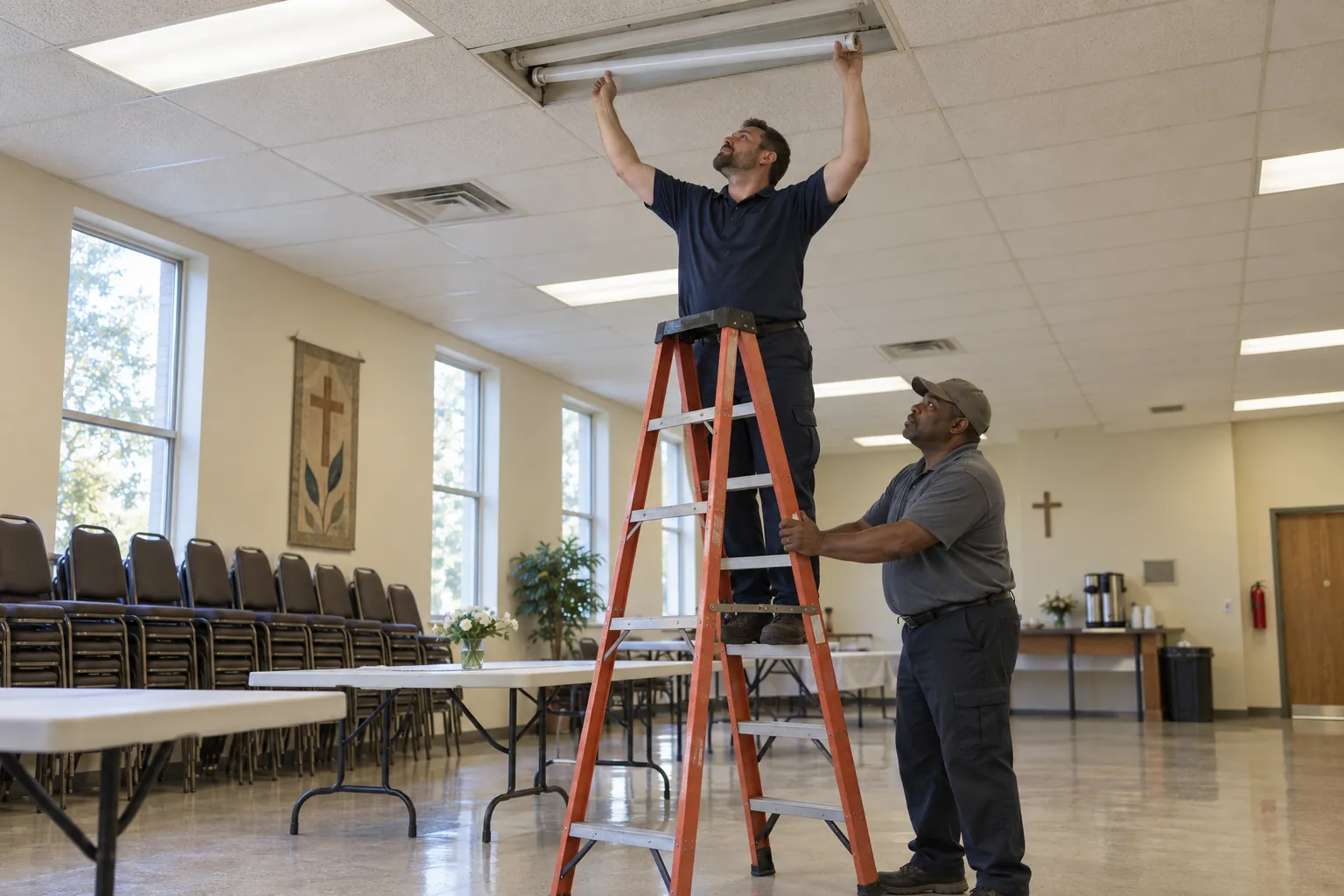
Ladders are the third. OSHA's ladder rule requires ladders to be inspected before initial use in each work shift, a defective ladder to be tagged "Dangerous: Do Not Use" or similar and removed from service, and the top step and cap of a stepladder never to be used as a step. Custodians also often work alone, early or late. There is no general OSHA rule that bans it, but the employer should decide which jobs, such as ladder work or moving heavy furniture, wait until someone else is present, and how a custodian working alone keeps in touch.
05
Skills, getting started, and a good record
The Bureau of Labor Statistics says janitors and building cleaners typically do not need formal education to enter the occupation, and most learn on the job. Many school district and government postings ask for a high school diploma or equivalent, a clean background check and the ability to lift and move supplies and furniture. Useful training includes Hazard Communication, safe chemical dilution, floor care equipment, ladder safety, bloodborne pathogens where the role includes cleaning up blood, first aid and CPR, and, in schools, AHERA asbestos awareness. Custodians often move up to lead custodian, head custodian, custodial supervisor or maintenance roles.
The personal qualities matter as much: reliability, attention to detail, organizing your own round, working unsupervised on a night shift, and being approachable when a teacher, an office worker or a church member arrives with a problem. Pay varies widely by employer, union agreement, shift and region, so look at current postings and the BLS pages for your area rather than rely on an average.
A good custodial record shows three things: that the routine checks were done, when and by whom; what was found and reported; and what happened to each report. The Bloodborne Pathogens standard, where it applies, expects a written schedule for cleaning and decontamination, based on the location, the type of surface, the type of soil and the tasks performed there. Even where no rule asks for a schedule, a custodian who keeps a record is protected when something goes wrong, and the facility manager can show a principal, a board, an insurer or an inspector that the building was looked after.
06
Where the record fails, and what SiteClara does about it
Custodians are often the most dependable people in a building and the least recorded. The rounds happen, but the restroom sheet on the back of the door is initialed for the whole day at once, the night walk leaves nothing behind it, and a leak mentioned to whoever was in the front office never becomes a work order. When the principal, the pastor or the building owner asks whether the restrooms were checked or the exits were clear, the custodian's word is all there is.
SiteClara gives each check a place. A printed QR poster at each location, such as a restroom, the main entrance, a stairwell, the cafeteria or the dumpster enclosure, with an optional NFC tag behind it, lets the custodian scan the code or tap the tag on their own phone, with no app to install. They see the checks due there and mark each one done, or say what stopped them, such as a locked room or no supplies, with a photo when one is asked for. A problem found there, such as a leaking valve, a broken dispenser or a blocked exit, goes onto the team's list of jobs until someone closes it.
The custodial supervisor or head custodian sees what is due, done and missed, and can record why a check was missed; a job that needs the building's manager can be escalated to them to answer. Each day the supervisor reviews and approves a short report, which goes to nominated contacts, such as the facility manager, the school principal or the client, at 8 a.m. the next morning, showing what was reported, what was completed, what is still open and how the scheduled checks went.
07
Questions people ask
What is a custodian vs a janitor?
A custodian is a janitor by another name, usually in a school, hospital or other institution. The Bureau of Labor Statistics treats them as one occupation, and its Occupational Outlook Handbook entry for janitors and building cleaners says custodians "are janitors or cleaning workers who typically maintain institutional facilities, such as schools and hospitals."
What is another job title for a custodian?
Janitor, custodial worker and building custodian are the usual ones. The Department of Labor's O*NET summary for Janitors and Cleaners, Except Maids and Housekeeping Cleaners lists reported job titles including building custodian, building services technician, building services worker, cleaner, custodial worker, facilities worker, heavy duty custodian, janitor and school custodian.
Is custodian a hard job?
It is physically demanding. The BLS Occupational Outlook Handbook entry for janitors and building cleaners says they spend most of the day walking, standing or bending, and sometimes get injured on the job, for example with sprains or strains from heavy lifting or pain and soreness from repetitive motion.
How many hours do custodians work?
Most work full time, although part-time work is common. According to the BLS Occupational Outlook Handbook entry for janitors and building cleaners, schedules vary, many cleaners work evening hours because office buildings are often cleaned while they are empty, and where a building such as a hospital needs cleaning around the clock, shifts may include nights, weekends or holidays.
08
Further reading, and a list to take away
OSHA's Cleaning Industry page gathers its material on the hazards custodial and janitorial workers face, including cleaning chemicals, equipment and the physical environment. The BLS Occupational Outlook Handbook entry for janitors and building cleaners describes the occupation, how people enter it and the outlook for jobs. For schools, EPA's Asbestos and School Buildings page sets out what AHERA asks of a school district and its custodial staff. Your state's OSHA plan, if it has one, and your local fire marshal can tell you where their rules go further than the federal ones.
If you are writing a custodian job description, or starting as a custodian, check that you know:
- who your employer is, whose safety rules apply (federal OSHA, a state plan or district policy), and who you report problems to;
- which buildings, floors and grounds are yours, and your shift, including events, snow days and call-backs;
- which routine checks are yours, how often, and where each one is recorded;
- where the safety data sheets are kept, and which chemicals you have been trained to use and dilute;
- which repairs you may do yourself, and which go on a work order to maintenance or a contractor;
- where the asbestos management plan, the emergency action plan and the emergency contacts are kept;
- which tasks wait until someone else is present, and how you stay in touch when working alone;
- how you show, at the end of the shift, what you did and what is still outstanding.
Sources
Every document this guide quotes or links to, in the order it first cites them.
- Occupational Outlook Handbook entry for janitors and building cleaners bls.gov
- 29 CFR 1910.22, Walking-working surfaces: general requirements osha.gov
- 29 CFR 1910.37, Maintenance, safeguards, and operational features for exit routes osha.gov
- 29 CFR 1910.1200, Hazard Communication osha.gov
- 29 CFR 1910.23, Ladders osha.gov
- 29 CFR 1910.1030, Bloodborne pathogens osha.gov
- OSHA-approved State Plans osha.gov
- Local education agency responsibilities under AHERA epa.gov
- Selected EPA-registered disinfectants epa.gov
- O*NET summary for Janitors and Cleaners, Except Maids and Housekeeping Cleaners onetonline.org
- Cleaning Industry osha.gov
- Asbestos and School Buildings epa.gov
Related guides
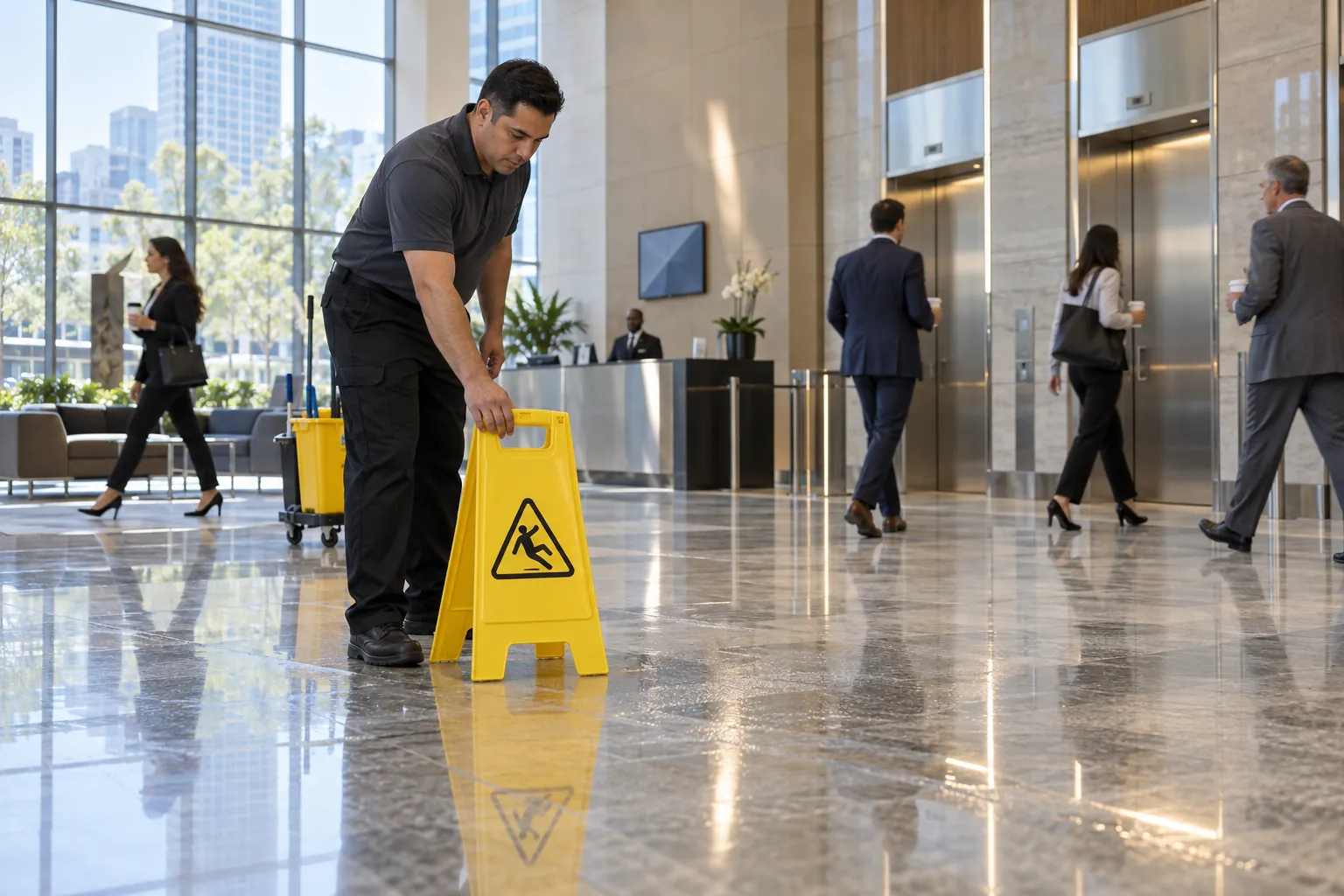 CleaningDay porter duties: what the job covers, and how to prove the roundsWhat a day porter does in an occupied building, a sample daily route, the OSHA rules behind the work, and how to show a client the rounds really happened.
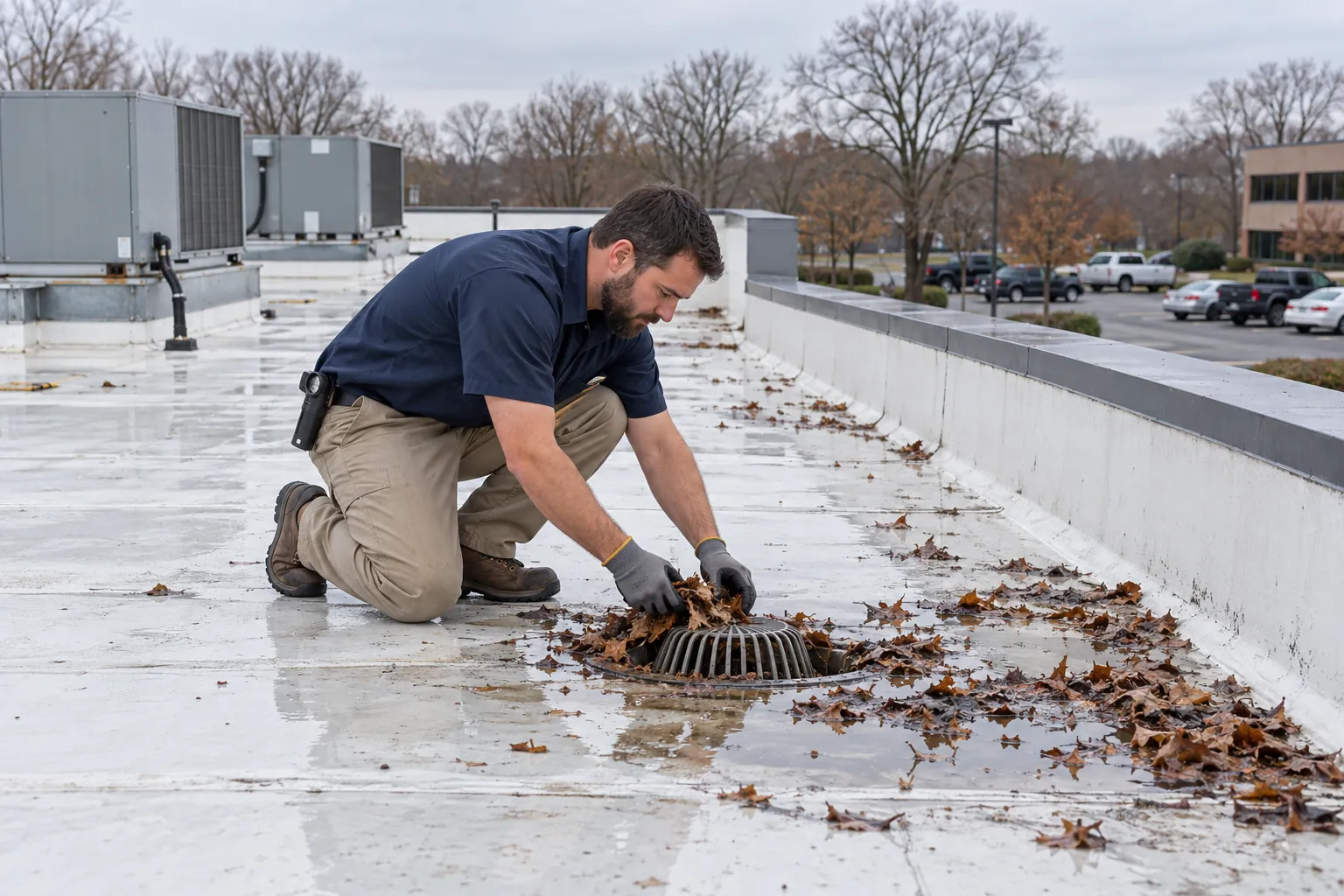 Premises and facilities managementBuilding maintenance checklist: what the code expects, how often to check, and who does itA building maintenance checklist for US commercial buildings, built on the International Property Maintenance Code: daily to annual tasks, who does each, the record.
 CleaningSchool cleaning checklist: what custodians clean, how often, and how to show it was doneA school cleaning checklist for classrooms, restrooms, hallways, the cafeteria, gym and nurse's office: daily, weekly and summer tasks, the rules and the record.
 Premises and facilities managementFacility manager duties: what the job covers, and how to show it is doneFacility manager duties across buildings and vendors: OSHA's General Duty Clause, exits, lockout, contractors, the inspection calendar and a record you can show.