Cleaning
Warehouse cleaning checklist: practical tasks and a usable record
A warehouse cleaning checklist sets out the cleaning tasks for floors, aisles, docks, storage and staff areas, with a safe method, a responsible role and a timing or trigger for each task.
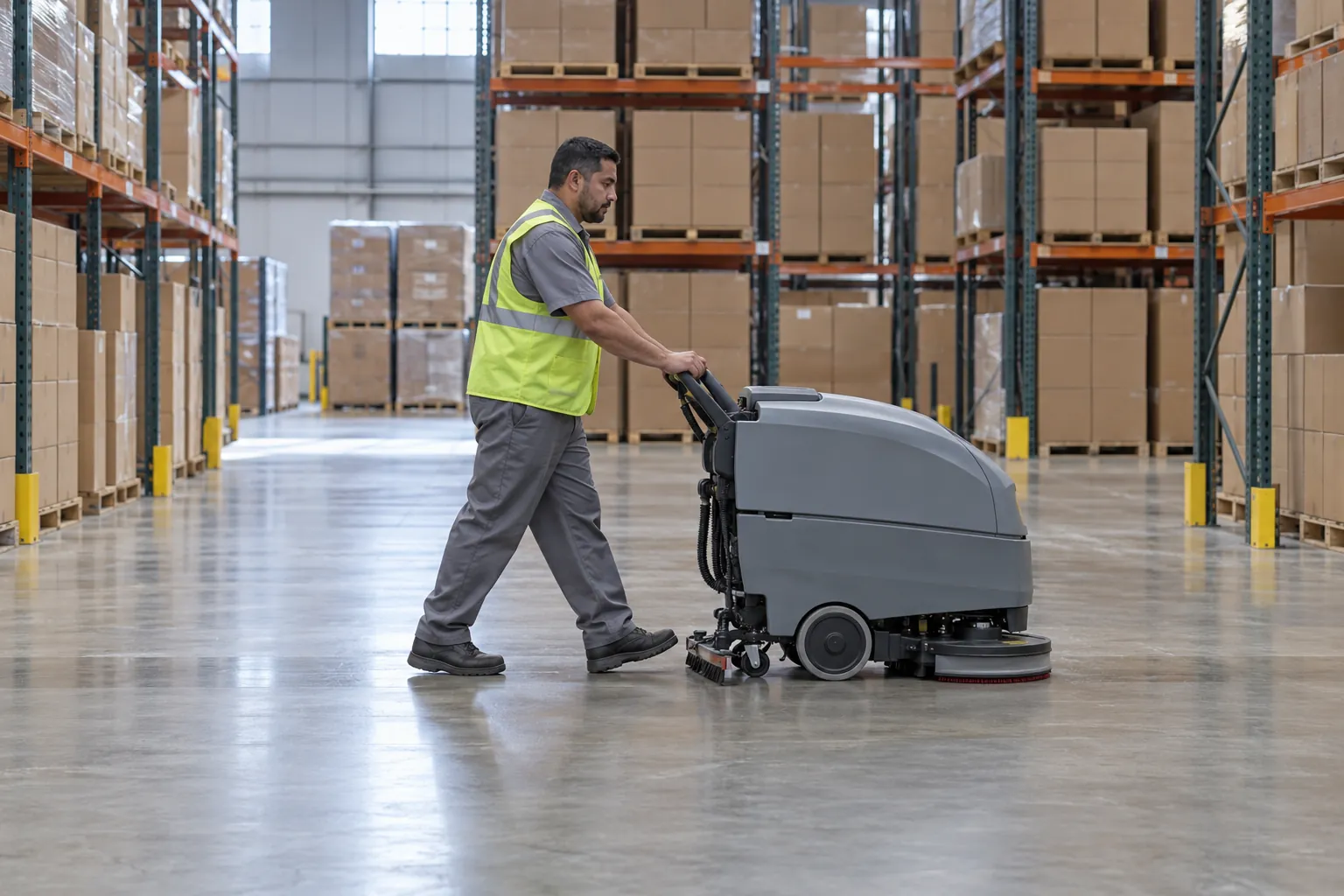
It should keep work routes clear throughout the shift, rather than treating cleaning as something that only happens after shipping finishes. This guide gives a template for a general warehouse or distribution center, explains how to adapt daily, weekly and monthly work, and separates routine cleaning from hazardous spill response and equipment servicing.
01
What warehouse housekeeping has to achieve
A warehouse cleaning checklist is a working method for keeping the building clean and safe; it is not an OSHA-issued form. OSHA 29 CFR 1910.22 requires clean, orderly and sanitary workplaces and walking-working surfaces, floors that are dry to the extent feasible, and regular inspections. An unsafe walking surface must be corrected before reuse or guarded until it is corrected. The duty applies during operations, not only when the cleaning contractor arrives.
The material-handling rule adds detail. Under 29 CFR 1910.176(a) and (c), aisles used with mechanical handling equipment need safe clearance and must be kept clear and in good repair; storage areas must be free from hazardous accumulation of materials. The rule identifies tripping, fire, explosion and pest-harboring hazards. A discarded strap or pile of cartons belongs on the cleaning plan because of what it can obstruct or cause, not only how it looks.
Exit routes are a separate immediate priority under 29 CFR 1910.37(a)(3). Do not park a scrubber, stack pallets or leave waste bags in an exit route while preparing to clean. Check the OSHA State Plans page for the regulator covering the workplace and any state requirements. Your fire authority and site procedures may set additional controls.
This guide covers ordinary housekeeping in a general warehouse. Food, pharmaceutical, refrigerated and chemical storage can need specialist sanitation or contamination-control procedures. A general template is not enough for those operations. Keep the warehouse cleaning list distinct from rack inspections, forklift examinations, equipment maintenance and security rounds, while giving every defect a route to the right responsible team.
02
The areas and tasks the checklist should cover
Build the list of cleaning tasks by walking the warehouse with operations and the cleaning team. Agree the condition standards you will inspect rather than writing “OSHA compliant” beside a single signature. Use the site's actual aisle, dock and room identifiers. Mark where a task requires traffic to stop, inventory to move, equipment isolation or access equipment; do not assume the cleaner can decide those arrangements while standing beside a busy dock.
- Floors and aisles: loose wrap, straps, cardboard, pallet fragments, dust, tracked-in dirt and ordinary spills. Include floor edges and pedestrian routes, not just the center of the forklift aisle.
- Receiving and loading docks: discarded packaging, accessible dock surfaces, drain obstructions and debris near doors. Keep work away from moving vehicles and unprotected edges.
- Storage and racking: accessible low surfaces, debris beneath racks and empty storage positions when released for cleaning. Do not climb racks or move loaded stock as an informal cleaning task.
- Packing and workstations: benches, shared touch points, scanner exteriors and other surfaces using methods compatible with the equipment.
- Restrooms and break rooms: fixtures, floors, food debris, waste, soap, toilet paper and other supplies, using designated tools separated from the warehouse floor-cleaning equipment.
- Waste and recycling: bins, cardboard and wrap collection points, waste routes and the accessible external waste area. Keep compactors and balers on their own authorized operating and servicing procedures.
- Entrances and exterior routes: mats, accessible walkways and litter. Report drainage problems, damaged pavement and pest evidence.
- Periodic accessible surfaces: walls, low ledges, doors and other dust-catching areas identified in the assessment. High-level surfaces and HVAC components need a separate safe access or service plan.
Each line should state who makes the area ready, who cleans it and who checks that it can reopen. Operations may need to stop vehicle movements or remove inventory; the contractor may clean only the released area. Put those boundaries in the scope of work so an unfinished task is not mistaken for a poor clean when access was never provided.
Give workers a route to report a spill, a damaged pallet or a blocked aisle immediately. The periodic checklist is useful for proving the round happened; it cannot substitute for responding to something hazardous that appears ten minutes later.
03
A daily warehouse cleaning checklist template
Use this copyable list for a general warehouse, adding the area identifiers and the approved methods. Opening, during-shift and end-of-shift headings are suggested management timings. They are not federal cleaning frequencies and should be increased or changed to match traffic, materials and conditions.
Before the main shift:
- Walk the allocated aisles and pedestrian routes for debris, leaks and overnight obstructions; arrange immediate protection for any hazard.
- Check that loading-dock cleaning can be done within the agreed traffic controls; remove ordinary loose packaging only when the area is safe to enter.
- Check waste collection points for buildup and make the planned removal arrangements.
- Check restrooms and break rooms for cleanliness, usable fixtures and supplies.
- Inspect the cleaning equipment for obvious defects and ensure the required tools, products and protective equipment are ready.
During operations:
- Collect loose wrap, straps and cardboard from released work areas before they accumulate.
- Respond to ordinary spills using the trained procedure, protecting the affected route. Report an unknown or potentially hazardous substance instead of treating it as mop water.
- Keep pedestrian routes and exit routes clear; request operations help where pallets or stock need moving.
- Check heavily used restrooms and break areas at the site's chosen intervals; clean and restock where needed.
- Empty collection bins before waste spreads into work routes, keeping the removal path clear.
At the end of the allocated cleaning window:
- Sweep, vacuum or scrub the released floor areas using the selected method. Verify that the area is safe before traffic resumes.
- Wipe agreed packing benches and accessible surfaces without spraying electrical controls or stored goods.
- Complete the restroom, break-room and waste-area tasks with their designated equipment.
- Empty, clean and store reusable cleaning equipment according to its instructions.
- Record unfinished areas, blocked access, failed equipment and defects, and pass them to the receiving supervisor.
For each shift, define the finish you will check: no loose debris, no unresolved wet hazard, collection points contained and the agreed surfaces clean. Avoid a single box called “warehouse done,” which hides whether the shipping aisle was inaccessible and whether it still needs cleaning.
04
How to clean safely around warehouse operations
A workable cleaning procedure starts with the area, the material to be removed and the way the warehouse is operating. Identify whether forklifts or automated equipment can enter, where pedestrians will go while a route is closed, and how the cleaned area will be released. A person with a mop should not have to improvise traffic control beside a reversing truck.
For ordinary floor soil, remove loose debris using a method selected for the material to prevent dust spreading, then clean the surface with compatible equipment and solution. Avoid leaving a slippery film or trailing leads across a route. Check the result before reopening the floor. Where wet cleaning is unsuitable for stock or equipment, use the approved dry method rather than bringing a hose into the area.
Dust needs its own assessment. OSHA's combustible dust guidance explains that finely divided combustible material suspended in air can become explosible under certain conditions. Fine or unusual dust, especially from materials that may be combustible, should not be scattered with compressed air or swept into a cloud. Have the responsible safety or technical person choose the method and collection equipment for the material. Ordinary household vacuums and a generic “deep clean” instruction do not establish that the method is suitable.
Cleaning can also be equipment servicing. OSHA 29 CFR 1910.147 includes cleaning and unjamming where a worker may be exposed to unexpected energization, startup or hazardous energy release. Reaching into a conveyor, baler or moving mechanism needs the applicable authorized procedure and trained personnel; pressing the stop button is not a general substitute for energy control. Keep ordinary external wiping separate from that work.
For hazardous cleaning chemicals, 29 CFR 1910.1200(g)(8) and (h) addresses access to safety data sheets and employee information and training. Use the product instructions and the site assessment for dilution, ventilation, protective equipment and disposal. Do not mix chemicals or use an unlabeled bottle because it was left with the scrubber.
A leaking unknown container or a spill with fumes is not an ordinary cleaning task. Restrict access and use the site's incident procedure, with the trained responders it specifies. Record where it was found and who was contacted without approaching to identify it. The routine cleaning checklist should flag the exception and refer to that procedure, not teach emergency chemical response.
05
Weekly, monthly and periodic cleaning checks
Daily, weekly and monthly columns make a schedule easier to read, but frequency must follow the actual warehouse. A busy packaging area may need debris removal repeatedly through a shift; a low-use storage room may need a different routine. Inspect the condition before the planned interval and adjust a schedule that allows buildup.
- Weekly planning example: rotate through accessible floor edges, released empty storage bays, packing-station surrounds and waste areas that need more time than the shift clean.
- Monthly planning example: review low ledges, accessible wall surfaces, door tracks and less-used areas for accumulated dirt, then assign the cleaning needed.
- High-level cleaning: plan access, exclusion below the work, stock protection and a method suited to the material. Use competent people and suitable access equipment; do not climb pallets or racking.
- HVAC and machinery: identify external cleaning that the cleaning team can safely do, keeping maintenance boundaries clear, and send internal servicing, guards, filters and energy-isolation work to the authorized maintenance procedure.
- Seasonal exterior work: inspect entrance matting, drainage and routes affected by weather. Set snow, ice and other weather response arrangements separately.
- Specialist operations: attach the sanitation or contamination-control program required for the goods being stored rather than extending this general list by guesswork.
Record the scheduled window, actual completion time, area cleaned and any part that could not be reached. If inventory prevented a task, name the area and the access problem. Agree a new window with operations; do not tick the task complete because the cleaner attended.
The supervisor should check the finished condition in a sample of accessible areas and read all exceptions. Verify that the area has actually reopened, that equipment was put away and that a report of damaged flooring, rack components or persistent leakage reached the correct responsible person. Cleaning does not repair those defects.
Review recurrent trouble spots with operations: wrap dropped at one station, a waste bin too far from the packing bench, a leaking door seal or a route repeatedly closed to cleaning. Changing the layout, collection systems or responsibility may solve the problem more reliably than asking the same team to clean it again.
06
Where the cleaning record misses the blocked area
A signed sheet often says a shift was completed while the busiest aisle was never released to the cleaner. A photo of a clean floor elsewhere cannot explain that gap. Record the particular area, its actual result and what stopped the work; keep the follow-up visible to the supervisor who can arrange safe access.
SiteClara uses tagged locations for routine work records. A cleaner scans a QR poster or taps an NFC tag fitted behind it with their phone, without installing an app, and records the check or what prevented completion. Issues can carry a note and optional photos. A visit photo remains separate from a completed check, so an image of a blocked dock does not mark the dock clean.
The supervisor can review due checks, explanations and unresolved jobs before approving a provider-led daily report to nominated management or client contacts. Client records identify the provider rather than individual operatives.
07
Questions people ask
What is the recommended cleaning procedure for a warehouse?
Select a method for the soil and surface, arrange safe access and traffic controls, remove the material, clean and check the finished area before it reopens. OSHA 29 CFR 1910.22 sets walking-surface outcomes and inspections; it does not prescribe one cleaning method for every warehouse.
What are the responsibilities of a warehouse cleaner?
The cleaner follows the agreed scope and safe method, records completed areas and reports hazards or tasks that could not be done. Work involving machinery cleaning with hazardous-energy exposure is governed by the applicable lockout/tagout procedure and trained authorized personnel, rather than being an unrestricted routine cleaning duty.
08
Official guidance and the checklist review
Read OSHA's Warehousing: Hazards and Solutions for the broader operation, 29 CFR 1910.22 for walking-working surfaces and 29 CFR 1910.176 for material-handling and storage requirements. The control of hazardous energy standard and Hazard Communication standard apply to the relevant risks; a cleaning checklist should refer to the site's procedures for them.
- Identify each aisle, dock, storage area and staff room.
- Agree who releases an area, who cleans it and who permits it to reopen.
- Use timings and triggers that match the traffic and materials.
- Separate ordinary cleaning, specialized dust removal, spills and equipment servicing.
- Record inaccessible areas and the next action instead of signing them done.
- Check actual conditions and fix repeated causes of debris or leakage.
Keep a blank printable template and an example completed shift record together. Train replacement staff and contractors on the same area names, methods and exception process. Update both records when the building layout, goods stored, operating pattern or cleaning method changes.
Sources
Every document this guide quotes or links to, in the order it first cites them.
- OSHA 29 CFR 1910.22 osha.gov
- 29 CFR 1910.176(a) and (c) osha.gov
- 29 CFR 1910.37(a)(3) osha.gov
- OSHA State Plans page osha.gov
- Combustible dust guidance osha.gov
- OSHA 29 CFR 1910.147 osha.gov
- 29 CFR 1910.1200(g)(8) and (h) osha.gov
- Warehousing: Hazards and Solutions osha.gov
Related guides
 Security patrolsWarehouse security: the checks that protect the building, and the record that proves themWarehouse security for US distribution centers: perimeter, dock and yard checks, CTPAT and TAPA criteria, DEA storage rules, OSHA exits, and records that hold up.
 CleaningCommercial cleaning checklist: area by area, and how to use itA commercial cleaning checklist for offices, lobbies, restrooms and shared areas, area by area, with the OSHA rules behind it and how a supervisor checks the work.
 CleaningJanitorial PPE: the hazard assessment, the kit and the daily checkJanitorial PPE under OSHA 29 CFR 1910.132: the hazard assessment, gloves, eye protection, footwear, bloodborne pathogens, training, payment and the daily check.
 CleaningChemical dilution control: getting the mix right, every bottle, every shiftHow a chemical dilution control system works, what OSHA HazCom and EPA labels require, how to check dispensers and bottles, and what the record should show.