Security patrols
Guard patrol systems: how they work, what they prove, and how to choose one
A guard patrol system, also called a guard tour system, is a tool security companies, estates and property managers use to record that a security officer reached each checkpoint on a patrol route, and when.
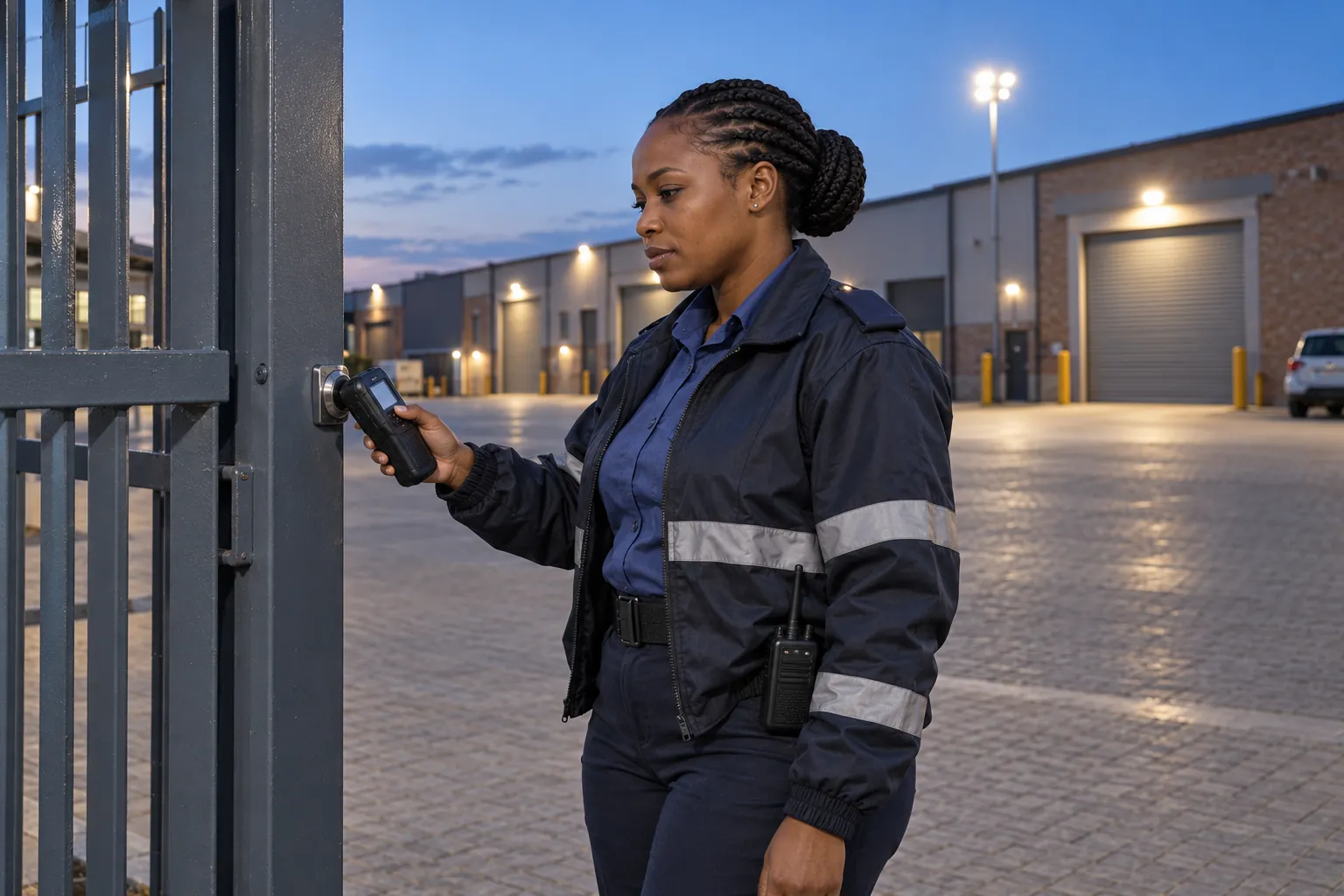
No South African law requires one, but the Private Security Industry Regulation Act and the PSIRA Code of Conduct require security businesses to supervise their officers properly and keep records of the service they render, and a patrol system is one of the commonest ways of doing both. This guide explains the main types fairly, what a patrol record can and cannot show, what PSIRA's rules and POPIA mean for the data, and the questions to ask before choosing one.
01
What a guard patrol system is, and what the law says about it
A guard patrol system, also sold as a guard tour system or guard tour monitoring system, records that a security officer visited set points on a patrol at set times. Each checkpoint on the route carries something the officer must interact with – a metal touch button, a proximity tag, an NFC tag, a QR code or a beacon – and each interaction is logged with the time and, usually, the officer's identity. The result is a patrol log showing which checkpoints were reached, in what order and when, and which were missed.
No South African law requires a guard patrol system. What the law does require is supervision and records. Under the Code of Conduct for Security Service Providers, 2003, made under section 28 of the Private Security Industry Regulation Act 56 of 2001:
- a security service provider must take reasonable steps to ensure that each security officer it employs and uses or makes available to render a security service "is properly managed, controlled and supervised" (regulation 11(5)(b));
- a security business must implement "systems and practices of management, control, supervision and administration" reasonably necessary for its size and services, to ensure "effective control over the rendering of security services" (regulation 13(2)(a));
- a provider must give a client sufficient and correct information on "the management, control and supervision of the rendering of the security service" when the client reasonably needs it (regulation 9(2)(f));
- an employer of in-house security officers, such as a shopping centre or hospital guarding its own premises, is subject to regulations 6, 7, 8, 11, 12 and 13 as far as they apply, including the supervision duties above (regulation 22(1)(b)).
The Code does not say how that supervision must be shown. Patrol frequencies and routes are set by the contract and the site instructions, which the guide to security officer duties explains, and a patrol system is one way a provider shows the client, and PSIRA, that the patrols it promised were walked.
02
The main types of guard patrol system
Most patrol systems sold in South Africa fall into a few families, some standalone and some built into wider security or workforce software. Each has a place.
- Touch-button readers: the officer carries a rugged handheld reader, often called a wand or baton, and touches it against a metal button fixed at each checkpoint. The reader stores the data, which is downloaded later at a docking station or by cable. They are simple, durable and work anywhere, including where there is no signal, but the record is only seen after the download.
- RFID proximity readers: the same idea with contactless tags, so the officer holds the reader near the tag. Some models send each read over the cellular network for near real-time monitoring; others store the data until they are docked.
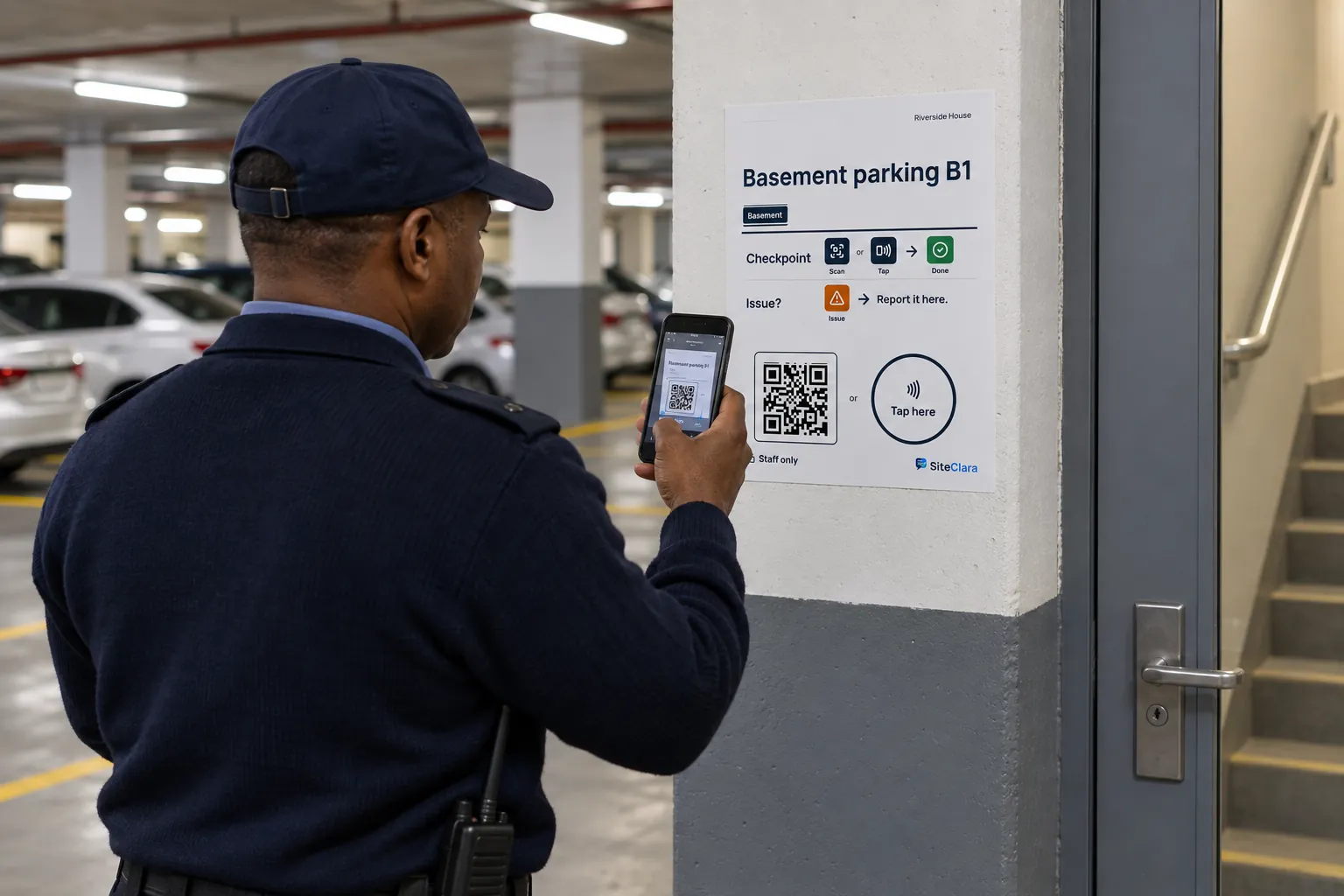
- Phone apps with NFC, QR codes or beacons: the officer taps an NFC tag, scans a QR code or passes a Bluetooth beacon with a phone running the app. Records are usually sent as they happen, and the app can add incident reports, photos, notes and checklists. Many also use GPS, which suits vehicle patrols across an estate or an armed response area.
- Online or wired systems: checkpoints wired into the building's access control, so the control room sees each read as it happens. They suit large, permanent sites with an existing security system.
- Combined devices: some handsets add a panic button, man-down or no-movement alerts, which makes them lone-worker devices as well as patrol recorders. That is a different job, and it deserves to be chosen on its own merits.
03
What a patrol system should record, and how long to keep it
Whatever the hardware, a good system lets you:
- Define tours: the checkpoints on each route, the order if it matters, and the times or frequency of each patrol, as the site instructions set them.
- Record each checkpoint with the time and the named officer, not just the device.
- Show missed checkpoints and late or incomplete tours plainly.
- Capture what was found: a note, a photo, a fault or an incident, at the checkpoint where it was seen.
- Alert a supervisor or the control room when a patrol is overdue, if the site needs that level of monitoring.
- Report to the client in a form the client will read: patrols completed against those scheduled, exceptions, and what was done about them.
- Keep and back up the data for as long as the law and the contract require.
That last point has a South African answer. Regulation 10(1) of the Private Security Industry Regulations, 2002 says every security business must keep "all the records and documents concerning the management, administration and other matters relating to the rendering of security service by it". Under regulation 10(2) they must be kept in a secure and orderly manner, available for PSIRA's inspection, for at least four years. Regulation 10(4) allows them to be kept electronically, provided an accurate, dated back-up copy is made separately on every day the business renders a service and a record changes or is added. Regulation 10(7) lists records that must be kept, including the attendance register and a daily posting sheet showing each officer, the client, the place and the hours; patrol logs are not named, but the general duty in regulation 10(1) is broad.
Section 34(1)(c) of the Act lets a PSIRA inspector use any computer system on the premises that appears to be used for the control or administration of a security service, access its data and reproduce records from it. A provider whose patrol data sits in a supplier's cloud should know how quickly it can produce four years of it, and in what form.
04
Questions to ask before choosing one
Supplier comparisons list features. The questions that decide whether a system works on your sites are more practical:
- What does the environment demand? Dust, rain, coastal salt, summer heat and how much abuse the device and the checkpoints will take.
- Is there signal everywhere on the route, and power during load shedding? Basements, parking garages, plant rooms and large steel buildings often have none. The system must work offline and send later without losing records.
- Whose device? A company handset, a dedicated reader or the officer's own phone. Each has cost, battery, data, security and policy consequences.
- Real time or after the shift? Real time lets a control room act on a missed patrol while it still matters. For some sites a report the next morning is enough.
- How are checkpoints fixed? Tags and codes need to be hard to remove or copy and placed where they can only be read by being there – a tag at the fence corner it proves was checked, not one inside the guardhouse.
- Do officers work alone? Section 8(2)(d) of the Occupational Health and Safety Act 85 of 1993 requires an employer to establish, as far as reasonably practicable, the hazards attached to the work and the precautions needed. A patrol recorder is not a lone-worker alarm; if the risk assessment calls for one, choose it separately.
- What about location tracking? The Protection of Personal Information Act 4 of 2013 (POPIA) counts "location information" as personal information. Section 10 allows processing only if it is "adequate, relevant and not excessive" for its purpose, and section 18 requires officers to be told what is collected and why.
- Who installs and services it? The Act's definition of security equipment includes "a satellite tracking device, closed circuit television or other electronic monitoring device", and installing, servicing or repairing security equipment is itself a security service. Whether a particular patrol system falls within that definition is a question for PSIRA or a lawyer, but a supplier who installs one on site can be asked whether it is registered.
- How will the client see the results? A portal nobody logs into is not client reporting.
- What does it cost over the contract? Hardware, subscriptions, tags, data, replacements and the time spent compiling reports.
05
Making patrol records mean something
A guard patrol system proves that someone was at a checkpoint at a time. It does not prove that they looked properly, tried the gate or noticed the cut in the palisade fence. The record is only as good as the patrol design and the supervision around it.
- Put checkpoints where the risk is: perimeter corners, the electric fence energiser, fire escapes, plant and generator rooms, stores, the far end of the parking area – the places that would otherwise be skipped.
- Write the route into the site instructions, with the times, so the officer, the supervisor and the client read the same plan.
- Vary the timing within those instructions, so patrols are not predictable to anyone watching.
- Attach a check to each point, such as gate locked, lights working, no water on the floor, so the scan records a task and not just a presence.
- Keep the OB in step: where the contract expects the occurrence book, patrols and what was found still go in it, and the two should agree.
- Read the data: the security supervisor should review missed and late checkpoints every day and ask why, as part of the security supervisor's duties.
- Act on what is found: faults reported on patrol need to reach the people who fix them.
- Keep visiting: unannounced post visits remain the best check that patrols are done well, not just done.
Used this way, patrol data answers the question the Code puts to a provider under regulation 13, whether its systems give it effective control over the service, and gives the client the information on supervision it is entitled to ask for under regulation 9(2)(f).
06
Where patrol records fail, and where SiteClara fits
Without a system, patrols are a line in the OB: "23:00 patrol complete, all correct", which reads the same whether the officer walked the perimeter or wrote it from the guardhouse chair. With a wand, the record may not be downloaded until the end of the week. Either way, a fault found at 02:00 often stays in the book rather than reaching maintenance.
SiteClara is a phone-based way to record that a checkpoint was reached and when. A printed QR poster, with an optional NFC tag behind it, goes at each checkpoint: a gate, a fence corner, a fire escape, a generator room. The officer scans the code or taps the tag on their own phone, with no app to install. At the checkpoint they see the checks due there and mark each one done or say what stopped them, and they can report a fault or incident with a photo. The time and the named officer are recorded as it happens, and a reported fault goes onto the team's list of open jobs until someone closes it.
The supervisor sees what was due, done and missed, and can record the reason a check was missed. Each day the supervisor reviews the totals and photos, adds a note and approves the daily report, which goes to nominated management or client contacts at 08:00 the next morning: what was reported, what was completed, what is still open and how the scheduled checks went.
07
Questions people ask
What is a guard tour monitoring system?
It is a guard patrol system under another name: checkpoints on a route, a reader or phone the officer uses at each one, and software that shows a supervisor or control room which checkpoints were reached, when and by whom, and which were missed. Section 1 of the Private Security Industry Regulation Act 56 of 2001 counts "a satellite tracking device, closed circuit television or other electronic monitoring device" as security equipment, and monitoring signals or transmissions from electronic security equipment as a security service; whether a particular patrol system falls within those words is a question for PSIRA or a lawyer.
What is the best guard patrol system?
No law or regulator names one. Regulation 13(2) of the Code of Conduct for Security Service Providers, 2003 asks a security business to implement systems of management, control and supervision reasonably necessary for its size, the number of officers it uses and the services it renders, to ensure "effective control over the rendering of security services". The best system is the one that meets that test on your sites: it works where your routes go, shows missed checkpoints the same day and gives the client a report they will read.
08
Further reading, and a list to take away
PSIRA publishes the Private Security Industry Regulation Act, the Private Security Industry Regulations, 2002 and the Code of Conduct together, and the Code of Conduct for Security Service Providers, 2003 on its own. The Department of Employment and Labour administers the Occupational Health and Safety Act. The Information Regulator's POPIA pages publish guidance and frequently asked questions on processing personal information, including information about employees.
Before choosing or changing a guard patrol system, check that:
- the patrol routes, checkpoints and times are written in the site instructions;
- checkpoints are at the places that matter, and can only be read by being there;
- the system keeps working without signal and through load shedding, and sends its records later;
- missed checkpoints are obvious to the supervisor the same day;
- faults found on patrol reach someone who will fix them;
- the data is kept and backed up as regulation 10 of the Private Security Industry Regulations requires, and can be produced for a PSIRA inspector;
- any location tracking is necessary, proportionate and explained to officers, as POPIA requires;
- lone-worker protection, if the risk assessment calls for it, is provided separately;
- the client gets a report they will actually read.
Sources
Every document this guide quotes or links to, in the order it first cites them.
- Code of Conduct for Security Service Providers, 2003 psira.co.za
- Private Security Industry Regulation Act 56 of 2001 gov.za
- Private Security Industry Regulations, 2002 psira.co.za
- Occupational Health and Safety Act 85 of 1993 gov.za
- Protection of Personal Information Act 4 of 2013 gov.za
- Private Security Industry Regulation Act 56 of 2001 acts.co.za
- Code of Conduct for Security Service Providers, 2003 acts.co.za
- Information Regulator's POPIA pages inforegulator.org.za
Related guides
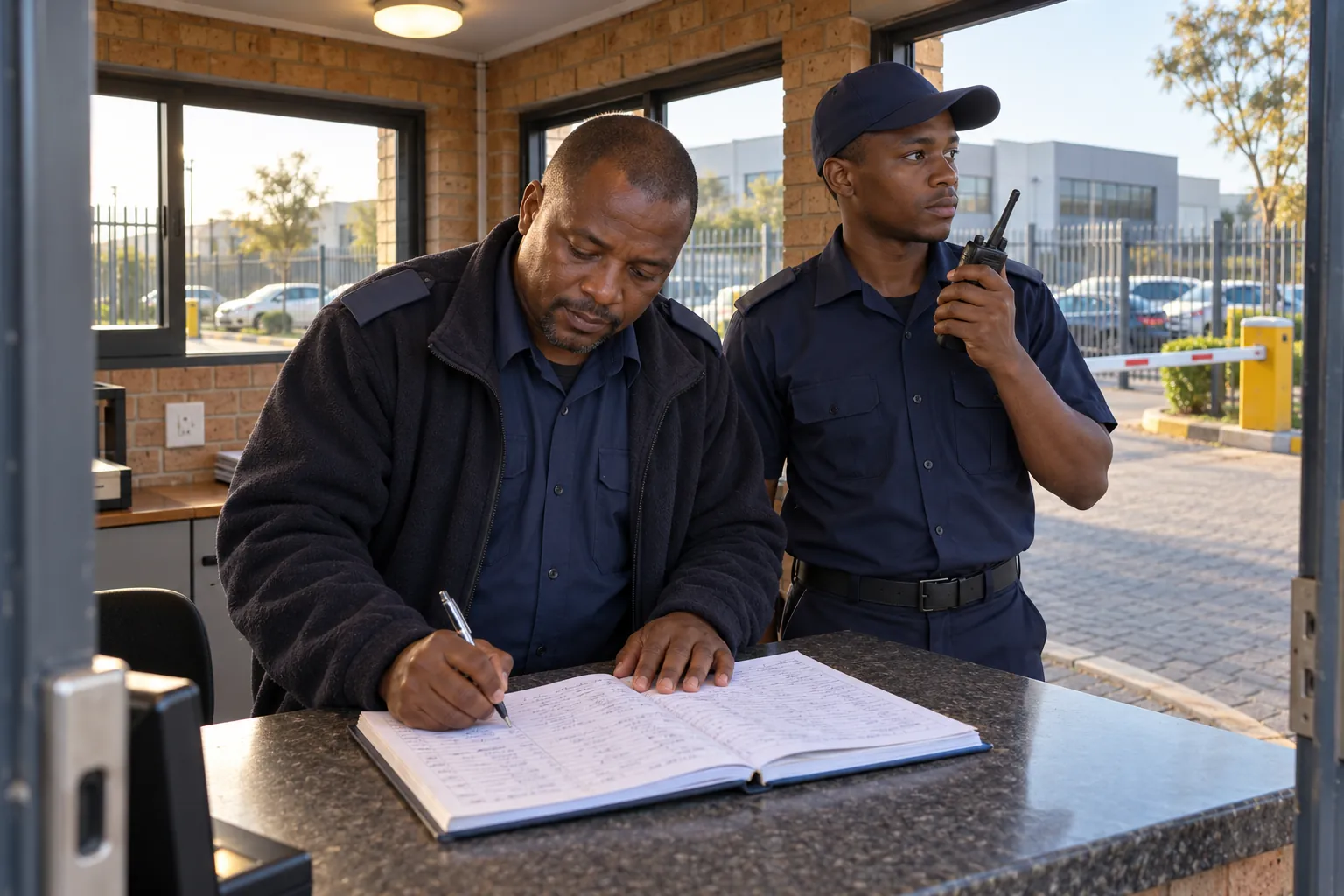 Security patrolsDuties of a security supervisor: what the role involves, and what PSIRA expectsWhat a security supervisor does in South Africa: the PSIRA Code's duty to supervise, grade B, post visits, the OB, incidents, discipline and the records behind them.
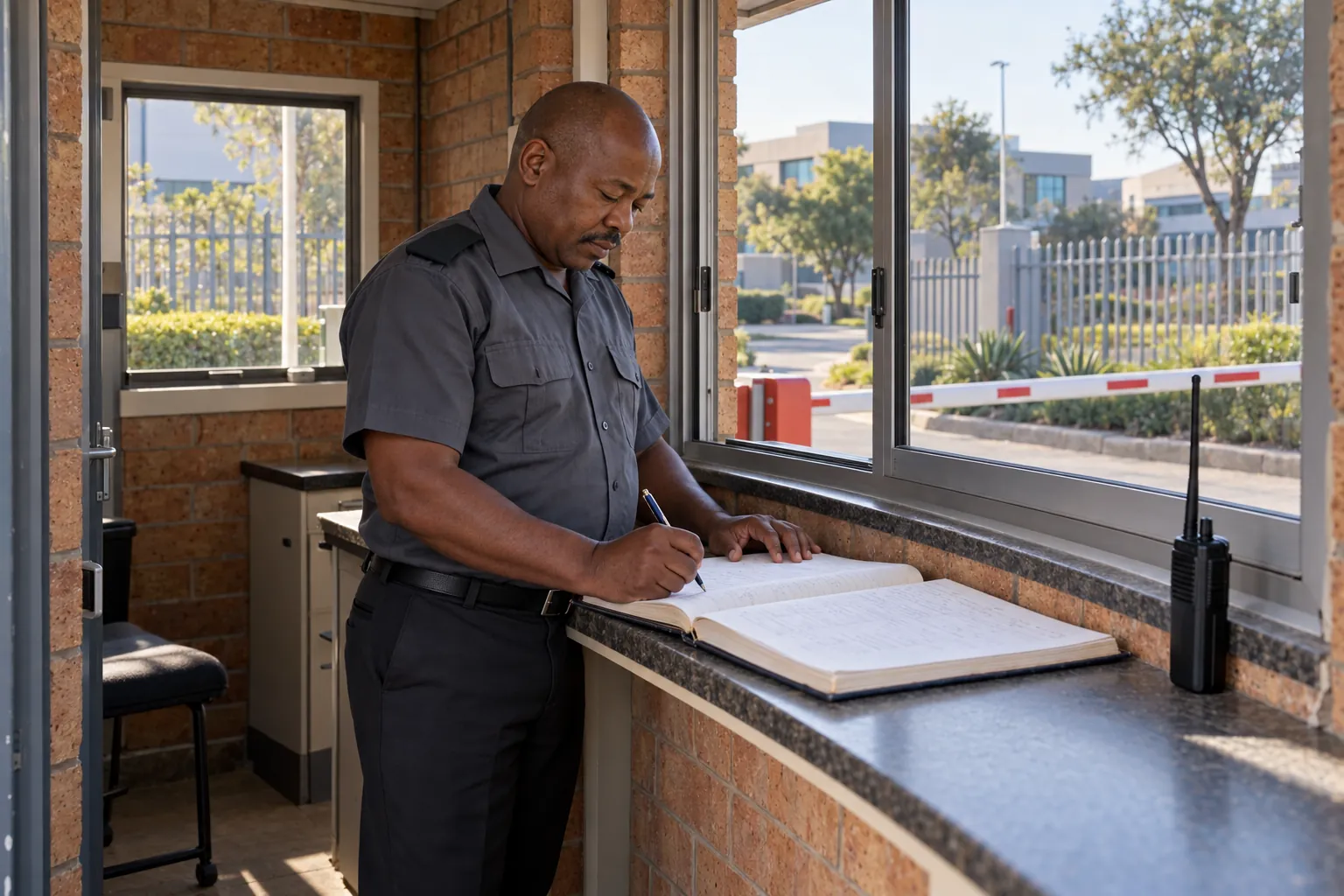 Security patrolsOccurrence book: what goes in the OB, and how to keep one that stands upThe security occurrence book (OB) in South Africa: what to record each shift, how to write entries, what PSIRA and the OHS Act require, and paper or electronic.
 Security patrolsSecurity officer duties and responsibilities: what the post involves, and how it is checkedSecurity officer duties in South Africa: PSIRA registration, patrols, access control, the OB, incidents, what officers may not do, and how duties are checked.
 Security patrolsControl room operator duties: what the job involves, and what the law expectsWhat a security control room operator does in South Africa: PSIRA registration, alarms and dispatch, the log, CCTV under POPIA and the records behind them.