Security patrols
Security officer duties and responsibilities: what the post involves, and how it is checked
A security officer's duties and responsibilities in South Africa are to protect people, property and assets on the site they are posted to – patrolling, controlling access, watching alarms and CCTV surveillance, responding to incidents and keeping the occurrence book – as a PSIRA-registered security service provider bound by the Code of Conduct for Security Service Providers, 2003.
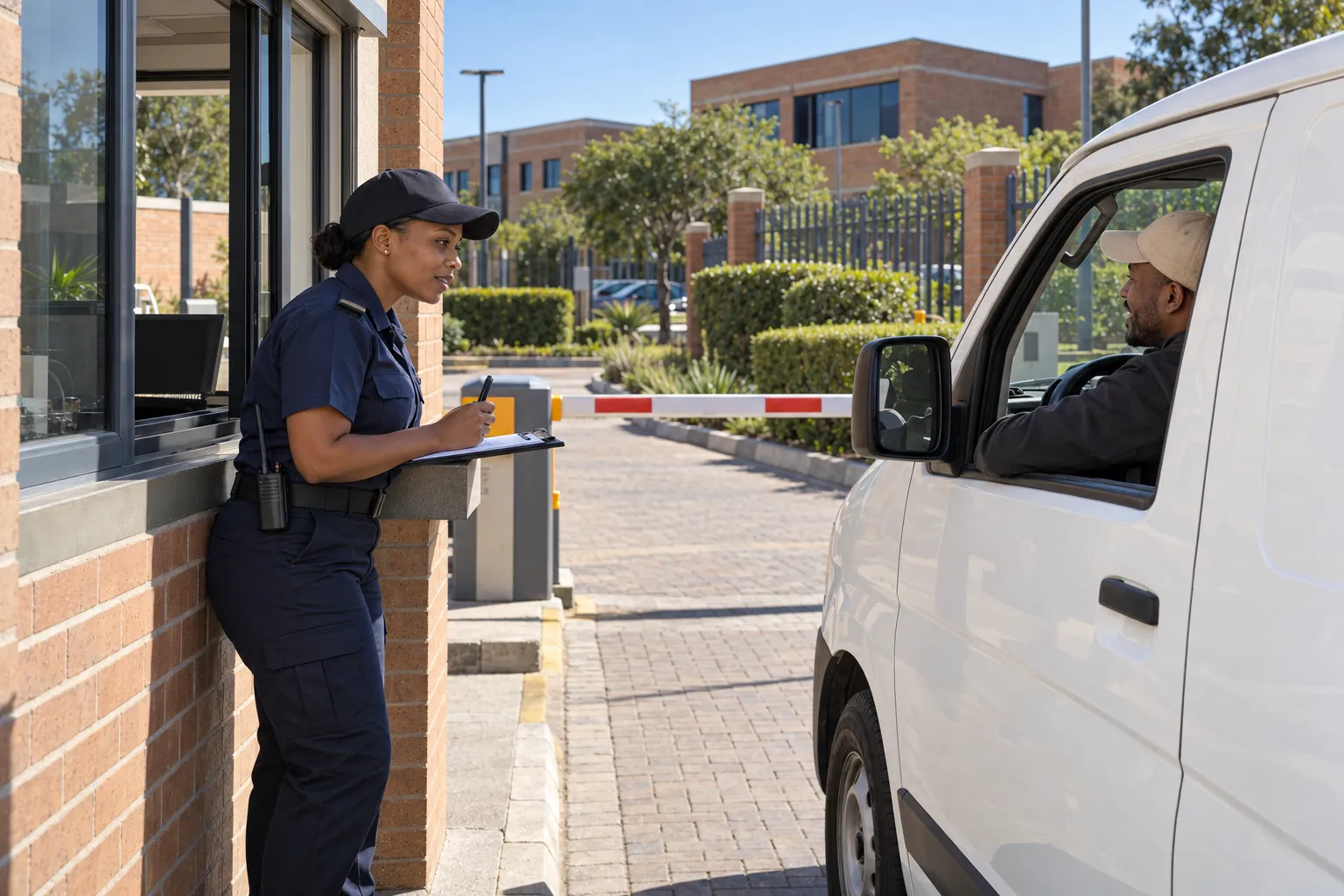
The job is simple to describe and hard to see: keep the site safe, and deal with whatever happens on the shift. This guide sets out what a security officer does, how the duties differ between sites, what an officer may not do, and how a client or supervisor can tell the duties are being carried out.
01
What a security officer is, and the registration behind the post
A security officer, or security guard – the two titles are used for the same job – is a person paid to protect people and property. Most are employed by a security company that supplies guarding to clients under contract; others are employed in-house to protect their employer's own premises. Either way, the work is regulated by the Private Security Industry Regulatory Authority (PSIRA) under the Private Security Industry Regulation Act 56 of 2001.
Section 1 of the Act defines a security service to include "protecting or safeguarding a person or property in any manner" and "providing a reactive or response service in connection with the safeguarding of a person or property in any manner". Section 20(1)(a) says no person may render a security service for remuneration, reward, a fee or benefit unless they are registered as a security service provider. Registration follows security training, and PSIRA's Training Division still lists the grades E to C and B to A set by board notices in 1995; the PSIRA grades guide explains what they mean for a post.
Once registered, an officer receives a certificate of identification, the PSIRA card. Regulation 9(5) of the Private Security Industry Regulations, 2002 says the officer must always carry it when rendering a security service or wearing a security company's uniform in public, and must produce it immediately when asked by the police, a PSIRA inspector, the client, a person the client has authorised in writing, or anyone else with a legitimate interest in the officer's registration and identity. Regulation 13 requires a guarding company to issue a standard uniform, which the officer must wear, with at least two badges naming the company and a badge on the front top of the uniform with the officer's name and registration number.
The Code of Conduct for Security Service Providers, 2003, made under section 28 of the Act, binds every security service provider, registered or not, and to the extent the Act provides, employers of in-house security officers, who under regulation 23(a) may only use registered, trained employees. Most of an officer's conduct duties are written there.
02
The core duties of a security officer
Regulation 8(3) of the Code puts the officer's purpose in one sentence: every security service provider "must endeavour to prevent crime, effectively protect persons and property". The detail of a security officer's job description changes from site to site, but the day-to-day tasks security officers perform are much the same everywhere:
- Being visible and alert: a uniformed, professional officer who is awake, at the post and paying attention is the simplest deterrent there is.
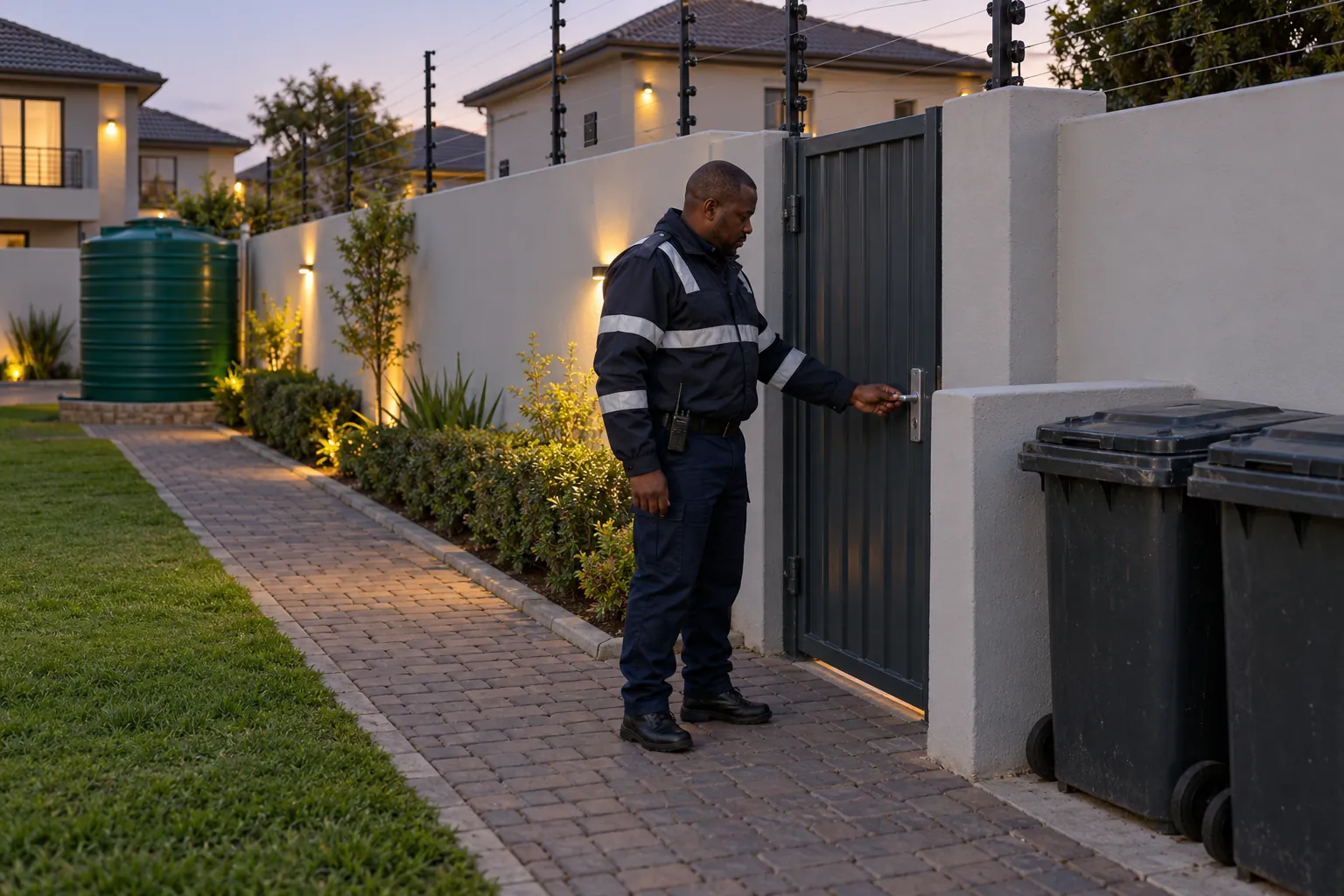
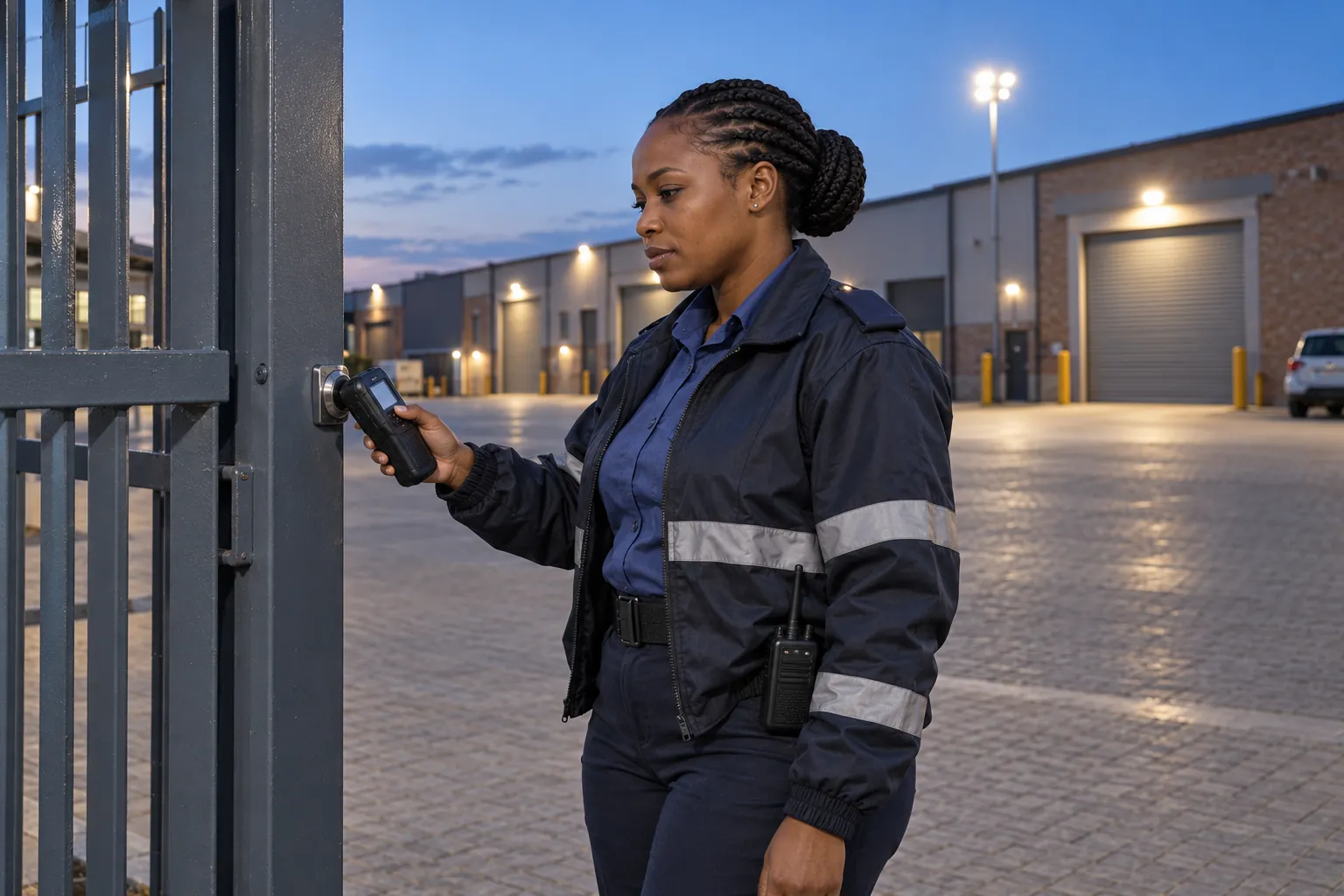
- Patrolling the buildings and grounds on the routes and at the times the site instructions set, and at irregular times too, checking doors, windows, gates, fences, fire exits and lighting.
- Access control: checking staff cards and permits, signing in visitors and contractors in the visitor register, searching vehicles or bags where the site's rules and the law allow it, and refusing entry to people who should not be there.
- Key control: issuing and recovering keys and access cards, and recording each one in the key register.
- Monitoring security systems and equipment: CCTV surveillance cameras, intruder alarms, access control panels, the electric fence energiser and the fire alarm panel where the site has them.
- Responding to alarms and incidents: investigating activations, handling trespassers, disputes and suspicious behaviour, calling armed response or the police when a situation needs them, and protecting a scene until they arrive.
- Responding to emergencies: fire evacuations, medical emergencies, floods and power failures, and meeting the emergency services at the gate.
- Keeping records: the occurrence book (the OB), patrol records, incident statements, key and visitor registers, and written reports that someone else can act on.
- Reporting faults and hazards: a gate motor that has failed, a broken lock, lights out in the car park, a leak or a blocked escape route, passed to whoever fixes them.
- Helping people: giving visitors directions and answers, and staying courteous under pressure.
- Handing over to the next shift: open incidents, keys out and faults reported, written in the OB and said in person.
03
How the responsibilities vary between sites
Security officers have different responsibilities on different sites, and the site instructions (sometimes called post instructions) are where those differences are written down. Some common settings:
- Office parks and business parks: the gatehouse and reception, visitor and delivery control, boom gates and parking, and locking-up patrols in the evening.
- Shopping centres and retail: a visible presence in the malls and parking areas, supporting store staff, dealing with shoplifting according to the client's procedure, and securing entrances at close.
- Sectional title complexes and residential estates: the main gate, visitor and contractor access under the body corporate's or HOA's rules, perimeter patrols along the wall and fence, and checking common property such as the clubhouse, pool and refuse area.
- Industrial sites and warehouses: the gatehouse, vehicle, driver and load checks, and patrols of yards, stores and loading bays, often through the night.
- Schools, campuses and hospitals: open sites with many entrances, where the job leans towards controlling access calmly, helping people and de-escalating rather than keeping everyone out.
- Construction sites and vacant buildings: perimeter and fence checks, gate control, and watching plant and materials against theft and trespass.
Many sites add duties of their own: checking that the standby generator has started and that gate motors, lighting and alarms are working when load shedding begins, walking the electric fence line, or unlocking for cleaners and contractors. Whatever they are, they belong in the site instructions, and where the client needs a particular PSIRA grade on a post, the contract should say so.
04
What a security officer may not do
Knowing the limits of the post is part of the job. PSIRA registration gives the holder no police powers, and the Code sets the limits plainly:
- No search, arrest or detention unless the law permits it. Regulation 8(2)(b) says a security service provider may not break open or enter premises, conduct a search, seize property, arrest, detain, restrain, interrogate, threaten or injure any person, or demand information or documents, unless the conduct is reasonably necessary in the circumstances and permitted by law. A search at the gate is normally a condition of entry the person agrees to; refusing entry is the remedy if they decline.
- Force only when necessary and lawful. Regulation 8(4) allows force only when its use, nature and extent are reasonably necessary in the circumstances and permitted by law.
- No claiming powers the officer does not have. Regulation 8(5) forbids holding oneself out as having any authority, power, training, registration or qualification one does not have.
- Firearms and weapons only when lawful. Regulation 8(6) and 8(7) allow a firearm or weapon to be carried and used only where the law permits it.
- No alcohol or drugs on duty. Regulation 8(13) forbids using or being under the influence of alcohol or a narcotic drug while rendering a security service.
- Client information stays confidential. Regulation 9(12) forbids disclosing confidential information about a client, including anything relevant to its security, without consent unless the law requires it.
When an officer does arrest someone, the power is the one every private person has under section 42 of the Criminal Procedure Act 51 of 1977: for example a person who commits or attempts a Schedule 1 offence in their presence, and, under section 42(3), a person found committing an offence on property, by the owner, occupier or person in charge or someone they have authorised. Section 50(1)(a) then says an arrested person must be brought to a police station as soon as possible. In practice the site instructions should say when to arrest, when to call the police instead, and that the officer's duty beyond that is to observe, protect the scene and record what happened.
Visitor registers, CCTV footage and incident reports hold personal information, so the Protection of Personal Information Act 4 of 2013 (POPIA) applies. Section 10 allows personal information to be processed only if, given its purpose, it is adequate, relevant and not excessive.
05
How duties are set, supervised and checked
An officer's duties on a site come from three places: the written contract between the security company and the client, which regulation 9(4) of the Code requires to be reduced to writing with a copy given to the client; the site risk assessment, which says what the security is for; and the site instructions, which tell the officer exactly what to do, when and how. On a site where the security company is a contractor, the client's section 37(2) agreement under the OHS Act usually sits alongside the contract.
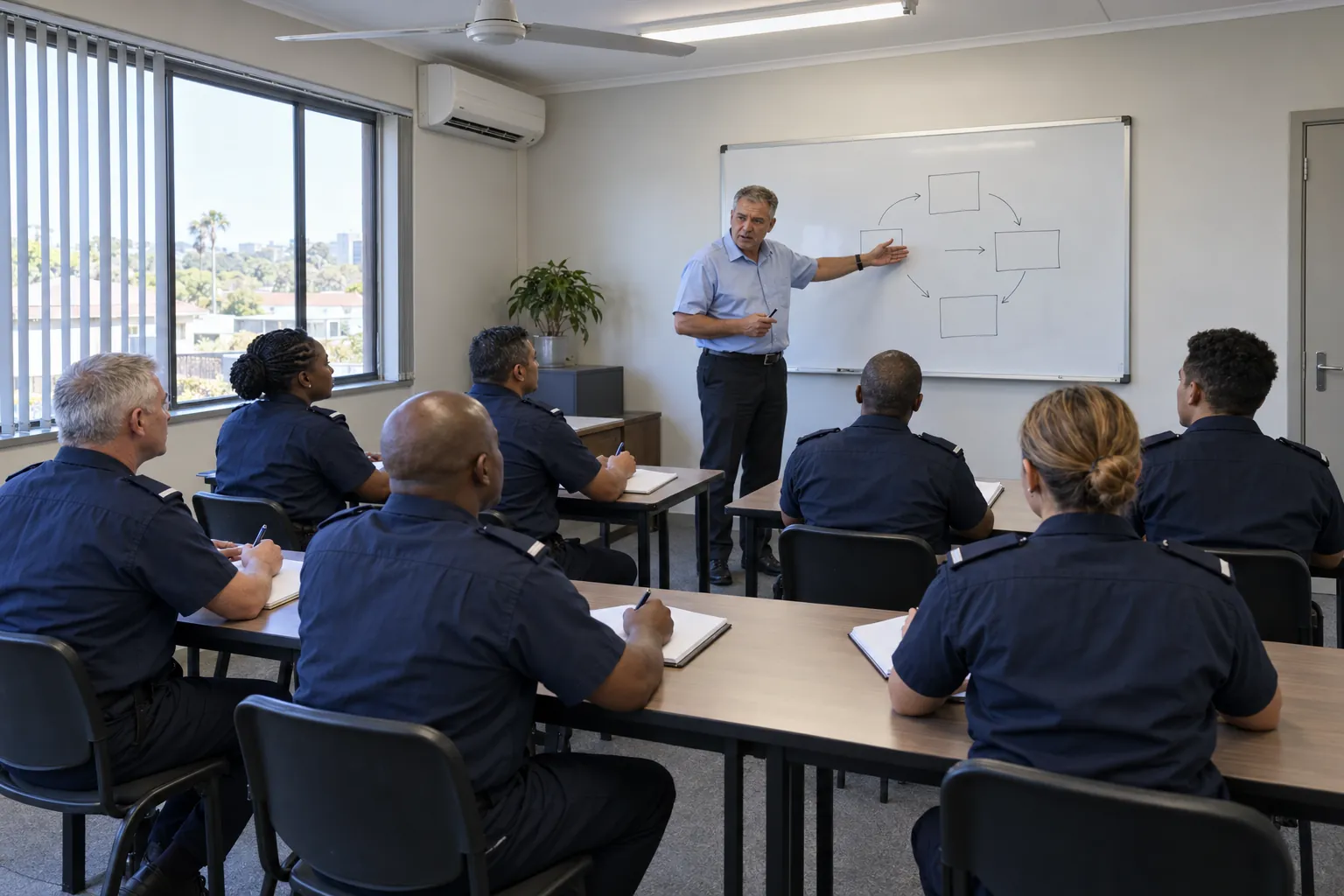
The Code puts the duty to brief and supervise on the employer. Regulation 11(5) says the security company must take reasonable steps to ensure each officer it deploys "has been properly informed about the nature and scope of his or her functions and duties as well as his or her legal powers in this regard" and "is properly managed, controlled and supervised", and has been lawfully provided with all the equipment necessary to render the security service, and regulation 11(7) requires training on the Code and the law regulating the private security industry at least once a year. Regulation 10(7) of the 2002 Regulations requires a guarding company to keep a daily posting sheet naming each officer, their registration number and the client and place served, and a description of each officer's duties in their personnel file.
The Occupational Health and Safety Act 85 of 1993 applies to officers as employees: section 14 requires them to report an unsafe or unhealthy situation to their employer or health and safety representative as soon as practicable, and any incident that may affect their health or has injured them by the end of that shift, unless that was not possible.
The security supervisor, or the company's site or area manager, then checks the work. The usual methods are:
- Supervisory visits, announced and unannounced and including at night, to check the officer is alert, in full uniform, carrying the PSIRA card and following the site instructions.
- Reading the records: the OB, incident reports and patrol records, for completeness and for patterns that point to a change in the site's risk.
- Patrol evidence: a guard patrol system or other record showing each checkpoint was visited, when and by whom.
- Registration checks: confirming each officer's PSIRA registration is current, which regulation 11(2) of the Code requires before employment; checking PSIRA registration shows how.
- Client meetings: complaints, incidents, response times and patrols done against patrols scheduled, reviewed with the client's representative.
06
Where the evidence of duties fails, and where SiteClara fits
Most of what a good security officer does leaves no trace. A patrol that finds nothing is written up as "all correct", and a client who never sees a problem may start to wonder what the contract is for. The OB entries written at 05:30 for the whole night, the faulty gate motor noted in the book but never passed to the managing agent, and the perimeter check nobody can prove happened are where trust in a security contract wears away.
SiteClara gives the routine duties a record. A printed QR poster, with an optional NFC tag behind it, sits at each checkpoint on the patrol: the main gate, a fire escape door, the generator room, a basement parking level, a corner of the perimeter fence. The officer scans the code or taps the tag on their own phone, with no app to install, and marks the scheduled check done, or explains what stopped them. The time and the named officer are recorded as it happens, with a photo when one is asked for. A fault or incident found on the patrol is reported there and goes onto the team's list of open jobs until someone closes it.
The security supervisor sees what is due, done and missed, and can record why a check was missed. At the end of the day the supervisor reviews the totals and photos, adds a note and approves the daily report, which goes to nominated management or client contacts at 08:00 the next morning, showing what was reported, what is still open and how the scheduled checks went.
07
Questions people ask
What are the basic duties of a security officer?
The basic duties of a security officer are to prevent crime and protect people and property. Regulation 8(3) of the Code of Conduct for Security Service Providers, 2003 says every security service provider must endeavour to prevent crime and effectively protect persons and property, and regulation 11(5) requires the employer to take reasonable steps to ensure each officer has been properly informed about the nature and scope of their functions and duties and their legal powers. The day-to-day tasks, such as patrols, access control and keeping the occurrence book, are set by the site instructions.
Does a security guard have to show their PSIRA card?
Yes. Regulation 9(5) of the Private Security Industry Regulations, 2002 requires an officer to carry the certificate of identification while on duty or in uniform in public, and to produce it immediately when asked by the police, a PSIRA inspector, the client, someone the client has authorised in writing, or any other person with a legitimate interest in checking the officer's registration and identity.
Can a security guard arrest you in South Africa?
A security guard can arrest a person only with the powers any private person has under section 42 of the Criminal Procedure Act 51 of 1977, such as for a Schedule 1 offence committed or attempted in their presence. The arrested person must be brought to a police station as soon as possible, and the Code forbids any arrest or detention that is not reasonably necessary and permitted by law.
08
Where to read the rules, and a list to take away
PSIRA publishes the Act, the 2002 Regulations and the Code of Conduct together. Its consumer awareness page lists what a client should check before appointing a security company: registration of the business and of every officer deployed, a letter of good standing, and registration with COIDA, the UIF, the Private Security Sector Provident Fund and the National Bargaining Council for the Private Security Sector.
Before an officer starts on a new post, check that:
- their PSIRA registration is current and their grade suits the post;
- they carry their PSIRA card and wear the full uniform with name and registration badges;
- they have read and signed the site instructions, including what they may and may not do;
- they know who to call for each kind of incident, including armed response, the police and the client's contact;
- they know how to write up the OB, incidents and faults, and who reads them;
- their supervisor has a plan for visits, record checks and the handover between shifts.
Sources
Every document this guide quotes or links to, in the order it first cites them.
- Private Security Industry Regulation Act 56 of 2001 gov.za
- Training Division psira.co.za
- Private Security Industry Regulations, 2002 psira.co.za
- Code of Conduct for Security Service Providers, 2003 psira.co.za
- Section 42 of the Criminal Procedure Act 51 of 1977 justice.gov.za
- Protection of Personal Information Act 4 of 2013 gov.za
- Occupational Health and Safety Act 85 of 1993 gov.za
- Consumer awareness page psira.co.za
Related guides
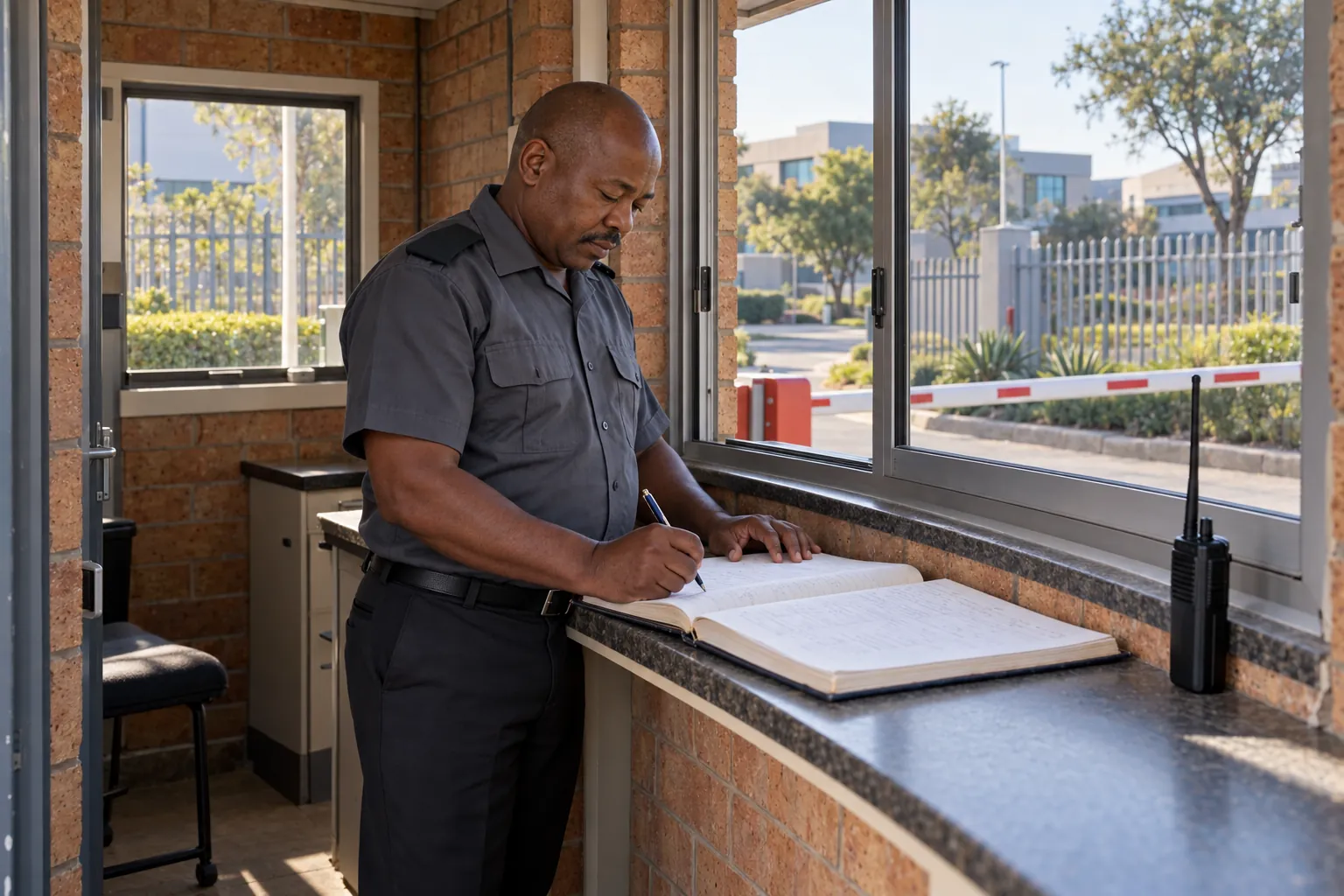 Security patrolsOccurrence book: what goes in the OB, and how to keep one that stands upThe security occurrence book (OB) in South Africa: what to record each shift, how to write entries, what PSIRA and the OHS Act require, and paper or electronic.
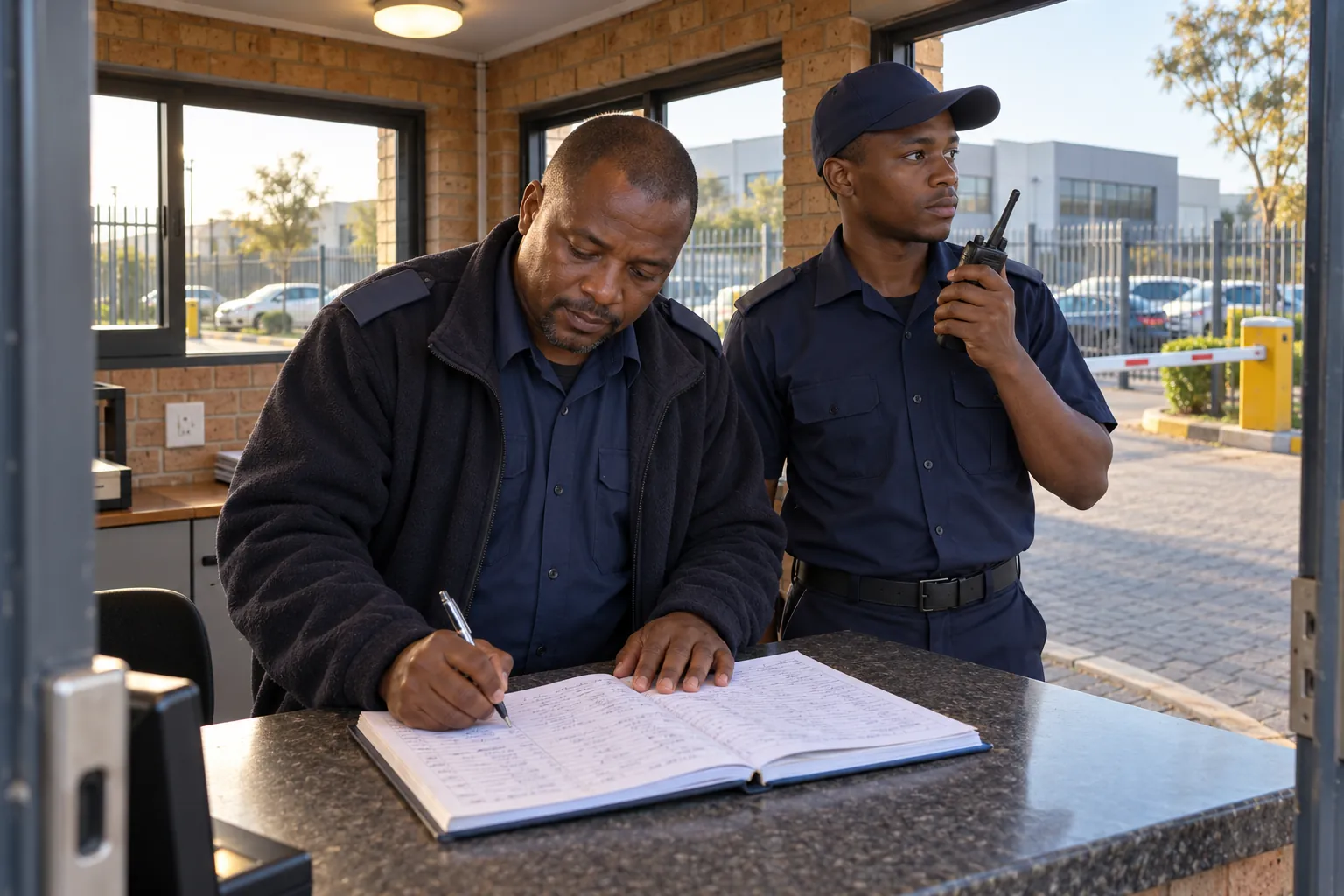 Security patrolsDuties of a security supervisor: what the role involves, and what PSIRA expectsWhat a security supervisor does in South Africa: the PSIRA Code's duty to supervise, grade B, post visits, the OB, incidents, discipline and the records behind them.
 Security patrolsGuard patrol systems: how they work, what they prove, and how to choose oneHow a guard patrol system records security patrols in South Africa: wands, RFID, NFC, QR and GPS, what PSIRA and POPIA mean for the data, and what to ask.
 Security patrolsPSIRA grades: what grades E to A mean, and which grade a post needsPSIRA grades E to A explained for clients and security providers: where the grades come from, what each covers, which grade a post needs and how to check it.