Premises and facilities management
Health and safety representatives: who needs them, and what they do
A health and safety representative, often called a SHE rep or safety rep, is a full-time employee designated in writing by the employer under section 17 of the Occupational Health and Safety Act 85 of 1993, and every employer with more than 20 employees at a workplace must have at least one.
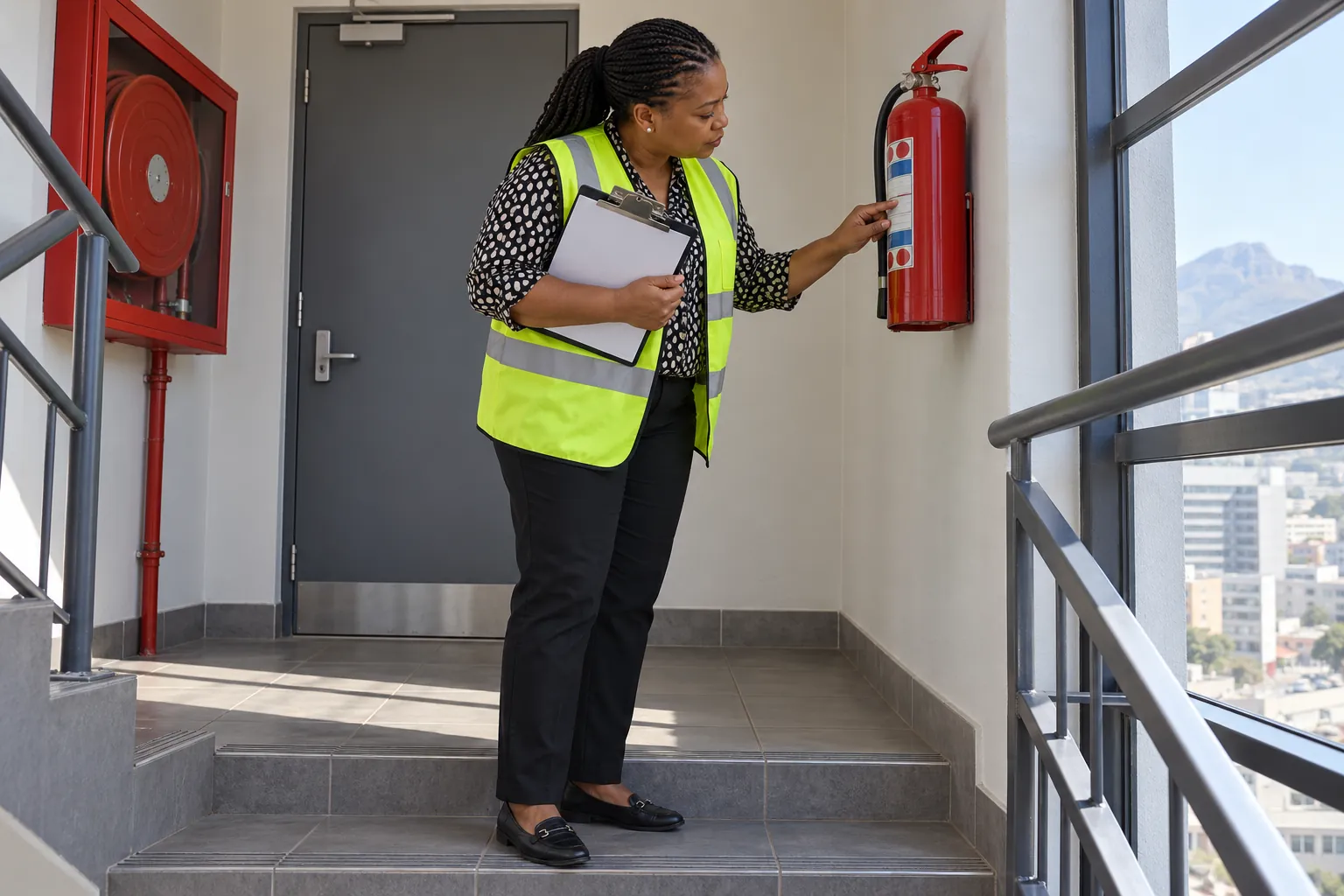
The representative speaks for the people who work there on health and safety: they inspect the workplace, look into complaints and incidents with the employer, and take what they find to the employer, the health and safety committee or, if that fails, an inspector. This guide covers when a workplace needs representatives and how many, how they are chosen and designated, what they may do, and how the inspection round and its findings are best recorded.
01
What the OHS Act says about health and safety representatives
The role is created by section 17 of the Occupational Health and Safety Act 85 of 1993 (the OHS Act), which the Department of Employment and Labour enforces. Section 1 defines a health and safety representative simply as "a person designated in terms of section 17 (1)". Section 17(1) says that every employer "who has more than 20 employees in his employment at any workplace" shall "designate in writing for a specified period health and safety representatives for such workplace, or for different sections thereof".
The designation has to happen within four months of commencing business, or from the time the number of employees at the workplace passes 20. A workplace, for the Act, is "any premises or place where a person performs work in the course of his employment": an office block, a school, a shopping centre, a warehouse, a hospital or a residential estate's maintenance yard all qualify.
The detail of how representatives are chosen sits in the General Administrative Regulations, 2003 (Government Notice R. 929 of 25 June 2003), regulations 6 and 7. What representatives may do is in section 18, and the health and safety committee they sit on is in sections 19 and 20.
A health and safety representative is not the same as the manager the chief executive officer appoints to carry the employer's duties. That is a section 16(2) appointment: the appointee acts for the employer, under the chief executive officer's control. A representative acts for the employees. A workplace needs both, and one person should not be asked to be both.
In practice the representative is the link between the workers and management. The Department describes the Act as built on communication and cooperation between workers and the employer, and the representative carries much of that communication, while the employer's own duties under the Act, starting with the section 8 duty to provide and maintain a safe working environment, stay with the employer.
02
Which workplaces need representatives, and how many
The threshold is more than 20 employees at a workplace. Below that, the Act does not require a representative, although an inspector may direct one (see below). Above it, section 17(5) sets the minimum number:
- Shops and offices: at least one health and safety representative for every 100 employees or part thereof. The Department's own worked example: one representative for 21 to 100 employees, two for 101 to 200.
- All other workplaces: at least one for every 50 employees or part thereof. One for 21 to 50 employees, two for 51 to 100.
- More when an inspector says so: under section 17(6), an inspector who thinks the number is inadequate, including at a workplace with 20 or fewer employees, may direct the employer in writing to designate more.
- More by agreement: the employer and employees may agree to designate more than the minimum.
A representative may be designated for the whole workplace or for a section of it, such as a floor, the basement parking or the night shift.
Employees who work somewhere other than the place they ordinarily report for duty are counted, under the proviso to section 17(5), at the workplace where they report. That matters for mobile teams such as patrol officers, maintenance technicians and cleaning teams who move between buildings.
It matters too for outsourced services. A contract cleaning or security company is the employer of its own cleaners and officers, so the duty to designate its representatives is the contractor's, not the client's. A client building may therefore have several sets of representatives: the owner's or tenant's own, and those of each contractor large enough to need them. How the contractor's health and safety arrangements are agreed with the client is the subject of a section 37(2) agreement.
03
How representatives are chosen and designated
Representatives are not simply picked by management. Regulation 6 of the General Administrative Regulations requires the employer, within four months of commencing business, to meet the registered trade unions at the workplace "to consult or bargain in good faith" and conclude an agreement on:
- the nomination or election of health and safety representatives;
- their terms of office, and the circumstances and manner in which they may be removed;
- how vacancies are filled;
- how representatives must perform their functions under the Act; and
- the facilities, training and assistance to be provided to them under section 18(3).
Where there is no registered trade union, the employer consults all the employee representatives at the workplace instead. If no agreement is reached on how representatives are nominated and elected, regulation 6 treats it as a dispute that any party may refer to the CCMA or the bargaining council, first for conciliation and then, if still unresolved, for arbitration. Regulation 7 then requires the designation itself to follow the agreement.
Section 17(4) limits who can serve: only employees "employed in a full-time capacity at a specific workplace and who are acquainted with conditions and activities at that workplace or section thereof". A part-time worker, a temporary visitor from head office or a person who has never worked in that section is not eligible for it.
The designation itself should be a letter that records at least:
- the representative's name and job;
- the workplace or section they are designated for;
- the period of the designation, which section 17(1) requires to be specified;
- how they were nominated or elected, with reference to the agreement; and
- the facilities and training agreed for them.
Section 17(7) says that all activities connected with the designation, functions and training of representatives are performed during ordinary working hours, and time reasonably spent on them counts for all purposes as time spent working. Section 18(3) requires the employer to provide the facilities, assistance and training that a representative reasonably requires and that have been agreed.
04
What a health and safety representative may do
Section 18(1) lists what a representative may do for the workplace or section they are designated for. The Act's word is "may": these are powers the representative can use, not a list of tasks they are punished for missing. They may:
- review the effectiveness of health and safety measures;
- identify potential hazards and potential major incidents;
- examine the causes of incidents, in collaboration with the employer;
- investigate complaints by any employee about that employee's health or safety at work;
- make representations to the employer or the health and safety committee on those matters and, where that is unsuccessful, to an inspector;
- make representations to the employer on general matters affecting employees' health or safety;
- inspect the workplace, including any article, substance, plant, machinery or health and safety equipment, at intervals agreed with the employer, after giving reasonable notice (the employer may be present);
- take part in consultations with inspectors and accompany them on inspections;
- receive information from inspectors; and
- attend the meetings of the health and safety committee they belong to.
Section 18(2) adds entitlements: to visit the site of an incident at all reasonable times, attend any investigation or formal inquiry under the Act, inspect any document the employer must keep under the Act so far as the representative reasonably needs to, accompany an inspector, be accompanied by a technical adviser with the employer's approval (which may not be unreasonably withheld), and take part in any internal health or safety audit.
Section 13 requires the employer to tell representatives beforehand about inspections an inspector has notified, and as soon as reasonably practicable about an incident in their area. Section 14 requires every employee to report an unsafe or unhealthy situation as soon as practicable to the employer or the representative, who passes it to the employer.
Regulation 9 of the General Administrative Regulations requires every incident reportable under section 24, and any other that needed medical treatment other than first aid, to be entered in the Annexure 1 record, kept for at least three years, and investigated within 7 days by the employer, a person the employer appoints, a health and safety representative or a committee member. See the guide to incident reporting and investigation.

05
The inspection round, the committee and the records
The Act fixes no frequency for a representative's inspection: section 18(1)(g) leaves it to the intervals "agreed upon with the employer". The regulation 6 agreement, or the designation letter, is the place to write the interval down, together with the area covered and who the findings go to. Settle it once, and the round then happens on schedule rather than when someone remembers.
A useful inspection round is short, repeatable and specific to the building. For an office block or shopping centre it will usually cover:
- escape routes, stairwells and fire doors: clear, and closing properly;
- fire extinguishers and hose reels in place, with service labels in date;
- first aid boxes stocked;
- ablutions clean, supplied and working;
- electrical hazards: damaged plugs, overloaded multiplugs, open distribution boards;
- floors, stairs and walkways: trip hazards, spills and lighting;
- storage, and chemicals stored and labelled;
- the generator room and other plant areas, where the representative's area includes them; and
- whatever has changed since the last round.
Good evidence of an inspection shows where the representative went, when, what they found at each point, and what happened next. A finding with a date, a location and a photograph is harder to lose than a line on a clipboard sheet, and a finding that is tracked until someone puts it right is worth more than a long list of observations that nobody acts on. A workplace safety inspection checklist gives a starting list to adapt.
Where two or more representatives have been designated, section 19 requires the employer to establish one or more health and safety committees. Every representative sits on at least one and participates as a member, and the employer's nominees may not outnumber them. The committee meets at least once every three months, must discuss every incident in which a person was injured, became ill or died, and under section 20(2) keeps a record of its recommendations and reports to an inspector, which regulation 5 requires the employer to keep for at least three years. The health and safety committee guide covers the meetings. A committee that receives each representative's findings, with what is fixed and what is still open, can spend its meeting on what needs a decision.
06
Where the record fails
The representative's round is where the record most often fails. The checklist is filled in at a desk from memory, with the same ticks every time. A representative on the night shift reports a broken emergency light to the day supervisor, who mentions it to the building manager, who assumes the maintenance contractor already knows. By the committee meeting nobody can say when it was found, who was told, or whether it was ever fixed.
SiteClara is built for the recording part of that. A printed QR poster, with an optional NFC tag behind it, is placed at each point on the round: the stairwell, the first aid box, the ablutions, the generator room. The representative scans it with their own phone, with no app to install, sees what is to be checked there, and marks each check done or says what stopped them, with a photograph when one is asked for. The record shows which point was checked, by whom and when, and a check that was due and not done shows as not done. A problem reported at a tag goes onto the list of open jobs for the team responsible, and stays there until someone closes it, so the committee can see what was found and what is still open.
07
Questions people ask
Do health and safety representatives get paid extra?
The Occupational Health and Safety Act 85 of 1993 does not require an extra allowance for representatives. What section 17(7) requires is that their designation, functions and training happen during ordinary working hours, and that time reasonably spent on them counts for all purposes as time spent working, so a representative is paid as normal for it. Any allowance on top is a matter for the employer's agreement with the employees.
What qualifications does a health and safety representative need?
The Occupational Health and Safety Act 85 of 1993 sets no formal qualification and no particular course. Section 17(4) requires the representative to be employed full time at that workplace and to be acquainted with its conditions and activities.
Training is part of the arrangement: section 18(3) requires the employer to provide the training a representative reasonably requires and that has been agreed, and regulation 6 of the General Administrative Regulations, 2003 puts that training in the agreement reached before representatives are designated.
Is a health and safety representative liable if something goes wrong?
Not merely for failing to act. Section 18(4) of the Occupational Health and Safety Act 85 of 1993 says a representative shall not incur any civil liability by reason only that they failed to do anything they may or are required to do under the Act. The employer's own duties under the Act stay with the employer. Section 26 also protects representatives: an employer may not dismiss an employee, reduce their pay or worsen their conditions because they did something they may or must do under the Act.
Does a workplace with fewer than 20 employees need a safety rep?
Not automatically. The duty in section 17(1) of the Occupational Health and Safety Act 85 of 1993 applies to an employer with more than 20 employees at a workplace, but under section 17(6) an inspector may direct an employer to designate representatives at a workplace with 20 or fewer employees if they consider the number inadequate.
08
Where to read the official guidance, and a list to take away
The Occupational Health and Safety Act 85 of 1993 is published on the South African Government website, with the Occupational Health and Safety Amendment Act 181 of 1993 that changed sections 17 and 18. The General Administrative Regulations, 2003 are there too. The Department of Employment and Labour explains the roles of representatives and committees in plain terms in its booklet What every worker and employer should know about health and safety in the workplace. Regulation 4 requires an employer with five or more employees to keep a copy of the Act and the relevant regulations readily available at the workplace.
To check that your workplace has its health and safety representatives in order:
- count the employees at each workplace, and at each section, and check the number of representatives against section 17(5);
- if you use contractors, check that each contractor large enough to need representatives has designated them;
- keep the regulation 6 agreement on file, covering nomination or election, term of office, vacancies, functions, facilities and training;
- give each representative a written designation naming their area and a specified period, and diary the renewal;
- check that every representative is a full-time employee acquainted with the area they cover;
- agree the interval for inspections in writing, and record each round with the date, the points visited and what was found;
- track each finding until it is put right, and bring the open ones to the committee; and
- where there are two or more representatives, set up the committee and hold a meeting at least every three months, keeping its records for three years.
Sources
Every document this guide quotes or links to, in the order it first cites them.
- Occupational Health and Safety Act 85 of 1993 gov.za
- General Administrative Regulations, 2003 gov.za
- Occupational Health and Safety Act 85 of 1993 labour.gov.za
- General Administrative Regulations, 2003 labour.gov.za
- What every worker and employer should know about health and safety in the workplace labour.gov.za
Related guides
 Premises and facilities managementHealth and safety committees: members, meetings and recordsWhen a workplace needs a health and safety committee under section 19 of the OHS Act, who sits on it, how often it meets, and the records it must keep.
 Premises and facilities managementThe 16.2 appointment: what the CEO hands over under the OHS Act, and what they keepWhat a 16.2 appointment under the OHS Act 85 of 1993 is, who can hold one, what goes in the letter, and the records that show the duties are being carried out.
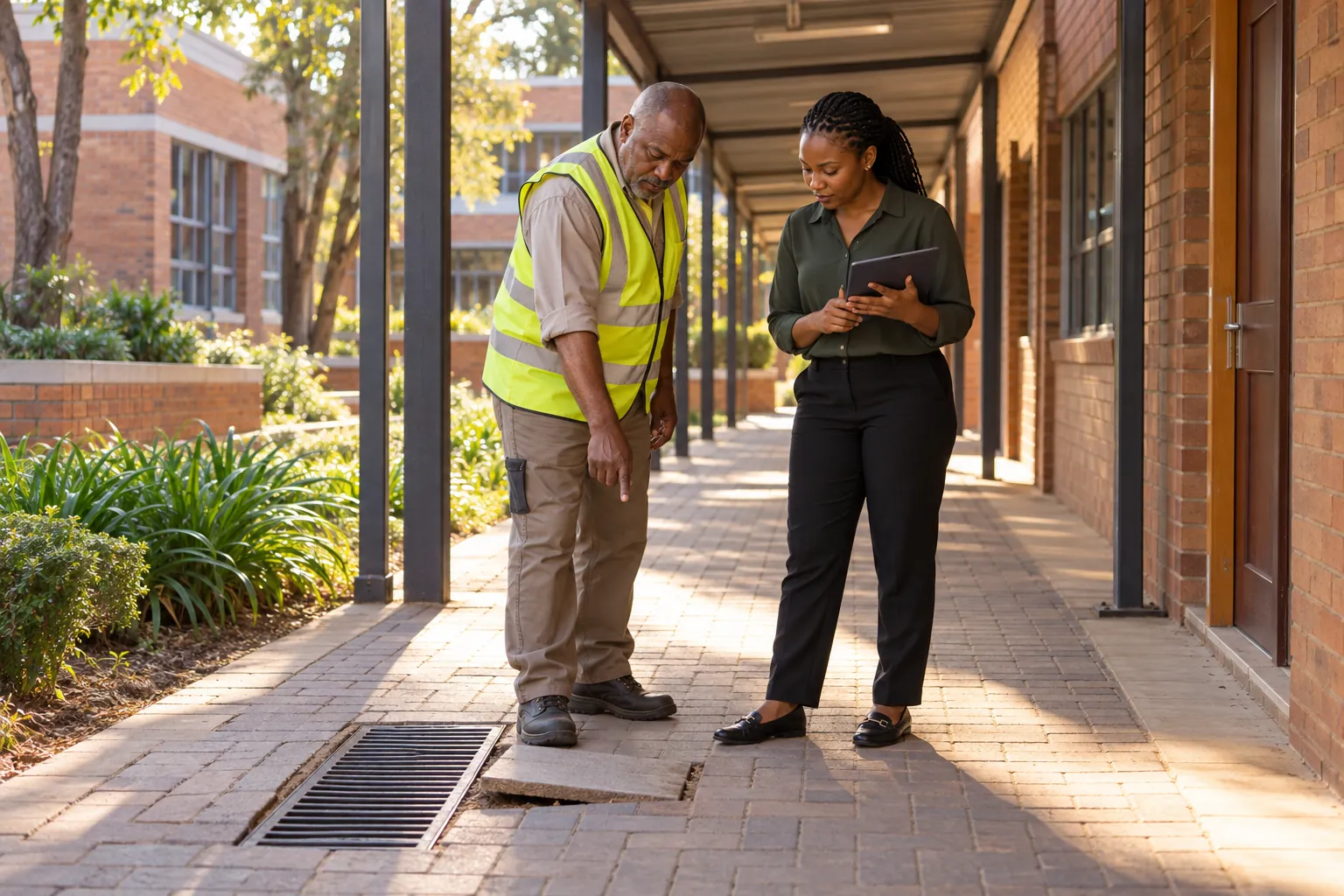 Premises and facilities managementHealth and safety inspection checklist: what to look at, and what to do nextWhat a workplace health and safety inspection should cover in South Africa, how often, who inspects, and how to record and close findings under the OHS Act.
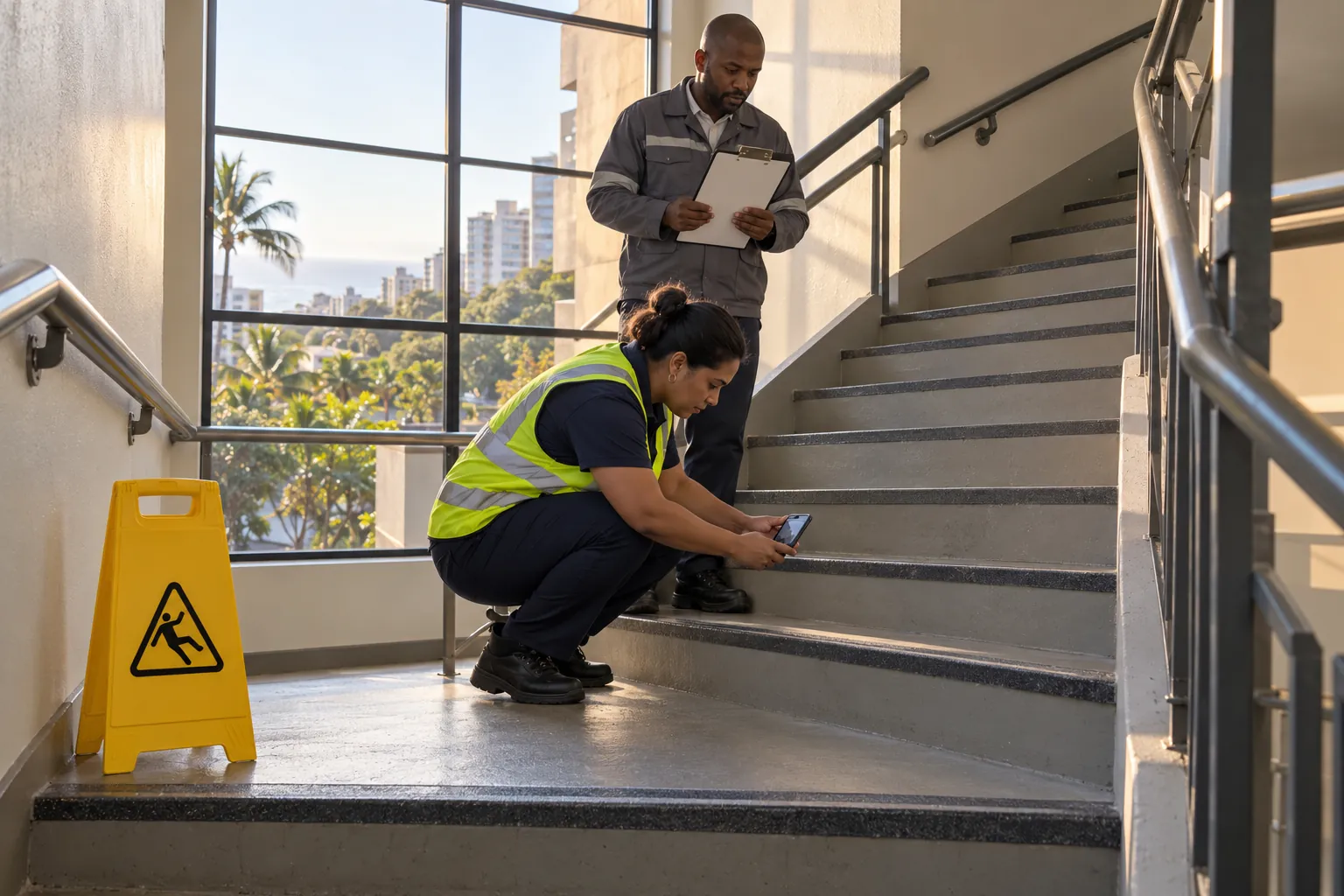 Premises and facilities managementIncident reporting and investigation under the OHS ActSection 24 of the OHS Act, the regulation 8 reporting clocks, the Annexure 1 incident register and the seven-day investigation, for cleaning, security and FM teams.