Premises and facilities management
Health and safety inspection checklist: what to look at, and what to do next
A health and safety inspection checklist is the list of items checked on a planned walk round a workplace – escape routes, fire equipment, first aid boxes, electrical hazards, housekeeping, chemicals and ablutions among them – to find hazards and confirm that they have been made safe.
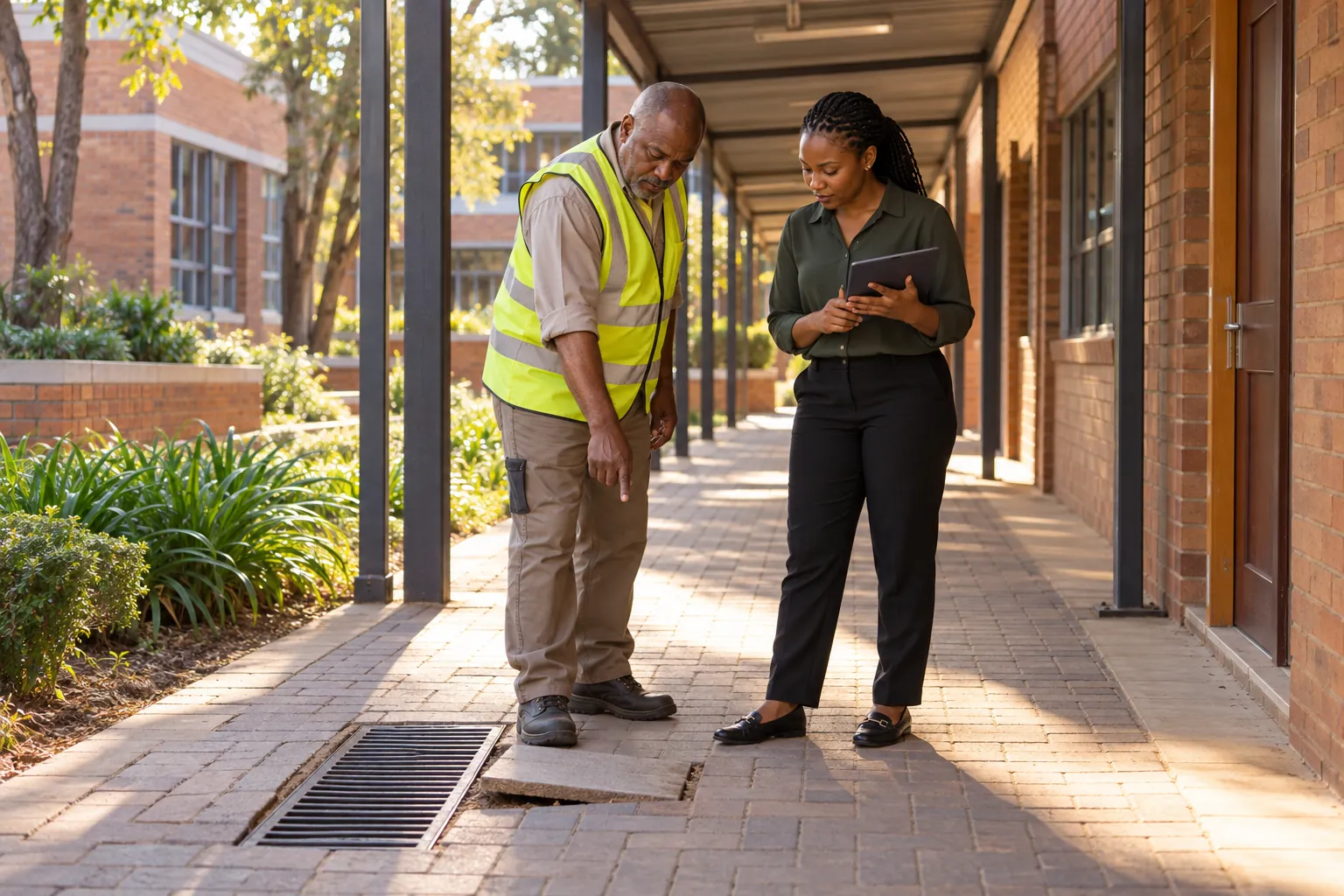
In South Africa it is the usual way an employer shows it is meeting its duty under section 8 of the Occupational Health and Safety Act 85 of 1993 to identify hazards and deal with them. No regulation prescribes one form or one frequency for a general inspection, so the checklist is built from the regulations that apply to the building. This guide covers the law behind the inspection, what to look at and the rule behind each item, how often to inspect and who should do it, how to record findings so they are closed, and where the representatives and committee fit in.
01
What the OHS Act says about workplace inspections
Section 8(1) of the Occupational Health and Safety Act 85 of 1993 (the OHS Act) requires every employer to "provide and maintain, as far as is reasonably practicable, a working environment that is safe and without risk to the health of his employees". Section 8(2) says what that includes, and three of its paragraphs describe what an inspection is for: establishing what hazards are attached to the work, the substances and the plant, and what precautions they need (section 8(2)(d)); removing or reducing a hazard before resorting to personal protective equipment (section 8(2)(b)); and enforcing the measures that are necessary in the interest of health and safety (section 8(2)(h)).
Regulation 2(1) of the General Safety Regulations, as amended by Government Notice 5954 of 6 March 2025, is more direct: every employer "shall make an evaluation of the risk attached to any condition or situation" to which people at the workplace are exposed, "and he shall take such steps as may under the circumstances be necessary to make such condition safe". A risk assessment finds the hazards on paper; a regular inspection checks that conditions on the ground still match it.
The duty sits with the employer and, under section 16(1), with the chief executive officer, who may assign duties to a person under their control under section 16(2). That section 16(2) appointment usually owns the inspection programme on site.
Two others may inspect the same workplace. A health and safety representative may, under section 18(1)(g), inspect it, "including any article, substance, plant, machinery or health and safety equipment", at intervals agreed with the employer, after giving reasonable notice. And an inspector of the Department of Employment and Labour may, under section 29(1), enter premises "without previous notice, at all reasonable times", require any record to be produced and ask for an explanation of any entry in it.
The Act prescribes no checklist and no frequency for a general inspection. The content comes from the specific regulations that apply to the building, set out below.
02
What a health and safety inspection checklist covers, and the rule behind each item
A general inspection of an office block, school, shopping centre or estate's common areas usually covers these items. Add the hazards your hazard identification and risk assessment names for each area, and drop what does not apply.
- Housekeeping and floors: every indoor workplace kept "clean, orderly and free of materials, tools and similar things which are not necessary for the work", floors, walkways, stairs and passages in good repair, "skid-free and free of obstructions", openings and open sides from which people could fall boarded over, fenced, or enclosed with rails or guards, and, where machinery is used, clear and unobstructed space at every machine (General Safety Regulations, regulation 13H, inserted in 2025). See workplace housekeeping.
- Escape routes and exit doors: every door on a way out "kept clear and capable of being easily and rapidly opened from inside", fire escape stairs clear of any material, and handrails on stairs (regulation 13J(1)). Municipal by-laws add to this: the City of Cape Town Community Fire Safety By-law forbids obstructing an escape route (section 15) or wedging a fire door so that it cannot close (section 14). Other municipalities' by-laws differ in detail.
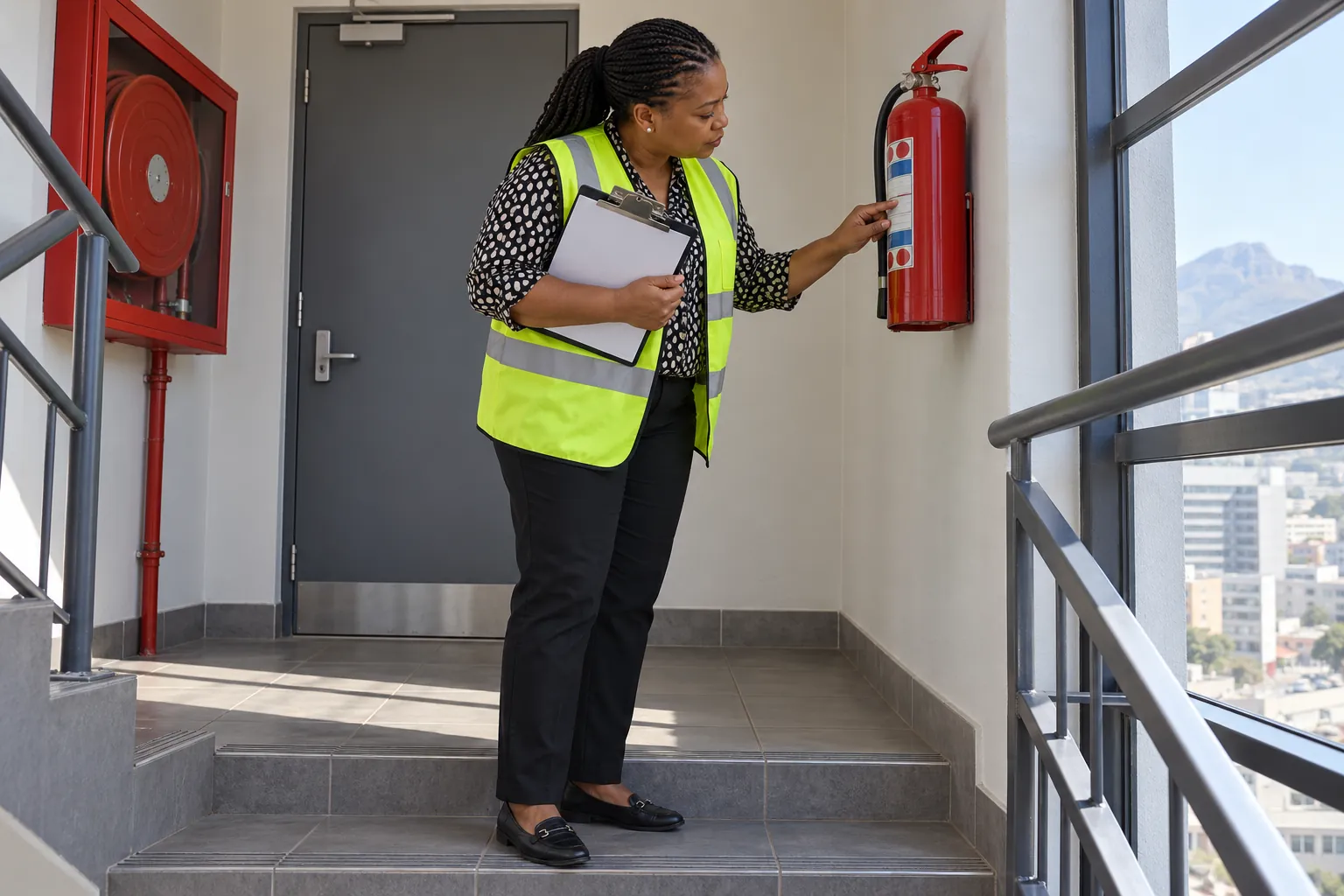
- Fire-fighting equipment: suitable equipment at strategic locations, "maintained in good working order" (regulation 13J(2)): in place, unobstructed, seals intact, service labels current. The annual service is a separate job for a permit holder; see the fire extinguisher checklist.
- Emergency lighting: "kept clean, in good working order and tested for efficient operation at intervals of not more than 3-months" (Physical Agents Regulations, 2024, regulation 11(6)(e)).
- First aid: where more than five employees work, a stocked first aid box at or near the workplace, and where more than ten work, a certificated first aider readily available for every group of up to 50 employees, or up to 100 in a shop or office (General Safety Regulations, regulation 3). See the first aid box checklist.
- Ablutions and drinking water: toilet paper, soap and towels or dryers free of charge, a seat on every pan, signs, ventilation and privacy (Facilities Regulations, 2004, regulation 2), and enough drinking water, with unfit taps clearly marked (regulation 7). See ablution facilities.
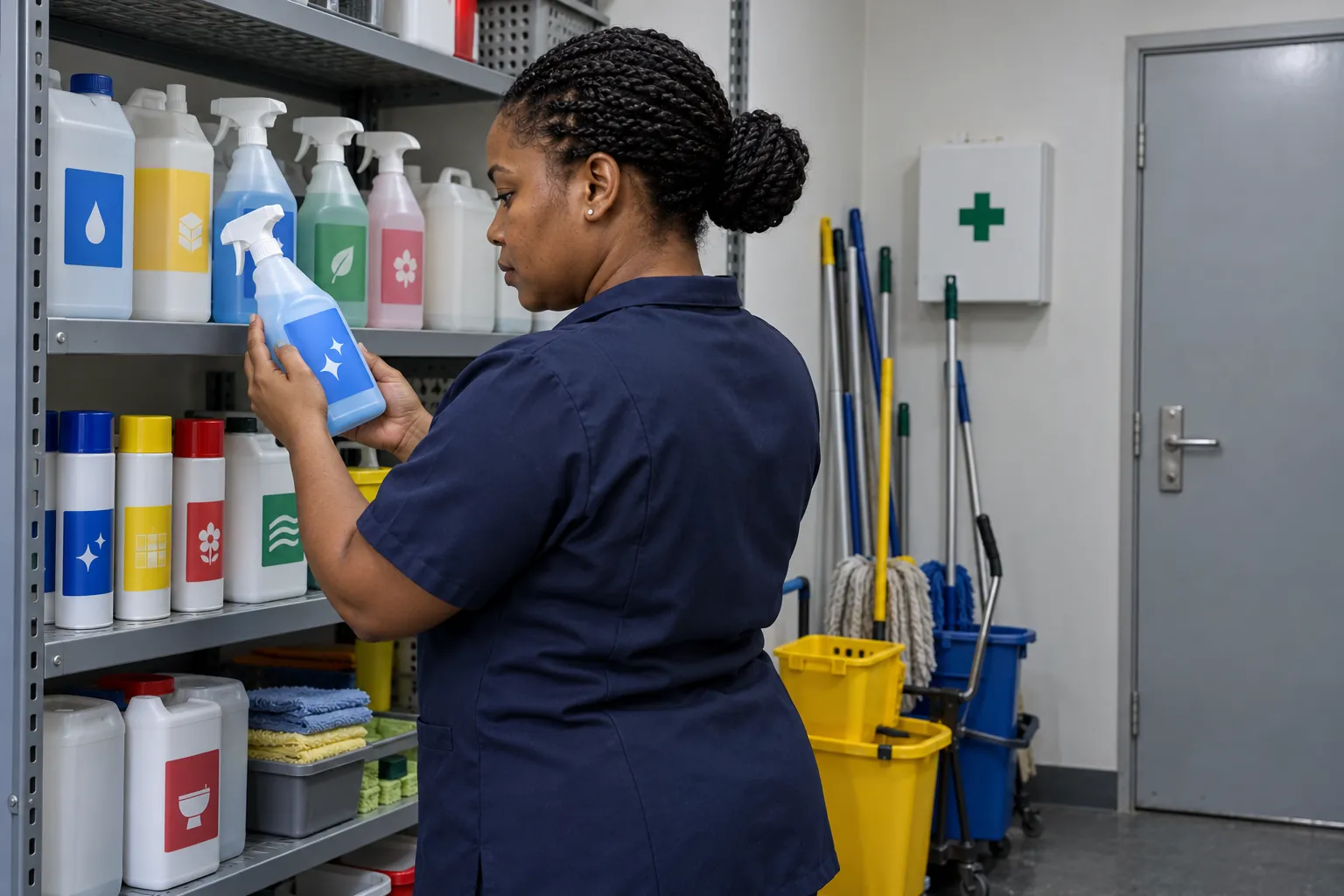
- Chemicals: hazardous chemical agents correctly labelled, decanted products in labelled containers, and the safety data sheet available to the people who use them (Regulations for Hazardous Chemical Agents, 2021, regulations 14A and 14B). This matters in every cleaners' store.
- Electrical: damaged plugs and leads, overloaded multiplugs, open or blocked distribution boards, leads across walkways. Under the Electrical Installation Regulations, 2009 the user or lessor is responsible for the installation's safety and maintenance (regulation 2) and must hold a valid certificate of compliance (regulation 7). The walk spots visible defects; only a registered person tests or certifies.
- Ladders, plant rooms and the generator: ladders sound (see ladder inspection), plant room access clear with nothing stored against the plant, and the standby generator ready for load shedding (see standby generator checks).
- Contractors: cleaning, security and maintenance contractors working to their section 37(2) agreement.
- Paperwork: a copy of the Act and relevant regulations readily available where there are five or more employees (General Administrative Regulations, 2003, regulation 4), emergency numbers and the evacuation plan.
Split the list into checklists by area – reception, each floor, the stairwells, the ablutions, the cleaners' store, the plant room, the basement parking – so each walk is short and the inspector knows what is expected at each point.
03
How often to inspect, and who should do it
The Act leaves the frequency to the employer and, for representatives, to the intervals agreed under section 18(1)(g). A few items have their own clock, such as the three-monthly emergency lighting test. For the rest, set it by the risk:
- Higher-risk areas, such as workshops, manufacturing floors, kitchens, loading bays, plant rooms and cleaners' stores: usually weekly, with some equipment, such as machine guards and forklifts, checked at the start of each shift.
- Lower-risk areas, such as offices and classrooms: often monthly, with a fuller review each year.
- After a change: new equipment, a new tenant, a refurbishment.
- After an incident: regulation 9(2) of the General Administrative Regulations requires a recordable incident to be investigated within 7 days; inspect the area, and similar areas, alongside it. See incident reporting and investigation.
Write the frequency for each area down and keep to it. A programme that slips from monthly to "when there is time" usually comes to light only after someone is hurt.
The inspector should know the area and be trained to recognise a hazard: on most sites the section 16(2) appointee, a supervisor, a SHE officer or a representative. Section 8(2)(i) points the same way: work should be supervised by someone who understands its hazards and has the authority to act. For specialist items the walk notes what is visible and a competent person does the rest: a registered person for the electrical installation, and a permit holder for extinguisher servicing. Vary who inspects: fresh eyes see what the regular inspector no longer notices.
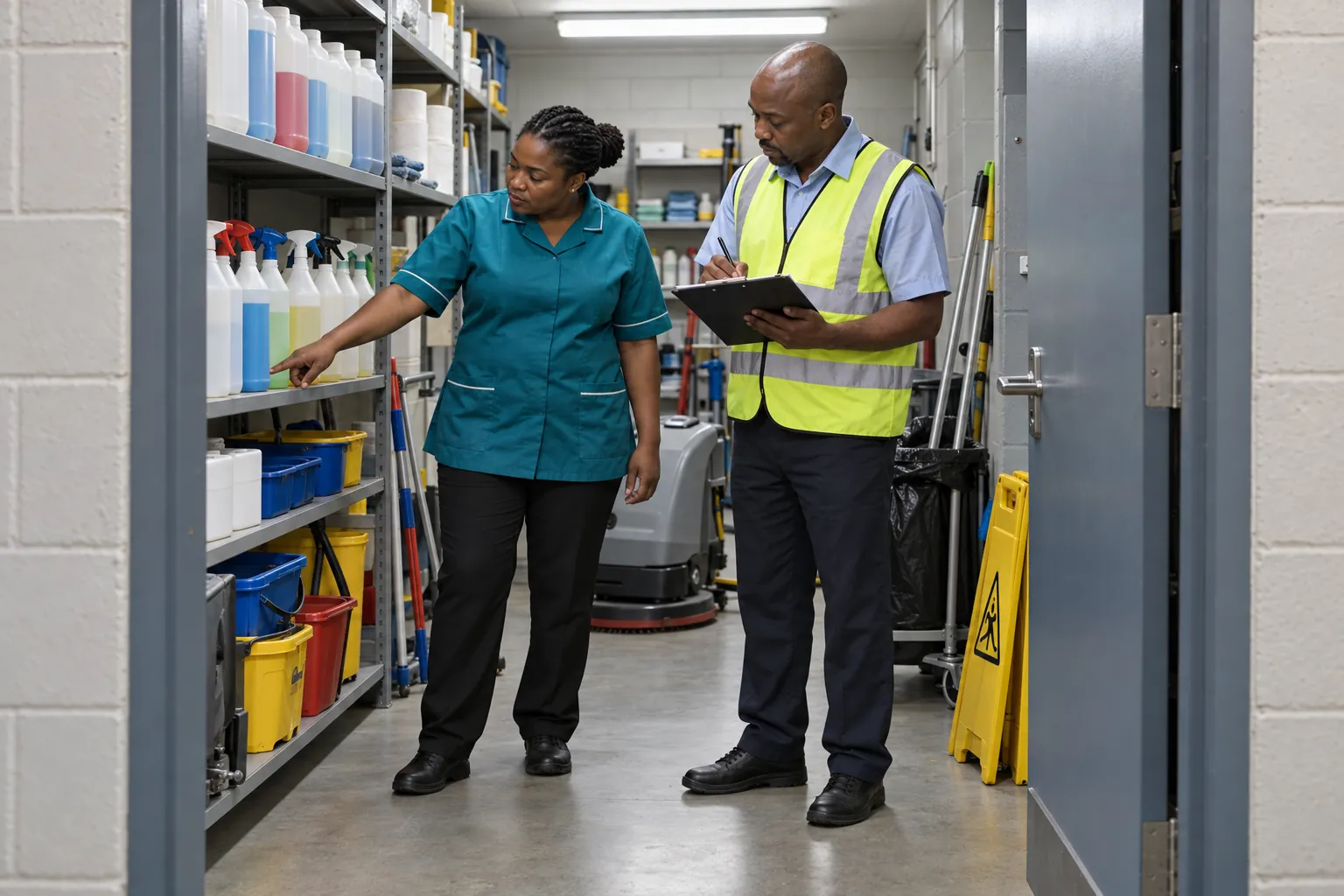
Where cleaning or security is contracted out, the contractor is the employer of its own staff, so it inspects its own equipment, stores and methods, and the owner or tenant inspects the building. The section 37(2) agreement should say who covers what, so the cleaners' store or the guard hut is not left out by both.
04
Recording findings and closing them out
An inspection is only useful if what it finds gets fixed. A good record, on paper or on a phone, captures:
- The inspection: the date and time, the area, and who inspected.
- Each finding: the hazard and exactly where, with a photograph where it helps.
- How serious it is: high, medium or low, so the worst is dealt with first. An immediate danger is made safe during the walk – the spill mopped, the ladder taken out of use – not written down and left.
- The action, an owner and a date: what will be done, by whom, by when.
- Close-out: when it was done, and who checked it.
Before each walk, read the last record and the open actions. Record what was in order as well as what was not: noting that the extinguishers were present and the escape doors opened shows the area was looked at, not ticked from a desk.
Write every entry as if an inspector will read it, because under section 29(1) one may. The Department's booklet What every worker and employer should know about health and safety in the workplace describes what can follow: a prohibition notice for threatening danger, with immediate effect; a contravention notice for a breached regulation, with a time limit to correct it that it says is usually 60 days; and a direction notice where the measures in place do not protect workers well enough. A record showing a hazard found, reported and fixed is the best answer.
Every few months, read the findings together: a hazard that keeps returning points to a cause the inspection alone will not fix, and to a risk assessment that needs updating.
05
Health and safety representatives, the committee and everyone else
The Department's booklet puts the system plainly: health and safety representatives "may inspect the workplace regularly and then report to a health and safety committee, who in turn may submit recommendations to the employer".
A workplace with more than 20 employees must have representatives under section 17. Section 13 requires the employer to tell them beforehand about inspections an inspector has notified, and promptly about incidents in their area. Where there are two or more, section 19 requires a health and safety committee meeting at least once every three months. Give it each round's findings, fixed and open.
Section 14(d) requires every employee who sees an unsafe or unhealthy situation to report it as soon as practicable to the employer or the representative. Inspections get better when:
- a representative or someone from the area walks the round;
- the people who work there are asked about the near misses nobody wrote down;
- cleaners, security officers and caretakers, who walk the building every day, can report a hazard the moment they see it; and
- findings and actions are shared, so people see that reporting leads to something.
06
Where the record fails, and what SiteClara does about it
Most inspection records fail in two ways. The walk happens, but the findings sit on a clipboard sheet where nobody is chased to close them, so the same broken emergency light appears on three months of checklists. And hazards noticed between inspections, by the cleaner who finds a leaking pipe or the security officer who finds a fire door wedged open at night, are mentioned to whoever is passing and never written down.
SiteClara is built for the second, and for the routine checks that sit alongside an inspection. A printed QR poster at each location, with an NFC tag behind it if staff prefer to tap, lets a person scan with their own phone, with no app to install, and complete the checks due there, such as a weekly walk of the escape routes or the first aid box check, or report a problem with a photograph. A check that was due and not done shows as not done. A reported problem goes onto the team's list of open jobs until someone closes it, and the supervisor's queue groups open jobs by building and floor. Each day a supervisor approves a report of what was reported, completed and still open, which goes to nominated management or client contacts the next morning.
07
Questions people ask
What does a health and safety inspection checklist include?
It includes the conditions the regulations require the employer to keep safe. The General Safety Regulations, as amended by Government Notice 5954 of 6 March 2025, require floors, walkways and stairs to be kept in good repair, skid-free and free of obstructions (regulation 13H(2)), exit doors to be kept clear and easy to open from inside, and fire-fighting equipment to be maintained in good working order (regulation 13J). Add first aid, ablutions, chemicals, electrical hazards and whatever your risk assessment names for the area.
Is a health and safety inspection checklist a legal requirement in South Africa?
No law prescribes a particular checklist for a general workplace inspection. Section 8(2)(d) of the Occupational Health and Safety Act 85 of 1993 requires the employer to establish what hazards are attached to the work, and regulation 2(1) of the General Safety Regulations, as amended by Government Notice 5954 of 6 March 2025, to evaluate the risk and take the steps needed to make conditions safe; a regular inspection recorded against a checklist is the usual way to show that is being done.
How often should a health and safety representative inspect the workplace?
As often as agreed with the employer. Section 18(1)(g) of the Occupational Health and Safety Act 85 of 1993 lets a representative inspect the workplace "at such intervals as may be agreed upon with the employer", after giving the employer reasonable notice, and the employer may be present, so write the interval down.
Can a Department of Employment and Labour inspector arrive without warning?
Yes. Section 29(1)(a) of the Occupational Health and Safety Act 85 of 1993 lets an inspector enter premises used by an employer "without previous notice, at all reasonable times", and section 29(1)(c) to (e) lets them require records to be produced, copy them and ask for an explanation of any entry.
08
Where to read the official guidance, and a list to take away
The Department of Employment and Labour publishes the Occupational Health and Safety Act 85 of 1993 as amended, and its regulations, on labour.gov.za. The 2025 amendments to the General Safety Regulations and the Physical Agents Regulations are in Government Gazette 52226 of 6 March 2025 on gov.za; the Physical Agents Regulations repeal the Environmental Regulations for Workplaces, 1987, 18 months after promulgation. Fire safety in use is set by each municipality's by-law, so read your own.
Before your next health and safety inspection, check that:
- the checklists are split by area and reflect your risk assessment and your written procedures;
- the frequency for each area is written down, including any agreed with the representatives, and followed;
- the three-monthly emergency lighting test is on the list;
- inspectors are trained, have authority to act, and change from time to time;
- immediate dangers are made safe on the spot;
- every finding has an action, an owner and a date, and is tracked to close-out;
- contractors' areas are covered in the section 37(2) agreement;
- staff can report a hazard between inspections; and
- open and repeat findings go to the committee and back into the risk assessment.
Sources
Every document this guide quotes or links to, in the order it first cites them.
- Occupational Health and Safety Act 85 of 1993 labour.gov.za
- Government Notice 5954 of 6 March 2025 gov.za
- City of Cape Town Community Fire Safety By-law openbylaws.org.za
- Physical Agents Regulations, 2024 gov.za
- General Safety Regulations labour.gov.za
- Facilities Regulations, 2004 gov.za
- Regulations for Hazardous Chemical Agents, 2021 labour.gov.za
- Electrical Installation Regulations, 2009 labour.gov.za
- General Administrative Regulations, 2003 labour.gov.za
- What every worker and employer should know about health and safety in the workplace labour.gov.za
Related guides
 Premises and facilities managementHealth and safety representatives: who needs them, and what they doWhen a workplace needs a health and safety representative under section 17 of the OHS Act, how many, how they are designated, and what a SHE rep may do.
 Premises and facilities managementHazard identification and risk assessment: how a HIRA is done, and how it stays trueWhat a HIRA is under the OHS Act and its regulations, how to identify hazards and rate risks, who takes part, when to review it, and how rounds keep it honest.
 CleaningHousekeeping in the workplace: what the law requires, and how to keep it upWhat regulation 13H of the General Safety Regulations requires of housekeeping at work in South Africa, how to prevent slips and trips, and how to check it daily.
 Premises and facilities managementHealth and safety committees: members, meetings and recordsWhen a workplace needs a health and safety committee under section 19 of the OHS Act, who sits on it, how often it meets, and the records it must keep.