Premises and facilities management
Health and safety committees: members, meetings and records
A health and safety committee is the body that section 19 of the Occupational Health and Safety Act 85 of 1993 requires an employer to establish at every workplace where two or more health and safety representatives have been designated, and it must meet at least once every three months.

Every representative sits on it, the employer's nominees may not outnumber them, and the employer must consult it at each meeting on the measures that keep employees healthy and safe at work. This guide covers when a committee is needed, who sits on it, how its meetings run, what it must do and keep, and what it should be reading when it meets.
01
What the OHS Act says about health and safety committees
The committee is created by sections 19 and 20 of the Occupational Health and Safety Act 85 of 1993 (the OHS Act), which the Department of Employment and Labour enforces. Section 1 defines a health and safety committee simply as "a committee established under section 19".
Section 19(1) sets the trigger and the purpose in one sentence: an employer "shall in respect of each workplace where two or more health and safety representatives have been designated, establish one or more health and safety committees and, at every meeting of such a committee as contemplated in subsection (4), consult with the committee with a view to initiating, developing, promoting, maintaining and reviewing measures to ensure the health and safety of his employees at work."
So the committee follows the representatives. Section 17 requires an employer with more than 20 employees at a workplace to designate health and safety representatives: at least one for every 100 employees or part thereof in shops and offices, and one for every 50 elsewhere. Once a workplace has two representatives, which happens at 101 employees in an office and at 51 in most other workplaces, or earlier where more are agreed or an inspector directs it, the committee is compulsory.
Section 20 says what the committee does: it may make recommendations to the employer, and to an inspector when the employer does not resolve the matter; it shall discuss every incident in which a person was injured, became ill or died; it shall perform any other function that is prescribed; and it shall keep a record of its recommendations and its reports to an inspector. Regulation 5 of the General Administrative Regulations, 2003 (Government Notice R. 929 of 25 June 2003) requires the employer to give the committee a suitable meeting place and to keep those records for at least three years.
Under section 38(1) it is an offence to fail to establish the committee, keep its records or take the steps section 20(4) requires, or to ignore an inspector's written direction to hold a meeting or set up more committees.
02
Who sits on the committee, and how they are appointed
Section 19(2) leaves the size of the committee to the employer, within three rules:
- One committee: if the workplace has a single committee, every health and safety representative for that workplace is a member of it.
- Several committees: if the employer sets up two or more, for example one per building on a campus or one per shift, each representative must be a member of at least one of them.
- Management may not outnumber the representatives: the number of people the employer nominates to a committee may not exceed the number of representatives on it.
Section 19(3) says how people get there. The employer's nominees are designated in writing by the employer, for a period the employer decides; this is the health and safety committee appointment letter people search for. The representatives need no separate letter: they are members for the period of their designation under section 17(1).
The employer's nominees are usually people who can act on what the committee recommends: the section 16(2) appointee or a manager reporting to them, the facilities or building manager, and whoever runs maintenance. A committee with nobody able to approve a repair will keep recommending the same things.
Section 19(6) lets the committee co-opt people "by reason of his or their particular knowledge of health or safety matters" as advisory members, who may not vote. The Department's booklet describes them as people brought in for their knowledge and expertise on health and safety matters; a safety practitioner, an occupational health nurse or a fire specialist is a common choice.
03
How often the committee meets, and how a meeting runs
Section 19(4) requires the committee to meet "as often as may be necessary, but at least once every three months", at a time and place the committee decides. Four meetings a year is the floor, not the target: a busy site, a building going through works, or a run of incidents may need monthly meetings.
An inspector can intervene. The first proviso to section 19(4) lets an inspector direct, in writing, that the members meet at a time and place the inspector sets. The second lets an inspector direct that a meeting be held where more than 10 per cent of the employees at the workplace have handed the inspector a written request.
Section 19(5) leaves the procedure to the committee itself. The Act does not mention a chairperson; the Department's booklet What every worker and employer should know about health and safety in the workplace explains that the members elect the chairperson and decide the period of office and the meeting procedures. It is worth writing those down once, in a short set of terms of reference: who chairs, who takes the minutes, how items are added, what makes a quorum and how the committee decides.
Section 17(7) matters here too. Attending the committee's meetings is one of a representative's functions under section 18(1)(j), and those functions are performed during ordinary working hours, with the time counted as time spent working. A meeting fixed for after a night shift, or on a day the cleaning team is off, excludes the people it is for.
A standing agenda for quarterly committee meetings might run:
- Minutes of the last meeting, and each action from it: done, in progress or not started, and who owns it.
- Incidents since the last meeting, from the Annexure 1 register, with what each investigation found.
- Near misses, hazards and unsafe conditions reported, and employees' complaints.
- The representatives' inspection findings: what was found, fixed and still open.
- Changes coming: works, equipment, contractors or chemicals.
- Routine checks due or overdue: fire equipment, emergency lighting, the evacuation drill, first aid boxes.
- Recommendations to the employer from this meeting, and the date of the next.
The minutes should record who attended, each recommendation in the committee's own words, who is to act and by when. Minutes that do that make the section 20(2) record easy to keep.
04
What the committee must do, and the records it must keep
Section 20(1) gives the committee three functions, two of them compulsory:
- Recommendations: the committee may make recommendations to the employer on any matter affecting the health or safety of people at the workplace or section it covers and, where that fails to resolve the matter, to an inspector.
- Incidents: it shall discuss any incident at the workplace or section "in which or in consequence of which any person was injured, became ill or died", and may report on it in writing to an inspector.
- Prescribed functions: it shall perform any other functions the regulations prescribe.
The main prescribed function is in regulation 9 of the General Administrative Regulations. The employer must keep a record in the form of Annexure 1, for at least three years, of every incident reportable under section 24 and every other incident that needed medical treatment other than first aid. Each must be investigated within 7 days, by the employer, a person the employer appoints, a health and safety representative or a committee member. Regulation 9(4) then requires the employer to have every such record examined by the committee at its next meeting, and to ensure that the necessary actions, as far as reasonably practicable, are implemented and followed up to prevent the incident happening again. The incident reporting and investigation guide covers the register itself.
The records the Act requires are narrower than people expect. Section 20(2) requires the committee to keep a record of each recommendation made to the employer and each report made to an inspector. Regulation 5 requires the employer to ensure those records are kept for at least three years. Section 39(7) gives them weight: in legal proceedings under the Act, the committee's section 20(2) records are admissible as evidence that the recommendation or report recorded in them was made to the employer or inspector concerned.
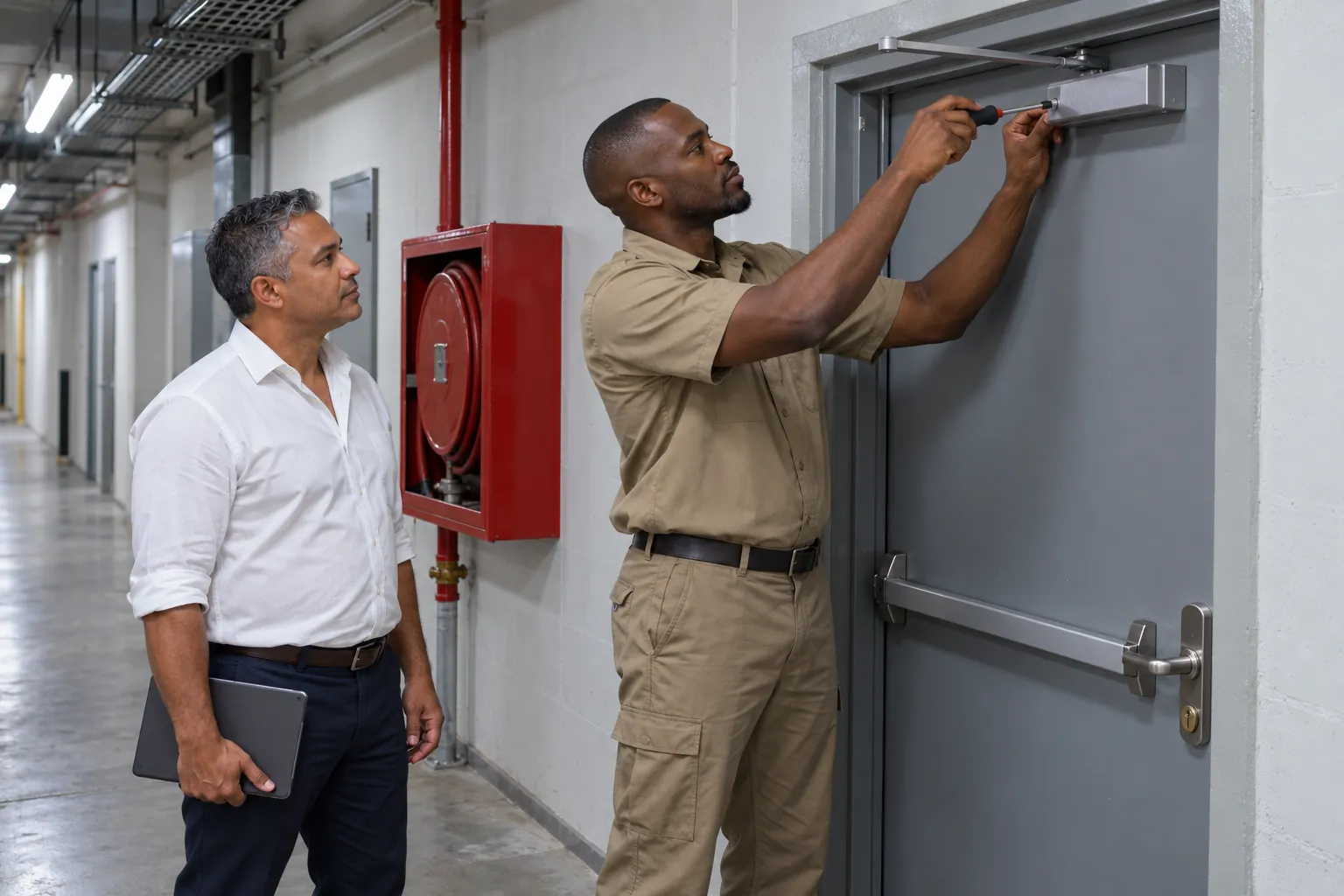
That cuts both ways. A recorded recommendation about a broken fire door is evidence that the employer was told; the recommendation, the reply and the repair together are evidence that it acted. A recommendation made in conversation proves neither.
Section 20(4) puts the burden on the employer, which "shall take the prescribed steps to ensure" that the committee meets at least every three months and does what section 20(1) and (2) require. Section 20(3) protects the members: neither the committee nor a member incurs civil liability only because they failed to do something they may or must do under the Act. The employer's section 8 duty to provide and maintain a safe working environment stays with the employer.
05
What the committee should be reading when it meets
A committee is only as good as what reaches it. The Department's booklet describes the system: representatives inspect the workplace regularly and report to the committee, which in turn may make recommendations to the employer. If the inspections are not recorded, the committee has nothing to recommend on.
The papers for a meeting should therefore include:
- The Annexure 1 incident register since the last meeting, with each investigation's findings, as regulation 9(4) requires.
- Near misses and unsafe conditions: a near-miss report is how the committee hears about the incident that has not happened yet.
- Each representative's inspection findings, with the date, the place and what was found, and a photograph where one helps.
- The open actions: every finding and recommendation not yet closed, how long it has been open and who owns it.
- Routine checks: whether the fire equipment, emergency lighting, first aid boxes, ablutions and escape routes were checked as planned, and what was found.
- Contractors' matters: incidents and findings involving cleaning, security and maintenance contractors on the premises, shared under each section 37(2) agreement.
The most useful single document is the list of open actions. A committee that sees a blocked escape route reported in March, recommended in April and still open in July knows what to raise with the employer. A stack of checklists with every box ticked tells it nothing. A workplace safety inspection checklist gives a starting list of points for the round; the committee's job is to see that each finding from it has a date, a place, an owner and an end.
06
Where the record fails
The committee meeting is where weak records show. The representative's round was written up afterwards from memory. The night-shift security officer noted a jammed fire door in the occurrence book, which nobody on the committee reads. The cleaners told their supervisor about a leak in the basement ablutions, who mentioned it to the building manager in the corridor. Nobody can say when the problem was found, who was told or whether it was fixed, so the item goes back on next quarter's agenda.
SiteClara is built for the recording part of that. A printed QR poster, with an optional NFC tag behind it, is placed at each point that is checked: the fire door, the first aid box, the ablutions, the generator room. The person doing the check, whether a representative, a cleaner or a security officer, scans it with their own phone, with no app to install, sees what is to be checked there, and marks each check done or says what stopped them, with a photograph when one is asked for. The record shows which point was checked, by whom and when, and a check that was due and not done shows as not done. A problem reported at a tag becomes an open job for the team responsible, and stays open until someone closes it, so the committee can see what was found, by whom, and what is still open when it meets.
07
Questions people ask
Who are the members of a health and safety committee?
Under section 19(2) and (3) of the Occupational Health and Safety Act 85 of 1993, every health and safety representative for the workplace sits on the committee, or on at least one of them where there are several, together with the people the employer designates in writing, who may not outnumber the representatives. Section 19(6) lets the committee co-opt advisory members for their knowledge of health or safety matters, but they may not vote.
How often should a health and safety committee meet?
As often as necessary, and at least once every three months, at a time and place the committee decides, under section 19(4) of the Occupational Health and Safety Act 85 of 1993. An inspector may direct a meeting in writing, including where more than 10 per cent of the employees have handed the inspector a written request for one.
Who chairs the committee and decides how its meetings run?
The committee itself: section 19(5) of the Occupational Health and Safety Act 85 of 1993 says the procedure at its meetings is determined by the committee. The Department of Employment and Labour's booklet What every worker and employer should know about health and safety in the workplace adds that the members elect the chairperson and decide the period of office and the meeting procedures.
What are the functions of a health and safety committee?
Section 20(1) of the Occupational Health and Safety Act 85 of 1993 says it may make recommendations to the employer, and to an inspector where that fails to resolve the matter; it shall discuss every incident in which a person was injured, became ill or died, and may report on it in writing to an inspector; and it shall perform any other prescribed function. Regulation 9(4) of the General Administrative Regulations, 2003 prescribes one: examining the employer's Annexure 1 incident record at its next meeting.
How long must health and safety committee records be kept?
At least three years. Regulation 5 of the General Administrative Regulations, 2003 requires the employer to ensure that the section 20(2) records of the committee's recommendations to the employer and reports to an inspector are kept for that period, and regulation 9(1) sets the same three years for the Annexure 1 incident record.
08
Where to read the official guidance, and a list to take away
Read sections 17 to 20 of the Occupational Health and Safety Act 85 of 1993, published on the South African Government website, with the Occupational Health and Safety Amendment Act 181 of 1993. Regulations 5, 6, 7 and 9 of the General Administrative Regulations, 2003 cover the committee's meeting place and records, the agreement on representatives, and the incident register the committee examines. The Department of Employment and Labour's booklet What every worker and employer should know about health and safety in the workplace explains representatives and committees in plain terms.
To check that your health and safety committee is in order:
- where a workplace has two or more representatives, set up at least one committee with every representative on one;
- designate each employer nominee in writing for a stated period, and keep them fewer than the representatives;
- agree terms of reference: chairperson, minutes, quorum and how the committee decides;
- meet at least every three months, in working hours, in a suitable meeting place;
- put the Annexure 1 register in front of every meeting, and follow each incident's actions to the end;
- record every recommendation to the employer and report to an inspector, and keep them for at least three years; and
- bring the representatives' findings and the open actions to each meeting, with who owns each.
Sources
Every document this guide quotes or links to, in the order it first cites them.
- Occupational Health and Safety Act 85 of 1993 gov.za
- General Administrative Regulations, 2003 gov.za
- What every worker and employer should know about health and safety in the workplace labour.gov.za
- Occupational Health and Safety Act 85 of 1993 gov.za
- General Administrative Regulations, 2003 labour.gov.za
Related guides
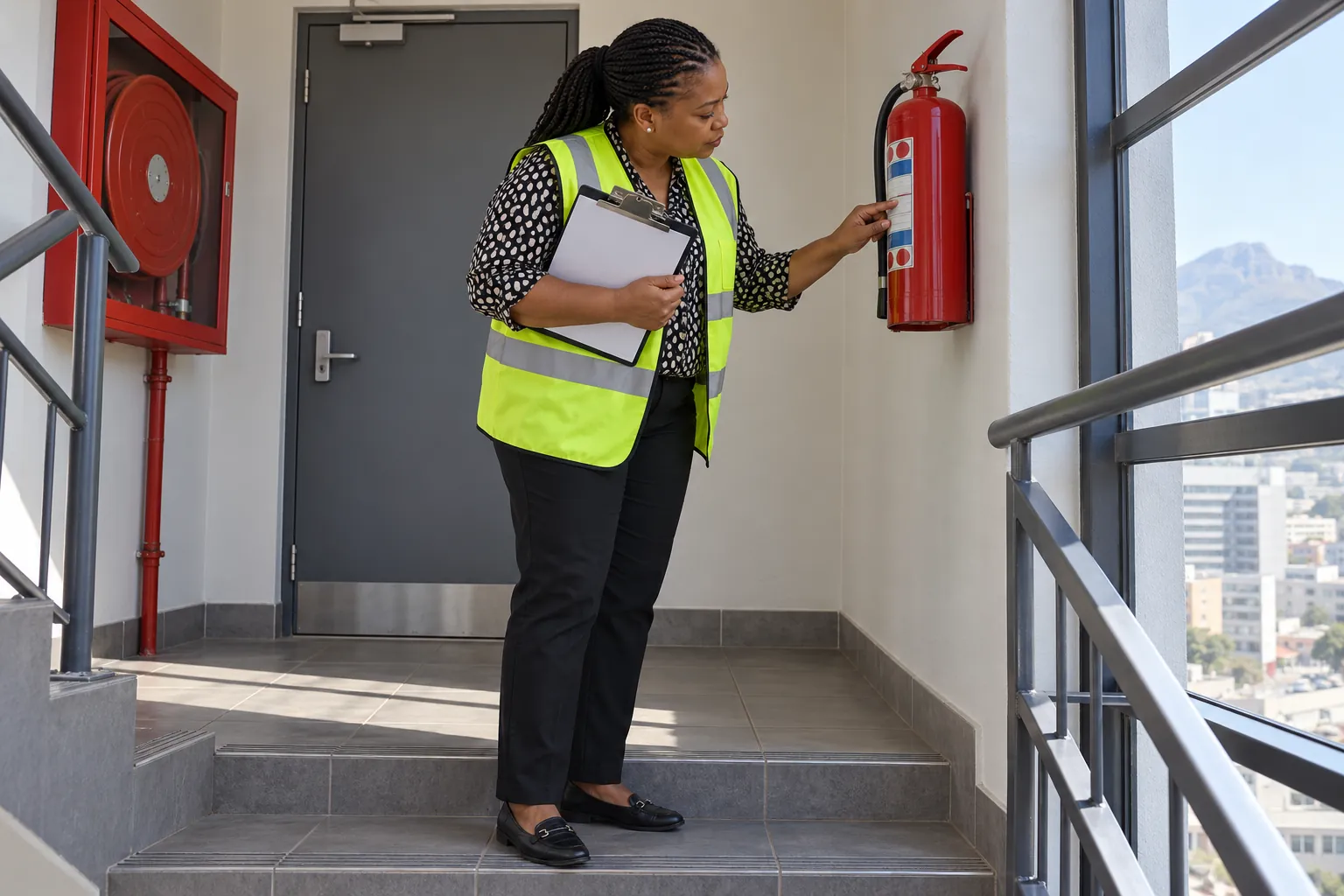 Premises and facilities managementHealth and safety representatives: who needs them, and what they doWhen a workplace needs a health and safety representative under section 17 of the OHS Act, how many, how they are designated, and what a SHE rep may do.
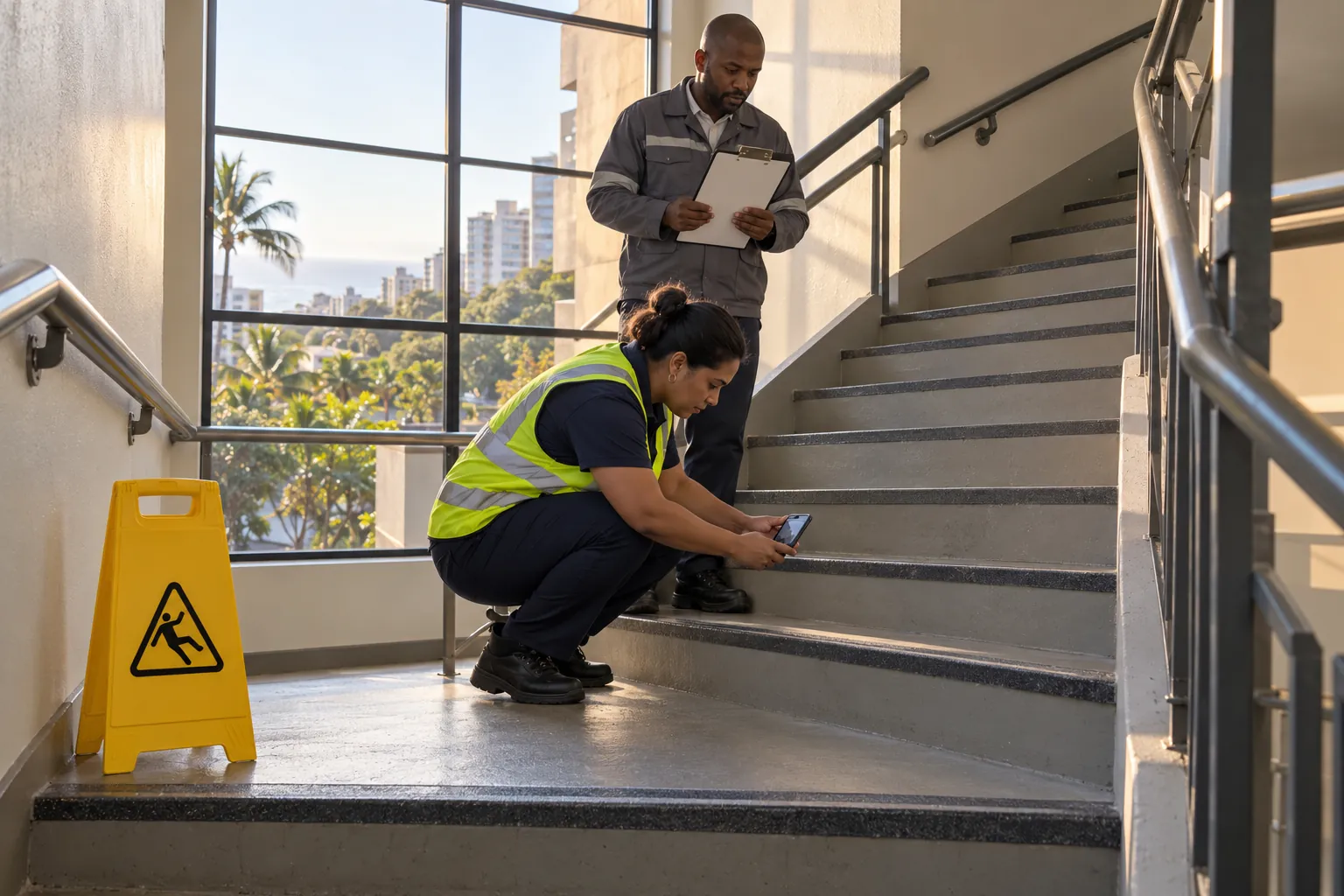 Premises and facilities managementIncident reporting and investigation under the OHS ActSection 24 of the OHS Act, the regulation 8 reporting clocks, the Annexure 1 incident register and the seven-day investigation, for cleaning, security and FM teams.
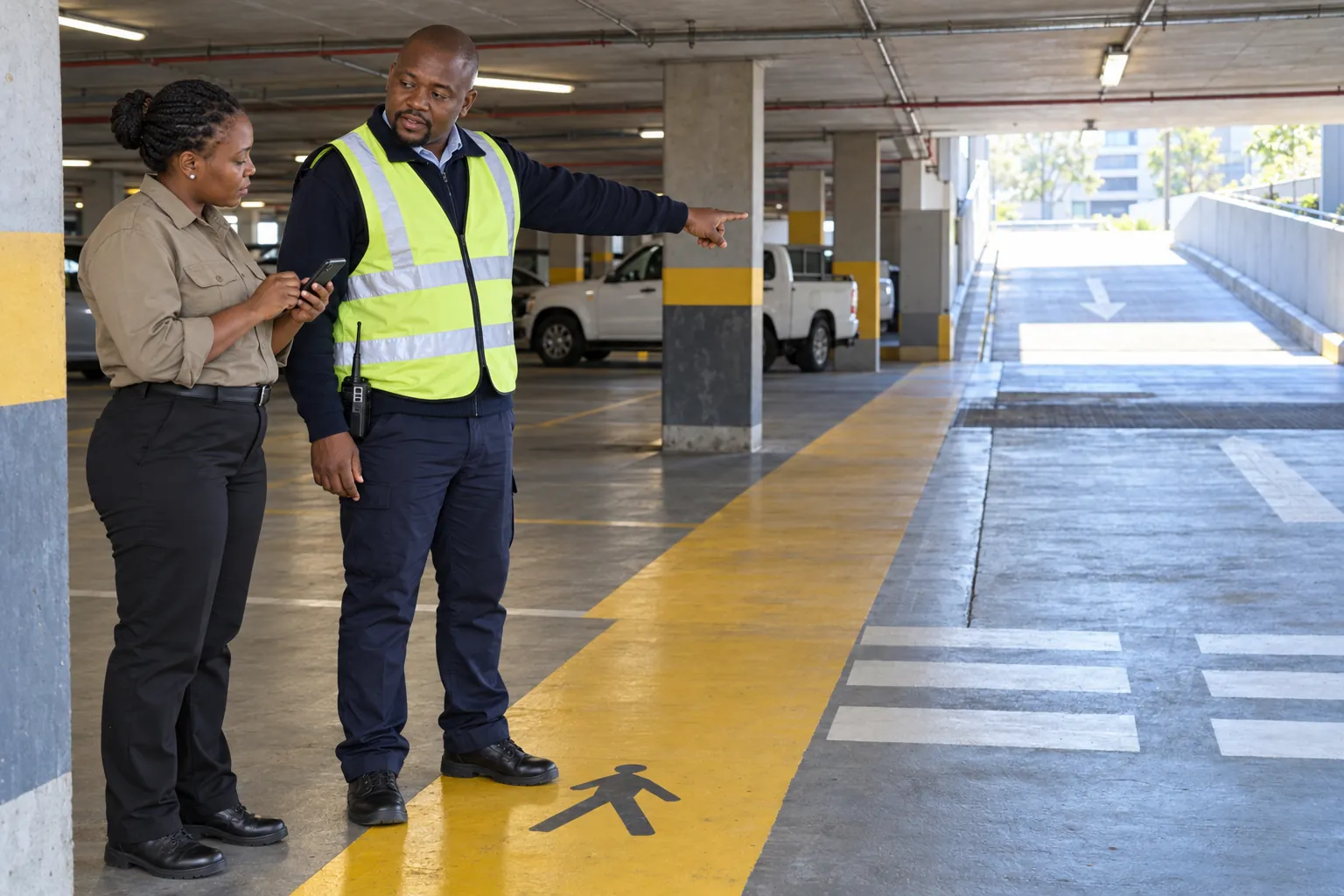 Premises and facilities managementNear miss reports: recording the close calls before someone is hurtWhat a near miss is under the OHS Act, what to put in a near miss report, who reports it to whom, and how cleaning, security and FM teams turn reports into fixes.
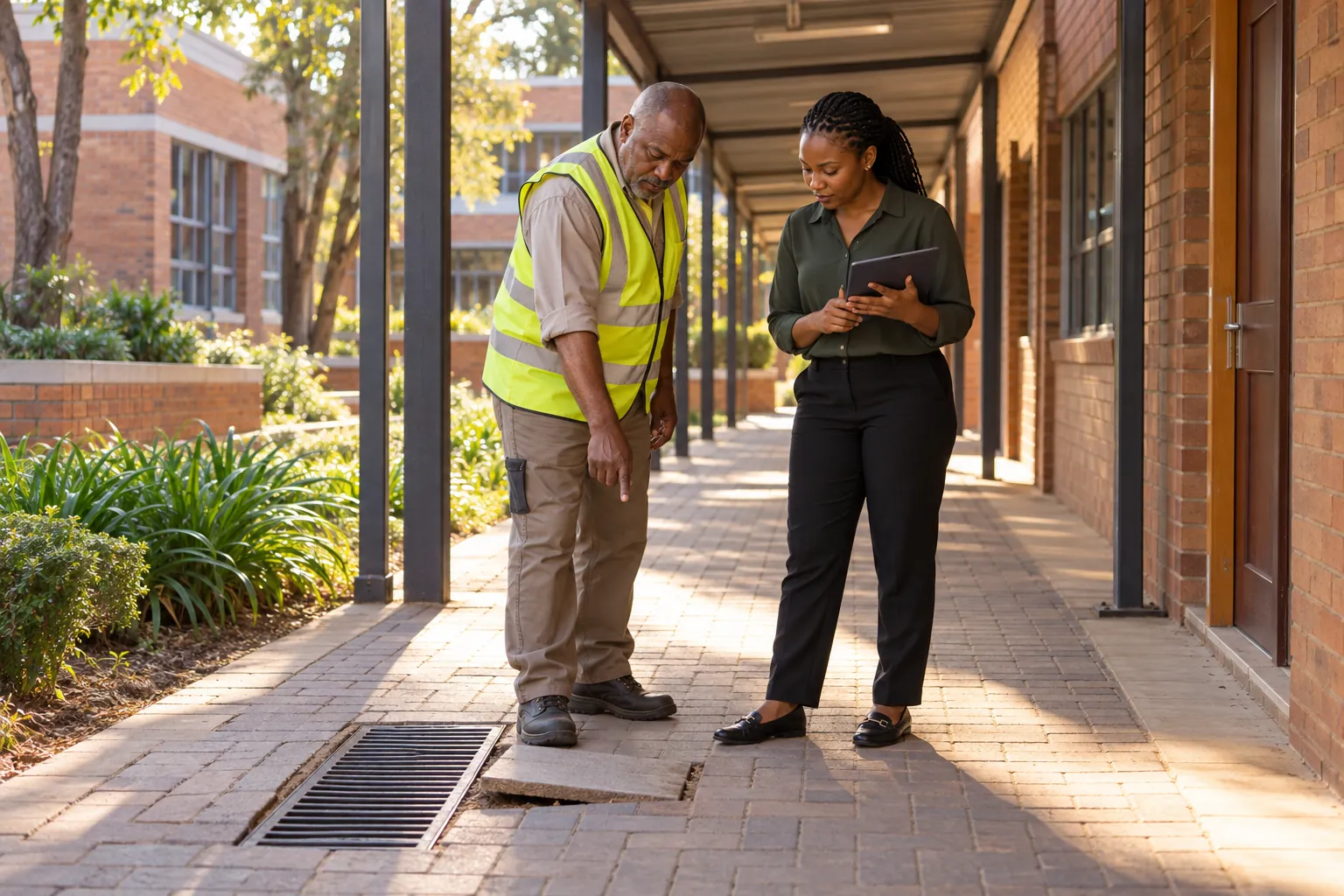 Premises and facilities managementHealth and safety inspection checklist: what to look at, and what to do nextWhat a workplace health and safety inspection should cover in South Africa, how often, who inspects, and how to record and close findings under the OHS Act.