Premises and facilities management
Incident reporting and investigation under the OHS Act
An incident investigation is the inquiry South African law requires into every recordable workplace incident: regulation 9 of the General Administrative Regulations, 2003 makes the employer have it done within seven days and enter the suspected cause and the steps to prevent a recurrence in the Annexure 1 incident register.
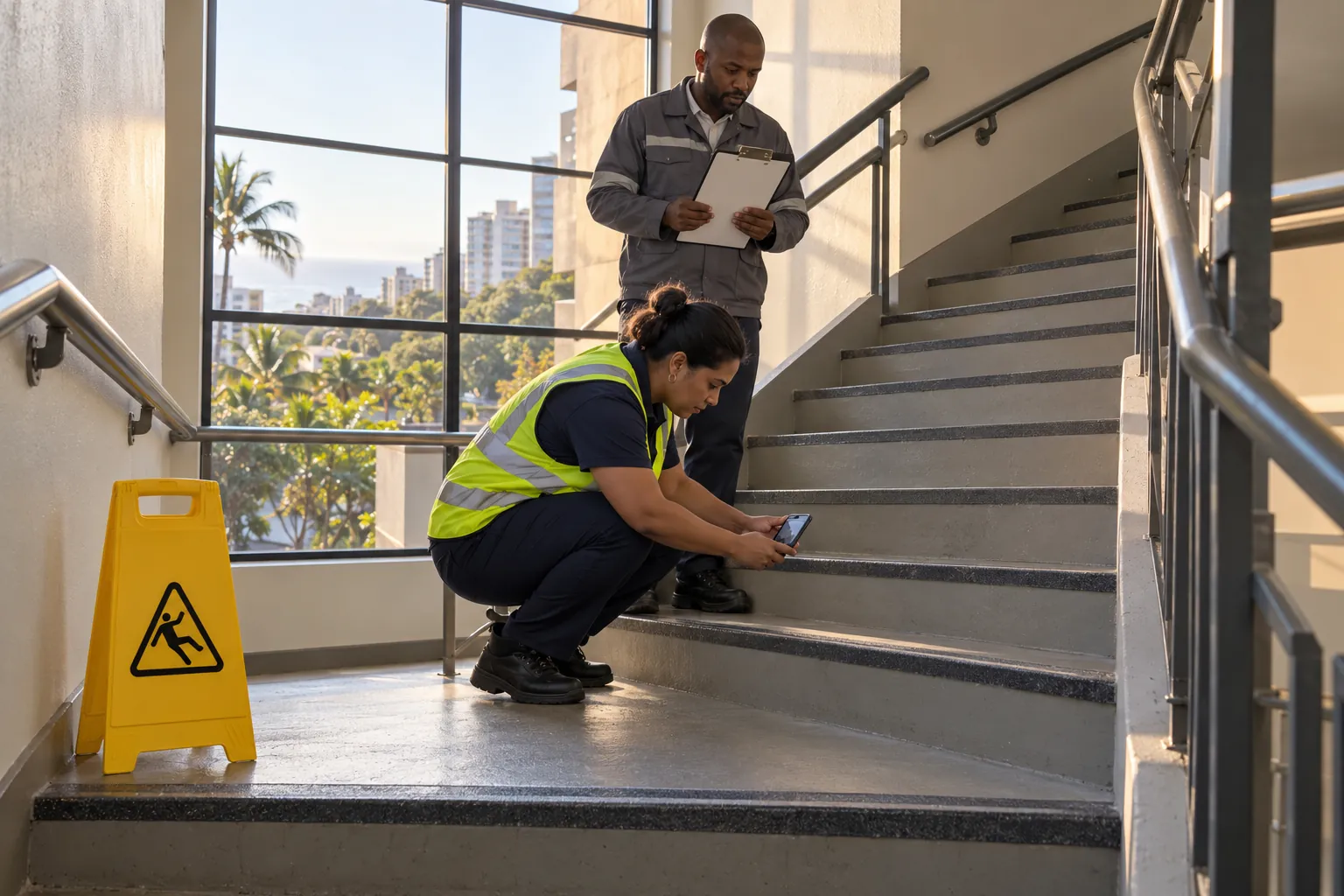
Separately, section 24 of the Occupational Health and Safety Act 85 of 1993 requires serious incidents to be reported to an inspector of the Department of Employment and Labour, and regulation 9 requires the register to be kept for at least three years. The rules are short, but they set different clocks and two thresholds, and contracted sites add the question of whose incident it is. This guide covers what must be reported and when, what goes in the incident register, how to run an investigation that finds causes rather than someone to blame, and where the paper trail usually breaks down.
01
What section 24 of the OHS Act requires
Section 24(1) of the Occupational Health and Safety Act 85 of 1993 covers every incident "occurring at work or arising out of or in connection with the activities of persons at work, or in connection with the use of plant or machinery". Three kinds must be reported to an inspector by the employer, or by the user of the plant or machinery concerned:
- An injury, illness or death (section 24(1)(a)): a person dies, becomes unconscious, loses a limb or part of a limb, or is injured or becomes ill to such a degree that they are likely to die, to suffer a permanent physical defect, or to be unable for at least 14 days to work or to continue the activity they were employed for.
- A major incident (section 24(1)(b)), which section 1 defines as "an occurrence of catastrophic proportions" resulting from the use of plant or machinery or from activities at a workplace.
- A dangerous occurrence (section 24(1)(c)): someone's health or safety was endangered and a dangerous substance was spilled, a substance under pressure was released uncontrolled, machinery fractured or failed so that objects flew, fell or moved uncontrolled, or machinery ran out of control. Nobody has to be hurt for this one to be reportable.
Section 24(2) covers the worst cases: where a person died, was injured so that they are likely to die, or lost a limb or part of one, nobody may disturb the site or remove anything involved without an inspector's consent, except to prevent a further incident, remove the injured or dead, or rescue people. Section 24(3) excludes a traffic accident on a public road.
The clocks, the forms and the register come from regulations 8 and 9 of the General Administrative Regulations, 2003 (Government Notice R. 929 of 25 June 2003). Two duties in the Act feed into them. Section 14(e) requires an employee involved in an incident that may affect their health, or that injured them, to report it to the employer, someone the employer has authorised, or their health and safety representative "as soon as practicable but not later than the end of the particular shift during which the incident occurred". Section 13(c) requires the employer to inform the health and safety representative for that area as soon as reasonably practicable.
02
What counts on a cleaning, security or facilities contract
There are two thresholds. Some incidents must be reported under section 24. A wider group must be recorded and investigated under regulation 9: every reportable incident, plus "any other incident which resulted in the person concerned having had to receive medical treatment other than first aid". On a building contract:
- A cleaner slips on a wet floor, needs stitches at a clinic and is back two days later. Recorded in Annexure 1 and investigated within seven days; not reportable unless she is off for 14 days or more.
- A security officer is injured on patrol and booked off for three weeks. Reportable within seven days, recorded and investigated.
- A maintenance worker is found unconscious below a ladder in a plant room. Reportable at once by telephone as well as in writing, and the scene left undisturbed except to help him and make it safe.
- A drum of concentrated cleaning chemical splits in a store room and staff breathe the fumes, though nobody needs treatment. A section 24(1)(c) dangerous occurrence, reportable forthwith.
- A visitor trips on a loose stair nosing in reception and breaks a wrist. An incident to someone who is not an employee, covered by regulation 8(3).
- A cut finger dressed from the first aid box. First aid only, so not a regulation 9 incident, though many employers note it: the same broken dispenser can hurt someone worse next week.
An event that could have hurt someone and did not is a near miss. Unless it fits section 24(1)(c), the law does not ask for it to be reported or recorded, but a site that learns only from injuries learns late. See the near miss report.
03
The reporting clocks in regulation 8
Regulation 8 sets how an incident reaches the provincial director of the Department of Employment and Labour for the area:
- Within seven days of any section 24(1)(a) incident, written notice on the form the regulation calls WCL 1 or WCL 2, the prescribed forms for reporting incidents under the compensation law (regulation 8(1)(a)).
- Forthwith, by telephone, fax or similar means, as well, where a person dies, becomes unconscious, loses a limb or part of one, or is likely to die or suffer a permanent physical defect, and for every major incident and dangerous occurrence (regulation 8(1)(b)).
- Forthwith, if an injured person dies after the incident was reported (regulation 8(2)).
- Forthwith, for an incident arising out of work that happens to someone who is not an employee (regulation 8(3)), giving the injured person's name and address, the employer's name, address and telephone number, a contact person, what happened, where, when, how and why, and the names of witnesses.
The list in regulation 8(3) makes a good template for any first account of an incident: it asks for the facts in the order an investigator will want them.
The report to the inspector is not the compensation claim. Section 39 of the Compensation for Occupational Injuries and Diseases Act 130 of 1993 (COIDA) requires an employer to report an accident to an employee to the Compensation Commissioner within seven days of learning of it. An injury well short of the 14-day threshold can still be a claim. See injury on duty.
Inside the company, the chain usually runs: the injured employee or a witness tells the supervisor before the shift ends; the supervisor makes the scene safe, arranges treatment and tells the health and safety representative; the person responsible for OHS decides which clock has started. Write that chain down, with names and numbers, where the night shift can find it.
04
The Annexure 1 incident register
Regulation 9(1) requires an employer to keep at the workplace a record in the form of Annexure 1 of every incident reportable under section 24 and every other incident needing medical treatment other than first aid, for at least three years, open to an inspector. This is the incident register. It has four parts:
- Part A, recording: the employer, the affected person and their identity number, the date and time, the part of the body affected, the effect (such as a sprain, wound, fracture, burn or poisoning), the expected period of disablement, the machine, process or work involved, and whether it was reported to the Compensation Commissioner, the provincial director and the police, with the SAPS reference.
- Part B, investigation: the investigator's name and designation, the date, a short description, the suspected cause and the recommended steps to prevent a recurrence, signed and dated.
- Part C, employer action taken to prevent a similar incident, signed and dated.
- Part D, health and safety committee remarks, signed by the chairperson.
The form is a trail. An entry with Part A filled in and Parts B to D blank tells an inspector the incident was noticed and nothing followed. Where contract staff are posted at a client's building, make sure their employer's register covers that workplace.

05
Investigating an incident within seven days
Regulation 9(2) requires every recordable incident to be investigated by the employer, a person it appoints, a health and safety representative or a member of a health and safety committee, within seven days, and finalised as soon as reasonably practicable, "or within the contracted period in the case of contracted workers". The findings go into Annexure 1 immediately the investigation is complete (regulation 9(3)), and the health and safety committee examines the record at its next meeting and ensures the actions are implemented and followed up (regulation 9(4)). Under section 18 of the Act a representative may examine the causes of incidents with the employer and visit the site of one; under section 20(1)(b) the committee must discuss any incident in which someone was injured, became ill or died.
The regulations set the deadline, not the method. An investigation that finds root causes rather than someone to blame usually runs like this:
- Make it safe and look after people. Where section 24(2) applies, leave the scene as it is.
- Preserve the evidence: photographs before anything is moved, the equipment or substance involved, the sign that was or was not in place, the page of the occurrence book or check sheet.
- Talk to those involved and the witnesses separately and soon. Ask what happened, not who was at fault.
- Build a timeline of the shift: who was where, what was scheduled, what was done, and when.
- Find the root cause and the contributing factors. The immediate cause (a wet floor with no sign) sits on underlying ones (the signs were locked away at night; the floor was mopped at the busiest hour). Asking "why" of each answer until it reaches something the organisation controls is the simplest method.
- Recommend steps that deal with the underlying causes, each with a person and a date, then check later that they were taken.
Many employers write this down as an incident investigation procedure: who leads the investigation team, how photographs, statements and other data are kept, and what training the people conducting incident investigations have had. A team that has practised identifying causes on minor incidents is better prepared when the consequences are serious.
Under section 31 an inspector may investigate any incident that resulted, or could have resulted, in injury, illness or death, and under section 32 the chief inspector may direct a formal inquiry. A thorough internal investigation, with the evidence kept, is what the employer will be asked for first. Failing to comply with regulations 8 or 9 is an offence under regulation 12, carrying a fine or up to 12 months' imprisonment, plus R200 or a day's imprisonment for each day a continuing offence goes on, up to 90 days in all.
06
Where the record fails, and what SiteClara does about it
Investigations stall on one question: what was the state of the place before it happened? The wet floor sign, the blocked fire escape, the stairwell light reported faulty three nights running. The answer usually sits on a check sheet behind a door, ticked for the whole week on Monday, or in a fault mentioned to whoever was passing. Part B of Annexure 1 can only say "suspected cause" when the record cannot say more.
SiteClara records routine checks where they happen. A printed QR poster, with an optional NFC tag behind it, sits at each location, such as an ablution block, a stairwell, a chemical store or a guard point. Cleaners, officers and supervisors scan or tap on their own phone, with no app to install, see the checks due there, and mark each one done or say what stopped them, with a photo when one is asked for. The time and the named person are recorded as it happens. A hazard or fault reported at a location goes onto the team's list of open jobs until someone closes it. The supervisor sees what is due, done and missed, and approves a daily report for the client's facilities manager. When an incident is investigated, that record helps answer when the area was last checked, by whom, and whether the hazard had already been reported.
07
Questions people ask
What are the three types of incidents under the OHS Act?
Section 24(1) of the Occupational Health and Safety Act 85 of 1993 names three that must be reported to an inspector: an incident in which a person dies, becomes unconscious, loses a limb or part of one, or is injured or ill to the point of being likely to die, be permanently disabled or be unable to work for at least 14 days; a major incident, defined in section 1 as "an occurrence of catastrophic proportions"; and a dangerous occurrence, where someone's health or safety was endangered by a spill of a dangerous substance, an uncontrolled release of a substance under pressure, machinery fracturing or failing, or machinery running out of control.
What steps does the law set for an incident investigation?
Regulation 9 of the General Administrative Regulations, 2003 sets the order: the employer has every recordable incident investigated by itself, a person it appoints, a health and safety representative or a committee member within seven days; the findings are entered in Annexure 1 immediately the investigation is complete; the health and safety committee examines the record at its next meeting; and the employer ensures the actions needed to prevent a recurrence are implemented and followed up. The method of finding causes is left to the employer.
Is there a prescribed incident investigation form?
Yes, in part. Part B of Annexure 1 to the General Administrative Regulations, 2003 is the investigation record: the investigator's name, the date of the investigation, the investigator's designation, a short description of the incident, the suspected cause and the recommended steps to prevent a recurrence. Many employers keep a fuller incident investigation report alongside it, but the Annexure 1 entry is the one an inspector may ask to see.
08
Where to read the official text, and a list to take away
Section 24 is in the Occupational Health and Safety Act 85 of 1993 on gov.za, and regulations 8 to 12 with the Annexure 1 form are in the General Administrative Regulations, 2003. The Department's guide What every worker and employer should know about health and safety in the workplace summarises the duties of workers, representatives and committees after an incident. Regulations and forms change from time to time, so check the current text before relying on an old copy. On a site you run or service, check that:
- every employee knows to report an incident before the end of the shift, and to whom;
- supervisors know which incidents must be phoned in at once, and who makes the call;
- the section 37(2) agreement says who reports and who investigates when a contractor's employee or a visitor is hurt;
- an Annexure 1 register is kept at the workplace, covers contract staff posted there, and goes back three years;
- every recordable incident is investigated within seven days, with the findings entered at once and Parts C and D completed;
- the scene of a serious incident is left undisturbed until an inspector agrees, except to help people or make it safe;
- near misses and first aid cases are noted too, so causes are found before someone is badly hurt.
Sources
Every document this guide quotes or links to, in the order it first cites them.
- Occupational Health and Safety Act 85 of 1993 gov.za
- General Administrative Regulations, 2003 labour.gov.za
- Compensation for Occupational Injuries and Diseases Act 130 of 1993 gov.za
- Occupational Health and Safety Act 85 of 1993 gov.za
- What every worker and employer should know about health and safety in the workplace labour.gov.za
Related guides
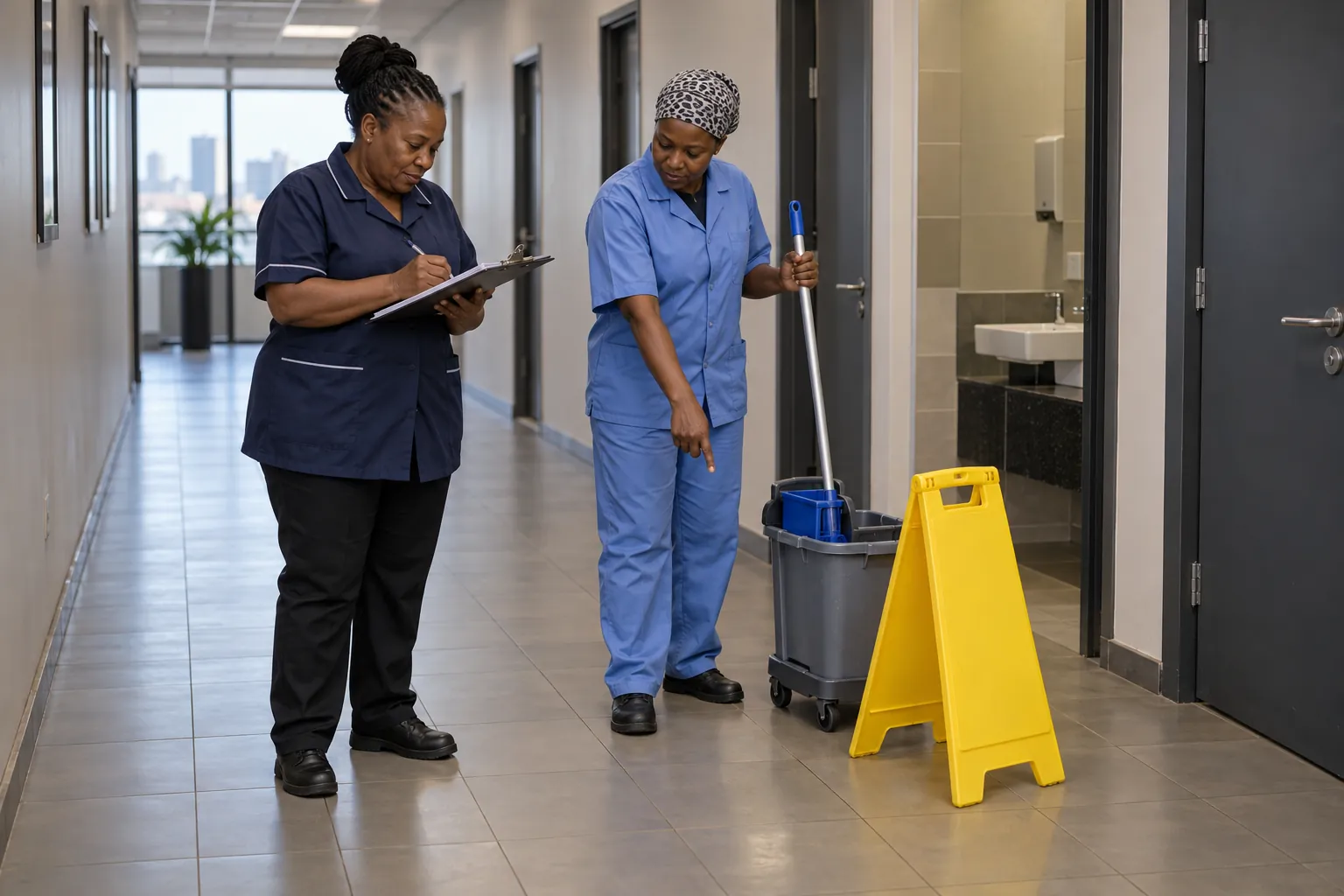 Premises and facilities managementInjury on duty: reporting an IOD under COIDA, and the record the claim rests onInjury on duty (IOD) in South Africa: what COIDA requires, the seven-day W.Cl.2 report, what to record on the day, and how it differs from the OHS Act report.
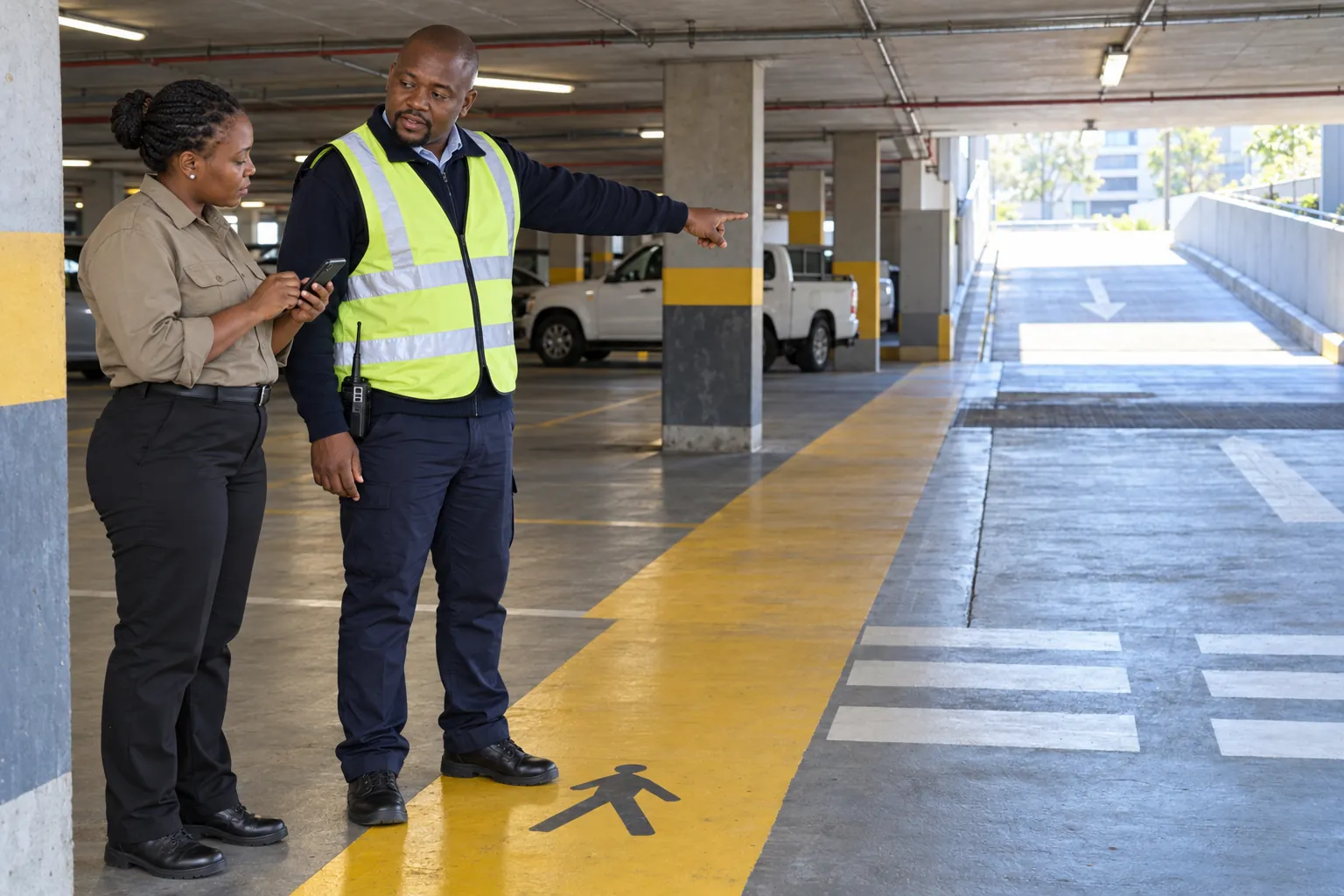 Premises and facilities managementNear miss reports: recording the close calls before someone is hurtWhat a near miss is under the OHS Act, what to put in a near miss report, who reports it to whom, and how cleaning, security and FM teams turn reports into fixes.
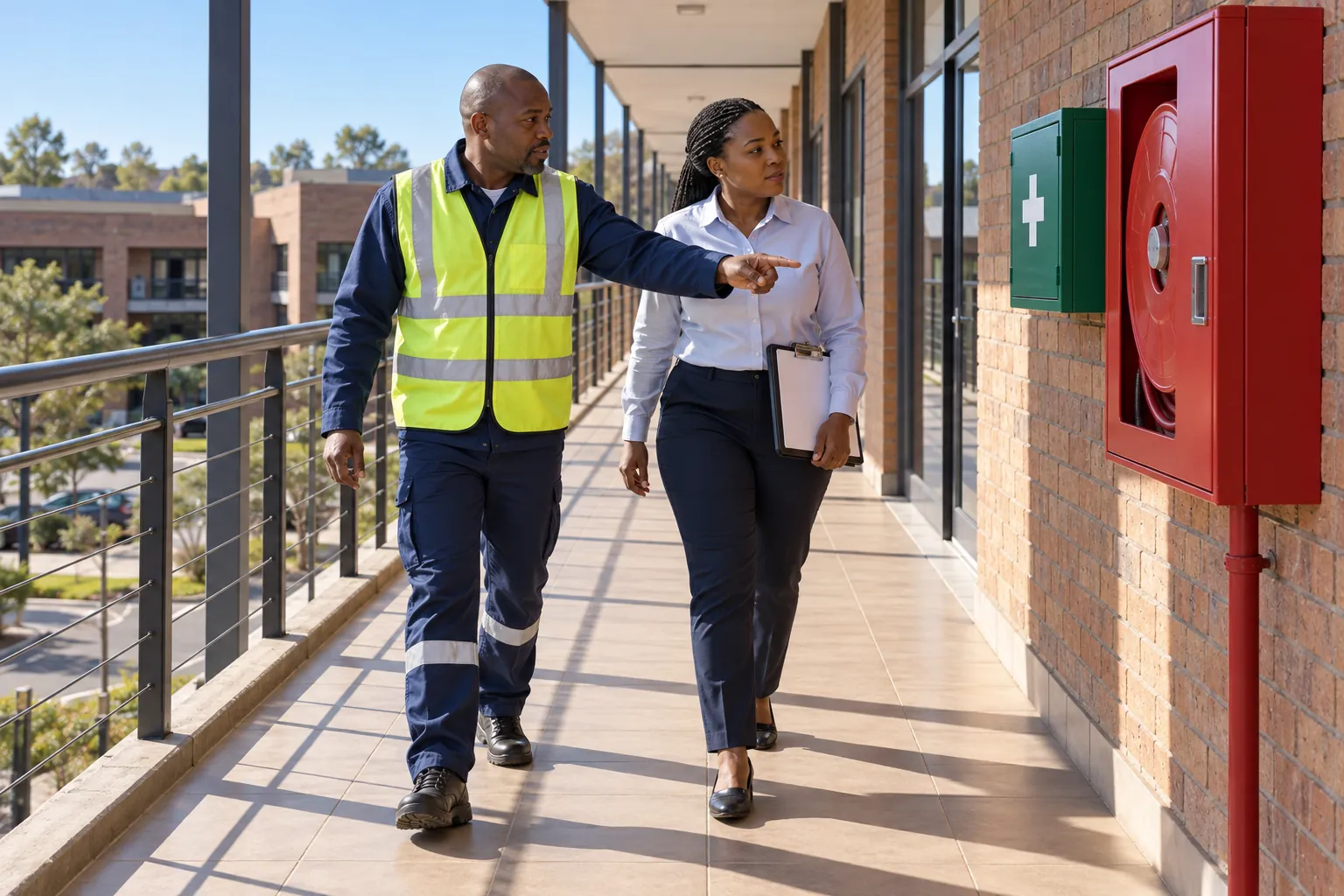 Premises and facilities managementThe OHS Act: what it asks of cleaning, security and facilities employersThe OHS Act 85 of 1993 in plain terms: employer and employee duties, the sections that matter on site, the key regulations and the records an inspector asks for.
 Premises and facilities managementHealth and safety committees: members, meetings and recordsWhen a workplace needs a health and safety committee under section 19 of the OHS Act, who sits on it, how often it meets, and the records it must keep.