Security patrols
Visitor register: what to record at the gate, and what the law lets you ask
A visitor register is a log, kept in a bound book or an electronic system at a guardhouse or reception, that records every visitor, contractor and delivery on the way in and out: the date, times, name, who they came to see and why, and usually the vehicle registration.
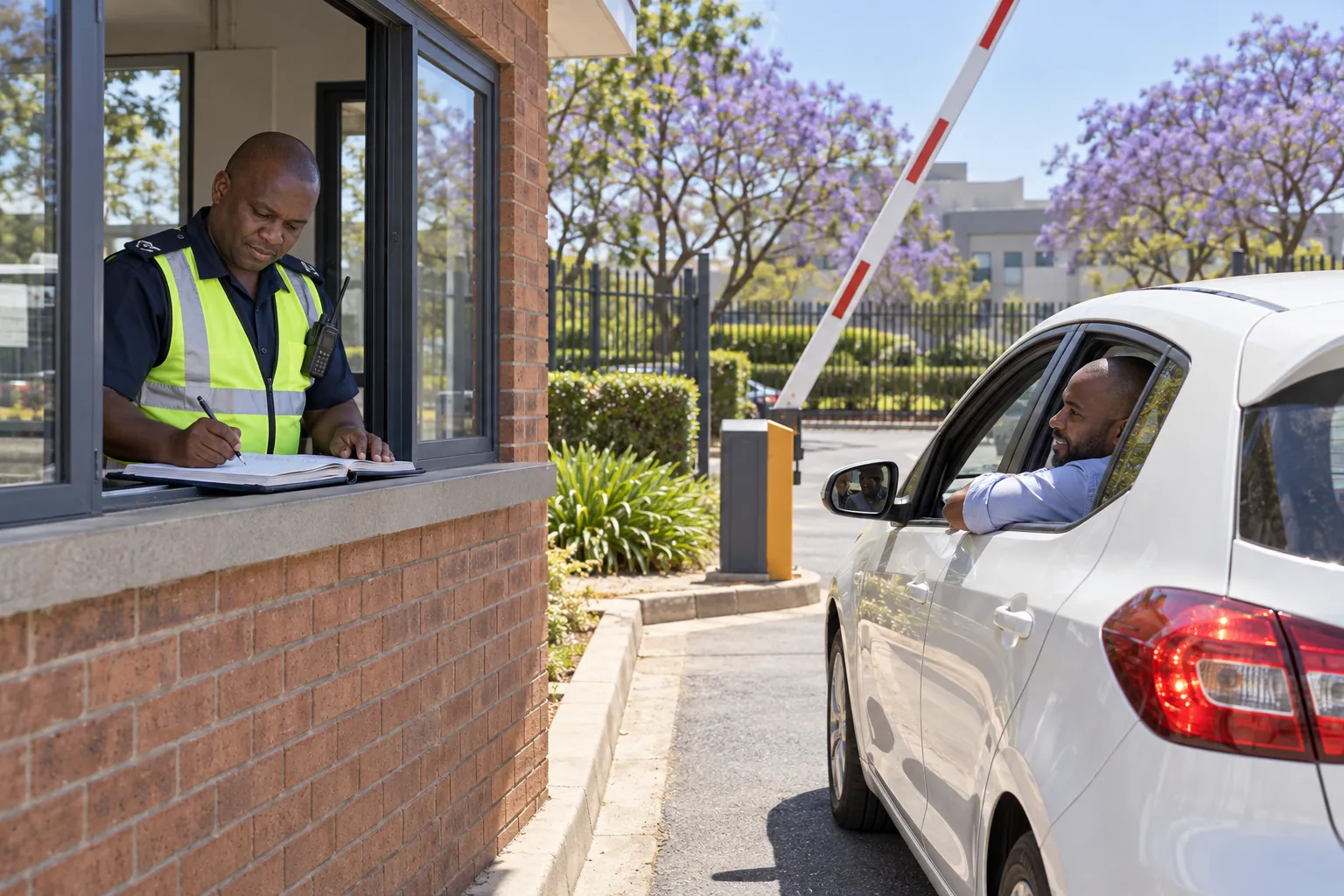
No South African law requires a private building to keep one, but the Protection of Personal Information Act 4 of 2013 governs everything a register records, and at government buildings the Control of Access to Public Premises and Vehicles Act 53 of 1985 sets out what an authorised officer may require before letting a person in. This guide covers what to record, what to leave out, how to run the register at the gate, and how long to keep it.
01
What a visitor register is, and which law sits behind it
A visitor register, also called a visitors' book or a visitor and vehicle register, records who came onto a site, when they arrived and left, and why. It lives at the point of entry: the guardhouse at an estate's or business park's boom gate, the security desk in an office block's foyer, the reception of a school, clinic or factory. It controls who comes in, lets the site track who is on the premises right now, and is the record looked at afterwards when something goes missing or goes wrong.
Government buildings. The one statute that deals directly with access control is the Control of Access to Public Premises and Vehicles Act 53 of 1985. It applies only to "public premises": property of, or occupied, used or controlled by, "the State or a statutory body", to which a member of the public has a right of access, is usually admitted or may be admitted. Under section 2(1) the head of the body occupying the premises may direct that they be entered only with an authorised officer's permission. Section 2(2) then lets the officer require a person to "furnish his name, address and any other relevant information", to "produce proof of his identity to the satisfaction of the authorized officer", to declare any dangerous object, to show the contents of a bag or vehicle, and to be screened by an electronic or other apparatus. Section 4 makes it an offence to enter without permission or to give information the person knows is materially false. The Act gives the power to ask; it says nothing about writing the answers down, and once a gate records them they are personal information under POPIA.
Private buildings. An office block, shopping centre, factory, sectional title scheme or estate is not public premises, so those powers do not apply. What a guard at a private gate controls is permission to enter. Section 1 of the Trespass Act 6 of 1959 makes it an offence to enter or be in a building or on land without the permission of the lawful occupier (or, where nobody lawfully occupies it, the owner or person in charge), unless the person has a lawful reason to be there. The site instructions, the client's contract or the body corporate's or HOA's rules set what a visitor is asked before that permission is given.
Safety. Section 9(1) of the Occupational Health and Safety Act 85 of 1993 requires every employer to ensure, as far as is reasonably practicable, that people other than its employees who may be directly affected by its activities are not exposed to hazards to their health or safety. Knowing which visitors and contractors are inside when the alarm sounds is one practical way of meeting that duty, which is why the register goes to the assembly point in an emergency evacuation.
02
What a visitor register should record, and what to leave out
A register should record what the site needs to control entry, find the visitor's host and account for everyone in an emergency, and no more. Typical columns, one line per visit:
- Date and time in, in the 24-hour clock.
- Full name and the company the visitor represents, if any.
- Who they are visiting, with the department, unit or floor, and the purpose: meeting, delivery, maintenance, interview.
- Vehicle registration and the number of people in the vehicle, at a vehicle gate.
- Visitor's pass number, so the pass can be collected on the way out.
- Time out, with the officer's initials against both times.
- For contractors: the work order or permit reference and confirmation of the site induction, where the site requires one.
What to leave out by default. Many South African gates write down the full ID number, photocopy the ID book or smart ID card, photograph the visitor or scan the barcode on a driver's licence. Each collects far more than a name and a time, and section 10 of POPIA allows personal information to be processed only if, given the purpose, it is "adequate, relevant and not excessive". Before collecting an ID number, a copy or a photograph, a site should be able to say why a name, a sighted ID and the host's confirmation are not enough, and how long the extra information will be kept. A site holding cash, firearms or hazardous stock may have a reason; a small office block usually does not.
Keys, deliveries and staff after-hours access are often better in their own registers, most commonly a key register. The occurrence book refers to the visitor register rather than copying it, and records anything out of the ordinary: a visitor refused entry, a pass not returned, a vehicle that would not stop.
03
What POPIA says about a visitor register
The Protection of Personal Information Act 4 of 2013 (POPIA) defines personal information, the Act's term for personal data, to include "any identifying number", a telephone number, location information and biometric information. A visitor register is a record of personal information, and every entry is processing. The provisions that matter most at a gate:
- Who is responsible. The body that decides why and how the register is kept, usually the building owner, the body corporate or HOA, or the tenant company, is the "responsible party". A security company running the gate for it is an "operator", which under section 20 may process the information only with the responsible party's knowledge or authorisation and must treat it as confidential. Section 21 requires a written contract ensuring the operator maintains the security measures section 19 requires.
- A lawful ground (section 11). Processing needs a ground such as consent or being "necessary for pursuing the legitimate interests of the responsible party". Keeping a building and the people in it secure is the ground most registers rely on.
- A stated purpose (sections 13 and 18). Information must be collected "for a specific, explicitly defined and lawful purpose", and before collection the visitor must be made aware of what is collected, by whom, why, and whether giving it is voluntary or mandatory. A short notice at the gate or on the book's first page does this.
- Not kept longer than necessary (section 14), unless a law requires or authorises it, the responsible party reasonably needs it for lawful purposes related to its functions or activities, a contract requires it, or the visitor has consented.
- Kept secure (section 19), by "appropriate, reasonable technical and organisational measures". An open book in which each visitor can read the names, numbers and registrations of the ten before them is the most common failure.
- Visitors can ask (section 23) whether the responsible party holds information about them, and for a description of it.
Fingerprints and face recognition. POPIA's definition of biometrics includes fingerprinting, and section 26 prohibits processing biometric information unless an exception in section 27(1) applies, such as the person's consent. Otherwise the Information Regulator may authorise it under section 27(2), on application and only where the processing is in the public interest and appropriate safeguards are in place; its Guidance Note on Processing of Special Personal Information (June 2021) explains how to apply. A site fitting a fingerprint reader at its visitor gate should know which exception it relies on, and offer another way in to a visitor who does not consent.
The Information Regulator describes the Information Officer as the person "responsible for ensuring that a responsible party complies with POPIA". That person, not the officer at the gate, should decide what the register records, the notice visitors see and how long completed books are kept.
04
Running the register at the gate or reception
The site instructions should set out the visitor procedure in steps a new officer can follow on their first shift:
- Confirm the visit with the host or unit by phone or intercom before the boom goes up, unless the visitor is on a list the host sent in advance.
- Sight the ID where the site requires it: check the photograph and name against the person, hand it back, and record only what the instructions ask for.
- Complete the line, or watch the visitor do so, and write the time in yourself.
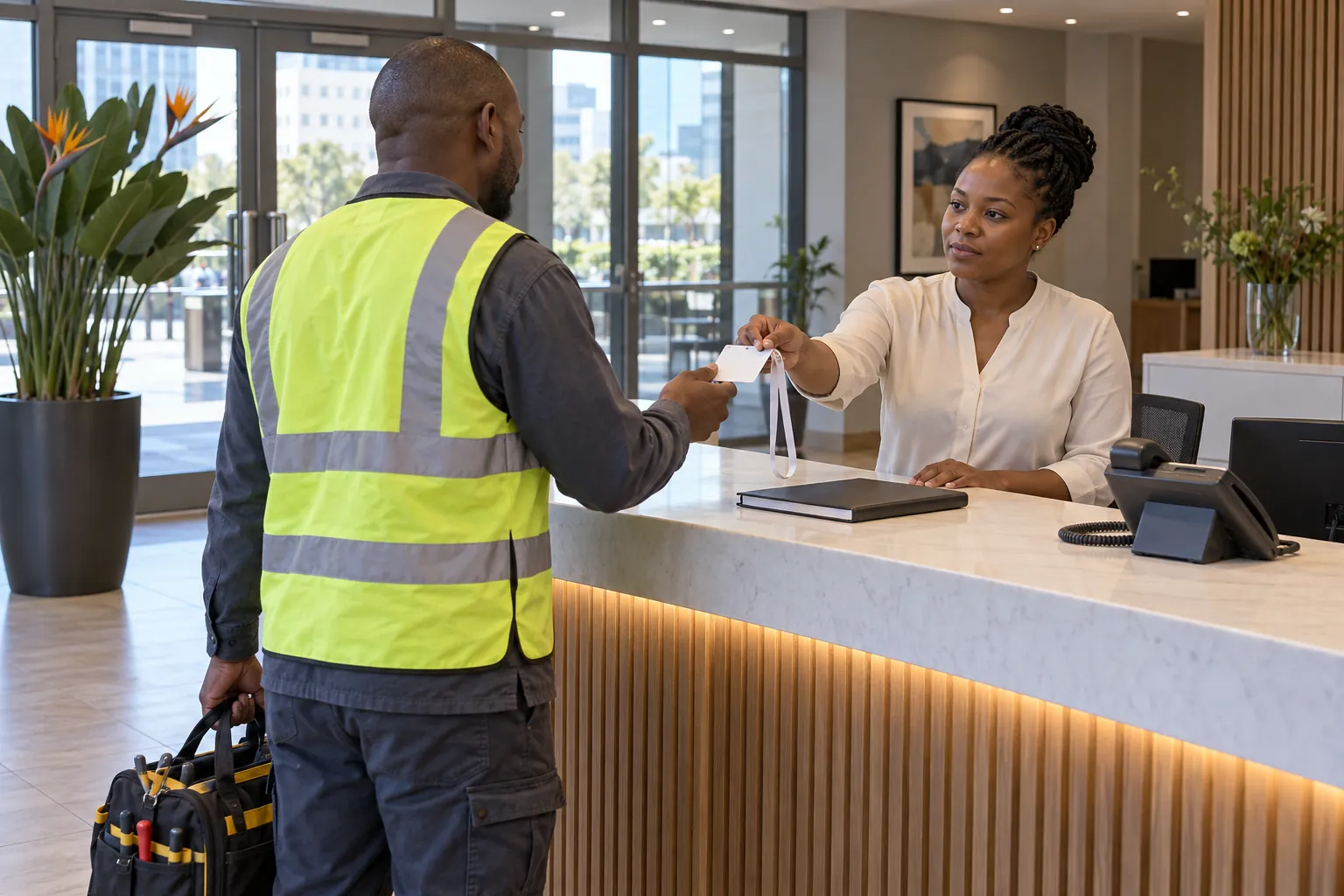
- Issue a pass, write its number against the entry, and tell the visitor where they may go and whether they will be escorted.
- Book the visitor out: collect the pass, write the time out and, at a vehicle gate, check the number of people leaving.
- Reconcile at every shift change: count entries with no time out and passes not returned, confirm with the hosts, and hand the list over in the occurrence book.
- Take the register to the assembly point when the alarm sounds.
Estates and sectional title schemes. Residents commonly send visitors' details in advance or issue them a code, so the officer checks a list rather than taking every detail at the boom. The pre-registration list is personal information too, and the body corporate's or HOA's rules should say what visitors are asked.
Refusals. A visitor who declines to give what is asked can be refused entry, courteously, with the time and the reason recorded in the occurrence book. Avoid keeping a visitor's ID document or driver's licence as a deposit for a pass: a returnable pass and a time out in the register do the same job without holding someone's identity document behind the counter.
Load shedding. A tablet at the gate needs power and a connection. Keep a paper register on the post for outages, and note the switch to paper in the occurrence book so the gap in the electronic record is explained.
05
Checking the register, keeping it and choosing a system
Checking. A supervisor visiting the post should read the register as well as the occurrence book: lines with no time out, passes missing, entries filled in later in one hand, visitors let in with no host recorded. A register complete at 08:00 and blank from 14:00 says as much about the post as any patrol record.
Keeping. No law sets a period for a private building's visitor register, so the responsible party decides one and writes it down: long enough to investigate a theft or incident that comes to light later, and no longer. An entry about an incident that may go to a hearing, an insurer or court is kept with that incident's file. Completed books are collected from the post, labelled with the site and dates, locked away and destroyed securely at the end of the period.
Paper or electronic. A bound book is cheap, works during load shedding and is understood by everyone, but every visitor can read it and it can be filled in afterwards. An electronic visitor management system can print passes, notify hosts, count who is on site and delete old entries on schedule. Features vary, so before choosing one, ask:
- What does it collect by default, and can ID scans, photographs and licence barcodes be switched off?
- Does it use fingerprints or face recognition, and on which section 27(1) exception would the site rely?
- Where is the information stored, who at the supplier can see it, and does the contract meet section 21?
- Does it delete entries at the end of a retention period the site sets?
- Is each entry traced to the officer who made it, and can it be changed without trace?
06
Where the visitor register fails, and where SiteClara fits
The register records the people who came to the front gate and were written in. It is weak at everything around it. Nobody notices the column of blank times out until the evacuation roll call. The shift-change reconciliation is signed as done whether or not anyone phoned the hosts. The broken intercom, the empty pass box and the side gate found propped open are mentioned to whoever was passing and are still broken next week. The client sees the book only if they walk to the guardhouse.
SiteClara records the routine checks around the entrance where they happen. A printed QR poster, with an optional NFC tag behind it, goes at each checkpoint: the main gate, the reception desk, the pedestrian gate, the delivery entrance. The officer scans the code or taps the tag on their own phone, with no app to install, and marks the scheduled check done, such as the shift-change reconciliation or the side gate locked at 18:00, or says what stopped them. The time and the named officer are recorded as it happens. A fault found at the gate can be reported there with a photo, and it stays on the team's list of jobs until someone closes it.
The supervisor sees what was due, done and missed, and can record why a check was missed. The supervisor approves the daily report, and it goes by email to nominated management or client contacts at 08:00 the next morning: what was reported, what was completed, what is still open and how the scheduled checks went.
07
Questions people ask
Which details should be recorded in a visitor register?
The date, time in and time out, the visitor's full name and company, who they are visiting and why, the pass number and, at a vehicle gate, the registration and number of people in the vehicle. Add more only where the site needs it: section 10 of the Protection of Personal Information Act 4 of 2013 says personal information may only be processed if, given its purpose, it is "adequate, relevant and not excessive".
How do you write a visitor register?
Rule one line per visit with a column for each detail, write the times in the 24-hour clock, and have the officer initial the time in and the time out. Put a short notice on the first page or at the gate: section 18(1) of the Protection of Personal Information Act 4 of 2013 requires reasonably practicable steps to make visitors aware of what is collected, the name and address of the responsible party, the purpose, and "whether or not the supply of the information by that data subject is voluntary or mandatory".
What are the benefits of a visitor register?
It controls who comes in, shows who is on site at any moment, and is the record looked at when something goes missing. It also helps an employer meet section 9(1) of the Occupational Health and Safety Act 85 of 1993, which requires it to ensure, as far as is reasonably practicable, that people other than its employees who may be directly affected by its activities "are not thereby exposed to hazards to their health or safety": a register taken to the assembly point shows which visitors and contractors still need to be accounted for.
Is a visitor register required by law in South Africa?
Not for a private building. The Control of Access to Public Premises and Vehicles Act 53 of 1985 applies only to premises of the State or a statutory body, and under section 2(2) an authorised officer there may require a person to "furnish his name, address and any other relevant information" and "produce proof of his identity" before giving permission to enter. Whatever a register records is personal information, so section 14 of the Protection of Personal Information Act 4 of 2013 says it must not be kept "any longer than is necessary for achieving the purpose" unless a law requires or authorises it, the responsible party reasonably needs it for lawful purposes related to its functions or activities, a contract requires it, or the visitor has consented.
08
Further reading, and a list to take away
The Control of Access Act, POPIA and the OHS Act are on gov.za, and the Trespass Act on the Department of Justice's site. The Information Regulator publishes its POPIA guidance on inforegulator.org.za. Before the next book is opened at the gate, check that:
- the Information Officer has agreed what the register records, and a notice tells visitors what, why and whether they must give it;
- ID numbers, copies, photographs and licence scans are collected only where the site can say why;
- the contract with the security company covers the register under sections 20 and 21 of POPIA;
- the open book does not show earlier visitors' details to the next one;
- every entry has a time out, and passes are reconciled at every shift change;
- the register goes to the assembly point, and a paper register is kept for load shedding;
- completed books are stored securely and destroyed at the end of a written retention period.
Sources
Every document this guide quotes or links to, in the order it first cites them.
- Control of Access to Public Premises and Vehicles Act 53 of 1985 gov.za
- Trespass Act 6 of 1959 justice.gov.za
- Occupational Health and Safety Act 85 of 1993 gov.za
- Protection of Personal Information Act 4 of 2013 gov.za
- Guidance Note on Processing of Special Personal Information (June 2021) inforegulator.org.za
- Information Regulator inforegulator.org.za
Related guides
 Security patrolsOccurrence book: what goes in the OB, and how to keep one that stands upThe security occurrence book (OB) in South Africa: what to record each shift, how to write entries, what PSIRA and the OHS Act require, and paper or electronic.
 Security patrolsKey register: issuing, returning and accounting for every key on siteWhat a key register should record in South Africa, how to issue and count keys at a post, and what the PSIRA Code and POPIA mean for the keys and the book.
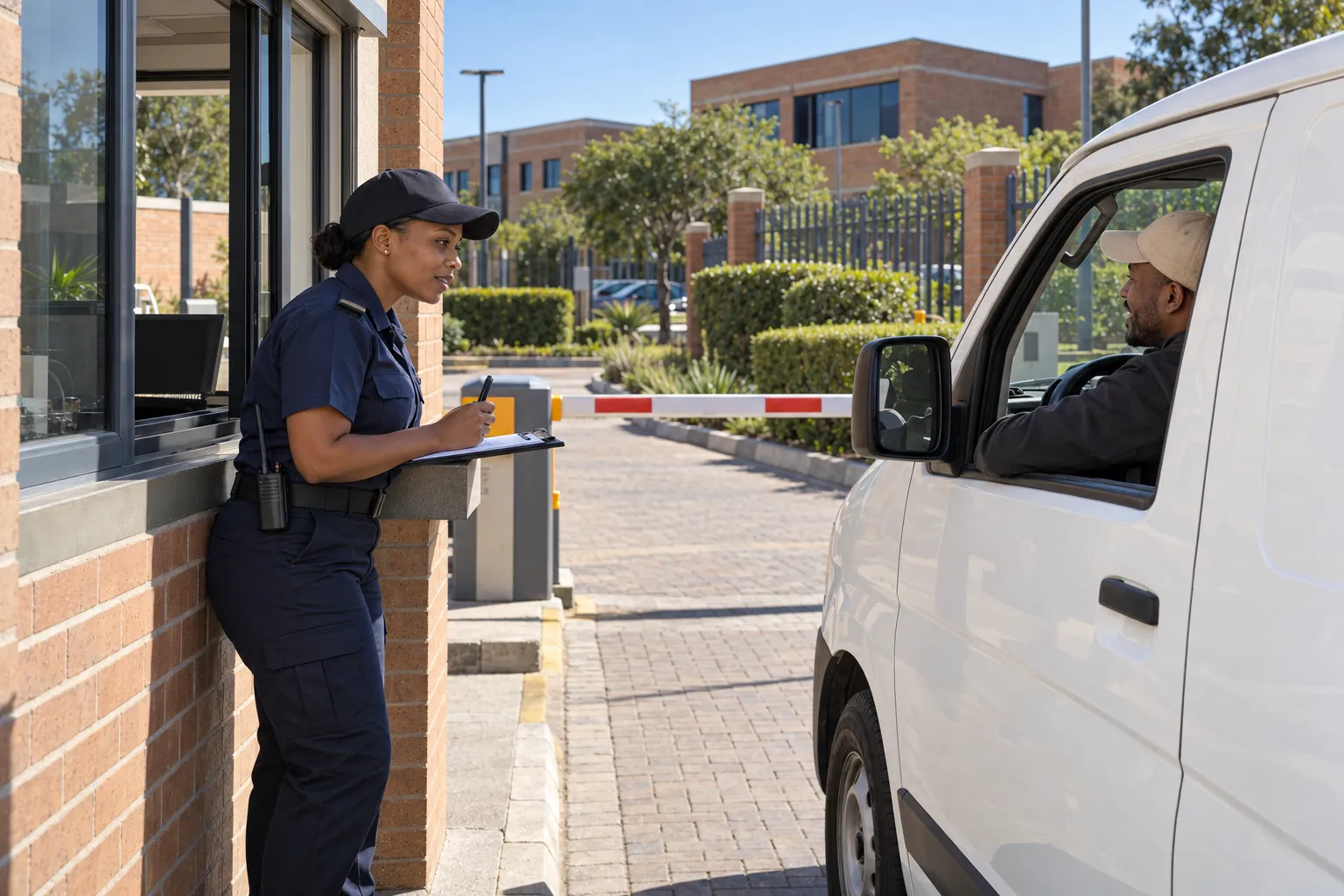 Security patrolsSecurity officer duties and responsibilities: what the post involves, and how it is checkedSecurity officer duties in South Africa: PSIRA registration, patrols, access control, the OB, incidents, what officers may not do, and how duties are checked.
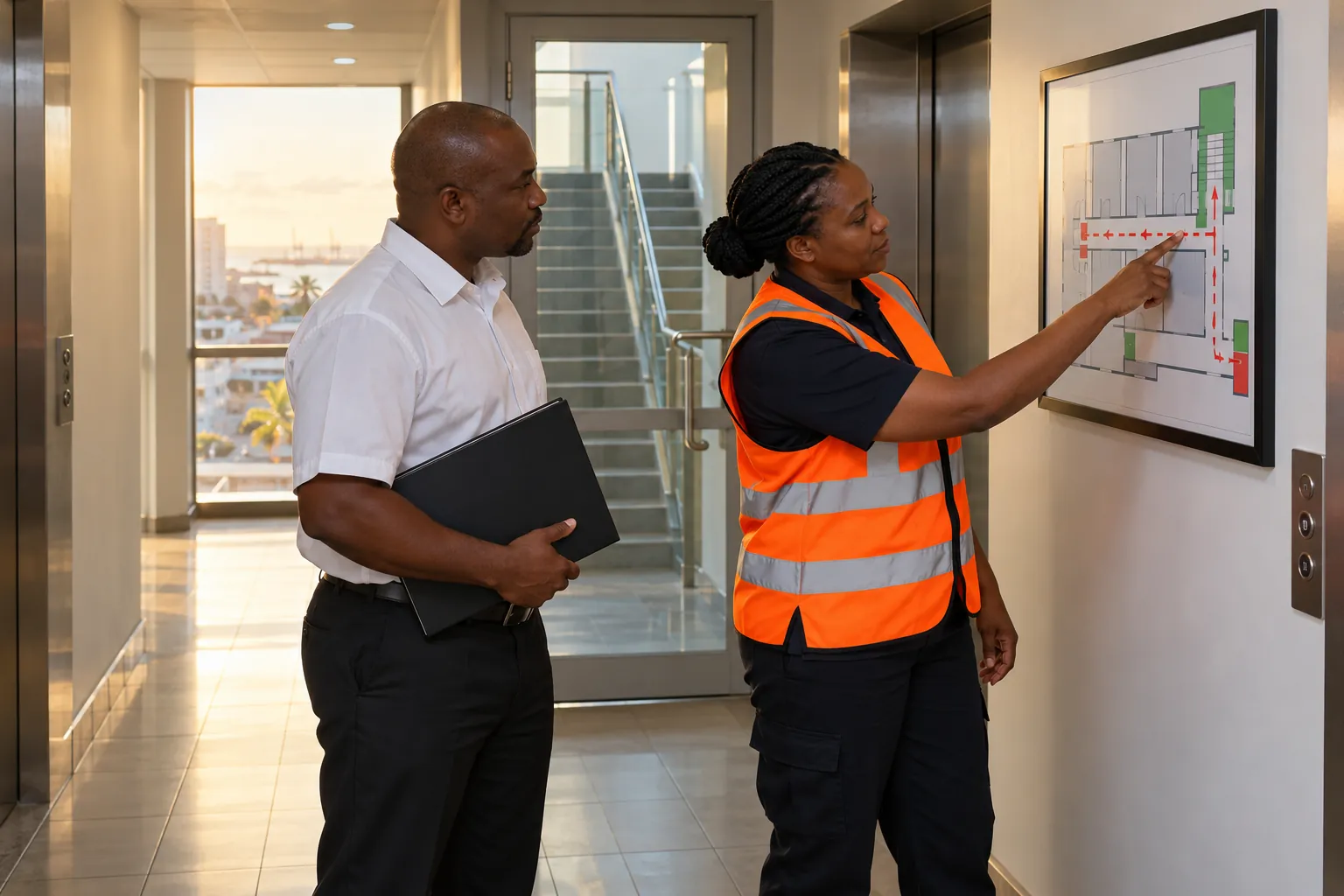 Fire and water checksEmergency evacuation plans: what goes in one, and how to keep it trueWhat an emergency evacuation plan must contain in South Africa, which by-laws require one, how often it is reviewed and tested, and keeping escape routes usable.