Premises and facilities management
Roof inspection checklist: getting up safely, checking the right things, and keeping the record
A roof inspection checklist for a commercial building in Australia covers two things: the access and fall protection that get the inspector onto the roof and back safely, and the condition of the roof itself, from box gutters, sumps and flashings to roof sheets, tiles, skylights and plant.
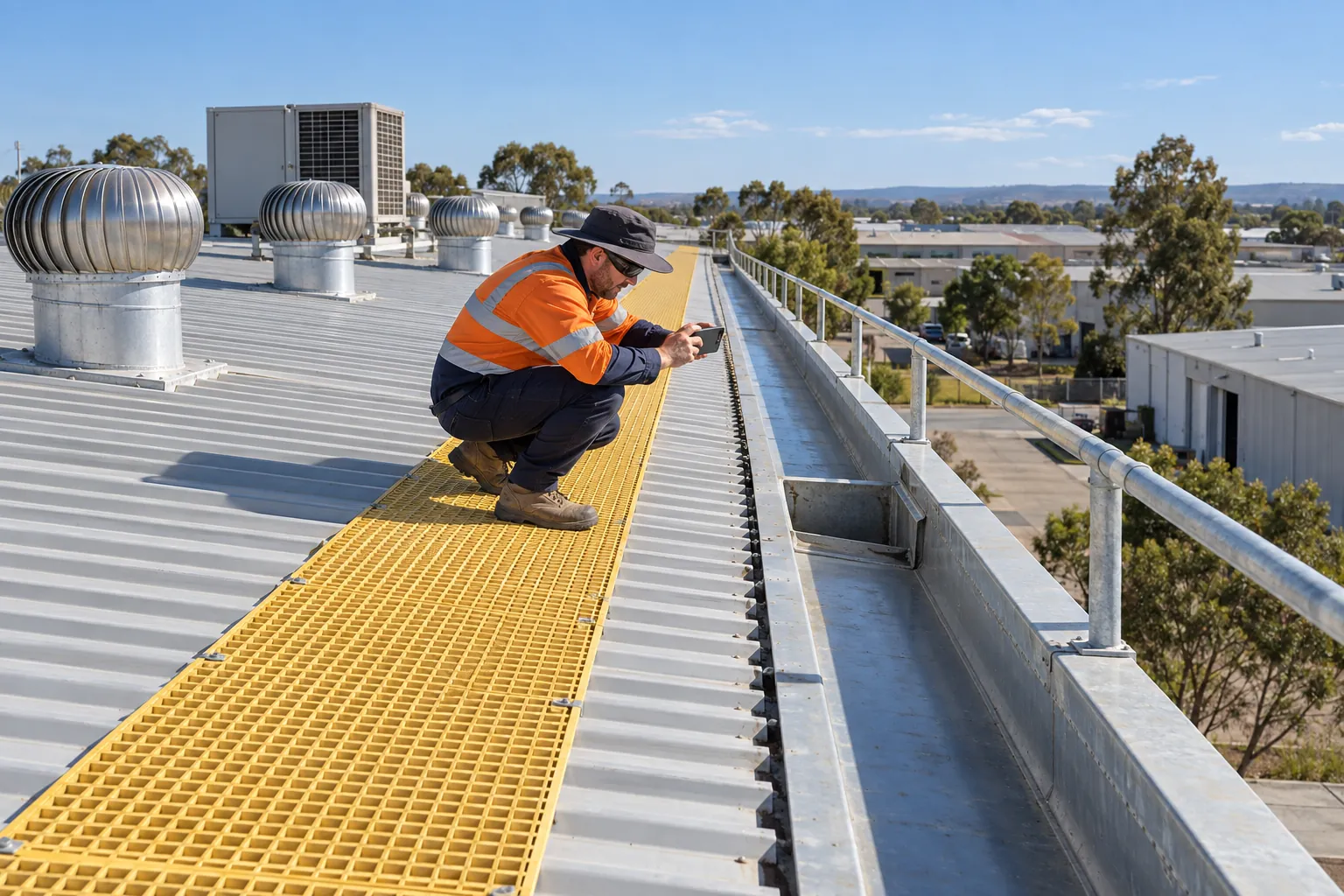
Many checklists only cover the second. The first matters as much, because the inspection has to get a person up there and back without a fall, over edges, through skylights and past fragile sheeting. This guide covers the falls duties in Australian work health and safety law, including Victoria's separate regulations, what a roof inspection checklist for a commercial or industrial building should cover, the controls to confirm before anyone steps out of the access hatch, how often to inspect, and the records that show it was done.
01
What Australian WHS law asks of anyone working on a roof
No Australian law prescribes a roof inspection checklist or says how often a roof must be looked at. What the law governs closely is getting onto the roof and moving around it, because that is where people are hurt. A roof inspection is work at height, and Part 4.4 of the model work health and safety regulations applies to it. The wording below is from the Commonwealth Work Health and Safety Regulations 2011 (compilation of 25 March 2025), which keep the model numbering; each state and territory that has adopted the model laws has its own regulation in substantially the same terms.
- Regulation 78: a person conducting a business or undertaking (PCBU) "must manage, in accordance with Part 3.1, risks to health and safety associated with a fall by a person from one level to another that is reasonably likely to cause injury". That includes a fall near an edge or an opening, or on "a surface through which a person could fall": every fibreglass skylight and brittle roof sheet. So far as is reasonably practicable the work is done on the ground or on a solid construction, and there must be safe means of access and exit.
- Regulation 79: where the risk cannot be eliminated, it is minimised in order: a fall prevention device (a secure fence, edge protection, a working platform or a cover); failing that, a work positioning system; and only then a fall arrest system.
- Regulation 80: where fall arrest is used, the PCBU must establish emergency and rescue procedures, test them so that they are effective, and train the workers involved.
Two further duties matter. The person with management or control of a workplace, often the owner, owners corporation, body corporate or managing agent, must ensure so far as is reasonably practicable that it and the means of entering and leaving it are without risks to health and safety (section 20 of the WHS Act). And regulation 48 requires effective communication with an isolated worker, which SafeWork NSW says can include someone alone on the roof of an occupied office building.
Roof work can also be construction work, which includes the repair and maintenance of a structure, though not "testing, maintenance or repair work of a minor nature" (regulation 289); where it "involves a risk of a person falling more than 2 metres" it is high risk construction work (regulation 291) and needs a safe work method statement. A look around from the hatch is an inspection; replacing a skylight sheet is likely to be construction work, while clearing a box gutter may be minor maintenance, and the paperwork changes with it.
The most specific guidance is SafeWork NSW's Code of practice: Work on roofs – commercial and industrial buildings, in force in New South Wales from 22 May 2026. It covers flat and low-pitched roofs "often requiring repeat access throughout the life of the building", and counts inspecting roof plant, walkways, guardrails, lifelines and anchor points as roof work in its own right. It is written for NSW, but it is quoted throughout this guide because no other document says as plainly what a well-run roof looks like.
02
What a roof inspection checklist covers
Build the checklist from the roof in front of you, in two parts: the access and fall protection that keep the inspector safe, checked first every time, and the condition of the roof, the reason for going up.
Access and fall protection, checked on the way up and on the way round:
- the access route: the hatch, plant room door, fixed ladder or stair, and a protected landing at the top;
- guardrails and parapets along edges and around openings, fixed and undamaged;
- walkways marked and clear, with the no-go areas beyond them signed and delineated;
- covers over skylights, and fragile or brittle sheeting marked as a no-go area;
- anchor points, static lines and rails: undamaged, and within their inspection date;
- signage at the access point and on the fall protection system, in place and readable;
- radio frequency exclusion zones around antennas, marked, with the site's access procedure followed.
Roof condition, walked area by area:
- box gutters, eaves gutters, sumps, rainwater heads and overflows: free of leaves, silt, plant growth, dead birds and loose debris;
- downpipe outlets and leaf guards: clear and attached;
- roof sheets and membranes: corrosion, lifted or missing fixings, cracked or split laps, ponding water, blistering;
- roof tiles, where a pitched section is tiled: cracked, slipped or missing tiles and loose ridge capping;
- sagging sheets, gutters or roof lines, which can indicate a structural problem for a competent person to assess;
- flashings, cappings and penetrations: lifted, torn or unsealed around vents, pipes, ducts and plant supports;
- skylights and roof lights: cracked, crazed or discoloured sheeting, failed seals;
- roof mounted plant: air conditioning units, exhaust fans and solar arrays secure, with no loose panels or cabling;
- storm and hail damage: dented or holed sheets, displaced flashings, blown debris;
- nesting birds, droppings, and signs of trespass such as a forced hatch;
- inside, under the roof and in the roof space: water stains on ceiling tiles and around downpipes, and damp or displaced insulation, often the first evidence of a leak before it becomes water damage.
SafeWork NSW's falls code names the fragile surfaces to look out for: "cement sheeting roofs, rusty metal roofs, fibreglass sheeting roofs and skylights". Each belongs on the checklist as a hazard to avoid, not only as a defect to report.
Keep the checklist to what the person going up can judge. A building manager can see a blocked sump or a missing fixing; whether an anchor will hold a fall, or a corroded purlin carry a load, is a question for a competent person.
03
Before anyone goes up: the controls to confirm
The Work on roofs code sets out what should be known about an existing roof before work begins. It says an inspection "should be conducted by a competent person to determine" safety mesh, the structural integrity of the roof, "the fragility of the roof and roof sheets", and "the presence of asbestos, sky lights, electrical, radio frequency, chemical, biological or other hazards". Record the answers once and keep them with the checklist. Then, before each visit:
- The asbestos register. Many buildings built before 1990 contain asbestos, and the code says the register must be reviewed before any work on roofs. Read it before planning the route.
- The route and the controls. Keep the path on walkways and away from edges and fragile areas. The code says no-go areas may be an appropriate control where a permanent trafficable walkway "clearly delineates a travel path that is a minimum of 3 metres from any fall hazard", prefers edge protection to harnesses and no-go areas, and warns that fall arrest "is typically unsuitable for controlling falls at roof edges".
- The access method. A portable ladder may suit "low risk, short duration activities such as site inspection, quoting and measuring", while "permanently installed access should be used where regular access is required to inspect, service and maintain roof-mounted plant". The code points to AS 1657:2018 for fixed platforms, walkways, stairways and ladders.
- The weather. The code lists extreme temperature, wind, rain and ice among roof hazards. A wet metal roof, a gusty afternoon or extreme heat on metal sheeting is a reason to postpone a routine inspection; after a storm, look first from the access point and the ground.
- The permit. Where the building uses roof access permits, one of the administrative controls the code lists, issue it before the key is handed over.
- Communication. Agree how the inspector will stay in contact, when they will check in, and what happens if they do not; the code suggests a check-in at a nominated time and an emergency response plan for a missed one.
- Rescue. If anyone will clip on to a fall arrest system, the rescue procedure must exist, have been tested, and be known to the person going up and the person who would start it (regulation 80).
When a roof plumber, air conditioning technician or solar installer goes up, the building and the contractor both hold duties for the same work, and section 46 of the WHS Act requires them, so far as is reasonably practicable, to consult, cooperate and coordinate activities. In practice that means the contractor sees the roof's hazards and the asbestos register first, uses the building's access procedure, and reports what they found.
04
How often to inspect a roof, and after what
There is no statutory interval for inspecting a roof's condition. It comes from the maintenance plan, the roofing and plant manufacturers' instructions, the trees around the building and the climate: a box gutter under eucalypts needs more attention than a clean membrane roof in an industrial estate. A sensible pattern is a routine visual check at a set interval, with a fuller inspection by a professional roofing contractor less often, written into the plan so that a missed inspection shows as missed. Regular inspections and prompt repairs help prevent small problems, such as a blocked sump, turning into water damage inside the property, and give the roofing materials a better chance of reaching their expected lifespan.
Some inspections are triggered by events rather than the calendar:
- before the wet season or the storm season;
- after a severe storm, hail or high winds, once it is safe to go up;
- after new plant, solar panels or antennas are installed, because the Work on roofs code says that where the use of a roof changes, existing controls "must be reviewed";
- after a leak is reported inside, to find the source;
- after a contractor has worked on the roof, to check it was left clean, sealed and secure.
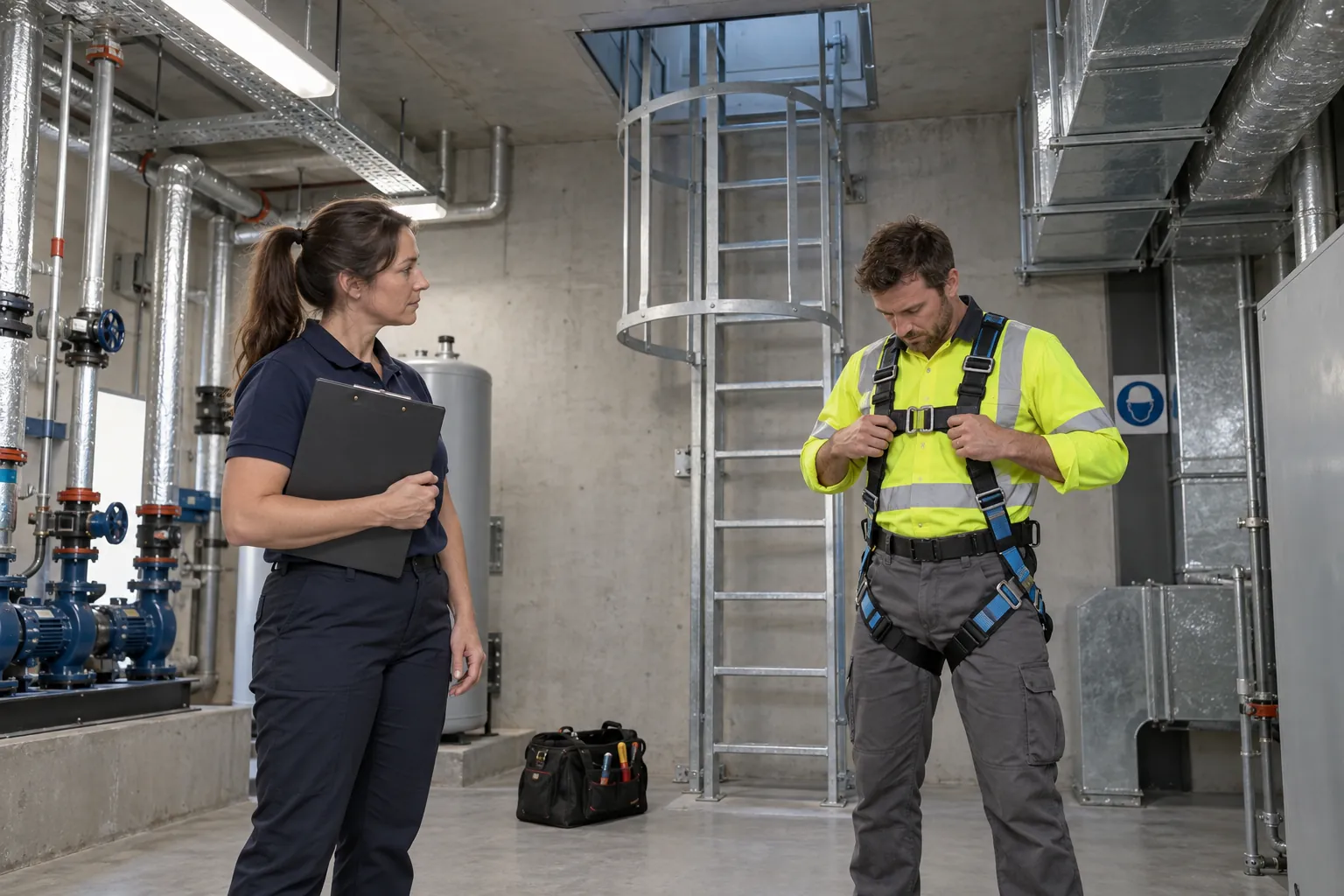
Fall protection has its own cycle. The Work on roofs code says anchorage points should be inspected in accordance with AS/NZS 1891.4:2025, Personal equipment for work at height – Selection, use and maintenance, "either on a scheduled basis or prior to use (if used infrequently)". That is a competent person's job; the routine roof check confirms only that the inspection is in date and nothing is visibly damaged. SafeWork NSW's falls code adds that fall arrest components should be inspected after installation and before use, at regular intervals, and immediately after arresting a fall. Harnesses and lanyards are checked by their user for wear and damage before and after use.
05
What a good roof inspection record looks like
For commercial roofs, the Work on roofs code names the record directly. Among its examples of control measures are "inspecting and maintaining all permanently installed roof access and fall-protection equipment in accordance with manufacturer's instructions and relevant Australian Standards" and "keeping records of inspection, testing and maintenance of all permanently installed roof access equipment", and ensuring the signage related to that equipment "is maintained and remains clearly visible".
The falls code describes what the inspection regime behind that record should contain:
- the equipment to be inspected, including its unique identification;
- the frequency and type of inspection, for example pre-use checks and detailed inspections;
- the action to be taken on finding defective equipment;
- the means of recording the inspections;
- training of users;
- the system of monitoring the inspection regime to verify that inspections are carried out appropriately.
For the roof's condition, a record worth keeping shows:
- which roof, or which area of a large roof, was inspected, identified the same way every time;
- who went up, when they went up, and when they came down;
- what was checked, item by item, with a plain yes, no or not applicable;
- photographs of each defect, and of the gutters and sumps even when clear, so the next inspector can compare;
- each defect raised as a job with an owner, a priority and a date, and closed only when fixed and checked;
- anything that stopped the inspection, such as weather, a locked hatch or an anchor out of date, recorded as a reason and not left blank.
The photograph does most of the work. A tick against "box gutter clear" says someone thought so; a dated photograph of the sump shows it, and photographs from the same spot each time show slow change, such as corrosion spreading around a fixing.
Keep the asbestos register, the fall protection inspection reports and any records required by state building or fire safety law as separate documents with their own rules; a roof checklist replaces none of them.
06
Where the roof record fails, and what SiteClara does about it
Roof records fail in predictable ways. The inspection is due, nobody goes up because the hatch key is with a contractor, and the sheet is filled in later from memory. The gutters are cleared, but nobody can show it when water comes through the ceiling after the next storm. A contractor finds a lifted flashing, mentions it to whoever was at reception, and it goes no further.
SiteClara helps with the routine part. A printed QR poster, with an optional NFC tag behind it, sits at each location where checks are scheduled, such as the roof access hatch, a plant room or a gutter run on a large roof. The person doing the check scans or taps with their own phone, with no app to install, sees the checks due there, and marks each one done, with a photo where one is asked for, or says what stopped them, such as weather or a locked hatch. A problem reported there, such as a blocked sump or a cracked skylight, goes onto the team's list of open jobs with the location, the time and the named person, until someone closes it.
The supervisor sees what was due, what was done and what was missed, and the open jobs grouped by building and floor. Each day they add a note and approve a report that goes to nominated management or client contacts the next morning, showing what was reported, what was completed and what is still open.
07
Questions people ask
What do they look for in a roof inspection?
Two things: whether the roof can be walked safely, and what condition it is in. SafeWork NSW's Code of practice: Work on roofs – commercial and industrial buildings says that before work on an existing roof a competent person should inspect it to determine the presence and integrity of safety mesh, the structural integrity of the roof and its supporting structures, the fragility of the roof and roof sheets, and the presence of asbestos, skylights, electrical, radio frequency, chemical, biological or other hazards. The routine condition check then looks at gutters, sumps, sheets, flashings, skylights and plant, as listed above.
Is there a roof inspection checklist for NSW?
There is no prescribed form, but SafeWork NSW's Code of practice: Work on roofs – commercial and industrial buildings, which commenced on 22 May 2026 and replaced the 2009 Safe Work on Roofs code, is the document to build one from. It is an approved code of practice under section 274 of the NSW Work Health and Safety Act 2011, so a court may rely on it in deciding what was reasonably practicable. Its examples of controls for commercial roofs include inspecting and maintaining permanently installed roof access and fall protection equipment, and keeping records of that inspection, testing and maintenance.
Does an old roof need checking for asbestos before anyone goes up?
Yes. SafeWork NSW's Code of practice: Work on roofs – commercial and industrial buildings notes that many buildings built before 1990 contain asbestos, including in roofing, guttering and downpipes, and that asbestos roofing is often weathered and in poor condition. Asbestos-containing materials must be recorded in the asbestos register, and the code says the register must be reviewed before any work on roofs.
08
Where to read more, and a checklist to take away
The falls duties are regulations 78 to 80 of the Work Health and Safety Regulations 2011, with regulation 48 on isolated work; for a site in a state or territory, read its own regulation.
For practice, read SafeWork NSW's Code of practice: Work on roofs – commercial and industrial buildings (May 2026), chapters 4, 5 and 7, and its Code of practice: Managing the risk of falls at workplaces, based on Safe Work Australia's model code. In Victoria, start with WorkSafe Victoria's Guide to the Occupational Health and Safety Regulations 2017, Part 3.3.
Before the next roof inspection, check that:
- the roof's hazards are recorded by a competent person: fragile sheeting, skylights, asbestos, safety mesh, RF zones;
- the checklist has two parts, access and fall protection first, then roof condition, area by area;
- walkways, guardrails, skylight covers and no-go areas are in place, and harnesses are a last resort;
- anchors and lines are within their AS/NZS 1891.4 inspection;
- the inspector has a way to stay in contact, a check-in time, and a tested rescue plan if they clip on;
- every defect has a photograph, an owner and a date, and is checked again when fixed;
- storms, new plant, leaks and contractors' visits trigger extra inspections;
- in Victoria, the procedure follows the OHS Act 2004 and the OHS Regulations 2017.
Sources
Every document this guide quotes or links to, in the order it first cites them.
- Work Health and Safety Regulations 2011 legislation.gov.au
- Guide to the Occupational Health and Safety Regulations 2017 content-v2.api.worksafe.vic.gov.au
- Compliance code: Prevention of falls in general construction worksafe.vic.gov.au
- Code of practice: Work on roofs – commercial and industrial buildings safework.nsw.gov.au
- Code of practice: Managing the risk of falls at workplaces safework.nsw.gov.au
Related guides
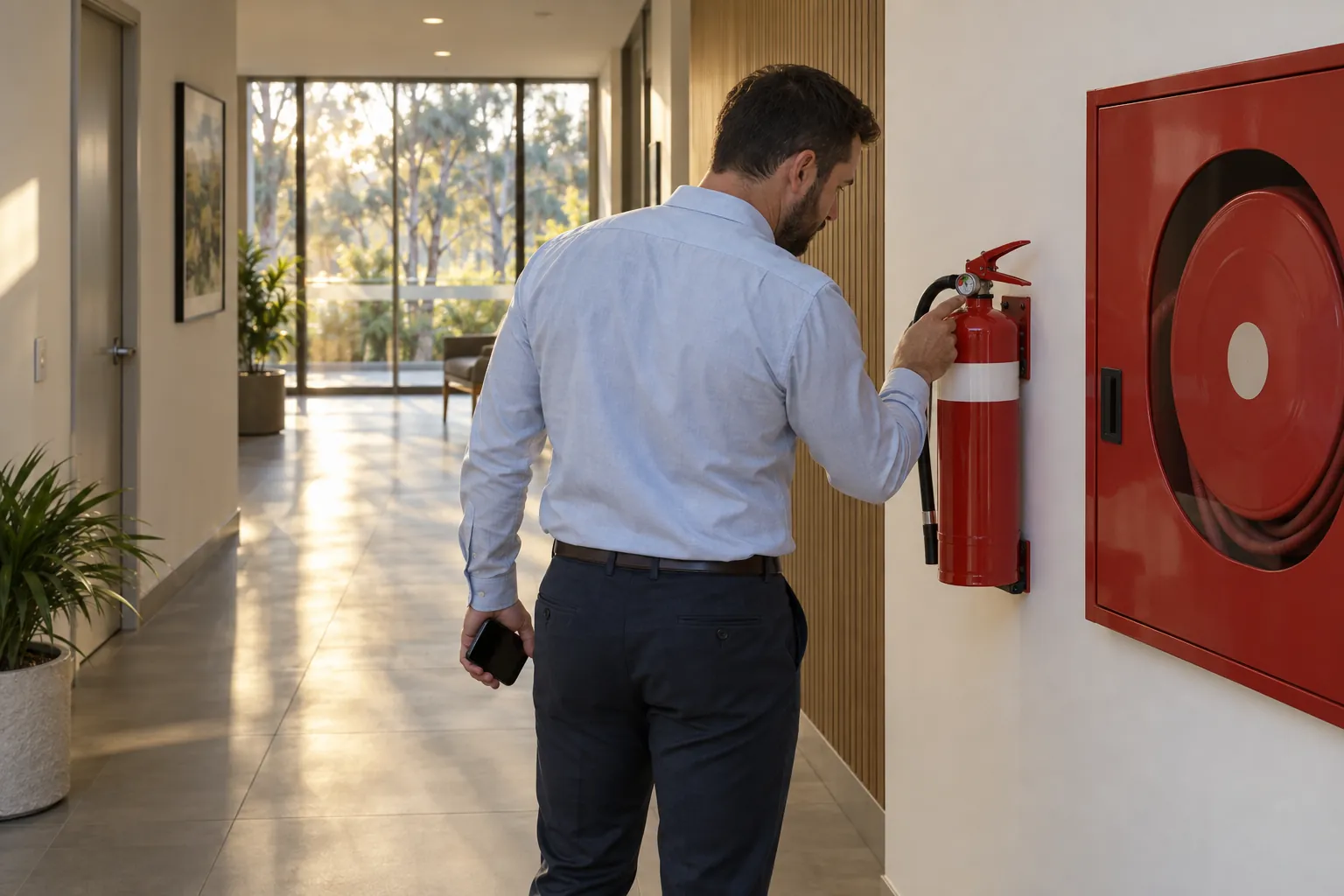 Premises and facilities managementBuilding maintenance checklist: what to check, how often, and who byA building maintenance checklist for Australian commercial and strata buildings: daily to annual tasks, the WHS and fire safety law behind them, and who does each.
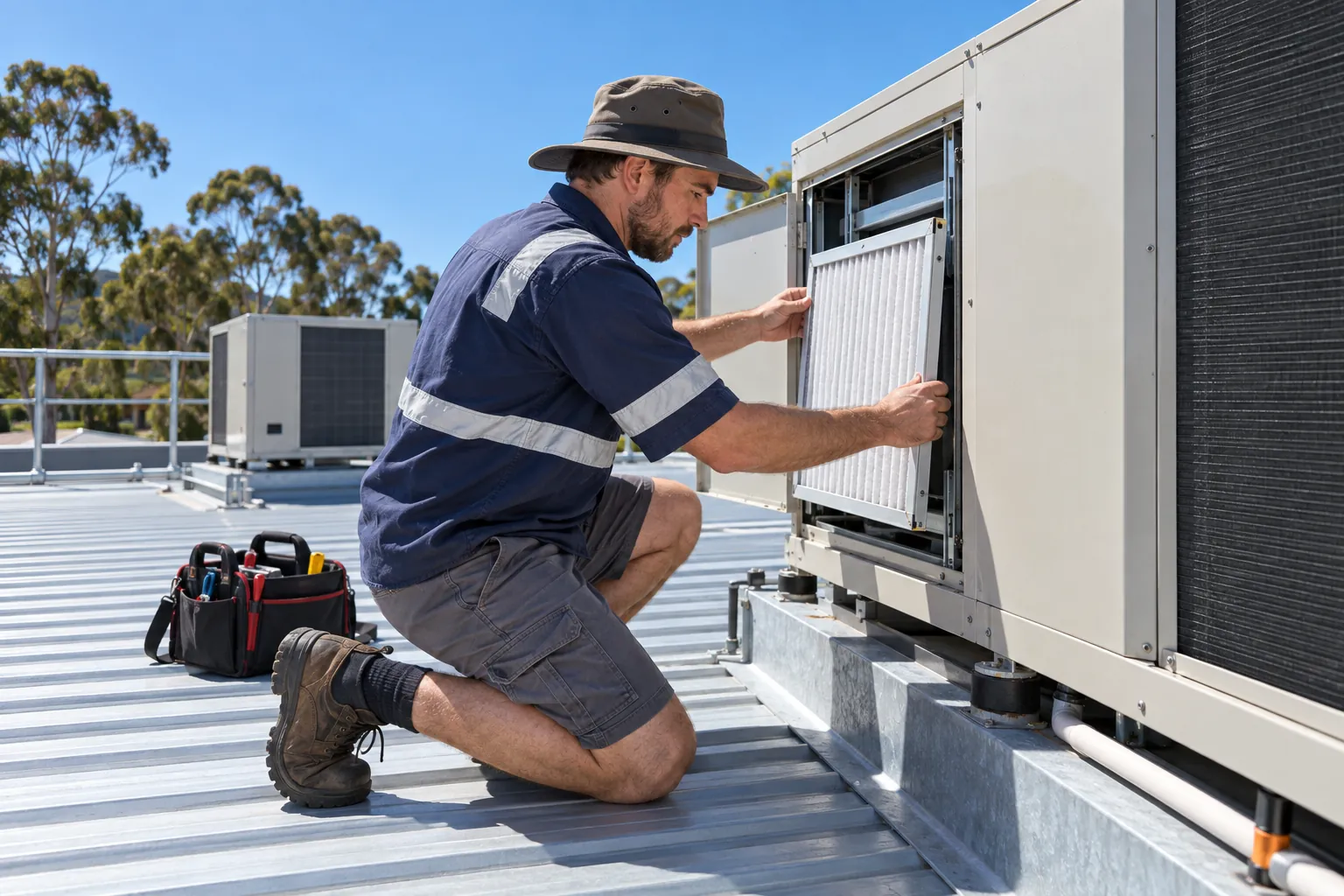 Premises and facilities managementPreventative maintenance: how to plan it for a building and prove it was donePreventative maintenance for Australian buildings: the WHS duty, the asset register and schedule, statutory and discretionary tasks, and keeping good records.
 Premises and facilities managementWorkplace inspection checklist: what WHS law asks, what to walk, and what to do nextWorkplace inspections under Australian WHS law: the duties behind them, what the checklist covers, how often, recording findings, and HSRs' right to inspect.
 Premises and facilities managementCyclone preparation checklist: getting a commercial building ready for the seasonA cyclone preparation checklist for Australian workplaces and commercial buildings: the WHS emergency plan, pre-season checks, watch and warning steps, and re-entry.