Premises and facilities management
Building manager duties in Australia: the law, the daily work and the record
A building manager runs the day-to-day operations of a building, keeping it safe, compliant, working and clean for the people who use it, usually on behalf of an owner, a landlord or an owners corporation.
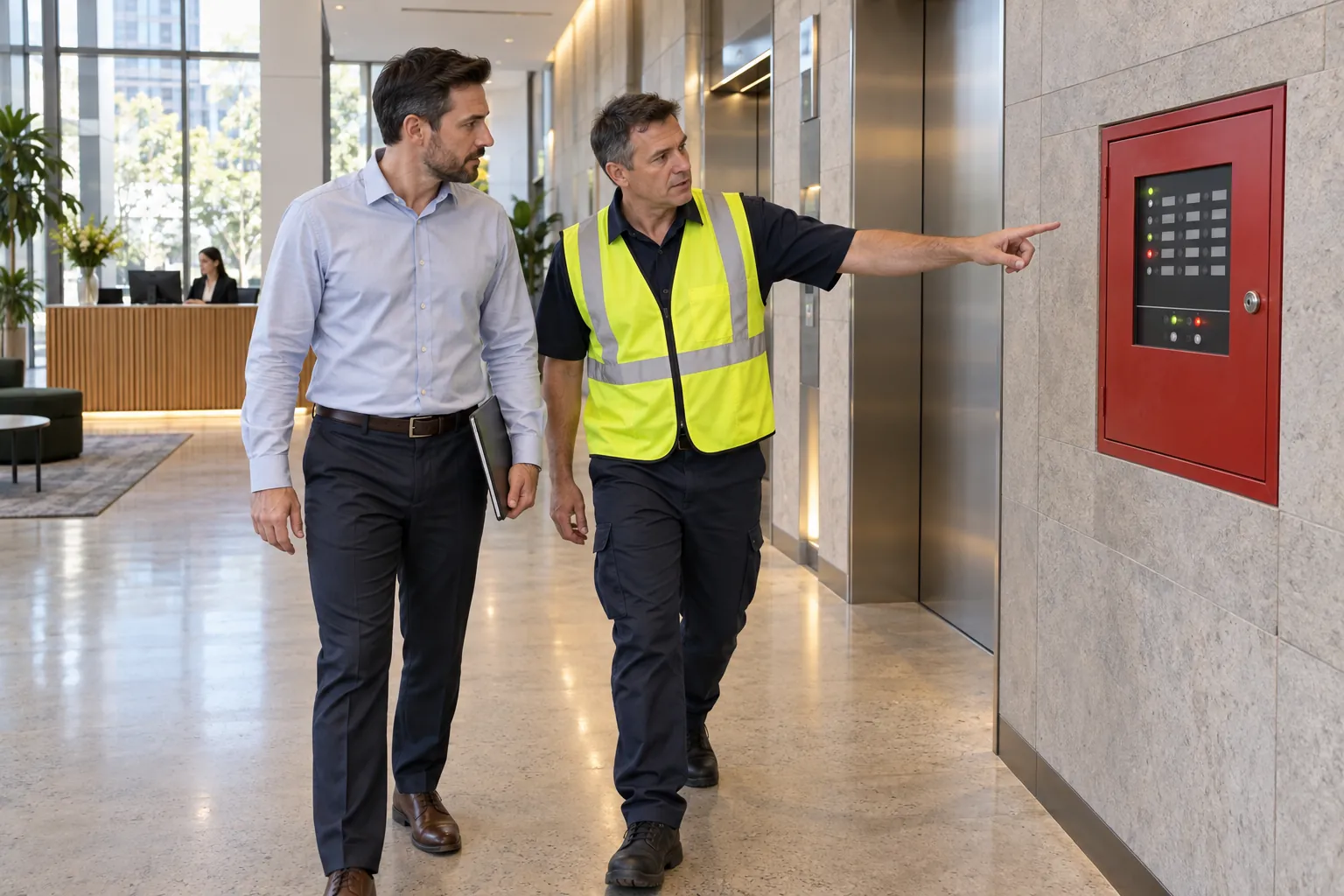
In Australia the role sits across three bodies of law: work health and safety, state fire safety maintenance and, in apartment and mixed-use buildings, strata law. This guide covers the duties a building manager carries out, how the role differs between commercial buildings and strata schemes, what the day looks like, and what a good record of the work holds.
01
What a building manager is, and the law behind the role
A building manager runs a building day to day: its safety, its building services, its cleaning and security, and the contractors who work in it. The title overlaps with others in property and facilities management. A property manager or asset manager looks after an owner's financial interest, including leases and outgoings; a facility manager looks after the services an organisation needs in the buildings it occupies; a strata manager administers an owners corporation's affairs. The building manager is the person on site, or responsible for the site, who makes the building work.
No single Australian law describes the building manager's job in a commercial building. The role carries out duties that the law places on whoever manages or controls the workplace. Every state and territory except Victoria has adopted a version of the model Work Health and Safety Act, and the key duty is in section 20. In the Work Health and Safety Act 2011 (Qld), which follows the model text, section 20(2) reads: "The person with management or control of a workplace must ensure, so far as is reasonably practicable, that the workplace, the means of entering and exiting the workplace and anything arising from the workplace are without risks to the health and safety of any person." Section 21 places the same kind of duty on the person with management or control of fixtures, fittings or plant at a workplace.
Two other sections shape how a building manager works with everyone else. Section 16 says that "more than 1 person can concurrently have the same duty", each to the extent of their capacity to influence and control the matter, and section 46 requires each of them to "consult, cooperate and coordinate activities with all other persons who have a duty in relation to the same matter". In an office tower or shopping centre the owner, the managing agent, each tenant and each contractor all hold duties, and the building manager usually coordinates them.
Victoria has its own law. Section 26(1) of the Occupational Health and Safety Act 2004 (Vic) requires a person who "(whether as an owner or otherwise) has, to any extent, the management or control of a workplace" to ensure so far as is reasonably practicable that it and the means of entering and leaving it "are safe and without risks to health", limited by section 26(2) to matters over which the person has management or control. The practical effect for a building manager is much the same.
In an apartment building the role is set by strata law as well, covered below. The building manager is rarely the only legal duty holder, but they are usually the person who makes sure the duties are met, and who can show it.
02
The key duties of a building manager
Building manager position descriptions vary with the asset, and many building managers look after a portfolio of buildings rather than one, but the core duties are consistent across office buildings, shopping centres, industrial estates and strata schemes:
- Work health and safety: keeping the common areas, entries, exits and car parks without risk, managing the hazards the building creates, and coordinating with tenants and contractors under section 46.
- Workplace facilities: under regulation 40 of the Work Health and Safety Regulation 2011 (Qld), people must be able "to enter and exit and to move about without risk to health and safety, both under normal working conditions and in an emergency". Regulation 41 requires toilets, drinking water, washing and eating facilities to be kept "clean, safe and accessible". In shared amenities and end of trip facilities, the building manager usually makes it happen.
- Asbestos: the person with management or control must ensure, so far as is reasonably practicable, that asbestos is identified by a competent person (regulation 422), keep an asbestos register at the workplace and keep it up to date (regulation 425, which does not apply to a newer building where no asbestos is identified or likely; the cut-off date is in each jurisdiction's regulations), and, where asbestos is present, prepare and maintain an asbestos management plan (regulation 429).
- Emergency planning: regulation 43 requires an emergency plan covering response, evacuation, notifying emergency services, medical help and communication, with "testing of the emergency procedures, including the frequency of testing". The building manager usually runs the emergency control organisation for the base building and coordinates the wardens from each tenancy.
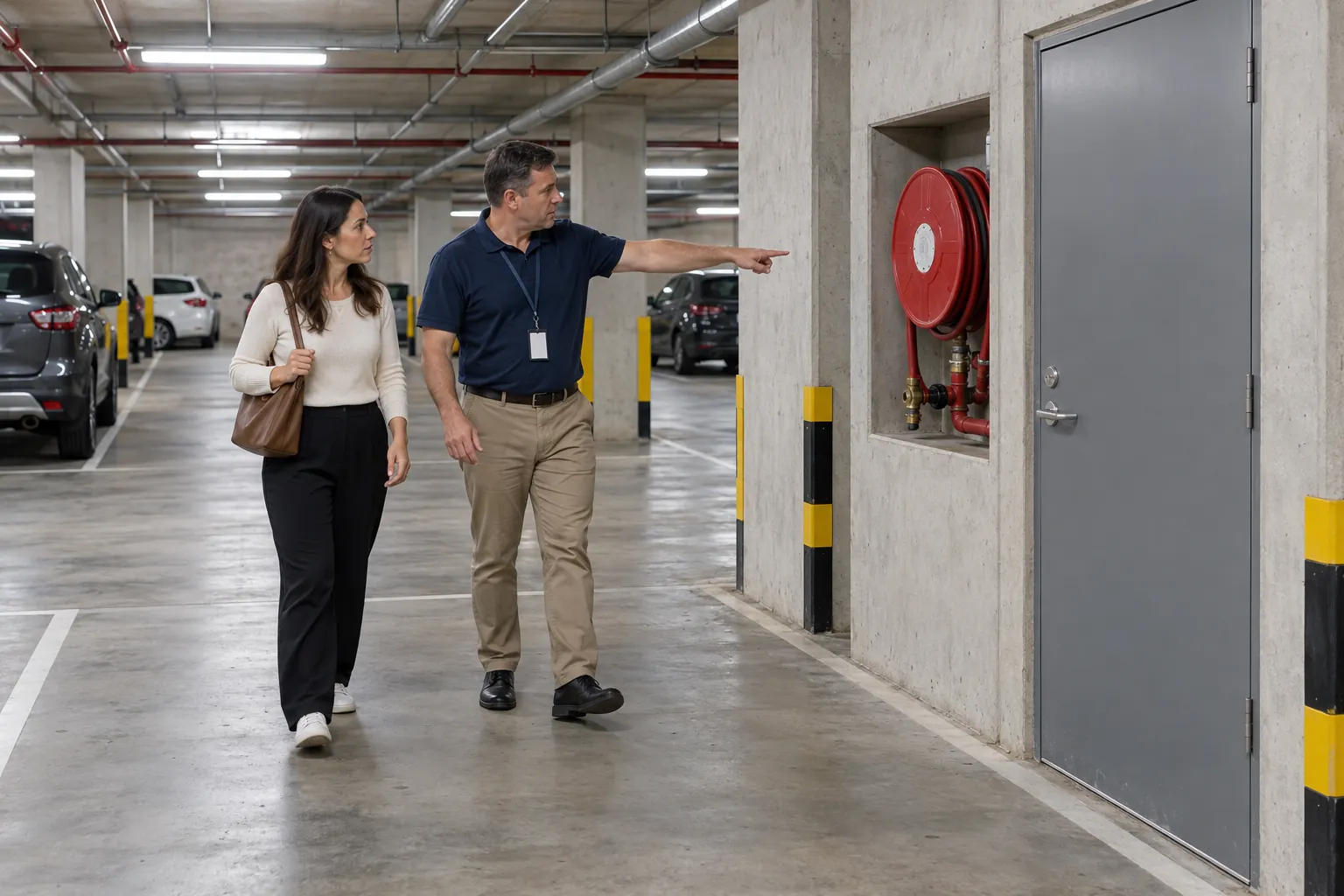
- Fire safety maintenance: inspection, testing and maintenance of the fire safety measures under state law, usually to AS 1851-2012, with the annual statement or report each state requires (covered below).
- Building services: planned and reactive maintenance of air conditioning, lifts, hydraulics, electrical services, roofs and façades, through service contractors.
- Contract management: engaging and checking contractors for cleaning, security, waste, landscaping and maintenance, including inductions, safe work method statements and permits.
- Security and access: access control, keys and swipe cards, CCTV, lock-up and after-hours response.
- Tenants and occupants: the point of contact for requests and complaints, and for notice of planned works and shutdowns.
- Budgets and reporting: the operating budget and outgoings, and regular reports to the owner or asset manager.
03
Commercial buildings and strata schemes: how the role differs
The safety law underneath is much the same, but who the building manager answers to, and what they may decide, changes with the type of building.
- Commercial buildings, such as office towers, business parks and shopping centres: the building manager usually works for the owner or its property manager, runs the base building and common areas, and coordinates with each tenant, which remains a person conducting a business or undertaking with its own WHS duties. The lease sets out who is responsible for what.
- Strata schemes, such as apartment and mixed-use buildings: the building manager works for the owners corporation or body corporate (a strata company in Western Australia), looks after the common property and deals directly with residents. In Queensland the on-site role is often a caretaker under a caretaking agreement.
- Owner-occupied sites, such as a campus, hospital or head office: the building manager, often called a facility manager, works for the occupier.
New South Wales sets out the strata role most clearly. The NSW Government's guide Who's who in strata says a building manager looks after the common property, including "managing general safety around the complex, including fire safety", and "is generally the primary contact for contractors working on-site". The strata manager, not the building manager, can enforce by-laws and has access to the owners corporation's funds, and a building manager cannot join the strata committee unless they also own a lot in the scheme.
Under NSW strata law the building manager must act in the owners corporation's best interest and "act promptly and with due diligence" to bring to its attention "any maintenance, repair or safety issue with the common property that the manager is aware of", including one they ought to be aware of; the NSW Government's example is "that the regular maintenance of the lift is overdue". They must also propose how a problem should be fixed, and disclose in writing any benefit from a contract they suggest and any connection with a supplier or the developer.
The NSW guide Appointing strata managers and other workers adds that a building manager is appointed in writing by a majority vote at a general meeting, for up to 10 years. Other states and territories have their own strata law and their own words, so check the law where the building is.
In any building, write down where the building manager's responsibility ends. Most failures happen at the edges: between landlord and tenant, between strata manager and building manager, between one contractor and the next.
04
Fire safety maintenance: a state-by-state duty
Fire safety maintenance is state law, and much of a building manager's year is organised around it. The common thread is AS 1851-2012, Routine service of fire protection systems and equipment, which sets inspection, testing and maintenance frequencies for fire systems. The compliance paperwork, and the requirements for who signs it, differ by state:
- Victoria: the owner must keep each essential safety measure in a state that lets it fulfil its purpose (regulation 226 of the Building Regulations 2018 (Vic)), prepare an annual essential safety measures report within 28 days before each anniversary date (regulation 223), and make available within 24 hours of a request from the municipal building surveyor or chief officer the annual reports for the last 10 years, the maintenance schedules and "the records of all inspections, testing and maintenance (including repairs)" (regulation 225).
- New South Wales: the NSW Government's page on fire safety certification explains that the owner of an existing building issues an annual fire safety statement confirming that an accredited practitioner (fire safety) has verified each fire safety measure. For apartment buildings, Safety rules for strata common property says that from 13 February 2026 essential fire safety systems must be tested under AS 1851, with "a physical logbook on site after inspections (electronic records are not enough)".
- Queensland: the Queensland Fire Department's page for building occupiers, owners, lessees and bodies corporate explains that anyone occupying, leasing or managing a building holds the status of occupier under the Fire Services Act 1990, with duties under the Building Fire Safety Regulation 2008, and that high occupancy buildings must appoint a fire safety adviser.
The building manager rarely does the testing. A fire services contractor carries out the AS 1851 routines and signs the logbook or service records; an accredited practitioner or the owner signs the annual statement or report. The building manager's job is to make sure the routines happen on time, that defects found are fixed and the fix recorded, and that the records are on site when an inspector asks for them.
05
The day-to-day work, and what good evidence looks like
Most of a building manager's day is small things that keep the building safe and running:
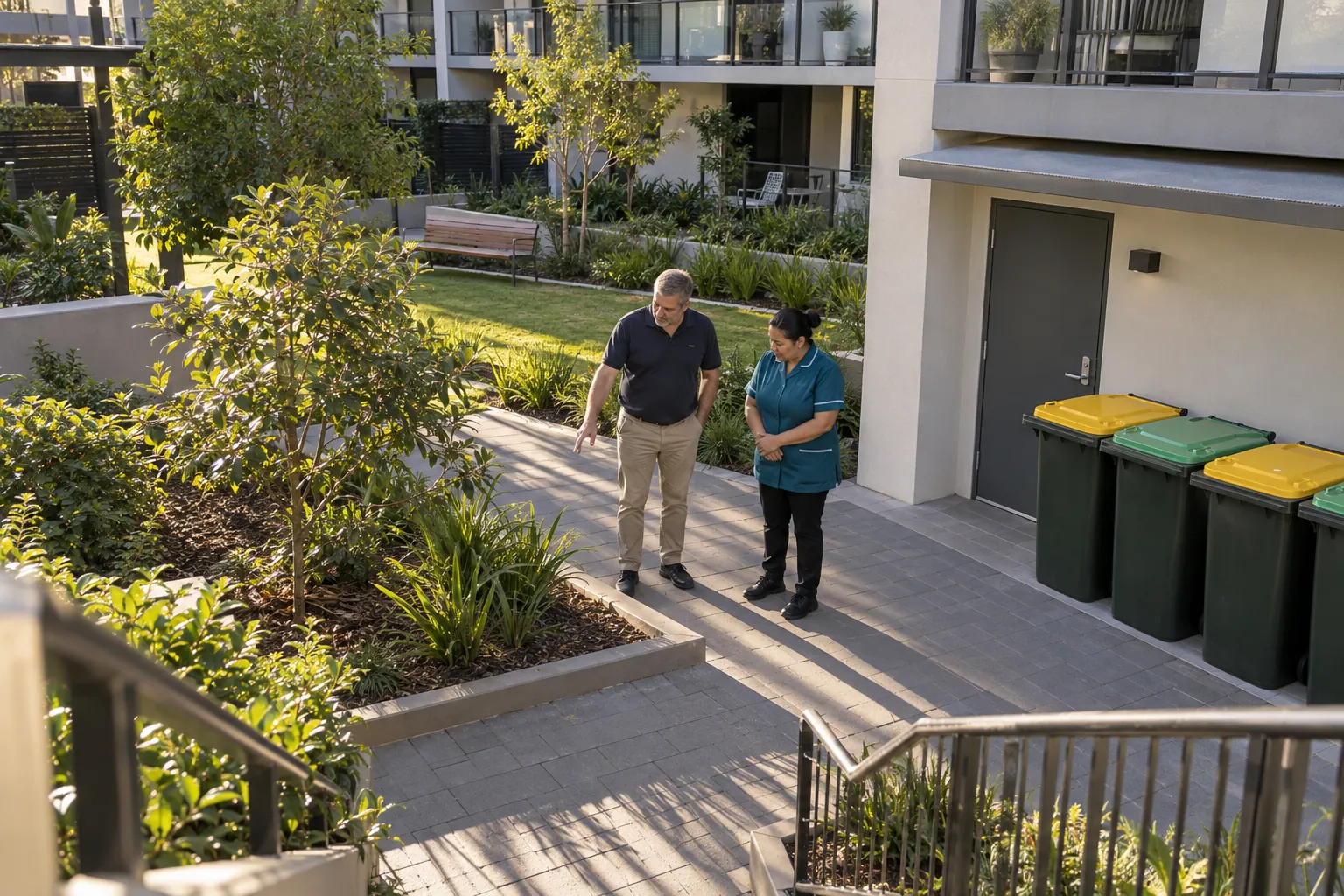
- A walk-around: entries, lobbies, car park, loading dock, plant rooms, fire stairs and end of trip facilities.
- Routine checks the site team or contractors do and record: exit paths clear, fire doors closing, amenities clean and stocked, lighting working, bin rooms tidy.
- Faults and requests from tenants, residents and staff: logged, assigned to the right contractor, and followed until they are closed.
- Contractors on site: inductions, asbestos register information before work that could disturb it, and permits for hot work or roof access.
- Service delivery: checking that cleaning, security and maintenance are delivered to the contract, not only invoiced.
- Reporting to the owner, asset manager or strata committee: what happened, what is open, what needs a decision.
Position descriptions usually ask for experience in building operations or facilities management. The skills that matter most are organisation, clear communication and good working relationships with tenants and contractors, and enough technical knowledge of building services to know when something is wrong and who should fix it.
Just as important is the ability to show the work. When an insurer, a fire authority, a building surveyor, a WHS inspector or the strata committee asks whether the building is properly run, the answer is in the records:
- a current asbestos register and asbestos management plan where they apply, and an emergency plan with the dates it was tested;
- the AS 1851 logbooks and service records, and the annual fire safety statement or essential safety measures report;
- certificates and service reports for lifts, cooling towers and electrical testing;
- records of routine checks, made at the time, naming who did them, and explaining any that were missed;
- a log of faults and requests, showing when each was raised and when it was closed;
- evidence that contracted services were delivered, not only billed.
06
Where the record fails, and what SiteClara does about it
A building manager usually has good records of what contractors certify and weak records of what happens every day: the routine checks, the cleaning and security rounds, the faults mentioned to whoever was passing. The weekly checks live in a folder in the plant room, the cleaners' sheets live in their store, and a fault reported to the concierge may never reach the maintenance contractor.
SiteClara puts a printed QR poster at each location, such as an amenities block, a plant room, a fire stair door or a bin room, with an optional NFC tag behind it. Staff of the cleaning, security or site team scan the code or tap the tag on their own phone, with no app to install, see the scheduled checks due there, and mark them done or explain what stopped them, with a photo when one is asked for. An issue reported there goes onto the team's list of open jobs until someone closes it. The supervisor's queue groups open jobs by building and floor, and a supervisor can escalate a job to the building manager, who can answer it.
Each day the supervisor approves a report that goes to the building manager and other nominated contacts at 8am the next morning: what was reported, completed and still open, and how the scheduled checks went. Where a cleaning contractor and a security contractor work in the same building, each runs its own staff, forms and approval.
07
Questions people ask
What does a building manager do?
A building manager runs the day-to-day operations of a building: its safety, cleaning, security, building services and the contractors who work there. For apartment buildings, the NSW Government's guide Who's who in strata says "Building managers look after the buildings in a strata scheme", including "maintaining and repairing common property", and that they must bring to the owners corporation's attention "any maintenance, repair or safety issue with the common property".
What is the difference between a building manager and a property manager?
A property manager looks after a landlord's lettings; a building manager looks after the building itself. The NSW Government's guide Who's who in strata says "A property manager manages the rental lease for a landlord, such as organising inspections, move outs, bonds and evictions", while "Building managers look after the buildings in a strata scheme". In commercial property, a property manager or asset manager usually handles leases and outgoings for the owner, and the building manager runs the base building and common areas.
08
Where to read more, and a list to take away
Safe Work Australia publishes the model WHS Act, Regulations and codes of practice; your state or territory regulator (SafeWork NSW, WorkSafe Victoria, WorkSafe Queensland, WorkSafe WA and others) publishes the version that applies where the building is. For fire safety, read the Building and Plumbing Commission (formerly the Victorian Building Authority) on essential safety measures, the NSW Government on fire safety certification and the Queensland Fire Department on occupiers' duties, with AS 1851-2012. For strata, read your state's guidance, such as the NSW Government's Who's who in strata, and our guides to strata manager responsibilities and AS 1851 routine service.
If you are writing a building manager position description, or taking on a new building, check that you know:
- who the persons with management or control are, and which of their duties you carry out;
- which state's law applies, and whether it is the model WHS law or Victoria's OHS Act;
- where the asbestos register, the asbestos management plan and the emergency plan are, and when each was last reviewed and tested;
- which fire safety measures the building has, who services them to AS 1851, and when the annual statement or report is due;
- which contractors work in the building, and what each is responsible for;
- how tenants and residents report faults, and how you know each one is closed;
- in a strata scheme, what your agreement delegates to you, and when it ends.
Sources
Every document this guide quotes or links to, in the order it first cites them.
- Work Health and Safety Act 2011 (Qld) legislation.qld.gov.au
- Occupational Health and Safety Act 2004 (Vic) legislation.vic.gov.au
- Work Health and Safety Regulation 2011 (Qld) legislation.qld.gov.au
- Who's who in strata nsw.gov.au
- Appointing strata managers and other workers nsw.gov.au
- Building Regulations 2018 (Vic) legislation.vic.gov.au
- Fire safety certification planning.nsw.gov.au
- Safety rules for strata common property nsw.gov.au
- Building occupiers, owners, lessees and bodies corporate fire.qld.gov.au
Related guides
 Premises and facilities managementFacility manager duties in Australia: what the role covers, and how to show it is doneWhat a facility manager does in Australia: the WHS duties behind the role, contractors, fire safety and asbestos, the compliance year and the records that show it.
 Premises and facilities managementStrata manager responsibilities: what the role covers, state by stateWhat a strata manager does in Australia: licensing and registration by state, delegated functions, disclosure, maintenance and safety, contracts and records.
 Premises and facilities managementBody corporate caretaker: the duties, the agreement and a record of the workWhat a body corporate caretaker does in Queensland: the caretaking agreement, the code of conduct, safety duties, remedial action notices and a record of the work.
 Premises and facilities managementBuilding compliance checklist: the duties that come with an Australian buildingA building compliance checklist for Australian commercial buildings: WHS duties, fire safety maintenance by state, asbestos, plant, water, access and the records.