Premises and facilities management
Winterization checklist: getting a building ready for a Canadian winter
A winterization checklist is the list of checks that get a building ready for freezing weather and keep it safe through the winter: protecting pipes and fire sprinklers from freezing, preparing the heating, sealing the building envelope, clearing roofs and drains, and keeping exits, hydrants and walkways free of snow and ice.
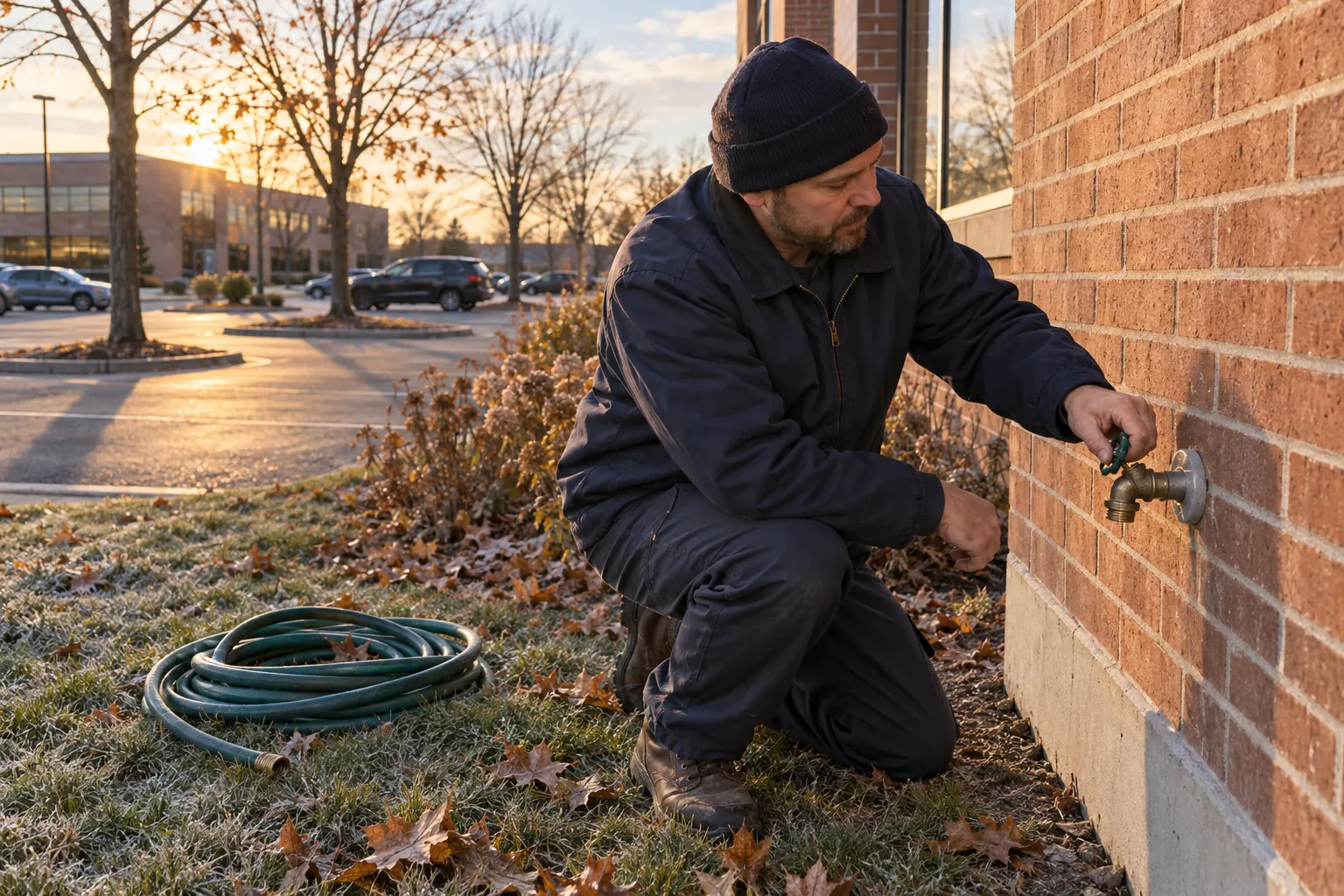
Most winter damage to a commercial building starts small: a sprinkler branch line in a cold stairwell, a door closer that stops latching, a drain left full of water, a hydrant buried by the plow. The checklist is how a property manager, building operator or superintendent makes sure the building is ready before the first hard frost, and stays ready through the cold snaps. This guide covers what the fire code and workplace law ask for in freezing weather, what a practical checklist covers, when each part is done and by whom, and what the record should show.
01
What winterization means, and what the codes ask for
No Canadian statute uses the word winterization. The duty sits in the provincial fire code, which has specific requirements for fire protection equipment in freezing weather, and in workplace health and safety law, which covers walking surfaces and people working in the cold. A winterization checklist gathers those duties, and the good sense of keeping water inside the pipes, into one list for the season.
Fire codes in Canada are provincial or territorial. The National Fire Code of Canada 2025 is a model code published by the National Research Council; each province decides what it adopts, and the NRC tells readers to contact their provincial or territorial official to find out which code applies. Most provinces point to one American standard for sprinklers and standpipes: Article 6.4.1.1. of the National Fire Code says water-based fire protection systems "shall be inspected, tested and maintained in conformance with NFPA 25". The British Columbia Fire Code 2024, for example, is the National Fire Code adopted with a few BC amendments; it replaced the 2018 edition, which carried the same sentence. Check which edition is in force in your province before relying on an article number.
Ontario writes its own list, and it is the clearest statement in Canada of what freezing weather means for fire protection. The Ontario Fire Code (O. Reg. 213/07), as consolidated from 1 January 2026, requires dry-pipe valve rooms in unheated buildings to be "checked as often as necessary when the outside temperature falls below 0°C to ensure that the system does not freeze" (Article 6.5.3.3.), and sets daily freezing-weather checks for fire pump rooms and water tanks. It also requires hydrants to be "maintained free of snow and ice accumulations" (Article 6.6.4.2.) and exterior passageways, exterior stairways and fire escapes in occupied buildings to be "kept free of snow and ice accumulations" (Article 2.7.1.8.). The detail is in the section on fire protection in freezing weather below.
Workplace law adds the ground under people's feet. In Ontario, section 11 of the Industrial Establishments regulation (R.R.O. 1990, Reg. 851) requires a floor or other surface used by any worker to be kept free of "accumulations of refuse, snow or ice", and clause 25(2)(h) of the Occupational Health and Safety Act requires an employer to "take every precaution reasonable in the circumstances for the protection of a worker". Other provinces have similar general duties, and some go further on cold: British Columbia's OHS Regulation, Part 7, requires a nearby heated shelter where the equivalent chill temperature is below -7°C (section 7.36).
02
What a winterization checklist covers
A useful checklist is organized by system and by place, so each item belongs to someone and can be walked in order. For an office building, school, plaza, condo or light industrial unit, it usually covers:
- Building envelope: weatherstripping and door sweeps, which also cut energy loss; door closers adjusted so doors latch in the cold; broken glazing and failed window seals; louvres and intakes that could let in drifting snow; gaps where cold air reaches pipes.
- Heating plant: the fall start-up of boilers, furnaces, rooftop units and unit heaters by a qualified contractor; controls and setpoints checked; flues and combustion air openings clear; filters changed.
- Chimneys and flues: in Ontario, inspected at intervals not greater than 12 months, when an appliance is added and after any chimney fire (Fire Code Article 2.6.1.4.).
- Domestic plumbing: hoses removed, exterior hose bibs, faucets and irrigation lines shut off and drained; pipes in exterior walls, crawlspaces, parking garages, loading docks and stairwells insulated or heat-traced; heat trace tested; traps in unheated areas kept primed.
- Sprinklers and standpipes: dry-pipe and antifreeze systems ready, low-point drains drained, heat confirmed in valve and pump rooms, fire department connections capped and clear.
- Roofs and drainage: roof drains, scuppers, gutters and downspouts cleaned of leaves and debris; a plan for checking snow and drifting on low roofs and around rooftop equipment.
- Grounds and entrances: the snow contract signed, snow storage marked away from hydrants, exits, fire routes and drains; salt ready and entrance mats installed; exterior lighting working.
- Emergency power: generator block heater and fuel checked.
- Unoccupied areas: vacant suites and closed floors identified, each either kept heated or drained down, water heater included, with a check frequency set (see vacant building inspection).
- People: winter gear for outdoor staff, a warm place for breaks, and instructions for a burst pipe after hours.
Work that needs a licensed trade belongs on your list as "booked" and "completed", with the trade's report kept alongside; your list does not replace their inspection.
03
Fire protection in freezing weather: the items that are not optional
A frozen sprinkler pipe floods the building when it splits, often when the thaw comes, and until someone notices, that part of the building has no sprinkler protection.
In Ontario, where a system is maintained to NFPA 25, Standard for the Inspection, Testing and Maintenance of Water-Based Fire Protection Systems, Sentence 6.5.1.1.(2) deems that to satisfy Subsections 6.5.4. to 6.5.6. of the Fire Code; the checks in Subsection 6.5.3., including the freeze check on dry-pipe valve rooms, still apply as written. Your sprinkler contractor will tell you which regime your inspection plan follows. The practical items are these:
- Before the frost: have the sprinkler contractor confirm which parts of the system are dry-pipe, which are antifreeze and which are wet pipe in areas that could get cold, such as stairwells, vestibules, loading docks and parking garages. Mark them on a plan.
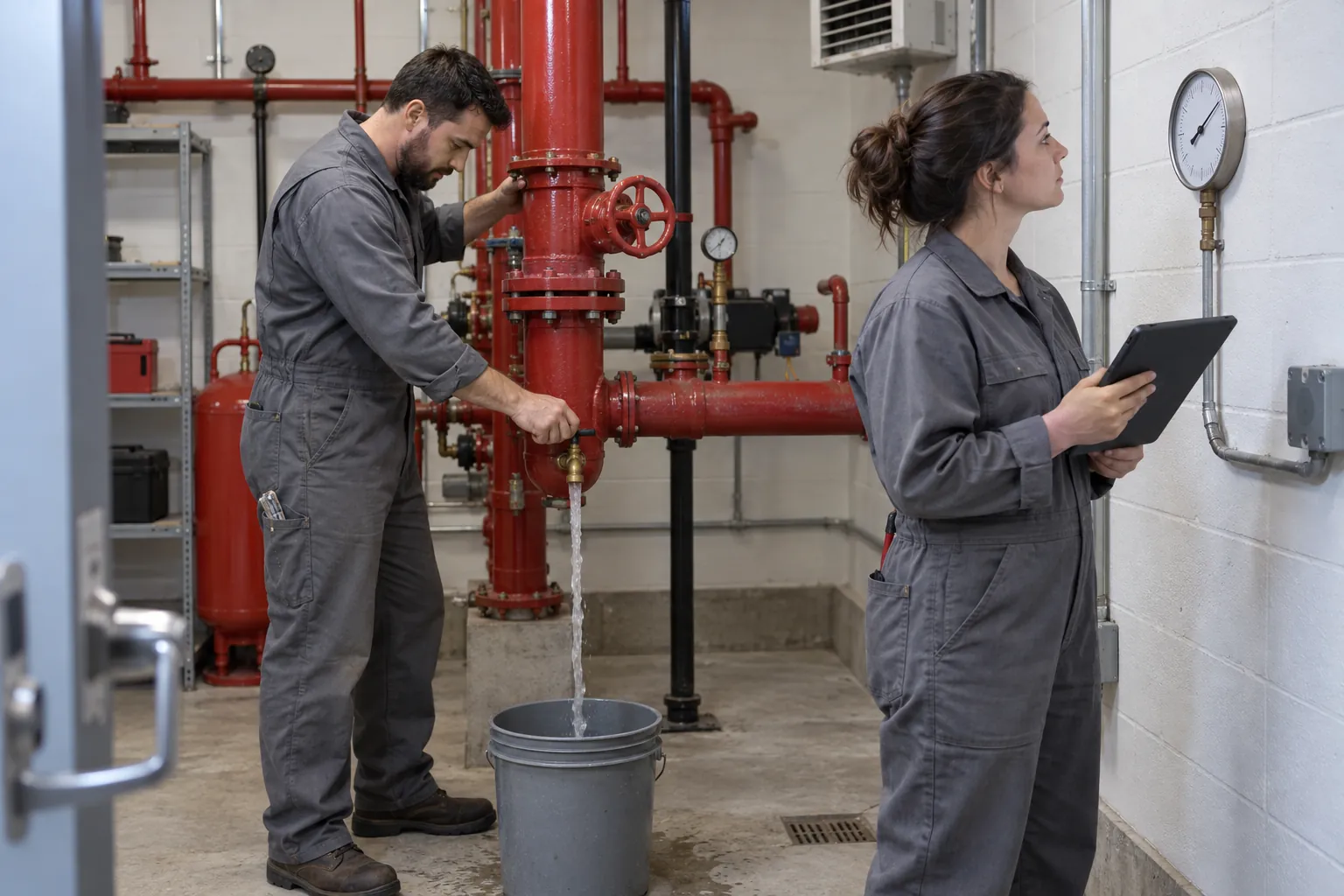
- Dry-pipe systems: in Ontario, dry-pipe valves are trip tested annually (Article 6.5.5.4.) and the priming water is inspected at least every three months (Article 6.5.4.3.). Many owners time the trip test for the fall so the system goes into winter proven.
- Auxiliary drains: dry-pipe systems collect condensation at their low points. The Fire Code says auxiliary drains "shall be inspected to prevent freezing" (Article 6.5.4.1., under the heading Winter damage), and it is the item most often missed.
- Valve rooms, pump rooms and valve pits: pump room temperature is checked daily in freezing weather (Article 6.6.3.2.), and pits containing sprinkler control valves must be "kept free of water and protected against freezing" (Article 6.5.6.3.). Sections of a system subject to freezing must be converted to dry-pipe or antifreeze, unless an approved alternative is used (Article 6.5.6.4.).
- Alarm lines: after the monthly alarm test, an alarm line subject to freezing must be cleared of anything that could freeze in it (Sentence 6.5.5.2.(2)).
- Water tanks: in freezing weather, the tank heating equipment, the water temperature and the temperature of an indoor tank enclosure are each checked daily (Articles 6.6.2.2. to 6.6.2.4.).
- Hydrants and fire department connections: fire department connections must be "clearly identified and maintained free of obstructions for use at all times" (Sentence 2.5.1.2.(2)). If a hydrant barrel holds water and the drainage cannot practically be fixed, "approved measures shall be taken to prevent freezing during winter conditions" (Article 6.6.5.5.).
Temperature changes matter as much as the equipment. Turning the heat down on a closed floor or converting a heated storeroom to unheated storage can take wet pipe sprinklers below 4°C, and Ontario's Article 6.5.1.4. says such changes must not be made without first altering the sprinkler system. Ask that question of anyone planning to lower setpoints over the holidays.
04
When to do it, and who does what
Winterizing a building is not one visit. It works best in four stages, each with named owners.
- Late summer: plan and book. The property or facility manager confirms the snow contract, books the heating start-up, the sprinkler contractor's fall work and drain cleaning, and reviews last winter: where pipes froze, which doors failed to close, which entrance iced up under a downspout.
- Fall: the walk-through. The building operator or superintendent walks the checklist before the first hard frost, which comes earlier in the North and on the Prairies than on the coast. Outdoor water is drained, envelope repairs are done and heat trace is tested.
- Freezing weather: the recurring checks. Daily or per shift: cold-risk rooms, entrances and exits, hydrants and fire department connections after snowfall, and known trouble spots. A cold snap, a storm or a power outage adds a check.
- Spring: de-winterization. Outdoor water restored and checked for split lines, roofs inspected for winter damage, salt damage cleaned up, and notes made for next year.
The owner or property manager holds the checklist and the contracts, and is the person the fire department or the insurer will ask. The building operator or superintendent does most of the checks. Licensed trades do the heating start-up, boilers and fire protection testing, and leave their own reports. The snow contractor clears the grounds (see the snow removal log guide). Janitorial staff are often first to see a leak or a cold room. If the building has security patrols, put cold-risk rooms on the route.
For outdoor staff, the duty of care covers the cold itself. CCOHS's guidance on cold environments control measures recommends heated warming shelters, layered clothing, training in the symptoms of cold stress and a buddy system, and refers to the work warm-up schedule developed by Saskatchewan's Occupational Health and Safety Division. In British Columbia, the OHS Regulation requires a cold stress assessment and exposure control plan where workers may be exposed (section 7.34).
05
What good winterization records look like
Where a fire code item is involved, the record is not optional. In Ontario, Fire Code Division B, Article 1.1.2.1., says that where the code requires tests and corrective measures or operational procedures, "records shall be made noting what was done and the date and time it was done", kept at the building for the Chief Fire Official; electronic records that can be made readily available on request are deemed to comply. Article 1.1.2.2. requires records to be kept for at least two years, with at least the most recent and the preceding record of each test or inspection. Other provinces have their own rules; check yours.
For the rest of the checklist, the record shows the work was done when it mattered. An insurer handling a water damage claim or a condo board asking why a unit flooded will want to know what was checked, when, by whom, and what was found. A good record shows:
- The item and the place: "sprinkler valve room, P1" or "hose bib, north wall", not "plumbing".
- The date and time the check was actually done, and who did it.
- The reading or result: the room temperature, "drum drained", "closer adjusted, door latching", "hydrant clear".
- What was wrong and what happened next: who was told, what was booked, when it was fixed.
- A photo where it helps: a thermometer in a cold room, a cleared hydrant, a heat trace indicator light.
- Trade reports filed with the checklist: heating start-up, sprinkler contractor, chimney inspection.
The most useful entries are often the dull ones. "Pump room 11°C, no action" at 06:30 on the coldest morning of January shows someone looked; a column of identical ticks does not. Check the record against the weather: a week of -25°C nights should show more checks, not fewer.
06
Where winterization records fail, and what SiteClara does about it
Winterization records fail in familiar ways. The fall checklist is signed once with every box ticked, including the ones nobody did. The daily pump room check is a clipboard on the door, filled in for the week on Friday. The cold stairwell was mentioned to whoever was passing, and nobody can say when it was dealt with.
SiteClara records work at the location. A printed QR poster, with an optional NFC tag behind it, sits at each place where checks are scheduled, such as a sprinkler valve room, a pump room, a cold stairwell, a loading dock or a hydrant by the parking lot. Staff scan or tap on their own phone, with no app to install, and mark the check done at that place, with a photo when one is asked for, such as the thermometer reading. The time, the place and the named person are recorded automatically, so the entry is made on the spot rather than written up later. If something stopped the check, such as a locked room or a snowbank over the hydrant, they say so, and the reason is recorded against that check.
Anyone on the team can report a problem at a location, such as a door that will not latch or frost on a pipe, with a photo; it stays on the team's list of jobs until someone closes it. Checks can be scheduled, such as a daily pump room check through the freezing months, and a missed one shows as missed. The supervisor adds a note and approves a daily report that goes to nominated management or client contacts the next morning, showing what was checked, what was reported and what is still open.
07
Questions people ask
What is included in winterization?
For a commercial building, winterization means keeping water from freezing where it can do damage, and keeping the ways in and out clear of snow and ice. The items with legal force are in the provincial fire code: the Ontario Fire Code (O. Reg. 213/07), for example, requires auxiliary drains on sprinkler systems to be inspected to prevent freezing (Article 6.5.4.1.), the temperature of pump rooms to be checked daily during freezing weather (Article 6.6.3.2.), and hydrants to be maintained free of snow and ice accumulations (Article 6.6.4.2.). Around those sit the practical items: the heating start-up, draining outdoor faucets, weatherstripping, clearing roof drains and signing the snow contract.
What should I include on my winter preparation checklist?
Every place that could freeze, every exit that must stay clear, and the people who work outside. For the building, list the valve rooms, pump rooms, stairwells and loading docks where pipes could freeze, each with a check frequency for freezing weather; the Ontario Fire Code (O. Reg. 213/07) requires dry-pipe valve rooms or enclosures in unheated buildings to be checked as often as necessary when the outside temperature falls below 0°C (Article 6.5.3.3.), and exterior passageways, exterior stairways and fire escapes in occupied buildings to be kept free of snow and ice accumulations (Article 2.7.1.8.). For outdoor staff, CCOHS's guidance on cold environments control measures says heated warming shelters should be made available nearby and used at regular intervals, and recommends clothing in multiple layers and a buddy system so workers can help each other recognize the early symptoms of cold injuries.
How do you winterize a vacant building without heat?
Either drain it down or keep enough heat where the pipes and sprinklers need it, and check it on a schedule either way. Ask the sprinkler contractor before the heat is turned down or off: the Ontario Fire Code (O. Reg. 213/07) says changes that might take wet pipe sprinklers below 4°C must not be made without first altering the sprinkler system to prevent freezing (Article 6.5.1.4.), and sections of a sprinkler system subject to freezing must be converted to a dry-pipe or antifreeze system unless an approved alternative is used (Article 6.5.6.4.). Have a plumber drain the domestic water lines and the water heater and protect the traps, and read your property insurance policy for any condition about vacancy. See also the guide to vacant building inspection.
08
Where to read more, and a checklist to take away
Start with your province's fire code, because that is where the enforceable freeze protection items are. In Ontario, the Ontario Fire Code (O. Reg. 213/07) has them in Division B, Sections 6.5 and 6.6, with the record rules in Subsection 1.1.2. Elsewhere, start from the National Fire Code of Canada 2025 and your province's adoption, and ask your sprinkler contractor for the cold weather items in its NFPA 25 inspection plan. For outdoor work, read CCOHS on cold environments control measures. Read your property insurance policy for any condition about heat or vacancy.
A short list to take away:
- Book the heating start-up, the sprinkler contractor's fall work, the chimney inspection and the snow contract early.
- Mark on a plan every room and pipe that could freeze: valve and pump rooms, stairwells, vestibules, loading docks, parking garages.
- Drain outdoor water, test heat trace, and fix weatherstripping, door closers and broken glazing.
- Drain the auxiliary drains on dry-pipe systems and confirm heat in every valve and pump room.
- Keep hydrants, fire department connections, exits and exterior stairs clear of snow and ice.
- Set recurring checks for freezing weather, and add checks after storms, cold snaps and outages.
- Give outdoor staff winter gear, a warm place for breaks and training in cold stress.
- Record each check with the time, place, person and result, and follow every fault to the date it was fixed.
- In spring, check for winter damage and write next year's list from what went wrong.
Sources
Every document this guide quotes or links to, in the order it first cites them.
- National Fire Code of Canada 2025 nrc.canada.ca
- British Columbia Fire Code 2024 www2.gov.bc.ca
- Ontario Fire Code (O. Reg. 213/07) ontario.ca
- Industrial Establishments regulation (R.R.O. 1990, Reg. 851) ontario.ca
- Occupational Health and Safety Act ontario.ca
- OHS Regulation, Part 7 worksafebc.com
- Cold environments control measures ccohs.ca
- NFPA 25 nfpa.org
Related guides
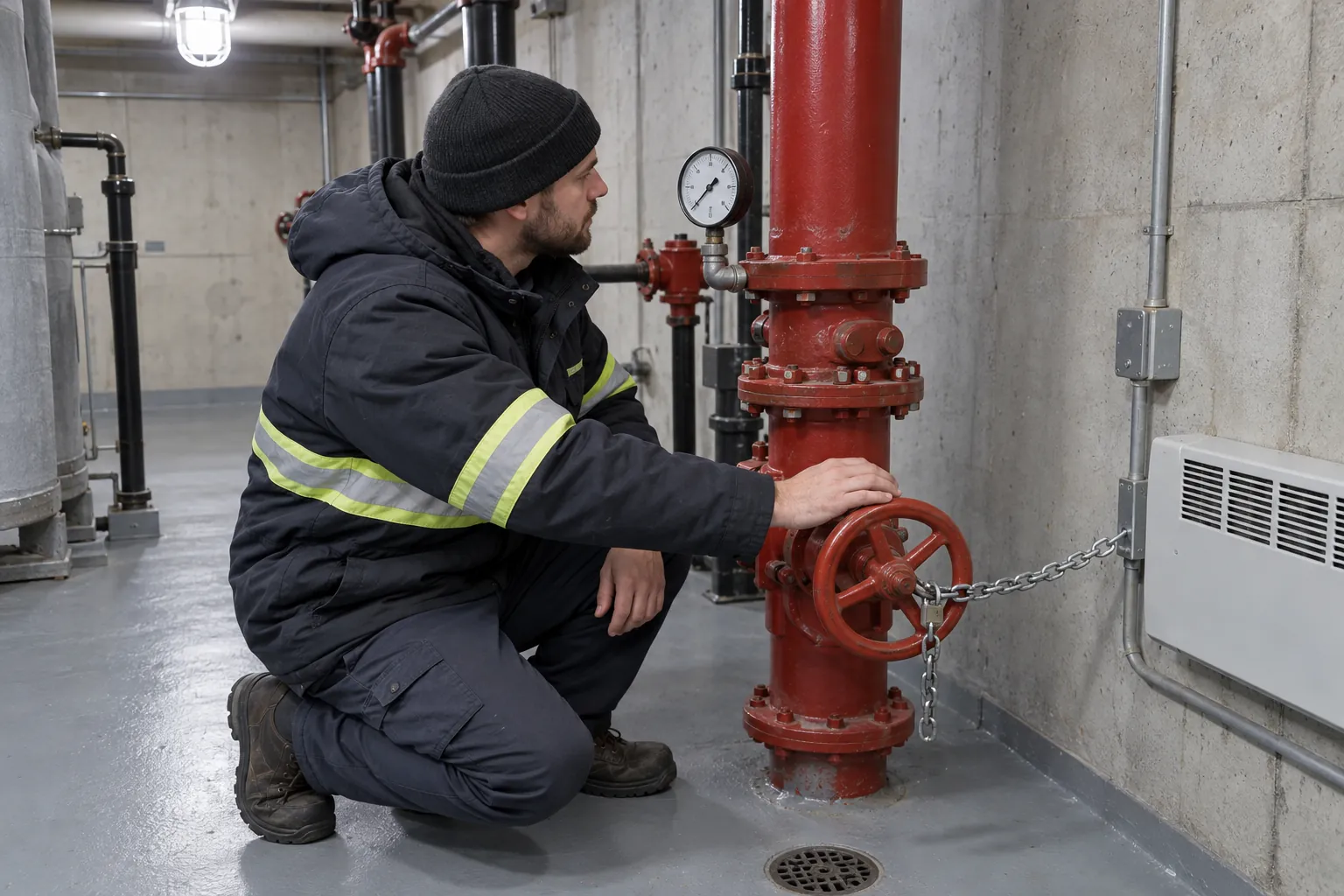 Fire and water checksSprinkler system inspection in Canada: what is checked, how often, and what the record must showSprinkler system inspection in Canada: what the fire codes and NFPA 25 ask, the weekly and monthly checks, the annual test, shutdowns and the records to keep.
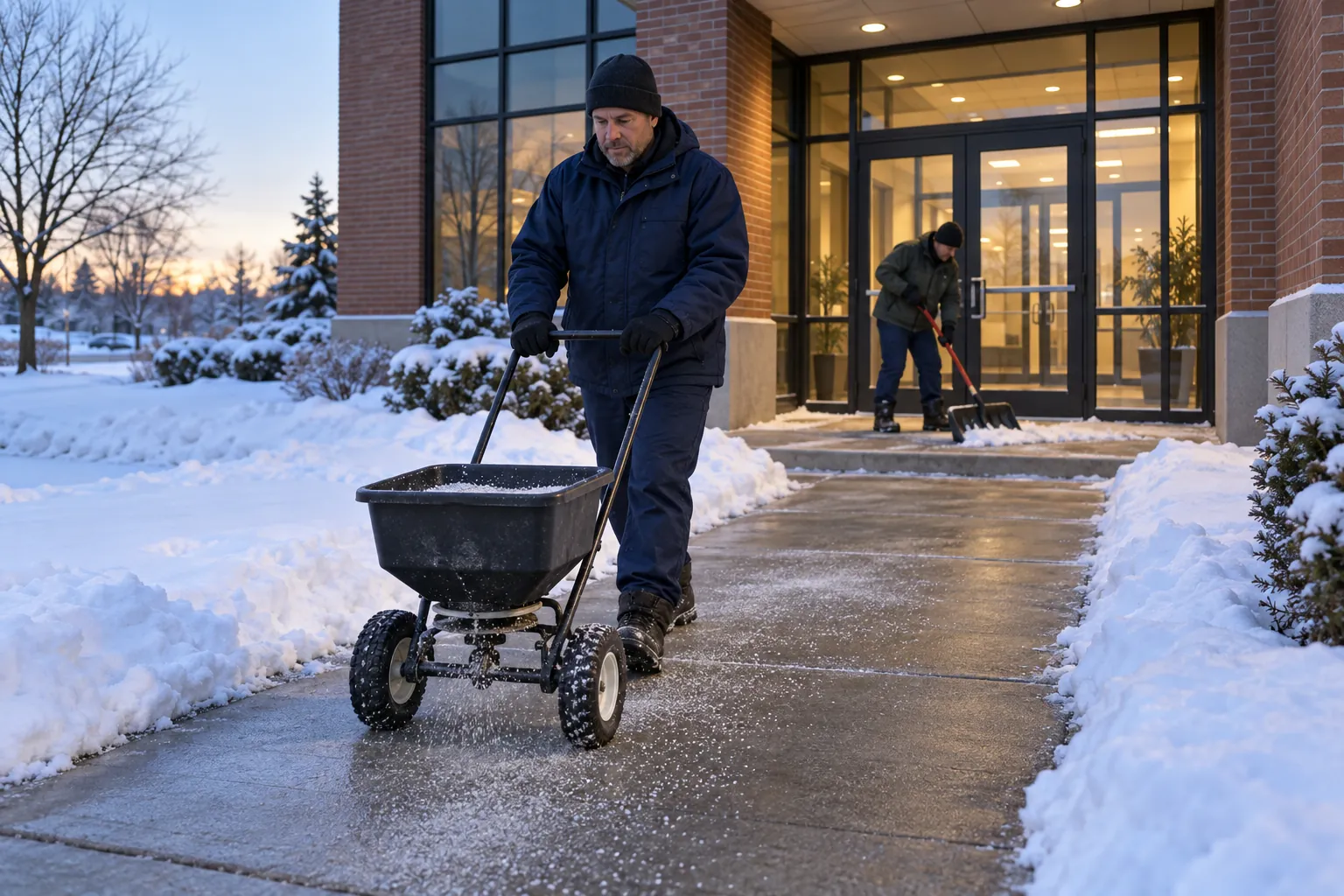 Premises and facilities managementSnow removal log: what to record, when, and why it mattersWhat a snow removal log should record, when to make entries, who keeps it, and how Ontario's 60-day notice rule for snow and ice claims makes the log count.
 Premises and facilities managementVacant building inspection: the rules, the checks and the recordHow to inspect a vacant building in Canada: the Fire Code, municipal property standards, winter and water, the insurer's conditions and the record of each visit.
 Premises and facilities managementPreventive maintenance checklist: what to include, how often, and how to show it was doneA preventive maintenance checklist for Canadian buildings: what the fire code and provincial law require, what to include, how often, and the records to keep.