Premises and facilities management
Vacant building inspection: the rules, the checks and the record
A vacant property inspection is a regular, recorded visit to an empty building to check that it is secure, weathertight and safe, and to catch damage, leaks and break-ins before they spread.
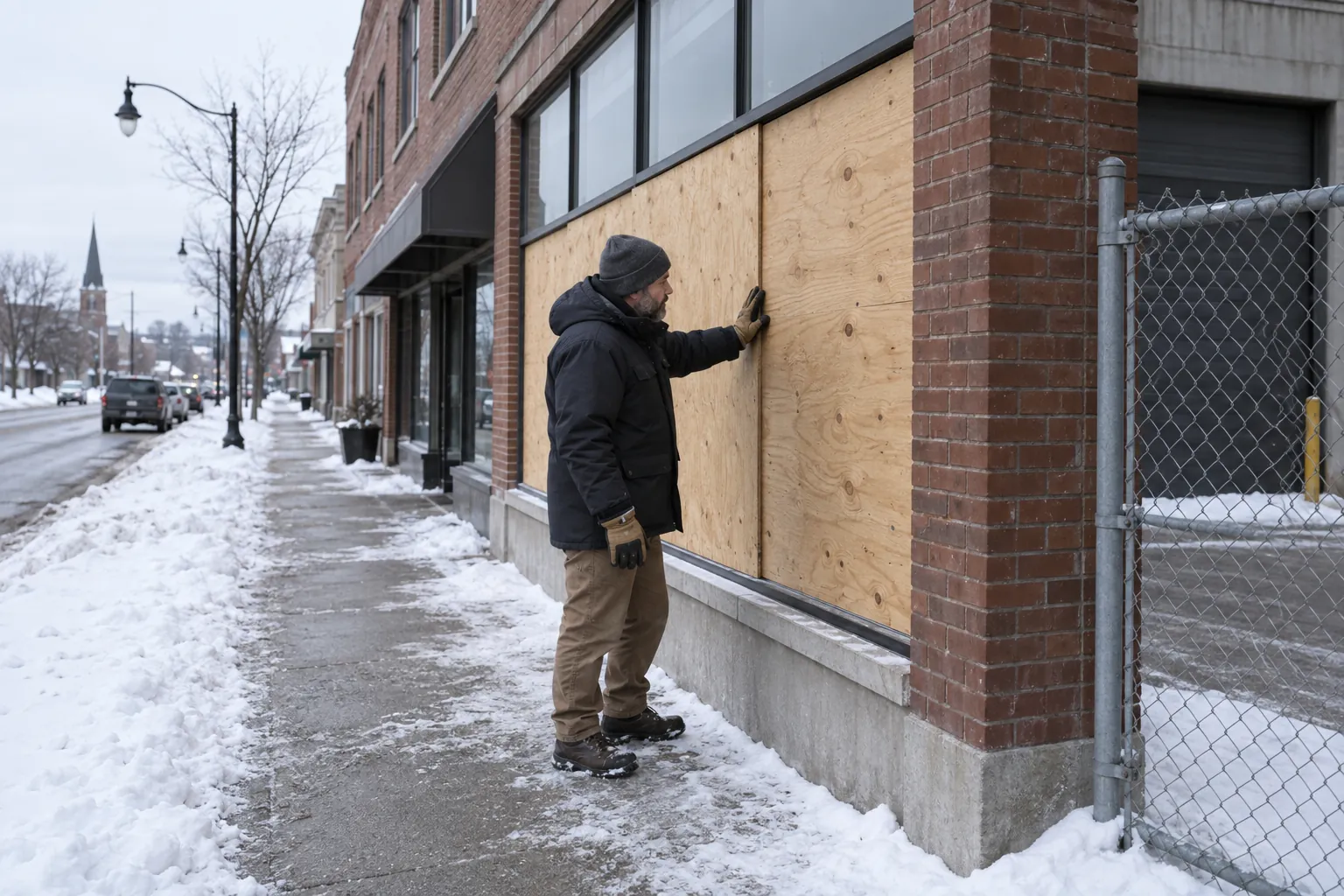
An empty building does not look after itself. In a Canadian winter a pipe can freeze and split in a single cold night, a boarded window can be pried open, and rubbish left against a wall is an invitation to a fire. Regular inspections find those problems early, and the record of each visit shows the owner, the insurer and the fire department that the building was kept secure. This guide covers the rules that apply, what to check, how often, and what to write down.
01
What a vacant building inspection is, and the rules behind it
A vacant building is one nobody is using: an office floor or a whole tower between tenants, a store that has closed, a school or church waiting for redevelopment, an apartment building emptied for renovation, a plant that has shut down. A vacant building inspection is a regular visit by someone the owner has asked to check that the building is secure, weathertight and safe, and to record what they found. The inspector might be the property manager, the building superintendent, a security guard on a mobile patrol or a company that offers vacant property inspection services.
No single Canadian law sets out an inspection routine for every empty building. The duties that make one necessary come from several places, and most of them are provincial or municipal. Ontario shows how they fit together.
- The fire code. The Ontario Fire Code, O. Reg. 213/07, in the consolidation in force from January 1, 2026, has a subsection headed Vacant Buildings. Article 2.4.7.1 of Division B reads, in full: "Vacant buildings shall be secured against unauthorized entry." Article 2.1.1.3 applies that subsection to individual dwelling units too, so an empty house or apartment is covered as well as a commercial building. Division A, Article 1.2.1.1, says that unless otherwise specified "the owner is responsible for carrying out the provisions of this Code."
- Combustibles. The same code, Division B Article 2.4.1.1, says combustible materials "shall not be accumulated in or around a building in such quantity or such location as to create a fire hazard", and that they shall not be stored on a roof or next to a building so as to create a fire hazard. For an empty building, that is the pile of dumped furniture by the back door and the pallets in the loading dock.
- Municipal property standards. Cities set their own rules for vacant property under their property standards bylaws. Section 629-24 of Toronto Municipal Code Chapter 629, Property Standards requires the owner of any unoccupied building to protect it "against the risk of fire, accident or other danger, by effectively preventing the entrance to it of all unauthorized persons", sets out how windows and doors must be boarded when ordinary locks do not keep people out, and requires utilities to be properly disconnected or otherwise secured once a building has been vacant for 90 days or more.
- Occupiers' liability. Under section 3 of Ontario's Occupiers' Liability Act, an occupier owes a duty to take reasonable care to see that people entering the premises are reasonably safe. The duty differs for people who enter to commit a crime (section 4), but an empty building with a broken fence still attracts people, including children, and the owner is still the occupier.
- Workplace safety. The building may be empty, but the inspector, the cleaner and the contractor are at work in it. Section 25(2)(h) of Ontario's Occupational Health and Safety Act requires an employer to "take every precaution reasonable in the circumstances for the protection of a worker".
Every province and territory sets its own fire code, most of them based on an edition of the National Fire Code of Canada, the model code the National Research Council publishes (the current edition is 2025), and many cities outside Ontario have their own vacant building or property standards bylaws. Outside Ontario, ask the provincial or territorial fire marshal's office which edition applies, and check the city's bylaws too, before settling the routine. On top of all of this sits the insurance policy, which usually sets the most specific rules of all.
02
What to check on each visit
A vacant building inspection follows the same route every time, outside first and then inside, so that anything new stands out. A typical vacant property inspection checklist covers security, maintenance problems and fire hazards:
- The perimeter: fences, gates and hoarding intact; no dumped garbage, furniture or combustibles against the walls or in the loading dock; no sign of people sleeping in doorways or of vehicles that should not be there. Fire access routes and the fire department connection clear and marked.
- Entry points: every door, window, overhead door, roof hatch and basement opening secure; plywood and screens undamaged and still fastened; no pry marks, broken glass or forced locks.
- Signs: no trespassing signs still in place and readable at each ordinary way in.
- Mail and flyers: mail slots sealed or the mail cleared, since a pile of flyers in the vestibule tells anyone passing the building is empty, and it burns.
- Roof, eavestroughs and snow, as far as can be seen safely from the ground: ice dams, blocked eavestroughs and downspouts, snow load building up on a flat roof, water running down the walls.
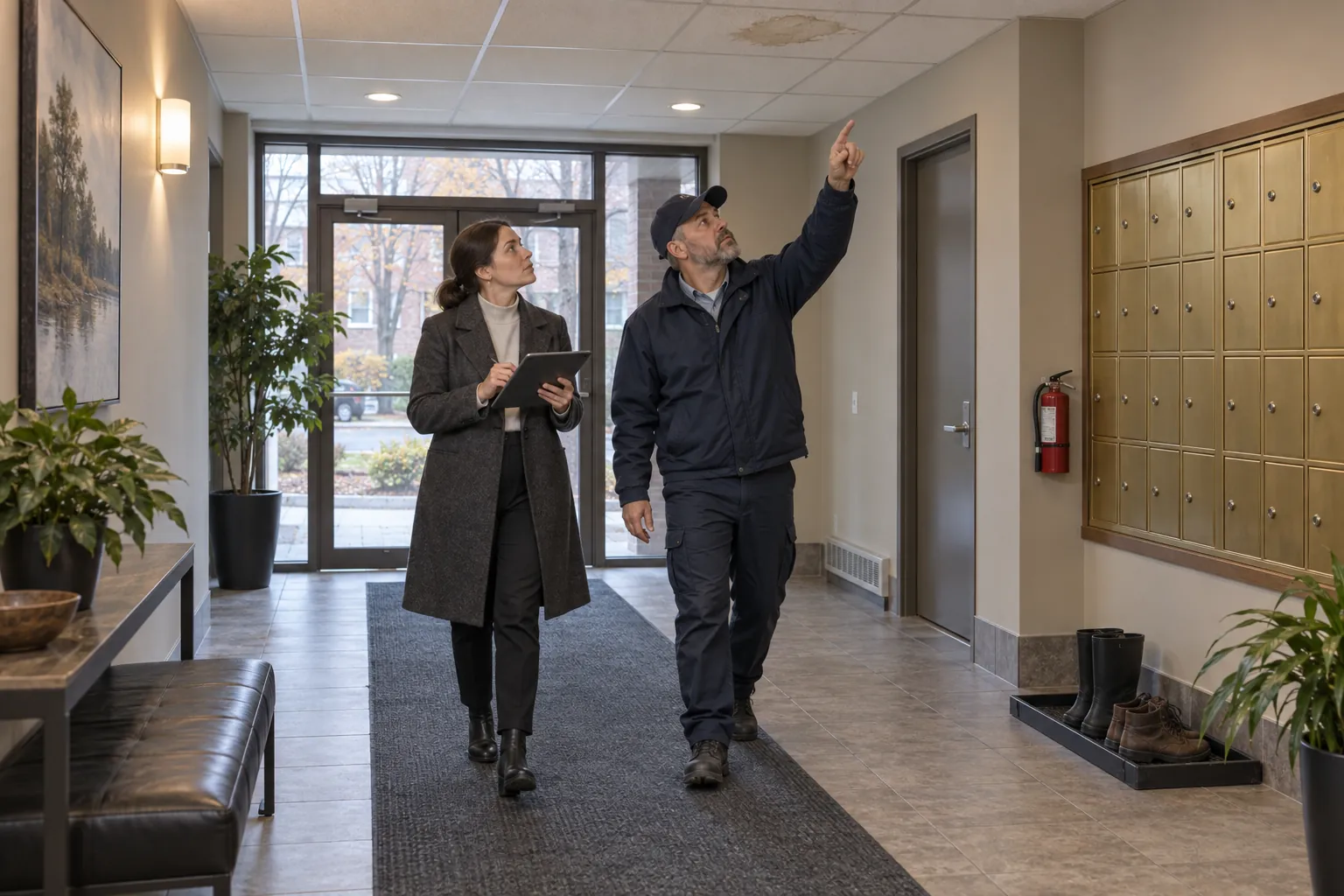
- Inside: signs of intruders, water on floors or stained ceiling tiles, mould, pests, damage to fittings, and any smell of gas, smoke or burning.
- Heat and water: the thermostat reading and the temperature in the coldest spaces, such as the sprinkler room, the stairwells and the rooms along exterior walls; the water shut off and the lines drained where that is the plan.
- Fire protection: sprinkler and standpipe valves open where the system is kept in service, gauges read, the fire alarm panel showing normal with no trouble signals, and extinguishers in place.
- Alarms and cameras: the intrusion alarm armed and the monitoring company's contact details current; cameras in position and recording.
- Meters: electricity, gas and water readings, so that a sudden change shows up a leak or someone using the supply.
Adapt the list to the building you are inspecting: a warehouse with a yard, an empty retail plaza and a vacant apartment building need different checks, and a building with a live sprinkler system needs more attention in winter than one fully drained down.
Ontario's Trespass to Property Act lets an occupier give notice that entry is prohibited, including by signs posted so that one is clearly visible in daylight from the approach to each ordinary point of access, and makes entering in breach of that notice an offence with a fine of up to $10,000. Checking the signs is part of the visit.
03
How often to inspect an empty building
Start with the insurance policy. Commercial and residential property policies in Canada commonly treat a building that has been vacant beyond a set number of days differently, and the vacancy conditions often say how often it must be checked, by whom, and sometimes that the checks must be written down. Weekly visits are a common pattern, but policies differ, and some reduce cover after a long vacancy. Read the wording, not a general rule, and if it is unclear, ask the broker or the insurer in writing. Tell the insurer when a building becomes vacant and when it is reoccupied; a vacancy condition protects the owner only if the insurer knew.
Beyond the policy, the risks at the building decide:
- Visit more often when the building is downtown or on a busy street, has been broken into before, is visibly empty, has copper and equipment worth stealing, is large or has many ways in, or when it is winter and the heat is on.
- Visit less often where the building sits inside a managed site with its own security, the vacancy will be short, the building is fully drained down with nothing left to freeze, and a monitored alarm and cameras will raise the alarm if someone gets in.
- Add a visit after an event: a storm, a deep freeze, a power outage, a heavy snowfall, an alarm activation or a neighbour's call. Record it like any other visit.
Many owners combine a weekly walk-through inside with a nightly drive-by from a mobile patrol, the guard noting the time and what they saw in a security officer report. Whatever the pattern, write it down, agree it with the insurer where the policy asks, and follow it. A missed visit that nobody recorded looks exactly like a visit that never happened.
Look after the inspector too. Someone walking an empty building on their own is working alone, which the Canadian Centre for Occupational Health and Safety describes in Working Alone – General as being "on their own; when they cannot be seen or heard by another person", and some provinces have specific working alone rules. Set a check-in procedure, make sure the inspector can call for help, and make the rule clear: if there are signs someone is inside, do not go in. Call the police rather than confronting anyone.
04
Winter, water and the fire protection systems
In most of Canada the biggest threat to an empty building is not a break-in but the cold. A pipe that freezes and splits in a building nobody is using can run for days, and the damage on several floors can be far greater than anything an intruder does. Deciding what to do with the water is the most important step when a building becomes vacant.
There are two usual approaches, and the choice belongs in writing:
- Drain down: shut off the water at the main, drain the domestic lines, and add antifreeze to traps where a plumber advises it. The heat can then be lowered, if the building has no sprinkler system or other equipment that needs it.
- Keep the heat on: where the sprinklers, the boiler or the building fabric need heat, keep the building above freezing, and check the temperature on every visit, especially in the coldest corners. A heating failure in January is exactly what the inspection is there to catch.
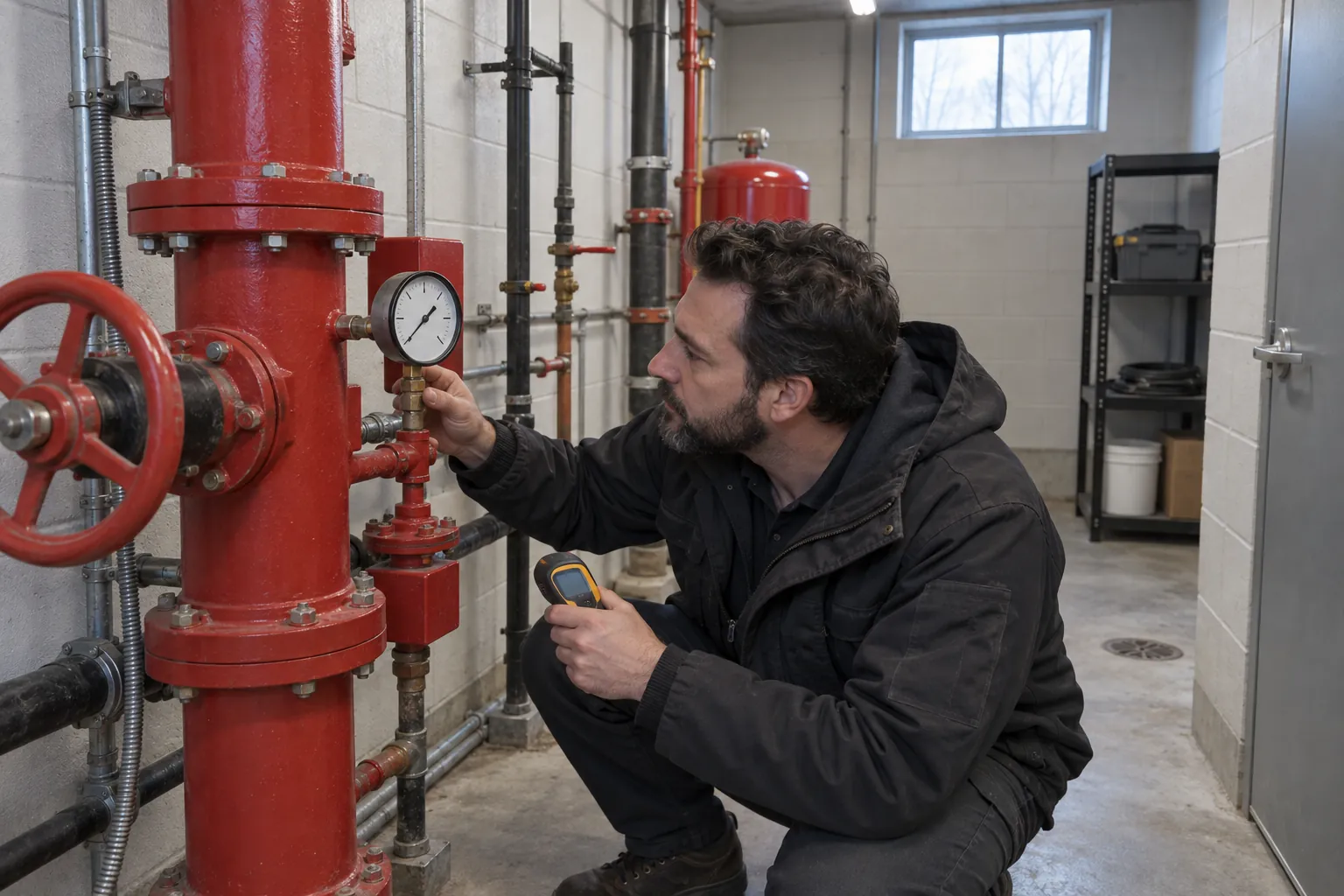
A sprinkler system cannot simply be drained and forgotten, because it protects the building from fire whether or not anyone is inside. The Ontario Fire Code's sprinkler maintenance rules, in Division B Section 6.5, keep applying to an empty building:
- Article 6.5.1.4: changes in equipment or occupancy that might result in temperatures at sprinklers of less than 4°C with wet pipe systems "shall not be made without previously making provisions to alter the sprinkler system to prevent premature operation or freezing". Turning the heat down in a sprinklered building is that kind of change.
- Article 6.5.3.2: water supply pressure and system air or water pressure "shall be checked weekly by using gauges".
- Article 6.5.3.3: dry-pipe valve rooms or enclosures in unheated buildings "shall be checked as often as necessary when the outside temperature falls below 0°C to ensure that the system does not freeze."
Those checks, and the fire alarm and extinguisher inspections, are the building's statutory fire protection records and are carried out by whoever the owner has made responsible, often a fire protection contractor. The vacant building inspection does not replace them; it makes sure someone notices between visits when a gauge has dropped, the panel is in trouble or a valve room is cold. See the guides to sprinkler system inspection and the winterization checklist for the detail.
05
What a good inspection record shows
After a claim, a fire or a complaint from the city, the questions are always the same: when was the building last inspected, by whom, and what did they find? A vacant property inspection record answers them. A useful record carries:
- the date and time of the visit, and the inspector's name;
- each point checked, outside and inside, and what was found there;
- photographs of the entry points, the roof line and anything wrong;
- the thermostat reading and the temperature in the coldest spaces, the sprinkler gauge readings and the meter readings;
- any damage, leaks or signs of entry, who was told and what was done about them.
Keep the records for the whole vacancy and well beyond, since a claim or a dispute can surface months later. The same record is how a property manager reports to an owner with several vacant properties, and how the owner shows the insurer that the vacancy conditions were met.
06
Where the record fails, and what SiteClara does about it
Vacant building inspections are easy to miss and hard to prove. The inspector visits a building nobody else goes into; the paper log sits in a truck or on a clipboard, or is filled in from memory on Friday; and the owner finds out a visit was missed only after the pipes have burst. A photo on someone's phone shows a boarded window, but not which building, when, or who took it.
SiteClara puts a printed QR poster, with an NFC tag behind it where staff prefer to tap, at points inside and outside the building: the main entrance, the sprinkler room, the loading dock, each floor. The inspector scans or taps with their own phone, with no app to install, sees the checks due at that point and marks each one done, or records what stopped them, with a photo on any visit. The time and the person are recorded as it happens.
A problem found on the visit, such as a forced door, a cold valve room or water on the floor, is reported there and goes onto the team's list of jobs until someone closes it, and a supervisor can escalate it to the building manager. The supervisor sees which inspections are due, done and missed, and can record why one was missed. Each day the supervisor approves a report that goes to nominated management or client contacts the next morning, with the photos, what was completed and what is still open.
07
Questions people ask
Can I say no to an inspection?
Not to a fire inspection. Under section 19 of Ontario's Fire Protection and Prevention Act, 1997, the Fire Marshal, an assistant to the Fire Marshal or a fire chief may, without a warrant, enter and inspect land and premises for the purposes of assessing fire safety, at all reasonable times. If entry is refused, section 20 lets a justice of the peace issue a warrant, and section 28 makes it an offence to prevent an inspector from entering. The owner can ask the inspector to identify themselves and explain the purpose of the entry, which section 19 requires them to do.
What do inspectors look for in an inspection?
At a vacant building, a fire inspector assesses fire safety against the fire code, starting with Article 2.4.7.1 of the Ontario Fire Code, O. Reg. 213/07: "Vacant buildings shall be secured against unauthorized entry." Section 21 of the Fire Protection and Prevention Act, 1997 lets the inspector then order the owner to make repairs, to remove combustible material or any thing that may constitute a fire hazard, and to remedy any contravention of the fire code, and, with the Fire Marshal's approval, to close the premises until that is done. A municipal property standards officer checks the city's own rules, such as section 629-24 of Toronto Municipal Code Chapter 629, Property Standards, which requires the owner of an unoccupied building to prevent the entrance to it of all unauthorized persons.
08
Further reading, and a list to take away
Start with the insurance policy and the broker: the vacancy conditions are the rules that decide whether a claim is paid. In Ontario, read the Ontario Fire Code, Division B Subsection 2.4.7 and Section 6.5, and your municipality's property standards bylaw, such as Toronto Municipal Code Chapter 629. Elsewhere, read the provincial fire code, which your provincial fire marshal or fire commissioner's office can point you to, and the city's bylaws. The CCOHS guidance on working alone is a good starting point for the inspector's own safety.
When a building becomes vacant, make sure that:
- the insurer or broker has been told, and you have read the vacancy conditions;
- the inspection frequency is written down and meets the policy;
- the water is drained down or the heat is kept on, by a written decision, and a wet pipe sprinkler system is kept above 4°C at the sprinklers unless it has first been altered to prevent freezing;
- every door, window and opening is secured, and no trespassing signs are posted at each way in;
- garbage and combustibles are removed from inside and around the building, and mail slots are sealed;
- meter readings and photographs are taken at the start of the vacancy;
- every visit is recorded with the time, the inspector's name, what was found and photographs;
- fire protection inspections continue on schedule, and anything wrong goes to someone who will fix it, with the fix recorded;
- the inspector has a check-in procedure and knows not to go in if someone may be inside.
Sources
Every document this guide quotes or links to, in the order it first cites them.
- Ontario Fire Code, O. Reg. 213/07 ontario.ca
- Toronto Municipal Code Chapter 629, Property Standards toronto.ca
- Occupiers' Liability Act ontario.ca
- Occupational Health and Safety Act ontario.ca
- National Fire Code of Canada nrc.canada.ca
- Trespass to Property Act ontario.ca
- Working Alone – General ccohs.ca
- Fire Protection and Prevention Act, 1997 ontario.ca
Related guides
 Security patrolsBuilding security checklist: what to check, how often, and how to show it was doneA building security checklist for Canadian workplaces: doors, locks, fobs, lighting, CCTV, alarms and exits, how often to check them, and how to keep a record.
 Premises and facilities managementWinterization checklist: getting a building ready for a Canadian winterA winterization checklist for Canadian buildings: the freeze checks the fire code asks for, heating, plumbing, roofs, grounds, outdoor staff and the records to keep.
 Premises and facilities managementProperty manager duties in Canada: licensing, legal duties and the daily recordWhat a property manager does in Canada: provincial licensing, the owner's duties under occupiers', tenancy and fire law, the daily work and the records.
 Security patrolsSecurity report writing: what a guard's report needs, and how to make it stand upSecurity report writing for Canadian guards: the reports a shift produces, what an incident report must contain, and what Ontario, BC and Alberta law expects.