Cleaning
BICS cleaning: what BICSc training is, and what it shows
BICS is the British Institute of Cleaning Science (BICSc), which describes itself as the largest independent, professional and educational body in the cleaning industry, and "BICS trained" means trained through its Cleaning Professional's Skills Suite, which starts with the compulsory Licence to Practice.
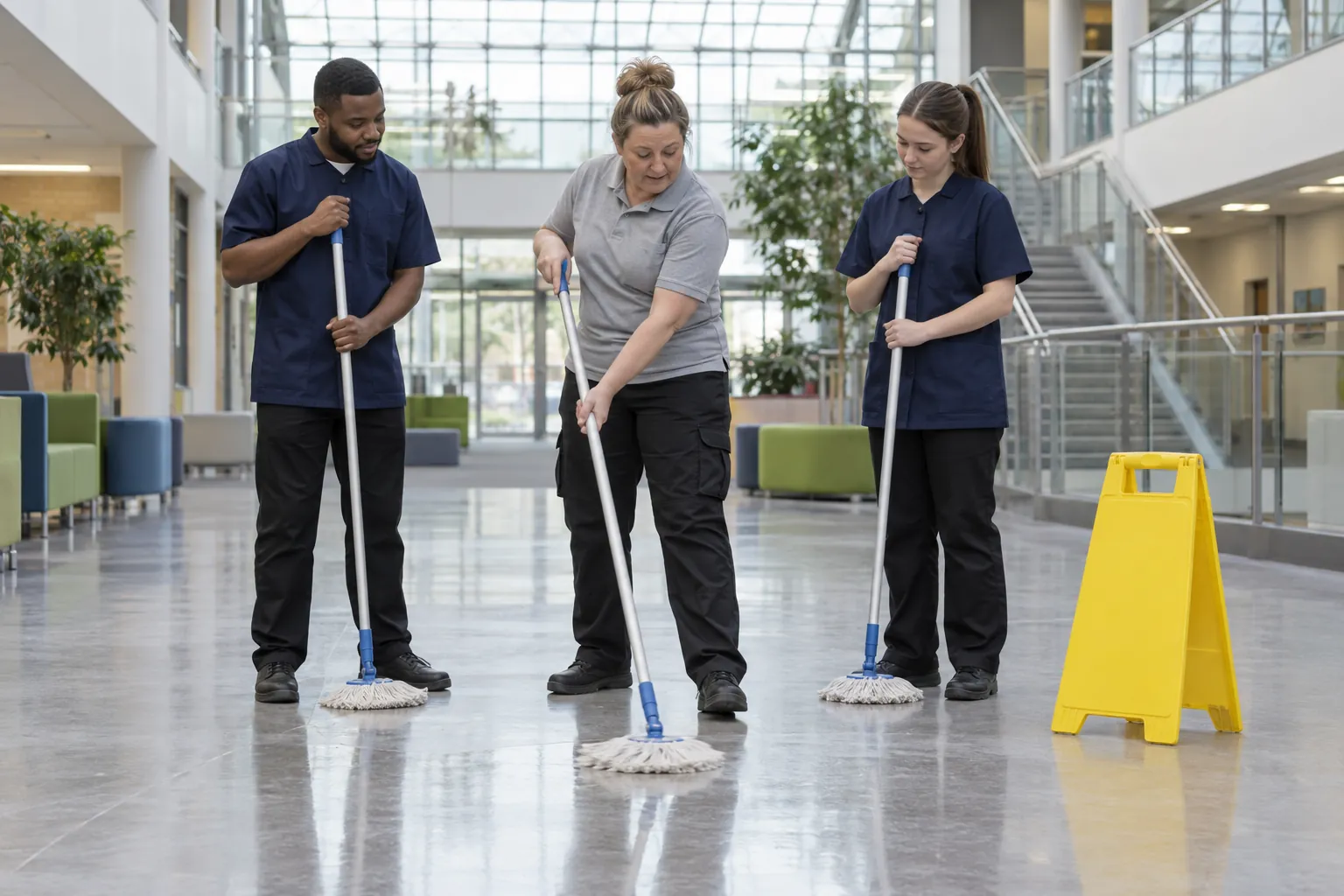
The phrase appears in cleaning job adverts, tender questions and contract specifications across the UK. This guide explains who BICSc is, how its Licence to Practice and skills units work, what employers and clients use the training for, and what a training record can and cannot tell you about the cleaning in a building.
01
What BICSc is
The British Institute of Cleaning Science (BICSc) is a professional and educational body for the cleaning industry; BICSc describes itself as the largest independent, professional and educational body within the cleaning industry, with over 80,000 individual and corporate members. It is often shortened to "BICS", which is why people search for "BICS cleaning" or "BICS training"; the organisation itself uses BICSc. It sets out how cleaning tasks should be carried out safely and well, trains and assesses cleaning operatives against those methods, accredits the trainers and training centres who do that work, and has members ranging from individual cleaning professionals in office cleaning, healthcare and housekeeping to large cleaning companies and in-house teams.
BICSc is not a regulator. No UK law requires a cleaner to hold a BICSc qualification, and a contractor can be competent without one. What the law does require is that employers give their staff the information, instruction and training they need to work safely. The Health and Safety at Work etc. Act 1974 sets that general duty, and the Control of Substances Hazardous to Health Regulations 2002 (COSHH) require suitable training for anyone working with hazardous substances, which includes many cleaning chemicals. BICSc training is one widely recognised way for an employer to meet part of that duty and to show that it has.
Its influence reaches beyond its own courses. The colour-coding of cloths, mops and buckets by area, red for washrooms and toilets, blue for general low-risk areas, green for food and catering areas and yellow for clinical and isolation areas, is the scheme BICSc recommends. It is guidance rather than a compulsory standard – BICSc notes that, outside healthcare, no national or international compulsory colour-coding standard exists – but many cleaning specifications and hygiene audits simply assume it.
02
What BICSc offers in practice
The detail changes over time, so check the current range with BICSc before you rely on it, but the main parts are:
- The Licence to Practice (LTP; BICSc spells it with a c), the entry-level qualification for cleaning operatives. It covers the basics every operative needs: using cleaning chemicals safely, using and caring for equipment, and storing both properly. It is the step before any further skills units.
- The Cleaning Professional's Skills Suite (CPSS), a library of individual skills units, over forty of them, grouped as base units used daily, additional units used frequently, specialist units, and sector-specific units for areas such as healthcare. Examples of the kind of task covered are damp mopping, damp wiping of surfaces, washroom cleaning, dust control and carpet care.
- A skills card, which lists the units a candidate has achieved, so an employer or client can see which tasks the person was trained and assessed on.
- Accredited trainers, assessors and training centres. Many cleaning companies and in-house teams train their own staff through an accredited trainer, so training and assessing happen on site in the building the operative actually cleans.
- Membership for individuals and organisations, with guidance, events and the industry's annual awards.
- Routes for supervisors, managers and trainers, for people moving from cleaning into supervising, training or running contracts.
Older certificates still appear on CVs. The Cleaning Operator's Proficiency Certificate (COPC) was withdrawn when the CPSS replaced it, and although COPC holders may well be skilled, BICSc's own advice has been that they refresh through the current scheme to gain the Licence to Practice.
03
How BICSc training works for a cleaning operative
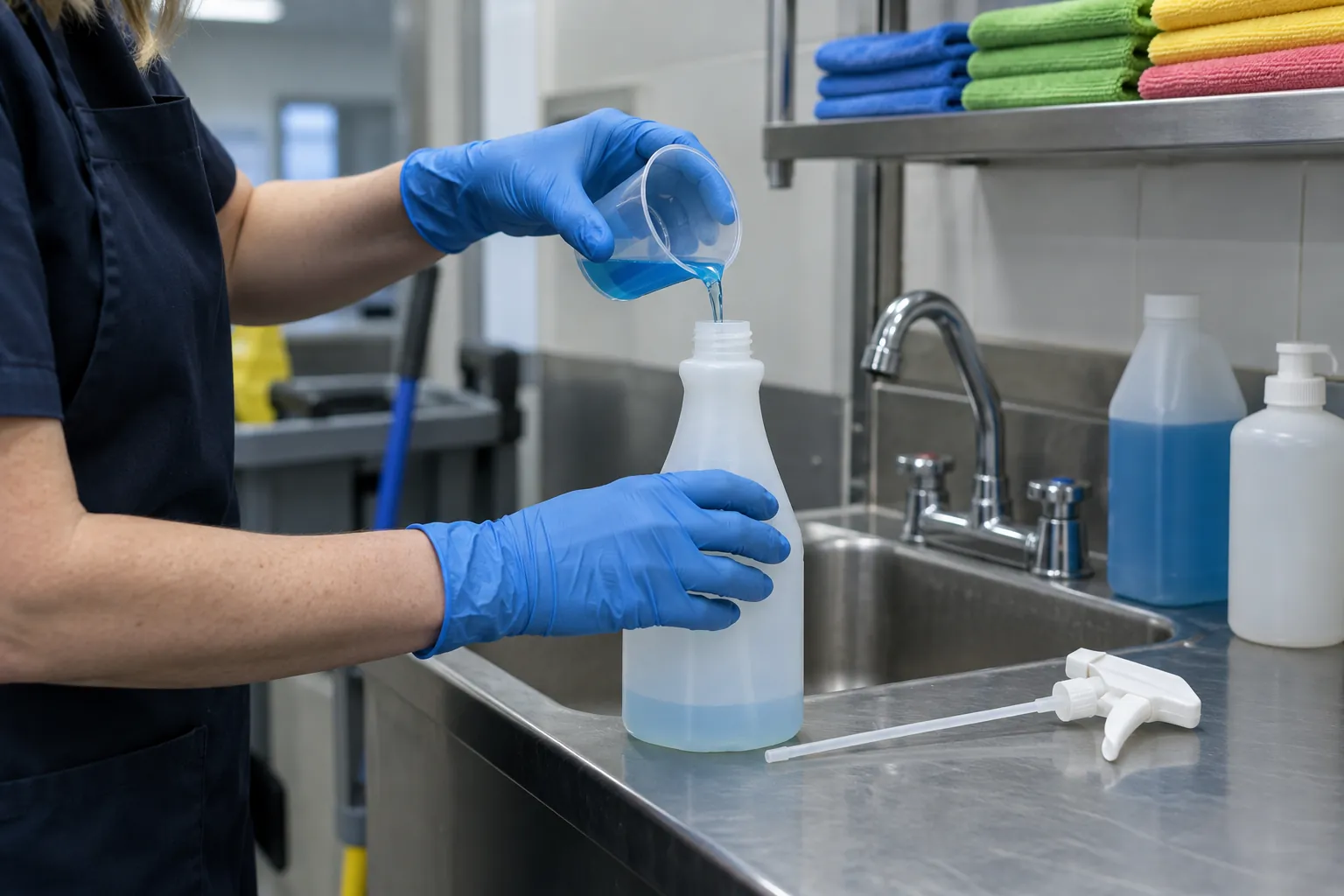
BICSc training is practical. The candidate is shown a standard method for a task, practises it, and is then assessed doing it, not only asked about it. The skills and confidence it aims for are the ordinary ones that make cleaning safe and efficient: diluting a chemical correctly, choosing the right colour-coded equipment, putting out a wet-floor sign, cleaning from clean to dirty and high to low, and leaving equipment clean and stored.
A typical route for a new operative looks like this:
- Induction by the employer: the site, the specification, emergency procedures, COSHH assessments for the products in use, and who to report to.
- The Licence to Practice, with an accredited trainer, covering chemical competence and the safe use, care and storage of equipment. Face-to-face Licence to Practice training takes a full day; the online version takes about two hours, plus a one-hour session for assessment.
- Base units for the tasks the operative does every day on that site, such as washrooms, hard floors and damp wiping.
- Further units as the role grows: carpet care, periodic floor maintenance, or a sector-specific unit for a hospital, school or food area.
- Refreshers and reassessment when methods, products or equipment change, or when a supervisor sees standards slipping.
Some assessments can be taken online, but the value of the scheme for most employers is the hands-on part. A card earned in a training room is worth less than one earned by demonstrating the method in the washroom the operative will clean each morning.
04
What employers use BICSc training for
For a cleaning company or an in-house cleaning team, BICSc training does several jobs at once:
- Health and safety: a structured, recorded way of training staff in chemicals and equipment, which supports the employer's COSHH and risk assessments and sits alongside them rather than replacing them.
- Consistency across sites: when every operative follows the same method for a washroom or a hard floor, a supervisor can compare one building with another and cover absences without retraining.
- Induction and retention: a recognised qualification gives new starters a clear first step, and further units let cleaning staff develop their skills and give a cleaning career somewhere to go, which matters in an industry with high staff turnover.
- Supervision: supervisors who are trained, and who train others, can correct a method on the spot rather than only noticing a poor result at audit.
- Tenders: buyers often ask what proportion of staff are trained, to what level, and how training is kept current. A training matrix built on a recognised scheme answers that question with evidence, and gives a bid credibility that a promise of professional cleaning does not.
The training record needs maintaining to be credible. Keep, for each person, the units achieved, the date, the trainer, and when a refresher is due. A matrix that has not been updated since mobilisation says more about the contract than its owner intends.
05
What clients and buyers should ask for
Facilities managers and procurement teams often write "operatives trained to BICSc standard" into a cleaning specification or tender. That is reasonable, but a few habits make the requirement fairer and more useful:
- Say "or equivalent". Other recognised routes exist, including regulated vocational qualifications in cleaning and well-run in-house training. Public buyers in particular should not specify one provider's scheme in a way that shuts out equivalents.
- Ask for the matrix, not the logo: which units, for which staff, on this site, and when they are refreshed.
- Match training to the building: a healthcare, food or specialist floor-care setting may need sector-specific or specialist units, not only the Licence to Practice.
- Ask about supervisors: who checks that trained methods are used day to day, and how often.
- Check it during mobilisation: staff transferring under TUPE may come with different training histories, and the new provider's plan to bring everyone up to the same standard is worth seeing.
Above all, keep training in its place. It is an input. The outputs a client cares about, a clean building and a service that was delivered as specified, are measured by quality control, audits and records of work done.
06
Where the training record stops, and where SiteClara fits
A skills card proves the operative knows how to clean a washroom. It says nothing about whether the washroom on the third floor was cleaned at 2pm today. That gap is where most disputes between clients and cleaning providers sit: a well-trained team, a good audit score last month, and a complaint this morning that nobody can answer with evidence.
SiteClara records the day-to-day delivery that training cannot. A printed QR poster at each location, with an optional NFC tag behind it, lets staff confirm a scheduled check with a scan or a tap on their own phone, with no app to install. Staff see the checks due at that location and mark them done, or say what stopped them, and can report an issue with a photo, which goes onto the team's list of jobs until someone closes it.
The supervisor sees what is due, done and missed, reviews the day's totals and photos, adds a note and approves the daily report, which goes to nominated management or client contacts at 8am the next morning. Trained people, and a record that shows a named person was at the location at the time and completed the check.
07
Questions people ask
What is BICS certification?
BICS certification is the record of British Institute of Cleaning Science training: a candidate who passes the Licence to Practice receives an LTP card, and the skills units achieved in its Cleaning Professional's Skills Suite are listed on a skills card awarded to the candidate on completion of their training. The Licence to Practice covers health and safety, COSHH, dynamic risk assessment, electrical safety, the safe use and care of equipment, correct dilution and cleaning store housekeeping, and BICSc requires candidates to complete it before progressing to further skills units.
How much does it cost to get a BICSc certification?
The BICSc online shop listed its Licence to Practice online course at £104.00 in September 2026, and the online renewal, for a Licence to Practice that has recently expired, at £62.00; the shop pages do not say whether VAT is included. Face-to-face training takes a full day, so ask BICSc or the accredited training centre for its price, and budget separately for any further skills units the role needs.
08
Further reading, and a list to take away
The British Institute of Cleaning Science publishes the current Licence to Practice and CPSS details, the list of accredited training centres and membership information on its own website. The Health and Safety Executive publishes guidance on COSHH, including for cleaning, and on training duties under the Health and Safety at Work etc. Act 1974. For sector standards that training supports, see our guide to cleaning standards in the UK.
If you employ cleaners, or buy cleaning, check that:
- every operative has an induction for the site and the COSHH assessments for the products in use;
- the training scheme, BICSc or equivalent, is named, with the units each person holds;
- units match the areas cleaned, including any healthcare, food or specialist work;
- trainers and supervisors are named, and someone checks methods on the job;
- the training matrix shows dates and refreshers, and is current;
- specifications and tenders say "or equivalent";
- training evidence sits alongside audits and records of work done, never in place of them.
Sources
Every document this guide quotes or links to, in the order it first cites them.
- BICSc describes itself bics.org.uk
- Control of Substances Hazardous to Health Regulations 2002 legislation.gov.uk
- The Cleaning Professional's Skills Suite bics.org.uk
- The Licence to Practice bics.org.uk
- Licence to Practice online course bics.org.uk
- Guidance on COSHH, including for cleaning hse.gov.uk
Related guides
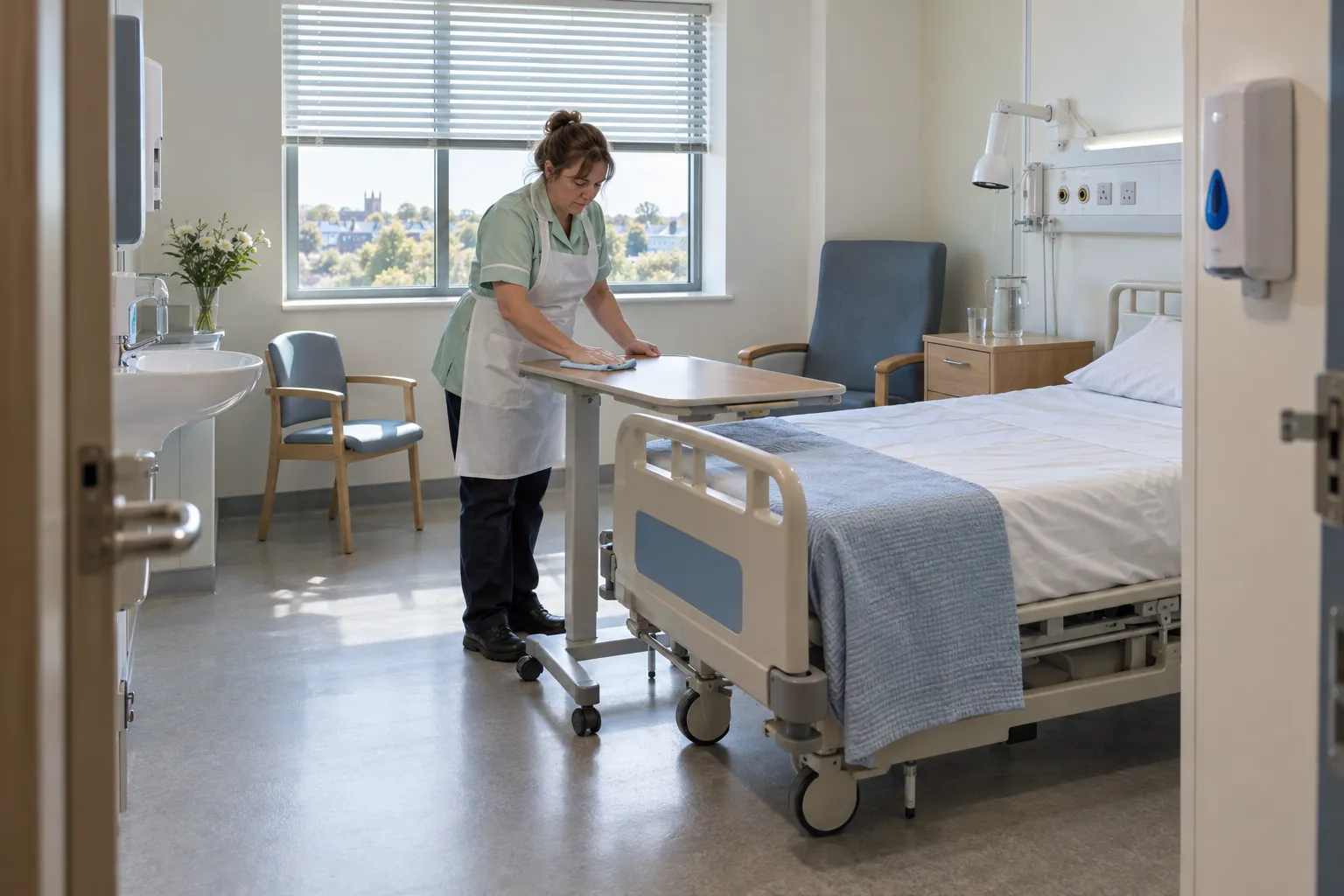 CleaningCleaning standards in the UK: a map, and how to chooseA map of UK cleaning standards: NHS cleanliness standards, the NHSScotland specification, BS EN 13549, BICSc, CQC and food hygiene law, and how to choose.
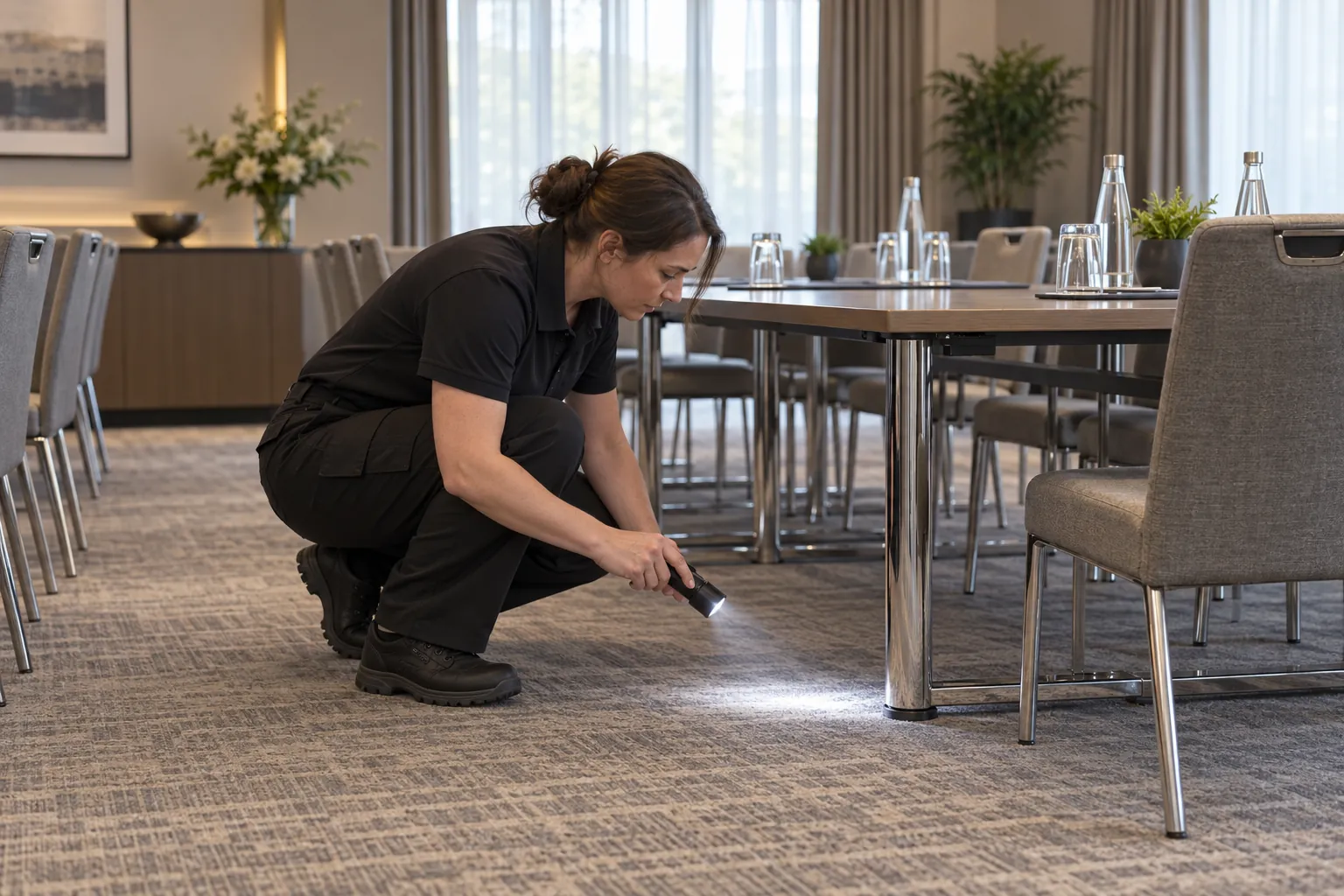 CleaningCleaning quality control: how to inspect, correct and prove the standardHow quality control works in commercial cleaning: QA versus QC, setting standards, running inspections, corrective action and a record that holds up.
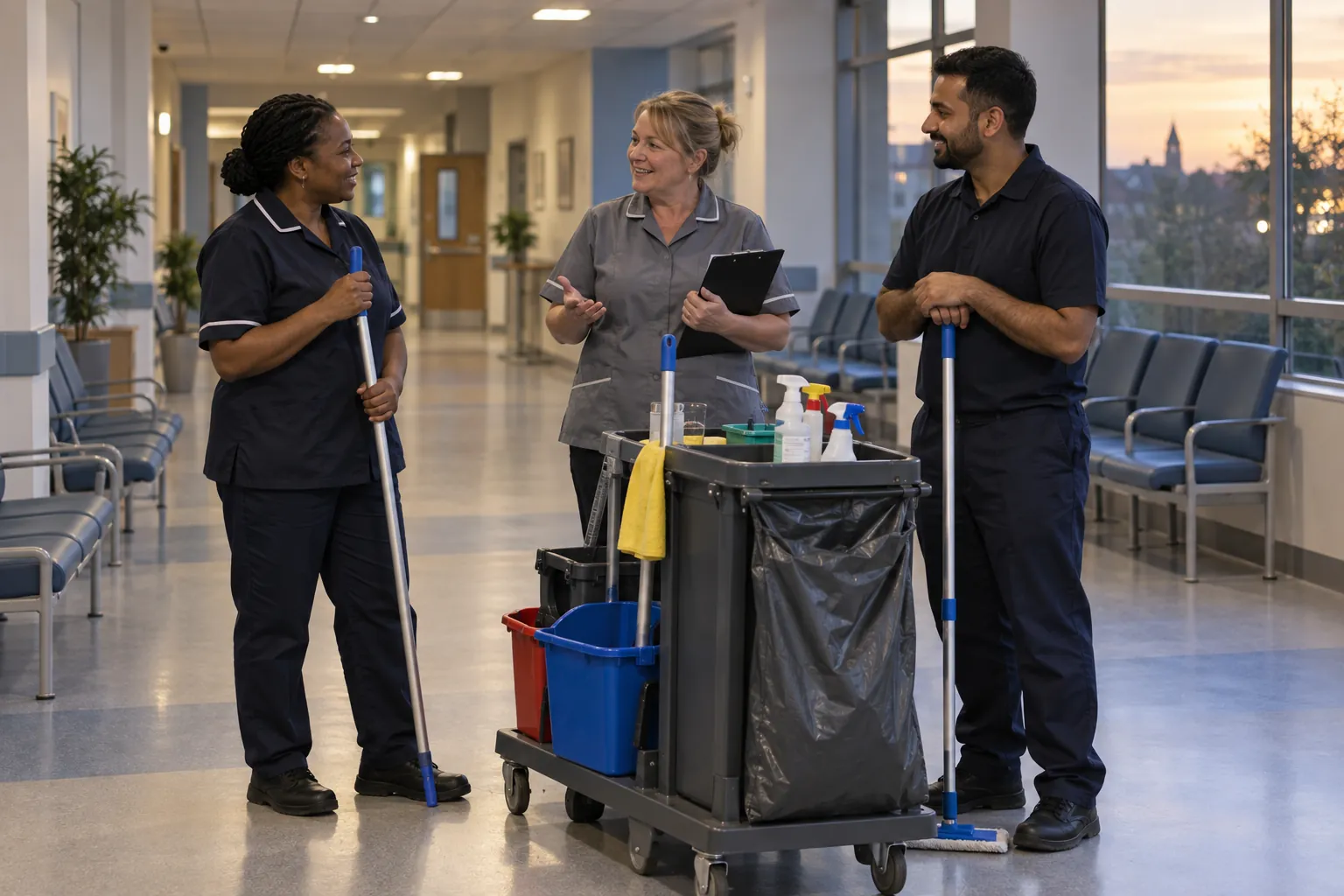 CleaningCleaning supervisor duties: what the role involves, and what good looks likeWhat a cleaning supervisor does: the main duties, a typical shift, health and safety, managing the team, checking the work and reporting to the client.
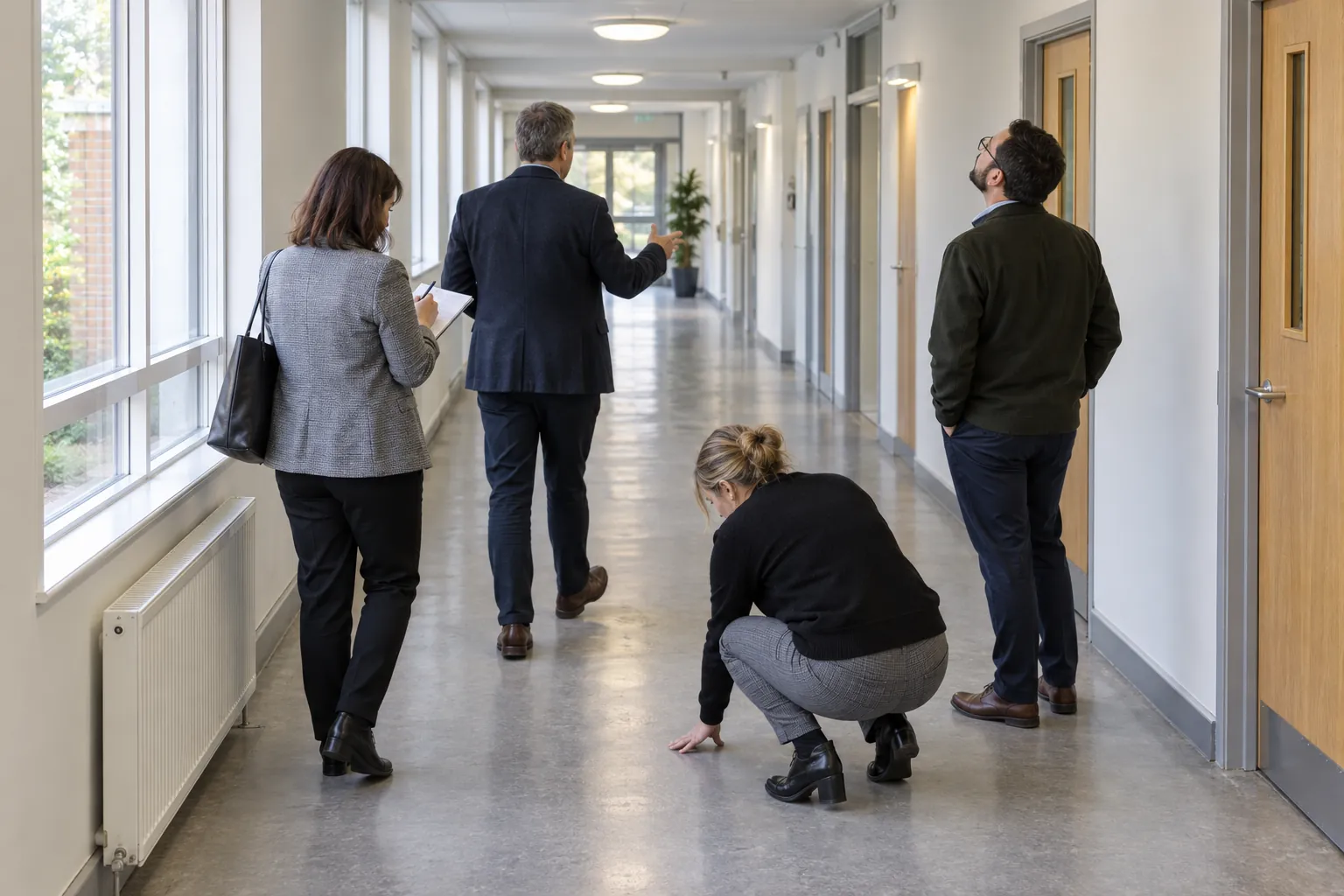 CleaningContract cleaning tender: how to run one as the buyerRunning a contract cleaning tender as the buyer: the tender pack, site visits, TUPE, evaluating quality and price, the Procurement Act 2023 and mobilisation.