Cleaning
Cleaning standards in the UK: a map, and how to choose
Cleaning standards in the UK come in three layers: the legal duty to keep a workplace sufficiently clean, set in Great Britain by the Workplace (Health, Safety and Welfare) Regulations 1992; sector standards such as NHS England's National standards of healthcare cleanliness 2025; and the standard written into each cleaning contract.
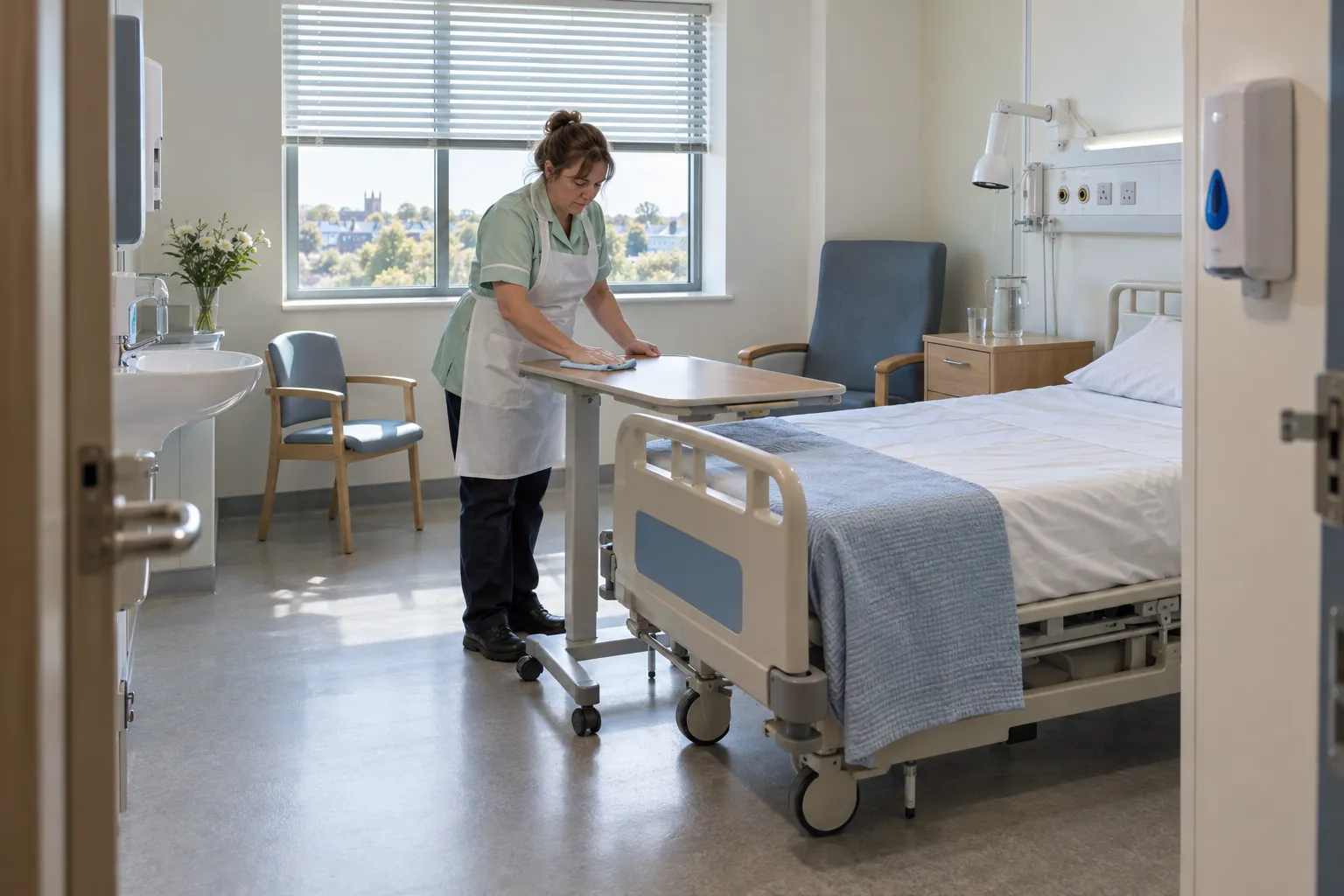
There is no single UK cleaning standard: a hospital ward, a care home kitchen, a school corridor and an office washroom each answer to different rules, and most buildings answer to more than one. This guide maps the cleaning standards that exist, says who they apply to, and shows how to decide which should shape your own specification and audits.
01
What "cleaning standards" means in the UK
People use "cleaning standards" for three different things: the law that says a place must be kept clean, published standards that say how clean, how often and how it is measured, and the contract standard in a particular cleaning specification. It helps to keep them apart, because only the first is compulsory everywhere.
The legal floor applies to almost every workplace. In Great Britain, regulation 9 of the Workplace (Health, Safety and Welfare) Regulations 1992 requires every workplace and its furniture, furnishings and fittings to be kept sufficiently clean, and regulations 20 and 21 require toilets and washing facilities, and the rooms containing them, to be kept in a clean and orderly condition; Northern Ireland has equivalent regulations of its own. The Health and Safety at Work etc. Act 1974 and the Control of Substances Hazardous to Health Regulations 2002 (COSHH) govern doing the work safely.
Above that floor, the sector decides. Healthcare has national standards with functional risk categories and audit regimes. Registered care has regulations enforced by an inspector. Food areas have food hygiene law. Most offices, schools, shops and communal areas have no sector standard at all, and their cleaning standard is whatever the client writes into the specification, often borrowing from the others.
02
The map of UK cleaning standards
The standards and rules you are most likely to meet are:
- NHS England's National standards of healthcare cleanliness 2025. These NHS cleaning standards replaced the 2021 edition and apply to all healthcare organisations in the NHS in England and, new in the 2025 standards, cover ambulance facilities, with bespoke cleaning frequencies for ambulance and patient transport vehicles.
- The NHSScotland National Cleaning Services Specification, published by NHS National Services Scotland, which sets the cleaning and monitoring framework for NHS boards in Scotland. Wales and Northern Ireland have their own arrangements for health service cleanliness.
- The Care Quality Commission's regulations for health and social care services registered in England: Regulation 15 of the Health and Social Care Act 2008 (Regulated Activities) Regulations 2014 requires premises and equipment to be clean, and Regulation 12 covers preventing and controlling the spread of infection, with the Department of Health and Social Care's Code of Practice on the prevention and control of infections alongside. The Care Inspectorate in Scotland, Care Inspectorate Wales and the RQIA in Northern Ireland regulate care in their nations.
- Food hygiene law for kitchens, cafés, canteens and any food preparation area, which requires premises to be kept clean and food safety procedures based on HACCP principles.
- BS EN 13549, Cleaning services – basic requirements and recommendations for quality measuring systems, a British and European standard on how to measure the quality of a cleaning service, rather than a list of tasks.
- BICSc methods and colour coding, the British Institute of Cleaning Science's standard methods and training, and its colour-coding of equipment by area, from red for washrooms to yellow for clinical and isolation areas, which many specifications adopt. See our guide to BICS cleaning.
- The client's specification, which in most buildings is the cleaning standard in practice.
03
Healthcare and care: the most developed standards
The NHS standards are the most complete cleaning framework in the UK for healthcare settings, and the one other sectors borrow from. Their approach, which the 2025 edition keeps, rests on a few ideas:
- Functional risk categories. Every functional area is assigned to a functional risk category, FR1 to FR6 or the number an organisation decides locally, from the highest-risk clinical areas, where a lapse matters most for infection prevention, down to low-risk areas such as offices and stores. Adopting all six categories is good practice but not mandatory.
- Cleaning frequencies by risk, with elements such as floors, high-touch surfaces, fixtures and patient equipment cleaned more often in higher categories.
- Responsibility by element: whether domestic staff, nursing staff or estates own each item, so nothing falls between departments.
- Technical cleaning audits of environmental cleanliness, done more often in higher-risk areas, with target scores by category: under the 2025 standards, 98% and above, audited weekly, in FR1 areas, down to 75% and above, audited every 12 months, in FR6 areas.
- Efficacy audits, which step back and ask whether the organisation has effective cleaning processes, and whether its standards and audit regime are working.
- Transparency: star ratings from audit results and a commitment to cleanliness charter displayed where patients and visitors can see it.
The 2025 standards say healthcare establishments must be able to demonstrate how and to what standard they are being cleaned. Compliance is expected of NHS trusts, including ambulance trusts, and other NHS healthcare providers in England. GP practices are inspected by the CQC under the same Regulations 12 and 15, so the 2025 version of the NHS standards is the natural reference for them. Care homes are not bound by the NHS standards, but CQC inspectors look at whether premises are clean and infection prevention and control (IPC) is effective, and many providers adopt a risk-based approach and audit tools modelled on the NHS one.
04
Food areas, contract cleaning and everyday buildings
Food areas. Food businesses, including a school kitchen, a staff canteen and a care home kitchen, must keep premises clean and in good repair, and must put in place food safety procedures based on the principles of HACCP (hazard analysis and critical control points). The main instruments are the Food Safety Act 1990 and the assimilated food hygiene regulation, Regulation (EC) No 852/2004, with equivalent rules in Northern Ireland. In practice that means written cleaning protocols and a documented cleaning schedule, cleaning and disinfection of food contact surfaces, controls against cross-contamination between raw and ready-to-eat food, and pest control. Local authority officers inspect, and the result appears as a food hygiene rating in England, Wales and Northern Ireland, or a Pass or Improvement Required in Scotland.
Contract cleaning quality. BS EN 13549 does not tell you what clean looks like. It sets out how a quality measuring system for cleaning services should work: agreeing what will be measured, how areas are sampled, how inspections are carried out and scored, and how results are reported. It is useful when writing the audit section of a contract, particularly where client and provider need an agreed, repeatable method.
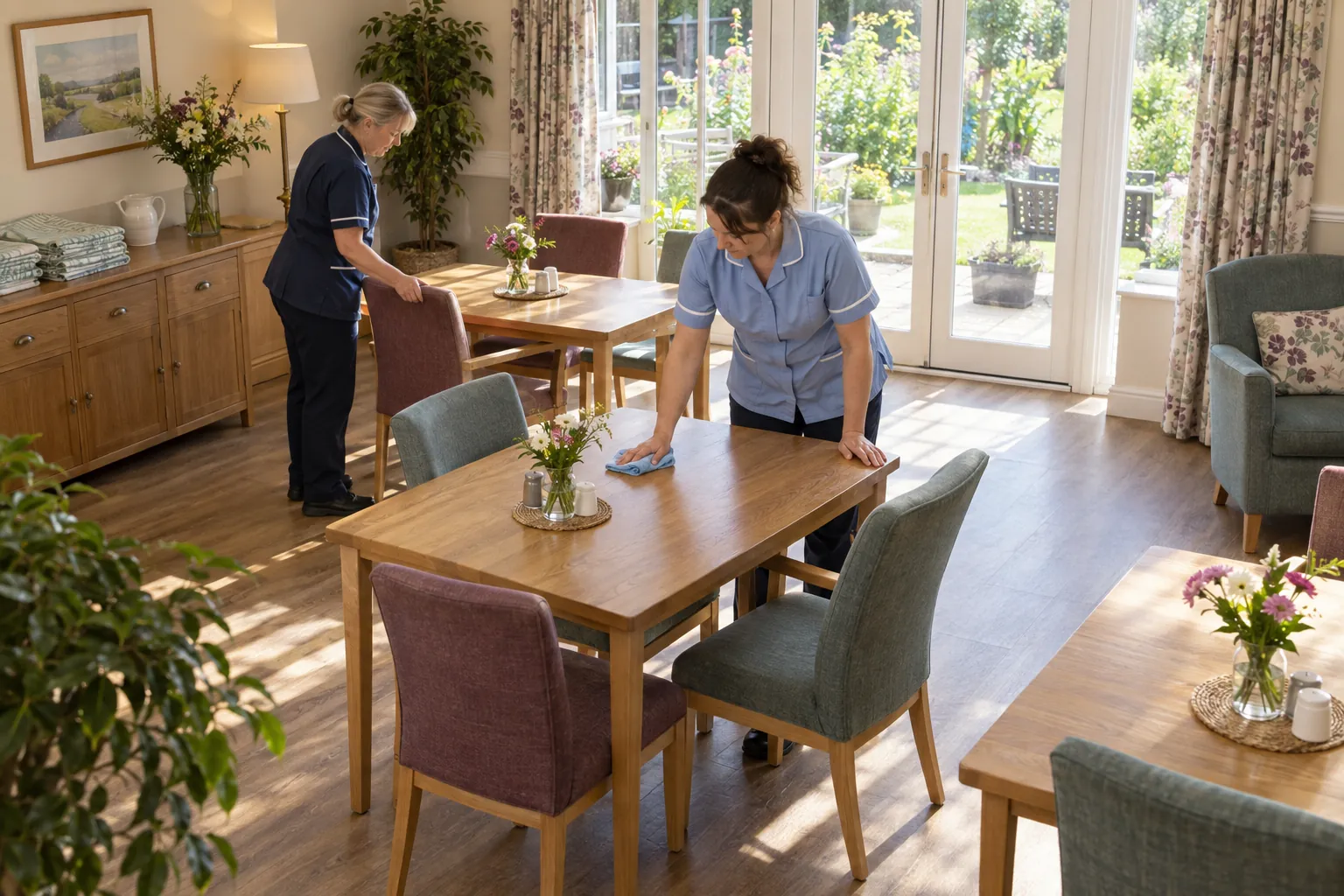
Offices, schools, retail and communal areas. Here the legal standard is "sufficiently clean", and the working standard is the specification. Schools add health protection guidance from the UK Health Security Agency and the nations' public health bodies, and school kitchens fall under food law. The best specifications borrow the NHS idea of risk to ensure effort goes where infection control matters most: washrooms, kitchens, entrances and high-touch surfaces cleaned and checked more often than low-risk areas. Many specifications written since COVID-19 kept that more rigorous cleaning of door handles, lift buttons and shared desks, which is a sound habit as long as someone can show it happens.
05
Choosing which cleaning standards apply to you
Work through the building area by area, not as a whole, because one site often carries several regimes:
- Start with the law. The workplace regulations and COSHH apply almost everywhere. Record how you meet them.
- Identify regulated activity. NHS healthcare follows the national standards for its nation. CQC-registered care in England follows Regulations 12 and 15 and the Code of Practice; care in the other nations follows its own regulator.
- Find the food areas. Kitchens, servery counters and food stores follow food hygiene law and the business's HACCP-based procedures, whoever cleans them.
- Check the contract. A client, landlord or framework may require a named standard, BICSc-trained staff or a BS EN 13549-style measuring system.
- Set the rest by risk. Group the remaining areas into a few risk levels, give each a frequency and a measurable standard someone can inspect, and write it into the cleaning specification.
- Decide how it will be measured. Conduct regular audits for quality, records for delivery, and a small set of cleaning KPIs to report.
If you start from a template, check every frequency against your own building before you adopt it. Borrowing is fine and often wise. An office that adopts the NHS logic of risk categories and audit frequencies, scaled down, will usually have a clearer standard than one that says "clean to a high standard" and leaves it there.
06
Where standards fail in practice, and where SiteClara fits
Every standard on the map assumes the work was done as scheduled. Audits then sample the result. The weak link is the gap between the two: the washroom check that should happen every two hours, the high-touch surfaces cleaned twice a day under an infection prevention protocol, the kitchen cleaning schedule signed at the end of the shift for the whole day. When an inspector, a client or an infection prevention lead asks whether the frequency was met, the answer is often a sheet filled in afterwards.
SiteClara records the scheduled checks as they happen. A printed QR poster at each location, with an optional NFC tag behind it, lets staff confirm a check with a scan or a tap on their own phone, with no app to install. Staff see what is due there and mark it done, or explain what stopped them, and can report an issue with a photo, which goes onto the team's list of jobs until someone closes it. The supervisor sees what is due, done and missed, records the reason for a miss, and approves a daily report that goes to management or the client at 8am the next morning, showing, for example, 12 of 12 checks completed and what is still open.
07
Further reading, and a list to take away
The primary sources are NHS England's National standards of healthcare cleanliness and their implementation workbooks; NHS National Services Scotland's National Cleaning Services Specification; the Care Quality Commission's guidance on Regulations 12 and 15; the Code of Practice on the prevention and control of infections; the Food Standards Agency's and Food Standards Scotland's guidance for food businesses; BS EN 13549 from the British Standards Institution; and the Health and Safety Executive's guidance on workplace cleanliness and COSHH.
To settle which cleaning standards apply:
- list every area and its use, not just the building type;
- note the law that applies to each: workplace, COSHH, food, care or healthcare;
- use the current edition of any national standard, such as the NHS cleanliness standards of 2025, not a summary of an old one;
- group the remaining areas by risk and set frequencies accordingly;
- write an inspectable standard for each area into the specification;
- agree how quality is audited and how delivery is recorded;
- review the choice when the building's use changes.
Sources
Every document this guide quotes or links to, in the order it first cites them.
- Workplace (Health, Safety and Welfare) Regulations 1992 legislation.gov.uk
- NHS England's National standards of healthcare cleanliness 2025 england.nhs.uk
- The NHSScotland National Cleaning Services Specification nss.nhs.scot
- Code of Practice on the prevention and control of infections gov.uk
- Regulation (EC) No 852/2004 legislation.gov.uk
- BS EN 13549 knowledge.bsigroup.com
- Their implementation workbooks england.nhs.uk
Related guides
 CleaningCleaning specification: what it should say, and how to show it is metWhat a cleaning specification should contain, input and output standards, setting frequencies by area, and how to show the specification is being delivered.
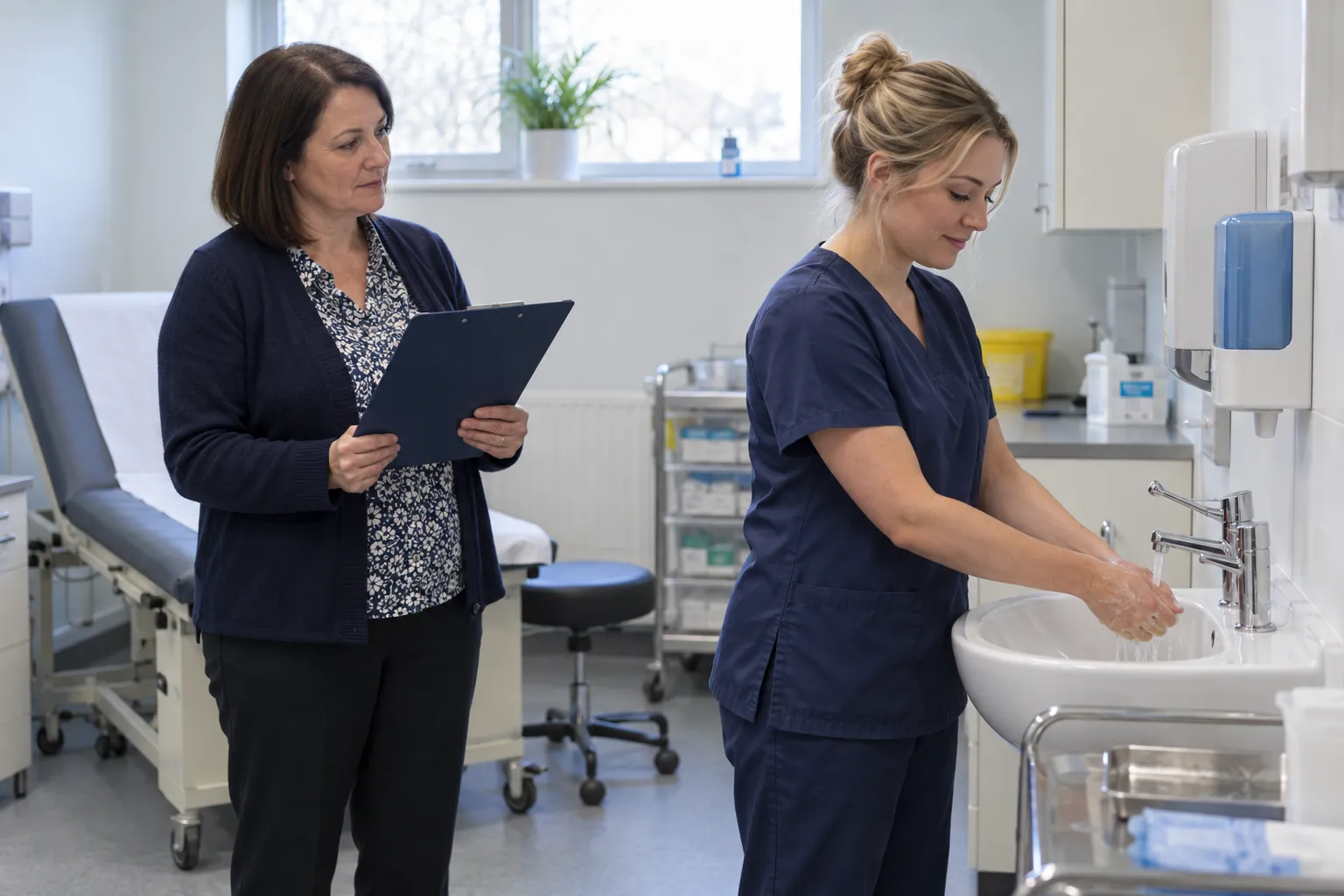 CleaningHygiene audit: what is checked, who does it, and what happens nextHow hygiene and infection prevention audits work in care, healthcare, schools and food areas: what is audited, by whom, how it is scored and what follows.
 CleaningCleaning KPIs: what to measure, and how to know the figures are trueThe cleaning KPIs worth measuring, how to define and target them, how to report them, and how a KPI can look green while the building is not clean.
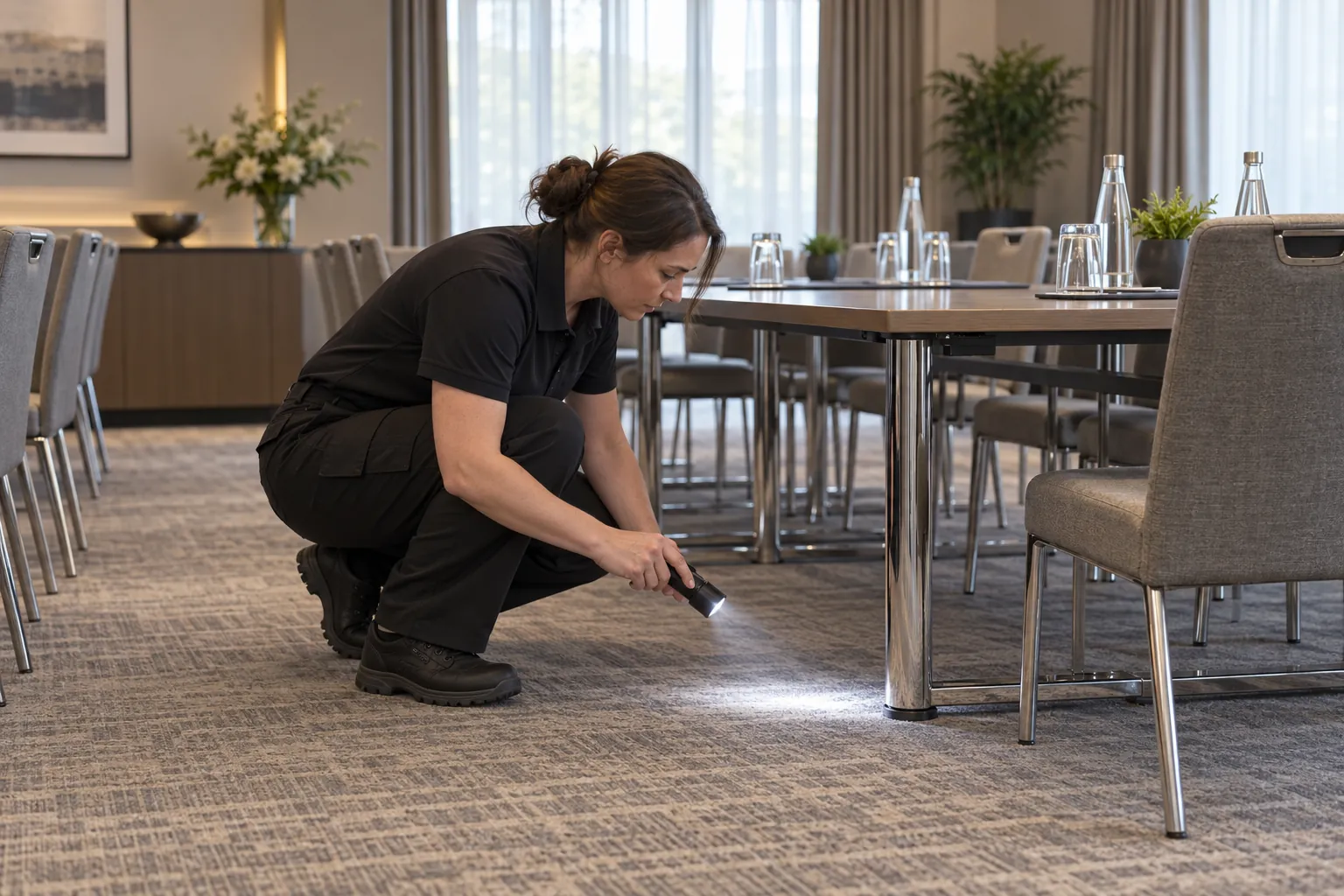 CleaningCleaning quality control: how to inspect, correct and prove the standardHow quality control works in commercial cleaning: QA versus QC, setting standards, running inspections, corrective action and a record that holds up.