Cleaning
Cleaning supervisor duties: what the role involves, and what good looks like
A cleaning supervisor runs a team of cleaners on one or more sites: allocating the work, training and briefing staff, inspecting the cleaning against the agreed standard, keeping the team safe, and acting as the client's first point of contact.
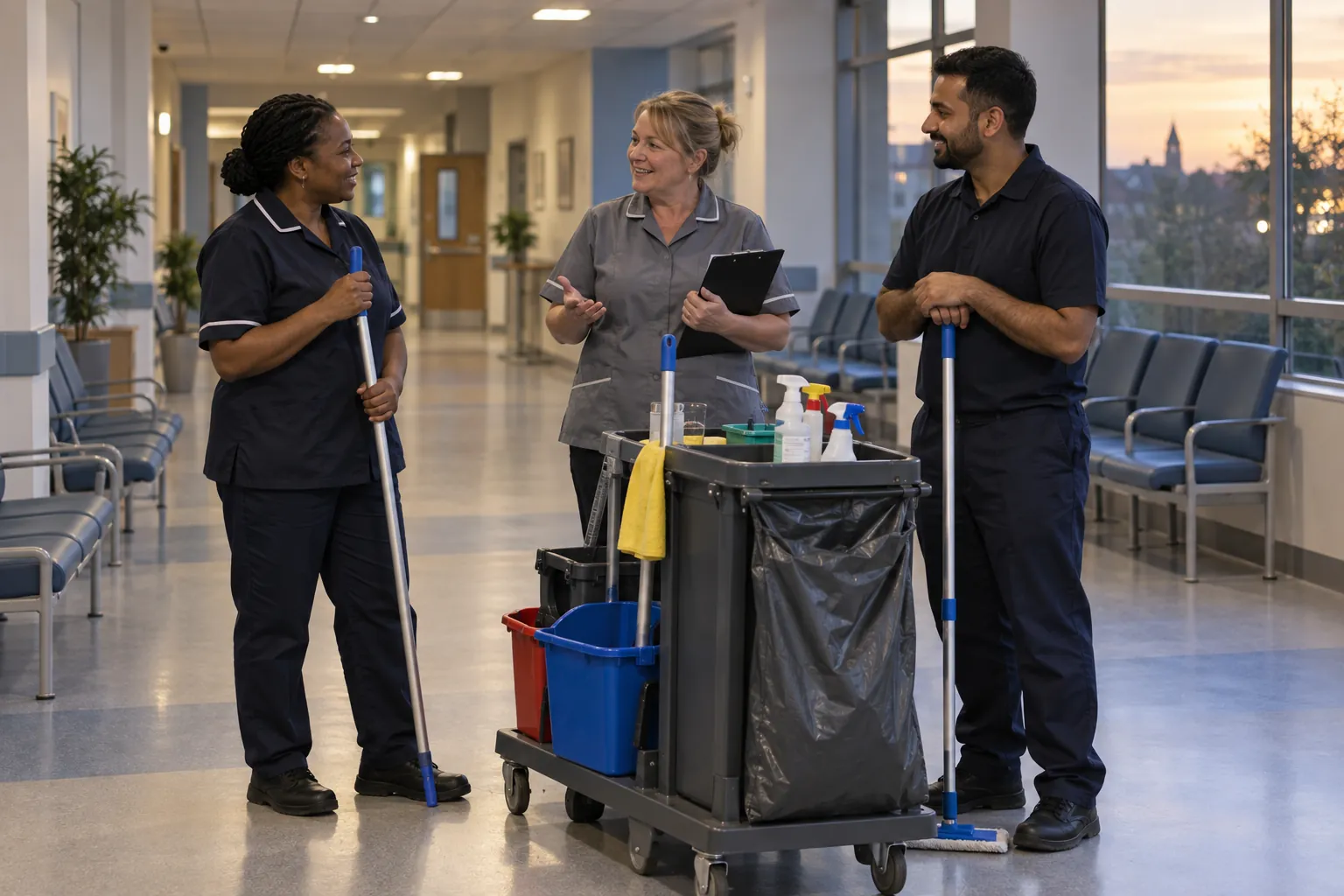
The supervisor is the person who turns a cleaning specification into a clean building, shift after shift. This guide covers the main duties and responsibilities, what a typical shift looks like, the health and safety side, and the records a good supervisor keeps.
01
What a cleaning supervisor is
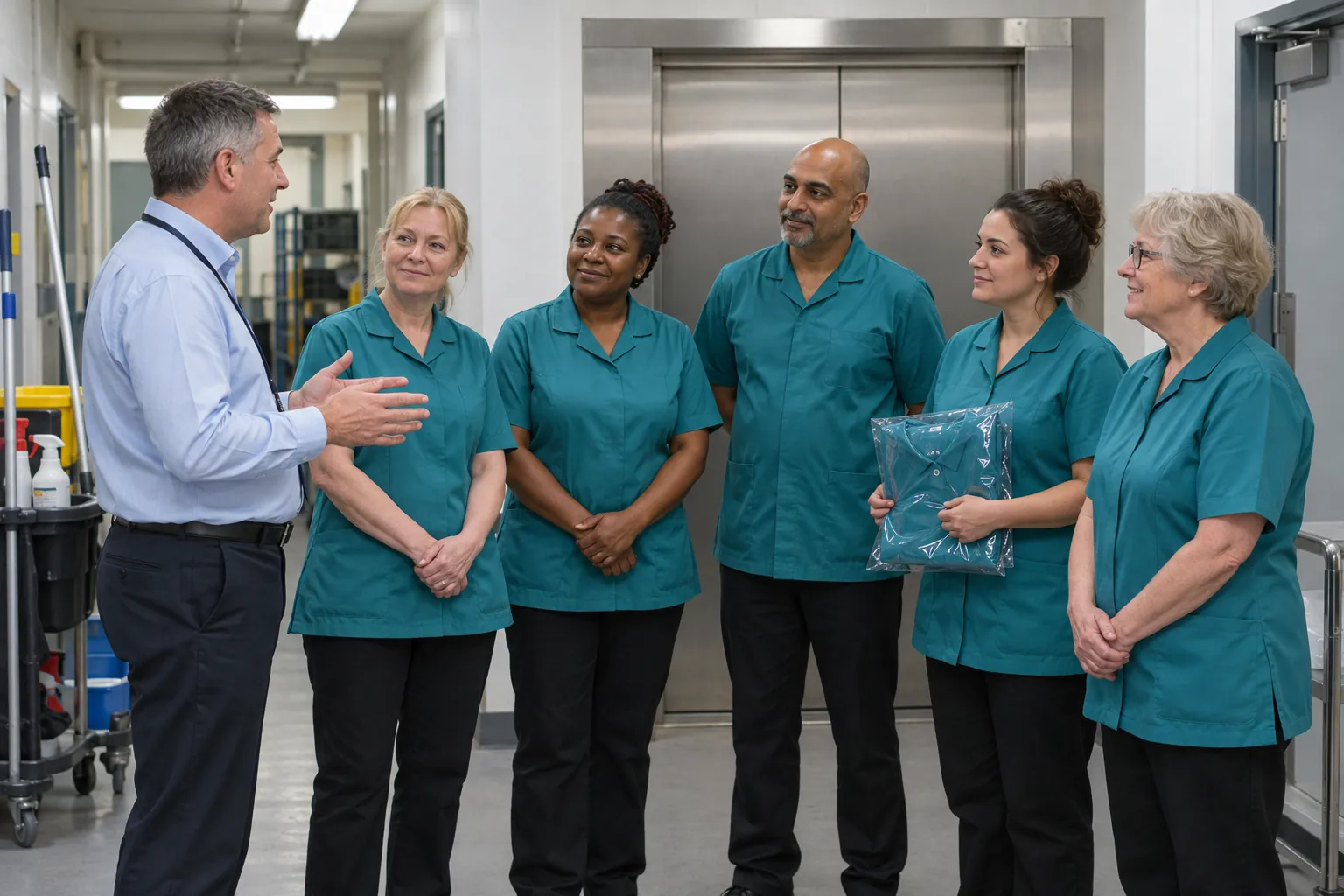
A cleaning supervisor is responsible for a team of cleaners on one or more sites: they supervise and oversee the work, monitor the standard, and make sure the cleaning is done to the agreed standard, safely, and on time. The role exists in contract cleaning companies, in in-house facilities teams, and under other names in hospital cleaning, hotels, universities and schools: housekeeping supervisor, domestic supervisor, environmental services supervisor, site supervisor or team leader.
On a smaller site the supervisor may be a working supervisor, cleaning alongside the team for part of the shift; on a larger one, the supervisor may manage the team full time. Either way, the supervisor sits between the operatives and the contract or area manager, and is the client's day-to-day contact on site.
The legal duties behind the role belong to the employer, but the supervisor is how they are carried out on site. The Health and Safety at Work etc. Act 1974 requires employers to ensure, so far as is reasonably practicable, the health and safety of their employees and others affected by the work. The Management of Health and Safety at Work Regulations 1999 require risks to be assessed and staff to be given adequate training and information, and the Control of Substances Hazardous to Health Regulations 2002 (COSHH) govern the cleaning chemicals. The Workplace (Health, Safety and Welfare) Regulations 1992 set the outcome the client needs: a workplace kept sufficiently clean. A supervisor does not carry these regulatory duties alone, but is expected to make them work day to day, which is why following the employer's health and safety procedures belongs in a cleaning supervisor's job description.
02
The main duties and responsibilities
Job descriptions vary by employer and sector, but the main responsibilities of a cleaning supervisor usually include:
- Organising the work: allocating areas and cleaning duties to each cleaner so the cleaning requirements of the whole specification are covered in the hours available.
- Managing the team: briefing staff, covering absence, dealing with lateness and performance, and helping the employer recruit and hire new starters and induct them.
- Training: showing new cleaners the methods, the equipment and the site, and spotting when refresher training is needed.
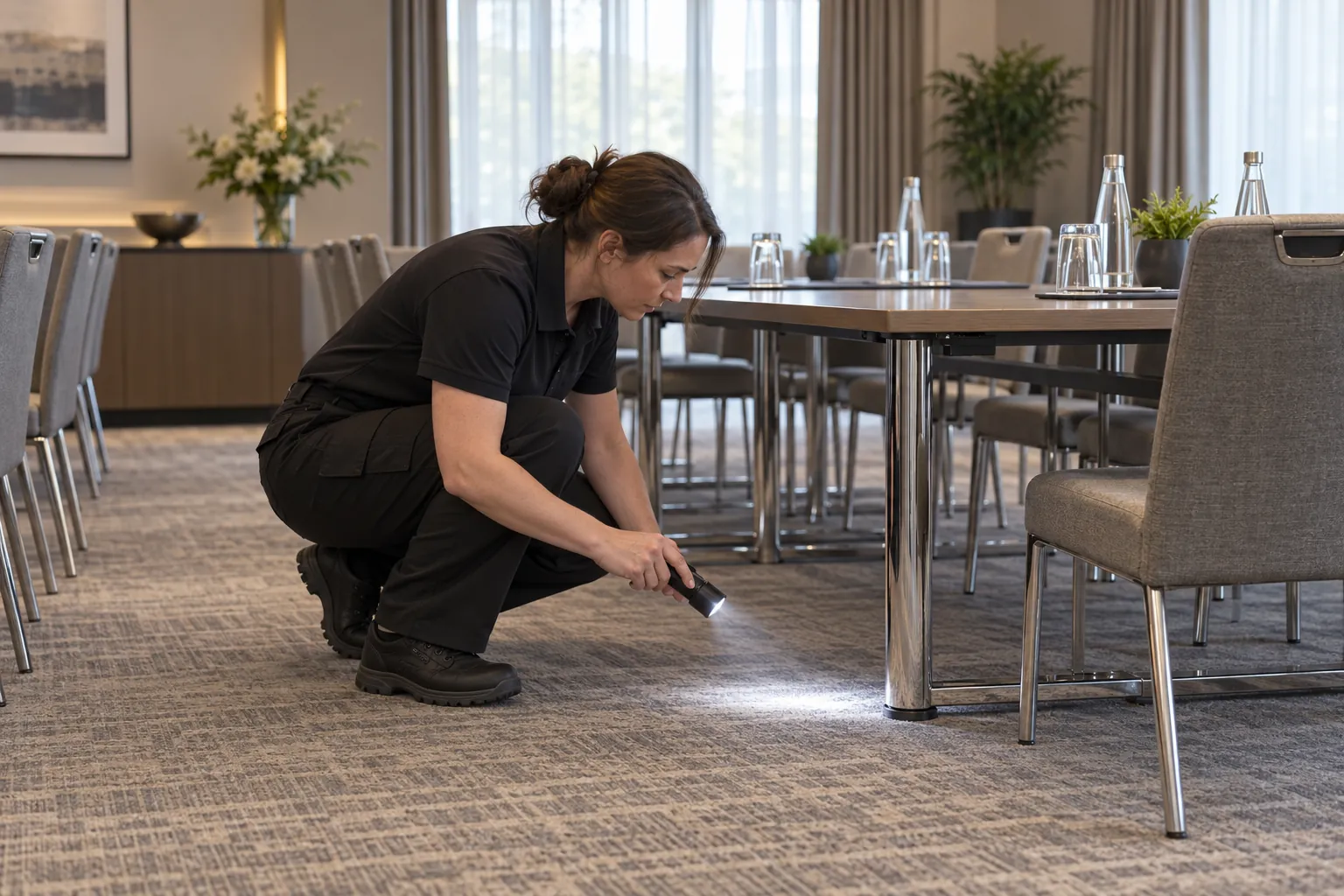
- Inspecting work: walking the building to inspect work against the standard, and making sure anything missed is put right.
- Periodic and specialist work: planning carpet cleaning, hard floor care, deep cleans and window cleaning around the building's use, whether done by the team or by contractors who specialise in it.
- Health and safety: making sure risk assessments and COSHH assessments are followed, PPE is worn, wet floors are signed, and accidents and near misses are reported.
- Cleaning equipment and supplies: keeping machinery working and safe, ordering chemicals and consumables, and keeping the cleaners' store secure and tidy.
- Client liaison: being the first point of contact for the client or facilities manager, taking requests and complaints, and reporting back.
- Records and reporting: keeping check sheets, inspection records, training records and accident records, and reporting to their own manager.
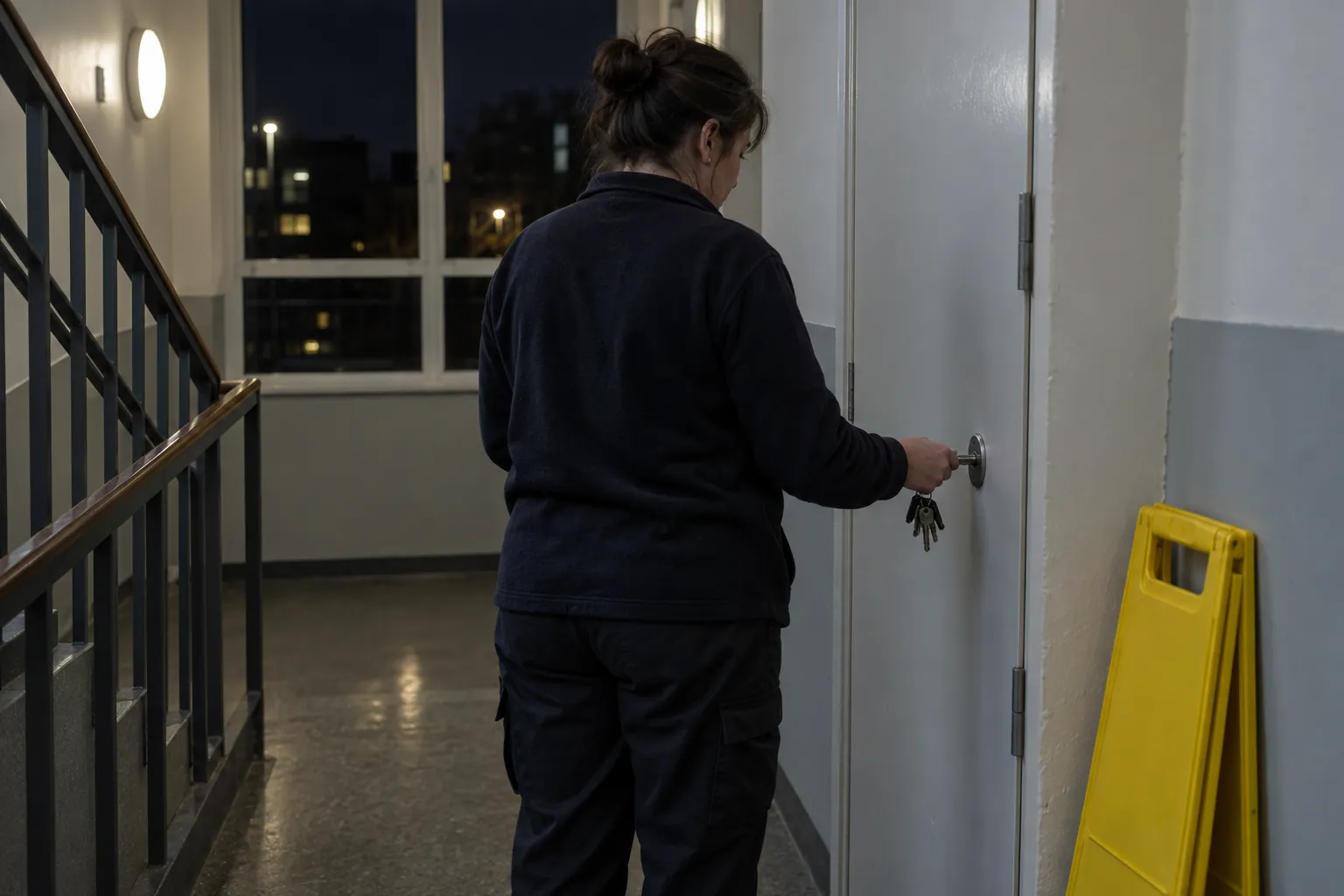
- Security and access: keys, alarm codes, locking up, and reporting anything found wrong with the building.
The facility and its environment shape the job. In hospitals, the role also includes infection prevention protocols and the audit requirements of the healthcare cleanliness standards. In hotels, it overlaps with housekeeping and room turnover. In schools, it often means working closely with the site manager or caretaker around the school day and the holiday deep clean.
03
What a typical shift looks like
Every site is different, but a supervisor's shift on a contract cleaning site often follows a pattern like this:
- Before the shift: check who is in, who is absent and how the gap will be covered; read any messages or requests from the client.
- Briefing: a few minutes with the team at the start, covering any changes, events in the building, faults reported, and the areas that need extra attention today.
- During the shift: walk the building, check work in progress, help where the team is stretched, deal with spillages and urgent requests, and answer questions from building users.
- Checks: carry out planned inspections and check the scheduled tasks, such as washroom checks through the day, have happened.
- Problems: report faults such as leaks, broken fittings or blocked toilets to whoever fixes them, and follow up those still open.
- End of shift: confirm everything scheduled was done or record why not, lock up, secure equipment and chemicals, and hand over anything outstanding to the next shift or the client.
Early morning and evening shifts are common, because offices and schools are easiest to clean when empty. Day supervisors in busy buildings such as hospitals, stations and shopping centres spend more of their time on reactive cleaning and washroom checks.
04
Managing people and keeping them safe
Most of what makes a good cleaning supervisor is people management. The team is often part-time, working unsocial hours, sometimes across several sites, and sometimes with English as a second language. Clear instructions, fair allocation of work and being visible during the shift matter more than any paperwork.
The health and safety side is where supervisors carry most responsibility in practice:
- COSHH: staff use only the approved chemicals, at the right dilution, with the PPE the assessment requires, and safety data sheets are available.
- Equipment: machines are checked before use, electrical equipment is maintained, and nobody uses a machine they have not been trained on.
- Slips and trips: wet floors are signed, cables are managed and spillages are dealt with at once.
- Manual handling: waste, water and equipment are moved safely.
- Accidents: every accident and near miss is recorded, and the employer is told promptly so it can report anything reportable under the Reporting of Injuries, Diseases and Dangerous Occurrences Regulations 2013 (RIDDOR).
- Vetting: in schools, care settings and some other sites, cleaners need checks before they start, usually a Disclosure and Barring Service (DBS) check in England and Wales, a PVG check through Disclosure Scotland or an AccessNI check in Northern Ireland. The supervisor makes sure nobody works on site before the client's requirements are met.
Supervisors also need to know the limits of the role. Pay, contracts, disciplinary decisions and recruitment usually sit with the area manager or HR, and a supervisor should know when to pass something up rather than handle it alone.
05
Checking the work and reporting to the client
Maintaining cleanliness is the purpose of the job, so a cleaning supervisor is responsible for knowing, at any point, whether the building is clean and whether the scheduled work was done. That takes two kinds of checking:
- Inspecting quality: regular inspections against the standard in the specification, sampling different rooms and times, with failures put right and recorded. Some supervisors also run formal audits with the client.
- Confirming delivery: that each scheduled clean and check actually happened, when and by whom, and that missed tasks are known and explained rather than discovered by the client.
Reporting to the client is where a supervisor earns trust. A short, honest report of what was done, what was missed and why, and what is still open is worth more than a long one that says everything went well. Clients rarely mind an explained gap; they mind finding it themselves.
Good supervisors also liaise upwards and sideways: with their own manager about staffing and supplies, with the client's facilities team about building changes, with security and reception about access, and with maintenance about faults the cleaning team finds.
06
Where the supervisor's record fails, and what SiteClara does about it
Much of a supervisor's day is spent finding out what has happened: whether the washroom checks were done, whether a fault was reported, whether the evening cleaner reached the fourth floor. On paper that means walking the building reading sheets on doors, and at the end of the day writing a report from memory. When a client asks what happened last Tuesday, the answer depends on who remembers.
SiteClara gives the supervisor that picture without the walk. Each location has a printed QR poster, with an optional NFC tag behind it. Staff, enrolled by text, scan or tap on their own phone, with no app to install, see the checks due there and mark each one done or explain what stopped them, with a photo when one helps. Issues are reported on the spot and go onto the team's list of jobs until someone closes them.
The supervisor sees what is due, done and missed, can record the reason a check was missed, and works from a queue of open jobs grouped by building and floor, escalating a job to the building manager when it needs them. At the end of the day they review the totals and photos, add a note, record who was notified and approve the daily report, which goes to nominated management or client contacts at 8am the next morning, showing what was completed, what is still open and how scheduled checks went, for example 12 of 12 completed.
07
Skills, training and further reading
Most cleaning supervisors come up through the role of cleaner or operative, and what employers look for is practical: experience of cleaning methods and equipment, the ability to organise a team and a shift, good communication with staff and clients, problem-solving, and reliability. Salary varies widely by region, sector, hours and the size of the organisation, so current cleaning supervisor jobs advertised in your area are the best guide to it.
Useful training includes the British Institute of Cleaning Science (BICSc) programmes for operatives and supervisors, vocational qualifications in cleaning and support services offered by several awarding bodies, first aid at work, and a short health and safety course for supervisors such as IOSH Managing Safely. The Health and Safety Executive publishes free guidance on COSHH, risk assessment, lone working and RIDDOR, and the Approved Code of Practice Workplace health, safety and welfare (L24).
A good cleaning supervisor, at the end of each shift, can say:
- who was on site, and how any absence was covered;
- that every area in the specification was allocated to someone;
- which scheduled tasks and checks were done, and why any were not;
- what was inspected, what failed and what was put right;
- which faults were reported, to whom, and which are still open;
- that any accident or near miss was recorded and passed on;
- that equipment, chemicals and keys are secure;
- what the client has been told.
Sources
Every document this guide quotes or links to, in the order it first cites them.
- Health and Safety at Work etc. Act 1974 legislation.gov.uk
- Management of Health and Safety at Work Regulations 1999 legislation.gov.uk
- Guidance on protecting lone workers hse.gov.uk
- Reporting of Injuries, Diseases and Dangerous Occurrences Regulations 2013 legislation.gov.uk
- Workplace health, safety and welfare hse.gov.uk
Related guides
 CleaningCleaning quality control: how to inspect, correct and prove the standardHow quality control works in commercial cleaning: QA versus QC, setting standards, running inspections, corrective action and a record that holds up.
 CleaningCleaning KPIs: what to measure, and how to know the figures are trueThe cleaning KPIs worth measuring, how to define and target them, how to report them, and how a KPI can look green while the building is not clean.
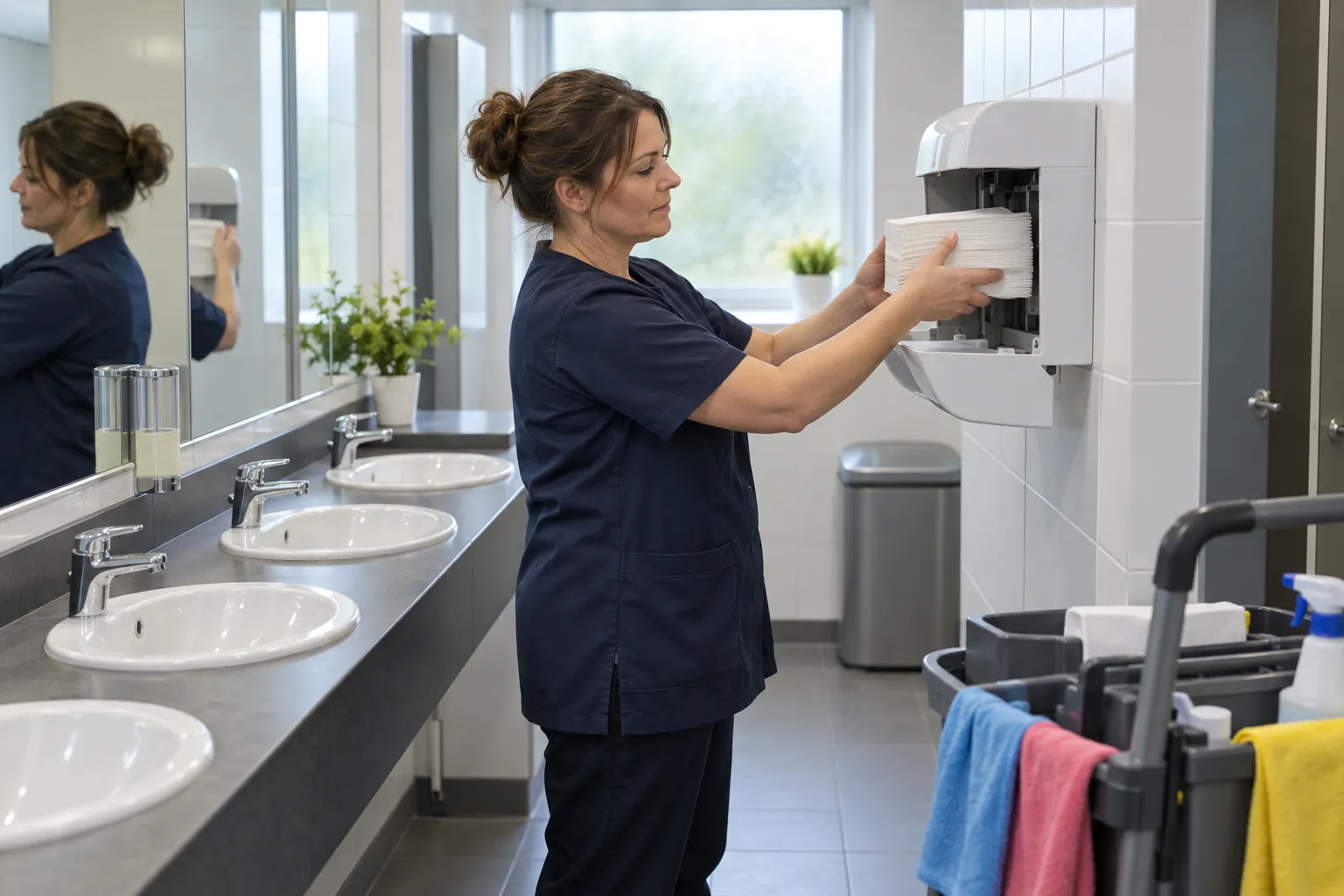 CleaningToilet check sheet: what to record and how to make it credibleWhat a washroom check sheet should record, how often to check, the legal duty behind it, and how to keep a record a client or inspector will believe.
 CleaningCleaning contract mobilisation: from contract award to a settled serviceHow to mobilise a new cleaning contract: the mobilisation plan, TUPE, site assessment, COSHH and induction, day one, and the first weeks of audits.