Cleaning
Communal area cleaning: what it covers, how often, and how to show it was done
Communal area cleaning is the regular cleaning of the shared parts of a block of flats or other shared building that no single resident is responsible for: the entrance hall, stairs, landings, corridors, lifts and bin store.
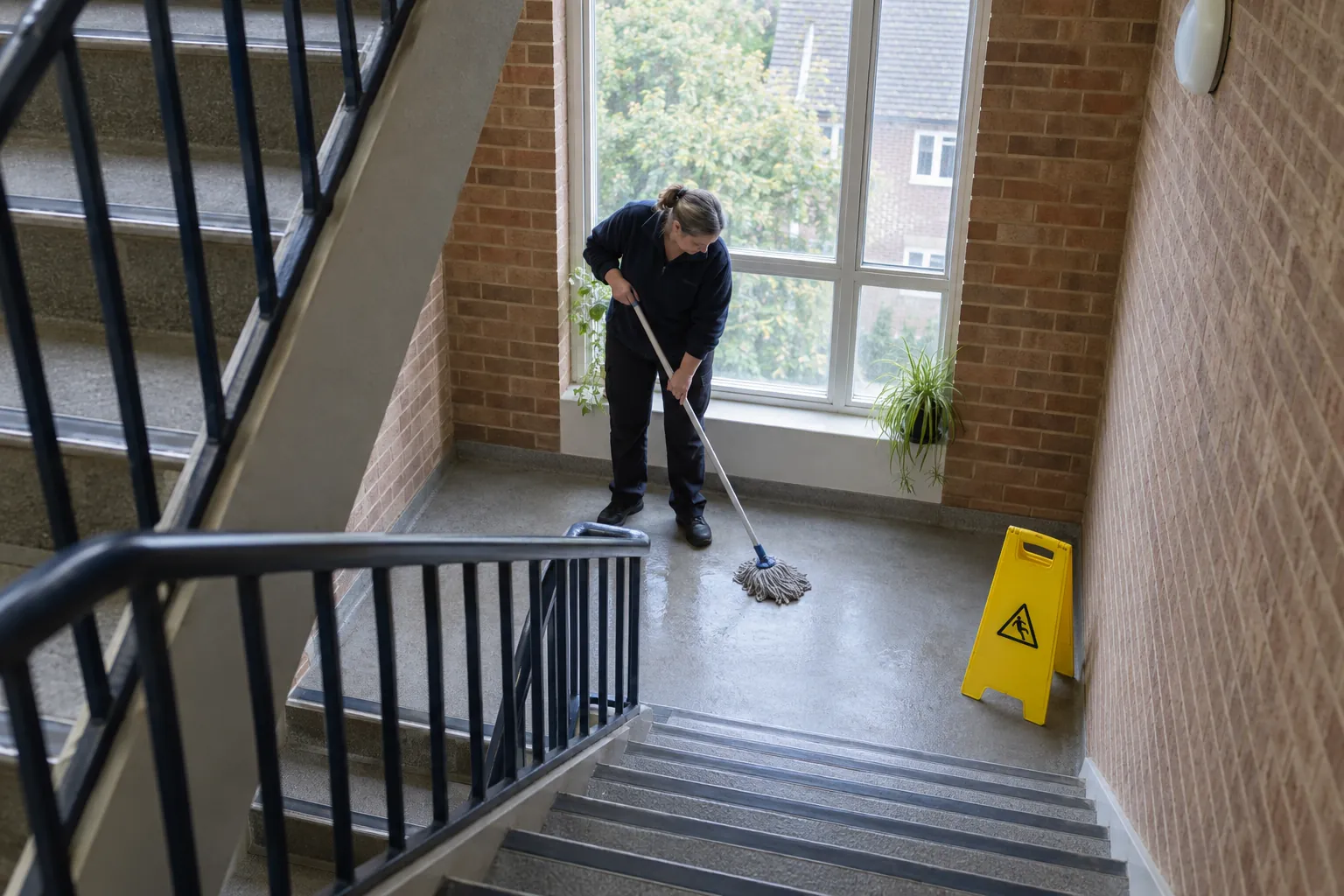
Those spaces are cleaned for everyone and watched by no one. This guide covers who is responsible for communal area cleaning, what a cleaning schedule for common parts should include, how it links to fire safety and the service charge, and how to keep a record residents will believe.
01
Who is responsible for cleaning communal areas
Communal areas, or common parts, are the shared spaces of a building, used by residents rather than let to any one of them: entrance halls, stairwells, landings, corridors, lifts, bin and cycle stores, and often paths, car parks and gardens. In a block of flats they are usually retained by the landlord, the freeholder or a residents' management company, and cleaned under the lease. In student halls and shared buildings they are the responsibility of the owner or operator. Well-maintained communal areas are part of a clean and safe living environment for every resident, and residents judge the whole building by them.
Where the duty comes from depends on the building:
- Leasehold blocks. The lease normally sets out the landlord's obligation to keep the common parts clean, lit and in repair, and allows the cost to be recovered through the service charge. The Landlord and Tenant Act 1985 limits service charges to costs that are reasonably incurred, for services of a reasonable standard.
- Houses in multiple occupation. The HMO management regulations (in England, the Management of Houses in Multiple Occupation (England) Regulations 2006, with separate regulations in Wales) require the manager to keep common parts in good and clean decorative repair, in a safe and working condition, and reasonably clear of obstruction.
- Health and safety. The common parts of a block of flats are treated as non-domestic premises under the Health and Safety at Work etc. Act 1974, so whoever controls them has duties to people who use them, including contractors such as cleaners.
- Fire safety. In England and Wales the Regulatory Reform (Fire Safety) Order 2005 applies to the common parts of blocks of flats. The responsible person must keep escape routes safe, and a clean, clear corridor is part of that.
Landlords and property managers, through managing agents, usually arrange communal cleaning on the landlord's behalf, through a cleaning contractor or directly employed staff. The legal responsibility stays with the landlord or management company; the agent organises the service.
02
What communal area cleaning covers
A communal area cleaning service for residential blocks usually includes the following. The same list works for residential and commercial buildings with shared areas, such as offices over shops or mixed-use developments:
- Entrance and reception areas: floors and entrance matting, glass doors and door furniture, post boxes and the door entry panel. This is the first impression of the building for residents, visitors and anyone viewing a flat, and a clean and welcoming entrance sets the tone for the rest.
- Hallways, landings and corridors: vacuuming or mopping, skirting boards, cobwebs, light switches and door handles.
- Stairwells: each step and landing, handrails and balustrades, and window sills.
- Lifts: floor, walls, mirrors, buttons and door tracks.
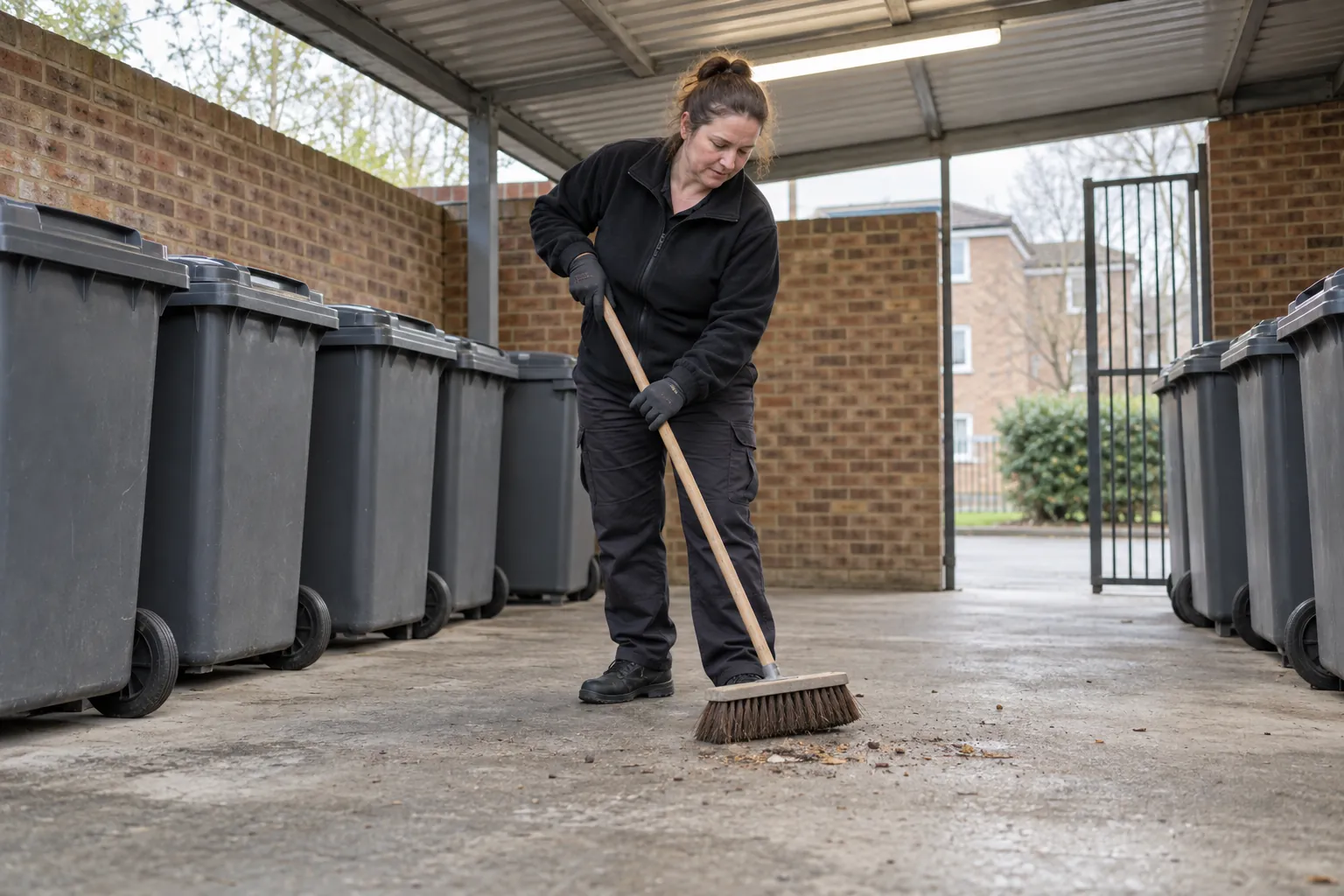
- Bin stores: sweeping and washing down, bins tidied and lids closed, spills and loose rubbish cleared, and fly-tipped items reported.
- Cycle stores, car parks and external areas: litter picking, sweeping paths and entrances, leaves in autumn.
- Glass and windows: internal glass cleaned on the routine visit; external and high-level window cleaning usually as a separate periodic service, carried out safely under the Work at Height Regulations 2005.
- Light fittings: dusted, with failed bulbs and emergency lights reported.
- Touch points: door handles, push plates, lift buttons and handrails wiped with a suitable product to keep them hygienic.
In student halls and other shared residential buildings, the list often adds shared kitchens and bathrooms, laundry rooms and social spaces, and the split between what the cleaning team does in the communal spaces and what residents must do themselves should be written down and given to every resident.
03
How often communal areas should be cleaned
There is no statutory frequency for communal area cleaning. The lease may say what services are provided but rarely how often; the right cleaning schedule follows the size of the building, how many people use it and what happens if it is left.
- A small block of flats of a few flats with little footfall are often cleaned weekly or fortnightly.
- Larger residential blocks are commonly cleaned weekly or several times a week, with entrances, lifts and bin stores visited more often than upper landings.
- Student halls and large developments with a concierge or on-site team may have daily cleaning of entrances, lifts and shared kitchens.
- Periodic work, such as carpet deep cleans, hard floor treatment, external windows and bin store jet washing, goes on a quarterly, six-monthly or annual calendar.
Communal areas require regular cleaning even when they look fine, because dirt, grit and litter build up on stairs and in corners long before anyone complains. Maintaining communal areas is about keeping them consistently clean, not rescuing them before an inspection. Consult residents before cutting or adding visits. Regular communal area cleaning that residents can see is usually valued more than cheaper fortnightly cleaning that leaves the stairs dirty for days, and in a leasehold block the choice shows up in everyone's service charge.
04
Cleaning, clutter and fire safety
Communal cleaners see the common parts more often than anyone else responsible for the building, which makes them the first people to notice problems that are not about cleaning at all. A good cleaning schedule asks them to look as well as clean:
- Items stored in corridors and stairwells: bikes, pushchairs, mobility scooters, furniture and rubbish bags. Escape routes need to stay clear. The guide Fire safety in purpose-built blocks of flats, produced in 2011 and now published by the Home Office, describes a "zero tolerance" or "managed use" approach to items in common parts, and the cleaner's job is to report, not to decide.
- Fire doors: doors propped or wedged open, self-closers not closing, damaged seals or glass. In England, the Fire Safety (England) Regulations 2022 require quarterly checks of communal fire doors in residential buildings over 11 metres high; a cleaner's report is not that check, but it is an early warning.
- Lighting: failed bulbs and emergency lights not lit.
- Damage and hazards: loose stair nosings, torn carpet, leaks, broken glass, damaged door entry systems.
- Bin stores: overflowing bins, fly-tipping and anything that could be set alight.
Each of these needs somewhere to go. A note in the cleaner's book records that it was seen; it does not get it fixed. The cleaning contract should say who the cleaner reports to, how quickly, and how the report is closed.
Cleaning products and methods belong in the same picture. Wet floors on stairs are a slip hazard for residents, so stairwells are best cleaned when footfall is low, ensuring minimal disruption to residents, with warning signs used and removed afterwards, and chemicals chosen and stored under COSHH.
What are the new rules for communal areas in flats in the UK?
In England, the Fire Safety (England) Regulations 2022, in force since 23 January 2023, added new fire safety duties for blocks of flats, including checks of the fire doors in their communal areas; they apply in England only. In every multi-occupied residential building with two or more sets of domestic premises, the responsible person must give residents fire safety instructions and information on the importance of fire doors. Where such a building is above 11 metres high, measured to the top storey, regulation 10 also requires checks of the fire doors in the communal areas at least every three months, and best endeavours to check flat entrance doors at least every 12 months, including that the self-closing devices work. High-rise buildings, at least 18 metres or seven storeys high, carry further duties.
05
Choosing a communal cleaning service, and checking it
Property management companies, housing associations, right to manage companies and residents' management companies choose cleaning companies on similar questions, whether the job is a residential block cleaning service for a small block or a contract for a large estate:
- Is there a written specification? Areas, tasks, frequencies and standards, so residents and the cleaner both know what is included. A good provider will create a cleaning plan for the building rather than offer a standard package, with a flexible cleaning schedule where the building needs one.
- Are the cleaners vetted, trained and fully insured? Ask for public liability insurance, employer's liability insurance and COSHH assessments. Cleaners in residential buildings hold keys and fobs, so key control matters.
- Who provides cleaning materials and equipment? Usually the cleaning contractor, but check, and check where they are stored.
- How are visits recorded? A signing sheet in the cupboard, a report, or something residents and the managing agent can see.
- How are problems reported? Faults, clutter and damage found on a visit should reach the managing agent the same day.
- How are complaints handled? A named contact and a time to put things right.
Choosing the right professional cleaning provider is only half of it. Checking the service is harder in a block than in a commercial cleaning contract for an office, because nobody from the client is on site. Most managing agents rely on periodic site inspections and residents' complaints. Both have gaps: an inspection shows the building on one day, and a complaint only arrives after the problem. Leaseholders pay for the service through the service charge, and a leaseholder who pays one has the right to ask for a summary showing how the charge is worked out and what it is spent on, and to see the paperwork supporting it, such as receipts, as GOV.UK's guidance on service charges sets out; the landlord must provide it. A record that shows each visit is worth more than an assurance that the cleaner comes every Tuesday.
06
Where the record fails, and what SiteClara does about it
The usual communal cleaning record is a signing sheet on the back of a cupboard door or in the bin store, filled in by the cleaner and read by nobody. Residents who think the stairs have not been cleaned for a fortnight cannot tell from it whether they are right, and the managing agent finds out through an email thread rather than a record.
SiteClara puts a printed QR poster at each location in the building, such as the entrance, each landing, the lift lobby and the bin store, with an optional NFC tag behind it. The cleaner scans the code or taps the tag on their own phone, with no app to install, sees the checks due there and marks them done, or explains what stopped them, with a photo when it helps. Clutter in a corridor, a propped fire door or a failed light can be reported there and then; it goes onto the team's list of jobs, grouped by building and floor, until someone closes it, and a supervisor can escalate it to the building manager.
The supervisor reviews the day's totals and photos, adds a note and approves the daily report, which goes to the managing agent or other nominated contacts at 8am the next morning, showing what was completed, what is still open and how the scheduled checks went. Buildings led by the owner can also allow residents to report issues from the same posters.
07
Further reading, and a list to take away
The Leasehold Advisory Service (LEASE) publishes free guidance for leaseholders and landlords on service charges and consultation. The Home Office publishes Fire safety in purpose-built blocks of flats, which covers the management of common parts; it was originally produced in 2011, and the Home Office says it should be viewed as no longer comprehensive. The Home Office also publishes guidance on the Fire Safety (England) Regulations 2022. The RICS Service Charge Residential Management Code sets out what is expected of managing agents in leasehold blocks, and the Health and Safety Executive publishes guidance on COSHH and on working at height.
Before you agree or renew a communal cleaning contract, check that:
- every communal area is listed, inside and out, including bin and cycle stores;
- each area has tasks, a frequency and a standard someone could inspect;
- periodic work such as windows and deep cleans has dates;
- the lease allows the cost to be recovered, and section 20 consultation is done if needed;
- cleaners know to report clutter, propped fire doors, failed lights and damage, and to whom;
- insurance, vetting, key control and COSHH are covered;
- each visit is recorded in a way the managing agent and residents can rely on.
Sources
Every document this guide quotes or links to, in the order it first cites them.
- Management of Houses in Multiple Occupation (England) Regulations 2006 legislation.gov.uk
- Regulatory Reform (Fire Safety) Order 2005 legislation.gov.uk
- Section 20 of the Landlord and Tenant Act 1985 legislation.gov.uk
- Fire Safety (England) Regulations 2022 legislation.gov.uk
- Fire Safety (England) Regulations 2022 gov.uk
- Regulation 10 legislation.gov.uk
- GOV.UK's guidance on service charges gov.uk
- Fire safety in purpose-built blocks of flats gov.uk
Related guides
 Premises and facilities managementManaging agent responsibilities in residential block managementWhat a managing agent does for a block of flats in England and Wales: service charges, the RICS code, repairs, fire safety in common parts, and records.
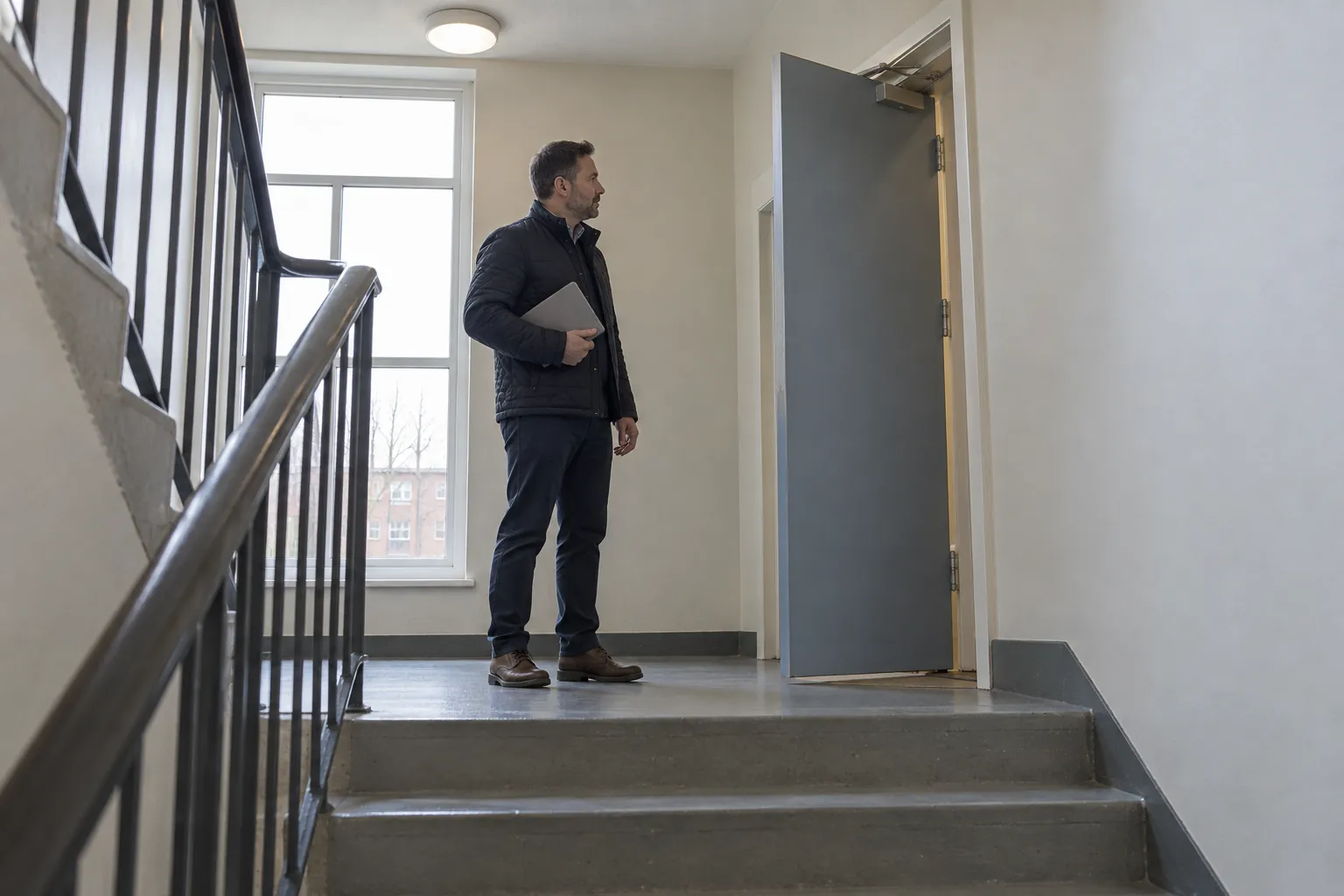 Fire and water checksCommunal fire door checks in blocks of flatsWhat the Fire Safety (England) Regulations 2022 require of communal fire doors and flat entrance doors, who carries out the checks, and how to record them.
 CleaningCleaning specification: what it should say, and how to show it is metWhat a cleaning specification should contain, input and output standards, setting frequencies by area, and how to show the specification is being delivered.
 Premises and facilities managementBuilding manager responsibilities: the duties, the daily work and the recordWhat a building manager is responsible for in UK commercial and residential buildings: legal duties, daily work, contractors and the records that prove it.