Premises and facilities management
Roof inspection checklist: what to check on an Irish building's roof, and how to do it safely
A roof inspection checklist is a written list of what to check on a building's roof and where each item is checked from: the gutters and outlets, the coverings and flashings, the plant on the roof, and the guard-rails and access that make it safe to look at all.
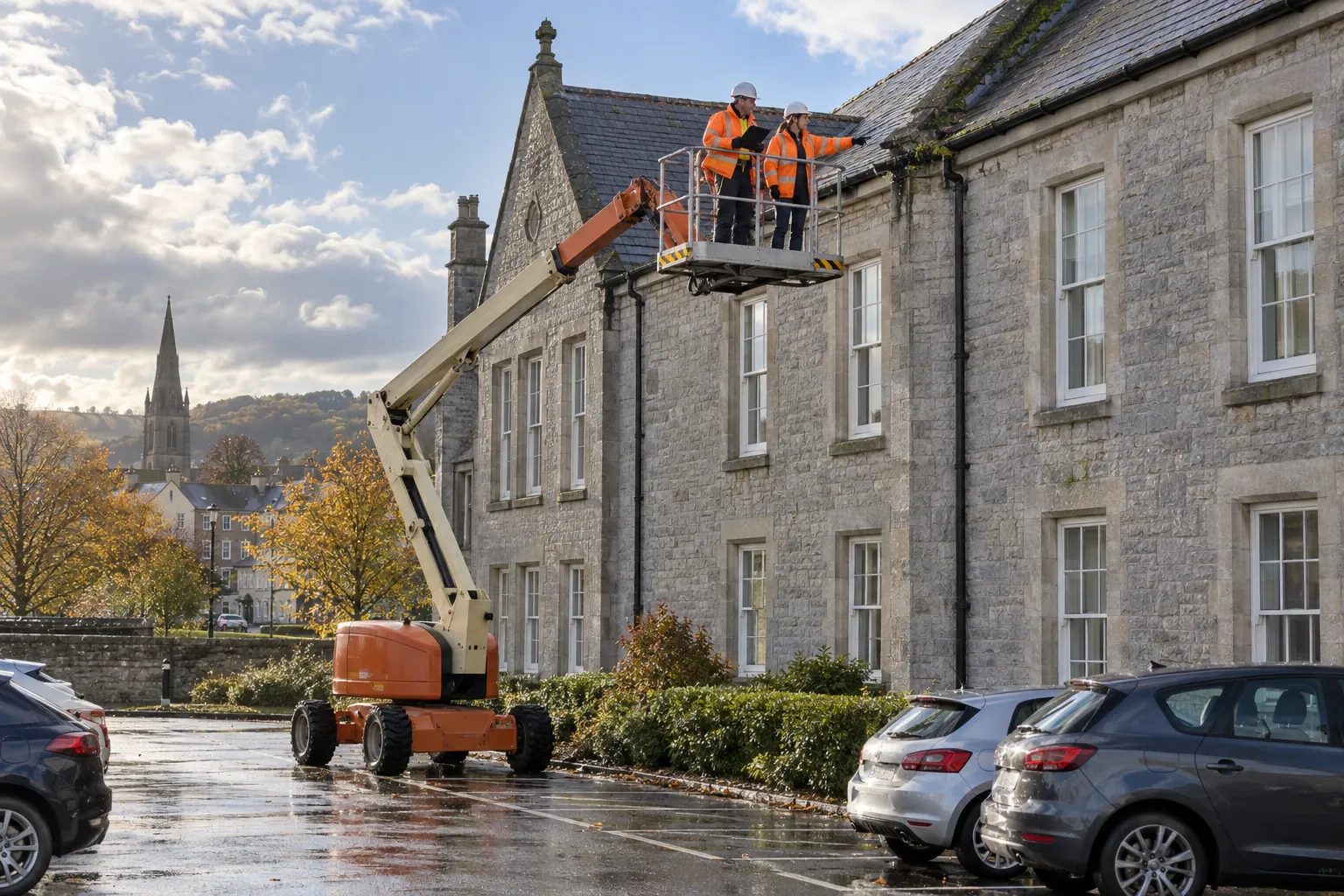
A roof is the part of a building nobody sees until water comes through a ceiling tile, and the checklist puts it on the calendar. This guide is written for offices, schools, shops, health centres, warehouses and apartment blocks in Ireland. It covers what to check, how often and by whom, and the work at height rules in the General Application Regulations 2007 and the HSA's Code of Practice for Safety in Roofwork that decide whether anyone should set foot on the roof in the first place.
01
The duty behind a roof inspection checklist in Ireland
No Irish law sets an interval for roof inspections. The duty comes from the law on safe places of work, and the work at height rules decide how a roof may be inspected.
Section 15 of the Safety, Health and Welfare at Work Act 2005 applies to anyone who controls, to any extent, a non-domestic place of work used by people other than their own employees, and its means of access. They must ensure, so far as is reasonably practicable, that it is safe and without risk to health. Section 15(2) extends this to anyone obliged to maintain or repair the place by contract, tenancy, licence or other interest, such as a landlord who keeps the roof under a lease or an owners' management company. Section 19 requires employers to hold a written risk assessment and review it when things change.
The rules on getting onto the roof are in Part 4, Work at Height, of the Safety, Health and Welfare at Work (General Application) Regulations 2007 (S.I. No. 299 of 2007, as amended). Regulation 94 defines work at height as work anywhere an employee could, without the Part's measures, fall a distance liable to cause personal injury, including getting there and back; there is no minimum height. Regulation 95 requires it to be properly planned and supervised, with a risk assessment and a plan for emergencies and rescues. Regulation 96 requires the surface and every parapet and permanent rail to be checked visually before use, and regulation 97 allows work at height only when the weather does not put anyone at risk.
Two more provisions are about roofs directly. Regulation 9(1)(c) does not permit access to roofs (or suspended ceilings) made of materials of insufficient strength unless equipment is provided so the work can be done safely and appropriate warning signs are placed at the access points. Regulation 115 deals with fragile surfaces, those liable to fail under a person's weight: nobody is to work on or near one where the work can be done without it, and where it cannot, supports or guard-rails must take the load and prominent warning notices must be fixed at the approach.
Most roof repairs are also construction work: the definition in the Safety, Health and Welfare at Work (Construction) Regulations 2013 includes repair, upkeep and other maintenance of a structure. So an owner or occupier who brings in a roofer takes on the duties of a client.
The practical guidance is the Health and Safety Authority's Code of Practice for Safety in Roofwork, issued under section 60 of the 2005 Act and in operation since 16 May 2016. It covers existing roofs, not only new ones. Under section 61 of the Act, a court may admit the code in evidence, and with it a failure to observe it or compliance with it.
02
What a roof inspection checklist covers
Write the checklist for the roof in front of you: a flat roof over a school hall, a slate roof on a Georgian office and a metal warehouse roof with rooflights need different questions. Most draw on these headings:
- Access: the hatch, door or fixed ladder is secured against casual use and signed; ladder rungs, cage and landing are sound; the route to the plant is clear.
- Edge protection: parapets and permanent guard-rails are complete and fixed, with no gaps or loose bases; any gate at a ladder opening closes on its own.
- Fragile areas: rooflights, glazing and fibre cement sheets are marked on the roof plan, protected or fenced off, and signed at every approach.
- Drainage: outlets, gutters, valley gutters, hoppers and downpipes are free of leaves, moss and silt; leaf guards are in place; no ponding on flat areas once rain has had time to drain.
- Coverings: damage to the roofing materials, such as splits, blisters and lifted laps in a membrane or asphalt; slipped, cracked or missing slates and loose ridge tiles; corrosion and loose fixings on metal sheets.
- Flashings and upstands: each flashing dressed down, fixed and sealed around plant, rooflights and parapets, with no cracked mastic or pointing.
- Plant on the roof: air-handling units, condensers, extract fans, flues, solar panels and aerials are secure, covers fixed, nothing rubbing through the covering.
- Fall protection equipment: anchors, lifelines and walkways in place and showing a current inspection by a competent person.
- Debris: off-cuts, fixings and packaging left by contractors, which block outlets or blow off in a gale.
- Underneath: stained ceiling tiles, damp patches and buckets on the top floor, often the first signs of water getting in.
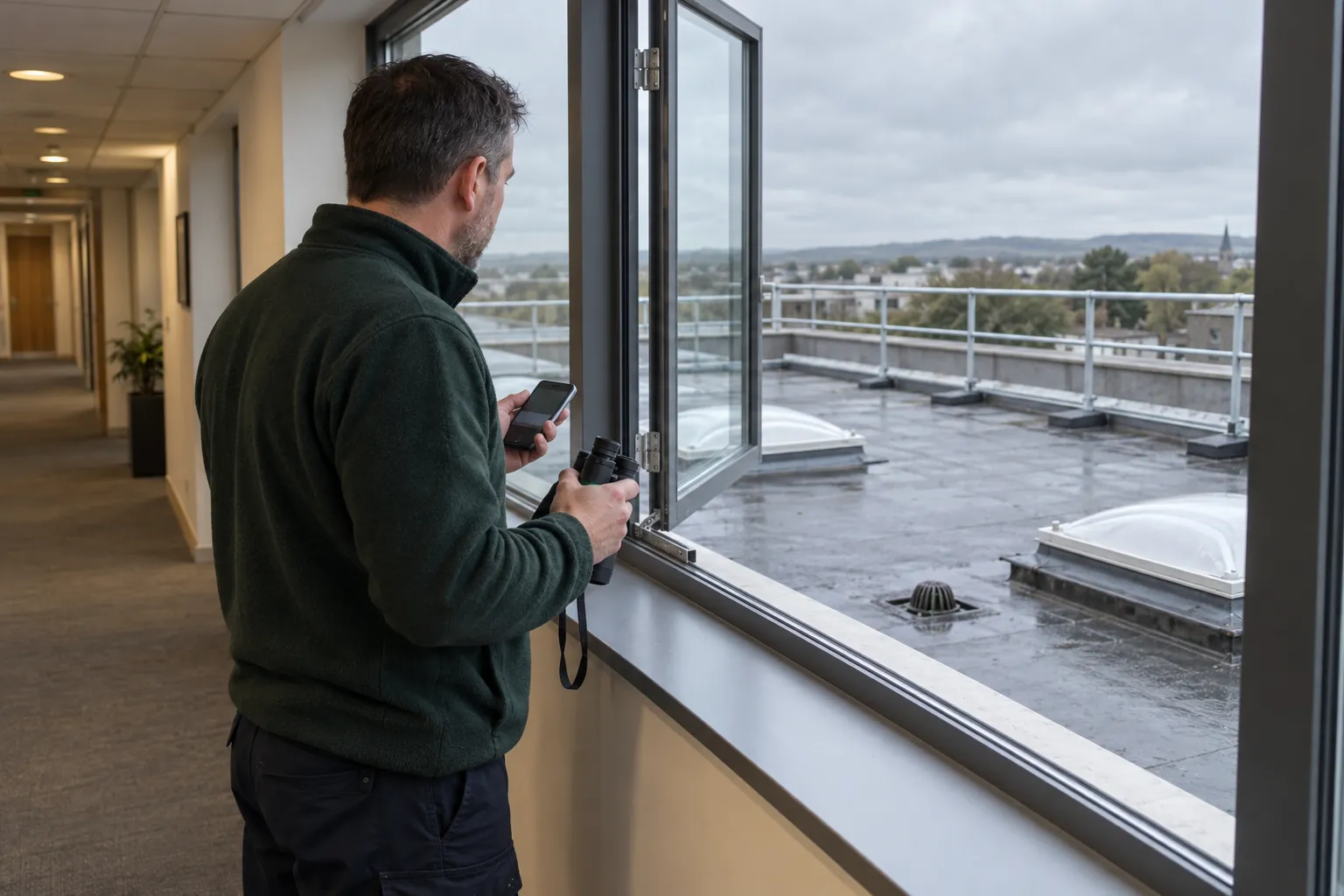
Many of these can be checked without going onto the roof. Gutters and outlets can often be seen from an upper window, or from the ground with binoculars, and the top floor ceilings can be walked weekly. The checklist should say where each item is checked from: a gutter ticked as clear from the car park is not the same as one looked into from the roof.
03
How often, and who should do each check
The Regulations set no frequency for inspecting a roof. It should follow from the risk assessment: the roof's age and type, nearby trees, the plant on it, its exposure and what is underneath. A workable pattern has three levels:
- Routine checks from a safe place, weekly or monthly, by the caretaker or facilities team: top floor ceilings, gutters visible from windows or the ground, the roof access still locked and signed, anything blown off into the grounds.
- A planned walk of the roof, often twice a year in spring and after the autumn leaf fall, by someone trained for that roof, and only where there is safe access and permanent edge protection. Outlets are cleared and coverings, flashings and plant looked at close up.
- Checks after an event: once a Met Éireann orange or red wind or rain warning has passed, after a reported leak, and after any contractor has worked on the roof.
Above these sit the checks and work that need a competent person: a detailed condition survey by a roofing contractor or building surveyor, the periodic inspection of anchors and lifelines, and any work on or near fragile areas.
Who does what depends on who controls the roof. In a multi-let office the landlord or its managing agent usually keeps the roof under the lease, and tenants' staff should not be on it. In an apartment block the roof is normally a common area of the owners' management company, whose managing agent arranges inspections and repairs for the directors. In a school, the caretaker often does the routine checks from the ground and a contractor is brought in for anything on the roof. Write down which roofs, which checks and which access each person may use.
The HSA's code says a roof must be inspected with care by those trained and experienced in assessing the risks, ideally from a safe place: an adjacent structure with binoculars, mobile access equipment, a secured ladder, or from below where the structure is exposed. A checklist that sends a caretaker alone onto an unprotected flat roof to look at a gutter has the order the wrong way round.
04
Before anyone goes onto the roof
An inspection on the roof is itself work at height, so the checklist needs a section completed before it starts. Regulation 98 sets the order: avoid work at height where possible; otherwise work from an existing place with its existing access; otherwise provide equipment that prevents a fall; and only then reduce the distance and consequences of one. Regulation 100 puts collective protection, such as guard-rails, ahead of personal protection, such as a harness. The code turns this into practical checks:
- Controlled access. The code expects the client or occupier to control access to existing roofs, by a permit to work or direct supervision depending on the risk assessment. Hatches are locked, and fixed ladders can be boarded off when not in use.
- Assume the roof is fragile unless a competent person has confirmed otherwise. The code lists coverings that have failed fragility tests, including rooflights, liner sheets, unreinforced fibre cement sheets, glass and wood wool slabs, and warns that rooflights can be hidden by paint and old metal sheets can become fragile. A fragile roof is not accessed without a written risk assessment and a safe system of work.
- Warning notices at every access point to fragile rooflights and roofs, durable and securely fixed. A sign does not make a roof safe; it tells people it is not.
- Edge protection checked before use, as regulation 96 requires. A gap found at the hatch ends the inspection there.
- The weather. The code notes that rain, ice or snow turn secure footing into a slip hazard, that a gust can throw someone off balance, and that a roof should be looked at before work starts to see whether conditions have changed.
- Plant near the edge. Where an exclusion zone is used around roof plant, the code says it should keep people from going within 2 metres of the edge.
- Footwear and rescue. Non-slip safety footwear and a high-visibility vest, no trailing rain gear, and, because regulation 95 requires a rescue plan, nobody on the roof alone without someone below knowing.
- Ladders only where justified. Regulation 114 allows one where the risk is low and the use short, or existing features cannot be altered, secured against slipping and extending far enough above the landing for a firm handhold.
05
What a good roof inspection record looks like
An inspection is worth what happens next: the outlet cleared before the downpour. For each inspection the record should hold:
- the date and time, and who did it;
- where it was done from: the ground, a window, the roof, or a mobile elevating work platform;
- the weather, and anything left unchecked because of it;
- each item marked satisfactory, defect or not checked, never blank;
- photos of each defect that show where it is;
- a priority, who was told, and the date it was put right.
Keep a numbered plan of each roof with access points, plant, outlets and fragile areas. The code asks for fragile parts to be marked and recorded in the safety file or permit system, and a plan lets the checklist say "outlet 4" rather than "the one near the fan".
Some records are not the checklist's to keep. Regulation 119 requires Part 4 work equipment, such as fall arrest and restraint systems and ladders, to be inspected at suitable intervals where it is exposed to deterioration, and as soon as practicable after exceptional circumstances; the result is recorded and kept for an HSA inspector for five years. That is the competent person's record: ask for it, keep it, and ask again after a severe storm. The code also reminds clients to maintain the safety file handed over after a project, including its safe maintenance arrangements, and make it available to later contractors.
Then read the record. A monthly look at open roof defects, carried into the building maintenance checklist, stops a defect being found, photographed and forgotten.
06
Where the roof record fails, and what SiteClara does about it
Roof inspections fail quietly. The six-monthly walk sits on a spreadsheet nobody opens until there is a leak. The caretaker is asked to have a look at the gutters and does, but nothing is written down, so in January nobody can say whether the outlets were cleared in November. A defect is photographed on a personal phone and mentioned at reception. After a storm, everyone assumes someone else went up.
SiteClara records the routine checks where they happen. A printed QR poster at each location, such as the roof access door, the top floor corridor or the plant room, with an optional NFC tag behind it, lets the caretaker or facilities operative scan the code or tap the tag with their own phone, with no app to install. They see the checks due there, such as the top floor ceilings, the gutters seen from the stair window or the hatch locked and signed, and mark each done or say what stopped them, with a photo when one is asked for. A defect found on the round, such as a blocked outlet or a slipped slate, goes onto the team's list of jobs until someone closes it, and the supervisor can escalate it to the building manager, who can answer it.
The supervisor sees what was due, done and missed, and records the reason for anything missed. Each day they approve a report that goes the next morning to nominated managers or client contacts, such as the facilities manager, the managing agent or the owners' management company's directors: what was reported, completed and still open, and how the scheduled checks went.
07
Questions people ask
What do they look for in a roof inspection?
The defects that lead to repairs, and anything that makes the roof unsafe to stand on. The HSA's Code of Practice for Safety in Roofwork describes roof maintenance as cleaning the roof and gutters, repairing or replacing damaged gutters, fascias, soffits, tiles and slates, and repointing ridge tiles and chimney copings, along with equipment installed on the roof such as satellite dishes and aerials. For any work on a fragile roof it also names factors to weigh when assessing the risk: rooflights obscured by paint, past repairs where fragile sheets were used to patch a roof, metal sheets that have deteriorated with age, and wood wool slabs weakened by water damage. If in doubt, the code says, assume the roof is fragile.
What should be included in a roof inspection checklist?
The condition of the roof and what is on it, and whether it is safe to look. Regulation 96 of the Safety, Health and Welfare at Work (General Application) Regulations 2007 requires the surface and every parapet, permanent rail or other fall protection at a place of work at height to be checked visually before use, and regulation 95 requires a risk assessment and a plan for emergencies and rescues. The HSA's Code of Practice for Safety in Roofwork adds that, on existing buildings, the hazards of maintenance on roofs and on roof-mounted plant must be identified and the risks assessed and, where the risks cannot be eliminated, the control measures recorded. The lists above under what a checklist covers and before anyone goes onto the roof follow those two halves.
What are the signs that a roof needs to be replaced?
The HSA's guidance does not list them: whether to repair or replace is a judgement for a roofing contractor or building surveyor. The HSA's Code of Practice for Safety in Roofwork does name the changes that matter for safety, such as metal sheets that have become fragile with age and wood wool slabs weakened by water. It says whoever controls the workplace must consider replacing fragile rooflights with non-fragile ones and, where that is not reasonably practicable, fitting mesh or grid supports under or over them, and that the choice between cleaning and sealing or replacing an asbestos cement roof should take account of the risks and cost of future maintenance.
08
Further reading, and a list to take away
Read the HSA's Code of Practice for Safety in Roofwork first; its sections on fragile roofs, maintenance, access and weather are written for owners and occupiers as well as roofers. The HSA's Work at Height page gathers its other guidance. The law is in Part 4 of the General Application Regulations 2007, sections 15 and 19 of the 2005 Act and, for repairs, the Construction Regulations 2013. For checks after a storm, Met Éireann's explanation of its weather warnings sets out what yellow, orange and red mean.
Before you adopt a roof inspection checklist, check that:
- it is written for each roof, with a plan of access, plant, outlets and fragile areas;
- each item says where it is checked from, and as many as possible from a safe place;
- access is controlled, and the routine says who may go up, with what training, and never alone;
- every surface is treated as fragile until a competent person says otherwise, and signed at each approach;
- edge protection and the weather are checked before anyone steps out;
- there are checks after storms, leaks and contractors' visits, not only on the calendar;
- each defect has a photograph, a priority, an owner and a closing date;
- the competent person's records and the safety file are kept alongside it, and it is reviewed when the roof, its plant or its use changes.
For the rest of the building, see the health and safety inspection checklist.
Sources
Every document this guide quotes or links to, in the order it first cites them.
- Section 15 of the Safety, Health and Welfare at Work Act 2005 irishstatutebook.ie
- Section 19 irishstatutebook.ie
- Safety, Health and Welfare at Work (General Application) Regulations 2007 irishstatutebook.ie
- Safety, Health and Welfare at Work (Construction) Regulations 2013 irishstatutebook.ie
- Code of Practice for Safety in Roofwork hsa.ie
- Work at Height page hsa.ie
- Met Éireann's explanation of its weather warnings met.ie
Related guides
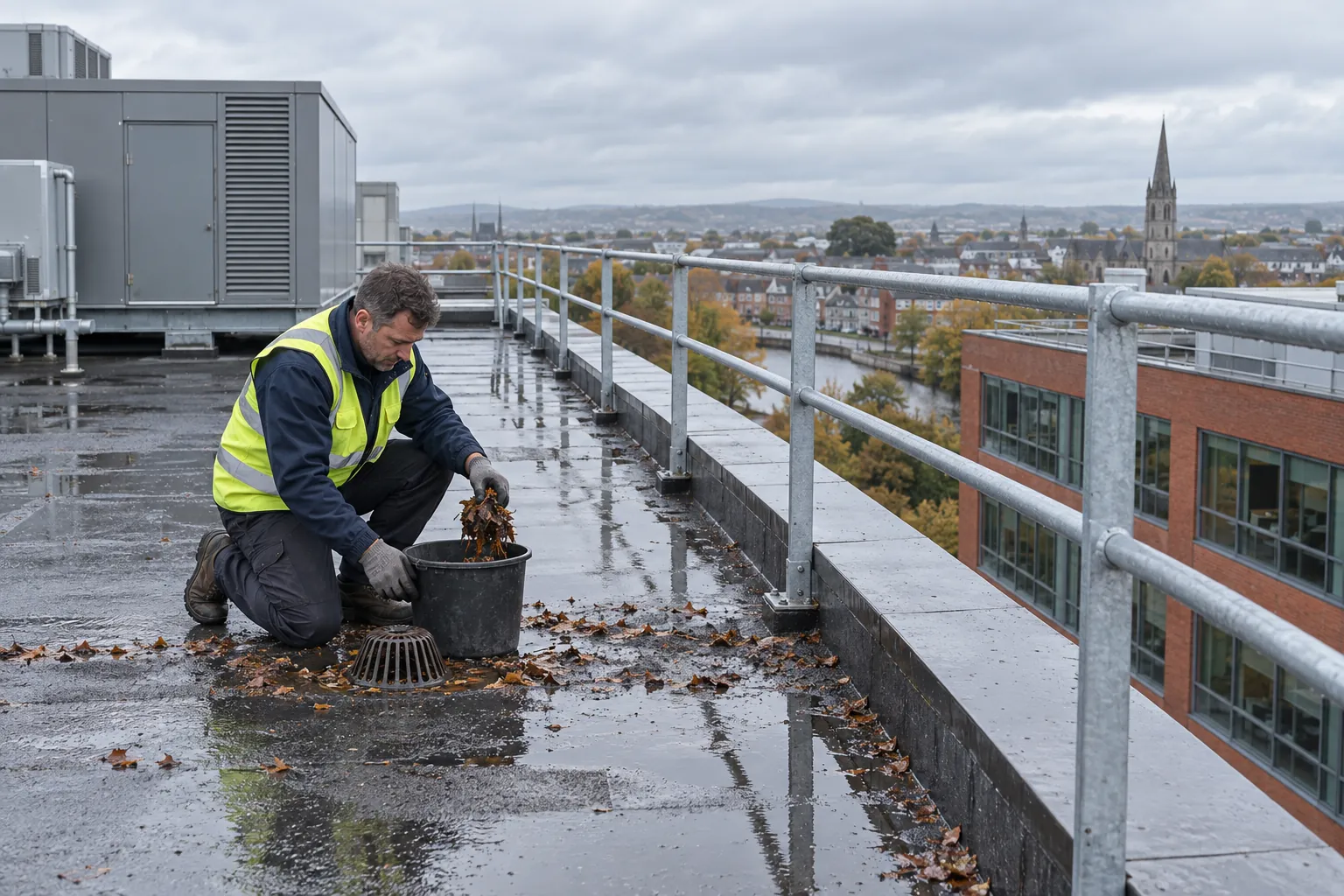 Premises and facilities managementBuilding maintenance checklist: what to check in an Irish building, how often, and who byA building maintenance checklist for non-domestic buildings in Ireland: daily to annual checks under the 2005 Act, the 2007 Regulations and the Fire Services Acts.
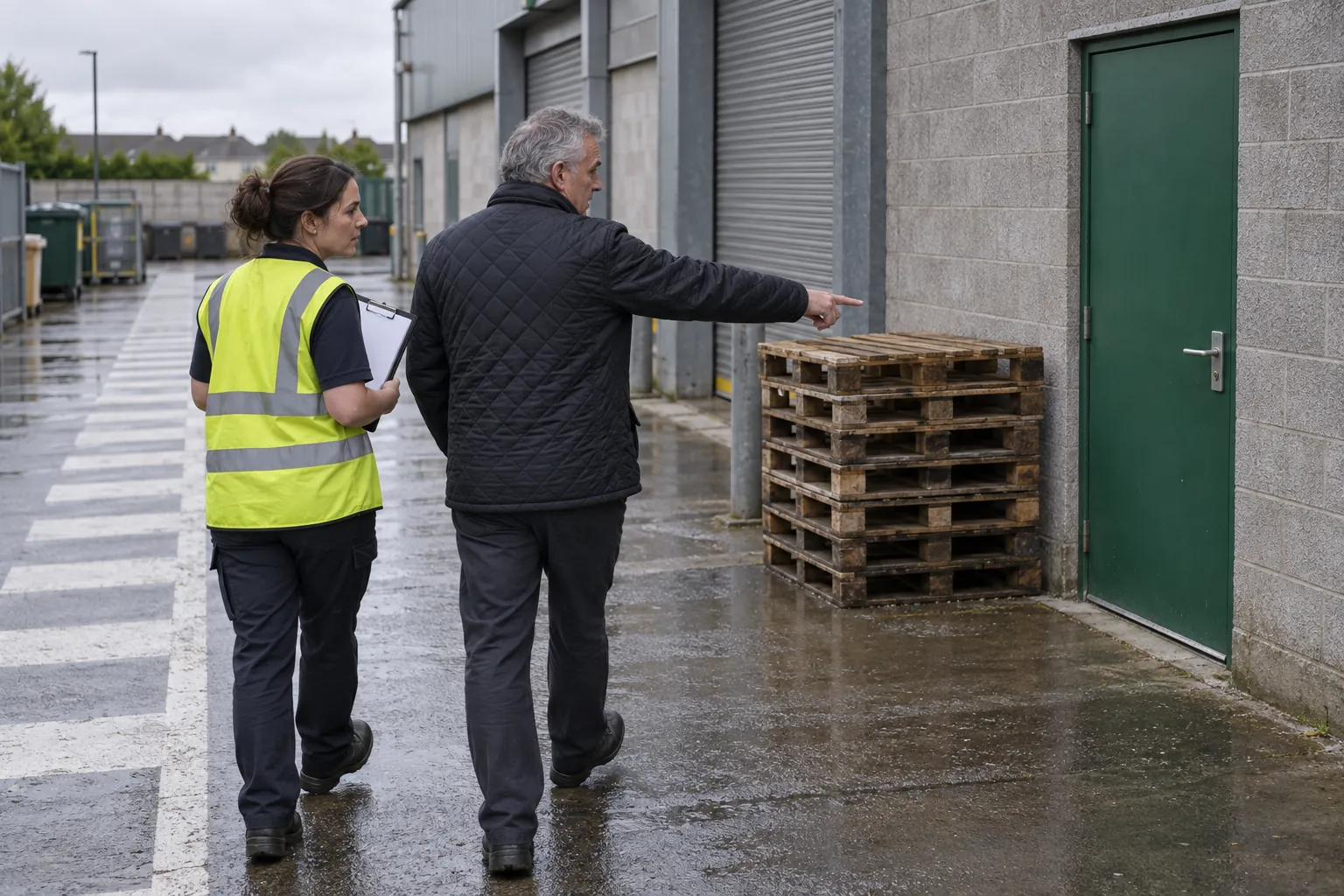 Premises and facilities managementHealth and safety inspection checklist: what to walk, what to record, and what the HSA looks forA workplace health and safety inspection in Ireland: the 2005 Act and 2007 Regulations, what to walk, how often, recording actions, and what an HSA inspector asks.
 Premises and facilities managementCaretaker duties in Ireland: what the job involves, and how to show it was doneCaretaker duties in Irish schools, parish halls, offices and apartment developments: the law behind the job, the daily and weekly checks, lone working and records.
 Premises and facilities managementOwners' management companies: what an OMC must do, and how to show the common areas are looked afterWhat an owners' management company (OMC) is under the Multi-Unit Developments Act 2011, what it must do, who does the work, and the records that show it was done.