Cleaning
Commercial kitchen cleaning checklist: what the Food Standards Code asks, task by task
A commercial kitchen cleaning checklist lists every bench, piece of equipment and area in a food business's kitchen with how often it is cleaned and sanitised, the method and products, and who does it, because Standard 3.2.2 of the Food Standards Code requires a kitchen with no accumulation of grease, food waste, dirt or other visible matter, and utensils and food contact surfaces in a clean and sanitary condition.
Also written for United Kingdom · Ireland · United States · Canada
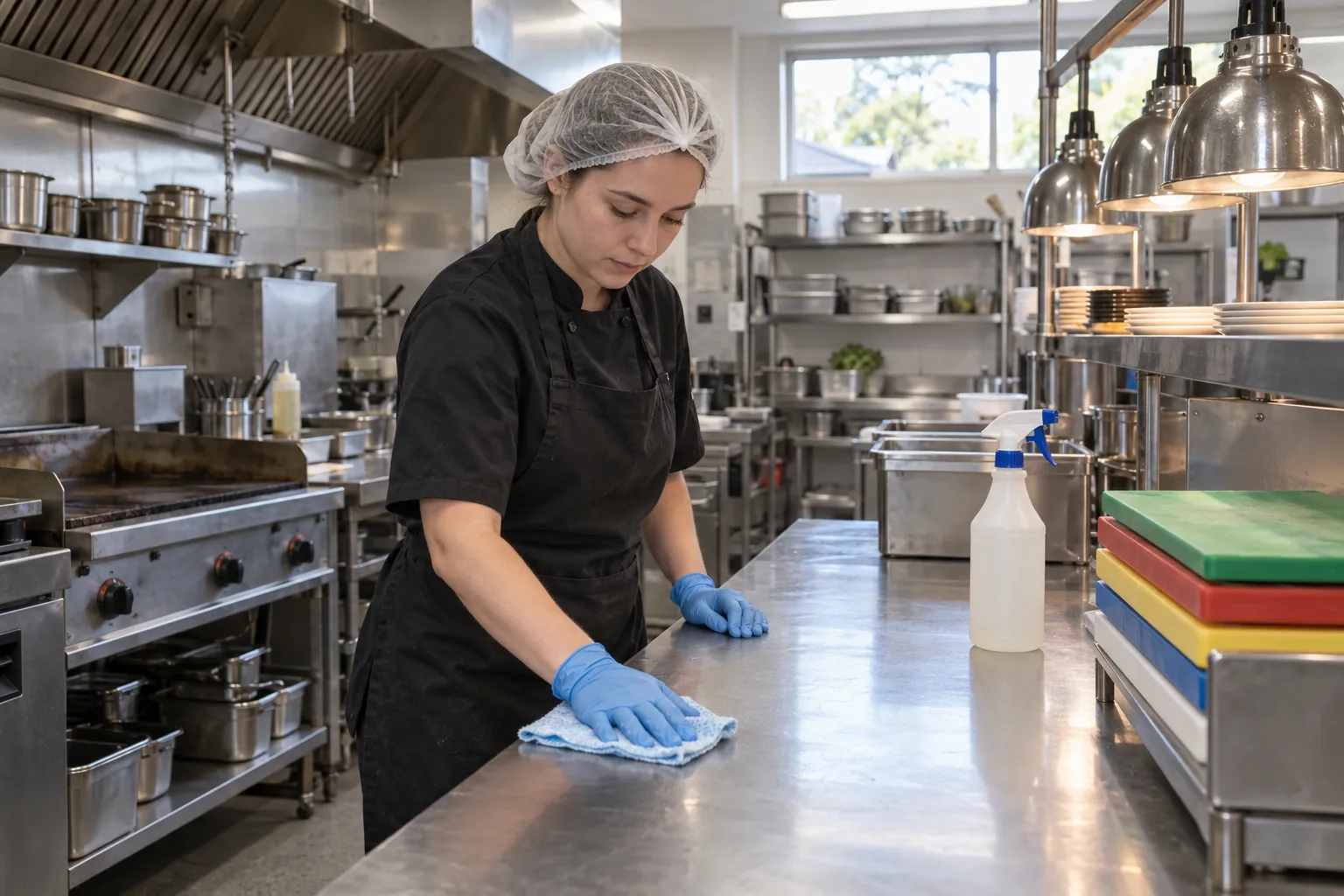
The duty applies to every restaurant, café, takeaway, pub kitchen, caterer and food van in Australia, and since December 2023 Standard 3.2.2A has asked many of them to show the cleaning and sanitising was done. This guide covers what the standards say, a checklist area by area, a cleaning schedule from service to deep clean, the six steps of cleaning and sanitising, and what the record has to show.
01
What the Food Standards Code says about cleaning a commercial kitchen
The cleaning duties of an Australian food business are in Chapter 3 of the Australia New Zealand Food Standards Code, which applies in Australia only and is enforced by state and territory food authorities and local councils under their own Food Acts.
Standard 3.2.2 Food Safety Practices and General Requirements sets the duty. Clause 19 says a food business must keep the premises, and all fixtures, fittings and equipment "having regard to its use", free of any accumulation of food waste, dirt, grease or other visible matter, with garbage and recycled matter only in containers. Clause 20 requires eating and drinking utensils to be in a clean and sanitary condition immediately before each use, and food contact surfaces whenever food that will touch them is likely to be contaminated. "Clean and sanitary" means clean, then treated with heat, chemicals or another process so that microorganisms are reduced to a level that does not compromise the safety of the food or permit the transmission of infectious disease. Clause 21 requires everything to be kept in a good state of repair and working order, and clause 24 requires all practicable measures against pests.
Clause 3 joins the checklist to people: those handling food or supervising it must have skills and knowledge of food safety and hygiene commensurate with their work. FSANZ's guide to the standards says that includes staff given cleaning and sanitising tasks, who must know how to prepare and use a food-grade sanitiser.
Standard 3.2.3 Food Premises and Equipment makes the kitchen cleanable: floors that can be effectively cleaned, do not absorb grease or water and do not pond; equipment installed so that it and the surfaces around it can be easily cleaned; hand washing facilities clearly designated for the sole purpose of washing hands, arms and face; ventilation that removes fumes, smoke and steam; and chemicals stored where they cannot contaminate food.
02
The commercial kitchen cleaning checklist, area by area
Build the list from the kitchen in front of you. Walk it with the head chef from the prep area to the bin store, write down every bench, appliance and surface, then add the method and the person responsible. A typical list covers:
- Benches, counters and chopping boards: cleaned and sanitised between tasks, always between raw meat, poultry or seafood and ready-to-eat food to prevent cross-contamination, and again at close.
- Utensils, crockery and glassware: through the dishwasher or glasswasher on its sanitising program, or by hand through the six steps, then stored where they stay clean.
- Slicers, stick blenders, mixers and can openers: dismantled as the maker instructs, cleaned and sanitised. FSANZ singles these out as hard to reach.
- Cooking line: flat tops, grills, ranges and woks scraped and wiped, grease trays emptied, fryers filtered and cleaned once cool, ovens on their own cycle.
- Rangehood and grease filters: hood wiped, filters washed or replaced before grease builds up.
- Fridges, freezers and the coolroom: handles and seals daily; shelves, walls and floors on a set day, with food kept under temperature control meanwhile.
- Bain-maries and display units: emptied, cleaned and sanitised.
- Sinks and hand basins: cleaned, with hand basins kept clear of dishes and stocked with soap and towels.
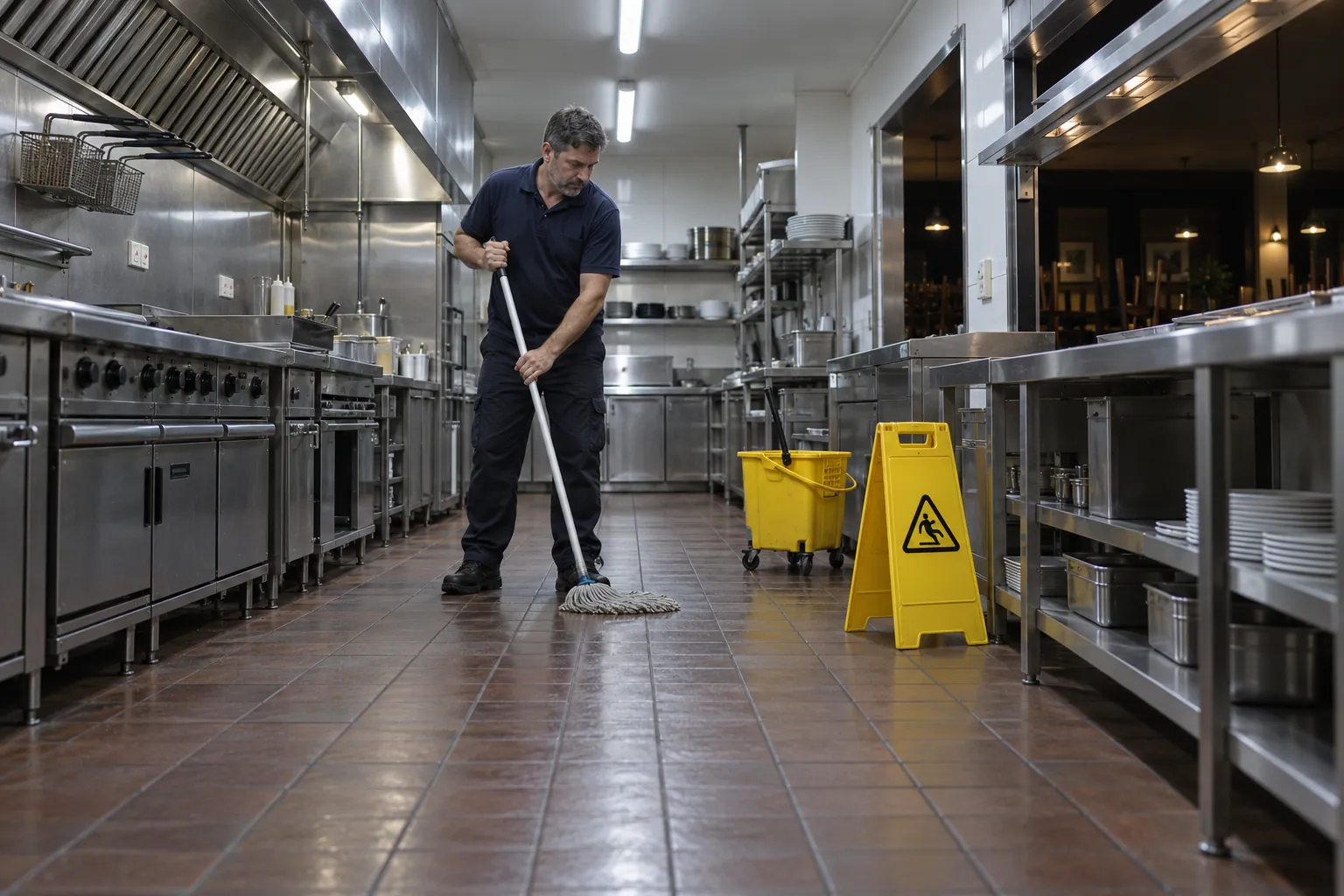
- Floors, walls and drains: sweep and mop, including under movable equipment; wipe splashbacks; clear floor waste grates.
- Touch points: door, fridge and tap handles, switches, the docket printer and the pass.
- Bins, dry storage and chemical store: bins emptied before they overflow and washed; shelves and racks wiped; chemicals kept apart from food.
Two lines are easy to forget. FSANZ's guide says drying towels should be clean, dry and ideally single use, and tea towels should not be reused without washing and drying between uses. And brooms, mops, buckets and hoses are equipment under the standards too, kept clean enough for their use.
A restaurant cleaning checklist adds front of house, where customers and guests see the result: tables, chairs, menus, the dining room, the bar, the coffee machine and the customer toilets. Keep those methods and cloths separate from the kitchen's.
03
A commercial kitchen cleaning schedule, from service to deep clean
The Food Standards Code sets outcomes, not frequencies, so the schedule is whatever keeps grease, waste and dirt from accumulating in your kitchen. FSANZ's guide gives the range: four-hourly may suit meat and salad slicers or stick blenders, weekly or monthly ceiling fans. A starting point for restaurant kitchen cleaning in a busy kitchen, daily, weekly and monthly:
- As you go: clean and sanitise benches, boards and utensils between raw and ready-to-eat food; wipe spills at once; empty bins before they overflow.
- Every four hours: slicers, stick blenders and other equipment in continuous use with ready-to-eat food, unless your procedure sets another interval.
- At close, daily: all food contact surfaces cleaned and sanitised; cooking line degreased; fryers filtered; bain-maries emptied; dishwasher drained and filters cleaned; floors mopped; bins emptied; touch points wiped.
- Weekly: fridge and coolroom shelves; ovens; rangehood filters, more often on a grease-heavy menu; walls; behind movable equipment; bins washed.
- Monthly: coolroom ceilings and fans, ceiling fans, light diffusers, plastic door strips and high shelves.
- Specialist: exhaust duct cleaning, grease trap servicing and equipment servicing, by a contractor at the interval each requires.
FSANZ lists the items most often forgotten: extraction filters, flues, coolroom ceilings, plastic door strips, touch points, refrigerators inside and out, toilet doors and ceiling fans. Name each on the schedule so it is cleaned regularly, because "clean kitchen" on a list tends to mean the benches and the floor.
A commercial kitchen deep clean is a set of cleaning tasks, each with its own date, method and person, not one tick for the whole kitchen. FSANZ notes that effective cleaning may need the power turned off or equipment such as fryers and coolroom fans moved or partly dismantled, which needs a trained person and a safe procedure. Frequency follows use: range hood filters are designed to trap grease, FSANZ explains, but must be washed or changed before the build-up makes them ineffective, so a chargrill kitchen needs a shorter interval than one that steams and bakes.
04
How to clean and sanitise: the six steps, chemicals and safe work
Food Standards Australia New Zealand's cleaning and sanitising guidance puts the difference simply: "Cleaning is removing general dirt, grease and food waste. Sanitising destroys microorganisms." Clean first: sanitisers generally do not work well in the presence of food residue, so a surface that is not clean is not properly sanitised. Appendix 6 of Safe Food Australia, Cleaning and sanitising surfaces and utensils, sets out six steps:
- Pre-clean: scrape or wipe off food scraps and rinse.
- Wash: hot water and detergent, soaking if needed.
- Rinse: remove detergent and loosened residue.
- Sanitise: apply a sanitiser to the manufacturer's instructions.
- Final rinse: if the manufacturer says to.
- Dry: drip dry or single-use towels.
FSANZ's sanitising examples are very hot water (77°C for 30 seconds), a commercial food-grade sanitiser used to its instructions, 70% alcohol, or a dishwasher on its sanitising program, usually the longest, hottest setting. For bleach it gives 100 ppm chlorine in cold water (10 ml commercial or 25 ml household bleach to 10 litres) and 50 ppm in warm water, with diluted bleach thrown away after 24 hours. These are guidance, not law; the label of the product you use comes first, including dilution, contact time and whether to rinse. Appendix 6 adds that every surface must be completely covered, that diluted sanitisers often keep less well than the concentrate, and that floor and toilet disinfectants are generally not suitable for food contact surfaces.
The chemicals are a work health and safety matter too. The model Code of Practice: Managing risks of hazardous chemicals in the workplace (SafeWork NSW edition) says decanted containers must be labelled correctly, and gives the example of chlorine bleach, which can release harmful chlorine gas if mixed with incompatible chemicals. So keep cleaning supplies in their own store, never where they could contaminate food: every decanted spray bottle labelled, and products never mixed. The model Code of Practice: Managing the work environment and facilities says spills on floors should be cleaned up immediately; mop when the kitchen is quiet and keep people off the floor until it is dry.
Train by watching. Under Standard 3.2.2A a food safety training course must include cleaning and sanitising of premises and equipment, but a certificate is not the same as knowing which bottle goes on the slicer. Ask a new kitchen hand to show you the six steps on a chopping board.
05
Standard 3.2.2A and what the cleaning record must show
Since December 2023, Standard 3.2.2A Food Safety Management Tools has applied to food service, catering and related retail businesses that handle unpackaged, potentially hazardous, ready-to-eat food. FSANZ's overview of food safety management tools explains the two categories. A category one business, such as a caterer, restaurant or food van making ready-to-eat meals on site, needs a food safety supervisor, food handler training and the evidence tool. A category two business, such as a deli selling food it did not make, needs the first two.
The evidence tool is section 3.2.2A–12. A category one business must make a record that substantiates what the prescribed provisions require, and keep it for 3 months. Clause 20 of Standard 3.2.2, cleaning and sanitising, is one of them. The record is not needed if the business can demonstrate compliance to an authorised officer on request; FSANZ's evidence tool guidance gives sanitising a piece of equipment as an example.
Safe Food Australia, the guide to the food safety standards (fourth edition, February 2023) says the cleaning record should show utensils and food contact surfaces were cleaned and sanitised when required: the water temperature if heat is used, how and when chemicals are used, or the manufacturer's sanitising setting on a commercial dishwasher, each with the date. Its examples describe a schedule of surfaces and equipment ticked as each task is done, perhaps with a weekly dishwasher temperature. Where something was not right, the business acts and records what it did. Templates are in its Appendix 8 and from state and council regulators; none is mandatory, and electronic records count.
So a commercial kitchen cleaning checklist template has two halves: the schedule (item, how often, method, products, who) and the completed record (date and time, item, person, result, anything not done and why, and what happened next).
Where a contract cleaner does the floors and deep cleaning overnight, the food business still owns the duty. Write down which tasks are the contractor's and which the kitchen's, and check the contractor's chemicals suit a food premises.
06
Where the kitchen cleaning record fails, and what SiteClara does about it
Restaurant kitchen cleaning records fail in familiar ways. The sheet on the coolroom door is ticked for the week on Monday. "Kitchen cleaned" is initialled at close with no way of telling that the slicer or the second fryer was left. The split door seal is mentioned to whoever was nearby, then again a fortnight later by someone else.
SiteClara is built for the routine checks and the reports between them. A printed QR poster, with an optional NFC tag behind it, sits at each location where work is scheduled, such as the prep kitchen, the dish area, the coolroom or the bin store. Enrolled staff scan or tap with their own phone, with no app to install, see the checks due there, and mark each one done or record why they could not do it. They can report a problem there with a note and a photo; it carries the location, the time and the named person, and stays on the team's list of open jobs until someone closes it. The supervisor sees what is due, done and missed, and approves a daily report that goes to nominated managers or the client the next morning.
07
Questions people ask
What should a commercial kitchen deep clean checklist include?
Whatever daily cleaning does not reach. Safe Food Australia's chapter on Standard 3.2.2 says food waste can build up on and behind equipment if those areas are not cleaned regularly, that effective cleaning may mean turning the power off or moving or partly dismantling items such as coolroom fans, fryers and ventilators, and that rangehood grease filters should be changed or washed regularly before the build-up makes them ineffective. Give each task its own date, method and person.
What do commercial kitchens clean with?
Hot water and detergent to clean, then heat or a sanitiser to sanitise. FSANZ's cleaning and sanitising guidance gives very hot water at 77°C for 30 seconds, 70% isopropyl alcohol or ethanol, bleach at 100 ppm chlorine in cold water or 50 ppm in warm water, or a dishwasher on its longest, hottest cycle or the program designed for sanitising.
How long do you keep kitchen cleaning records in Australia?
At least 3 months. FSANZ's evidence tool guidance says a category one food service, catering or related retail business must keep its records, cleaning and sanitising among them, for at least 3 months, and a record can be in any form, including electronic.
08
Where to read the official guidance, and a list to take away
The primary sources are the Standard 3.2.2 Food Safety Practices and General Requirements (clauses 3 and 19 to 24), Standard 3.2.3 Food Premises and Equipment, Standard 3.2.2A Food Safety Management Tools and FSANZ's Safe Food Australia guide with its Appendix 6 and Appendix 8 templates. Your council's environmental health team and your state food authority can advise on your own kitchen. For the rest of the building see the commercial cleaning checklist, and for a record laid out by location the cleaning log sheet.
- List every bench, appliance, sink and surface by name.
- Write the method, product, dilution and contact time beside each food contact item.
- Split the schedule into as you go, four-hourly, close, weekly, monthly and specialist.
- Add the forgotten items: filters, flues, coolroom ceilings, door strips, touch points, ceiling fans.
- Keep chemicals labelled, unmixed and away from food, and floors dry before people cross them.
- Agree in writing what the cleaning contractor does and what the kitchen does.
- If you are a category one business, record cleaning and sanitising and keep it for 3 months.
- Record what was not done and why, and follow each fault to a repair.
Sources
Every document this guide quotes or links to, in the order it first cites them.
- Standard 3.2.2 Food Safety Practices and General Requirements legislation.gov.au
- Standard 3.2.3 Food Premises and Equipment legislation.gov.au
- Occupational Health and Safety Act 2004 (Vic) legislation.vic.gov.au
- Cleaning and sanitising guidance foodstandards.gov.au
- Appendix 6 of Safe Food Australia, Cleaning and sanitising surfaces and utensils foodstandards.gov.au
- Code of Practice: Managing risks of hazardous chemicals in the workplace safework.nsw.gov.au
- Code of Practice: Managing the work environment and facilities safework.nsw.gov.au
- Standard 3.2.2A Food Safety Management Tools legislation.gov.au
- Overview of food safety management tools foodstandards.gov.au
- Evidence tool guidance foodstandards.gov.au
- Safe Food Australia, the guide to the food safety standards (fourth edition, February 2023) foodstandards.gov.au
- Safe Food Australia's chapter on Standard 3.2.2 foodstandards.gov.au
Related guides
 CleaningCommercial cleaning checklist: area by area, and how to know it is followedA commercial cleaning checklist for Australian offices and shared buildings, area by area, with the WHS duties behind it and how a supervisor checks it is followed.
 CleaningOffice kitchen cleaning: what the law asks, who does what, and a routine that survives the lunch rushOffice kitchen cleaning in Australia: what WHS law and the codes ask of eating areas, who cleans what, how often, the fridge rule, and what a good record shows.
 CleaningCleaning log sheet: what to record, who signs it, and what a signature provesWhat a cleaning log sheet should record in Australian workplaces and food businesses, the WHS and food safety rules behind it, and what a signature proves.
 CleaningCleaning standards in Australia: a map, and how to chooseA map of Australian cleaning standards: WHS and OHS duties, NSQHS Action 3.13, state health policy, the Food Standards Code, aged care and contract specs.