Premises and facilities management
Building engineer duties: what the job covers, and how to show it is done
Building engineer duties are to operate, inspect, maintain and repair a building's heating and air conditioning, mechanical, electrical, plumbing and life safety systems, and to keep the logs that show it was done.
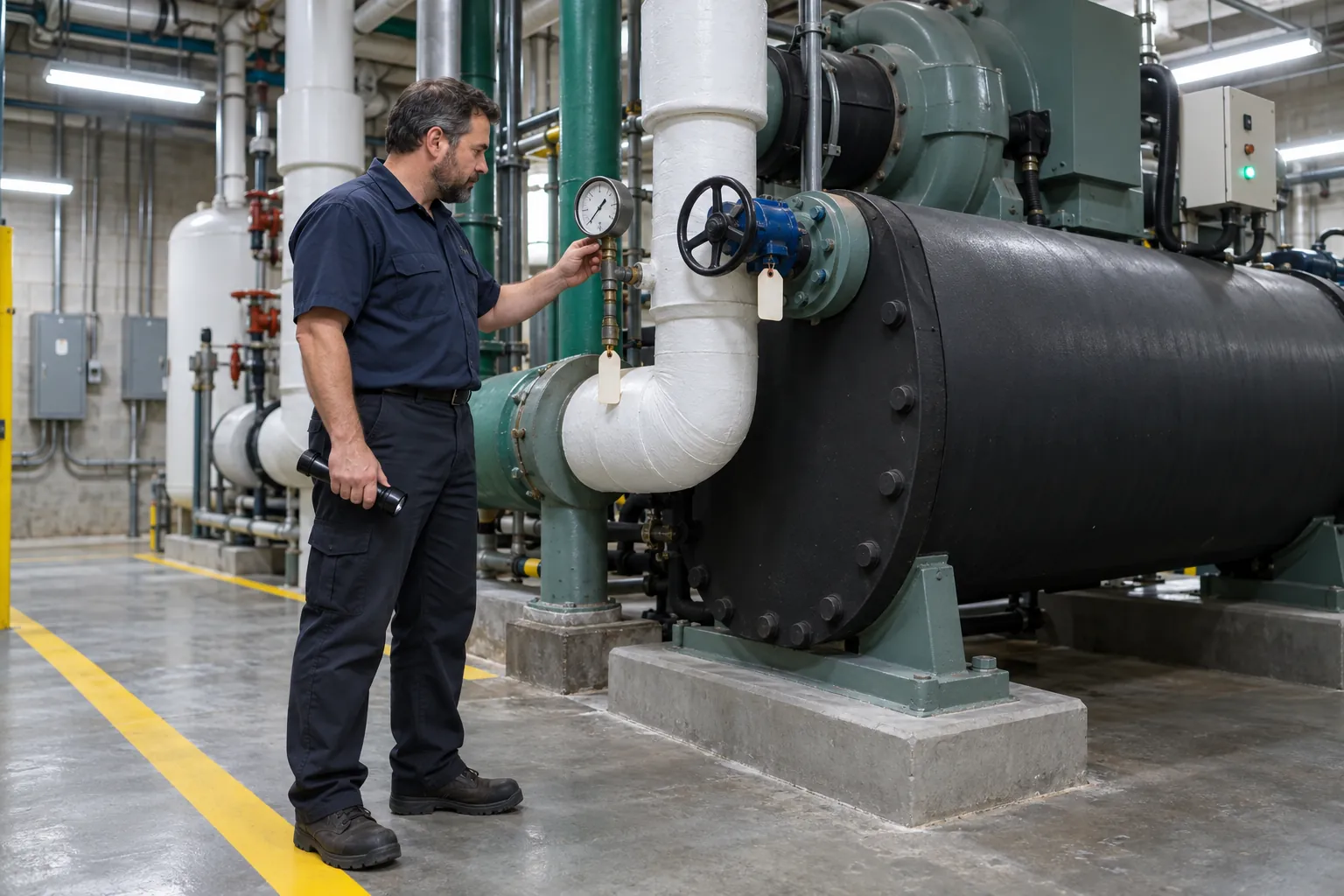
That means the boilers and chillers, the air handlers, the pumps, the switchgear and the fire systems that tenants never see until something stops. This guide sets out what the job involves in an office tower, a campus or a medical building, the federal rules that shape the work, what the daily rounds and logs should look like, and how to show the routine work was actually done.
01
What a building engineer is, and the duties behind the role
In American commercial real estate, a building engineer is the person on site who operates and maintains the building's systems. The title varies: building engineer, operating engineer, stationary engineer, maintenance engineer, and chief engineer for the person who leads the team. It does not usually mean a licensed professional engineer who designs systems, but the tradesperson who runs them.
The Bureau of Labor Statistics describes the closest occupation in its Occupational Outlook Handbook entry for stationary engineers and boiler operators: they "control stationary engines, boilers, or other mechanical equipment to provide utilities for buildings or for industrial purposes." Its list of duties includes "Read gauges, meters, and charts to track boiler operations" and "Monitor boiler water, chemical, and fuel levels." In an office building the same skills extend to chillers, cooling towers, air handlers, the building automation system (BAS), domestic water and the electrical distribution.
Most building engineers work for the owner or for the property management company that runs the building on the owner's behalf. BOMA International, the Building Owners and Managers Association, describes itself on BOMA International's website as "the leading trade association and credential provider in the commercial real estate industry". A facility manager usually answers for services across a campus or portfolio; the building engineer answers for the plant and systems in one building, or a few.
The legal duties behind the job belong to the employer and the building owner. For a private employer under federal OSHA, the starting point is the Occupational Safety and Health Act of 1970, Section 5. Section 5(a)(1), the General Duty Clause, requires each employer to furnish "employment and a place of employment which are free from recognized hazards that are causing or are likely to cause death or serious physical harm to his employees." Section 5(a)(2) adds that the employer "shall comply with occupational safety and health standards", and Section 5(b) puts a matching duty on each employee.
02
Building engineer duties and responsibilities in practice
Building engineer job descriptions differ in the size of the building and how much is contracted out, but the same duties appear in nearly all of them:
- Operate the plant: start, stop and adjust boilers, chillers, cooling towers, pumps and air handlers to hold the building's temperatures and pressures, and keep the building automation system's schedules and setpoints right for the season and the tenants' hours.
- Make the rounds: walk the mechanical rooms, the roof and the penthouse on a set route, read gauges and meters, listen and look for leaks, vibration and alarms, and log the readings. See building rounds.
- Preventive maintenance: change filters, grease bearings, check belts, clean strainers and coils, and carry out the tasks set by the manufacturer and the owner's preventive maintenance program, usually issued as work orders from a CMMS. See the preventive maintenance checklist.
- Repairs and tenant requests: hot and cold calls, a leaking faucet, a tripped breaker, and the reactive work orders from tenants and the property manager.
- Life safety systems: support fire alarm, sprinkler, fire pump, emergency lighting and generator testing, and put systems back in service after the licensed contractor inspects.
- Water treatment: check chemical feed on boilers and cooling towers, and carry out the building's part of any Legionella water management program.
- Vendors and contractors: escort elevator, HVAC, controls and fire protection contractors, issue hot work permits, and check the work before signing the ticket.
- Emergencies: power outages, floods, freeze-ups and alarms, often on call after hours.
- Records: the boiler log, the round sheets, closed work orders, contractor reports, and notes for the next shift.
A chief engineer takes on a supervisory role and adds the management side: scheduling the engineering staff, planning the preventive maintenance calendar, drafting capital requests, and reporting to the property manager or the owner. In a small building one engineer may do all of it; a large tower may have engineers on every shift.
03
The federal rules a building engineer works under
OSHA owns its own requirement pages, and the engineer's job is to turn them into routines and records. These are the standards and rules a building engineer meets most often, federally:
- Lockout/tagout. 29 CFR 1910.147, The control of hazardous energy (lockout/tagout), covers servicing and maintenance where "the unexpected energization or start up of the machines or equipment" could injure employees. The employer must have "a program consisting of energy control procedures, employee training and periodic inspections", with the procedures inspected "at least annually" and each inspection certified.
- Electrical work. 29 CFR 1910.333, Selection and use of work practices, requires safety-related work practices "when work is performed near or on equipment or circuits which are or may be energized", and says that "Only qualified persons may work on electric circuit parts or equipment that have not been deenergized." Many employers use NFPA 70E, Standard for Electrical Safety in the Workplace, to build their electrical safety program around it.
- Confined spaces. Sump pits, tanks, vaults and some crawl spaces may be permit spaces. 29 CFR 1910.146, Permit-required confined spaces, requires the employer to "evaluate the workplace to determine if any spaces are permit-required confined spaces" and to inform exposed employees "by posting danger signs or by any other equally effective means."
- Exit routes. 29 CFR 1910.37, Maintenance, safeguards, and operational features for exit routes, says exit routes "must be free and unobstructed" and that safeguards such as sprinkler systems and fire doors must be "in proper working order at all times." Engineers usually fix the exit signs, door hardware and emergency lights.
Refrigerant work has its own federal rules under the Clean Air Act. The EPA's page on Section 608 technician certification says "technicians who maintain, service, repair, or dispose of equipment that could release ozone depleting refrigerants into the atmosphere must be certified." EPA's Section 608 certification requirements list four types: Type I for small appliances, Type II for high- or very high-pressure appliances, Type III for low-pressure appliances, and Universal for all types, each earned by passing an EPA-approved test that includes a Core section. Large chillers matter here too: EPA's stationary refrigeration leak repair requirements say owners or operators "must take corrective action when an appliance with a full charge of 50 or more pounds is discovered to be leaking ozone depleting refrigerant" above the trigger rate, which is 10% for comfort cooling, and must "Repair leaks within 30 days from the date the leak was discovered", or develop a plan within 30 days to retrofit or retire the appliance, with verification tests afterward. Equipment charged with an HFC has its own leak repair rules under the AIM Act: EPA's page on regulatory actions for managing HFC use and reuse describes leak repair requirements for appliances with a charge of 15 pounds or more that contain an HFC or certain HFC substitutes. Check which rule covers the refrigerant in each machine.
Boilers are usually a state or city matter. The BLS says that "Some state and local governments require licensure for stationary engineers and boiler operators." New York City is one example: the Department of Buildings issues a High Pressure Boiler Operating Engineer license, whose holders "are licensed to operate high pressure boilers in New York City." Find out what your state and city require, for licenses and for boiler inspections, before assuming the federal rules are the whole picture.
Water systems carry a public health duty. The CDC's Toolkit: Developing a Legionella Water Management Program calls itself "A practical guide to implementing industry standards" and says that "many buildings need a WMP to reduce the risk for Legionella growing and spreading within their water system and devices." The engineer usually carries out the program's checks: temperatures, flushing of little-used outlets, cooling tower treatment. Sprinkler and fire pump testing follows NFPA 25 where the AHJ has adopted it, often with the engineer doing the routine visual checks and a licensed contractor the rest.
04
The engineer's day: rounds, readings and the logs
Most building engineers run to a rhythm that looks like this, adjusted for the building and the season:
- Every shift: a walk of the mechanical rooms, chiller plant, roof equipment and electrical rooms; readings of pressures, temperatures and levels; alarm review on the BAS; and a boiler log entry where a boiler is running.
- Daily: tenant work orders and hot and cold calls, and water treatment readings where the program calls for them.
- Weekly and monthly: filter and belt checks, generator run tests, emergency lighting checks, flushing of little-used outlets, sprinkler valve checks, and the preventive maintenance due.
- Quarterly and annually: coil and cooling tower cleaning, seasonal changeover, the lockout/tagout procedure inspection, and the contractors' annual fire, elevator and boiler inspections.
A good round is walked on a fixed route, with each reading recorded against a normal range, so a drift stands out before it becomes a failure. A reading written from memory, or copied from yesterday, is worse than none, because it looks like evidence and is not.
What good evidence looks like, for any routine check an engineer does:
- What was checked, named the same way every time.
- When it was done, not when it was written up.
- Who did it, by name.
- The result, and what was done about anything out of range.
- What stopped the check, such as a locked room or a part on order, so a missed check has a reason rather than a blank.
The work order system usually holds planned maintenance and repairs. The rounds and the problems noticed along the way often sit somewhere else: a clipboard, a notebook, a spreadsheet.
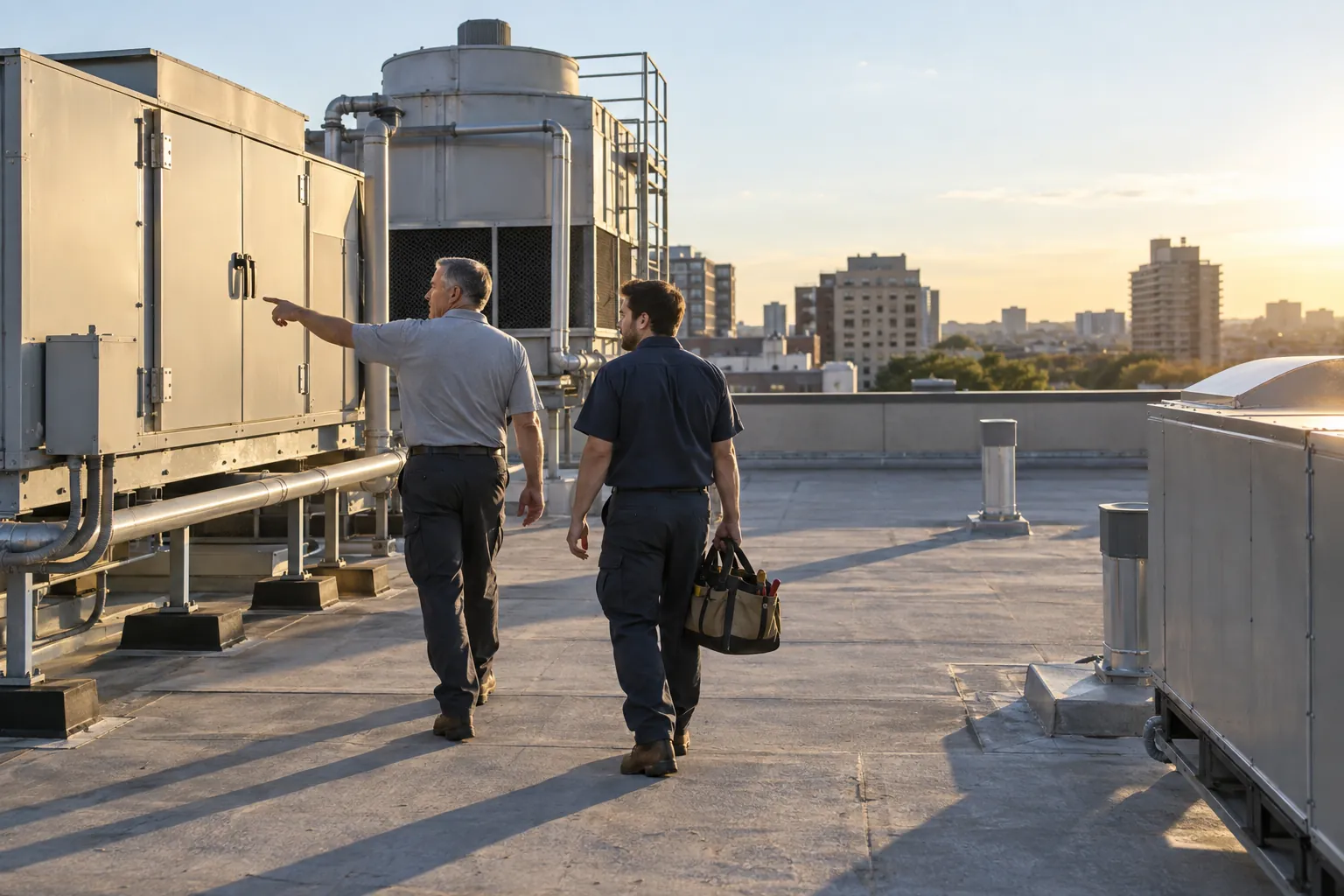
05
Tenants, vendors, the property manager, and the skills the job needs
A building engineer spends much of the day as the liaison between tenants, contractors and property managers. Tenants report that it is too hot, too cold or leaking. The property manager sets priorities, approves spending and answers to the owner. Contractors come in to service elevators, fire systems and controls. The janitorial and security teams are often the first to see a problem on their rounds, and a good engineer makes it easy for them to report it.
The engineer also carries the building's memory: where the shut-off valves are, which pump runs hot. A chief engineer who writes that down protects the building when people move on.
On skills and training, the BLS says stationary engineers and boiler operators need "at least a high school diploma" and "typically learn their work through long-term on-the-job training under the supervision of an experienced engineer or operator." It adds that "apprenticeships usually last 4 years, include 8,000 hours of on-the-job training, and require 600 hours of technical instruction." Beyond that, a building engineer typically needs:
- a state or city engineer or boiler license, where the jurisdiction requires one;
- EPA Section 608 certification for refrigerant work;
- lockout/tagout and electrical safety training appropriate to the work;
- working knowledge of HVAC, plumbing, electrical and life safety systems, the BAS and the CMMS;
- for a chief engineer, supervision, budgeting and contractor management.
What the property manager and owner want to know is short: the building ran, the life safety systems are in service, and the routine checks were done. The last is the hardest to show.
06
Where the record fails, and what SiteClara does about it
A building engineer's contractor reports are usually in good order. The weak part is the routine work in between. The round sheet on the boiler room clipboard was filled in at the end of the shift. The generator run was done, but the only record is memory. A leak mentioned to the security officer at the lobby desk never reached the engineer. When the property manager asks whether the weekly checks were done in every mechanical room last month, the honest answer is often an assurance rather than a record.
SiteClara records that routine work at the place it happens. A printed QR poster at each location, such as a boiler room, a chiller plant, a roof hatch, a fire pump room or an electrical closet, with an optional NFC tag behind it, lets engineering, janitorial or security staff scan the code or tap the tag on their own phone, with no app to install. They see the scheduled checks due there and mark each one done, or say what stopped them, with a photo when one is asked for. A problem found there goes onto the team's list of jobs until someone closes it, and the supervisor's queue groups open jobs by building and floor. A supervisor can escalate a job to the building's manager, who can answer it.
Each day the supervisor reviews the day's checks and photos, gives a reason for any check that was missed, and approves a report, which goes to the chief engineer, the property manager and other nominated contacts at 8 a.m. the next morning. It shows what was reported, what was completed, what is still open and how the scheduled checks went. Where an engineering team, a janitorial vendor and a security vendor work in the same building, each can run its own staff, forms and approval.
07
Questions people ask
What are the responsibilities of a building engineer?
The Bureau of Labor Statistics' Occupational Outlook Handbook entry for stationary engineers and boiler operators, the closest federal occupation, lists duties including "Inspect equipment to ensure that it is operating efficiently", "Check safety devices routinely" and "Record data and keep logs of operation, maintenance, and safety activity." In an office building the same responsibilities cover the chillers, air handlers, plumbing, electrical distribution and life safety systems described above.
What is another name for a building engineer?
O*NET OnLine's profile of Stationary Engineers and Boiler Operators (51-8021.00) lists reported job titles including "Operating Engineer", "Stationary Engineer", "Plant Utilities Engineer" and "Boiler Operator". In commercial real estate you will also see maintenance engineer, and chief engineer for the person who leads the team.
Is it hard to become a building engineer?
It takes time more than a degree, and most people come into the profession through hands-on training. The BLS Occupational Outlook Handbook entry for stationary engineers and boiler operators says they "typically learn their work through long-term on-the-job training under the supervision of an experienced engineer or operator", and that "Apprenticeships usually last 4 years, include 8,000 hours of on-the-job training, and require 600 hours of technical instruction." Where a license is required, it takes experience and an exam: "Applicants for licensure usually must meet experience requirements and pass a written exam."
What skills does a building engineer need?
The BLS Occupational Outlook Handbook entry for stationary engineers and boiler operators names four important qualities: being detail oriented, dexterity, mechanical skills and problem-solving skills. On the last, it says they "must figure out how things work and quickly solve problems that arise with equipment or controls." O*NET OnLine's profile of Stationary Engineers and Boiler Operators (51-8021.00) lists monitoring, critical thinking and active listening among the skills the work needs.
08
Further reading, and a list to take away
Start with the BLS entry for stationary engineers and boiler operators, OSHA's standards on lockout/tagout, electrical work practices, confined spaces and exit routes (checking your state plan), the EPA's Section 608 pages, and the CDC's Legionella toolkit, all linked above. Your state and city publish the boiler, elevator, fire and building code requirements for your building, and the AHJ decides which editions are in force.
In your first month as a building engineer or chief engineer, make sure you know:
- every piece of major equipment in the building, where it is, and its normal operating range;
- which licenses your state or city requires for the boilers and plant you run, and who on the team holds them;
- the lockout/tagout procedures for each machine, and when they were last inspected;
- which spaces are permit-required confined spaces, and how they are marked;
- which refrigerant each chiller and large system holds, its charge, and who is certified to work on it;
- the water management program, what checks it asks of you, and how often;
- the life safety systems and the dates of their next inspections;
- where the round sheets and logs are kept;
- what the property manager and owner expect to hear from you, and how often.
Sources
Every document this guide quotes or links to, in the order it first cites them.
- Occupational Outlook Handbook entry for stationary engineers and boiler operators bls.gov
- BOMA International's website boma.org
- Occupational Safety and Health Act of 1970, Section 5 osha.gov
- OSHA-approved State Plans osha.gov
- 29 CFR 1910.147, The control of hazardous energy (lockout/tagout) osha.gov
- 29 CFR 1910.333, Selection and use of work practices osha.gov
- 29 CFR 1910.146, Permit-required confined spaces osha.gov
- 29 CFR 1910.37, Maintenance, safeguards, and operational features for exit routes osha.gov
- Section 608 technician certification epa.gov
- Section 608 certification requirements epa.gov
- Stationary refrigeration leak repair requirements epa.gov
- Regulatory actions for managing HFC use and reuse epa.gov
- High Pressure Boiler Operating Engineer license nyc.gov
- Toolkit: Developing a Legionella Water Management Program cdc.gov
- Stationary Engineers and Boiler Operators (51-8021.00) onetonline.org
Related guides
 Premises and facilities managementFacility manager duties: what the job covers, and how to show it is doneFacility manager duties across buildings and vendors: OSHA's General Duty Clause, exits, lockout, contractors, the inspection calendar and a record you can show.
 Premises and facilities managementBoiler log: what to record, how often, and what the state expectsWhat a boiler log should record, how often to take readings and test the low-water cutoff, what state boiler rules and ASME CSD-1 expect, and where logs fail.
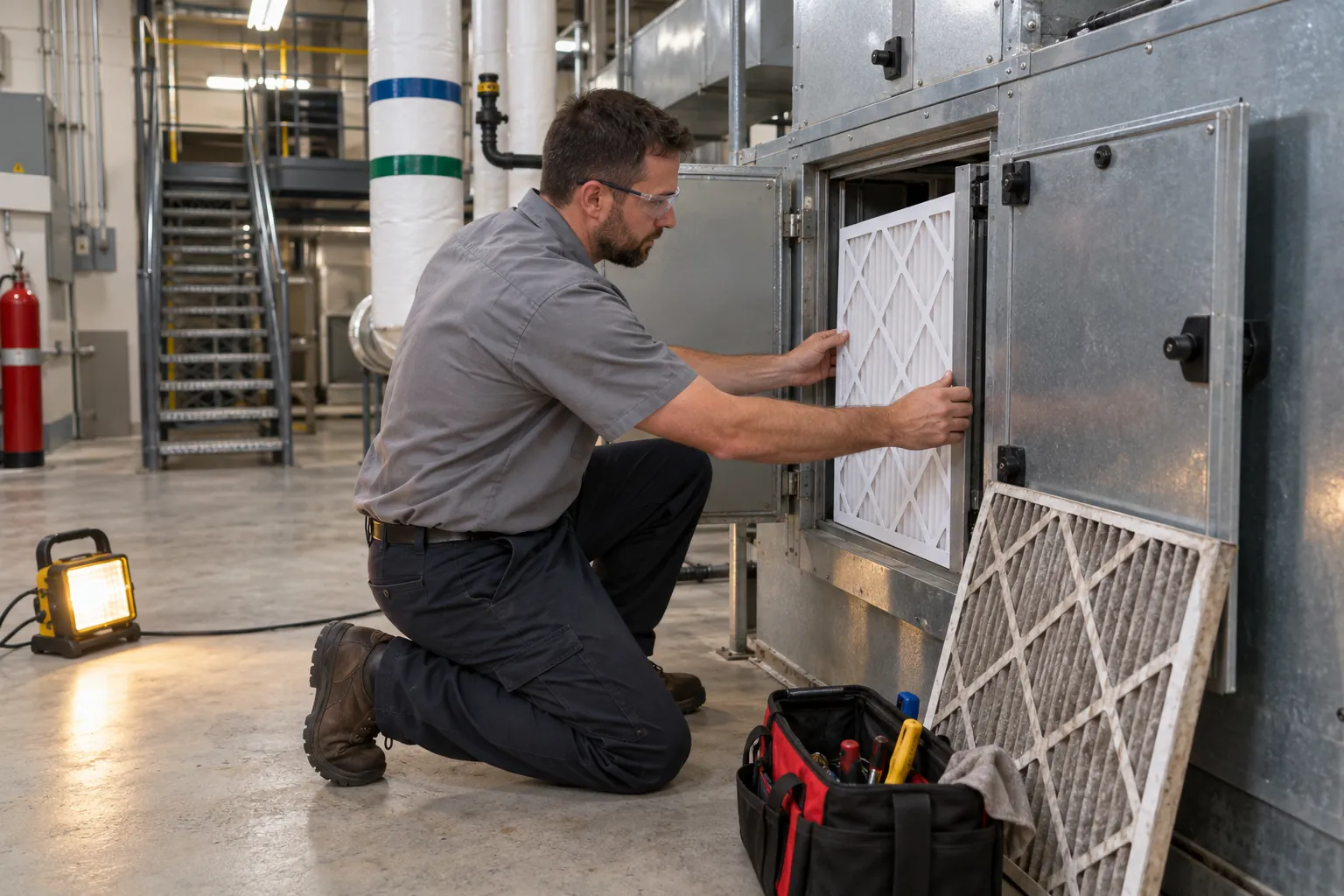 Premises and facilities managementPreventive maintenance checklist: what to check in a commercial building, how often, and how to prove itA preventive maintenance checklist for commercial buildings: HVAC, electrical, fire and life safety, plumbing, how often, and what the record should show.
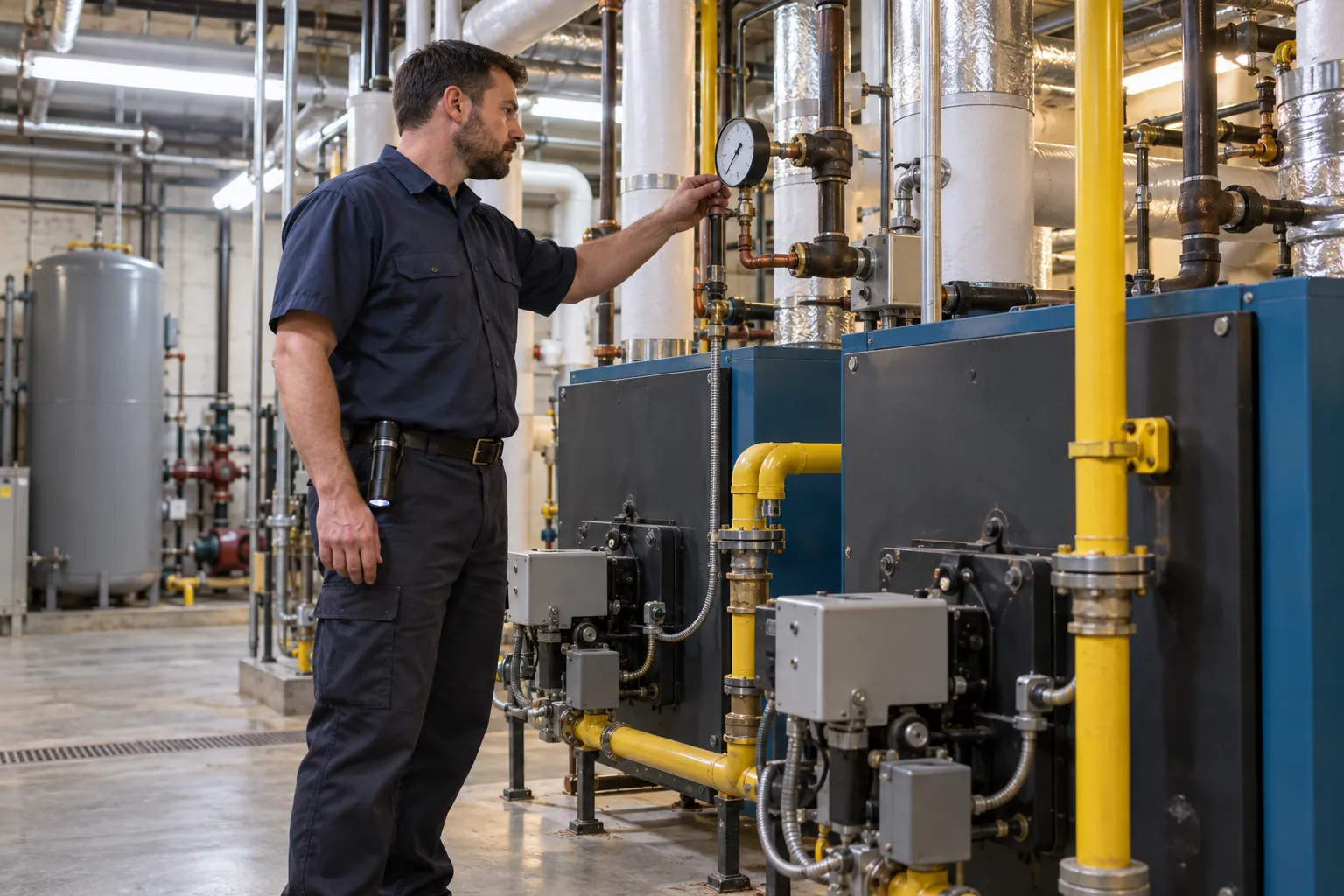 Premises and facilities managementEngineering rounds: how to walk the plant, and how to show it was walkedEngineering rounds in a commercial building: what to walk, the readings to take, how often, the rules behind them, and a round log that shows the plant was checked.