Premises and facilities management
Engineering rounds: how to walk the plant, and how to show it was walked
In a commercial building, engineering rounds are the building engineer's scheduled walk of the mechanical, electrical and plumbing spaces to check that the plant is running normally: the boiler room, the chiller plant, the fan rooms, the roof, the electrical closets and the fire pump room.
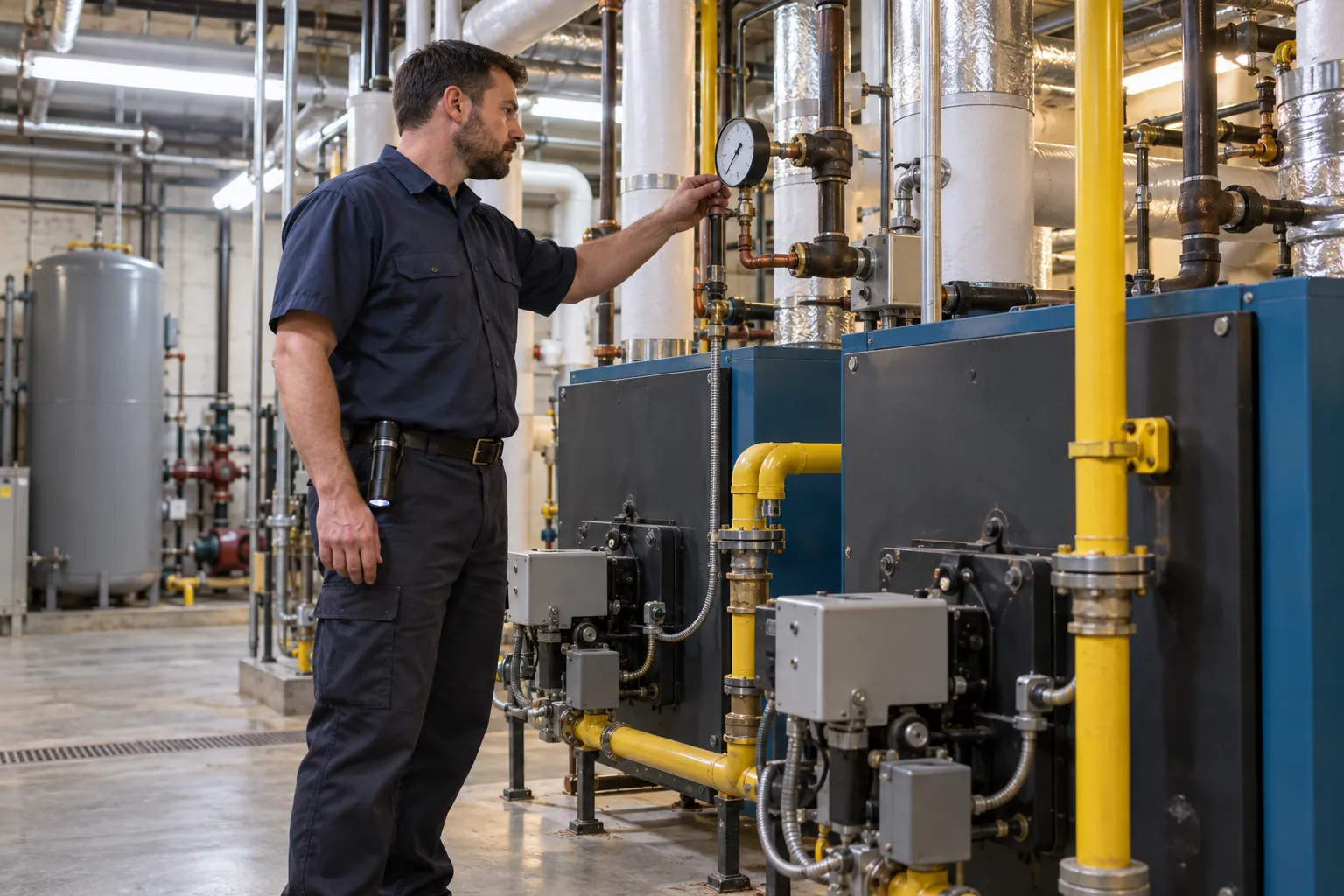
Done well, a round catches the slow leak, the belt that has started to squeal and the pump that is running hot before any of them becomes a tenant's problem. This guide covers what a round should include, which readings to take and how often, the rules and standards behind the practice, and what a round log needs to show.
01
What engineering rounds are, and where the duty comes from
Engineering rounds, also called operator rounds, plant rounds or building rounds, are a planned route through a building's equipment spaces, walked at set times by the building engineer or operating engineer on shift (see building engineer duties). On each round the engineer looks, listens and smells, takes the readings the building needs, checks that alarms are clear, and writes down anything that is not normal. A round is not a repair or a preventive maintenance task; it is the observation that tells the chief engineer what needs a work order, and the record that shows the plant was attended.
No single federal rule says "walk engineering rounds." The duty is built up from several sources, and which of them apply depends on the building, the equipment and the state:
- OSHA's general industry standards. Under 29 CFR 1910.22, walking-working surfaces, "walking-working surfaces are inspected, regularly and as necessary, and maintained in a safe condition," and hazardous conditions are corrected "before an employee uses the walking-working surface again." Under 29 CFR 1910.37, exit routes, "exit routes must be free and unobstructed." Under 29 CFR 1910.157, portable fire extinguishers, extinguishers "shall be visually inspected monthly."
- State boiler laws. Many states license boiler operators and set how often an attended plant must be checked. New Jersey is a clear example: the state's Guidelines for Logbooks, Compliance to Boiler Regulations N.J.A.C. 12:90 (revision of October 2010) quotes N.J.A.C. 12:90-3.10, under which a low-pressure boiler operator "shall monitor the conditions of the low pressure boiler plant at least once every two hours" and, when away from the boiler room, "shall indicate in the log periodic tours of the boiler plant." Check your own state's boiler rules for the current text.
- Voluntary standards. ASHRAE's fact sheet on Standards 180 and 211 describes ASHRAE Standard 180-2018, Standard Practice for Inspection and Maintenance of Commercial Building HVAC Systems, as providing "a standard practice for inspecting and maintaining commercial HVAC systems to achieve acceptable thermal comfort, energy efficiency, and indoor air quality." It "defines the tasks needed to meet the required minimum standard," with informative appendices on "specific indicators of potential issues." A standard like this is voluntary until a contract, an owner's policy or a jurisdiction adopts it; check ASHRAE for the current edition.
Federal OSHA is not the whole picture. OSHA lists 29 approved State Plans: 22 covering both private sector and state and local government workers, and seven covering only state and local government workers. In a State Plan state, check the state's own standards before citing 29 CFR 1910. Fire codes are adopted locally too, so the authority having jurisdiction (AHJ) decides which fire code and which edition apply to the building.
02
What an engineering round covers in practice
Every building's route is different, but most commercial rounds in an office tower, a campus building, a medical office building or a mixed-use property take in these spaces:
- Boiler room: boilers in service, water level, pressure or temperature, flame condition, stack temperature, fuel on hand, water treatment, any alarm or lockout at the burner controls. The boiler log carries these readings.
- Chiller plant: chillers and pumps in service, supply and return water temperatures, refrigerant alarms or monitors, oil levels where visible, unusual vibration or noise.
- Air handlers and fan rooms: fans running as scheduled, belts, filter differential pressure, condensate pans draining, dampers moving, doors latched.
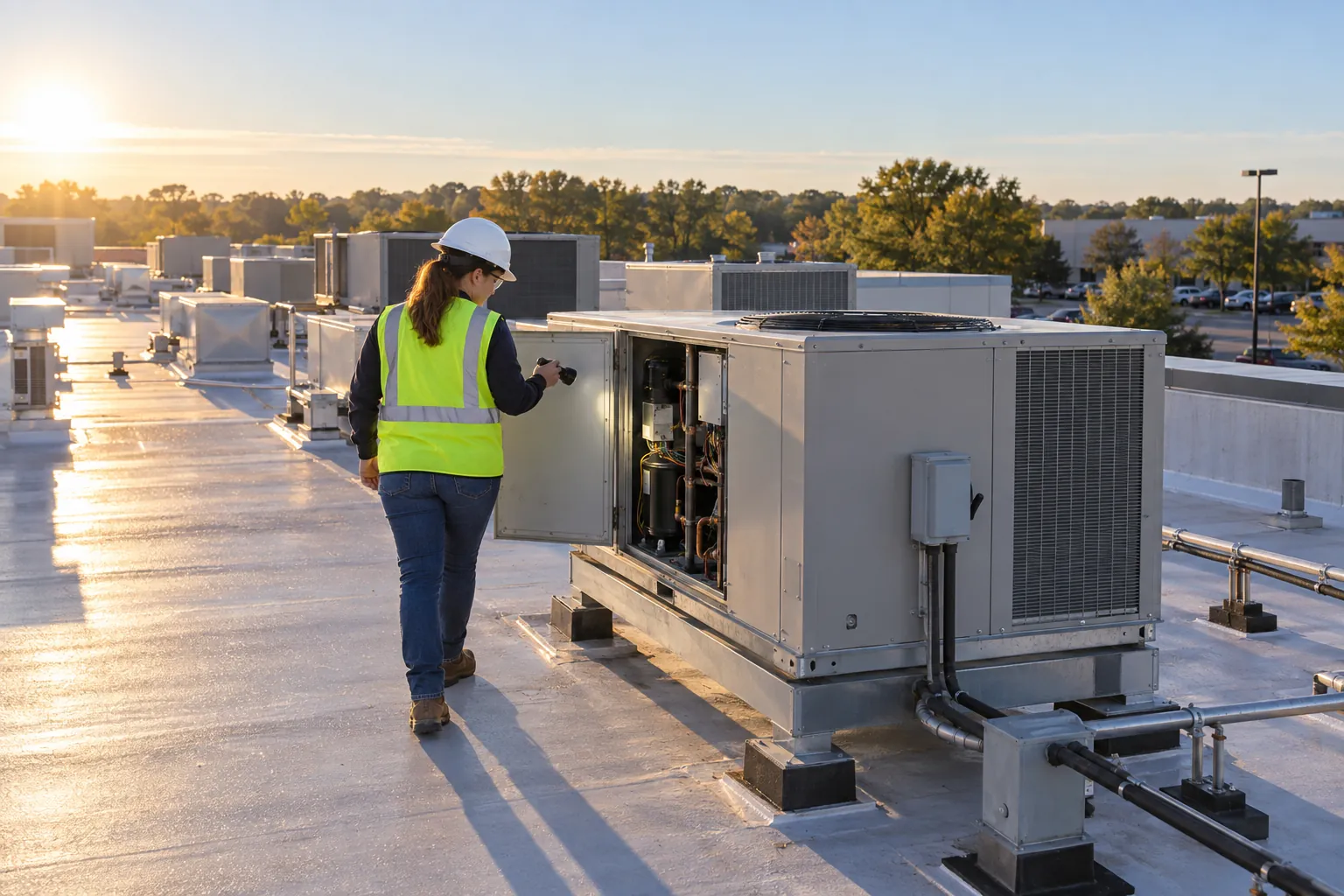
- Cooling tower (usually on the roof): water flowing evenly, basin clean, no visible biofilm or debris, drift eliminators in place, chemical feed running. See the cooling tower inspection guide.
- Domestic water and pumps: booster pumps, water heaters and their temperatures, backflow assemblies (visual only), sump and sewage ejector pumps, signs of leaks.
- Electrical rooms and closets: look, listen and smell only; no panel is opened on a round. Heat, humming, a burning smell, water or storage in front of the gear goes in the log.
- Emergency generator: set in automatic, no alarms, fuel level, block heater working, no leaks under the set.
- Fire protection spaces: the fire pump room and sprinkler riser rooms for valves in their normal position, gauges reading, no leaks, heat on in winter. The formal inspections belong to the fire protection contractor under the code the AHJ enforces; the round only confirms nothing has changed since.
- Elevator machine rooms, roof and garage: machine rooms secured and dry; roof access doors and hatches closed and secured; roof drains clear and rooftop units running; garage exhaust fans and any carbon monoxide detection working.
- Building automation system (BAS): the alarm list and any points in override, checked at the start and end of the round.
In every space, check housekeeping and exits: a plant room used as a storeroom hides leaks.
03
Which readings to take, and how often to walk
How often to walk depends on the plant, the law and the risk. A high-pressure steam plant may be attended around the clock; a small office building with rooftop units may need one daily round and a fuller weekly one. Write the frequency down, with its reason.
The New Jersey guideline shows the kind of thinking a state expects. It treats the two-hour check in its regulation as "a minimum inspection period," and adds that "plant environment, organizational safety practices or requirements, or management procedure may dictate that more frequent checks be made." It lists daily instrument readings for low-pressure heating boilers and readings "at least once per eight-hour shift for high-pressure boilers," covering items such as outdoor air temperature, operating hours and cycles, fuel consumed, boiler water level, firing rate, flame condition, stack temperature, condensate return temperature and chemical levels.
A workable pattern for most commercial buildings is a tiered one:
- Every shift or every round: the readings the plant needs, alarms, leaks, noise, temperature in critical rooms, generator in automatic.
- Daily: the full route including the roof and the garage, domestic hot water temperatures, water treatment levels, a look at the fire pump and riser rooms.
- Weekly: filter pressure drops across all air handlers, belts, strainers, sump pumps run, plumbed eyewash stations run where installed, storage and housekeeping in every plant space.
- Monthly: the visual inspection of portable fire extinguishers that 29 CFR 1910.157(e)(2) requires, exit routes and exit signs in the back-of-house areas, and any monthly items from the building's own maintenance plan.
Take readings the same way each time, from the same gauge, at roughly the same time of day. The New Jersey guideline puts the reason plainly: "It is very important that the boiler logbook and readings be kept in a consistent format, in order for trends to be perceived and followed with preventive or predictive action." The change from last week is what shows a strainer clogging.
The Department of Energy's O&M Best Practices Guide, Release 3.0, chapter 5, Types of Maintenance Programs defines preventive maintenance as actions performed "on a time- or machine-run-based schedule," and predictive maintenance as "measurements that detect the onset of system degradation." Round readings, logged consistently, are the cheapest predictive measurements a building has. The preventive maintenance checklist is the scheduled work; the round shows whether it is keeping up.
04
Who walks the round, and how to run it well
The chief engineer owns the route: which spaces, which readings, what the normal range is for each, and how often. Operating engineers walk it. In a single-engineer building, the engineer walks it and a relief engineer or an HVAC contractor covers vacations. Out of hours, a security officer on patrol can look for water and alarms, but should not take readings or reset equipment unless trained to.
A good round is designed rather than inherited:
- Walk it in a fixed order. The New Jersey guideline describes rounds in the boiler plant as "a top to bottom, front to rear assessment of the boiler and the controls and safety devices." The same idea works for the whole building: a set order means nothing is skipped when the engineer is busy.
- Put the normal range on the sheet. A reading with no range beside it is a number, not a check.
- Record the abnormal, not only the numbers. The New Jersey guideline says a logbook entry "is not just a list of readings" and should "indicate all observations that are abnormal or unusual in their occurrence."
- Turn each finding into an action. Anything that needs work becomes a work order or a job with an owner, and the log says so.
- Stay safe. Rounds are for looking. Opening panels or working on equipment is maintenance, done under lockout procedures by someone qualified.
- Hand off properly. At shift change the outgoing engineer tells the incoming one what is abnormal, what is isolated, and what has changed. The New Jersey guideline says that if valve positions have changed from normal, "the logbook and your oral discussion with the relief must convey this information."
Janitorial staff, day porters and security officers pass through the building far more often than engineering and are usually first to see a leak from a ceiling tile. They need one clear way to report it that reaches engineering the same shift.
05
What a round log should show, and how it is reviewed
A round log that will stand up to a question from a property manager, an insurer or a boiler inspector records, for each round:
- the date, the time the round started and ended, and the engineer's name;
- each space visited, in route order, with the readings taken against their normal ranges;
- anything abnormal, where it was, and what was done about it, with the work order or job it became;
- any space that was not visited, and why;
- alarms found and cleared, and equipment found in hand or override;
- the signature of the engineer at the end of the shift, and the chief engineer's review.
The missed check matters as much as the completed one. The New Jersey guideline asks an operator returning to the boiler room to record "all time away from the boiler plant," and says the entry "should be clear and indicate the reason why a check could not be made." It also warns that falsifying a logbook "is a serious offense that could cause an operator to lose their license if the action is negligent or deliberate."
Some rounds feed a legal record directly. Where a state requires a boiler log, the format is set by that state: New Jersey's guideline asks for "a hardbound book of the consecutively numbered type," or electronic media that is "accessible for review or printing upon request." For refrigeration, the EPA's stationary refrigeration leak repair requirements under 40 CFR Part 82, Subpart F apply to appliances with a full charge of 50 or more pounds of ozone-depleting refrigerant, with a leak rate threshold of 10% a year for comfort cooling, and leaks must be repaired "within 30 days from the date the leak was discovered." Separately, EPA's 2024 rule under the AIM Act, described on its page on managing HFC use and reuse, requires leak repair for appliances with "a refrigerant charge size of 15 pounds or more that contain an HFC or certain HFC substitutes" (40 CFR 84.106); check EPA for the thresholds and dates that apply to your equipment. A round that notices a refrigerant alarm is often where that clock starts, so log when.
Water systems are another. The CDC's Toolkit: Developing a Legionella Water Management Program and ANSI/ASHRAE Standard 188-2021 set out water management programs, and the CDC's page on controlling Legionella in cooling towers advises owners to "keep site-specific log sheets, test procedures, service reports, and test results on site." Hot water temperatures and tower checks taken on rounds belong in those records.
06
Where the round record fails, and what SiteClara does about it
Round logs fail in familiar ways. The boiler room clipboard is filled in at the end of the shift from memory. The roof was skipped in the rain but the sheet says it was walked. The leak a custodian mentioned at the lobby desk never reached the engineer. Asked whether every mechanical space was checked last month, the honest answer is often an assurance rather than a record.
SiteClara records that routine at the place it happens. A printed QR poster at each space on the route, such as the boiler room, the chiller plant, a fan room, the roof hatch, the fire pump room or an electrical closet, with an optional NFC tag behind it, lets staff scan the code or tap the tag on their own phone, with no app to install. They see the scheduled checks due at that location and mark each one done, or say what stopped them, with a photo when one is asked for. A problem found there goes onto the team's list of jobs until someone closes it, and janitorial or security staff can report a problem at the same location.
The supervisor sees what is due, done and missed across the route, and records the reason a check was missed. Each day they review the checks and photos, add a note and approve a report, which goes to the chief engineer, the property manager and other nominated contacts at 8 a.m. the next morning, showing what was reported, what was completed, what is still open, and how the scheduled checks went.
07
Further reading, and a list to take away
Read OSHA's 29 CFR 1910 standards after checking its list of State Plans. For boiler plants, read your state's boiler and pressure vessel rules; New Jersey's Guidelines for Logbooks are a useful model even outside the state. For HVAC inspection and maintenance, see ASHRAE Standard 180 and the Department of Energy's O&M Best Practices Guide. BOMA International, "commercial real estate's leading trade association," points to BOMI for building operations training.
Before you rely on your engineering rounds, check that:
- the route is written down, in a fixed order, and covers every equipment space including the roof and the garage;
- the frequency is written down with its reason, and meets any state boiler rule that applies;
- each reading has its normal range on the sheet;
- abnormal findings become work orders or jobs with an owner, and the log says which;
- missed spaces and time away are recorded with a reason, not left blank;
- shift turnover covers anything abnormal, isolated or changed;
- janitorial and security staff have one clear way to report a problem to engineering;
- the chief engineer reads the log daily and looks at trends weekly;
- rounds that feed a statutory record, such as a boiler log, refrigerant records or a water management program, are kept in the form that record requires.
Sources
Every document this guide quotes or links to, in the order it first cites them.
- 29 CFR 1910.22, walking-working surfaces osha.gov
- 29 CFR 1910.37, exit routes osha.gov
- 29 CFR 1910.157, portable fire extinguishers osha.gov
- Guidelines for Logbooks, Compliance to Boiler Regulations N.J.A.C. 12:90 nj.gov
- Fact sheet on Standards 180 and 211 ashrae.org
- State Plans osha.gov
- O&M Best Practices Guide, Release 3.0, chapter 5, Types of Maintenance Programs www1.eere.energy.gov
- Stationary refrigeration leak repair requirements epa.gov
- Managing HFC use and reuse epa.gov
- Toolkit: Developing a Legionella Water Management Program cdc.gov
- ANSI/ASHRAE Standard 188-2021 ashrae.org
- Controlling Legionella in cooling towers cdc.gov
- BOMA International boma.org
Related guides
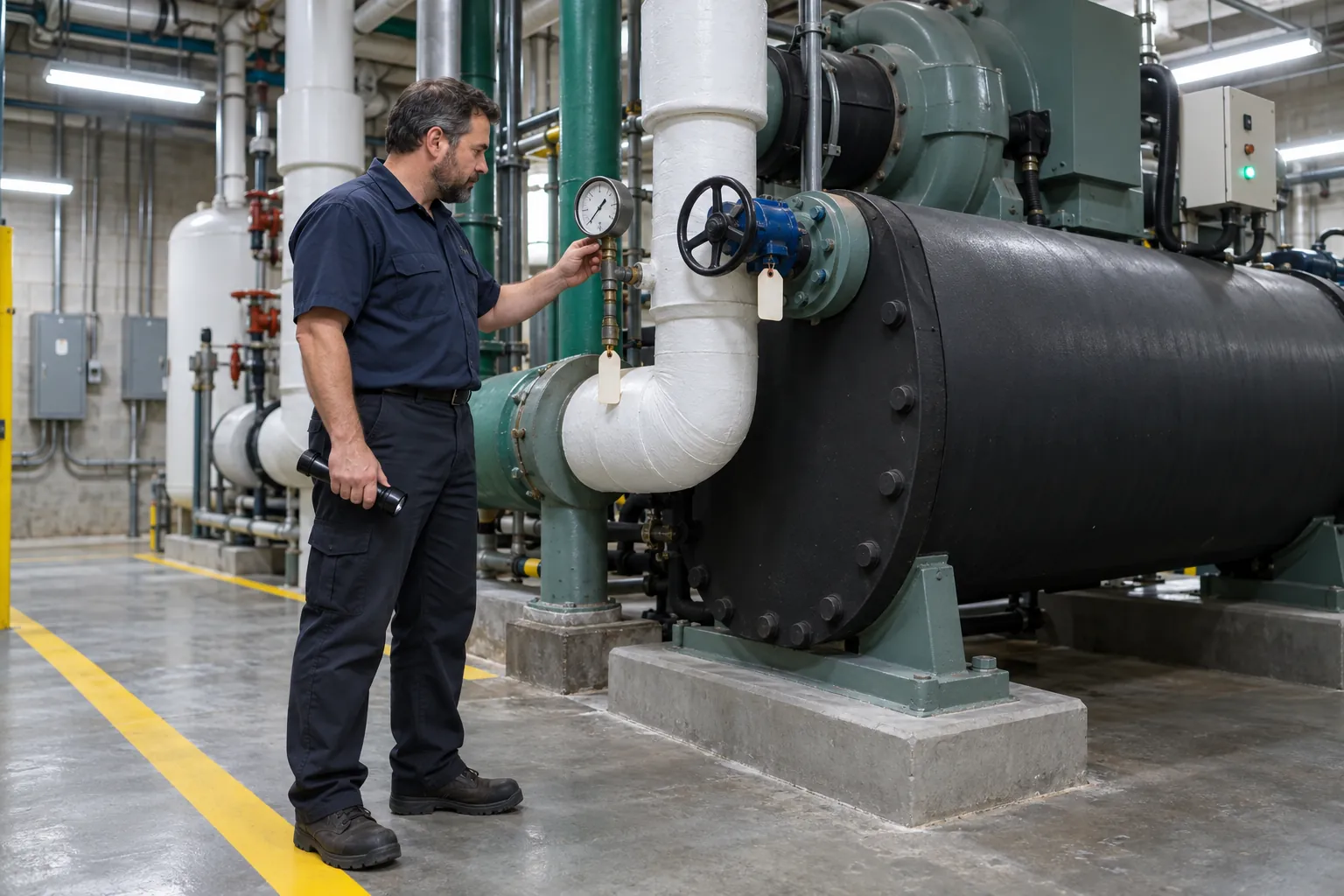 Premises and facilities managementBuilding engineer duties: what the job covers, and how to show it is doneBuilding engineer duties in a commercial building: running the plant, rounds and logs, lockout, refrigerant and boiler rules, vendors, and a record that holds up.
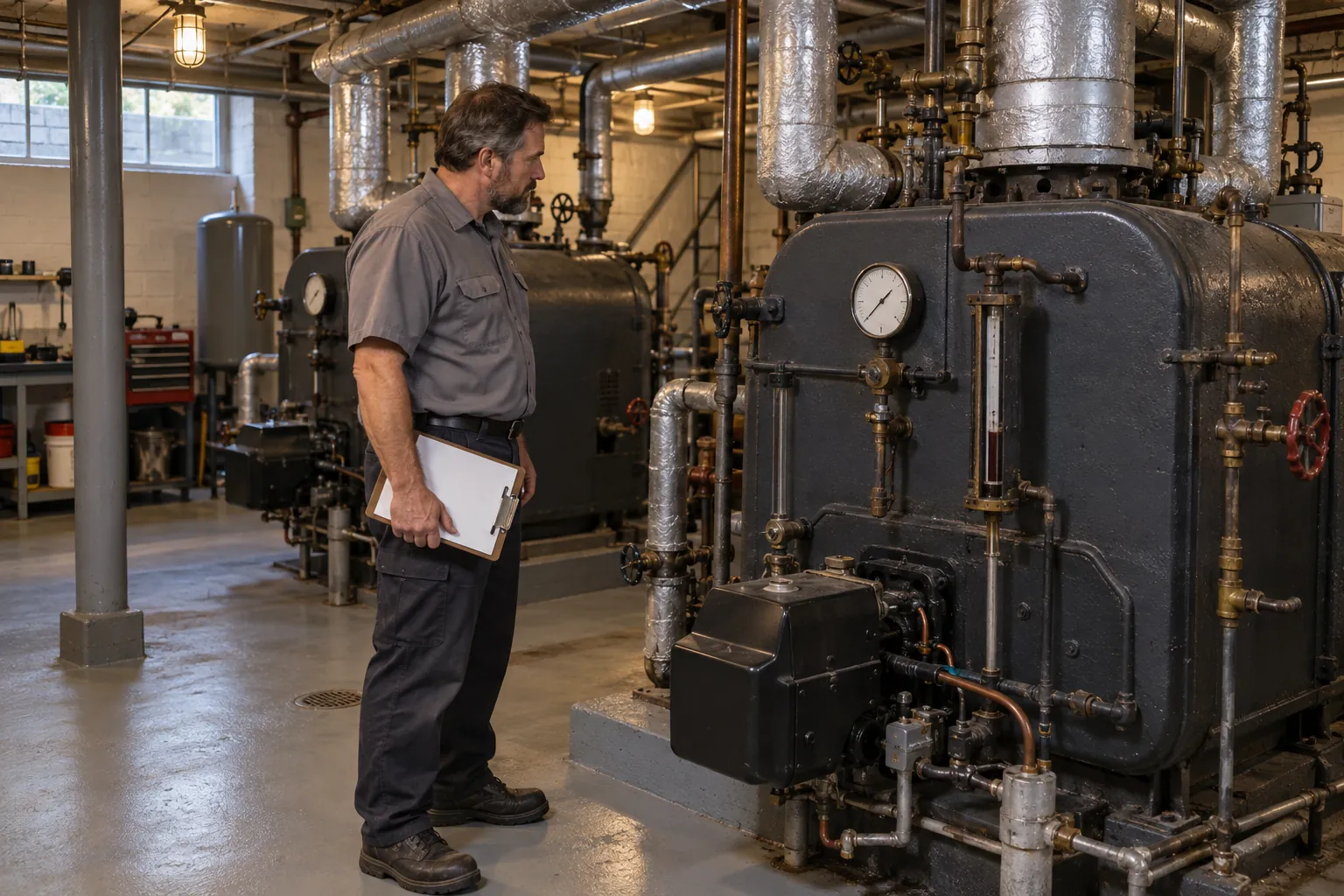 Premises and facilities managementBoiler log: what to record, how often, and what the state expectsWhat a boiler log should record, how often to take readings and test the low-water cutoff, what state boiler rules and ASME CSD-1 expect, and where logs fail.
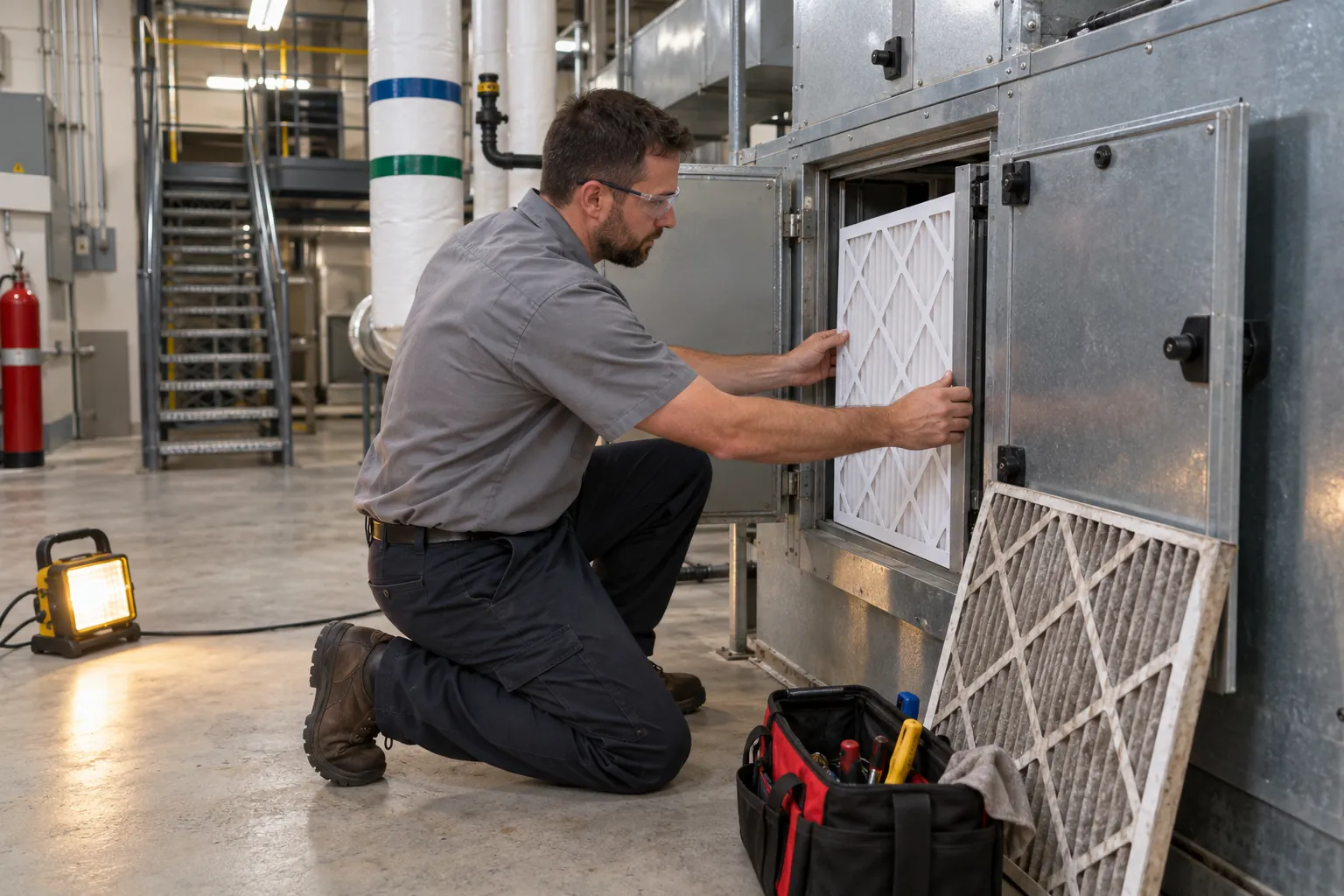 Premises and facilities managementPreventive maintenance checklist: what to check in a commercial building, how often, and how to prove itA preventive maintenance checklist for commercial buildings: HVAC, electrical, fire and life safety, plumbing, how often, and what the record should show.
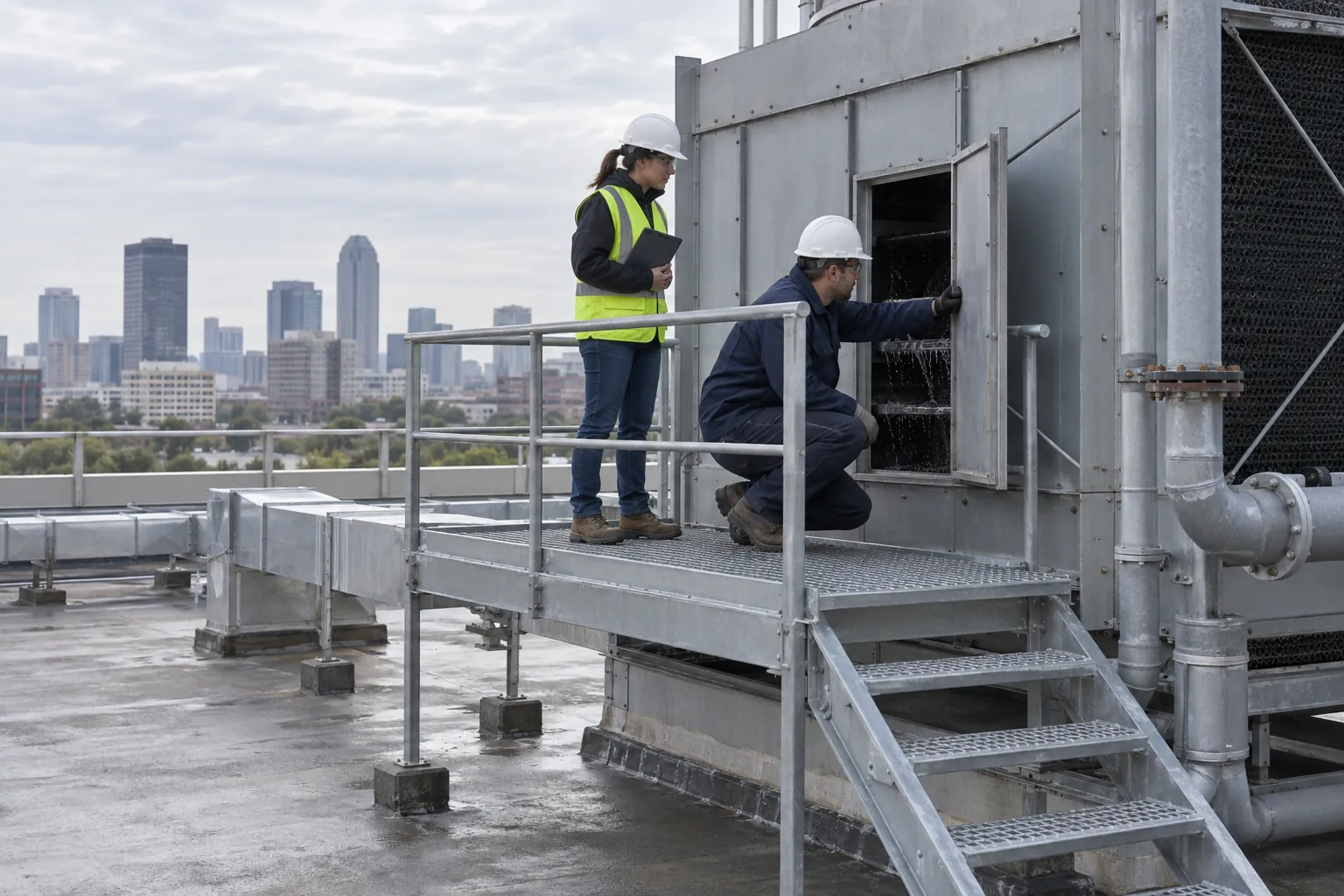 Fire and water checksCooling tower inspection: the weekly checks, the 90-day inspection, and a record that holds upCooling tower inspection in the US: weekly checks, the 90-day compliance inspection under NYC rules, Legionella sampling, cleaning, and a record that holds up.