Premises and facilities management
The California Facility Inspection Tool: what good repair means, and how to keep a school there between inspections
The Facility Inspection Tool (FIT) is the school facility inspection and evaluation instrument that California's Office of Public School Construction developed to determine whether a public school is clean, safe and functional, or in "good repair," under Education Code section 17002.
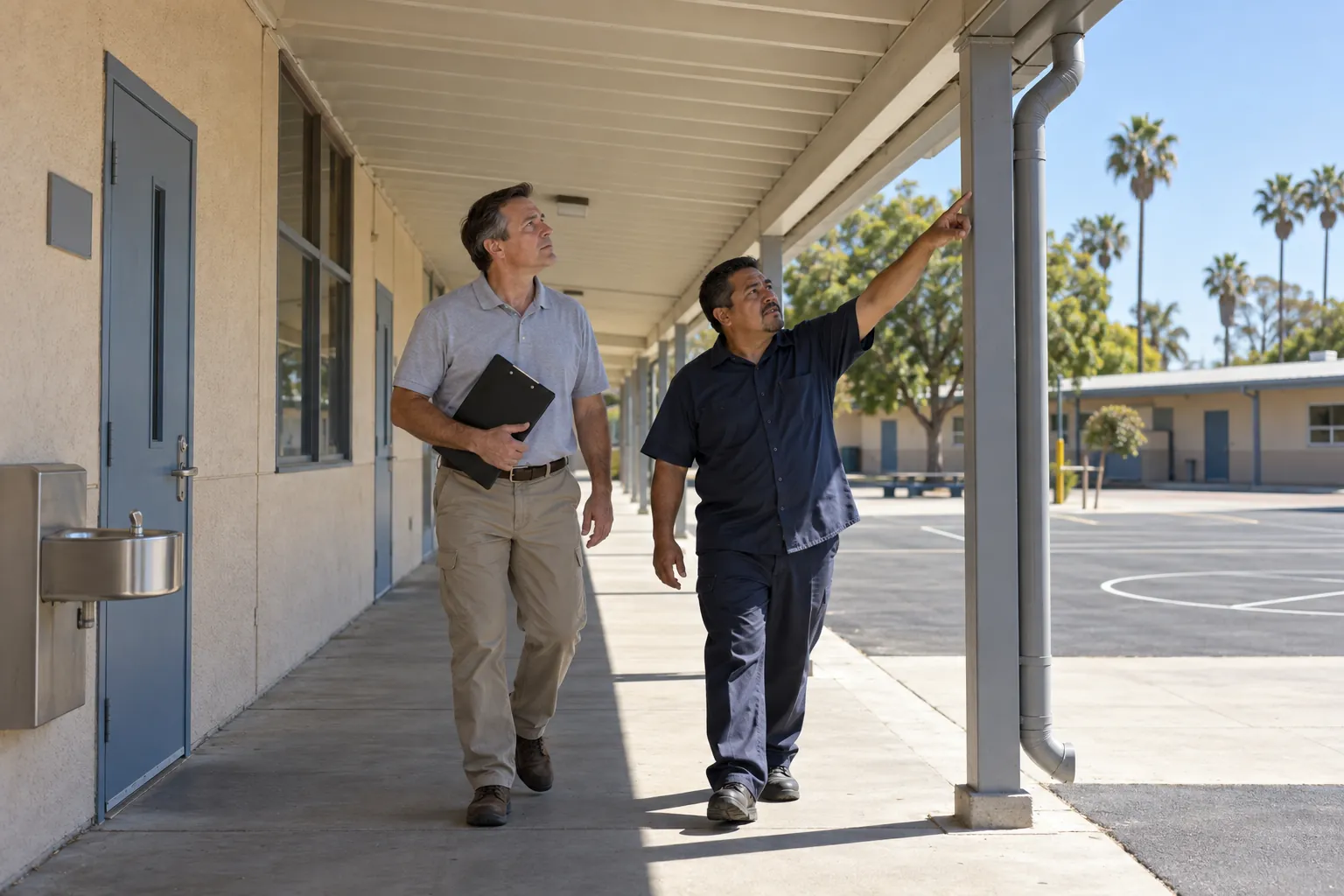
It is a California rule, not a national one. For district maintenance and operations teams, site custodians, principals and the contractors who work for them, it turns a vague duty into nineteen plain conditions, from gas lines to restrooms to graffiti. This guide covers what the law says, what the tool looks at, who inspects and how often, and what a record that holds up to a county visit or a complaint looks like.
01
What the Facility Inspection Tool is, and where the duty comes from
California law defines a school in good repair in one sentence. Under California Education Code section 17002, subdivision (d), "good repair" means the facility is maintained in a manner that assures that it is "clean, safe, and functional as determined pursuant to a school facility inspection and evaluation instrument developed by the Office of Public School Construction and approved by the board or a local evaluation instrument that meets the same criteria." The board is the State Allocation Board. The instrument the Office of Public School Construction (OPSC) developed is what districts call the Facility Inspection Tool, or FIT.
Three points in that definition matter in practice:
- A district may use its own instrument if it meets the same criteria. The legal test is the criteria, not the form.
- The tool measures condition, not design. The instrument "shall not require capital enhancements beyond the standards to which the facility was designed and constructed." An old classroom wing is not failing for lacking what a new one has; it is failing if its doors do not lock or its heating does not work.
- It rates rather than passes or fails: each item "good," "fair" or "poor," and the whole school "exemplary," "good," "fair" or "poor."
Several other sections of the Education Code borrow that definition. Education Code section 17070.75 requires a district that takes state money under the School Facility Program to keep each project "at all times maintained in good repair, working order, and condition," and, in subdivision (f), to "establish a facilities inspection system to ensure that each of its schools is maintained in good repair." The school accountability report card rules in Education Code section 33126 require the report card to cover the "safety, cleanliness, and adequacy of school facilities, including any needed maintenance to ensure good repair." And the county superintendent's visits under Education Code section 1240 check both the condition of facilities and the accuracy of what the report card says about them.
Taken together, these sections mean that a California public school's physical condition is not a private matter for the maintenance department: it is inspected, rated, published on the report card and open to complaint.
02
What the FIT covers: the nineteen good repair conditions
Section 17002(d)(1) lists the conditions the instrument must evaluate. In the statute's order, and in plain terms, a school in good repair has:
- Gas systems and pipes that "appear and smell safe, functional, and free of leaks."
- Mechanical systems, including heating, ventilation and air conditioning, that are functional and unobstructed, appear to supply enough air to every classroom and work space, and keep indoor temperatures within normally acceptable ranges.
- Doors and windows that are intact and open, close and lock as designed, unless there is a valid reason they should not.
- Fences and gates that are intact and secure, with their hardware working.
- Interior surfaces (walls, floors, ceilings) without tears, holes, missing tiles, damaged carpet, water damage or signs of mold or mildew.
- Hazardous materials stored properly, with no peeling paint or other signs of hazardous materials or mold.
- Structural components with no visible damage, and no sloping or sagging beyond the design.
- Fire safety: in the statute's words, "Fire sprinklers, fire extinguishers, emergency alarm systems, and all emergency equipment and systems appear to be functioning properly. Fire alarm pull stations are clearly visible. Fire extinguishers are current and placed in all required areas, including every classroom and assembly area. Emergency exits are clearly marked and unobstructed."
- Electrical systems that are safe, enclosed and guarded from pupils.
- Lighting that is adequate and working, without flickering or dimming.
- No pests: "No visible or odorous indicators of pest or vermin infestation are evident."
- Drinking fountains that work, with adequate water pressure and clear water.
- Restrooms and fixtures that are functional, "appear to be maintained and stocked with supplies regularly," appear to be accessible to pupils during the school day, and appear to comply with Education Code section 35292.5.
- Sanitary sewer systems that work, without odors.
- Roofs and gutters that work and show no visible damage.
- Drainage without flooded areas or signs of water damage.
- Playground equipment and exterior fixtures, seating and tables that are "functional and free of significant cracks, trip hazards, holes, deterioration that affects functionality or safety, and other health and safety hazards."
- School grounds, fields, walkways and parking lot surfaces free of the same kinds of hazards.
- Overall cleanliness, which the statute sets out in full: all areas "appear to have been cleaned regularly and are free of accumulated refuse and unabated graffiti. Restrooms, drinking fountains, and food preparation or serving areas appear to have been cleaned each day that the school is in session."
Most of these items are building systems that need a technician or a contractor to fix. A handful, especially restrooms, drinking fountains, graffiti, refuse and food areas, are made or lost by the custodial routine every school day. A school can pass on its systems and still rate poorly because the restrooms were not stocked on the afternoon the inspector walked in.
03
Who inspects, and how often
Section 17070.75(f) requires a facilities inspection system but does not set a frequency for the district's own inspections. That is for the district to decide and write down. What the law does fix is the outside check. Under California Education Code section 1240, the county superintendent of schools must inspect the schools on a list the State Superintendent of Public Instruction draws up, including charter schools: those most recently identified for comprehensive or additional targeted support and improvement under the federal Every Student Succeeds Act, and those where 15 percent or more of the teachers hold a permit or other authorization that is a lesser certification than a preliminary or clear California teaching credential. The visits "shall be conducted at least annually," with at least 25 percent of them unannounced in each county. The priority is to find any facility condition that "poses an emergency or urgent threat to the health or safety of pupils or staff" and to check whether the school accountability report card is accurate about facilities and good repair.
Inside a district, the inspection usually falls to a small number of roles:
- The maintenance and operations (M&O) department, which owns the inspection system, trains inspectors and turns findings into work orders.
- The site custodian or head custodian, who walks the building every day and knows which roof drain backs up and which restroom door sticks.
- The principal or site administrator, who answers for the result on the report card and at a county visit.
- Contractors: janitorial providers where custodial work is outsourced, and the trades who fix what the inspection finds.
A workable pattern has three layers. A formal FIT walk of every room and exterior area at each school, at an interval the district sets and early enough to feed the report card. Short, frequent condition checks by custodial and site staff on the items that change daily: restrooms, fountains, food areas, graffiti, refuse, exit routes, lighting. And a check after events that change conditions quickly, such as a storm, a break-in, a heat wave or a large community event on campus. The formal walk shows where the school stands on one day; the frequent checks keep it there on the others, including, at a school on the county's list, the day its visitors arrive unannounced.
04
What a good FIT record looks like
A rating on its own does not help anyone fix anything. Each deficiency on a FIT should be specific enough that a technician who has never been to the school can find it and know what to do. For each finding, record:
- Where: the building and room number, or the exterior area, not just "B wing."
- Which condition it falls under, from the nineteen above.
- What was seen, in a few plain words: "two ceiling tiles water stained above the sink," not "interior surfaces fair."
- A photo where it helps, especially for water damage, graffiti, trip hazards and anything that will be disputed later.
- The rating for that item, and who inspected and when.
- The work order it became, the date it was completed, and who confirmed it.
Separate the urgent from the routine. Education Code section 17592.72, subdivision (c), describes emergency facilities needs as structures or systems in a condition that poses a threat to the health and safety of pupils or staff, and lists examples including gas leaks; nonfunctioning heating, ventilation, fire sprinkler or air conditioning systems; electrical power failure; major sewer line stoppage; major pest or vermin infestation; broken windows or exterior doors or gates that will not lock and that pose a security risk; abatement of hazardous materials previously undiscovered that pose an immediate threat to pupils or staff; and structural damage creating a hazardous or uninhabitable condition. It excludes cosmetic or nonessential repairs. A condition like that is not something to write on a form and leave for the next work order batch: it needs to reach the person who can make it safe that day.
05
How conditions are checked from outside: complaints, county visits and restrooms
Good repair is tested by three routes other than the district's own walk.
Complaints. Under Education Code section 35186, anyone can complain about a facilities condition that poses "an emergency or urgent threat to the health or safety of pupils or staff." A notice must be posted in each classroom saying, among other things, that "School facilities must be clean, safe, and maintained in good repair," and where to get a complaint form. The district must remedy a valid complaint "within a reasonable time period but not to exceed 30 working days from the date the complaint was received," and report summarized data on the nature and resolution of complaints each quarter to the county superintendent and the governing board. Thirty working days is a ceiling, not a target: a gas smell or a broken exterior door cannot wait that long.
County visits. Under section 1240, if the county superintendent finds a facility that poses an emergency or urgent threat, or is not in good repair as defined in section 17002(d), and the district has not provided evidence of successful repairs within 30 days of the visit (or, for major projects, evidence that the repairs will be done in a timely manner), the county superintendent may prepare a report documenting it. That report must be posted on the county superintendent's website until the repairs are verified.
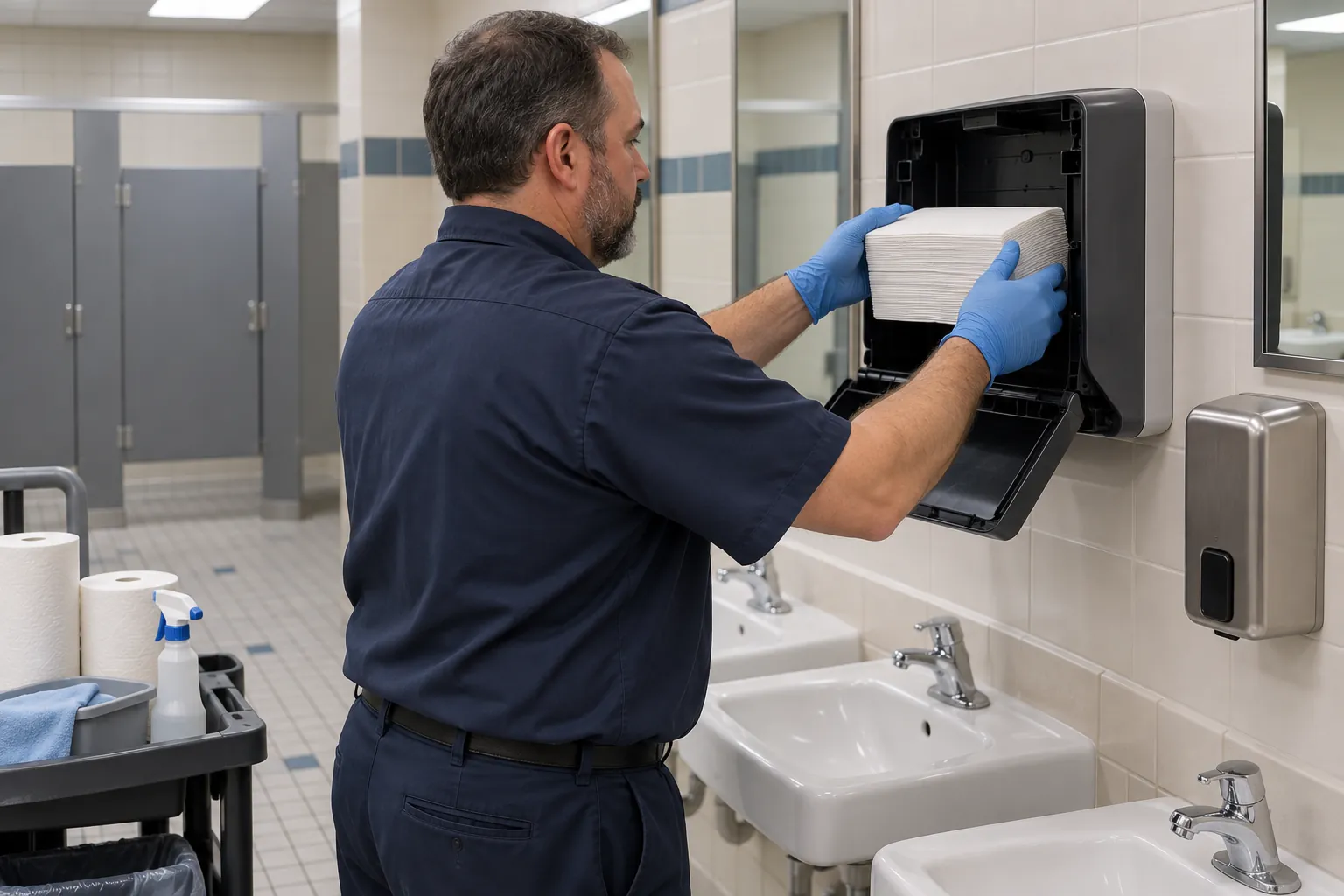
Restrooms. Restrooms are named twice, once in the good repair conditions and once in their own statute. Education Code section 35292.5 requires that "every restroom shall at all times be maintained and cleaned regularly, fully operational, and stocked at all times with toilet paper, soap, and paper towels or functional hand dryers," and that schools keep all restrooms open during school hours when pupils are not in class, and enough of them open during class time. A restroom may be closed temporarily only for pupil safety or for repairs. By July 1, 2026, the same section requires each school district, county office of education and charter school maintaining any of grades 1 to 12 to provide at least one all-gender restroom for pupil use at each schoolsite that had more than one female and more than one male restroom for pupils (not counting transitional kindergarten or kindergarten restrooms), and to designate a staff member as a point of contact.
That makes the restroom the one part of the FIT where the standard is "at all times," not "on the day of the inspection." A frequent restroom round, with a way to report an empty dispenser or a blocked toilet as soon as it is seen, protects the rating more than any other single routine.
06
Where the record fails, and what SiteClara does about it
The FIT itself is rarely the problem. The problem is the gap between inspections. A school rated good in the fall can have a restroom without soap for a week in February, a fire exit blocked by stacked chairs after a concert, and a drinking fountain that nobody reported because nobody knew whom to tell. The custodial log on the closet door was initialed in advance for the week. A teacher mentioned the leak to whoever was passing. When the complaint arrives, the district has a good rating on paper and nothing to show what happened in between.
SiteClara puts a printed QR poster at each location that matters, such as a restroom, a drinking fountain bank, a cafeteria serving area, a fire exit or a portable classroom, with an optional NFC tag. Custodians and site staff scan the code or tap the tag on their own phone, with no app to install, and sign in with a link. They see the checks due at that location and mark each one done, with a photo when one is asked for, or say what stopped them, such as a locked door. A fault found there, such as an empty dispenser, a leaking fixture or a flickering light, is reported on the spot with a photo and goes onto the team's list of jobs until someone closes it.
The supervisor sees what is due, done and missed, and can record why a check was missed. A job the team cannot fix, such as a roof leak that needs a contractor, can be escalated to the building manager to answer. Each day the supervisor reviews and approves a report that goes to nominated management or client contacts at 8 a.m. the next morning, showing what was reported, completed and still open, and how the scheduled checks went, for example 14 of 15 completed. Over a school year, the site has a dated account of who checked each restroom and exit, what they found and when it was put right, which is the evidence a FIT rating and a complaint response both lean on.
07
Questions people ask
Where can I get the Facility Inspection Tool as a PDF or Excel file?
The Office of Public School Construction publishes it on the OPSC forms page listing the Facility Inspection Tool, in two versions: a PDF document and a macro-enabled Excel workbook (.xlsm), both approved by the State Allocation Board on April 27, 2022. Download it from that page rather than reusing an old copy, so your inspections use the approved version.
Is there still a web-based version of the FIT?
No. The OPSC forms page for the Facility Inspection Tool says that, effective March 13, 2025, the web-based form is no longer available. The PDF and Excel versions are still listed on the same page.
Does a school district have to use the state's FIT form?
Not the form itself. Education Code section 17002, subdivision (d), allows "a local evaluation instrument that meets the same criteria." Whichever instrument a district uses rates each item "good," "fair" or "poor," gives the school an overall rating of "exemplary," "good," "fair" or "poor," and cannot require capital enhancements beyond the standards to which the facility was designed and constructed.
08
Where to read the law, and a list to take away
Every section cited here is on the Legislature's own site, starting with Education Code section 17002 for good repair and the instrument. The Office of Public School Construction, part of the California Department of General Services, publishes the Facility Inspection Tool and its instructions: use its current version, and ask your county office of education how the county runs its visits.
Before your next FIT walk, or your next county visit, check that:
- the district's facilities inspection system is written down: who inspects, how often and with which instrument;
- each finding names the room, the condition and what was seen, with a photo where it helps;
- every deficiency becomes a work order, and the completion date is recorded against the finding;
- anything that fits the emergency facilities needs in section 17592.72 reaches someone who can make it safe the same day;
- restrooms, drinking fountains and food areas are checked and cleaned each school day, and restrooms are stocked at all times;
- the section 35186 complaint notice is posted in every classroom, and complaints are logged, remedied within 30 working days and reported quarterly;
- the facilities section of the school accountability report card matches what the latest inspection found.
Sources
Every document this guide quotes or links to, in the order it first cites them.
- California Education Code section 17002 leginfo.legislature.ca.gov
- Education Code section 17070.75 leginfo.legislature.ca.gov
- School accountability report card rules in Education Code section 33126 leginfo.legislature.ca.gov
- California Education Code section 1240 leginfo.legislature.ca.gov
- Education Code section 17592.72 leginfo.legislature.ca.gov
- Education Code section 35186 leginfo.legislature.ca.gov
- Education Code section 35292.5 leginfo.legislature.ca.gov
- The OPSC forms page listing the Facility Inspection Tool dgs.ca.gov
Related guides
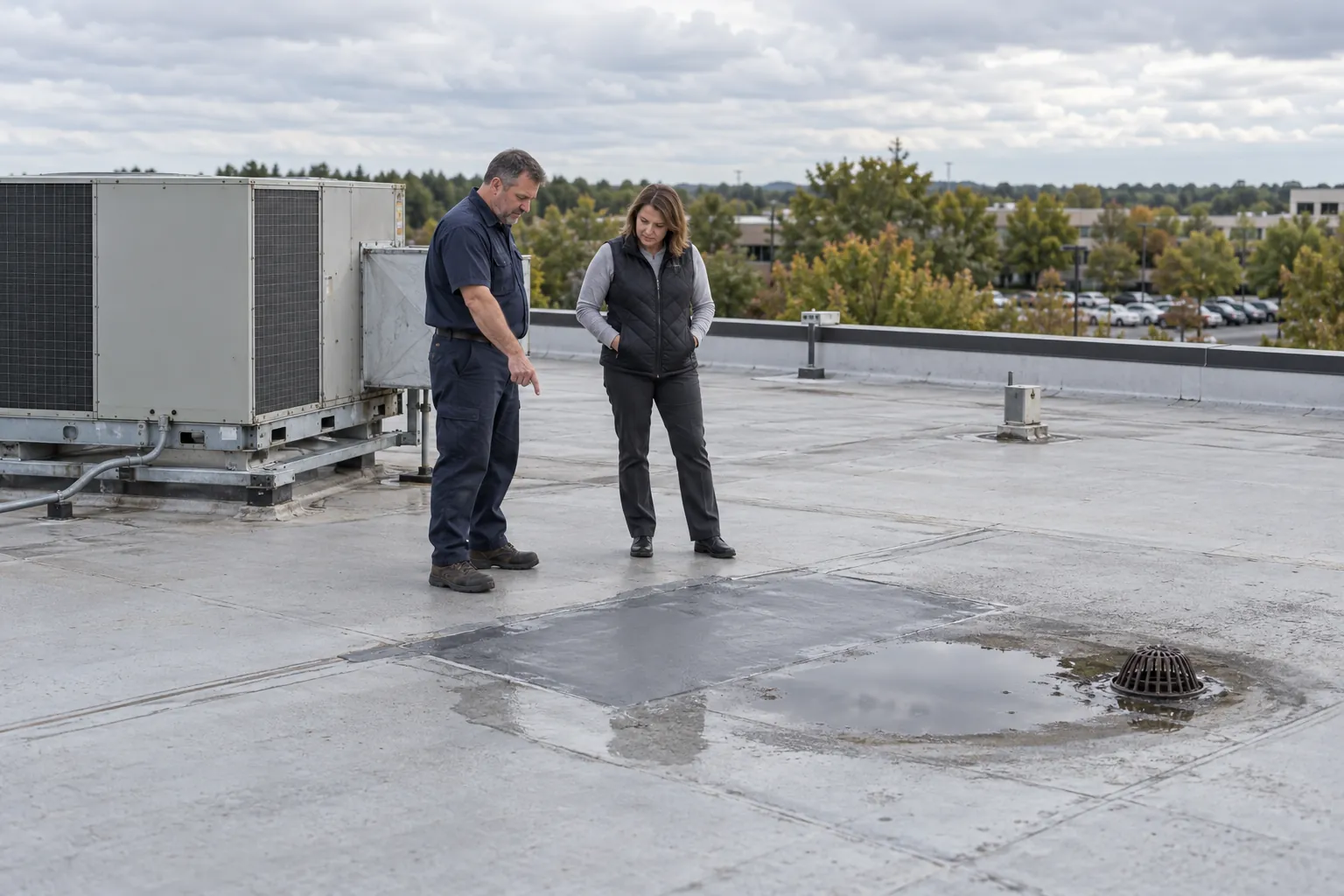 Premises and facilities managementDeferred maintenance: what it is, how to measure the backlog, and what cannot waitWhat deferred maintenance means under FASAB, GASB and APPA, how a backlog and FCI are measured, what OSHA says cannot wait, and how to keep the backlog honest.
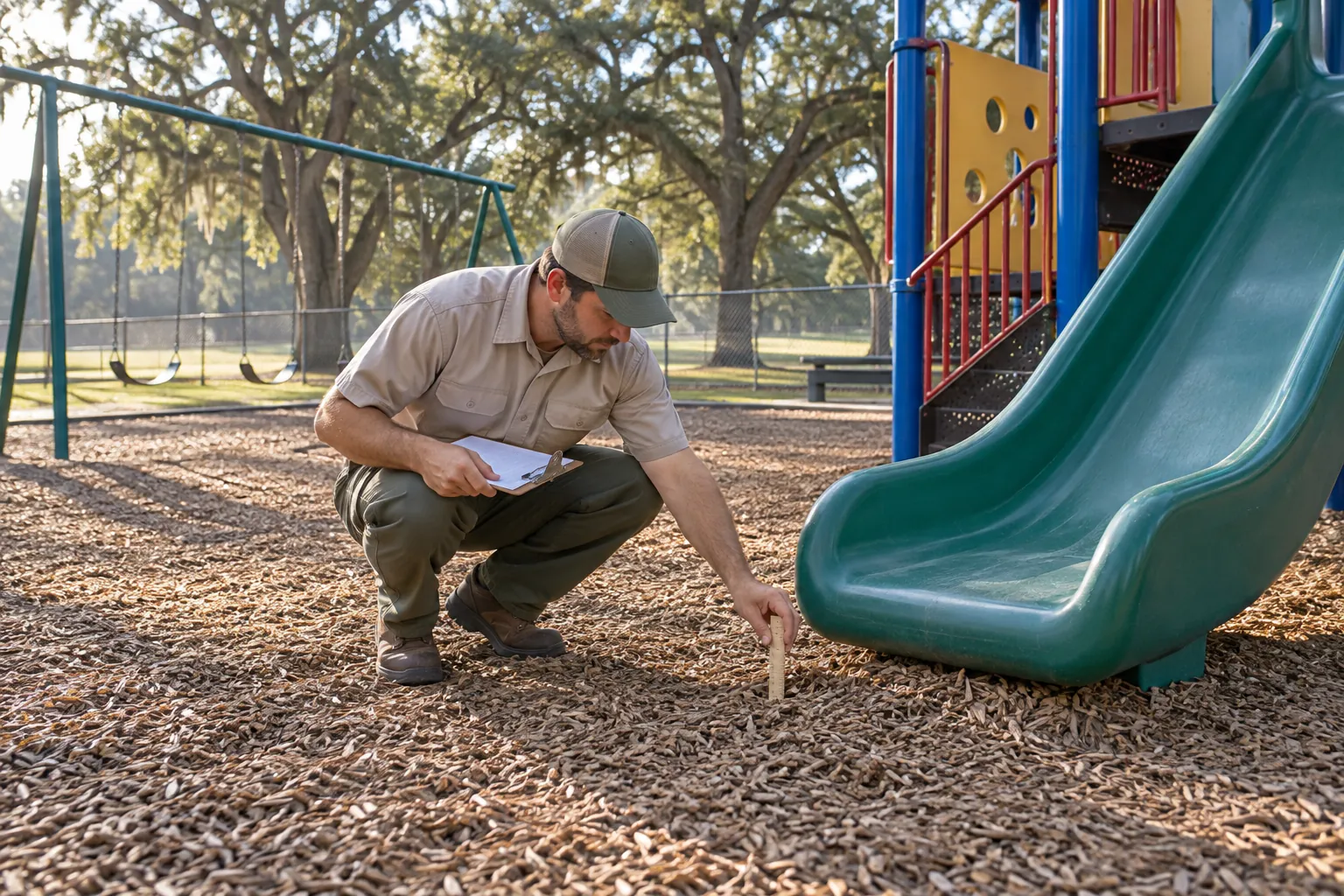 Premises and facilities managementPlayground inspection checklist: keeping public play equipment safe between the big inspectionsA playground inspection checklist for US schools, parks, child care centers and HOAs: the CPSC Handbook, ASTM F1487, surfacing, hazards, frequency and records.
 Premises and facilities managementBuilding maintenance checklist: what the code expects, how often to check, and who does itA building maintenance checklist for US commercial buildings, built on the International Property Maintenance Code: daily to annual tasks, who does each, the record.
 CleaningSchool cleaning checklist: what custodians clean, how often, and how to show it was doneA school cleaning checklist for classrooms, restrooms, hallways, the cafeteria, gym and nurse's office: daily, weekly and summer tasks, the rules and the record.