Fire and water checks
Fire alarm trouble signals: what they mean and what to do
A fire alarm trouble signal means the fire alarm control panel has detected a fault in the fire alarm system itself, such as a broken circuit, a power or battery failure or a lost connection to the monitoring company, rather than a fire.
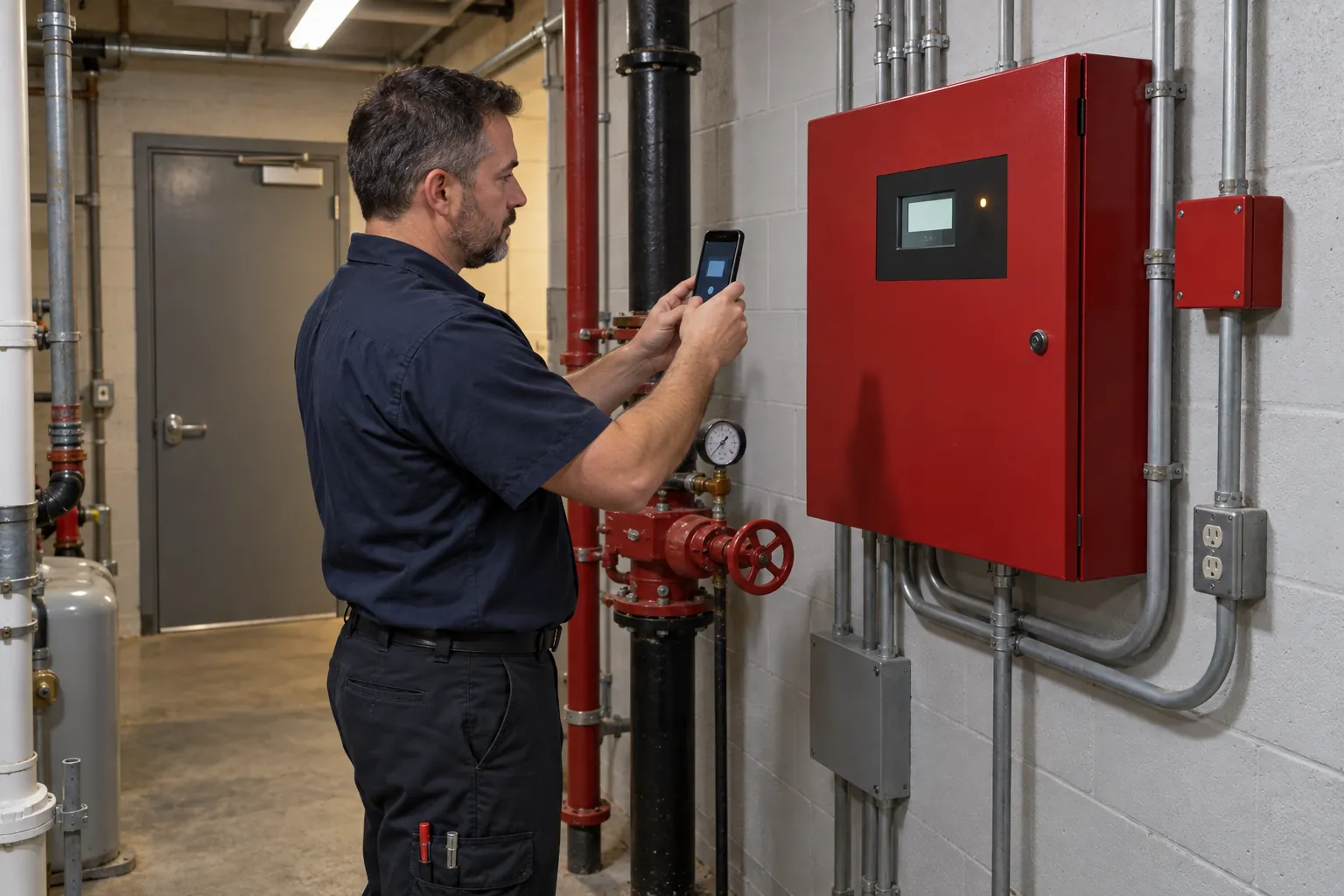
It is not an emergency, which is exactly why trouble lights get ignored, but a system with a fault may not report a real fire. This guide covers what a trouble signal is and how it differs from a supervisory signal, what usually causes one, what building staff should do at the panel, when a fault turns into an out-of-service system under the fire code, and what the building's trouble log should show.
01
What a trouble signal is, and whose problem it is
A fire alarm control unit, the box most people call the fire alarm panel, can show three conditions besides normal. NFPA's A Guide to Fire Alarm Basics names them as alarm, supervisory and trouble, and defines the last one plainly: "A trouble condition means there is an issue or fault with the fire alarm system. An example would be a break in an initiating device circuit." A supervisory condition is something else: it "means there is an issue with a system, process, or equipment that is monitored by the fire alarm control unit," such as a closed sprinkler valve. In short, supervisory means something the alarm watches over is wrong; trouble means the alarm itself may not work as designed.
Nothing is burning, but a broken circuit or a dead battery can mean a real fire goes unreported. The question is whether anyone writes it down and gets it fixed.
The technical rules are in NFPA 72, National Fire Alarm and Signaling Code, which is a standard, not a law, until your state or city adopts it through its fire code, usually with amendments. The fire marshal or fire code official who enforces that code, the authority having jurisdiction (AHJ), decides which edition applies. The duty sits with the owner. NFPA's column Fire alarm system roles and responsibilities quotes Chapter 14 of the 2019 edition: the "property or building or system owner or the owner's designated representative shall be responsible for inspection, testing, and maintenance of the system," and adds that the work can be delegated, "but it remains the owner's responsibility to ensure the system is maintained in a reliable condition."
02
What usually sets off a trouble signal
The panel's display, or the remote annunciator at the lobby desk, normally names the condition and, on an addressable system, the device. NFPA's guide to supervision explains that addressable devices report a unique address, which "allows for the location to be identified" at the panel; an older conventional system may show only a zone. The usual families of trouble are:
- Power. The panel runs on primary power, usually from the utility, with batteries as the usual secondary supply. NFPA's guide to fire alarm power supplies says batteries must run the whole system for 24 hours in standby and then 5 minutes in alarm (15 for an emergency voice alarm communication system). A tripped breaker, a long outage or a failing battery shows as trouble.
- Wiring faults. NFPA's example, a break in an initiating device circuit, is an open circuit. A ground fault is another; Portland Fire & Rescue's Fire Alarm System – Testing and Maintenance Report lists ground-fault monitoring among the panel functions the contractor checks.
- Devices removed or disabled. The same Portland report asks, for each kind of device, whether there is "Proper TROUBLE notification at FACP once devices are rendered inoperable." A detector head taken off its base during a tenant build-out or a module disconnected by another trade should show as trouble: the system working, and a gap in coverage until the device is back.
- The link to the supervising station. The Portland report asks whether the monitoring agency "Receives Proper Annunciation of Alarm, Supervisory and Trouble Signals," so the monitoring company should see your trouble signals too.
- Connected systems. A kitchen hood suppression system or a releasing panel may report to the building panel; which of its signals show as trouble and which as supervisory depends on how the panel was programmed. Ask your contractor.
03
What to do when the panel shows trouble
Most trouble signals are found by whoever walks past the panel: the building engineer on the morning round, a security officer at the lobby desk, a day porter who hears the buzzer in the riser room. They need a short written routine, in the post orders or the engineer's round.
- Read the display and write it down. Note the time, the condition, and the device, circuit or zone exactly as shown. A photo of the display helps.
- Acknowledge only as your procedure allows. Silencing the trouble sounder quiets the buzzer; the fault is still there. Do not reset, disable or bypass anything unless trained and authorized: OSHA's 1910.165(d)(5) requires servicing and testing to be done "by persons trained in the designed operation and functions" of the system.
- Check the obvious, safely. Is a contractor testing today? Has there been a power outage or electrical work? Is another trade working in the area the display names?
- Call the monitoring company. Ask what they received and when. NFPA's guide to off-premises signaling and supervising stations explains that central station service, listed to UL 827, can include "record keeping and reporting, testing services, and runner service," while a remote supervising station contract is "typically limited to the monitoring and recording of signals." With remote service, nobody comes unless you call.
- Call the fire alarm contractor. Read them the panel text, get a service ticket or reference number and an arrival time, and record both.
- Tell the owner, or whoever the owner has named. In New York City this is written into the New York City Fire Code, Chapter 9, Fire Protection Systems (2022 edition): FC 901.7.4 says any person "upon becoming aware of any condition" rendering a fire alarm system inoperable "in whole or in part, shall notify the owner and the impairment coordinator."
- Decide whether any part of the system is out of service. A detector off its base in a vacant suite is different from a panel on its last hour of battery. If protection is lost where people are, treat it as an impairment (see the next section) without waiting for the contractor.
- Record the clearance. Note when the panel returned to normal, who cleared it and the cause. A trouble entry without a cleared time is an open fault.
04
When a trouble signal means the system is out of service
Fire codes deal with lost protection in the section on systems out of service, numbered 901.7 in the International Fire Code and in state and city codes that keep its numbering. The California Fire Code (2022) text, as reproduced by the state's Department of Health Care Access and Information in Code Application Notice CAN 9-901.7, Fire Watch, reads: "Where a required fire protection system is out of service, the fire department and the fire code official shall be notified immediately and, where required by the fire code official, the building shall either be evacuated or an approved fire watch shall be provided" until the system is back in service.
How that works varies by jurisdiction. Three published examples:
- New York City (Fire Code 2022, FC 901.7). The owner designates an impairment coordinator, or is one. The FDNY must be told when a fire alarm system is out of service on more than one floor, or for "8 hours or more in any 24-hour period or 30 hours or more (consecutive or non-consecutive) in any month." Fire guards patrol each affected area at least once an hour; trained building staff may stand the watch for the first 4 hours where the area is 50,000 square feet or less. The record is kept on the premises for at least 48 hours after the watch.
- Seattle. The Seattle Fire Department's Client Assistance Memo 5991, Fire Watch and Out of Service Fire Protection Systems (updated June 2022) requires a fire watch whenever a fire protection system is out of service, subject to the exceptions it lists, patrols the whole building when the fire alarm is impaired, and visits all applicable areas "at least once every 15 minutes." The Fire Department is notified if the outage is expected to last eight hours or more, and excessive nuisance alarms can also bring a fire watch order.
- California hospitals. HCAI's notice asks for patrols "at least once each hour unless otherwise specified," a logbook on the premises, the log sent in for each 24-hour period, and termination only in writing: "Verbal Termination Authorizations are not permitted."
Hourly in one city is every 15 minutes in another. Find out your own AHJ's rules, write them into the building's procedure, and know who will stand a fire watch before the night you need one; the fire watch guide covers the patrol and its log.
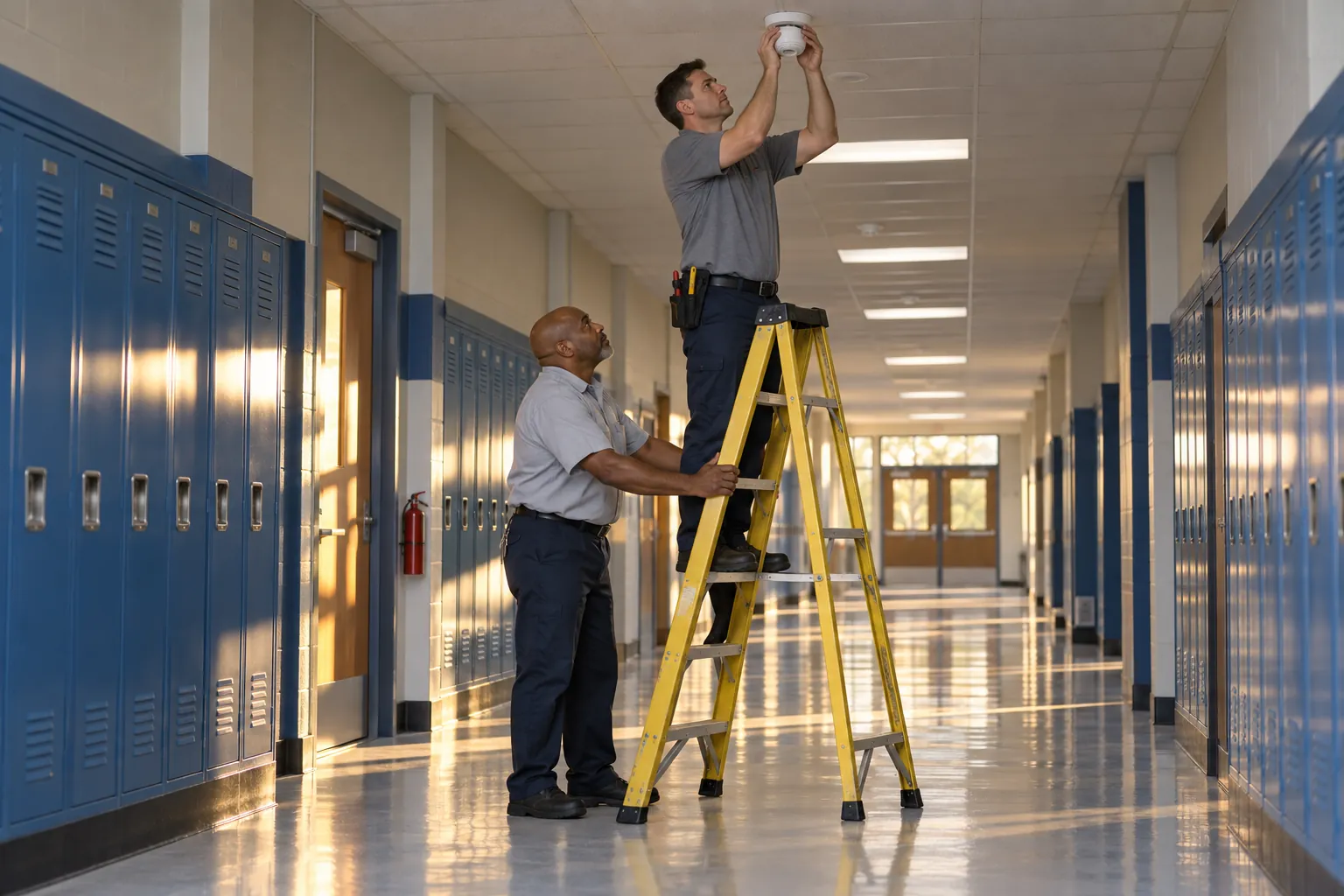
Restoring the system is a step of its own. New York City's FC 901.7.6 lists it: test to confirm the affected systems work, notify the department, tell the owner, central station, insurance carrier, emergency preparedness staff and, if they were told earlier, the occupants in the affected areas, then remove the out-of-service tags.
05
The trouble log, and getting faults fixed
The contractor's inspection and test reports are the formal record, and codes require them to be kept; New York City's FC 901.6.2 covers records of all inspections, tests, servicing and other maintenance. Between visits, the building's own trouble log is where a fault gets owned or lost. A useful entry shows:
- the date and time the trouble was first seen, and by whom;
- the panel text, word for word, with the device, circuit or zone;
- who was called, when, and the reference number;
- whether any part of the system was treated as out of service, and if so when the fire department was told and when the fire watch started and ended;
- when the panel returned to normal, who cleared it, and the cause;
- any follow-up: a part on order, a return visit scheduled, a device to replace.
Getting faults fixed is a duty too. California's Title 19, section 904.2(d), quoted in the HCAI notice, says "The building or system owner shall insure immediate correction of any deficiencies noted during the service." In Texas, the State Fire Marshal's Office explains in its SFMO frequently asked questions that yellow labels on a fire alarm system identify "noncompliant issues that might impact the fire alarm system's ability to respond quickly and function properly when needed," including a "lack of required testing or maintenance of the system."
Two habits make the log work:
- A check at the start of every shift. Someone looks at the panel and records "normal" or what it shows, and that nothing is stacked in front of the panel or annunciator.
- Looking for patterns. The same detector or circuit showing trouble again and again points to a cause the contractor can find. Hand them the log before the annual test; the fire alarm testing guide covers the test itself.
06
Where the record fails, and what SiteClara does about it
The failure is rarely the trouble signal; it is what happens next. The amber light that glowed for three weeks because each shift assumed the last had called it in. The buzzer silenced at 2 a.m. with no note, so the morning engineer never knew. The contractor told "it's the third floor again" with no dates and no panel text. And a property manager with a portfolio has no way of knowing which panels were looked at this week without calling around.
SiteClara records the in-house checks where they happen. A printed QR poster, with an optional NFC tag behind it, sits at each place a check is scheduled, such as the fire alarm panel or the lobby annunciator. Building staff or security officers scan the code or tap the tag on their own phone, with no app to install, see the checks due there, such as the start-of-shift panel check, and mark each one done or say what stopped them, such as a locked panel room. The time and the named person are recorded as it happens, with a photo when one is asked for, for example of the panel display. A problem, such as a trouble signal, is reported there with a photo and goes onto the team's list of jobs until someone closes it.
The supervisor sees what is due, done and missed across the building or portfolio, and can record the reason a check was missed. A job that needs the building manager can be escalated to them to answer. Each day the supervisor reviews and approves a report that goes to nominated management or client contacts at 8 a.m. the next morning, showing what was reported, completed and still open, and how the scheduled checks went, for example 3 of 3 panel checks completed.
07
Questions people ask
What does trouble mean on a fire alarm system?
It means the fire alarm system has a fault of its own. NFPA's A Guide to Fire Alarm Basics says "A trouble condition means there is an issue or fault with the fire alarm system," gives "a break in an initiating device circuit" as the example, and adds that it "would show up as a trouble signal on the control unit." It is not a fire, but the fault should be logged and fixed.
What is the difference between a supervisory and a trouble signal?
A trouble signal is about the fire alarm system; a supervisory signal is about something the system watches. In NFPA's A Guide to Fire Alarm Basics, a supervisory condition "means there is an issue with a system, process, or equipment that is monitored by the fire alarm control unit," such as "a sprinkler system valve being closed." An alarm condition is the third kind, "an immediate threat to life, property, or mission," such as a smoke detector sensing smoke.
What are the common problems with fire alarm systems?
The problems that show as trouble are mostly wiring, power and devices. NFPA's A Guide to Fire Alarm Basics gives a break in an initiating device circuit as its example, and NFPA's guide to fire alarm power supplies explains that batteries or a generator provide "backup power if primary power is lost," and that batteries must run the system for 24 hours in standby and then 5 minutes in alarm. The panel display names the condition; your fire alarm contractor finds the cause.
How can you tell if a fire alarm system is malfunctioning?
A supervised system tells you: the panel shows trouble. Where OSHA's 29 CFR 1910.165, Employee alarm systems applies, paragraph (d)(4) requires alarm circuitry installed after January 1, 1981 that can be supervised to be supervised and to "provide positive notification to assigned personnel whenever a deficiency exists in the system," and (d)(5) requires servicing, maintenance and testing to be done "by persons trained in the designed operation and functions" of the system. Someone still has to look at the panel, which is why a start-of-shift check and regular inspections matter.
08
Further reading, and a list to take away
NFPA's A Guide to Fire Alarm Basics series is the plain-language way in, with articles on supervision, power supplies and supervising stations. The standard is NFPA 72; read Chapter 14 in the edition your AHJ enforces, and 29 CFR 1910.165 if your alarm is used to alert employees or was installed to meet an OSHA standard. For systems out of service, the New York City Fire Code, Chapter 9, Seattle's CAM 5991 and HCAI's CAN 9-901.7 are clear published examples, but only your own fire marshal's office can tell you the rules for your building.
Before the next trouble light, check that:
- someone looks at the panel or annunciator at the start of every shift and records what it shows;
- the people who pass the panel know the difference between alarm, supervisory and trouble, and what to do about each;
- you know whether your monitoring is central station or remote, and whether anyone is dispatched for trouble signals;
- you know your AHJ's rules for a system out of service: who is notified, when, and how a fire watch is stood and recorded;
- every trouble entry has a cleared time and a cause, and repeat faults go to the contractor with dates.
Sources
Every document this guide quotes or links to, in the order it first cites them.
- A Guide to Fire Alarm Basics nfpa.org
- NFPA 72, National Fire Alarm and Signaling Code nfpa.org
- Fire alarm system roles and responsibilities nfpa.org
- 29 CFR 1910.165, Employee alarm systems osha.gov
- Guide to supervision nfpa.org
- Guide to fire alarm power supplies nfpa.org
- Fire Alarm System – Testing and Maintenance Report portland.gov
- Guide to off-premises signaling and supervising stations nfpa.org
- New York City Fire Code, Chapter 9, Fire Protection Systems nyc.gov
- Code Application Notice CAN 9-901.7, Fire Watch hcai.ca.gov
- Client Assistance Memo 5991, Fire Watch and Out of Service Fire Protection Systems seattle.gov
- SFMO frequently asked questions tdi.texas.gov
Related guides
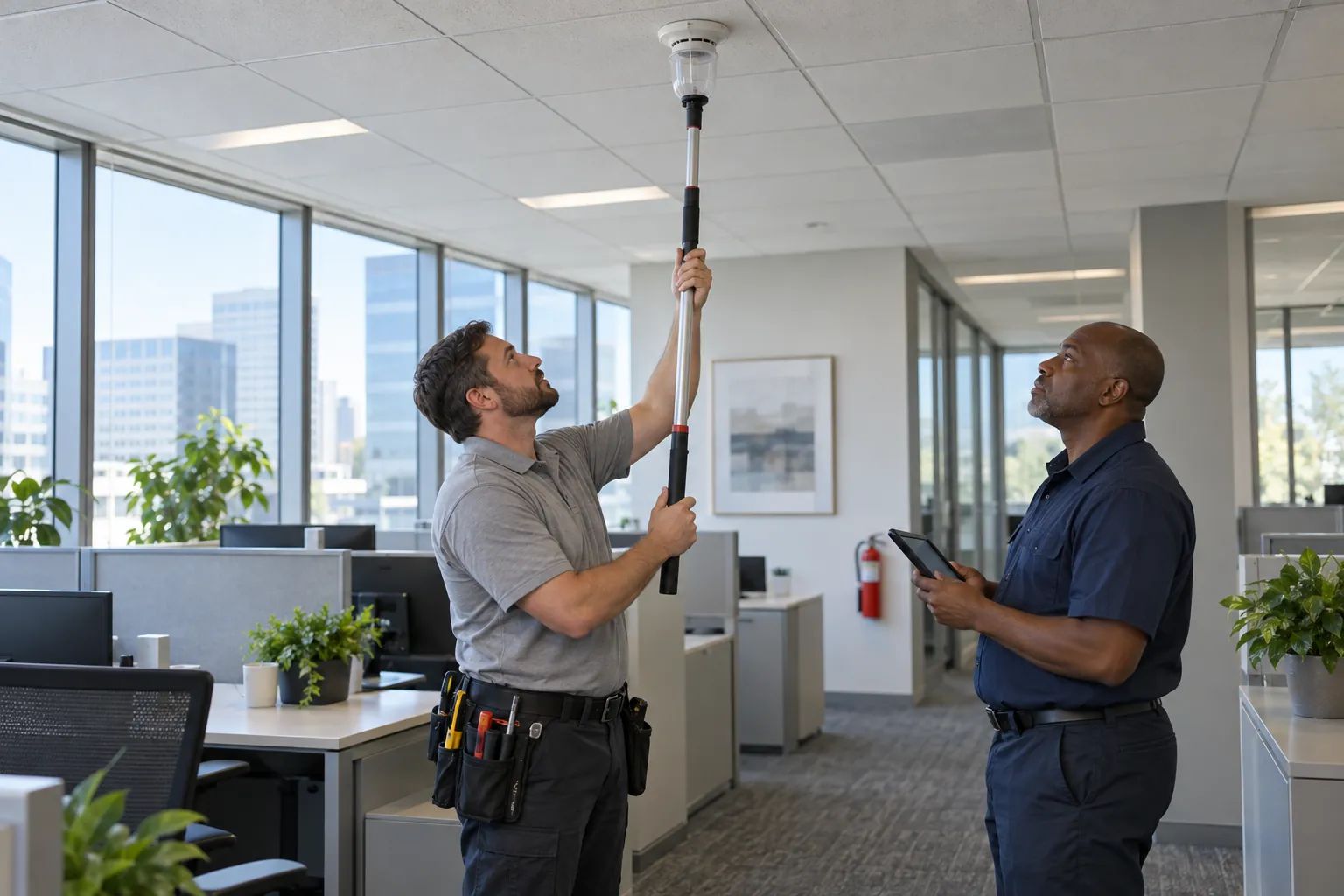 Fire and water checksFire alarm testing: who does what, and what the record should showFire alarm testing in the US: what NFPA 72 and OSHA ask of the owner, what gets tested, how to run a test day, and what the building's own record should show.
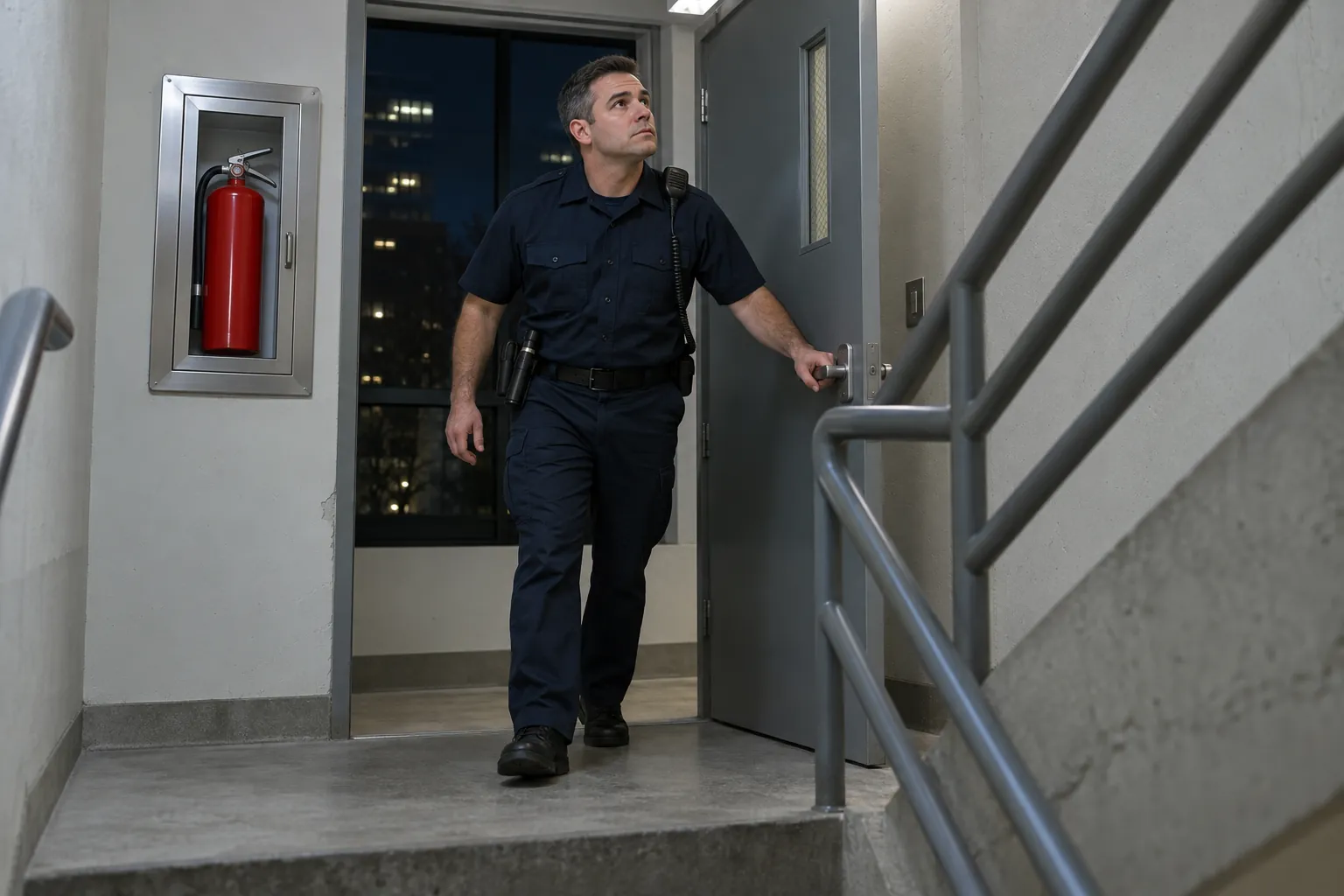 Fire and water checksFire watch logs: patrolling a building while its fire protection is out of serviceWhen a fire watch is required under IFC 901.7 and NFPA 25, who can stand it, how often to patrol, and what a fire watch log should show the fire marshal.
 Fire and water checksFire sprinkler inspection: what NFPA 25 asks of the buildingWhat a sprinkler system inspection involves under NFPA 25, who does the weekly, monthly and annual checks, how impairments work, and what the record should show.
 Fire and water checksFire inspection checklist: what the fire marshal looks at, and how to be readyA fire inspection checklist for US businesses: what the fire marshal checks, the records to have ready, who prepares what, and how to stay ready between visits.