Premises and facilities management
HVAC filter change log: what to record, how often, and who signs it
A filter change log is a dated record of every air filter inspection and replacement in a building's HVAC system, showing which unit, which filters, who did the work and what the pressure gauge read before and after.
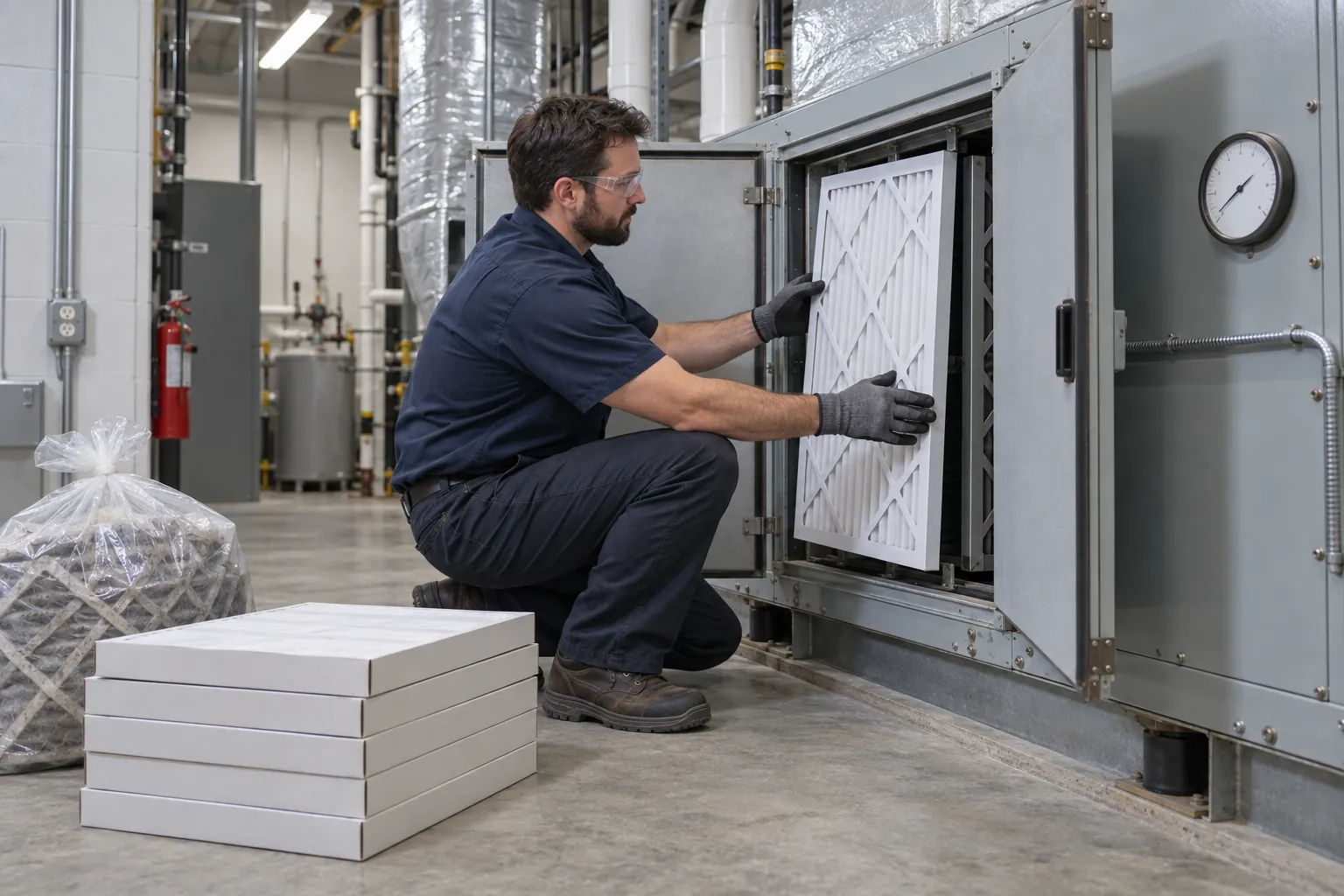
It is the simplest record in the mechanical room and one of the easiest to fill in after the fact. Kept honestly, it protects the equipment, the air and the people who breathe it, and it answers the question an inspector, a client or an accreditation surveyor will ask. This guide covers what the log should hold, how often filters are checked and changed, who does the work, and how the record goes wrong.
01
What an HVAC filter change log is, and which rules ask for one
An HVAC filter change log is a running record, per air handler or per building, of every filter inspection and replacement: the unit, the filters installed, the date, who did the work, and the condition and pressure readings found. It sits inside the preventive maintenance program for the heating, ventilating and air conditioning (HVAC) system.
There is no single federal rule that says "keep a filter log". OSHA's own indoor air quality page is plain about it: "Although OSHA does not have IAQ standards, it does have standards about ventilation and standards on some of the air contaminants that can be involved in IAQ problems." Instead OSHA points to the General Duty Clause, which requires employers to provide workers with a safe workplace that does not have known hazards that cause or are likely to cause death or serious injury. Its booklet Indoor Air Quality in Commercial and Institutional Buildings (OSHA 3430, 2011) includes an HVAC maintenance checklist that asks, for filtration systems, for written maintenance programs, routine inspection and "provision for measuring pressure drops across the filtration system".
The industry standard of care comes from ASHRAE. ASHRAE Standard 180-2018, Standard Practice for Inspection and Maintenance of Commercial Building HVAC Systems, co-sponsored by ACCA, is, in ASHRAE's words from its Standards 180 and 211 fact sheet, "a standard practice for inspecting and maintaining commercial HVAC systems to achieve acceptable thermal comfort, energy efficiency, and indoor air quality". It "defines the tasks needed to meet the required minimum standard" and is written for "facility managers, operations and maintenance staff, and consulting engineers". ANSI/ASHRAE Standard 62.1-2025, Ventilation and Acceptable Indoor Air Quality covers ventilation design and, per ASHRAE, includes requirements for filtration, air cleaning and "building operations and maintenance". Both can be read free in ASHRAE's read-only versions of ASHRAE standards.
An ASHRAE standard is voluntary until something makes it binding: a code your jurisdiction has adopted, a lease, a service contract, a green building certification or the owner's own policy. Check which applies before calling it "required".
In healthcare, the CDC's Guidelines for Environmental Infection Control in Health-Care Facilities (2003) ask facilities to keep HVAC filters "properly installed and maintained to prevent air leakages and dust overloads" (C.I.2.a), to monitor areas with special ventilation requirements for air changes, filtration and pressure differentials, to set a maintenance schedule for them (C.I.2.b and C.I.2.c), and to "Document these parameters, especially the pressure differentials" (C.I.2.d).
02
What goes in a filter change log
A useful log lets someone who was not there see exactly what was done. One line per unit per visit is enough if each line carries:
- The unit: the air handler, rooftop unit, fan coil, unit ventilator or make-up air unit, by the same asset ID used on the equipment list and the drawings, with its location (roof, mechanical room, classroom number).
- The filter bank: each stage (prefilter, final filter), the nominal size, the MERV rating, the type (pleated panel, bag, rigid box) and the number installed.
- The date, the time and the name of the person who did the work, and the contractor's company where it was not in-house staff.
- The pressure drop across each stage before the change and after it, where the unit has a gauge, and the change-out value the filter manufacturer gives.
- What was done: inspected and left, changed, or not done, with the reason (no stock, unit locked out, no access to the roof).
- Condition found: dirt load, damage, wet or moldy media, gaps, missing clips, a crushed or collapsed filter, the wrong size installed.
- Fit and direction: filters seated with no bypass, airflow arrows the right way, frames and racks sound, gauge tubing intact.
- Anything found nearby: a dirty coil, a blocked drain pan, a slipping belt, a damper out of position, water in the plenum.
- The next due date or the next pressure reading that will trigger a change, so an overdue unit shows at a glance.
A free filter change log template, whether a printable sheet or a spreadsheet, will do if it has a column for each of these; one that stops at the date and a signature will not. The date written on the filter frame with a marker is a useful habit, but it is not a log: it says nothing about who, whether the rest of the bank was changed, or what the gauge read. Keep a stock line too, with the sizes and ratings each building uses and how many are on hand, because a change cannot be made from an empty shelf.
03
How often to check and change HVAC filters
There is no one right interval, and anyone who gives a single number for every building is guessing. The U.S. Department of Energy's Federal Energy Management Program O&M Best Practices Guide, Release 3.0, chapter 9, puts it this way: sites should change filters based on "either the pressure drop across the filter, calendar scheduling, or visual inspection", with scheduled intervals "between 1 and 6 months, depending on the dirt loading from indoor and outdoor air". It adds that "Measuring the pressure drop across the filter is the most reliable way to assess filter condition", and that where dirt loading is regular and predictable the readings can be used to set the interval, after which changes can be routinely scheduled.
The same chapter's air handling checklist has a monthly item to "Check filter condition according to system type and manufacturer's recommendations" and an annual one to "Inspect filter rack for integrity. Inspect local pressure differential gauge, tubing, and pilot tubes for condition". The EPA's What is a MERV rating? page gives the plain rule: "All filters require periodic replacement to function properly. Follow the manufacturer's recommendations on maintenance and replacement."
In practice that gives a schedule in three layers:
- A regular check, often monthly, of every unit's gauge and a look at the filter face, logged whether or not the filters are changed.
- A change when the pressure drop reaches the manufacturer's final value, when the filter is visibly loaded or damaged, or when the calendar interval set from past readings comes due, whichever is first.
- An extra check after events that load filters quickly: construction or renovation nearby, wildfire smoke, heavy pollen, a flood or a dust-producing job inside the building.
Units without gauges, such as small rooftop units, fan coils and school unit ventilators, run on the calendar and visual inspection alone, so the log is the only evidence the change happened. Units serving isolation rooms or other special areas in a hospital follow the facility's infection control risk assessment.
A change of filter rating is a design decision, not a maintenance one. The EPA suggests MERV 13 or "as high a rating as your system fan and filter slot can accommodate", and notes that an HVAC technician may be needed to confirm what the system can take. A higher-rated filter adds resistance, so the change-out value on the log should follow the new filter's data, not the old one's.
04
Who changes the filters, and how to do it safely
Filter changes fall to different people in different buildings, and the log should name the role as well as the person:
- The building engineer or chief engineer in a larger office, hospital or campus, usually as part of a weekly or monthly preventive maintenance route in the work order system.
- An HVAC service contractor under a preventive maintenance agreement, on the visits the contract sets, in smaller buildings and retail sites.
- Custodians or maintenance technicians in schools, changing unit ventilator filters room by room, often under the district's IAQ coordinator.
- The facility or property manager, who does not change filters but owns the schedule, the stock and the record, and signs off that the work was done.
The EPA's IAQ Tools for Schools Ventilation Checklist sets out a good routine for anyone changing filters: replace filters per the maintenance schedule, "Shut off ventilation system fans while replacing filters (prevents dirt from blowing downstream)", vacuum the filter area before installing new filters, confirm "proper fit of filters to prevent air from bypassing (flowing around) the air filter", and confirm "correct direction for airflow". The checklist is part of the wider IAQ Tools for Schools Action Kit, and its items translate well to office buildings.
Three OSHA points apply to the job itself:
- Hazardous energy. The lockout/tagout standard, 29 CFR 1910.147, covers servicing and maintenance "in which the unexpected energization or start up of the machines or equipment, or release of stored energy could cause injury to employees". Reaching into an air handler near a fan or belt drive that a building automation system can start is exactly that situation, so follow the site's energy control procedure.
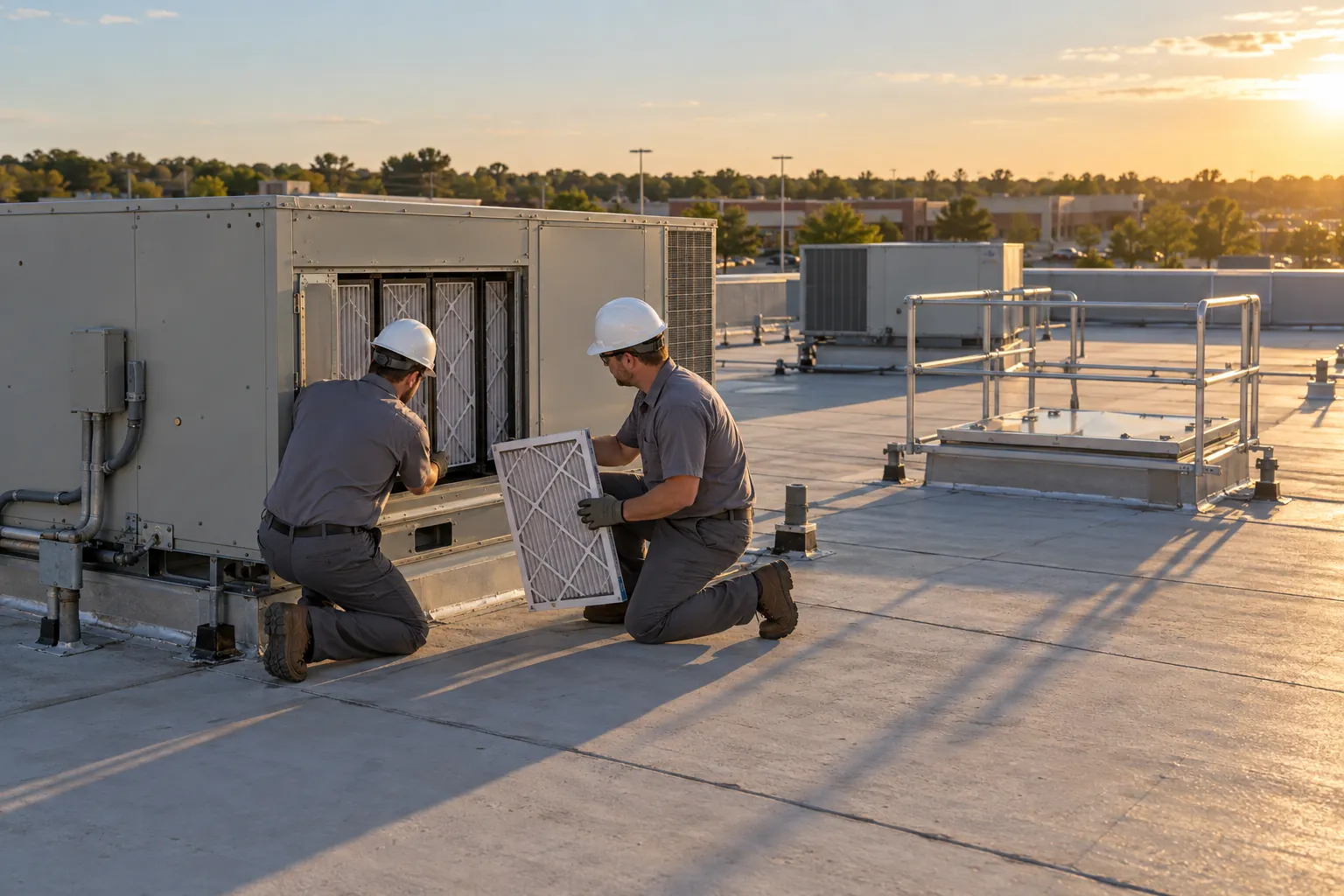
- Protective equipment. Under 29 CFR 1910.132 the employer must assess the workplace for hazards that call for personal protective equipment and certify that assessment in writing. Dust, mold, sharp frames and roof work are the usual reasons for gloves, eye protection and, where the assessment says so, respiratory protection.
- Getting there. Many filters sit on roofs or above ceilings, so ladders, roof edges and hatches are part of the task.
Bag spent filters at the unit. The CDC's recommendation C.I.2.i is to "Bag dust-filled filters immediately upon removal to prevent dispersion of dust and fungal spores during transport within the facility", and the Air section of the CDC Guidelines for Environmental Infection Control in Health-Care Facilities notes they can then go out with routine solid waste.
05
What a good filter log looks like, and how it is checked
A filter log earns its keep when someone reads it. For every unit, a facility manager or chief engineer should be able to track its filter history: when the filters were last checked and replaced, whether the readings make sense, and what was done about anything found. Signs of a log that can be trusted:
- entries made the same day, at the unit, with times that match the route and the day's other work;
- pressure readings that rise between changes and fall after them, rather than the same figure every month;
- a reason written against every missed change, and a later entry showing it was caught up;
- filters drawn from stock that match the changes logged;
- faults found at the filter, such as a wet plenum or a dirty coil, turned into work orders that were closed;
- contractor visit reports that match the log's dates and units.
Spot checks keep it honest: open a panel on a unit the log says was changed last week and look at the filters actually in the rack, the date on the frame and the gauge.
The log is also what outside readers ask for. In California the Division may ask for the section 5142 records and they must be produced within 48 hours; New Jersey's PEOSH standard gives employees and their representatives a right to see the records. An accreditation surveyor, an insurer, a tenant with complaints and a client auditing a facilities contract will all start with the same page, often after something has gone wrong.
Retention follows the strictest rule that applies: at least five years under Cal/OSHA section 5142, at least three years for New Jersey public employers, and whatever your contract, insurer or accreditation body expects beyond that.
06
Where the record fails, and what SiteClara does about it
Filter logs fail in familiar ways. The month's changes are initialed in one sitting at the desk. A contractor's invoice says "filters changed, all units" with no unit list, no readings and no name. The rooftop units are logged as done in January when nobody went up in the snow. A classroom unit ventilator is skipped because the room was locked, and nothing says so. A wet plenum is mentioned to whoever was passing and never reaches the list of jobs.
SiteClara records the checks at the location. A printed QR poster, with an optional NFC tag behind it, sits at each place a check is scheduled, such as a mechanical room door or the access panel of a rooftop unit. Staff scan the code or tap the tag on their own phone, with no app to install, see the checks due there, and mark each one done or say what stopped them, such as no stock or a locked room. The time and the named person are recorded as it happens, with a photo when one is asked for, for example of the new filters in the rack or the gauge reading. A problem, such as a wet filter or a dirty coil, is reported there with a photo and goes onto the team's list of jobs until someone closes it.
The supervisor sees what is due, done and missed, and can record the reason a check was missed. A job that needs the building manager can be escalated to them to answer. Each day the supervisor reviews and approves a report that goes to nominated management or client contacts at 8 a.m. the next morning, showing what was reported, completed and still open, and how the scheduled checks went, for example 5 of 6 filter checks completed.
07
Further reading, and a list to take away
Read the primary sources in the original: section 9.7 of the FEMP O&M Best Practices Guide, Release 3.0 for intervals, appendix C of OSHA 3430 for the HVAC checklist, the EPA Ventilation Checklist for the change routine, and Cal/OSHA section 5142 or the New Jersey PEOSH IAQ Standard where they apply.
Before the next filter round, check that:
- every air handler, rooftop unit, fan coil and unit ventilator is on one list with an ID that matches the equipment;
- each unit's filter sizes, ratings and change-out pressure are written down;
- the interval for each unit is set from readings and the manufacturer's data, with extra checks for construction, smoke and pollen;
- the person changing filters shuts the fans off and follows lockout/tagout where the unit can start;
- spent filters are bagged at the unit;
- each entry carries the date, the time, the name, the readings and what was found;
- every missed change has a reason and a catch-up date;
- someone reads the log each month and records are kept as long as your state and contracts require.
Sources
Every document this guide quotes or links to, in the order it first cites them.
- Indoor air quality page osha.gov
- Indoor Air Quality in Commercial and Institutional Buildings (OSHA 3430, 2011) osha.gov
- Standards 180 and 211 fact sheet ashrae.org
- ANSI/ASHRAE Standard 62.1-2025, Ventilation and Acceptable Indoor Air Quality ashrae.org
- Read-only versions of ASHRAE standards ashrae.org
- Title 8, section 5142, Mechanically Driven HVAC Systems to Provide Minimum Building Ventilation dir.ca.gov
- PEOSH Indoor Air Quality Standard, N.J.A.C. 12:100-13 nj.gov
- Guidelines for Environmental Infection Control in Health-Care Facilities (2003) cdc.gov
- Federal Energy Management Program O&M Best Practices Guide, Release 3.0, chapter 9 www1.eere.energy.gov
- What is a MERV rating? epa.gov
- IAQ Tools for Schools Ventilation Checklist epa.gov
- IAQ Tools for Schools Action Kit epa.gov
- Lockout/tagout standard, 29 CFR 1910.147 osha.gov
- 29 CFR 1910.132 osha.gov
- Air section of the CDC Guidelines for Environmental Infection Control in Health-Care Facilities cdc.gov
Related guides
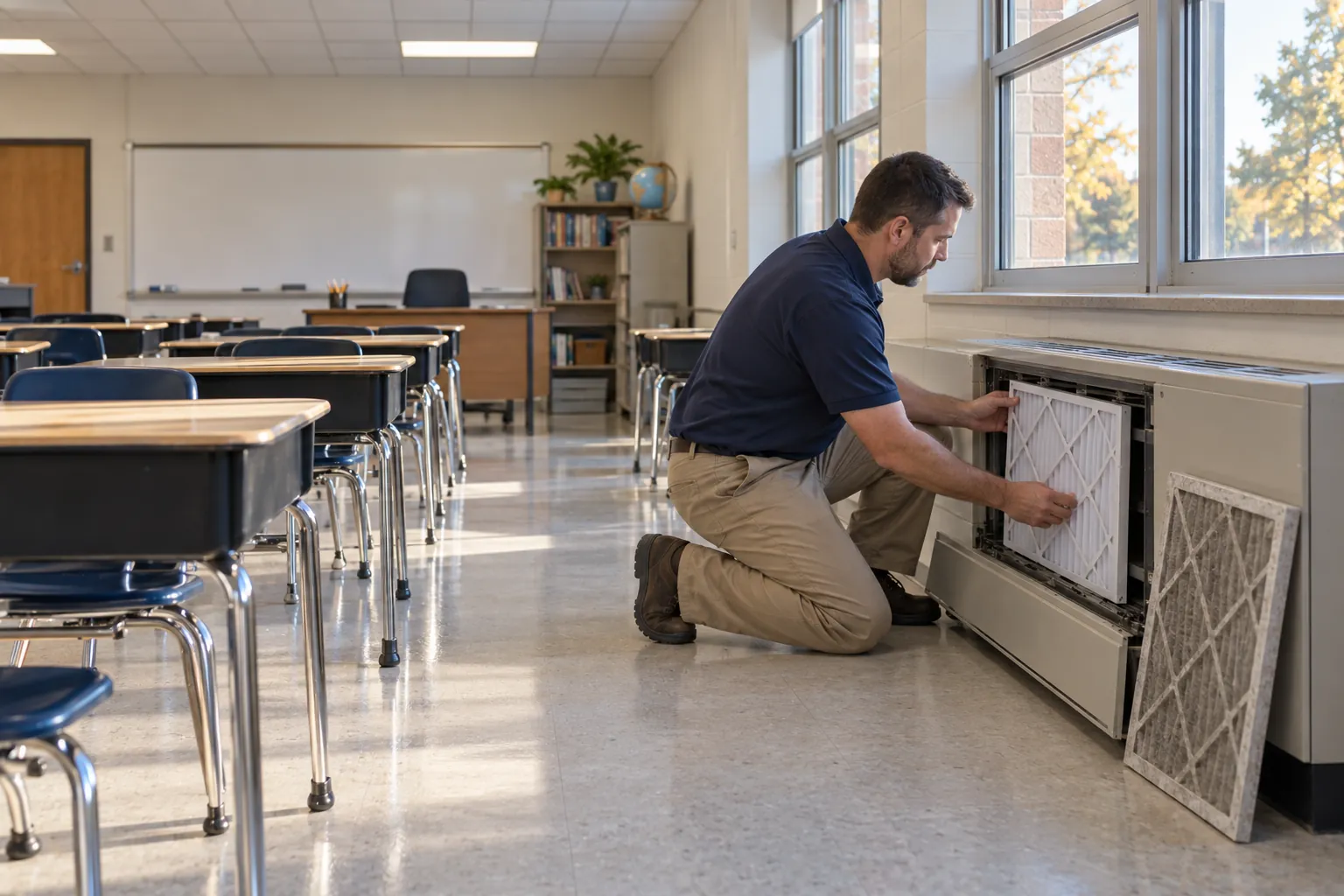 Premises and facilities managementIndoor air quality checks in schools and other buildings: what to check, how often, and what to recordIndoor air quality checks for schools and other buildings: what to check, how often, who does it, and what EPA, OSHA and state rules expect of the record.
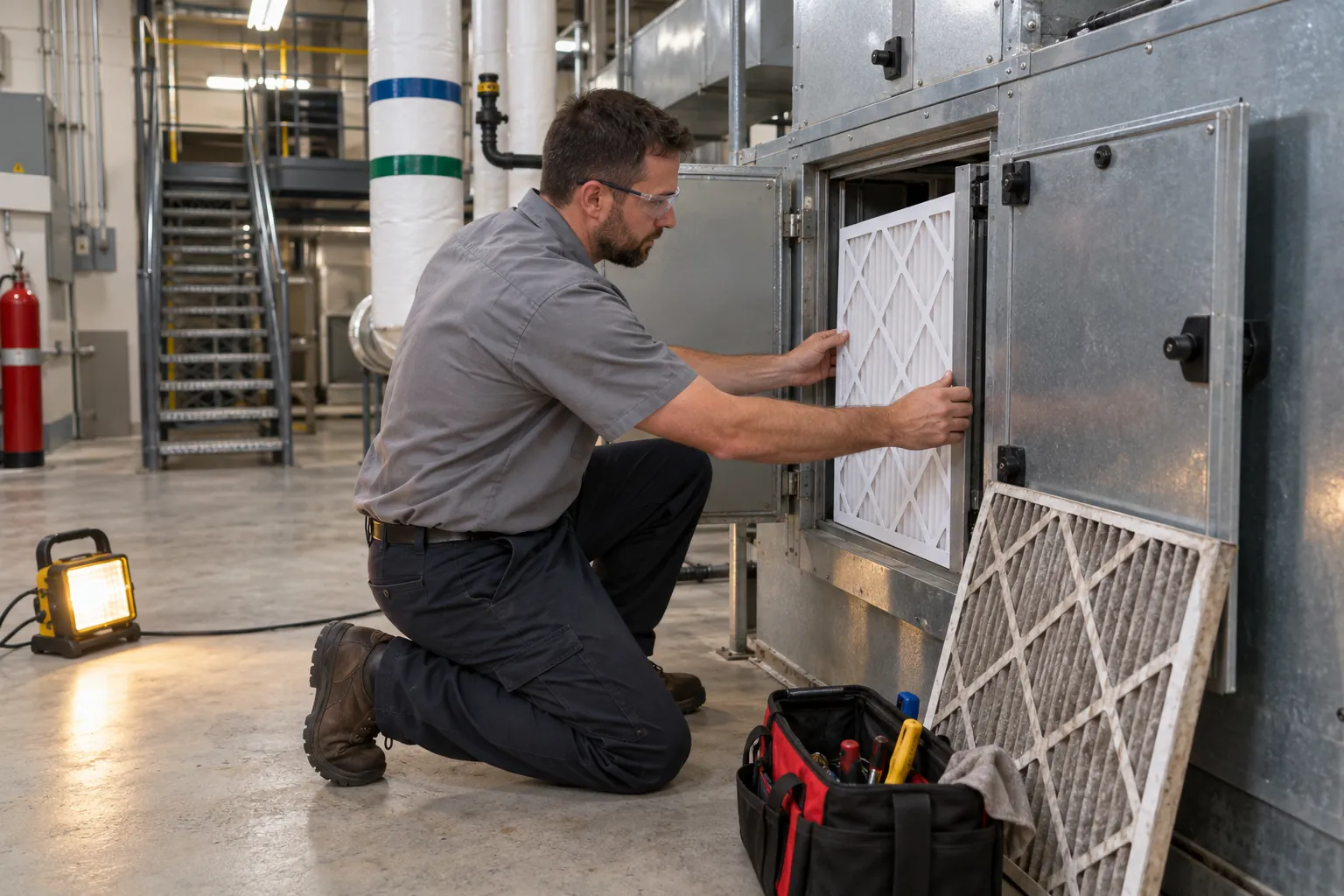 Premises and facilities managementPreventive maintenance checklist: what to check in a commercial building, how often, and how to prove itA preventive maintenance checklist for commercial buildings: HVAC, electrical, fire and life safety, plumbing, how often, and what the record should show.
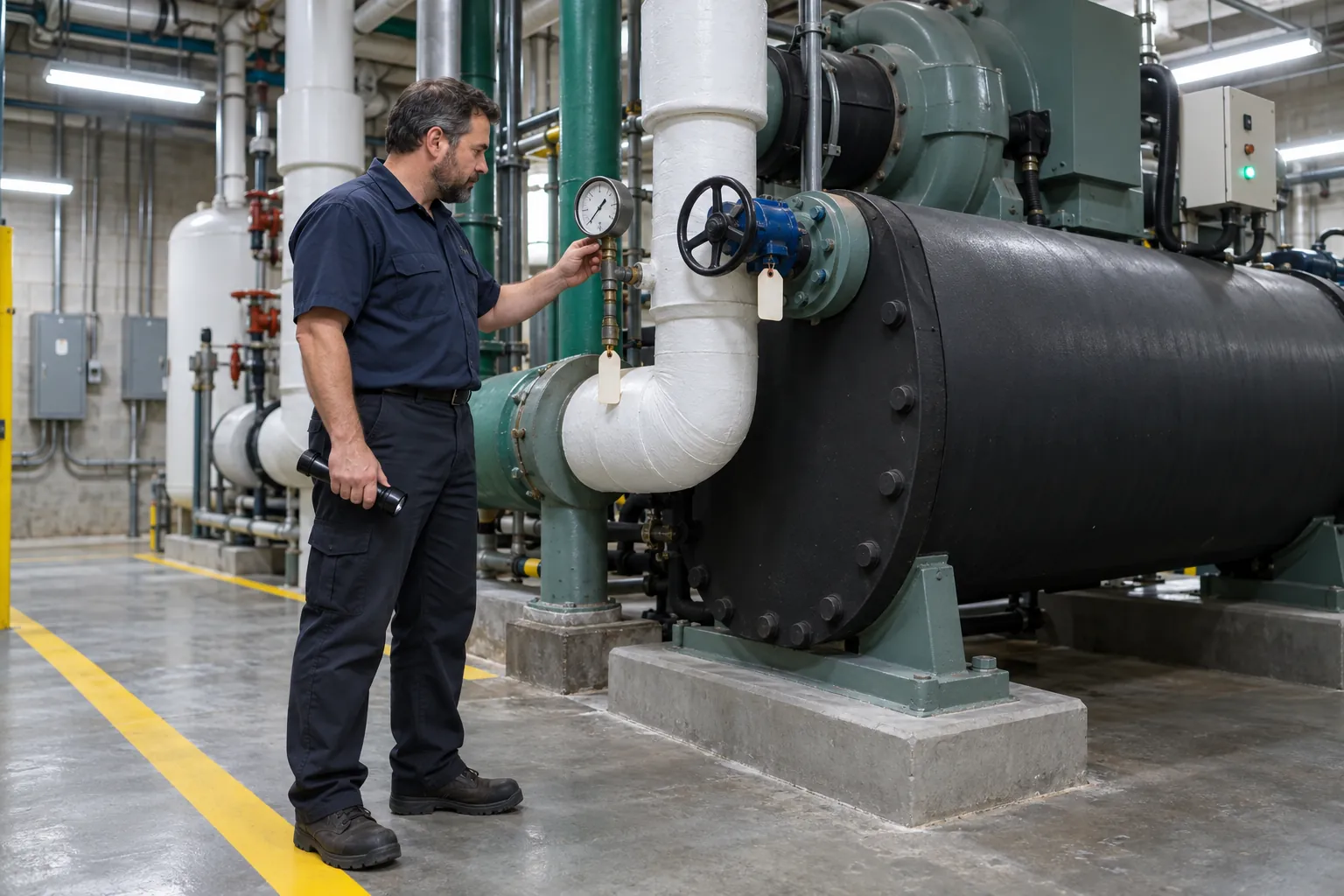 Premises and facilities managementBuilding engineer duties: what the job covers, and how to show it is doneBuilding engineer duties in a commercial building: running the plant, rounds and logs, lockout, refrigerant and boiler rules, vendors, and a record that holds up.
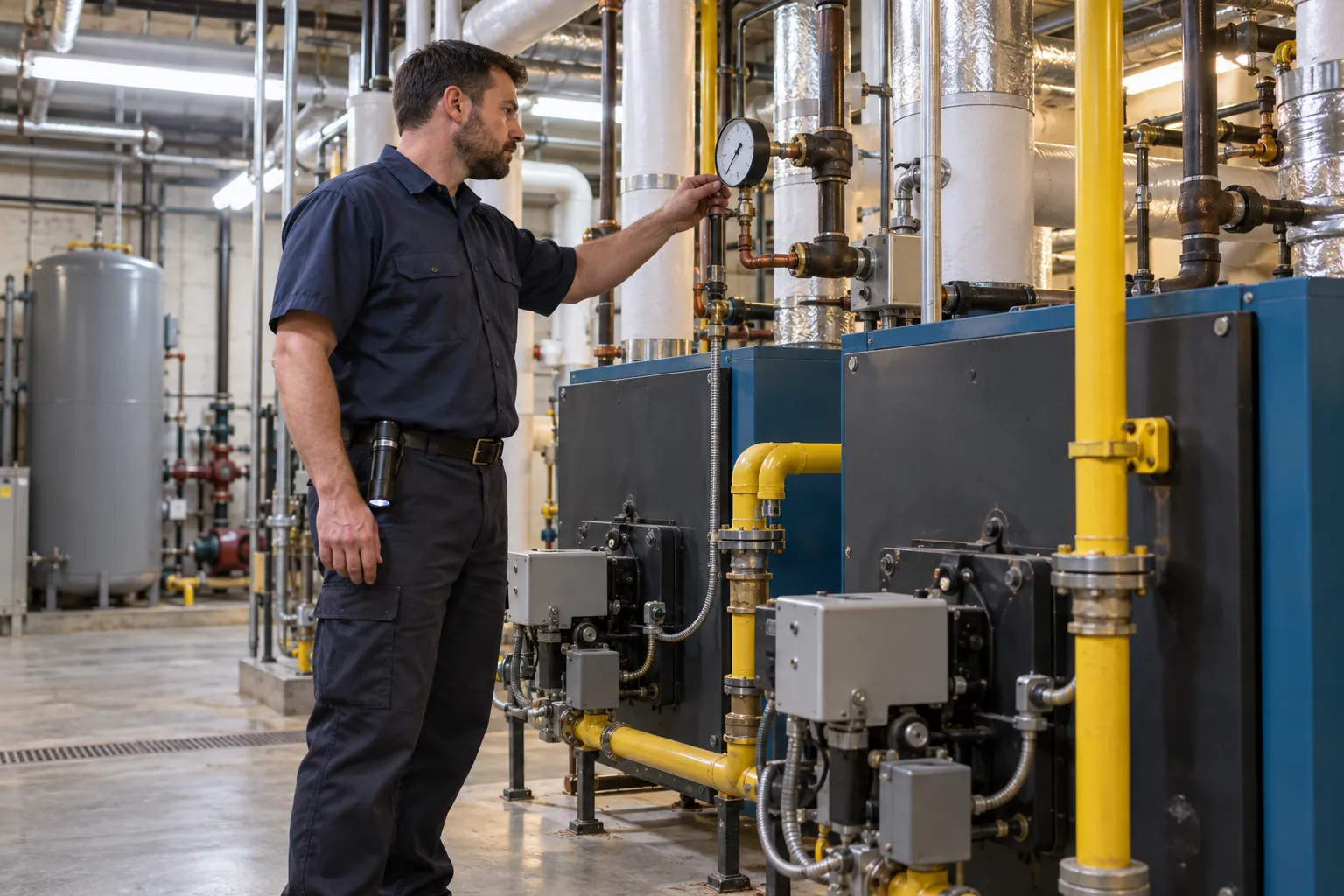 Premises and facilities managementEngineering rounds: how to walk the plant, and how to show it was walkedEngineering rounds in a commercial building: what to walk, the readings to take, how often, the rules behind them, and a round log that shows the plant was checked.