Premises and facilities management
Lockout tagout procedure: the steps, the written procedure and the annual inspection
A lockout tagout (LOTO) procedure is the written energy control procedure that OSHA's standard 29 CFR 1910.147 requires an employer to develop, document and use so that a machine or piece of equipment is shut down, isolated from all its energy sources, locked or tagged, and verified safe before anyone services or maintains it.
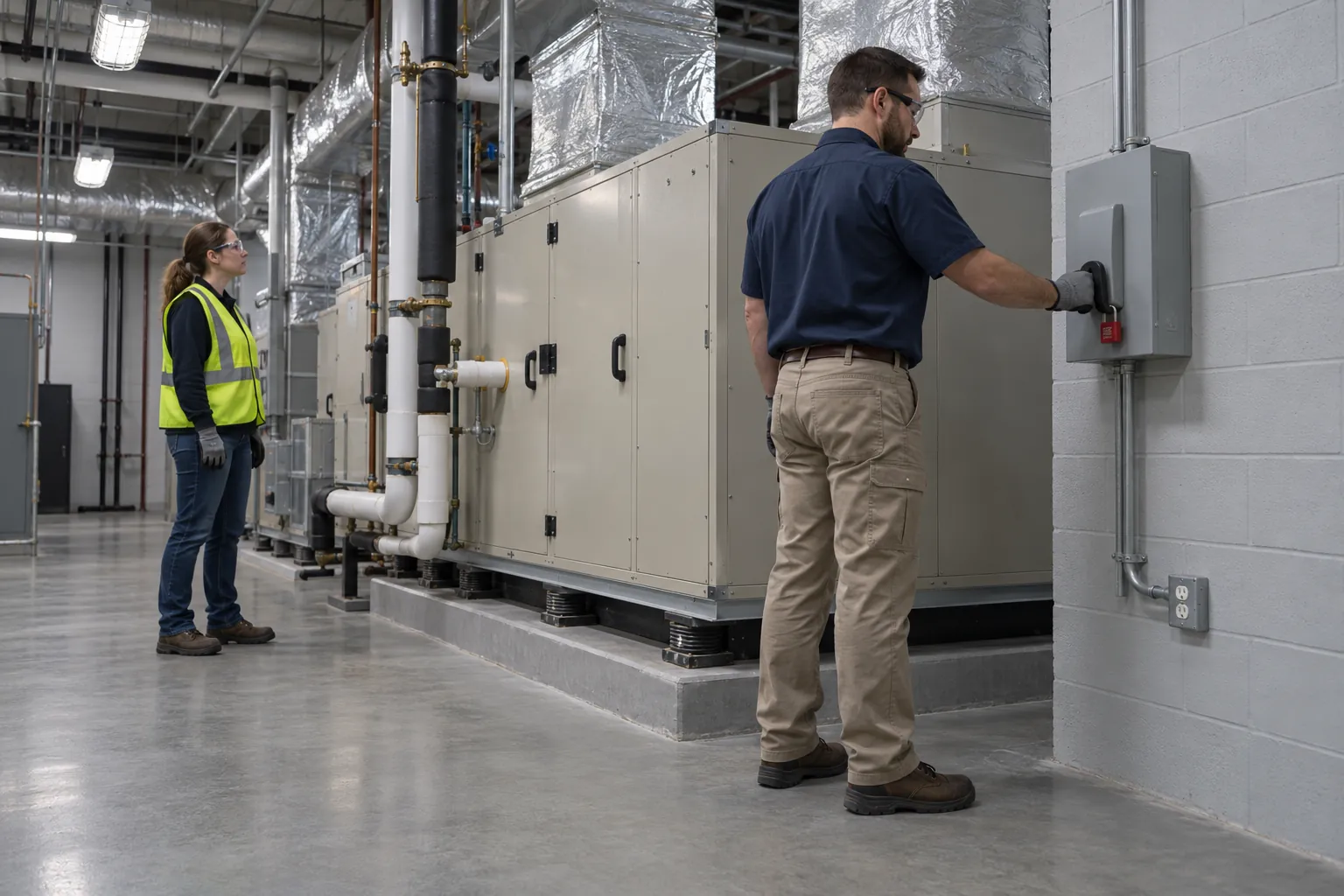
In a commercial building that means air handlers, pumps, boilers, trash compactors, kitchen and laundry equipment, and the circuits that feed them. The standard sets the order of the steps, what each written procedure must contain, who may apply and remove a lock, and an inspection of each procedure at least once a year that the employer must certify. This guide covers what the rule requires, where it applies in a building, the steps in order, how to write a procedure a technician can follow, and what the annual inspection and training records must show.
01
What OSHA requires: an energy control program and written procedures
For most private employers the federal rule is the Occupational Safety and Health Administration's 29 CFR 1910.147, The control of hazardous energy (lockout/tagout). It covers servicing and maintenance of machines and equipment "in which the unexpected energization or start up of the machines or equipment, or release of stored energy could cause injury to employees," and servicing is defined widely enough to include lubrication, cleaning and unjamming.
Paragraph (c)(1) requires a program with three parts: energy control procedures, employee training and periodic inspections. Paragraph (c)(4)(i) says: "Procedures shall be developed, documented and utilized for the control of potentially hazardous energy." Under (c)(4)(ii) each procedure must include at least:
- a specific statement of the intended use of the procedure;
- specific steps for shutting down, isolating, blocking and securing the equipment;
- specific steps for placing, removing and transferring lockout or tagout devices, and who is responsible for them;
- specific requirements for testing the equipment to verify that the energy control measures work.
Lockout is the default in a LOTO program. Under (c)(2), if an energy isolating device can be locked out, the program must use lockout unless the employer can show that tagout gives full employee protection, and equipment installed, replaced or given a major repair, renovation or modification after January 2, 1990 must have isolating devices designed to accept a lock. The note to (c)(4)(i) excuses a written procedure only when all eight listed conditions hold, including a single energy source, no stored energy and a single lock under the servicing employee's exclusive control; most building plant does not qualify.
OSHA's Lockout/Tagout fact sheet (December 2022) says compliance "prevents an estimated 120 fatalities and 50,000 injuries each year," and OSHA's Top 10 Most Frequently Cited Standards for fiscal year 2026 (October 1, 2025, to August 31, 2026) puts 1910.147 third.
Check where you are. OSHA's State Plans page says 22 State Plans cover private sector and state and local government workers and seven cover only public workers, each at least as effective as OSHA. California's Title 8, section 3314 requires procedures "documented in writing" with "separate procedural steps for the safe lockout/tagout of each machine or piece of equipment," unless its grouping conditions for similar equipment are met.
02
Where lockout/tagout applies in a commercial building
The standard defines an energy source as "any source of electrical, mechanical, hydraulic, pneumatic, chemical, thermal, or other energy," and a building has plenty of energy sources. Equipment that building engineers and maintenance technicians typically lock out includes:
- Mechanical plant: air handlers, fans, cooling towers, chillers and pumps that can start on a timer or a building automation command.
- Boilers, steam and hot water: heat and pressure, isolated with valves and bled down before anything is opened.
- Trash compactors and cardboard balers: hydraulic rams and automatic cycles, often cleared by custodial or porter staff.
- Kitchen and laundry equipment in hospitals, hotels, schools and dormitories: mixers, slicers, dish machines, washers and dryers.
- Overhead doors and dock levelers: motors, springs, hydraulics and gravity to restrain.
- Electrical circuits and equipment feeding lighting, motors and plant.
Electrical work has its own rule. 29 CFR 1910.333(b)(2) requires a written copy of the procedures, "a lock and a tag" on each disconnecting means, and a qualified person using test equipment to verify the parts are deenergized, and under (b)(2)(ii)(C) capacitors are discharged "if the stored electric energy might endanger personnel." A note accepts a 1910.147 procedure for this if it also addresses the electrical hazards and adds that test and the extra safeguard needed when a tag is used without a lock, so one building procedure can serve both.
Some work falls outside 1910.147. Construction is covered by 29 CFR 1926 instead. Cord and plug connected equipment is excluded where unplugging controls the hazard and the plug is "under the exclusive control of the employee performing the servicing or maintenance": a floor machine unplugged beside its operator qualifies, a plug in another room does not.
The standard sorts people into three groups. An authorized employee locks or tags out equipment to service it. An affected employee operates the equipment or works in the area. All other employees who work where energy control may be used, which in a building includes custodians, day porters and security officers, must be told about the procedure and that they must not attempt to restart locked or tagged equipment. OSHA's enforcement directive CPL 02-00-147, The Control of Hazardous Energy – Enforcement Policy and Inspection Procedures describes a janitorial worker who died inside a hospital laundry dryer he had entered to clean without deenergizing or locking it out.
03
Lockout tagout steps, in the order OSHA sets
Paragraph (d) of 1910.147 says the procedure "shall cover the following elements and actions and shall be done in the following sequence." Under (c)(9), affected employees are notified before the controls are applied. Then:
- Preparation for shutdown. The authorized employee knows "the type and magnitude of the energy, the hazards of the energy to be controlled, and the method or means to control the energy."
- Shutdown. Turn the equipment off by its established procedure, in an orderly way that adds no hazard.
- Isolation. Operate every energy isolating device needed: breakers, disconnects, line valves, blocks. "Push buttons, selector switches and other control circuit type devices are not energy isolating devices."
- Device application. Each authorized employee fixes a lockout device that holds the isolating device in the "safe" or "off" position, or a tagout device that clearly shows the isolating device must not be moved from that position, fastened where the lock would have gone if the device takes one.
- Stored energy. Relieve, restrain or otherwise make safe any stored or residual energy, such as that in capacitors, springs, rotating flywheels, hydraulic systems and air or steam pressure, and keep checking if it could build up again.
- Verification. Before starting work, verify that the equipment is isolated and deenergized.
Release, under (e), also has an order: inspect the work area so tools and nonessential items are removed and the equipment is intact, check that everyone is clear, have each device removed by the employee who applied it, and tell affected employees before the equipment is started.
Lists of six, seven, eight or ten steps split the same sequence differently. OSHA's non-mandatory Typical Minimal Lockout Procedure in Appendix A to 1910.147 uses eight, and its verification step is the familiar try: "operating the push button or other normal operating control(s) or by testing to make certain the equipment will not operate," then returning the controls to neutral or "off."
04
Writing a procedure a technician can actually follow
Federal OSHA does not require a separate procedure for every machine. CPL 02-00-147 says similar machines, "such as those using the same type and magnitude of energy," with similar controls and "which can be rendered safe using the same sequential procedural steps," can share one procedure if they are listed in its scope. A building-wide generic policy needs equipment checklists wherever machines or isolation points differ; the directive says "the use of generic energy control procedures alone are unacceptable" if they do not meet (c)(4)(ii).
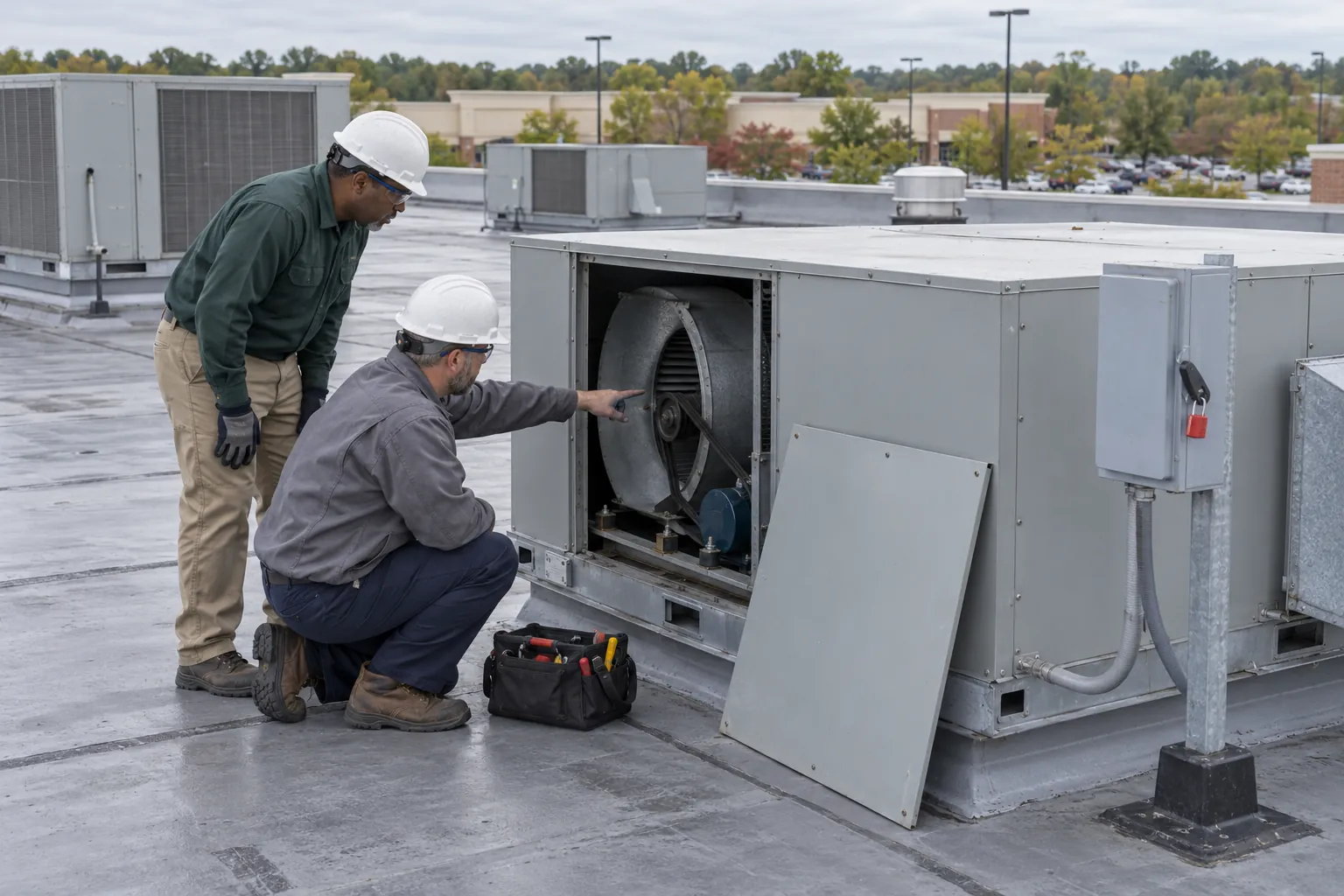
A lockout tagout procedure for one air handler or compactor fits on a page or two, kept where the work happens. It gives:
- The equipment: name, asset number and location.
- Its intended use: belt changes, clearing a jam, cleaning inside.
- Every energy source, by type and magnitude: 480-volt feed, 120-volt controls, steam pressure, hydraulic ram, spring or gravity.
- Each isolation point and where it is, such as the rooftop disconnect or breaker 14 in panel 3B, with the device it needs.
- How stored energy is released, and how isolation is verified, including a meter test by a qualified person for electrical parts.
- Restoring to service safely, and who is notified, by role.
Paragraph (f) adds three situations that need written steps. Group lockout: one authorized employee has primary responsibility and each worker puts a personal lock on the group lockbox when they start and removes it when they stop. Shift changes: an orderly transfer of protection between off-going and oncoming employees, for the chiller repair that runs past the day shift. Contractors: the building's employer and an outside company, such as an elevator or HVAC contractor, must inform each other of their procedures; the directive expects them to "exchange copies."
Write down what happens when the person who applied a lock has gone home. Under (e)(3) the employer may remove it only through a documented procedure that verifies the employee is not at the facility, makes all reasonable efforts to contact them, and makes sure they know before they resume work.
05
The annual periodic inspection and the training records
Paragraph (c)(6)(i) requires a "periodic inspection of the energy control procedure at least annually." The directive reads that as twelve-month intervals, and a procedure used less than once a year is inspected when it is used. The inspection:
- is done by an authorized employee other than the one using the procedure being inspected;
- "must be performed while the authorized employees perform servicing and/or maintenance," by watching the work, not reading the binder;
- includes a review of responsibilities with each authorized employee, and with affected employees too where tagout is used;
- corrects any deviation or inadequacy it finds, with retraining where needed.
Under (c)(6)(ii) the employer must certify the inspection, identifying "the machine or equipment on which the energy control procedure was being utilized, the date of the inspection, the employees included in the inspection, and the person performing the inspection." The directive allows similar procedures to be grouped and a representative sample inspected, suggests rotating which ones each year, and says a problem found in one must be fixed across the group.
Training is certified separately. Under (c)(7), authorized employees are trained to recognize hazardous energy and how to isolate it, affected employees in the procedure's purpose and use, and everyone else in the area not to restart locked or tagged equipment. Retraining follows a change in job assignment, a change in machines, equipment or processes that presents a new hazard, or a change in the procedure, and whenever an inspection or anything else shows deviations from or gaps in an employee's knowledge or use of the procedure, and the certification under (c)(7)(iv) contains "each employee's name and dates of training."
The usual weak points are an inspection that never watched anyone lock anything out, a certification that names no equipment, a contractor's crew who never saw the building's procedure, and a procedure written for a boiler replaced two years ago.
06
Where the record fails, and what SiteClara does about it
The written procedures usually exist. What fails is the everyday condition around them. The lockout station is short of locks, so a tag goes where a lock should. The procedure posted at the compactor is for the old unit. A nameless lock sits on a disconnect. The porter who saw the compactor ram move with its door open mentioned it at the desk, and nothing was written down. None of this shows in the annual certification, and all of it is visible to whoever walks past.
SiteClara records routine checks where they happen. A printed QR poster, with an optional NFC tag behind it, sits at each location, such as a mechanical room, a lockout station or the compactor room. Staff scan the code or tap the tag on their own phone, with no app to install, see the checks due there, such as confirming the station is stocked and the posted procedure is present, and mark each one done or say what stopped them. A problem, such as a missing lock, a tag left on after the work or a damaged hasp, is reported there with a photo and goes onto the team's list of jobs until someone closes it.
The supervisor sees what is due, done and missed, and can record why a check was missed. Each day they approve a report that goes to nominated management or client contacts at 8 a.m. the next morning, showing what was reported, completed and still open, and how the scheduled checks went, for example 6 of 6 completed.
07
Questions people ask
What does lockout tagout mean?
Paragraph (b) of 29 CFR 1910.147, The control of hazardous energy (lockout/tagout) defines lockout as "the placement of a lockout device on an energy isolating device, in accordance with an established procedure," so that the equipment "cannot be operated until the lockout device is removed." Tagout places a tagout device, a prominent warning such as a tag, to show that the equipment "may not be operated until the tagout device is removed": it warns but does not physically stop anyone.
Is LOTO mandatory?
Yes, wherever the standard applies. 29 CFR 1910.147, The control of hazardous energy (lockout/tagout) covers "the servicing and maintenance of machines and equipment in which the unexpected energization or start up of the machines or equipment, or release of stored energy could cause injury to employees," and paragraph (c)(1) requires the employer to establish an energy control program for that work. Construction work comes under 29 CFR 1926 instead, and a State Plan may set its own rule, at least as effective.
What is the final step in the lockout procedure before servicing may begin?
Verification. Paragraph (d)(6) of 29 CFR 1910.147 says: "Prior to starting work on machines or equipment that have been locked out or tagged out, the authorized employee shall verify that isolation and deenergization of the machine or equipment have been accomplished." OSHA's Appendix A to 1910.147, Typical minimal lockout procedures does it by operating the normal controls to make certain the equipment will not operate, then returning them to neutral or off.
Who is allowed to remove a lockout device?
The employee who applied it. Paragraph (e)(3) of 29 CFR 1910.147 allows removal by anyone else only under a documented procedure, used when that employee is not at the facility, with all reasonable efforts to contact them and their knowing before they resume work.
How long can equipment stay locked out while waiting for parts?
As long as needed. In an interpretation letter of November 24, 2025, OSHA said it "does not specify any maximum timeframe a lockout device may be used to control hazardous energy while waiting on a part." Before work starts again, paragraph (d)(6) still requires the authorized employee to verify isolation.
Is unplugging a machine the same as locking it out?
Only for cord and plug connected equipment whose plug stays "under the exclusive control of the employee performing the servicing or maintenance," under paragraph (a)(2)(iii)(A) of 1910.147. Hard-wired equipment, or a plug out of reach or out of sight, needs a lockout procedure.
08
Where to read the rules, and a list to take away
Start with OSHA's text of 29 CFR 1910.147, with its sample procedure in Appendix A, and for electrical work 29 CFR 1910.333. OSHA's booklet Control of Hazardous Energy: Lockout/Tagout (OSHA 3120, 2002, revised) explains the standard in questions and answers, the Control of Hazardous Energy (Lockout/Tagout) topic page links the related standards, and CPL 02-00-147 shows how inspectors read the rule. In California read section 3314. See also electrical panel clearance and hot work permits.
Before the next annual inspection, check that:
- every piece of equipment that is serviced has a written procedure, or is listed in a grouped one;
- each procedure names every energy source, each isolation point, how stored energy is released and how isolation is verified;
- locks and tags are standardized, used only for lockout and identify the user;
- group lockout, shift changes, contractors and removing an absent employee's lock have written steps;
- each procedure was inspected in the last twelve months by someone watching the work, and the certification names the equipment, date, employees and inspector;
- training is certified with names and dates, and retraining followed any change or deviation;
- custodians, porters and security officers know not to touch a locked or tagged control, and who to tell;
- lockout stations are stocked and posted procedures match the equipment on site.
Sources
Every document this guide quotes or links to, in the order it first cites them.
- 29 CFR 1910.147, The control of hazardous energy (lockout/tagout) osha.gov
- Lockout/Tagout fact sheet osha.gov
- Top 10 Most Frequently Cited Standards osha.gov
- State Plans osha.gov
- Title 8, section 3314 dir.ca.gov
- 29 CFR 1910.333(b)(2) osha.gov
- CPL 02-00-147, The Control of Hazardous Energy – Enforcement Policy and Inspection Procedures osha.gov
- Appendix A to 1910.147, Typical minimal lockout procedures osha.gov
- Interpretation letter of November 24, 2025 osha.gov
- Control of Hazardous Energy: Lockout/Tagout (OSHA 3120, 2002, revised) osha.gov
- Control of Hazardous Energy (Lockout/Tagout) osha.gov
Related guides
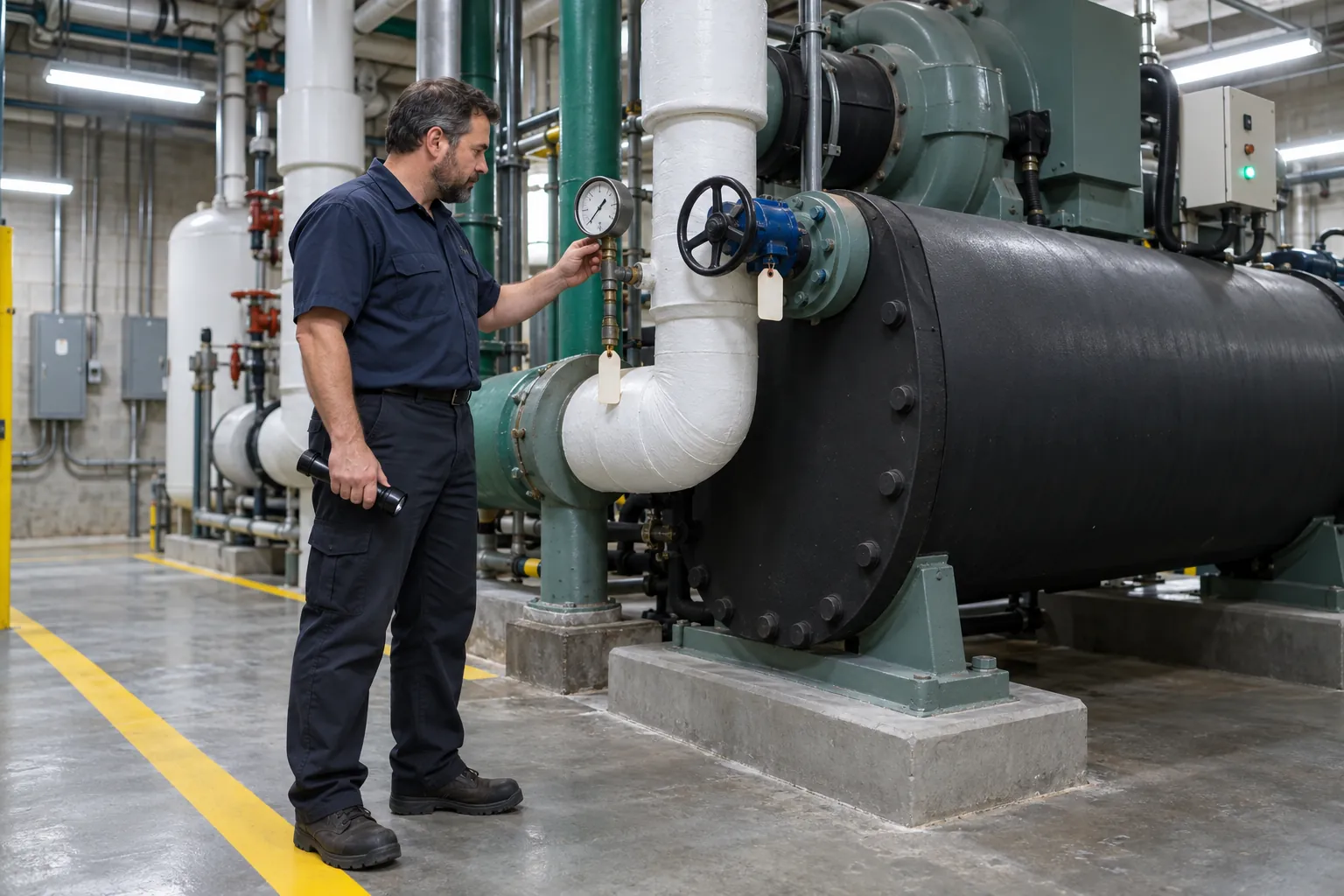 Premises and facilities managementBuilding engineer duties: what the job covers, and how to show it is doneBuilding engineer duties in a commercial building: running the plant, rounds and logs, lockout, refrigerant and boiler rules, vendors, and a record that holds up.
 Premises and facilities managementMaintenance technician duties: what the job covers, and how to show it was doneMaintenance technician duties in apartments, schools and offices: work orders, preventive maintenance, OSHA and EPA rules, levels 1 to 3, and the record.
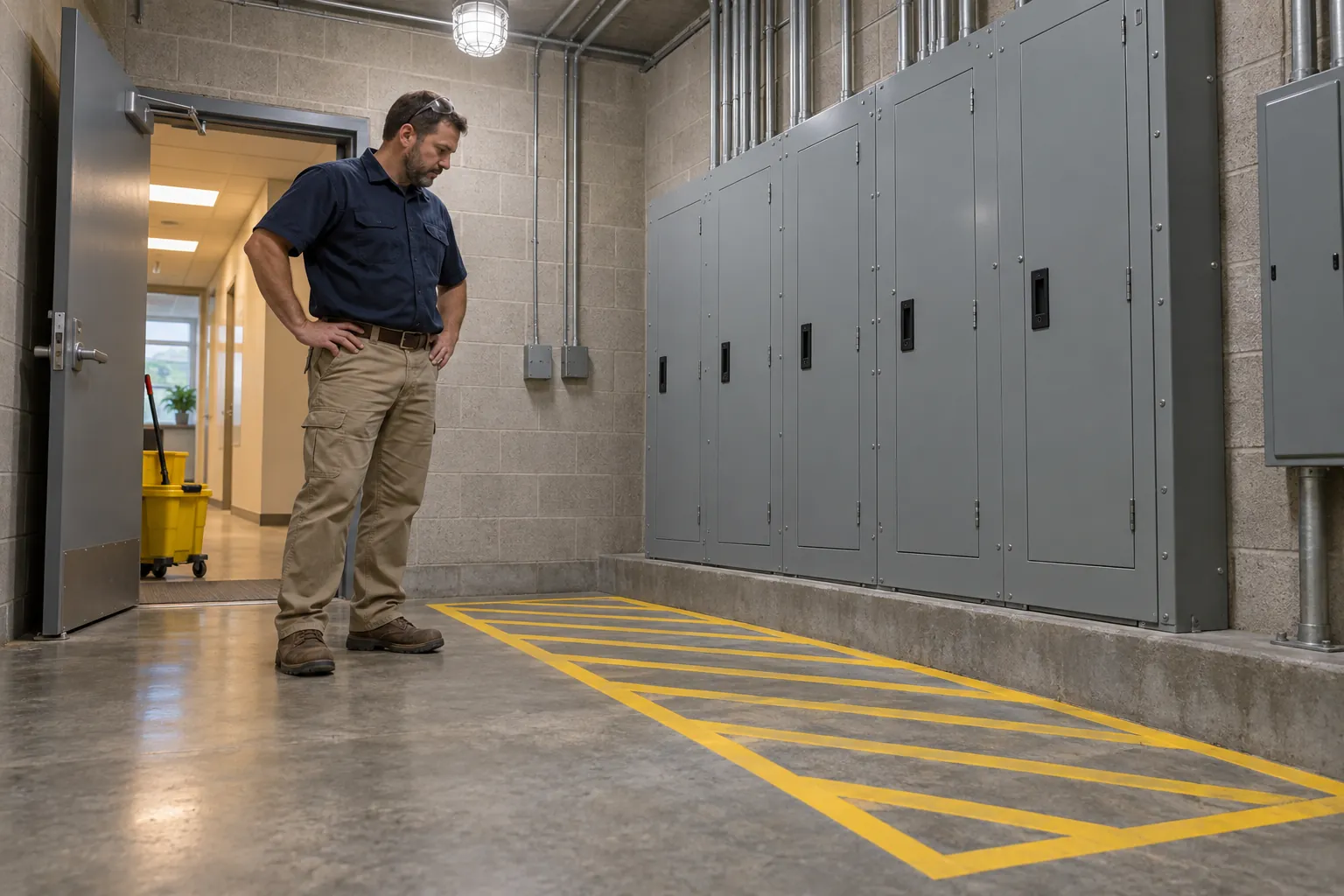 Premises and facilities managementElectrical panel clearance: the working space rules, and how to keep the space clearElectrical panel clearance under OSHA 29 CFR 1910.303(g) and NEC 110.26: the 36-inch depth, 30-inch width and headroom, why storage is out, and how to keep it clear.
 Premises and facilities managementJob hazard analysis: the job, its steps, the hazards and the controlsHow to do a job hazard analysis under OSHA 3071: which jobs first, the steps, controls, a floor-stripping example, and the certification 1910.132(d) requires.