Premises and facilities management
Job hazard analysis: the job, its steps, the hazards and the controls
A job hazard analysis (JHA), also called a job safety analysis (JSA), is a written breakdown of one job into its steps, the hazards at each step and the controls that remove or reduce them, done before anyone is hurt.
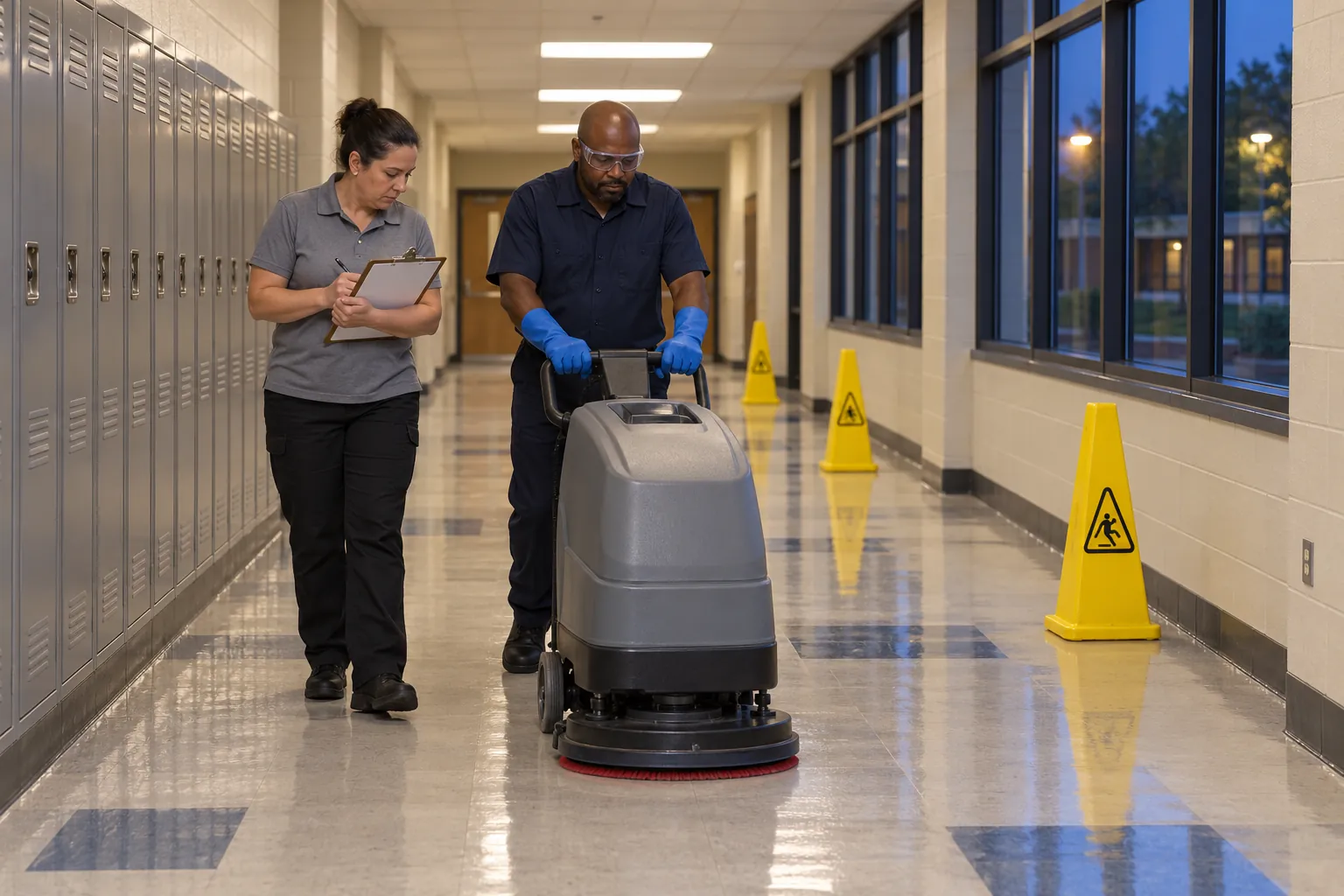
Federal OSHA recommends it in its booklet Job Hazard Analysis (OSHA 3071), but no general industry standard requires a document by that name. What OSHA does require of most employers is a written certification that the workplace has been assessed for hazards that call for personal protective equipment, under 29 CFR 1910.132(d), and a JHA is the usual way to do that work properly. This guide covers what the rules say, which janitorial, security and building engineering jobs to analyze first, the steps, the controls, a worked example and how to keep the analysis honest.
01
What a job hazard analysis is, and what OSHA actually requires
OSHA's booklet Job Hazard Analysis (OSHA 3071, 2002, revised) defines it: "A job hazard analysis is a technique that focuses on job tasks as a way to identify hazards before they occur. It focuses on the relationship between the worker, the task, the tools, and the work environment. Ideally, after you identify uncontrolled hazards, you will take steps to eliminate or reduce them to an acceptable risk level." The booklet also says "job safety analysis", and in practice a job hazard analysis (JHA) and a job safety analysis (JSA) are the same document: the job, its steps in order, the hazards at each step and the controls for each hazard. It is a risk assessment done one job or task at a time, rather than one room or one building at a time.
The booklet calls a JHA "one of the best ways to determine and establish proper work procedures", and says supervisors can use its findings "to eliminate and prevent hazards in their workplaces", which it says "is likely to result in fewer worker injuries and illnesses; safer, more effective work methods; reduced workers' compensation costs; and increased worker productivity." It can also be "a valuable tool for training new employees in the steps required to perform their jobs safely."
OSHA 3071 is guidance, not a standard. It calls a JHA "one component of the larger commitment of a safety and health management system" and tells employers to consult the OSHA standards for their industry, because "Compliance with these standards is mandatory". Federal OSHA's general industry standards do not require a document called a job hazard analysis. What they require is narrower:
- The PPE hazard assessment. Under 29 CFR 1910.132, Personal protective equipment, general requirements, paragraph (d)(1), "The employer shall assess the workplace to determine if hazards are present, or are likely to be present, which necessitate the use of personal protective equipment (PPE)." Paragraph (d)(2) requires "a written certification that identifies the workplace evaluated; the person certifying that the evaluation has been performed; the date(s) of the hazard assessment; and, which identifies the document as a certification of hazard assessment." Paragraph (g) limits this to eye and face, head, foot and hand protection and personal fall protection systems (1910.133, .135, .136, .138 and .140).
- Task-level procedures in other standards. Lockout/tagout, 29 CFR 1910.147, The control of hazardous energy, says at (c)(4)(i): "Procedures shall be developed, documented and utilized for the control of potentially hazardous energy". The bloodborne pathogens standard, 29 CFR 1910.1030, requires a list of the "tasks and procedures" in which occupational exposure occurs.
- The General Duty Clause. Where no standard fits, Section 5 of the Occupational Safety and Health Act of 1970 requires a workplace "free from recognized hazards that are causing or are likely to cause death or serious physical harm".
Check the state. OSHA's State Plans page says "There are currently 22 State Plans covering both private sector and state and local government workers, and seven State Plans covering only state and local government workers" (OSHA 3071's 2002 count is out of date). California's Title 8, section 3203 requires "procedures for identifying and evaluating work place hazards including scheduled periodic inspections", with records of each kept "for at least one (1) year" (an employer with fewer than 10 employees may keep them only until the hazard is corrected); see our guide to the Cal/OSHA IIPP.
02
Which jobs need a JHA first
OSHA 3071 says "A job hazard analysis can be conducted on many jobs in your workplace", and that priority should go to:
- "Jobs with the highest injury or illness rates;"
- "Jobs with the potential to cause severe or disabling injuries or illness, even if there is no history of previous accidents;"
- "Jobs in which one simple human error could lead to a severe accident or injury;"
- "Jobs that are new to your operation or have undergone changes in processes and procedures; and"
- "Jobs complex enough to require written instructions."
In a building, those tests point to a short list for each trade:
- Janitorial and custodial: stripping and refinishing floors; high dusting from a ladder; restroom cleaning where blood and needles turn up; trash runs to the compactor; mixing chemicals where no dilution dispenser is installed.
- Security: a night patrol of a parking lot or garage; responding alone to an alarm; a lobby post where people are turned away. There is no federal workplace violence standard; California has its own, in our guide to California workplace violence prevention, and our lone worker policy guide covers check-ins.
- Building engineering: filters and belts in an air handler, work at an electrical panel, roof access, ladders, and anything needing lockout/tagout.
- New or changed work: a new floor finish or disinfectant, a ride-on scrubber, a new building on the contract.
A contractor with many accounts usually writes one JHA per job type, then adds what is particular to each building: which floors are terrazzo, where the eyewash is, which dock has the steep ramp.
03
How to do a job hazard analysis: OSHA's five steps
Most JHA forms come down to four moves: select the job, break the job into steps, identify potential hazards at each step, and decide the controls. OSHA 3071 opens with five steps under "Where do I begin?":
- Involve your employees. "They have a unique understanding of the job, and this knowledge is invaluable for finding hazards."
- Review your accident history, including "any 'near misses' -- events in which an accident or loss did not occur, but could have." Our guide to near miss reporting covers getting those reports in.
- Conduct a preliminary job review. "If any hazards exist that pose an immediate danger to an employee's life or health, take immediate action to protect the worker." Easy fixes "should be corrected as soon as possible. Do not wait to complete your job hazard analysis." For hazards that present unacceptable risks, it says to "evaluate types of hazard controls."
- List, rank, and set priorities for hazardous jobs, "based on those most likely to occur and with the most severe consequences."
- Outline the steps or tasks. "watch the employee perform the job and list each step as the worker takes it", recording "enough information to describe each job action without getting overly detailed." Review it with the employee, and "Point out that you are evaluating the job itself, not the employee's job performance."
Then ask of each step, in OSHA's words: "What can go wrong? What are the consequences? How could it arise? What are other contributing factors? How likely is it that the hazard will occur?" The answer is a hazard scenario: where it happens, who it happens to, what triggers it and the consequence. "Slippery floor" is a label. "In the second-floor corridor, a custodian walking backward with the wet vacuum steps onto stripper slurry and falls" is a scenario you can control. On likelihood, the booklet says that "If there have been 'near-misses' or actual cases, then the likelihood of a recurrence would be considered high." Some employers rank each hazard on a simple risk matrix of likelihood against severity; OSHA 3071 does not require one.
Appendix 2 of the booklet lists hazard types to check each step against. In buildings the usual ones are chemical, electrical, ergonomic hazards from "overexertion (strains and sprains) or repetitive motion", falls on "slippery floors, poor housekeeping, uneven walking surfaces", caught-between and cutting hazards, struck-by, temperature extremes and poor visibility.
04
Choosing controls, and a worked example: stripping a floor
"Information obtained from a job hazard analysis is useless unless hazard control measures recommended in the analysis are incorporated into the tasks," says OSHA 3071. Its Appendix 1 puts engineering controls first, then administrative controls, then personal protective equipment. NIOSH's Hierarchy of Controls has five levels: elimination, substitution, engineering controls, administrative controls and PPE, where "Elimination removes the hazard at the source" and "PPE is equipment worn to minimize exposure to hazards." OSHA 3071 also warns that "training is not very effective in hazard control when triggering events happen quickly". A sign does not stop someone stepping onto a wet floor at a run; a barricade at each end of the corridor does better. Write each control as a safe work practice someone can be seen doing, eliminating or reducing the hazard, rather than a reminder to be careful.
OSHA's sample form heads each sheet with the job title, the job location, the analyst and the date, then the task, the hazard and the controls. Here is an illustration for a common custodial job, to adapt rather than adopt; the PPE must match each product's safety data sheet.
Job: strip and refinish a vinyl composition tile (VCT) corridor, evening shift, two custodians, a swing machine and a wet vacuum.
- Clear the corridor. Hazards: back strain moving furniture; occupants walking into the work. Controls: a dolly or two-person lift; start after the floor empties; barricades and wet floor signs at both ends before any liquid goes down.
- Mix the stripper. Hazard: alkaline concentrate splashing into eyes or onto skin. Controls: a dilution dispenser instead of free pouring; splash goggles and long-cuff chemical-resistant gloves; everyone knows where the nearest eyewash is and that it works.
- Apply and scrub. Hazards: falls on a floor made very slick by the stripper; shock from a damaged cord in wet slurry; the machine pulling away. Controls: slip-resistant shoes; cord and plug inspected before use, plugged into a ground-fault (GFCI) protected outlet and kept behind the operator; trained operators only.
- Pick up the slurry. Hazards: walking backward into slurry; lifting a full wet vacuum tank. Controls: work toward the dry end; empty the tank at a mop sink without lifting it full; goggles stay on.
- Rinse and apply finish. Hazards: vapors in a closed corridor; wet finish. Controls: ventilation as the safety data sheet directs; barricades stay until the last coat is dry.
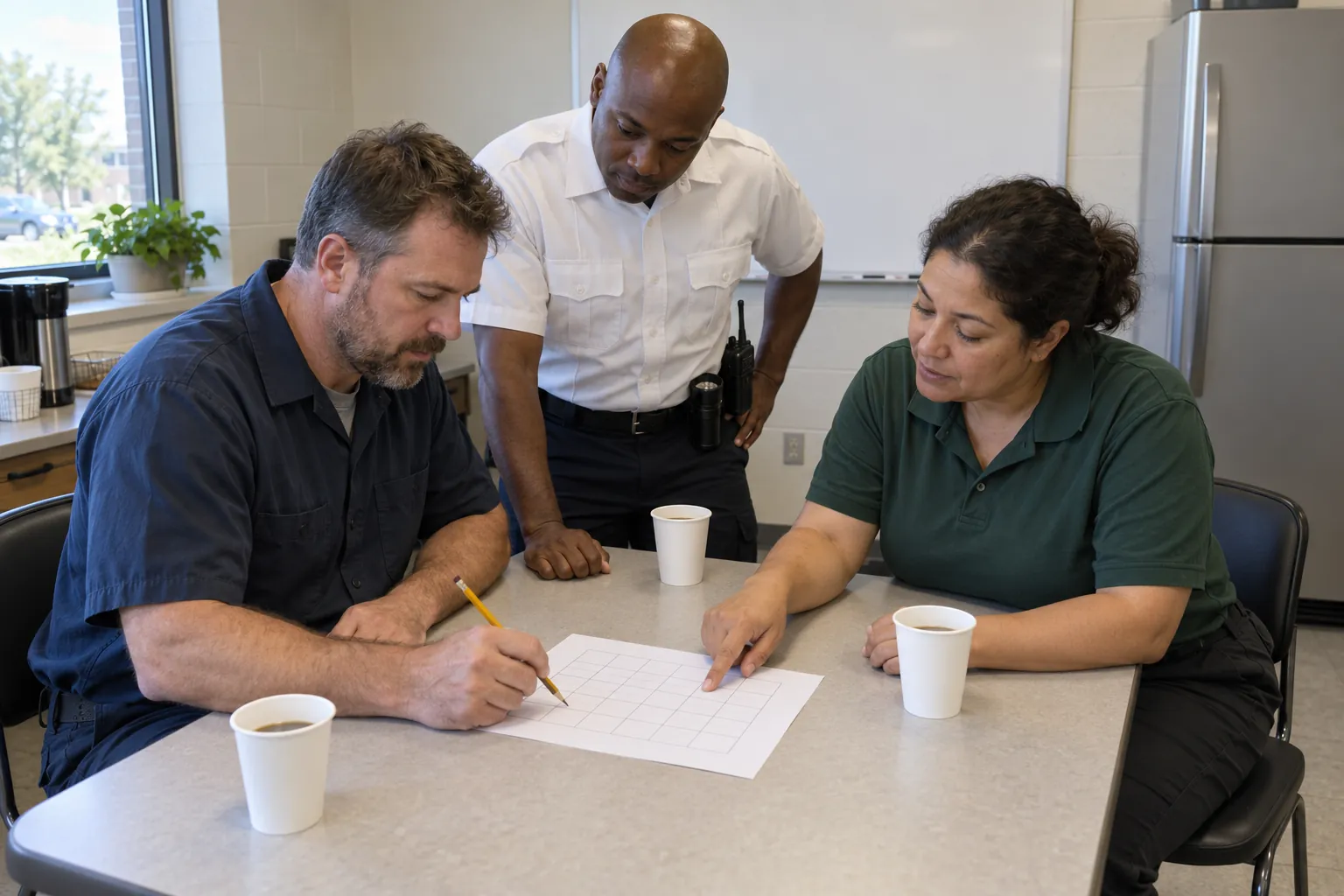
The same method works for a security post. A night patrol of a parking garage breaks into leaving the post, walking each level, checking stairwells and returning. Hazards include trips on curbs and wheel stops in poor light, reversing vehicles and confronting someone alone; controls might be lighting faults reported and followed up, a reflective vest, radio check-ins and a rule to observe and report rather than approach.
05
Who signs it, when to review it, and what good evidence looks like
OSHA 3071 says periodic review keeps a JHA current, and that "Even if the job has not changed, it is possible that during the review process you will identify hazards that were not identified in the initial analysis." It adds that "It is particularly important to review your job hazard analysis if an illness or injury occurs on a specific job", so treat any incident or near miss on the job, and any changing equipment, product or method, as a reason to reopen it. It also says "Any time you revise a job hazard analysis, it is important to train all employees affected by the changes". OSHA's Appendix B to Subpart I, Nonmandatory Compliance Guidelines for Hazard Assessment and Personal Protective Equipment Selection says to reassess "as necessary, by identifying and evaluating new equipment and processes, reviewing accident records, and reevaluating the suitability of previously selected PPE." OSHA's Hazard Identification and Assessment page adds hazards "associated with emergency and nonroutine situations".
On a contracted building the work splits naturally:
- The employer, for a janitorial or security crew the contractor, owns the JHA, the 1910.132(d) certification, the training and the equipment. Outside help is fine, but OSHA 3071 says "you and your employees remain involved".
- The supervisor makes the controls real each shift: barricades on the cart, GFCI outlets working, goggles where they are needed, new hires trained before they run the machine.
- The worker helps write the steps, follows the controls and reports what is missing.
- The client's facility manager tells contractors about the building's own hazards, such as an unguarded roof edge or a dock ramp that ices over, asks to see the JHAs for high-risk work, and fixes what belongs to the building.
Good evidence comes in two layers. The first is the JHA itself, dated and naming the job, the location and the analyst, with the PPE certification beside it. The second is evidence that the controls existed on the day: the eyewash checked, the cords inspected, the garage light reported and repaired. That second layer is what an investigator asks for after an injury, and it is usually the one missing. See our guides to the safety walkthrough and accident investigation.
06
Where the JHA record fails, and what SiteClara does about it
The usual JHA is a well-made document in a binder at the contractor's office. It says the eyewash is checked and the garage lights are reported, but nothing on the floor shows that either happened this week. The night officer mentions a dead light on P2 at pass-down and it goes no further. When the JHA is reviewed after an injury, nobody can say whether the controls were there on the day.
SiteClara records the checks where those controls live. A printed QR code poster goes at each location, such as a janitor closet, a loading dock or a garage level, with an NFC tag behind it if staff would rather tap than scan. Staff scan or tap on their own phone, with no app to install, see the checks due there, such as the eyewash or the spill kit, and mark each one done or say what stopped them. The time and the named person are recorded as it happens, with a photo when one is asked for. A problem found there, a frayed cord or a dead light, is reported at that location and goes onto the team's list of jobs until someone closes it.
The supervisor sees what is due, done and missed, and records the reason a check was missed. Each day they review and approve a report that goes to nominated management or client contacts at 8 a.m. the next morning, showing what was reported, completed and still open. When a JHA is reviewed, that record shows whether the checks it depends on were being done.
07
Questions people ask
Does OSHA require a job hazard analysis?
Not by that name in general industry: OSHA recommends a JHA in Job Hazard Analysis (OSHA 3071), but its standards require something narrower. Under 29 CFR 1910.132(d) the employer must assess the workplace for hazards that call for PPE and certify that assessment in writing, and some standards, such as lockout/tagout, require written procedures of their own.
What are the 5 steps of a job hazard analysis?
OSHA's booklet Job Hazard Analysis (OSHA 3071) lists five steps under "Where do I begin?": involve your employees; review your accident history, near misses included; conduct a preliminary job review; list, rank and set priorities for hazardous jobs; and outline the steps or tasks of each job. You then identify the hazards at each step and choose controls that eliminate or reduce them.
Is job hazard analysis the same as job safety analysis?
Yes, in practice. Job Hazard Analysis (OSHA 3071) uses both names, telling readers "When conducting your own job safety analysis" to consult the OSHA standards for their industry, and both describe the same breakdown of a job into steps, hazards and controls.
When should a job hazard analysis be performed?
Before the work is done, and first for the jobs Job Hazard Analysis (OSHA 3071) puts at the top: those with the highest injury or illness rates, those that could cause severe or disabling injuries even with no history of accidents, those where one simple human error could lead to a severe accident, new or changed jobs, and jobs complex enough to need written instructions.
How often should a job hazard analysis be reviewed?
OSHA sets no fixed interval. Job Hazard Analysis (OSHA 3071) says periodic review keeps a JHA current and that it is "particularly important" to review it if an illness or injury occurs on that job; any time you revise it, train all employees affected by the changes.
08
Where to read the guidance, and a list to take away
Start with Job Hazard Analysis (OSHA 3071), which has a sample form and a list of common hazards in its appendices. Then read 29 CFR 1910.132 with its Appendix B, and NIOSH's Hierarchy of Controls. In a state plan state, read its rules too.
Before you rely on a job hazard analysis, check that:
- the riskiest jobs were analyzed first;
- the people who do the job helped write it, and the steps came from watching the work;
- each hazard is a scenario, not a one-word label;
- each control is as high on the hierarchy as practical, with PPE last;
- the PPE matches each safety data sheet, and the 1910.132(d) certification names the workplace, the certifier and the date;
- the client's building-specific hazards are added;
- it is reviewed after any injuries or near misses and whenever the job changes, with retraining;
- the controls it depends on are checked at the location, with a record of who and when;
- anything missing or broken is reported as a job and followed until fixed.
Sources
Every document this guide quotes or links to, in the order it first cites them.
- Job Hazard Analysis (OSHA 3071, 2002, revised) osha.gov
- 29 CFR 1910.132, Personal protective equipment, general requirements osha.gov
- 29 CFR 1910.147, The control of hazardous energy osha.gov
- Bloodborne pathogens standard, 29 CFR 1910.1030 osha.gov
- Section 5 of the Occupational Safety and Health Act of 1970 osha.gov
- State Plans page osha.gov
- Title 8, section 3203 dir.ca.gov
- Hierarchy of Controls cdc.gov
- Appendix B to Subpart I, Nonmandatory Compliance Guidelines for Hazard Assessment and Personal Protective Equipment Selection osha.gov
- Hazard Identification and Assessment osha.gov
Related guides
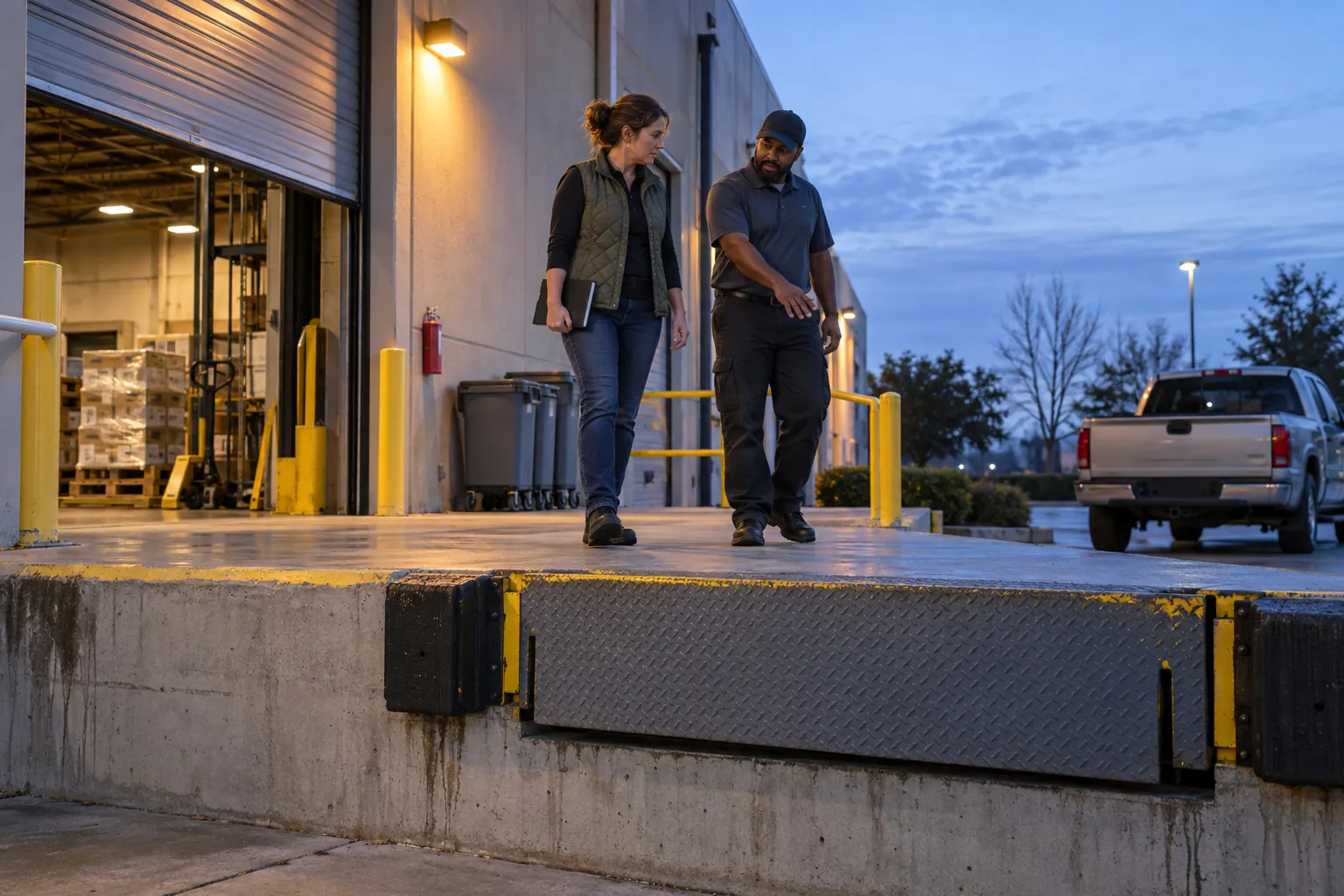 Premises and facilities managementSafety walkthroughs: how to walk a building, talk to the crew and fix what you findWhat a safety walk is under OSHA's Recommended Practices, what to look at in a commercial building, how often to walk, how to record findings and close them out.
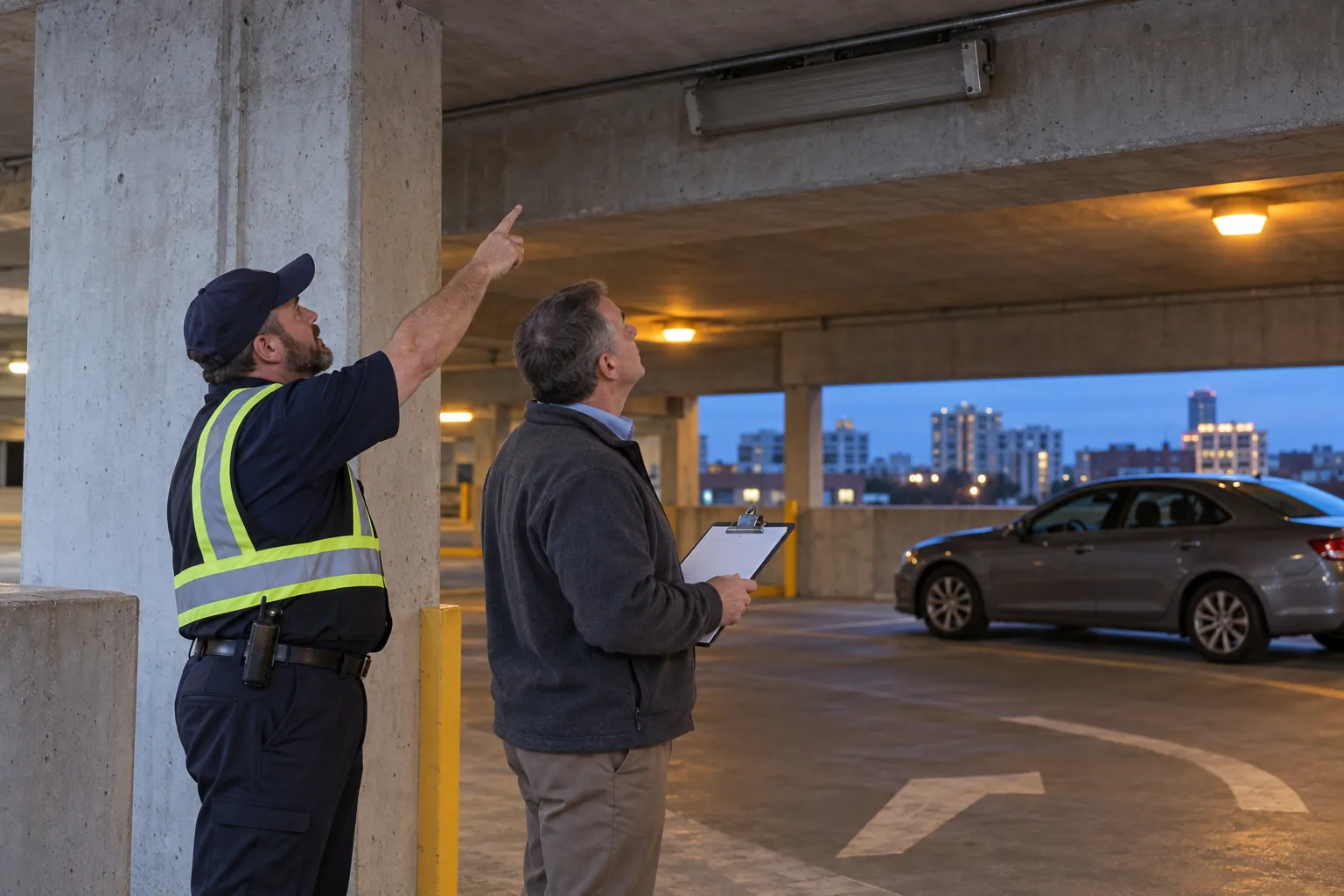 Premises and facilities managementNear miss reporting: catching the close calls before they become injuriesWhat counts as a near miss, what OSHA recommends, what a near miss report should capture, and how to follow it up so people keep reporting in your buildings.
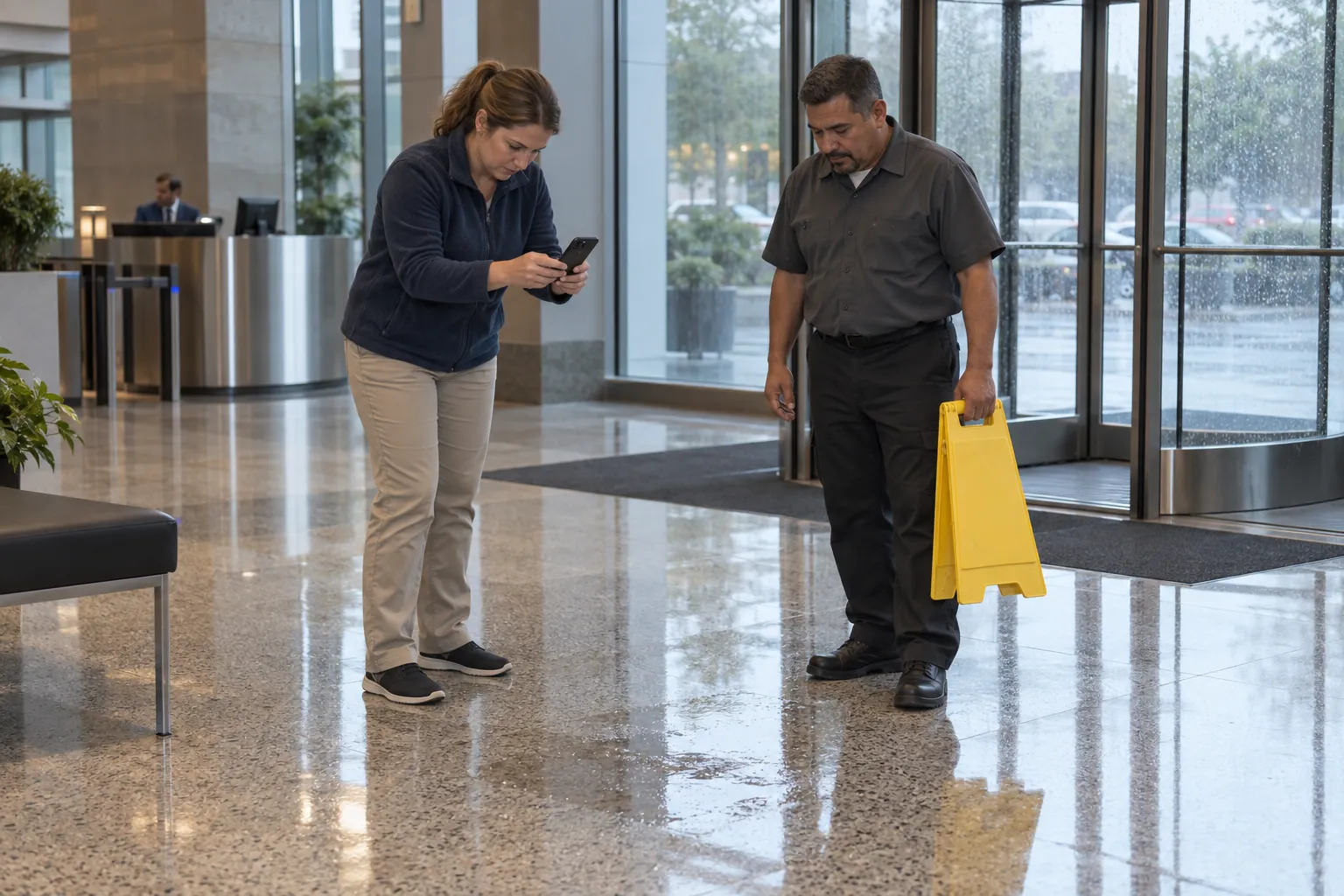 Premises and facilities managementAccident investigation: finding out why it happened, not who to blameHow to investigate a workplace accident in a U.S. building: OSHA's four steps, the scene, interviews, root causes, corrective actions and the records that matter.
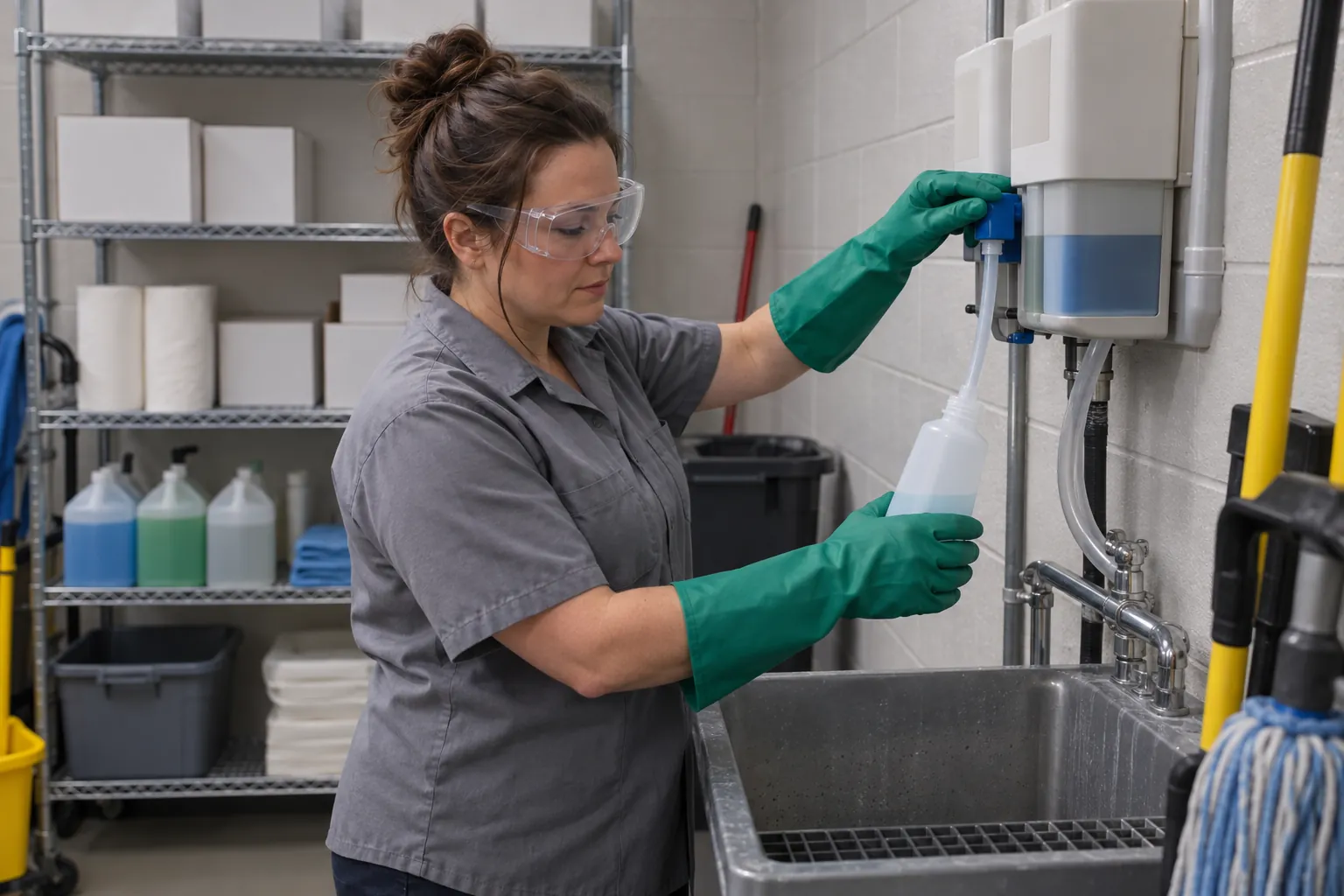 CleaningJanitorial PPE: the hazard assessment, the kit and the daily checkJanitorial PPE under OSHA 29 CFR 1910.132: the hazard assessment, gloves, eye protection, footwear, bloodborne pathogens, training, payment and the daily check.