Premises and facilities management
The apartment make-ready checklist: how to turn a unit properly, and prove it
An apartment make-ready checklist is the list of inspections, repairs, cleaning tasks and safety tests a maintenance team completes to bring a vacated rental unit back to rent-ready condition before the next tenant moves in.
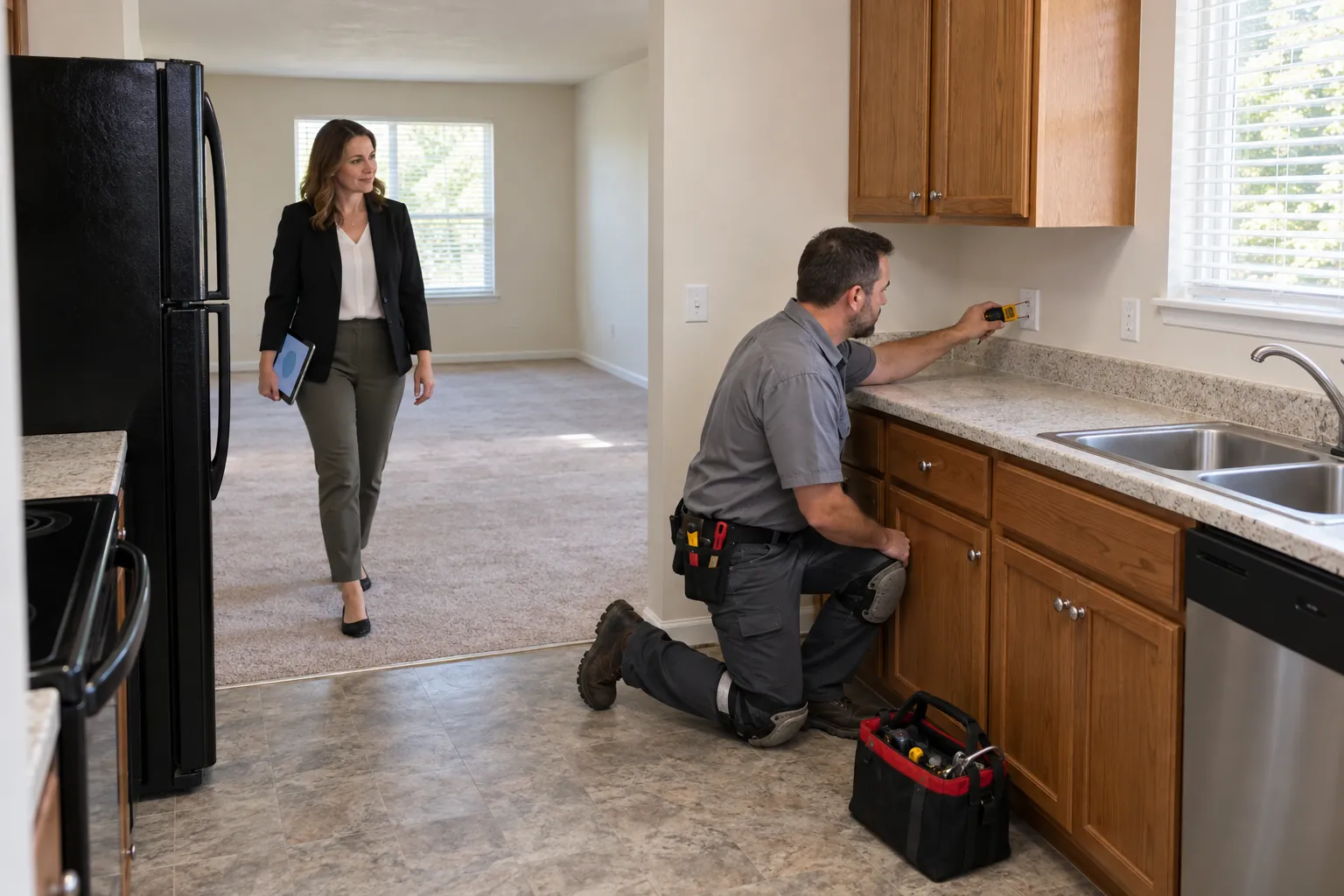
The make-ready itself is the work between one resident moving out and the next moving in: walk the unit, fix what is broken, paint, clean, test the safety devices, change the locks and hand over the keys. Done well, the new resident walks into a home that works and a lease file that shows its condition. Done in a rush, it produces a move-in complaint in week one and a security deposit argument a year later. This guide sets out the rules behind a make-ready, a room-by-room checklist, the order to do it in, and what good evidence looks like.
01
What a make-ready is, and the rules behind it
In apartment operations, "make-ready" (or unit turn, or turnover) is the work that returns a vacated unit to rent-ready condition. The maintenance team usually owns it, with painters, flooring installers and cleaners brought in as needed, and the property manager signs it off before the unit is leased and the move-in is scheduled. No single federal law is titled "make-ready." The duties come from several places, and which apply depends on the property, the program and the state.
- HUD housing. Public housing and HUD-assisted and insured multifamily properties are held to the NSPIRE rule, 24 CFR Part 5, Subpart G. Section 5.703 says the items and components "within the units of HUD housing must be functionally adequate, operable, and free of health and safety hazards," and lists affirmative requirements for every unit, from hot and cold running water to smoke detectors and GFCI outlets. A turned unit is the easiest place to meet them.
- Housing Choice Vouchers. Under 24 CFR 982.305, PHA approval of assisted tenancy, the public housing agency must, in the ordinary case, inspect the unit and find that it passes Housing Quality Standards before it approves the tenancy and before the lease term begins. HUD's notice extending the NSPIRE compliance date for the HCV, PBV and Moderate Rehabilitation programs (90 FR 46911) lets agencies keep using the previous standards through January 31, 2027. For a voucher move-in, the make-ready is what the PHA inspector walks.
- State landlord-tenant law. Every state sets its own habitability and deposit rules, and several reach straight into the make-ready. Texas and California, below, are two examples.
- Local property maintenance codes. Many cities and counties adopt the International Property Maintenance Code (IPMC), published by the International Code Council, usually with local amendments, and enforce it through code inspectors. Check which edition your jurisdiction has adopted and what it changed.
- Federal lead rules. For housing built before 1978, EPA's lead rules govern how painted surfaces are disturbed during the turn and what the next resident must be given before signing the lease.
02
The apartment make-ready checklist, room by room
A good checklist follows the path a technician walks, so nothing is skipped because it was in the wrong column. Adapt it to your units, your appliances and your local code, and keep it short enough that it is actually used.
- Entry and exterior doors: door opens, closes and latches; deadbolt and door viewer work; locks rekeyed or cores changed; weatherstripping and threshold intact; unit number visible.
- Kitchen: range, oven burners and hood fan work; refrigerator cools and the gasket seals; dishwasher runs a full cycle without leaking; disposal works; sink drains; no leaks under the cabinet; cabinet doors and drawers aligned; countertop and backsplash caulked; GFCI outlets within 6 feet of the sink trip and reset.
- Bathrooms: toilet flushes, refills and does not run; no leaks at supply lines or the base; tub or shower drains, and the caulk and grout are clean and sound; exhaust fan works; mirror, towel bars and toilet paper holder secure; GFCI outlet tested.
- Living areas and bedrooms: walls patched and painted; ceilings free of stains; closet doors on their tracks; blinds complete and working; every outlet and switch works, with covers on.
- Floors: carpet cleaned or replaced; hard floors cleaned and free of trip edges; transitions secure.
- Windows: open, close and lock; screens present and undamaged; no broken or fogged panes.
- Safety devices: smoke alarms tested and in the required locations; carbon monoxide alarms where fuel-burning appliances or an attached garage require them; fire extinguisher, where provided, charged and tagged.
- Mechanical systems: HVAC heats and cools; filter changed and dated; water heater set at a safe temperature, with no leaks and the relief valve discharge pipe in place.
- Clean: a final clean after all trades, including inside appliances, cabinets and closets, light fixtures, vents, baseboards and windowsills.
- Final: pest check done; utilities on; keys, fobs, mailbox and amenity access counted and labeled; unit photographed; quality check signed by someone other than the technician.
03
The order of work, and who does what
Most make-ready delays come from doing things in the wrong order, such as carpet cleaned before the painter drips on it. A sequence that works for most turns:
- Move-out walk. On the day the unit is returned, the manager or maintenance supervisor walks it with the checklist, photographs every room before anything is touched, and records damage beyond ordinary wear and tear separately from normal turn work.
- Scope and schedule. From the walk, write the scope: what is repaired, replaced, painted and cleaned, and by whom. Order parts and book trades the same day.
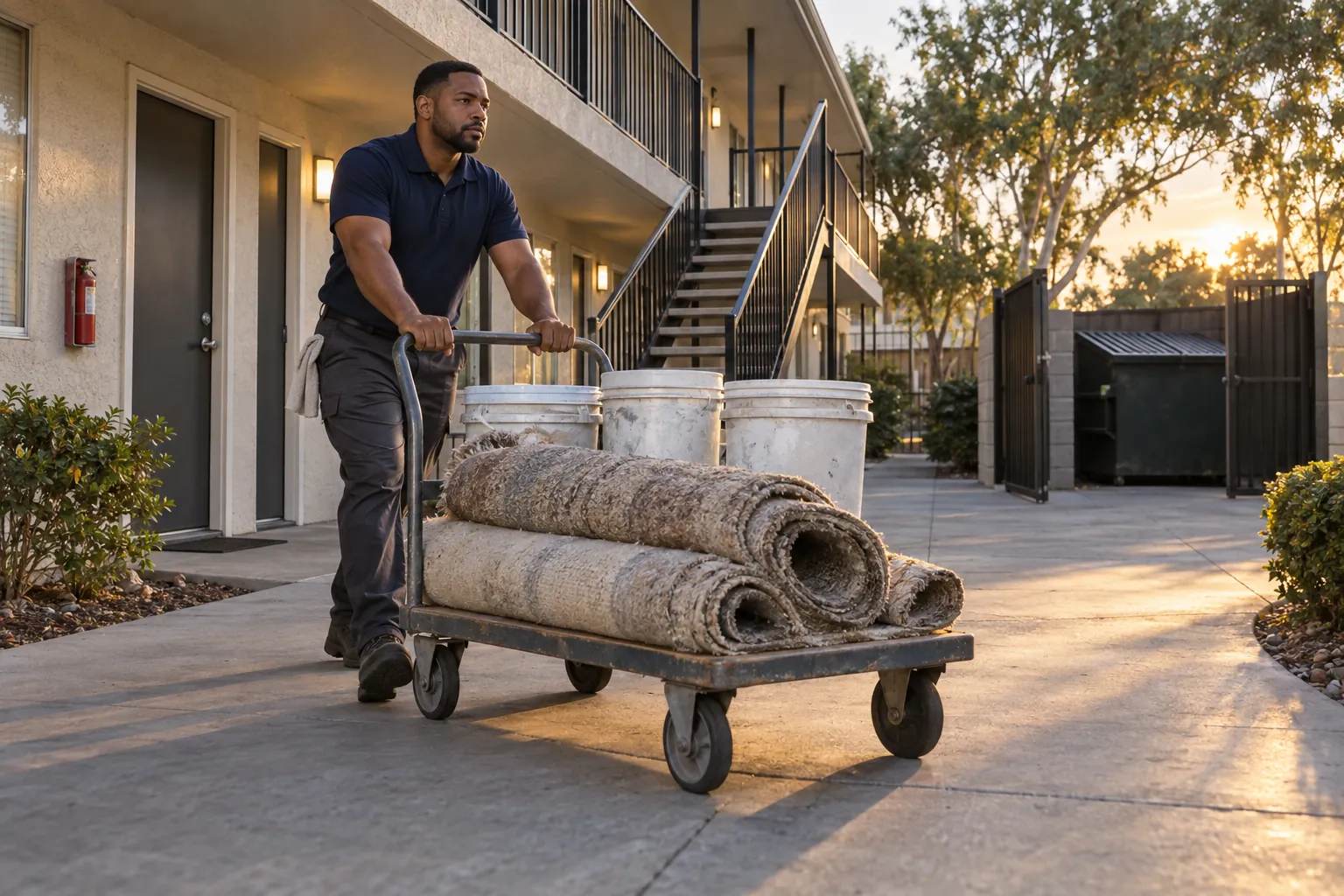
- Trash-out and rough work. Remove anything left behind, then do repairs that make dust or mess: drywall, cabinet and door repairs, plumbing and electrical fixes.
- Paint. Touch up or full paint, depending on condition and your policy. In pre-1978 housing, see the lead section below before anyone sands or scrapes.
- Flooring. Replace or repair hard floors and carpet, then shampoo carpet that stays.
- Clean. The final clean goes last, after every trade has left.
- Safety checks and rekey. Test smoke and carbon monoxide alarms, GFCI outlets and locks once the work is finished, not before, because trades can disconnect or damage them.
- Quality check. A second person walks the unit against the checklist, puts anything missed on a punch list, and signs off only when every item on it is complete.
Most companies set their own target for days vacant. The number means little without the record behind it: when the walk happened, when each trade finished, what the quality check found. A unit marked ready on the turn board while the dishwasher still leaks is not ready.
04
The safety items a make-ready cannot skip
Cosmetic work takes the time; safety items carry the liability. Check these every turn.
Smoke alarms. In HUD housing, section 5.703(d) requires a working smoke detector on each level of the unit, inside each bedroom, and within 21 feet of any door to a bedroom measured along a path of travel, with alarms designed for hearing-impaired persons where a hearing-impaired person lives in the unit. State law adds its own rules: Texas Property Code section 92.255 requires at least one smoke alarm in each separate bedroom, and section 92.258 requires the landlord to test each alarm at the start of the tenancy. Record the date each alarm was tested and, if it was replaced, its date of manufacture.
Carbon monoxide. NSPIRE requires HUD units to meet HUD's carbon monoxide detection standards, and many states and cities have their own alarm laws. Test these alarms with the smoke alarms.
Electrical. Test every GFCI outlet near water. Replace missing cover plates, which are an easy finding for any inspector. Any outlet that does not work goes on the scope, not in a note for later.
Lead-safe work in older buildings. EPA's Lead Renovation, Repair and Painting Program Rules apply to firms working on renovation, repair and painting projects that disturb lead-based paint in homes, child care facilities and kindergartens built before 1978, and EPA says the rule covers in-house maintenance staff as well as many outside contractors. Firms must be EPA- or state-certified, and renovators must be trained by an EPA-accredited provider. Under 40 CFR Part 745, Subpart E, minor repair and maintenance that disrupts 6 square feet or less of painted surface per room inside, or 20 square feet or less outside, falls outside the rule, but only if no prohibited work practices are used and the work involves no window replacement or demolition of painted surfaces. A full scrape-and-paint turn in a pre-1978 unit usually goes over that.
Lead disclosure at lease. Under 40 CFR 745.107, disclosure requirements for sellers and lessors, before the new resident is obligated under a lease of pre-1978 target housing that is not exempt, the lessor must provide an EPA-approved lead hazard information pamphlet and disclose any known lead-based paint or hazards, with any available records and reports. The make-ready file is a good place to confirm the disclosure is ready.
Water damage and mold. EPA's A Brief Guide to Mold, Moisture and Your Home says it is important to dry water-damaged areas and items "within 24-48 hours to prevent mold growth," and warns: "Do not paint or caulk moldy surfaces." It also says a moldy area of less than about 10 square feet can usually be cleaned up in-house; larger areas need more care.
Locks and keys. Rekey or change the cores at every turnover, whether or not the state requires it, and account for every key, fob and access card from the last resident. Texas sets a seven-day deadline; elsewhere it is simply good practice.
05
What good make-ready evidence looks like
The record shows the unit was safe and working at move-in, supports any deposit charge, and answers a later dispute. It needs to be made at the time, by the person who did the work.
California has written part of this into law. The California Civil Code, section 1950.5 (security deposits) says that for tenancies that begin on or after July 1, 2025, "the landlord shall take photographs of the unit immediately before, or at the inception of, the tenancy." Since April 1, 2025, the landlord must also photograph the unit within a reasonable time after it is returned, before any repairs or cleaning to be charged against the deposit, and again after that work is done. The itemized deposit statement is due no later than 21 calendar days after the resident has vacated, and the same section entitles a resident, on request, to an initial inspection no earlier than two weeks before the tenancy ends, so they can correct the deficiencies themselves.
Even where the law is silent, the same habits make a make-ready defensible:
- Before and after photos of every room, taken on the day, with the date and unit on each.
- Damage separated from wear and tear, with a photo of each item charged and the cost of the repair.
- Named completion: who did each part of the work and when, not one signature for the whole unit at the end.
- Test results: smoke and carbon monoxide alarms, GFCIs and appliances tested after the trades finished, with the date.
- A separate quality check by someone who did not do the work, with what they found and when it was fixed.
- Key control: the date the unit was rekeyed and the keys issued.
- One file: all of these records kept with the tenant's lease file, not spread across phones and clipboards.
A checklist ticked from top to bottom in one color of ink, all at the same time, tells a hearing officer or an inspector that someone filled in a form. A record with times, names and photos tells them the work was done.
06
Where the record fails, and what SiteClara does about it
The make-ready sheet is signed "complete" on Friday for work finished on Monday. The move-out photos are on the manager's phone, the after photos are on the painter's, and neither is in the resident file. The smoke alarm test box is ticked but nobody remembers testing it. Meanwhile, the move-out has taken a chunk out of the hallway wall, the elevator pads went up and never came down, and the mattress left by the dumpster was reported to whoever was passing.
SiteClara works on the routine checks and reports in the shared spaces of a building, which a turnover hits as hard as the unit itself. A printed QR poster goes at each location, such as a corridor, the elevator lobby, the trash room, the loading area or the laundry room, with an optional NFC tag behind it. Staff scan the code or tap the tag on their own phone, with no app to install, and sign in with a link. They see the checks due at that location and mark each one done, or say what stopped them. A problem, such as a gouged wall after a move-out, bulk trash left at the dumpster or a stairwell light out, is reported there with a photo and goes onto the team's list of jobs until someone closes it.
The supervisor sees what is due, done and missed, and can record why a check was missed; a job that needs the building or property manager can be escalated to them to answer. Each day the supervisor reviews and approves a report that goes to nominated management or owner contacts at 8 a.m. the next morning, showing what was reported, completed and still open, and how the scheduled checks went.
07
Questions people ask
What should be on an apartment checklist?
For HUD housing, the NSPIRE national standards for the condition of HUD housing, 24 CFR 5.703, set a useful baseline for any unit. Each unit must have hot and cold running water in the bathroom and kitchen; its own bathroom with a sink, a bathtub or shower and a flushable toilet; a living room and a kitchen area with a sink, cooking appliance, refrigerator, food preparation area and food storage area; working smoke detectors in the required locations; two working outlets, or one working outlet and a permanent light, in every habitable room; GFCI protection for outlets within 6 feet of a water source; and a permanently mounted light fixture in the kitchen and each bathroom. Outside HUD housing, add your state and local code requirements.
What does a 100% apartment inspection consist of?
A 100% inspection covers every unit rather than a sample. In HUD housing, 24 CFR 5.707, the uniform self-inspection requirement and report, requires PHAs and owners of HUD housing subject to an assistance contract, other than owners in the HCV, PBV and Moderate Rehabilitation programs, to self-inspect their properties, including all units, every year against the NSPIRE standards. They must keep the results for three years and provide them to HUD on request.
What should I include on my apartment cleanup checklist?
Beyond the final clean of appliances, cabinets, closets, light fixtures, vents, baseboards and windowsills, look for water damage and mold. EPA's A Brief Guide to Mold, Moisture and Your Home says to dry water-damaged areas and items within 24 to 48 hours, to scrub mold off hard surfaces with detergent and water and dry them completely, and not to paint or caulk moldy surfaces. It adds that absorbent or porous materials, such as ceiling tiles and carpet, may have to be thrown away if they become moldy.
08
Where to read more, and a list to take away
For HUD housing, read 24 CFR Part 5, Subpart G, especially section 5.703, and our guide to the NSPIRE inspection. For voucher move-ins, read 24 CFR 982.305 and ask your PHA which inspection standard and options it uses. For pre-1978 buildings, start with EPA's Lead Renovation, Repair and Painting Program Rules. Then read your own state's landlord-tenant law and your city's property maintenance code, because that is where rekeying, smoke alarm, deposit and photo rules differ.
Before a unit is marked ready, check that:
- the move-out walk was done on the day of return, with photos of every room before work started;
- damage beyond ordinary wear and tear is listed separately, with a photo and cost for each item;
- trades worked in order: repairs, paint, flooring, then the final clean;
- pre-1978 painting and repairs followed EPA's lead-safe rules where they apply;
- smoke and carbon monoxide alarms, GFCI outlets and every appliance were tested after the trades finished;
- the locks were rekeyed or changed and every key, fob and access card is accounted for;
- a second person did the quality check, and anything they found was fixed and recorded;
- after photos were taken and filed with the lease, and the lead disclosure is ready where it applies;
- the shared areas the move hit, such as corridors, elevators and the trash room, were checked and fixed too.
Sources
Every document this guide quotes or links to, in the order it first cites them.
- NSPIRE rule, 24 CFR Part 5, Subpart G ecfr.gov
- 24 CFR 982.305, PHA approval of assisted tenancy ecfr.gov
- Notice extending the NSPIRE compliance date for the HCV, PBV and Moderate Rehabilitation programs (90 FR 46911) federalregister.gov
- International Property Maintenance Code (IPMC) codes.iccsafe.org
- Texas Property Code, Chapter 92 (Residential Tenancies) statutes.capitol.texas.gov
- Lead Renovation, Repair and Painting Program Rules epa.gov
- 40 CFR Part 745, Subpart E ecfr.gov
- 40 CFR 745.107, disclosure requirements for sellers and lessors ecfr.gov
- A Brief Guide to Mold, Moisture and Your Home epa.gov
- California Civil Code, section 1950.5 (security deposits) leginfo.legislature.ca.gov
- NSPIRE national standards for the condition of HUD housing, 24 CFR 5.703 ecfr.gov
- 24 CFR 5.707, the uniform self-inspection requirement and report ecfr.gov
Related guides
 Premises and facilities managementNSPIRE inspections: what HUD looks at, how it scores, and how to be readyWhat a HUD NSPIRE inspection covers under 24 CFR Part 5 Subpart G, how deficiencies are scored, the 24-hour to 60-day repair deadlines and how to prepare.
 Premises and facilities managementVacant property inspection: what to check, how often, and what to recordHow to inspect a vacant commercial building in the US: the fire and property maintenance codes, security, water, sprinklers, the insurer's terms and the record.
 Premises and facilities managementBuilding maintenance checklist: what the code expects, how often to check, and who does itA building maintenance checklist for US commercial buildings, built on the International Property Maintenance Code: daily to annual tasks, who does each, the record.
 Premises and facilities managementCommon area inspection checklist: what to check, how often, and the record to keepA common area inspection checklist for apartment, condo and commercial buildings: what to check, how often, the codes and case law behind it, and the record to keep.