Premises and facilities management
NSPIRE inspections: what HUD looks at, how it scores, and how to be ready
An NSPIRE inspection checks the physical condition of public housing, HUD-assisted and insured multifamily properties and, by February 1, 2027 at the latest, voucher units against HUD's standards for whether their units, common areas and grounds are safe, working and habitable.
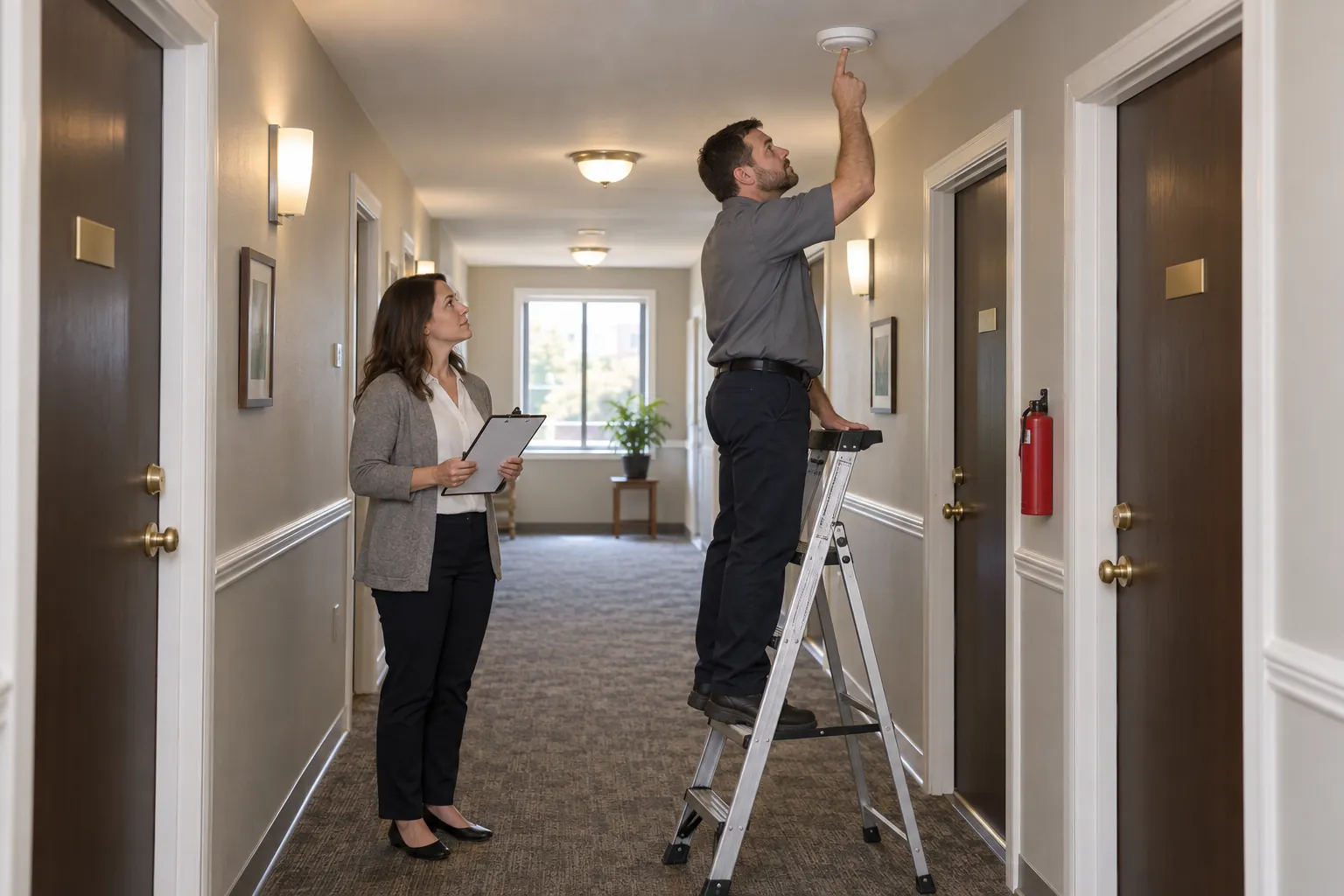
It replaced the old UPCS protocol with standards that care less about how a building looks and more about health and safety. This guide covers what the rule requires, what inspectors look at, how deficiencies are scored and how fast they must be fixed, and how a property team can keep the building ready between inspections.
01
What an NSPIRE inspection is, and the rule behind it
NSPIRE stands for the National Standards for the Physical Inspection of Real Estate. HUD published the final rule on May 11, 2023, in the NSPIRE final rule (88 FR 30442), and it sits in the Code of Federal Regulations at 24 CFR Part 5, Subpart G, Physical Inspection of Real Estate. The core duty is in section 5.703: the items and components inside the building, outside the building and within the units of HUD housing "must be functionally adequate, operable, and free of health and safety hazards."
Under section 5.701 the rule covers public housing, the Housing Choice Voucher (HCV) and Project-Based Voucher (PBV) programs, project-based Section 8, Sections 202 and 811, and HUD-insured multifamily housing.
The detail lives in two Federal Register notices: the NSPIRE Inspection Standards notice (88 FR 40832, June 22, 2023), which lists every inspectable item, its deficiencies and their severity, and the NSPIRE Scoring Notice (88 FR 43371, July 7, 2023), which turns what the inspector finds into a score. Both applied from July 1, 2023. The individual standards are published on HUD's NSPIRE Standards page.
The start dates differ by program. According to HUD's Notice PIH 2026-18, NSPIRE Administrative Procedures for Voucher Programs (issued July 15, 2026), NSPIRE inspections began for public housing in July 2023 and for multifamily properties in October 2023. For the voucher programs HUD has extended the compliance date three times, most recently in the NSPIRE compliance date extension for HCV, PBV and Moderate Rehabilitation (90 FR 46911): public housing agencies may keep using Housing Quality Standards as previously defined until February 1, 2027.
02
What the inspector looks at: unit, inside and outside
NSPIRE divides every property into three inspectable areas, defined in section 5.703:
- Unit: the interior of an individual dwelling, from bathroom and kitchen to heating, smoke alarms and carbon monoxide devices.
- Inside: the common areas and building systems inside the building but outside any unit. The rule's examples include basements, restrooms, mechanical rooms, community rooms, corridors, stairs, laundry rooms and trash collection areas, and systems such as elevators, emergency power, fire protection and HVAC.
- Outside: the site and the building exterior, such as fencing, lighting, parking lots, play areas and equipment, refuse disposal, walkways, fire escapes, roofs, walls and windows.
The rule also sets affirmative requirements, things that must be present rather than merely undamaged. Inside areas must have at least one working smoke detector on each level, GFCI protection for any outlet within 6 feet of a water source, a guardrail at any walking surface with a drop of 30 inches or more, permanently mounted light fixtures in kitchens and bathrooms, and no unvented space heaters that burn gas, oil or kerosene. Units have their own list, including smoke alarms on each level, inside each bedroom and within 21 feet of any bedroom door, two working outlets (or one outlet and a permanent light) in every habitable room, and carbon monoxide detection to HUD's standard.
Section 5.703(e) adds a general duty: the unit, inside and outside must be free of health and safety hazards, including carbon monoxide, electrical hazards, extreme temperature, fire hazards, garbage and debris, handrail hazards, infestation, lead-based paint, mold and structural problems.
HUD's Standards page lists more than sixty standards, from Address and Signage to Window, each with its deficiencies, their severity and a correction timeframe. The inspector does not look at every building on a large property: the Scoring Notice says only buildings that contain a unit in the inspection sample are inspected, plus at least two non-dwelling spaces, with priority on spaces residents use, such as a community room.
03
Deficiencies, severity and the repair deadlines
Under section 5.705(a) every deficiency is classed as Life-Threatening, Severe, Moderate or Low. The Scoring Notice defines them:
- Life-Threatening: deficiencies that "present a high risk of death to a resident."
- Severe: a high risk of permanent disability or serious injury or illness, or the physical security or safety of a resident or their property "would be seriously compromised."
- Moderate: a moderate risk of an adverse medical event requiring a healthcare visit, temporary harm, or a condition that could worsen a chronic illness if left untreated.
- Low: deficiencies "critical to habitability but not presenting a substantive health or safety risk."
Section 5.711(c) sets the clock. At the end of the inspection, or of each day of a multi-day inspection, the owner or public housing agency is told of any Life-Threatening or Severe items. Life-Threatening items must be corrected within 24 hours of receipt of that notice unless HUD approves a variation; Severe items within 24 hours unless the individual standard says otherwise or HUD approves a variation. Within 2 business days after that deadline, the owner must electronically certify, with supporting evidence, that each item has been fixed, made safe or blocked until permanent repairs can be done. Moderate deficiencies must be corrected within 30 days and Low deficiencies within 60 days, unless the individual standard or a HUD notice sets another time.
A worked example shows how concrete the standards are. The NSPIRE Smoke Alarm Standard (V3.0, June 20, 2023) has three deficiencies: a smoke alarm not installed where required, an obstructed smoke alarm, and one that gives no audio or visual alarm when tested. A missing required alarm is Life-Threatening, with a 24-hour correction timeframe, in a unit and in an inside area alike. The standard also says an alarm should be at least 10 feet from a cooking appliance and never painted over or decorated.
The Inspection Standards notice also records a change in federal law: under the Public and Federally Assisted Housing Fire Safety Act of 2022, sealed batteries in smoke alarms became a requirement from December 29, 2024.
04
How the score works, and how often you are inspected
The Scoring Notice weights each deficiency by severity and by location. Deficiencies in units weigh most, because that is where residents spend their time, and a Life-Threatening deficiency in a unit costs the most points. Deductions are divided by the number of units inspected, and the score runs on a 0 to 100 scale.
Two thresholds decide whether a property fails:
- Property threshold: a score below 60 is a failing score.
- Unit threshold: if 30 or more points are deducted for unit deficiencies across the sample, the property fails regardless of its overall score, and the result is deemed to be 59. The 30 points apply to the unit area in aggregate, not to one unit.
A score of 30 or below means an enforcement referral. Under section 5.711(c)(2), a property scoring below 60 must survey every unit, inside area and outside area and submit the results to HUD.
The score also sets the inspection cycle. Section 5.705(c) says a property must be inspected before it joins a covered program, and then annually unless a longer cycle applies, within three months either side of the anniversary of the last inspection. For properties scored under this methodology, a score of 90 or more makes a standard 1 performer, inspected once every three years; 80 to 89 is standard 2, every two years; below 80 is standard 3, inspected every year. Small public housing agencies and voucher units have their own cycles.
Access matters as much as condition. Section 5.705(e) requires owners and agencies to give HUD or its representative access to all units, "whether or not the resident is home or has installed additional locks" for which the owner has no key. Failing to provide access gives the property a physical condition score of zero.
If the owner believes the inspection got something wrong, section 5.711(d) allows a request for technical review, received no later than the 45th calendar day after the report is provided. The burden of proof is on the owner, HUD presumes the inspection was accurate, and a review is not granted for conditions corrected after the inspection. The rule names photographs, and written material from a source such as a fire marshal or professional engineer, as evidence.
05
Getting ready: self-inspection, routine checks and the evidence
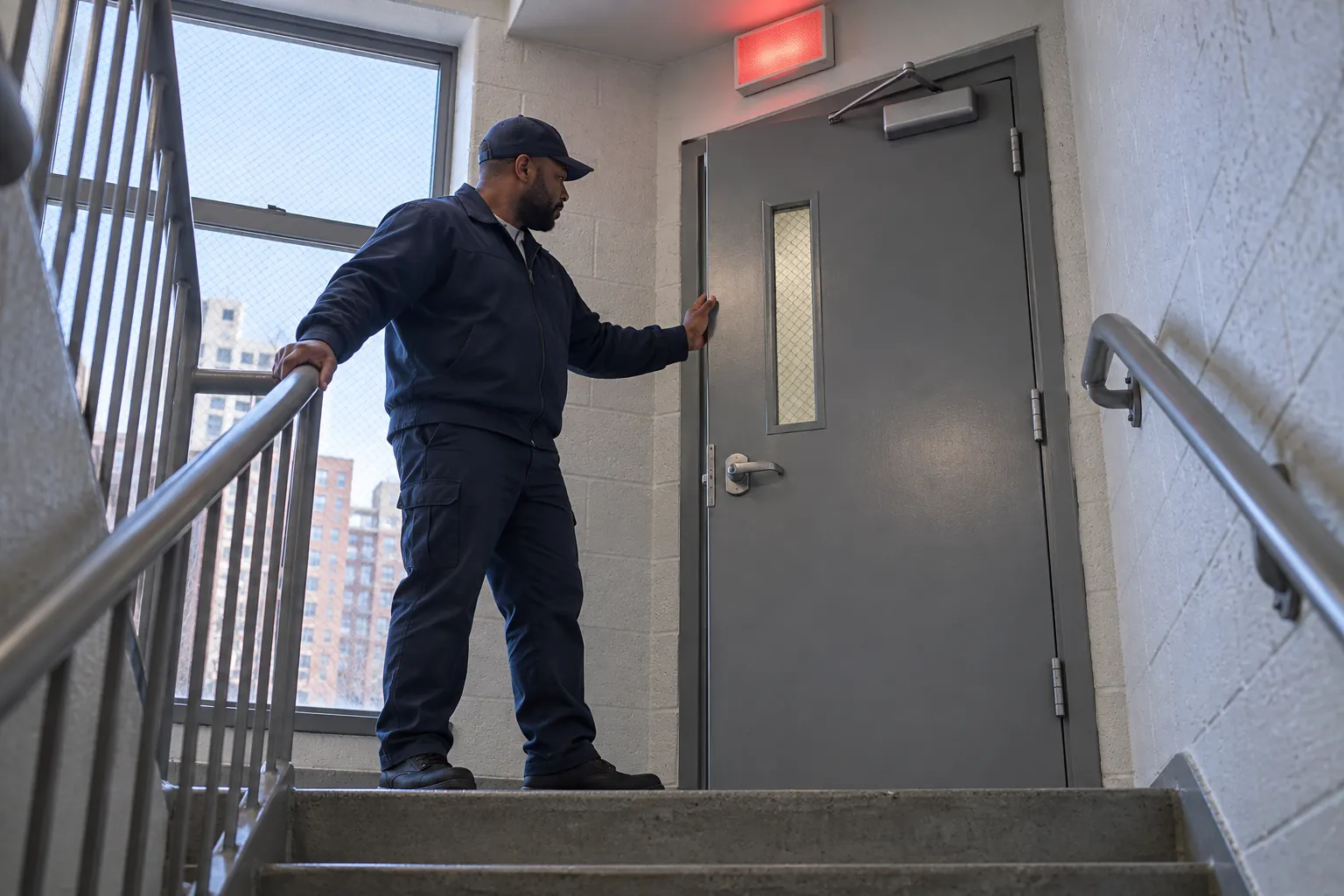
NSPIRE is built so that a property is in good condition every day, not just on inspection day. The rule makes that explicit. Section 5.707 requires public housing agencies and owners of HUD housing under an assistance contract (other than owners in the HCV, PBV and Moderate Rehabilitation programs) to self-inspect their properties annually, including all units, against the section 5.703 standards, to keep the results for three years, and to provide them to HUD on request.
A self-inspection once a year finds problems once a year. Most deficiencies appear between inspections: a smoke alarm taken down after burnt toast, a door wedged open, a light out in a stairwell. The teams who do well usually split the work in three:
- Routine checks of the common areas, on a set schedule, by the people already in the building: maintenance technicians, porters, custodians and the building engineer. Stairs and handrails, exit signs, extinguishers, fire labeled doors that close and latch, trash rooms, laundry rooms and walkways.
- Unit work that follows the same standards: make-ready and turnover, annual unit inspections, and work orders, each checked against the NSPIRE deficiencies rather than an old UPCS checklist.
- A clear route for reports, so that residents and staff can report a hazard and see it fixed. Section 5.705(f) says HUD will set a procedure for tenants to recommend units for it to inspect, and the owner must correct whatever HUD finds there within the usual timeframes.
Good evidence answers four questions for each check or repair: what was checked or fixed, where exactly, who did it and when. A photograph of the corrected condition is the most useful single piece of evidence, both for the 2-business-day certification of Life-Threatening and Severe items and for a technical review, where the rule names photographs first.
Before a scheduled inspection, check the paperwork as well as the building. Have keys for every unit and for any additional locks. Notify residents of the planned inspection, as section 5.711(h)(1) requires, and give any notice of entry that your lease and state law require. Make sure lead-based paint documentation is available, since section 5.703(e)(2) requires HUD housing to have proper documentation under 24 CFR Part 35.
06
Where the record fails, and what SiteClara does about it
The self-inspection is a binder on a shelf. The common-area walk is a clipboard sheet initialed at the end of the week for every day at once. A stairwell light reported to whoever was passing never became a work order, and on inspection day it is a deficiency with nothing to show it was ever noticed. After a Life-Threatening item is fixed at 6 p.m., the proof is a photo on one technician's personal phone, and the certification is due in two business days.
SiteClara works on the routine checks and reports in the shared spaces of a building. A printed QR poster goes at each location, such as a stairwell, a laundry room, a trash room or a community room, with an optional NFC tag behind it. Staff scan the code or tap the tag on their own phone, with no app to install, and sign in with a link. They see the checks due at that location, such as exit signs lit, extinguisher in place, fire door closing and latching, and mark each one done, or say what stopped them. A problem, such as a leak, a missing smoke alarm cover or a broken handrail, is reported there with a photo and goes onto the team's list of jobs until someone closes it.
The supervisor sees what is due, done and missed, and can record why a check was missed; a job that needs the building manager can be escalated to them to answer. Each day the supervisor reviews and approves a report that goes to nominated management or owner contacts at 8 a.m. the next morning, showing what was reported, completed and still open, and how the scheduled checks went. Before an NSPIRE inspection, that record shows which common areas have been checked, by whom and when, and what was found and fixed.
07
Questions people ask
What is a good NSPIRE score?
A score of 60 or more passes, but a good NSPIRE score is 90 or more, because it earns the longest gap before the next inspection. The NSPIRE Scoring Notice (88 FR 43371) keeps a 0 to 100 scale and says "any score under 60 is considered a failing score." Under section 5.705(c) of 24 CFR Part 5, Subpart G, a property scoring 90 points or higher is a standard 1 performing property, inspected once every three years; 80 to 89 means once every two years, and below 80 means every year.
What happens if an NSPIRE inspection fails?
The owner or public housing agency must survey the whole property for deficiencies and report the results to HUD. The NSPIRE Scoring Notice (88 FR 43371) says that for properties scoring below 60, "the owner or PHA must conduct a survey of the entire project, including all units, inside areas, and outside areas, for any deficiency," and submit a copy of the results to HUD electronically. Under section 5.711(i) of 24 CFR Part 5, Subpart G, a score of 30 points or less is automatically referred to HUD's Departmental Enforcement Center, and two successive scores under 60 may be referred. Pass or fail, the Scoring Notice says the score does not change the obligation to repair all deficiencies identified in the inspection.
What does an NSPIRE inspection consist of?
An NSPIRE inspection looks at a sample of units and at the property's inside and outside areas, and records each deficiency against HUD's published standards. Section 5.703 of 24 CFR Part 5, Subpart G requires the items and components in those three inspectable areas to be "functionally adequate, operable, and free of health and safety hazards." The NSPIRE Scoring Notice (88 FR 43371) says only the buildings that contain a unit in the inspection sample are inspected, along with at least two non-dwelling spaces, with priority on spaces residents can access or will spend time in.
08
Where to read more, and a list to take away
Start with HUD's NSPIRE program page, which links to the standards, the inspection protocol and the score calculator, and the NSPIRE Official Notices and Proposed Rules page, which lists every notice with its applicable date. Read the rule itself at 24 CFR Part 5, Subpart G; it is short. Voucher programs should read Notice PIH 2026-18 before February 1, 2027. Remember that state and local codes, and your fire marshal, still apply.
Between inspections, check that:
- you know which program covers each property, when its next inspection window opens, and whether it is a standard 1, 2 or 3 performer;
- every level and every required location has a working smoke alarm, and carbon monoxide detection meets HUD's standard;
- the new affirmative requirements are met: fire labeled doors, GFCI outlets near water, guardrails, heat, kitchen and bathroom lighting, and outlets or lights in habitable rooms;
- common areas are checked on a set frequency by named staff, with a same-day record of each check;
- residents and staff have one clear way to report a hazard, and each report becomes a job that is closed and recorded;
- someone is on call to correct Life-Threatening and Severe items within 24 hours and to certify with evidence within 2 business days;
- the annual self-inspection covers all units and its results are kept for three years;
- keys, resident notices and lead-based paint documentation are ready before the inspector arrives.
Sources
Every document this guide quotes or links to, in the order it first cites them.
- NSPIRE final rule (88 FR 30442) federalregister.gov
- 24 CFR Part 5, Subpart G, Physical Inspection of Real Estate ecfr.gov
- NSPIRE Inspection Standards notice (88 FR 40832, June 22, 2023) federalregister.gov
- NSPIRE Scoring Notice (88 FR 43371, July 7, 2023) federalregister.gov
- NSPIRE Standards page hud.gov
- Notice PIH 2026-18, NSPIRE Administrative Procedures for Voucher Programs hud.gov
- NSPIRE compliance date extension for HCV, PBV and Moderate Rehabilitation (90 FR 46911) federalregister.gov
- NSPIRE Smoke Alarm Standard (V3.0, June 20, 2023) hud.gov
- Notice PIH 2025-27 / H 2025-06 hud.gov
- NSPIRE program page hud.gov
- NSPIRE Official Notices and Proposed Rules hud.gov
Related guides
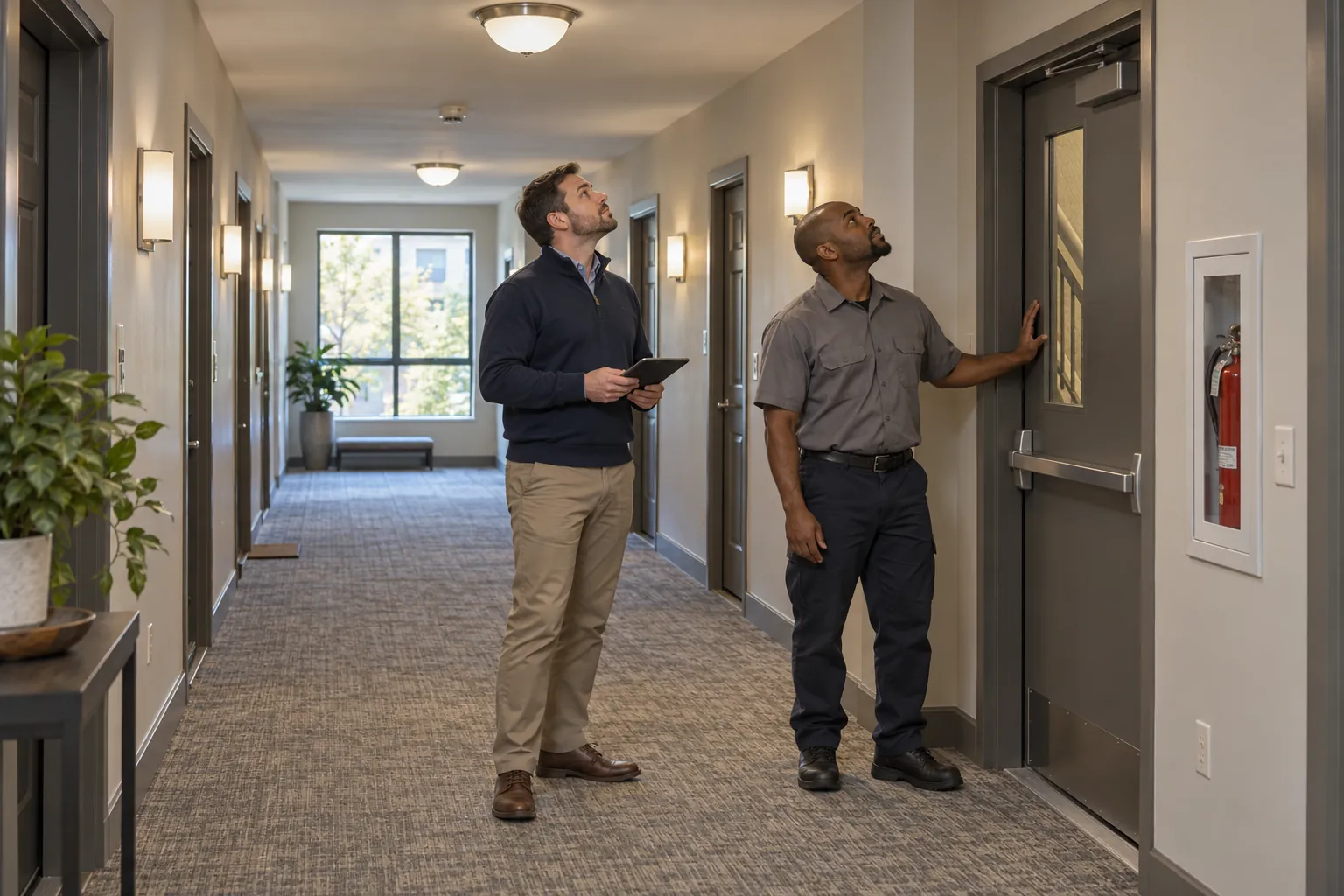 Premises and facilities managementCommon area inspection checklist: what to check, how often, and the record to keepA common area inspection checklist for apartment, condo and commercial buildings: what to check, how often, the codes and case law behind it, and the record to keep.
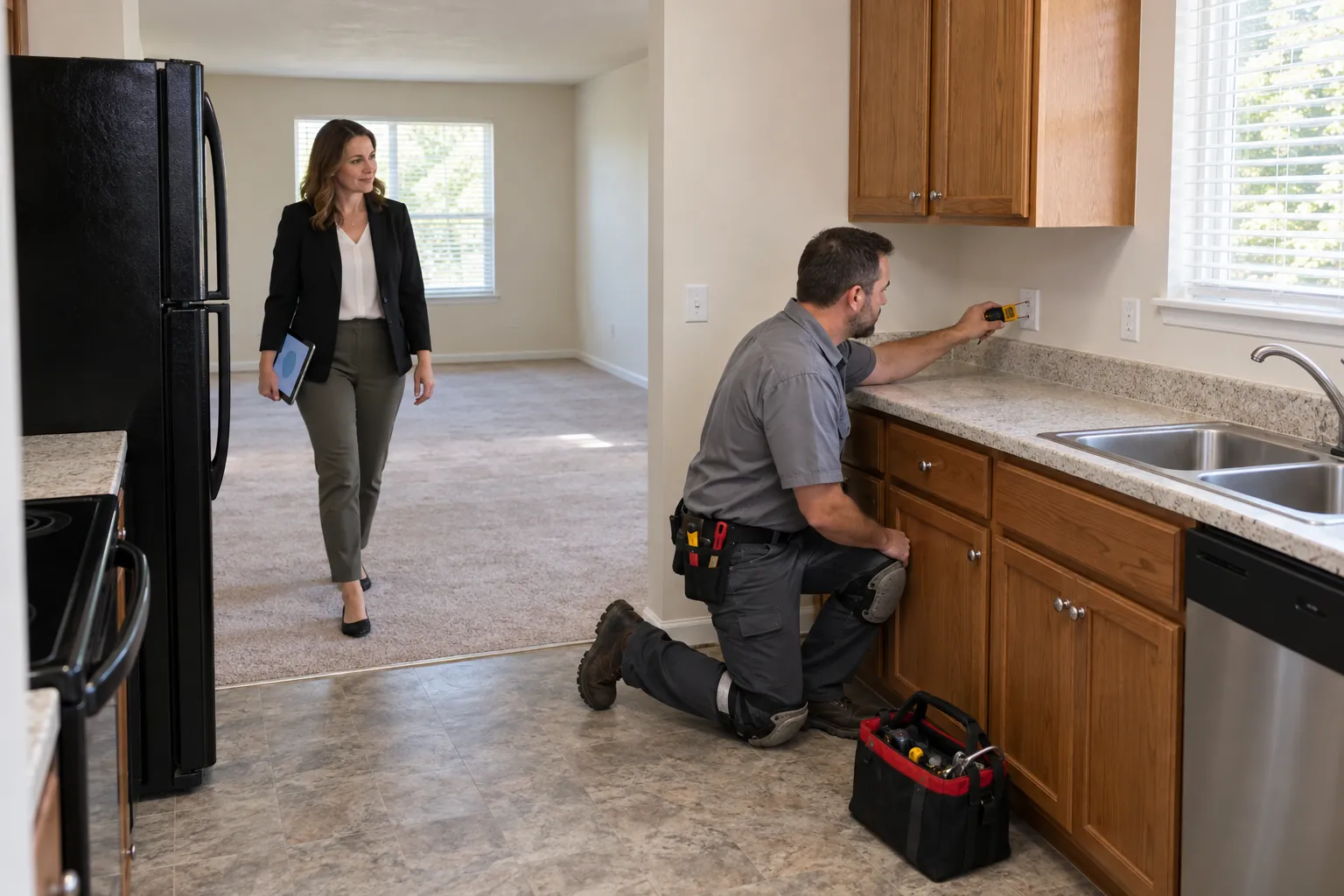 Premises and facilities managementThe apartment make-ready checklist: how to turn a unit properly, and prove itAn apartment make-ready checklist room by room: the order of work, the safety items HUD, EPA and state law require, and the photos and sign-off that prove it.
 Premises and facilities managementPreventive maintenance checklist: what to check in a commercial building, how often, and how to prove itA preventive maintenance checklist for commercial buildings: HVAC, electrical, fire and life safety, plumbing, how often, and what the record should show.
 Premises and facilities managementEngineering rounds: how to walk the plant, and how to show it was walkedEngineering rounds in a commercial building: what to walk, the readings to take, how often, the rules behind them, and a round log that shows the plant was checked.