Premises and facilities management
Vacant property inspection: what to check, how often, and what to record
A vacant property inspection is a regular, recorded visit to an unoccupied building to confirm that it is secure, weathertight and safe, and to catch damage, leaks and hazards early.
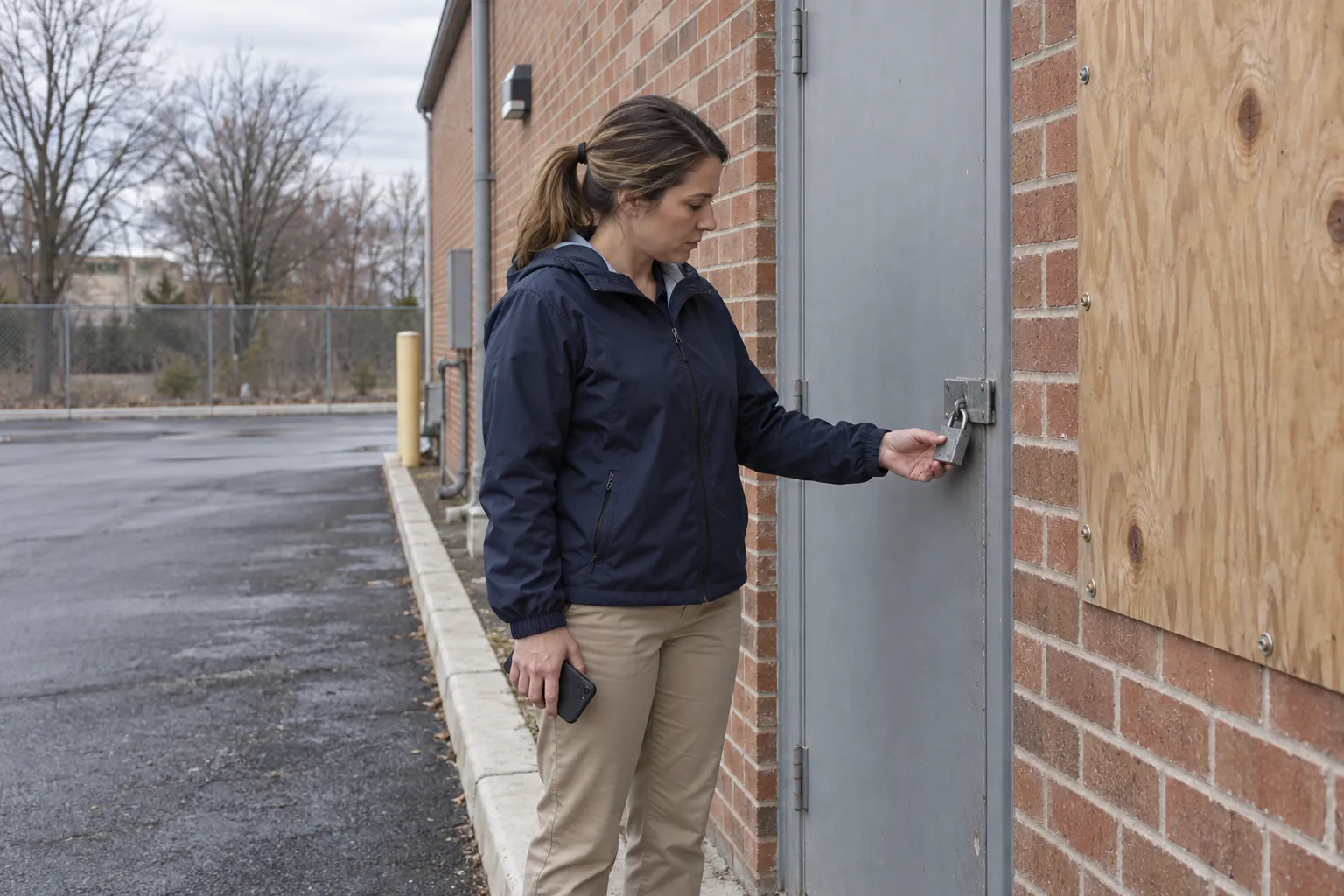
An empty building deteriorates faster than an occupied one, and nobody is there to notice. A pipe freezes, a rear door is pried open, someone dumps a mattress behind the loading dock, and the first anyone hears of it is the claim or the code violation. The record of those visits is what shows the owner, the insurer and the code official that the building was looked after. This guide covers the codes behind it, what to check, how often, and what to write down.
01
What a vacant property inspection is, and the codes behind it
A vacant property is one that nobody is using: an office floor between leases, a closed retail store, a school building awaiting demolition, a bank-owned building after foreclosure. A vacant property inspection is a regular visit by a property manager, a building engineer, a security officer on patrol or a property preservation vendor, to confirm that the building is secure, weathertight and safe, and to record what they found. Lenders and property preservation companies inspect vacant residential properties too; this guide concentrates on commercial buildings, but the model codes below cover both.
There is no single federal rule that says how often an empty commercial building must be inspected. The duties come from the codes your jurisdiction has adopted, from the insurance policy, and from local ordinances. The two model codes most US jurisdictions build on are published by the International Code Council:
- The International Fire Code (IFC). Section 311 of the 2024 International Fire Code, Chapter 3 covers vacant premises. It says that "temporarily unoccupied buildings, structures, premises or portions thereof, including tenant spaces, shall be safeguarded and maintained" under the rest of the section. That includes security ("exterior and interior openings open to other tenants or unauthorized persons shall be boarded, locked, blocked or otherwise protected to prevent entry by unauthorized individuals"), fire protection ("fire protection systems shall be maintained in an operable condition at all times", with narrow exceptions the fire code official must approve), fire separation between a vacant tenant space and the rest of the building, and the removal of combustible waste.
- The International Property Maintenance Code (IPMC). Section 301.3 of the 2024 International Property Maintenance Code, Chapter 3 says that "vacant structures and premises thereof or vacant land shall be maintained in a clean, safe, secure and sanitary condition as provided herein so as not to cause a blighting problem or adversely affect the public health or safety." The rest of Chapter 3 applies to the vacant building as it would to an occupied one, including rubbish (308.1) and rodents (302.5).
Fire and property maintenance codes are adopted locally, often with amendments or in an older edition, and the authority having jurisdiction (AHJ) interprets them; some jurisdictions use NFPA 1 or their own housing code instead. Check what your city or county enforces before treating any section number here as the rule for your building.
Many cities add a vacant building ordinance on top. Chicago's Department of Buildings, for example, says on its Vacant Buildings page that the city "enforces registration and maintenance requirements for the owners of all vacant buildings, the owners of occupied buildings with one or more vacant storefront, and the mortgagees of certain vacant buildings." Other cities have their own registration, signage, insurance and boarding standards, so look up the ordinance for the city the building is in.
02
What to check on each visit
A vacant building inspection follows the same route on every visit, outside first and then inside, so that changes stand out. A typical checklist covers:
- The perimeter and the lot: fences and gates intact; no illegal dumping, trash or pallets piled against the building; no signs of people camping, of vehicles parked where they should not be, or of anyone tampering with rooftop units, copper or the generator.
- Doors, windows and other entry points: every door, window, overhead door, roof hatch and basement areaway secure; locks, padlocks, boards and security screens undamaged; no pry marks, broken glass or cut chains.
- Mail and deliveries: the mail slot sealed or mail collected, flyers and packages cleared from the vestibule, since a pile of mail tells anyone passing that the building is empty.
- Roof, gutters and downspouts, as far as can be seen safely from the ground or a permitted roof access: ponding, missing flashing, clogged drains, water staining down the walls.
- Inside: signs of entry or occupation, water on the floor, stained or fallen ceiling tiles, mold, rodent droppings or other pests, vandalism, and any smell of gas, smoke or sewage.
- Utilities: water shut off and the system drained where that is the plan; gas and electricity isolated except for circuits that serve the fire alarm, sprinkler equipment, heat and security lighting; heat set to the minimum the plan calls for.
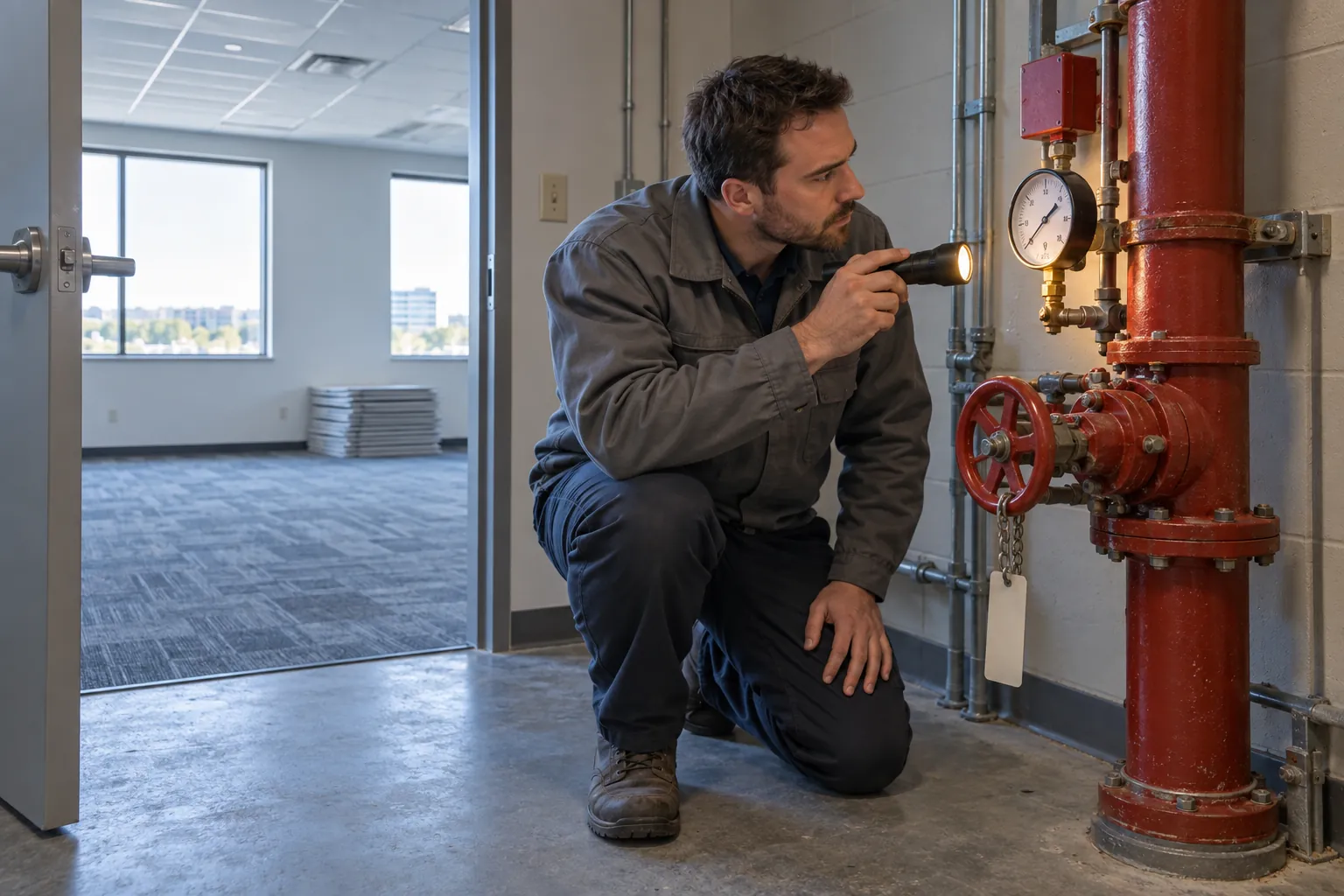
- Fire protection: sprinkler control valves in their normal position and secured, the fire alarm panel showing normal with no trouble or supervisory signals, heat on in any room with water-filled sprinkler piping, and the fire department connection and hydrant unobstructed.
- Security systems: intrusion alarm armed and reporting to the monitoring company, cameras in position and recording, exterior lighting working.
- Meters: electric, gas and water readings at the start of the vacancy, and on later visits where a sudden change would show a leak or an unauthorized connection.
- Combustibles: no stored trash, furniture or packaging left inside, and exits usable for anyone who has to work in the building.
Treat anything that is an immediate safety risk, such as a smell of gas, exposed wiring or a person inside, as a call to make from outside the building, not an item to note for the report.
Tailor the list to the building. A partly vacant office building also needs the demising walls, fire doors and common corridor checked, because IFC 311.2.3 requires the fire-resistance-rated separations between a vacant tenant space and the rest of the building to be maintained.
03
How often to inspect a vacant building
Start with the documents that set a minimum. The insurance policy and any vacancy permit or endorsement may require inspections at a set interval, by a particular kind of person, or recorded in writing. A local vacant building ordinance may set its own inspection or maintenance standard. A lender or loan servicer may have one too. Commercial loan documents set their own terms; for comparison, on FHA-insured single-family home mortgages, 24 CFR 203.377 makes the mortgagee "responsible for the inspection of such property at least monthly" once it learns a property in default is vacant or abandoned. Read the actual wording that applies to your building rather than a rule of thumb, and if the policy is silent, ask the broker or the carrier in writing.
Above that minimum, an assessment of the building's risks decides:
- Higher risk, calling for more frequent visits: a building on a busy street or in an area with a history of break-ins, visible signs that it is empty, rooftop equipment or copper worth stealing, a large footprint, a sprinkler system that stays wet, and winter in a cold climate.
- Lower risk: a building inside a managed business park with its own patrols, a short vacancy between leases, a monitored intrusion alarm and cameras that raise an alert if someone gets in.
- After an event: a storm, a hard freeze, a power outage, an alarm activation, a police call or a neighbor's complaint all justify an extra visit, recorded like any other.
One pattern for a commercial vacancy is a weekly interior and exterior inspection, sometimes with a nightly drive-by from a mobile patrol. Whatever the pattern, write it down, agree it with the carrier where it matters, and follow it. A missed visit that is not recorded looks exactly like a visit that never happened.
04
Water, heat and the sprinkler system
Water is one of the most damaging things that can happen to a vacant building. A split pipe in an empty building can run for days, and on an upper floor it can ruin every floor below, so deciding what happens to the water at the start of the vacancy is usually the most important single step.
The sprinkler system complicates it. IFC 311.2.2 requires fire protection systems in a vacant building to be kept operable at all times. The exceptions are narrow and each needs the fire code official. The main ones are a building cleared of all combustible materials and debris where construction, separation distance and security mean there is no fire hazard, or an unheated building with no contents or storage and every opening secured, where the fire alarm and sprinklers may be placed out of service and standpipes kept dry. Do not drain a sprinkler system or shut a control valve on your own authority.
If the sprinklers stay in service, the building needs heat. NFPA's article on the building owner's responsibilities for sprinkler inspection, testing and maintenance summarizes the owner's duties under NFPA 25: areas with water-filled piping that has no other freeze protection must be kept at 40°F (4°C) or above; the owner must notify the AHJ, the fire department if required and the alarm-receiving facility before shutting down a system or its supply; and inspection, testing and maintenance records must be kept and made available to the AHJ. The same article lists the removal of heating from spaces with piping subject to freezing among the changes the owner should evaluate. Your sprinkler contractor, not the inspector on the weekly visit, carries out the NFPA 25 inspections and tests; the weekly visit checks that nothing has changed in between.
Where potable water is left on, it goes stagnant. The CDC's guidance on reopening buildings after prolonged shutdown or reduced operation warns that "stagnant or standing water in a plumbing system can increase risk for growth and spread of Legionella", that hot water can cool into the Legionella growth range (77–113°F), and that corroded plumbing can raise lead and copper levels. Before people come back, it recommends a water management program, flushing hot and cold water through every point of use, checking the water heater setting, and assessing the building for mold and excess moisture. Plan for that at the start of the vacancy, using our water management program guide, rather than on the day the new tenant arrives.
05
What a good inspection record shows
After a claim, a code complaint or a dispute with a buyer, the questions are simple: when was the building last inspected, by whom, and what did they find? A useful vacant property inspection report carries:
- The property, the date and the time of the visit, recorded at the time, not written up at the end of the week.
- The inspector's name, identifying one person, not a company or a set of initials.
- Each item on the checklist, with what was found, not just a check mark: "rear door secure, padlock intact", "panel normal", "ceiling tile stained in suite 210".
- Date-stamped photos: the boarded window, the valve, the thermostat, the roof drain, so that a change is visible from one visit to the next.
- Problems and follow-up: what was found, who it was reported to, the work order raised, and when the repair was complete, such as a lock replaced after a break-in or a hauler called to clear dumped trash.
- Missed or late visits, with the reason.
Keep the records for the whole vacancy and after it, because a claim or a code case can surface months later, and the record is the evidence.
Look after the inspector too. OSHA's workplace violence page notes that "working alone or in isolated areas may also contribute to the potential for violence", and names late-night work and high-crime areas as risk factors. Give inspectors a check-in procedure and a clear rule: if someone may be inside, do not go in; leave and call the police. For rodent droppings, the CDC's advice on cleaning up after rodents is to ventilate first, never sweep or vacuum, and wet them with a bleach solution or an EPA-registered disinfectant while wearing gloves.
06
Where the record fails, and what SiteClara does about it
Vacant property inspections are easy to skip and hard to prove. The inspector visits a building nobody else goes into. The paper log stays in a truck or on a clipboard, or the report is typed up on Friday for the whole week. The owner hears about a missed visit only when something has gone wrong, and a photo on the inspector's phone shows the building but not when it was taken, where, or by whom.
SiteClara puts a printed QR poster, with an NFC tag behind it if you prefer staff to tap, at points inside and outside the building: the front entrance, the sprinkler riser room, the electrical room, the loading dock, each floor. The inspector scans or taps with their own phone, with no app to install, sees the checks due at that point and marks each one done, or says what stopped them, such as a door that will not unlock, with a photo on any visit. The time and the named person are recorded as it happens.
A problem found on the visit, such as a forced window or water on the floor, is reported there with a photo and goes onto the team's list of jobs until someone closes it, and a supervisor can escalate it to the building manager to answer. The supervisor sees which inspections are due, done and missed, and can record why one was missed. Each day the supervisor reviews and approves a report that goes to nominated management or client contacts the next morning, with the photos, what was completed and what is still open.
07
Questions people ask
How long does a building have to be empty to be considered vacant?
There is no national number; it depends on the definition that applies to the building. An insurance policy may count a stated number of consecutive days, and a city ordinance uses its own test. The District of Columbia, for example, defines a vacant building in D.C. Code § 42–3131.05 as "any real property improved by a building that is not lawfully occupied on a regular or habitual basis by the owner or a tenant or other person having the permission of the owner", with no number of days. Read the policy and the local ordinance for the building in question.
Is a vacant property inspection required by law?
Not by one federal rule that covers every building, but some requirements are specific. For an FHA-insured single-family home mortgage, 24 CFR 203.377 says that the mortgagee, "upon learning that a property subject to a mortgage insured under this part is vacant or abandoned, shall be responsible for the inspection of such property at least monthly, if the loan thereon is in default." For other buildings the duty to keep a vacant building secure and safe comes from the fire and property maintenance codes your jurisdiction has adopted, local ordinances and the insurance policy, which in practice means inspecting it.
How do you check whether a property is vacant?
Look for signs that nobody is using it: mail and flyers piling up, utilities off, no furniture or stock, overgrown or littered grounds. Lenders have a set trigger. Under 24 CFR 203.377, when a payment on an FHA-insured single-family home mortgage in default is not received within 45 days of the due date and the mortgagor cannot be reached by telephone, "the mortgagee shall be responsible for a visual inspection of the security property to determine whether the property is vacant."
08
Further reading, and a list to take away
Start with the insurance policy and your broker, then the codes your jurisdiction enforces: the International Code Council publishes read-only versions of the International Fire Code and the International Property Maintenance Code, and your building department will tell you which edition it has adopted and what it has amended. The CDC's guidance on reopening buildings covers water, mold and ventilation before reoccupancy. For cold climates, see the winterization checklist.
When a vacant building comes onto your books, make sure that:
- the carrier or broker has been told, and you have read the vacancy condition and any endorsement;
- you know which fire and property maintenance codes apply, and whether the city requires the building to be registered;
- the inspection frequency is written down and meets the policy, the ordinance and any lender's requirement;
- mail is stopped, combustibles removed, every opening secured, and meter readings and photos taken on day one;
- the plan for water, heat and the sprinkler system is agreed with the fire code official and the sprinkler contractor, and nothing is drained or valved off without it;
- every visit is recorded with the time, the inspector's name, what was found and photos;
- problems go to someone who will fix them, and the fix is recorded;
- inspectors have a check-in procedure and know not to enter if someone may be inside;
- water, mold and life safety systems are checked before the building is reoccupied.
Sources
Every document this guide quotes or links to, in the order it first cites them.
- 2024 International Fire Code, Chapter 3 codes.iccsafe.org
- 2024 International Property Maintenance Code, Chapter 3 codes.iccsafe.org
- Vacant Buildings page chicago.gov
- 24 CFR 203.377 ecfr.gov
- The building owner's responsibilities for sprinkler inspection, testing and maintenance nfpa.org
- Reopening buildings after prolonged shutdown or reduced operation cdc.gov
- Workplace violence page osha.gov
- Cleaning up after rodents cdc.gov
- D.C. Code § 42–3131.05 code.dccouncil.gov
Related guides
 Premises and facilities managementWinterization checklist: getting a commercial building ready for freezing weatherA winterization checklist for commercial buildings: freeze protection, sprinklers, heating, roofs, snow and ice, when to check, who does it, and what to record.
 Security patrolsBuilding security checklist: what to check, when to check it, and how to show it was doneA building security checklist for US offices, schools and commercial buildings: doors, locks, lights, cameras, alarms and exits, when to check them and the record.
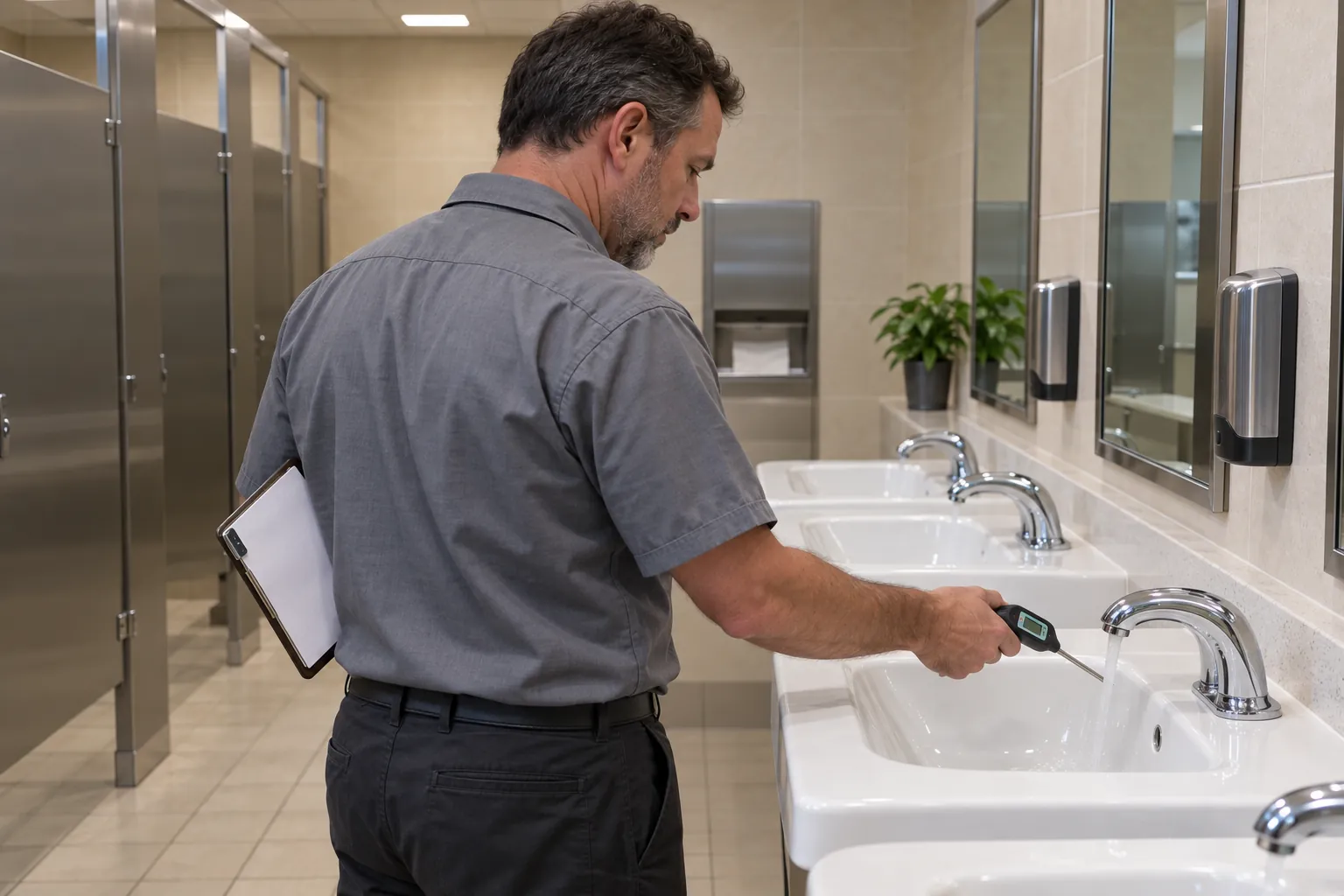 Fire and water checksLegionella water management program: the plan, the routine checks, and the record that proves themWhat a Legionella water management program covers under ASHRAE 188 and the CDC toolkit: control limits, routine monitoring, corrective action and the record.
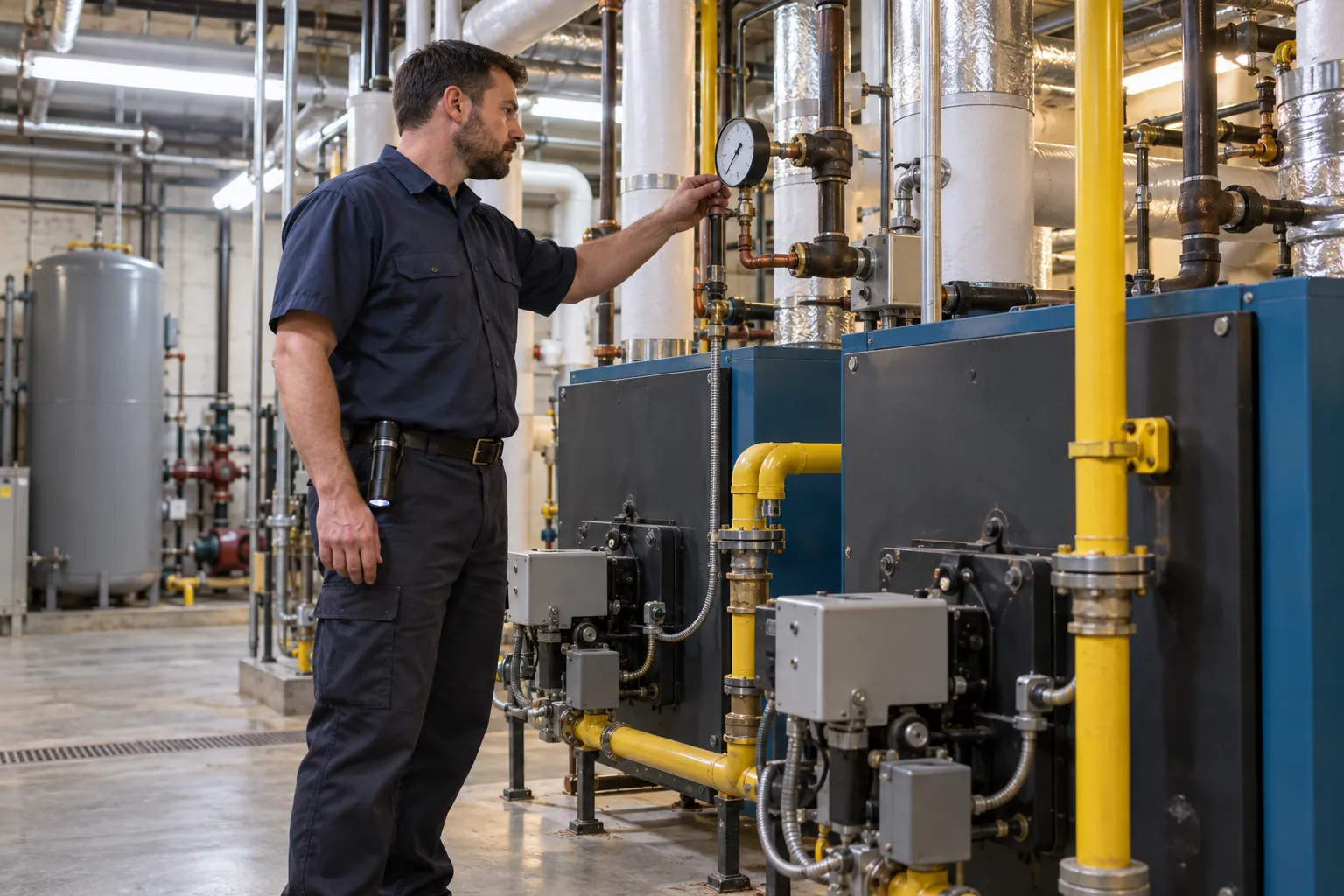 Premises and facilities managementEngineering rounds: how to walk the plant, and how to show it was walkedEngineering rounds in a commercial building: what to walk, the readings to take, how often, the rules behind them, and a round log that shows the plant was checked.