Premises and facilities management
Power outage procedures: what building staff do when the power goes out
A power outage checklist for a building sets out what staff check, in order, when the power fails: trapped elevator passengers, emergency lighting, the generator, the fire alarm panel, people, equipment and refrigerated stock, and who tells occupants what is happening.
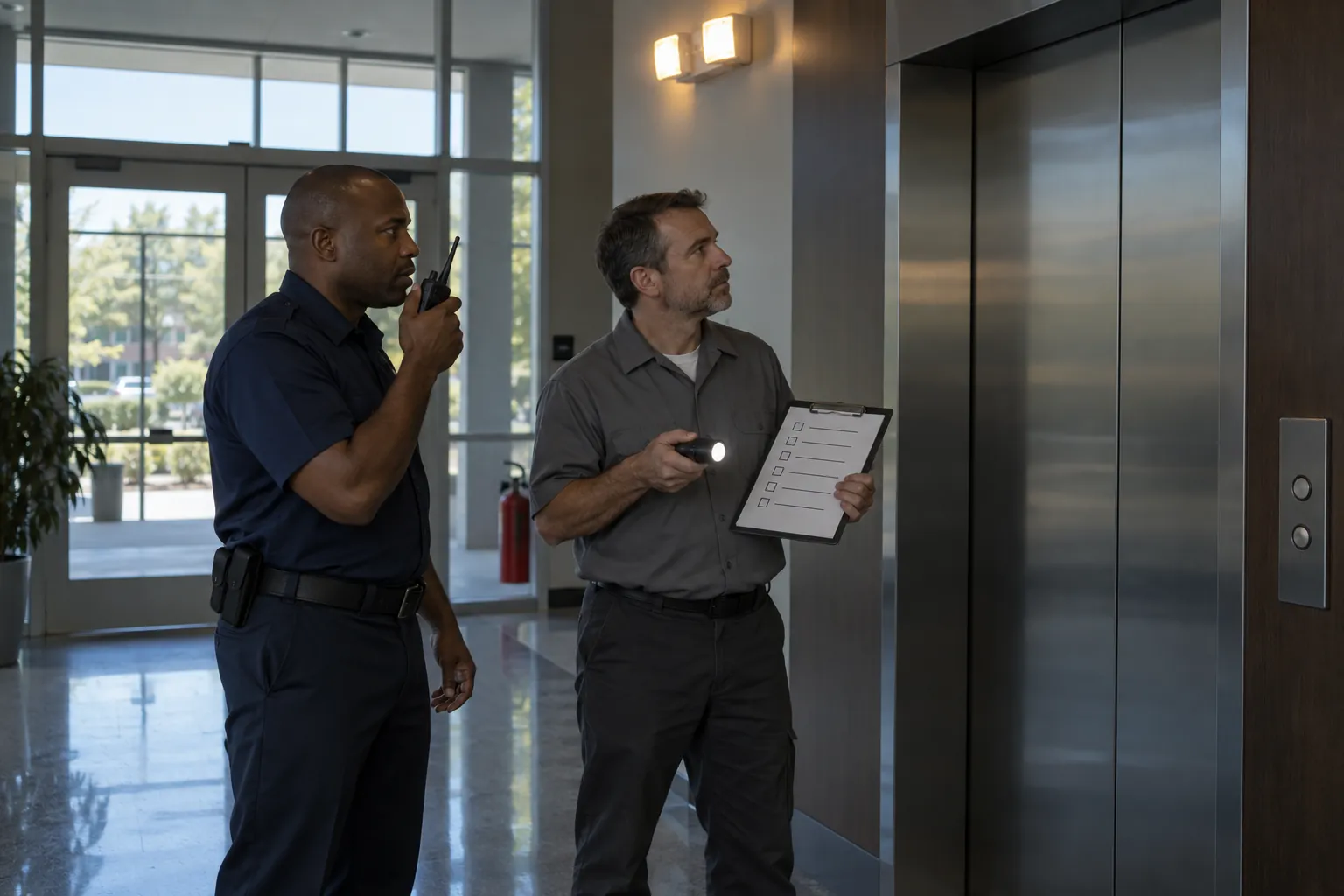
In an occupied building, the first hour decides whether a power failure is an inconvenience or an incident. This guide covers the rules and guidance behind a power outage procedure in the United States, what goes dark, a first-hour checklist, the longer outage, restoring power safely, and what the record should show afterward.
01
Where a power outage procedure comes from
No single federal rule is called a power outage procedure. The duty is spread across four sources.
The first is the emergency action plan. Under OSHA 29 CFR 1910.38, Emergency action plans, an employer must have a plan "whenever an OSHA standard in this part requires one", and the plan "must be in writing, kept in the workplace, and available to employees for review" (employers with ten or fewer employees may communicate it orally). Its minimum elements include procedures for reporting an emergency, for evacuation and exit route assignments, for employees who "remain to operate critical plant operations before they evacuate", and for accounting for everyone afterward. 1910.38 does not list particular emergencies, but a power failure is worth covering in the plan whether or not it leads to an evacuation. Our emergency action plan guide covers the plan itself.
The second is the exit route. OSHA 29 CFR 1910.37 says that "each exit route must be adequately lighted so that an employee with normal vision can see along the exit route", and that exit routes "must be free and unobstructed". That duty does not pause when the utility fails, which is why buildings have emergency lighting. Our emergency lighting testing guide covers those tests.
The third is emergency power. Where a building has a generator serving life safety loads, NFPA 110, Standard for Emergency and Standby Power Systems, sets how it is maintained and tested, once the building or fire code in force calls it up. NFPA 110 is a standard until a jurisdiction adopts it; the authority having jurisdiction (AHJ) decides which edition applies. The routine is in our generator testing guide.
The fourth is planning guidance. FEMA's Ready Business program publishes a Power Outage Ready Business Toolkit that walks an organization through four steps: identify your risk, develop a plan, take action, and be recognized. Its planning scenario is a severe weather event after which you "should assume you will not be able to access anything in your facilities that requires power for at least three days". It groups preparation under staff, space, systems and service.
02
What goes dark: the building systems to list
The FEMA toolkit's self-assessment asks whether your employees can work without HVAC, water heating and distribution, elevators or lighting, and whether your safety alarms will still work. The honest way to answer is to walk the building and list what depends on power before the day it fails. A typical commercial building list:
- Lighting: normal lighting goes out; emergency lighting and exit signs should come on from batteries or the generator.
- Elevators: cars can stop between floors. Some buildings have one car on emergency power; most do not. The FEMA toolkit suggests planning to use an elevator with backup power "for product or material transportation only".
- Fire alarm and life safety: the fire alarm panel runs on its secondary power supply, usually batteries, for a limited time. An electric fire pump depends on its power source.
- Water: domestic water booster pumps stop, so upper floors of a high-rise can lose water pressure. Sump and sewage ejector pumps stop, and a basement can flood in heavy rain. Water heaters stop heating.
- HVAC: no heating, cooling or ventilation. In summer, heat builds quickly in interior spaces; in winter, pipes can freeze.
- Refrigeration: walk-in coolers, freezers, breakroom refrigerators, pharmacy and laboratory refrigerators, and ice machines.
- Access control and security: card readers, electrified locks, gates, video surveillance and intercoms. Know, door by door, whether each lock fails safe (unlocks) or fails secure (stays locked) on loss of power.
- Communications: phone systems, internet, Wi-Fi, public address systems and the building's radio repeaters.
- Operations: computers, point of sale, kitchen equipment, dock doors and garage gates.
Mark each item as normal, emergency or standby power, and note how long any battery or generator will carry it. That list is the backbone of the procedure.
03
The first hour: a power outage checklist
The first hour is where a written procedure earns its keep. Keep it short enough to follow with a flashlight in one hand. A typical sequence for the building engineer, security officer or facility manager on duty:
- Confirm the scope. Is it the whole building, one floor, one panel, or the whole street? Check the utility's outage map. Report the outage to the utility; the FEMA toolkit says "it is always advisable to report outages" even in a widespread event.
- Check every elevator for trapped passengers. Call each car, check the machine room or controller if you are trained to, and call the elevator contractor. Only the elevator contractor or trained personnel should move a car or release passengers. See our elevator entrapment procedure.
- Confirm the emergency lighting and exit signs are on, especially in stairwells and along exit routes, and note any that are dark.
- Confirm the generator started and transferred, if you have one. Check the transfer switch position, the controller alarms and the fuel level.
- Check the fire alarm panel. Note any trouble signals, such as AC power loss, and confirm the panel is on battery. If any fire protection system is out of service or will be, follow your impairment procedure: notify the monitoring company and, where your fire code requires it, the fire department, and be ready to start a fire watch.
- Decide: continue, shelter in place, or evacuate. Follow the emergency action plan. Help anyone with a mobility impairment who relied on an elevator.
- Account for people if you evacuate or move them.
- Secure the building. Check doors that rely on electrified locks, and post a security officer at any entrance that is now open or cannot be opened.
- Protect equipment. Turn off or unplug computers and sensitive equipment to protect them from a surge when power returns. The FEMA toolkit calls for a plan "for turning off and disconnecting appliances during an outage".
- Protect refrigerated stock. Keep refrigerator and freezer doors closed and note the time the power went out.
- Communicate. Tell occupants and tenants what has happened, what to do and when you will next update them, and tell your own management. Use whatever channel still works.
Write down the time of each step and who did it as you go. Afterward it is the only reliable account of what happened.
04
Who does what, and when the outage runs for hours
Name roles, not only tasks, because the people on duty at 2 p.m. on a Tuesday and 3 a.m. on a Sunday are different. Typical assignments:
- Building engineer or chief engineer: electrical switchgear, generator and transfer switch, fire pump, booster and sump pumps, HVAC and elevator contact.
- Security officers: elevator checks and communication with trapped passengers, lobby and entrances, doors and access control, patrols of dark areas, and the log. Their post orders should say what to do on a power failure.
- Custodial or janitorial staff and day porters: flashlights and supplies, wet floors from sump backups or condensation, restroom checks.
- Facility or property manager: the decision to continue, shelter or evacuate, tenant communications, the utility and contractors, and the business continuity plan.
If the outage runs beyond an hour or two, the procedure changes from response to endurance. Things to plan for:
- Generator fuel and load. Check the fuel level at set intervals, know how many hours the tank holds at the current load, and have a fuel supplier's number ready.
- Batteries. Emergency lighting and fire alarm batteries run for a limited time. Plan portable lighting and a fire watch for when they run down.
- Portable generators. If you bring one in, keep it outdoors. CDC's Carbon Monoxide Poisoning Basics says never to use a generator inside, "even if doors and windows are open", and to run it only outside, "more than 20 feet away from any windows, doors, and vents". Never connect a portable generator to building wiring except through a properly installed transfer switch.
- Downed lines. The FEMA toolkit is plain: "never try to make your own electrical repairs, or pull tree limbs off power lines", and remember that "lines can be energized even if they are on the ground". Keep people and vehicles away and report them to the utility.
- Food. The FDA's Food and Water Safety During Power Outages and Floods says a refrigerator "will keep food cold for about 4 hours if it is unopened", and a full freezer about 48 hours (24 if half full) with the door closed. Food service operations also follow their local food code.
- Heat and cold. Watch for heat in interior rooms and for freezing pipes in winter. The FEMA toolkit suggests storing drinking water and protecting plumbing lines in freezing temperatures.
- Security. A dark building with open doors needs more patrols, not fewer.
05
Restoring power, and getting ready for the next one
Power coming back is its own hazard: equipment restarts at once, and systems off for hours may not come back as they were. A restoration checklist:
- Confirm with the utility that power is stable before switching loads back.
- Return the generator and transfer switch to automatic and confirm they retransferred. A set left in manual after an outage will not start on the next one.
- Bring loads back in stages: HVAC, pumps and large motors one at a time, rather than everything at once.
- Clear the fire alarm panel and confirm it is back on normal power with no trouble signals. Restore any impaired fire protection system, end the fire watch, and notify the monitoring company and anyone else told of the impairment.
- Check the elevators are back in service.
- Check the emergency lighting is recharging and the exit signs are on normal power.
- Check refrigeration temperatures. The FDA says to "discard any refrigerated perishable food (such as meat, poultry, seafood, milk, eggs, or leftovers) that has been at refrigerator temperatures above 40°F for 4 hours or more".
- Check the basement and pump rooms for water, and that sump and ejector pumps are running.
- Reset access control, clocks and time-based systems, and check every electrified door locks and unlocks correctly.
- Tell occupants what is back and what is still out.
Any repair to equipment that failed during or after the outage is maintenance work, not a reset. Under OSHA 29 CFR 1910.147, The control of hazardous energy (lockout/tagout), which covers servicing and maintenance where "the unexpected energization or start up of the machines or equipment, or release of stored energy could cause injury to employees", machines and equipment such as pumps, HVAC units and dock doors must be isolated from their energy source and rendered inoperative before the work starts. Electrical work on switchgear, panels, transfer switches or building wiring is covered instead by OSHA's electrical safety-related work practices in Subpart S (29 CFR 1910.333), which generally require live parts to be deenergized, and the circuits locked out or tagged, before anyone works on or near them. A returning utility supply is the kind of unexpected energization these rules guard against.
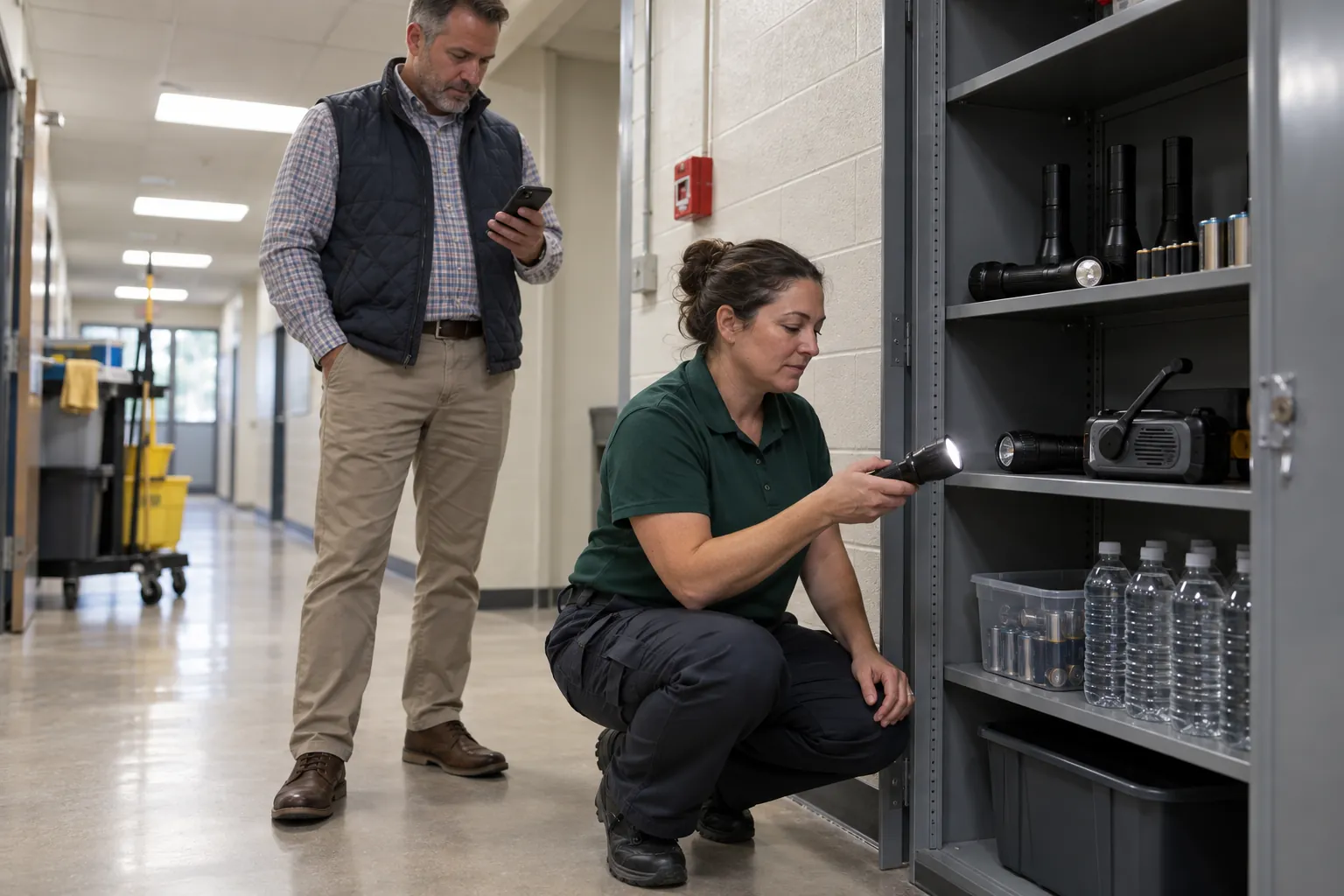
Then debrief. Update the list, the procedure and the post orders. Keep the outage kit stocked: flashlights, spare batteries, a radio, the printed contacts and procedure. The FEMA toolkit also recommends a power outage drill as part of an employee training program.
06
Where the record fails, and what SiteClara does about it
The procedure is usually in a binder. The weak part is the readiness between outages: the monthly flashlight and battery check initialed a quarter at a time, the outage kit that was raided for a leaking ceiling and never restocked, the generator left in manual after its test, and the dark exit sign that someone mentioned to whoever was passing.
SiteClara records the checks at the location. A printed QR poster, with an optional NFC tag behind it, sits at each place a check is scheduled, such as the outage kit cabinet, the generator room, the fire alarm panel or a stairwell. Staff scan the code or tap the tag on their own phone, with no app to install, see the checks due there, and mark each one done or say what stopped them. The time and the named person are recorded as it happens, with a photo when one is asked for, for example of the transfer switch set to automatic after a test. A problem, such as a dark exit sign or missing flashlights, is reported there with a photo and goes onto the team's list of jobs until someone closes it.
The supervisor sees what is due, done and missed, and can record the reason a check was missed. A job that needs the building manager can be escalated to them to answer. Each day the supervisor reviews and approves a report that goes to nominated management or client contacts at 8 a.m. the next morning, showing what was reported, completed and still open, and how the scheduled checks went, for example 6 of 6 completed.
07
Questions people ask
What should I stock up on for power outages?
For a building, stock an outage kit with flashlights, extra batteries, a battery-powered or hand crank radio, a first aid kit, drinking water and a printed copy of the procedure and contacts. Ready.gov's Build A Kit page lists a basic disaster supplies kit that includes water, "one gallon per person per day for several days, for drinking and sanitation", "at least a several-day supply of non-perishable food", a flashlight, extra batteries, a first aid kit, a whistle and a "cell phone with chargers and a backup battery". FEMA's Power Outage Ready Business Toolkit adds that you should identify the people responsible "for having flashlights available as needed", not use candles, and, as a backup, let employees keep a battery-powered flashlight in their workspace.
How to prepare for 72 hours without power?
Plan as if nothing that needs power will work for three days, because that is the planning scenario in FEMA's Power Outage Ready Business Toolkit: "You should assume you will not be able to access anything in your facilities that requires power for at least three days." From there the toolkit works through staff, space, systems and service. It suggests developing an emergency supply kit, storing drinking water, protecting pipes in freezing weather ("Insulate exposed pipes, drip faucets, and consider turning off the water supply"), making sure the sump pump has a battery, generator or other backup power source, arranging service and fuel vendors for a permanently installed generator, and, where the generator needs fuel, planning to "anticipate fuel supply shortages".
Are you allowed to flush the toilet when the power is out?
No rule stops you, but whether the toilets keep working depends on the building's pumps. FEMA's Recovery Advisory Reducing Loss of Utility Impacts in Critical Facilities explains that a building discharging to a sewer line at a higher elevation needs sewer lift pumps, that sumps holding 4 to 8 hours of effluent are not uncommon, and that in a longer outage "sumps can overflow and contaminate the building unless standby power is provided to the lift pumps". Upper floors can also lose water when the booster pumps stop. Know which restrooms depend on a sewage ejector or booster pump, and close them or limit their use before the sump fills.
08
Where to read more, and a list to take away
FEMA's Ready Business Toolkits page links the Power Outage toolkit alongside those for earthquake, hurricane, inland flooding and severe wind, and Ready.gov's Emergency Response Plan page covers protective actions for life safety. Ready.gov's Power Outages page gives the plain public advice, including keeping freezers and refrigerators closed and disconnecting appliances "to avoid damage from electrical surges". OSHA's Control of Hazardous Energy (Lockout/Tagout) page covers safe servicing after restoration.
Before the next outage, check that:
- you have a list of what depends on power in the building, and what is on emergency or standby power;
- the emergency action plan covers a power failure, and names who does what on each shift;
- security post orders include the first-hour checklist, starting with the elevators;
- emergency lighting, exit signs and the generator are tested on schedule, and the generator is left in automatic;
- you know whether each electrified door fails safe or fails secure;
- the outage kit is stocked, and someone checks it on a schedule;
- restoration steps are written down, including returning the generator to automatic and lockout/tagout for repairs;
- someone runs a debrief after every outage and updates the procedure.
Sources
Every document this guide quotes or links to, in the order it first cites them.
- OSHA 29 CFR 1910.38, Emergency action plans osha.gov
- OSHA 29 CFR 1910.37 osha.gov
- NFPA 110, Standard for Emergency and Standby Power Systems nfpa.org
- Power Outage Ready Business Toolkit ready.gov
- State Plans osha.gov
- Carbon Monoxide Poisoning Basics cdc.gov
- Food and Water Safety During Power Outages and Floods fda.gov
- OSHA 29 CFR 1910.147, The control of hazardous energy (lockout/tagout) osha.gov
- 29 CFR 1910.333 osha.gov
- Build A Kit ready.gov
- Reducing Loss of Utility Impacts in Critical Facilities fema.gov
- Ready Business Toolkits ready.gov
- Ready.gov's Emergency Response Plan page ready.gov
- Power Outages ready.gov
- Control of Hazardous Energy (Lockout/Tagout) osha.gov
Related guides
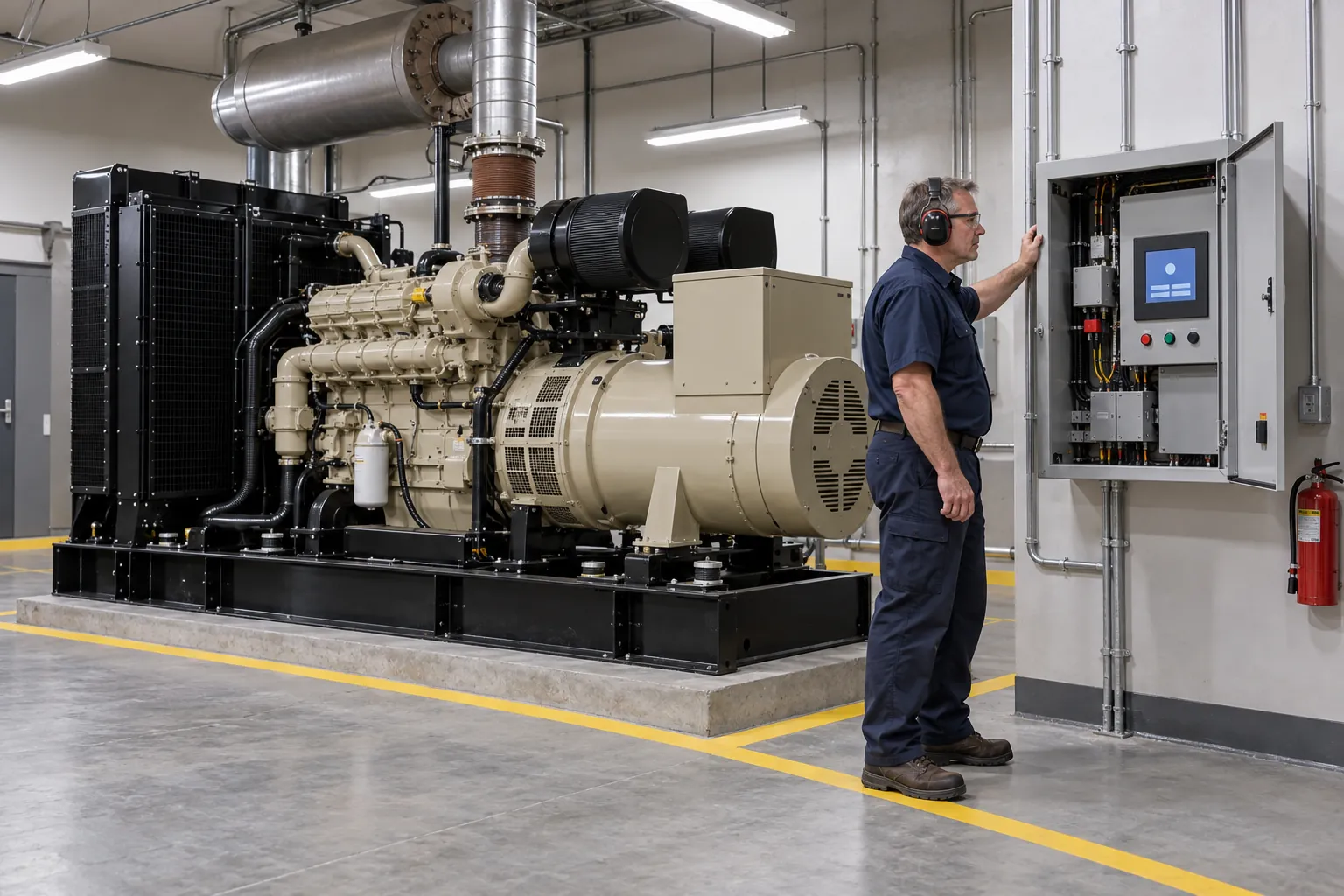 Premises and facilities managementGenerator testing: what NFPA 110 asks, and what to write downEmergency generator testing under NFPA 110: the weekly inspection, the monthly exercise under load, batteries, fuel, the 36-month test, and what the record shows.
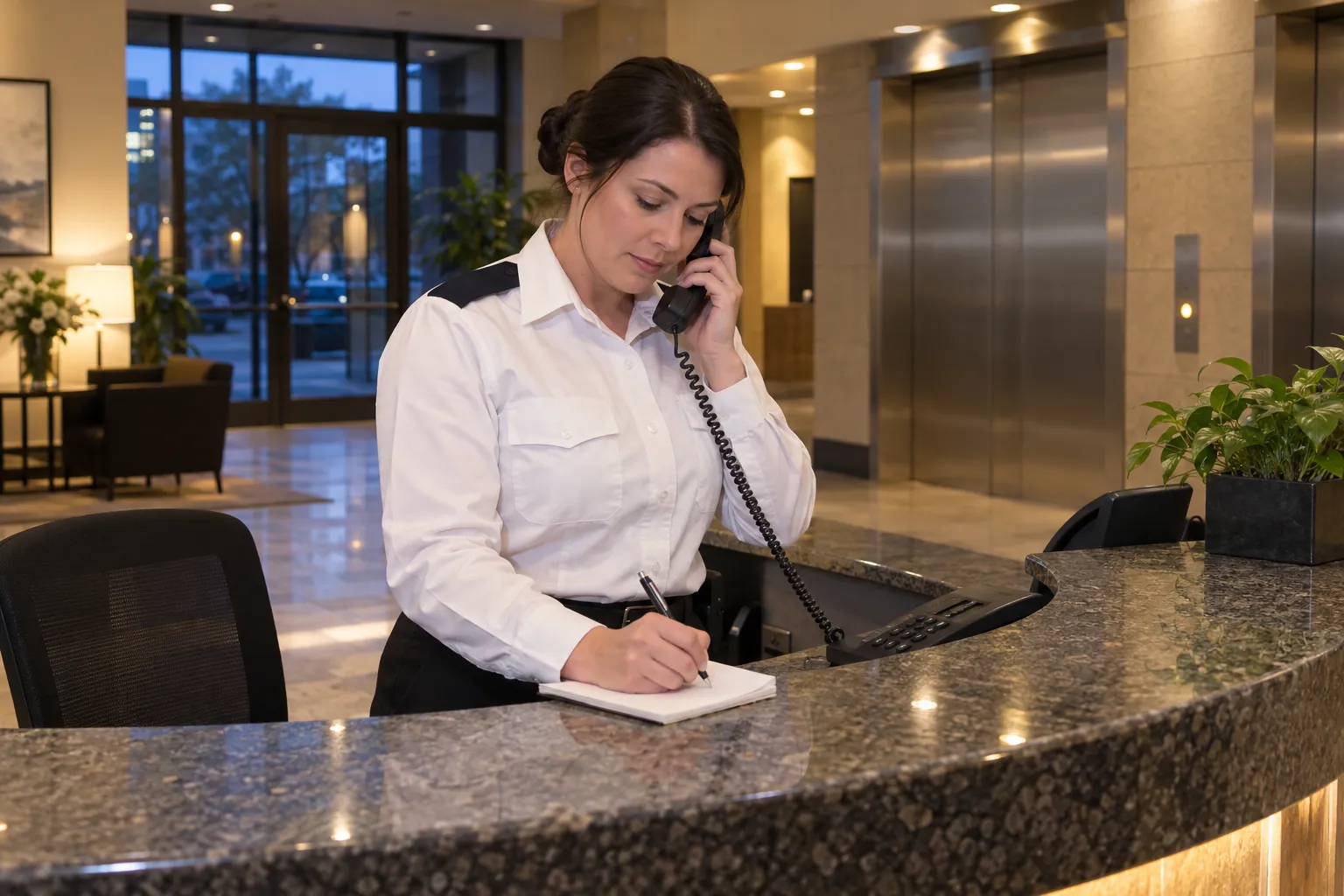 Security patrolsElevator entrapment: a procedure for the people who answer the callWhat security officers, engineers and property managers do when people are stuck in an elevator: the first minutes, who to call, what not to do, and what to record.
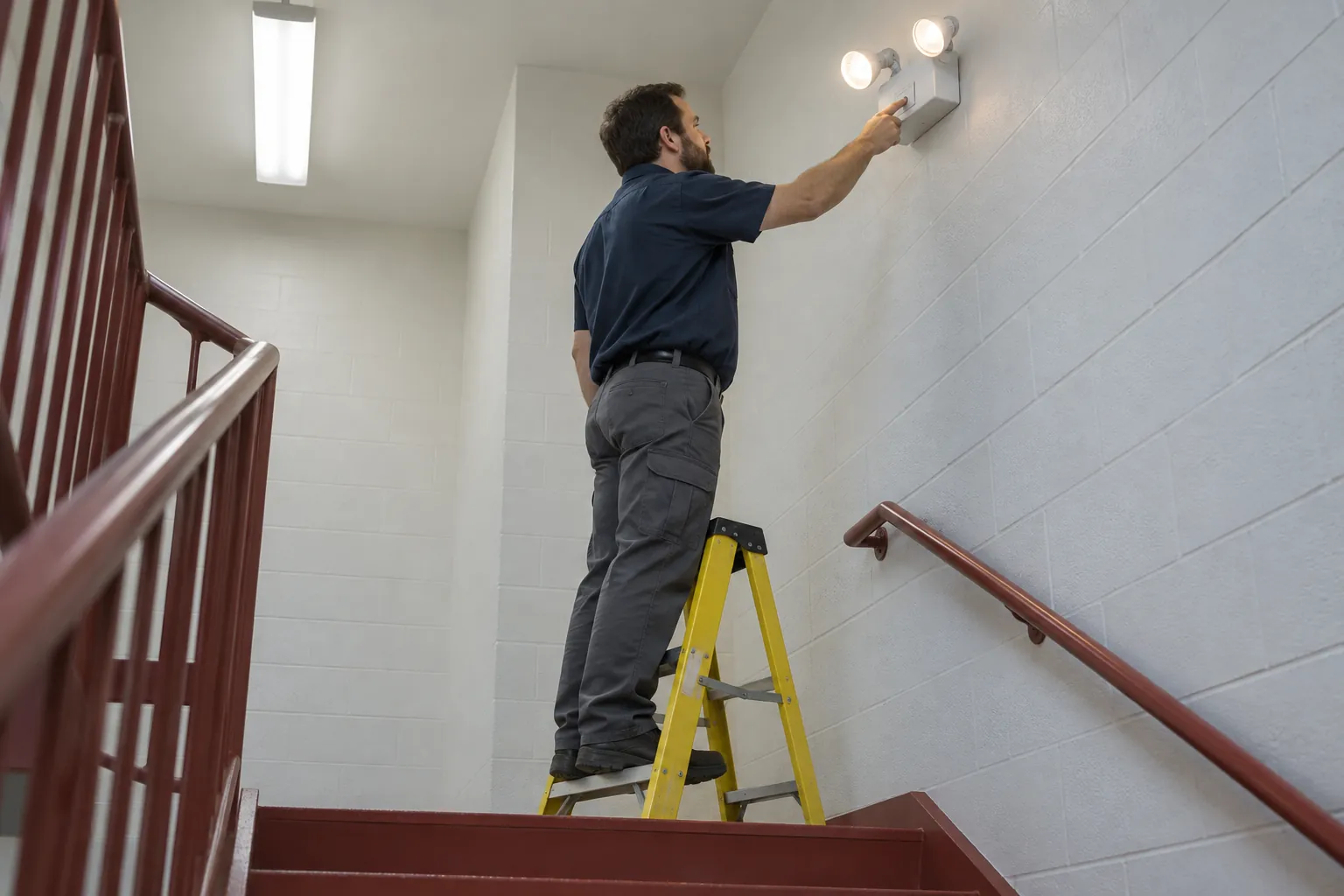 Fire and water checksEmergency lighting testing: the codes, the two tests, and the recordEmergency lighting testing in the US: what OSHA, NFPA 101, CMS and HUD ask, how to run the short and full-duration tests, and what the record should show.
 Fire and water checksEmergency action plan: what OSHA requires, and how to keep the plan workingWhat an emergency action plan must contain under OSHA 1910.38, who needs one, how alarms, wardens, drills and reviews fit in, and what the record should show.