Premises and facilities management
Property manager responsibilities: the job, the law and the record
A property manager's responsibilities are running a rental property's day-to-day operations for its owner: leasing and tenant relations, collecting rent and paying the bills, budgets and reports to the owner, and keeping the building safe and in repair through staff and vendors, all within state licensing law, state landlord-tenant law and the federal Fair Housing Act.
Also written for United Kingdom · Canada · Australia · South Africa
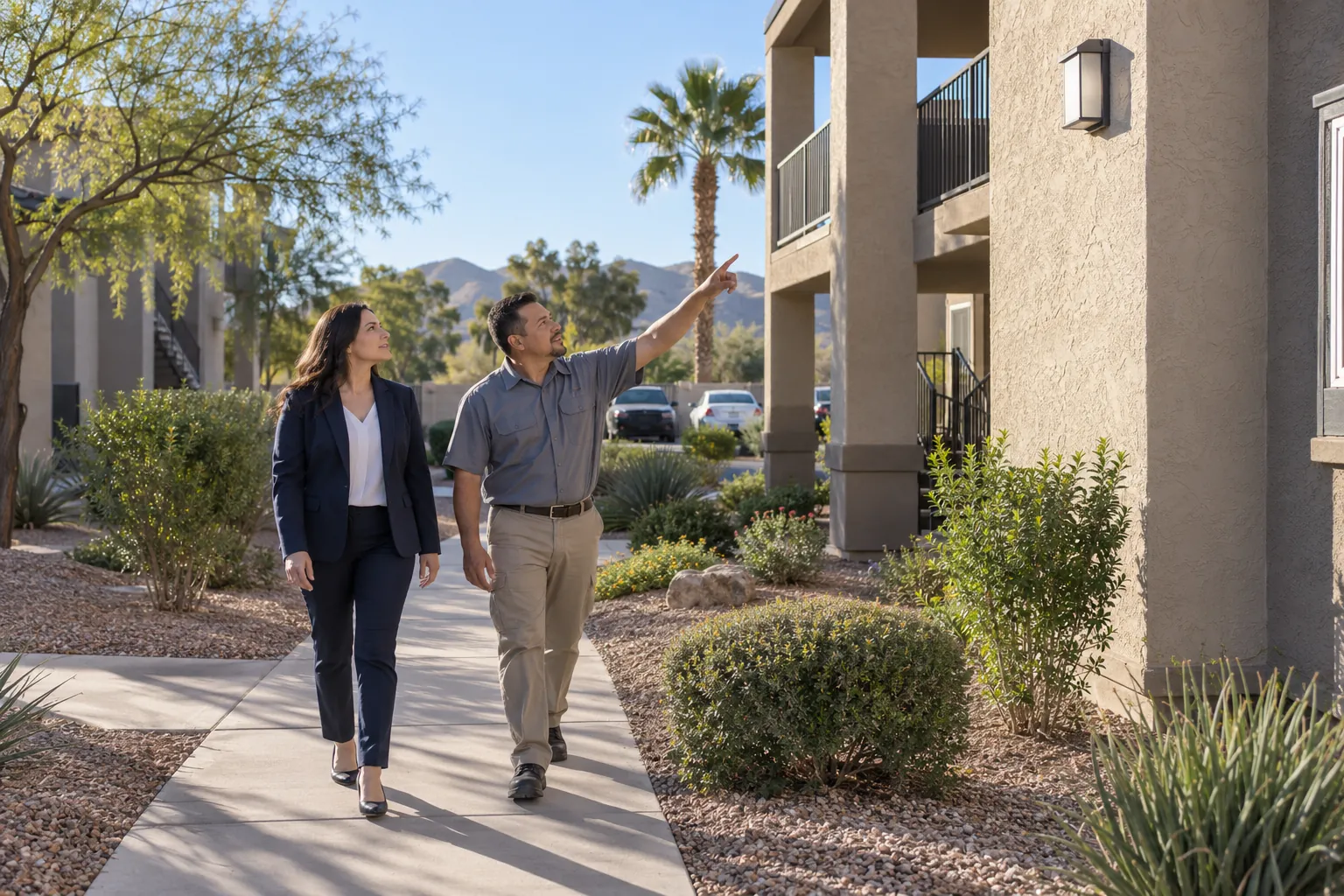
The property owner keeps the property and most of the legal duties that come with it; the property manager does the work of meeting them. This guide covers what property managers do in residential and commercial buildings, the laws behind the role, repairs and safety, and the records an owner, a tenant or a regulator can ask to see.
01
What a property manager is, and who they work for
A property manager is a person or property management company hired to operate real estate for its owner. The Bureau of Labor Statistics, in its Occupational Outlook Handbook entry for property, real estate, and community association managers, says property and real estate managers "oversee the operation of income-producing commercial or residential properties and ensure that real estate investments achieve their expected revenues." The job takes different shapes:
- Residential property managers run apartment communities, single-family rental portfolios and mixed-use buildings. A large community usually has an on-site manager, responsible in the Handbook's words for "the day-to-day operation of a single property, such as an apartment complex or a shopping center."
- Commercial property managers run office buildings, retail centers, medical office buildings and industrial parks, where the tenants are businesses, the leases are longer, and much of the work is operating budgets, common area maintenance (CAM) charges and building systems.
- Community association managers work for an HOA or condo association board, managing common areas and services and helping residents follow the association's rules.
The relationship is set by a management agreement: what the manager may do without asking (repairs up to a dollar limit, for example), what needs the owner's approval, how money is handled, what reports are due, and the fee. Hiring a property manager moves the work, not the ownership. The owner remains the landlord in law, responsible for most of the duties below, and the manager carries them out as their agent. Becoming a property manager, the Handbook says, typically takes "several years of work experience in a related occupation."
02
Property manager legal responsibilities: licensing, fair housing and disclosure
No single federal law defines a property manager's responsibilities. The role is shaped by state licensing and landlord-tenant law, a handful of federal rules, and the management agreement:
- State real estate licensing. In many states, leasing property or collecting rent for someone else, for pay, is real estate brokerage. California's Business and Professions Code section 10131(b) includes leasing or renting, soliciting tenants and collecting "rents from real property" for another, for compensation, in the definition of a real estate broker. In Texas, the definition of broker in Texas Occupations Code section 1101.002 includes a person who, for consideration, "leases real estate" for another or "controls the acceptance or deposit of rent from a resident of a single-family residential real property unit". The Handbook says that "in most states, property managers must have a property management license or real estate broker's license".
- Client money. California's Business and Professions Code section 10145 requires a broker who accepts funds belonging to others, unless they go straight to a neutral escrow or to the broker's principal, to deposit them "into a trust fund account maintained by the broker in a bank or recognized depository in this state." Rents and security deposits are not the manager's money.
- The Fair Housing Act (42 U.S.C. 3601 et seq.). The Department of Justice's overview of the Fair Housing Act lists the protected characteristics as race or color, religion, sex, national origin, familial status and disability, and says the Act covers "direct providers of housing, such as landlords and real estate companies". Under 42 U.S.C. 3604 it is unlawful to refuse to rent on those grounds, to publish an advertisement that "indicates any preference, limitation, or discrimination" on them, or to refuse "to make reasonable accommodations in rules, policies, practices, or services" that a person with a disability needs. Many states and cities add protected classes.
- Lead-based paint disclosure. For most housing built before 1978, the EPA's real estate disclosure requirements for lead-based paint mean the renter must receive the EPA pamphlet, a Lead Warning Statement and any known information on lead-based paint before signing the lease. The rule, 40 CFR Part 745, Subpart F, treats anyone who contracts with a lessor to lease such housing as an agent, and section 745.115 says "each agent shall ensure compliance with all requirements of this subpart."
- Accessibility in commercial buildings. Under the ADA Title III regulations, 28 CFR 36.201(b), both the landlord and the tenant of a place of public accommodation are covered, and "as between the parties, allocation of responsibility for complying with the obligations of this part may be determined by lease or other contract." Section 36.211(a) requires accessible features to be kept "in operable working condition".
The Institute of Real Estate Management's IREM Code of Professional Ethics, effective January 1, 2023, binds its members, including Certified Property Managers (CPM). It asks for accurate financial records and reports to the client at agreed intervals (Article 3), forbids commingling a client's funds (Article 4), and says a member "shall not engage in any conduct that is in conscious disregard for the safety and health of those persons lawfully on the premises of the client's property" (Article 12). It is not law, but it describes what owners expect.
03
Property manager duties in practice
The BLS Handbook's list of typical duties is a fair summary of the everyday job: showing properties, explaining leases, collecting monthly fees, inspecting "building facilities, including the grounds and equipment", arranging repairs, paying bills, contracting "for landscaping, maintenance, trash removal, and other services", settling complaints, keeping records and preparing "budgets and financial reports". In more detail:
- Leasing: marketing vacancies, screening applicants under a written, consistent policy, leases, renewals, move-ins and move-outs, and the make-ready that turns a unit for the next resident.
- Tenant relations: answering requests and complaints from tenants, enforcing lease terms and house rules, serving notices, and settling disputes early.
- Rent and money: collecting rent, following up delinquencies under state notice rules, holding deposits as state law requires, and paying vendors, insurance, utilities and taxes from the client's account.
- Budgets and owner reporting: the operating budget, monthly statements, rent rolls and variance notes, and in commercial buildings the year-end reconciliation of operating expenses or CAM charges.
- Maintenance: taking requests, issuing work orders, supervising maintenance technicians, planning preventive maintenance and capital projects, and handling emergencies at any hour.
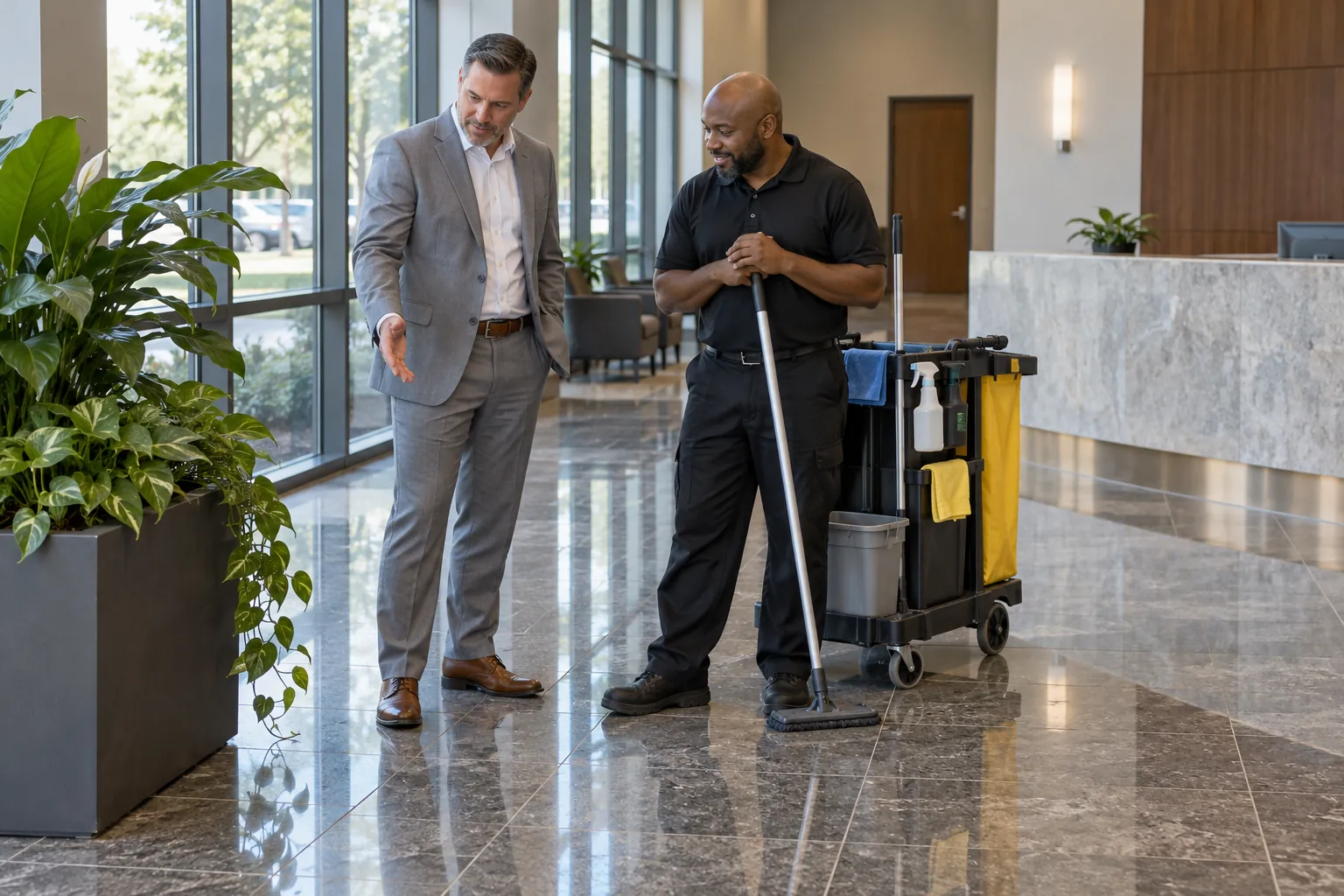
- Vendors: hiring and managing janitorial, landscaping, snow removal, pest control, security, elevator, fire protection and trash contractors, checking their insurance, and checking the work is done.
- Inspections: regular walks of the property, unit inspections at move-in and move-out, and the inspections that codes, lenders, insurers or housing programs require.
- Compliance and records: fair housing, licensing, landlord-tenant law and local codes, with leases, notices, maintenance history and vendor contracts kept where someone else can find them.
A commercial manager spends more time on building systems, tenant improvements and expense recovery; a residential manager more on leasing, resident requests, turnovers and collections. Both answer to property owners whose goals are usually the same: a property that earns its expected income and keeps its value.
04
Keeping the property safe and in repair
Repairs are where landlord-tenant law meets the manager's daily work, and each state sets its own rules. Two examples:
- California. Civil Code section 1941 says the lessor of a building intended for human occupation "must, in the absence of an agreement to the contrary, put it into a condition fit for such occupation, and repair all subsequent dilapidations thereof, which render it untenantable".
- Texas. Under Texas Property Code Chapter 92, section 92.052, a landlord "shall make a diligent effort to repair or remedy a condition" that materially affects the physical health or safety of an ordinary tenant once the tenant, not delinquent in rent, gives notice. Section 92.056 treats notice as received when "the landlord or the landlord's agent or employee has actually received" it, with "a rebuttable presumption that seven days is a reasonable time" to repair.
The Texas rule shows why intake matters as much as the repair: once a request reaches a leasing agent, a technician or the front office, the clock may be running. Every request needs one way in, the date it arrived, and a record of when it was done.
Common areas need the same discipline. Stairwells, corridors, parking lots, pool decks, laundry rooms and trash enclosures are where slips, broken lighting and blocked exits are found, and a common area inspection on a set route catches them. Local fire and property maintenance codes, adopted by the city or county, set many of the specific requirements.
A management company that employs maintenance technicians, porters or leasing staff is also an employer under the Occupational Safety and Health Act of 1970, Section 5, which requires "employment and a place of employment which are free from recognized hazards that are causing or are likely to cause death or serious physical harm" to employees. 29 CFR 1910.22, Walking-working surfaces, requires surfaces to be "inspected, regularly and as necessary, and maintained in a safe condition." OSHA lists 22 OSHA-approved State Plans covering private sector workers, which can go further than the federal rules.
05
The records an owner, a tenant or a regulator can ask for
Some property management records have their content, retention period or deadline set in law:
- Lead disclosure: under 40 CFR 745.113(c), the lessor "and any agent" must keep the completed disclosure, or the lease containing it, "for no less than 3 years from the commencement of the leasing period."
- Security deposits in California: Civil Code section 1950.5 requires photographs of the unit at the start of tenancies beginning on or after July 1, 2025; since April 1, 2025, photographs after move-out, before any repairs or cleaning charged to the deposit, and again after them; and an itemized statement and the balance "no later than 21 calendar days after the tenant has vacated the premises".
- Security deposits in Texas: Property Code section 92.103 says the landlord "shall refund a security deposit to the tenant on or before the 30th day after the date the tenant surrenders the premises", subject to the chapter's exceptions.
Other records are not required by statute but are what a manager is judged on. Can you answer these quickly, with a record behind each answer, for any property in the portfolio?
- Which maintenance requests are open, when did each arrive, and who owns it?
- When were the common areas last walked, by whom, and what was found?
- Did each vendor deliver what its contract says: the lobby cleaned nightly, the lot swept weekly, the snow cleared before opening?
- What did the unit look like at move-in and at move-out?
- Which inspections and certificates are due in the next 90 days?
- How does this month's spending compare with the budget?
A property inspection report from each site visit, one log of maintenance requests and proof of service from each vendor answer most of them; the monthly owner report answers the rest.
06
Where the record fails, and what SiteClara does about it
A property manager with a portfolio may visit each property only weekly or monthly, leaving its day-to-day operations to on-site staff and vendors. In between, they rely on vendors' invoices, the maintenance team's word and tenants' emails. The janitorial checklist is initialed for the whole week at once, the porter's trash runs leave no trace, a broken gate is mentioned to whoever is at the leasing office, and the first the manager hears of a missed service is a tenant complaint.
SiteClara puts a printed QR poster at each location in a building, such as the lobby, each corridor, the trash room, the garage or the pool, with an optional NFC tag behind it. The janitorial, porter, security or maintenance team scans the code or taps the tag on their own phone, with no app to install, sees the checks due there, and marks each one done or says what stopped them, with a photo when one is asked for. A problem found on the round goes onto the team's list of jobs, grouped by building and floor, until someone closes it, and a supervisor can escalate a job to the building's manager, who can answer it.
Each day the vendor's supervisor reviews the checks and photos, gives a reason for any check that was missed, and approves a report, which goes to the property manager and other nominated contacts at 8 a.m. the next morning. It shows what was reported, what was completed, what is still open and how the scheduled checks went.
07
Questions people ask
Do I need a license to be a property manager in California?
Usually, yes: under section 10131(b), leasing property, soliciting tenants or collecting rents for another for compensation is a broker's work. Business and Professions Code section 10131.01 exempts the resident manager of an apartment building and that manager's employees, and lets unlicensed employees of a property management firm show units, take applications and accept rents and signed leases at an apartment property under a broker's supervision.
Does an on-site apartment manager need a real estate license in Texas?
No: Texas Occupations Code section 1101.005 says the licensing chapter does not apply to "an on-site manager of an apartment complex", or to "an owner or the owner's employee who leases the owner's improved or unimproved real estate."
What are the three main types of property managers?
The Bureau of Labor Statistics' Occupational Outlook Handbook entry for property, real estate, and community association managers describes three: onsite property managers, who "are responsible for the day-to-day operation of a single property, such as an apartment complex or a shopping center"; real estate asset managers, who "plan and direct the purchase, sale, and development of real estate properties on behalf of businesses and investors"; and community association managers, who manage the common areas and services of condominiums, cooperatives and planned communities for their members.
What is the highest salary for a property manager?
According to the Occupational Outlook Handbook entry for property, real estate, and community association managers, the median annual wage for the occupation was $69,990 in May 2025, and the highest 10 percent earned more than $139,680.
08
Further reading, and a list to take away
Your state's real estate licensing agency publishes the licensing and trust account rules for property management, and your state's code holds its landlord-tenant law. The Department of Justice publishes fair housing and ADA guidance, the EPA the lead disclosure rule and pamphlet, and OSHA the standards for your own employees.
If you are taking on a property, or reviewing how one is run, check that:
- a written management agreement sets out services, spending limits, reports, fees and termination;
- the manager holds the license your state requires, and client funds are in a trust account;
- leasing, advertising and screening follow fair housing law, with a process for reasonable accommodation requests;
- lead disclosures are given and kept, and deposits are handled within the state's deadlines;
- every maintenance request is logged with the date it arrived and the date it was done;
- common areas are walked on a set route, and what was found is recorded and acted on;
- each vendor's scope is written down, with evidence that it was delivered;
- the owner receives regular, accurate reports, and the records behind them can be found.
Sources
Every document this guide quotes or links to, in the order it first cites them.
- Occupational Outlook Handbook entry for property, real estate, and community association managers bls.gov
- Business and Professions Code section 10131(b) leginfo.legislature.ca.gov
- Texas Occupations Code section 1101.002 statutes.capitol.texas.gov
- Business and Professions Code section 10145 leginfo.legislature.ca.gov
- Overview of the Fair Housing Act justice.gov
- 42 U.S.C. 3604 govinfo.gov
- Real estate disclosure requirements for lead-based paint epa.gov
- 40 CFR Part 745, Subpart F ecfr.gov
- ADA Title III regulations ada.gov
- IREM Code of Professional Ethics irem.org
- Civil Code section 1941 leginfo.legislature.ca.gov
- Texas Property Code Chapter 92 statutes.capitol.texas.gov
- Occupational Safety and Health Act of 1970, Section 5 osha.gov
- 29 CFR 1910.22, Walking-working surfaces osha.gov
- OSHA-approved State Plans osha.gov
- Civil Code section 1950.5 leginfo.legislature.ca.gov
- Business and Professions Code section 10131.01 leginfo.legislature.ca.gov
Related guides
 Premises and facilities managementProperty inspection report: how to walk the property, and what the report should showHow a property manager runs a site visit of a commercial or multifamily property and writes the inspection report: what to walk, how often, and what to record.
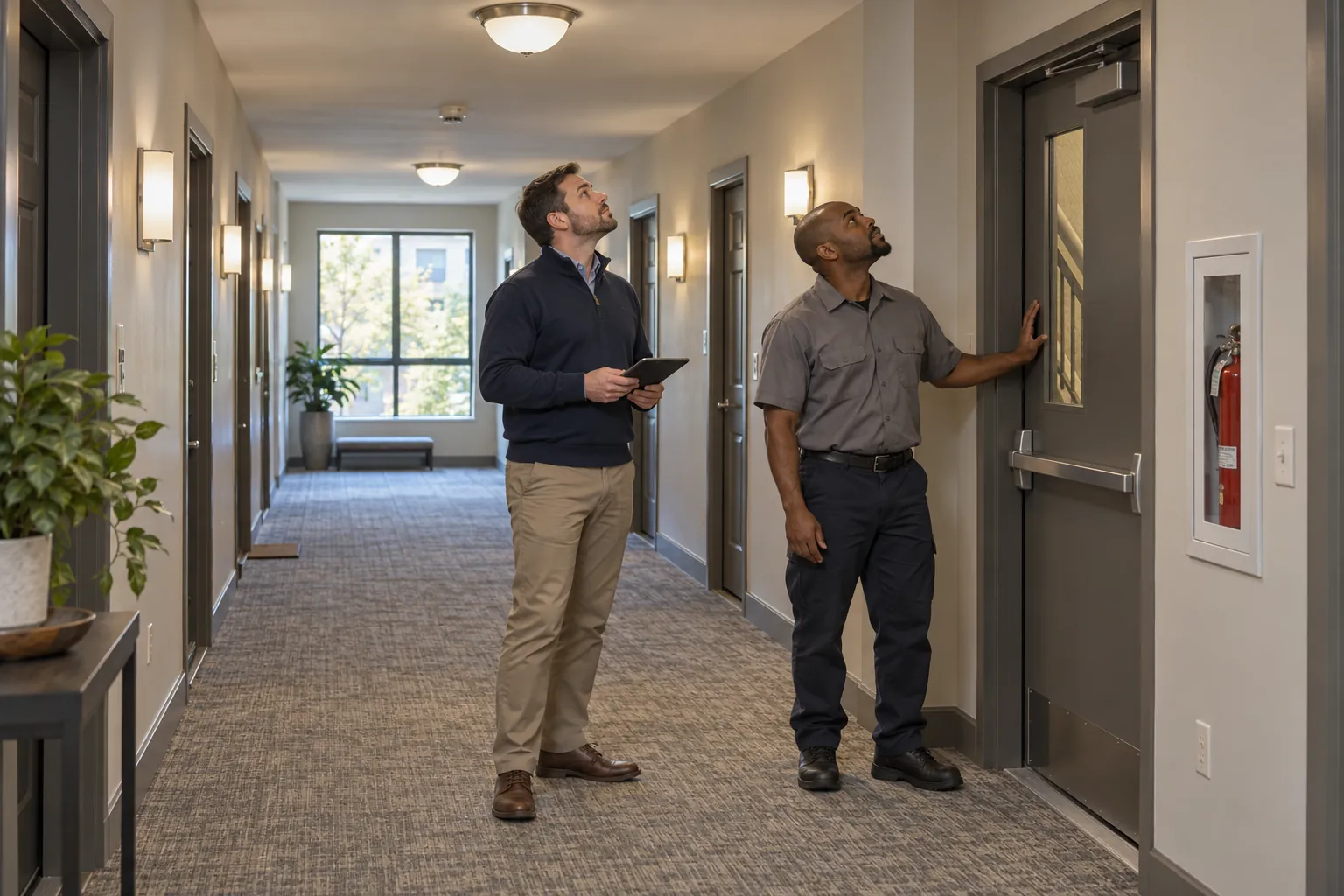 Premises and facilities managementCommon area inspection checklist: what to check, how often, and the record to keepA common area inspection checklist for apartment, condo and commercial buildings: what to check, how often, the codes and case law behind it, and the record to keep.
 Premises and facilities managementFacility manager duties: what the job covers, and how to show it is doneFacility manager duties across buildings and vendors: OSHA's General Duty Clause, exits, lockout, contractors, the inspection calendar and a record you can show.
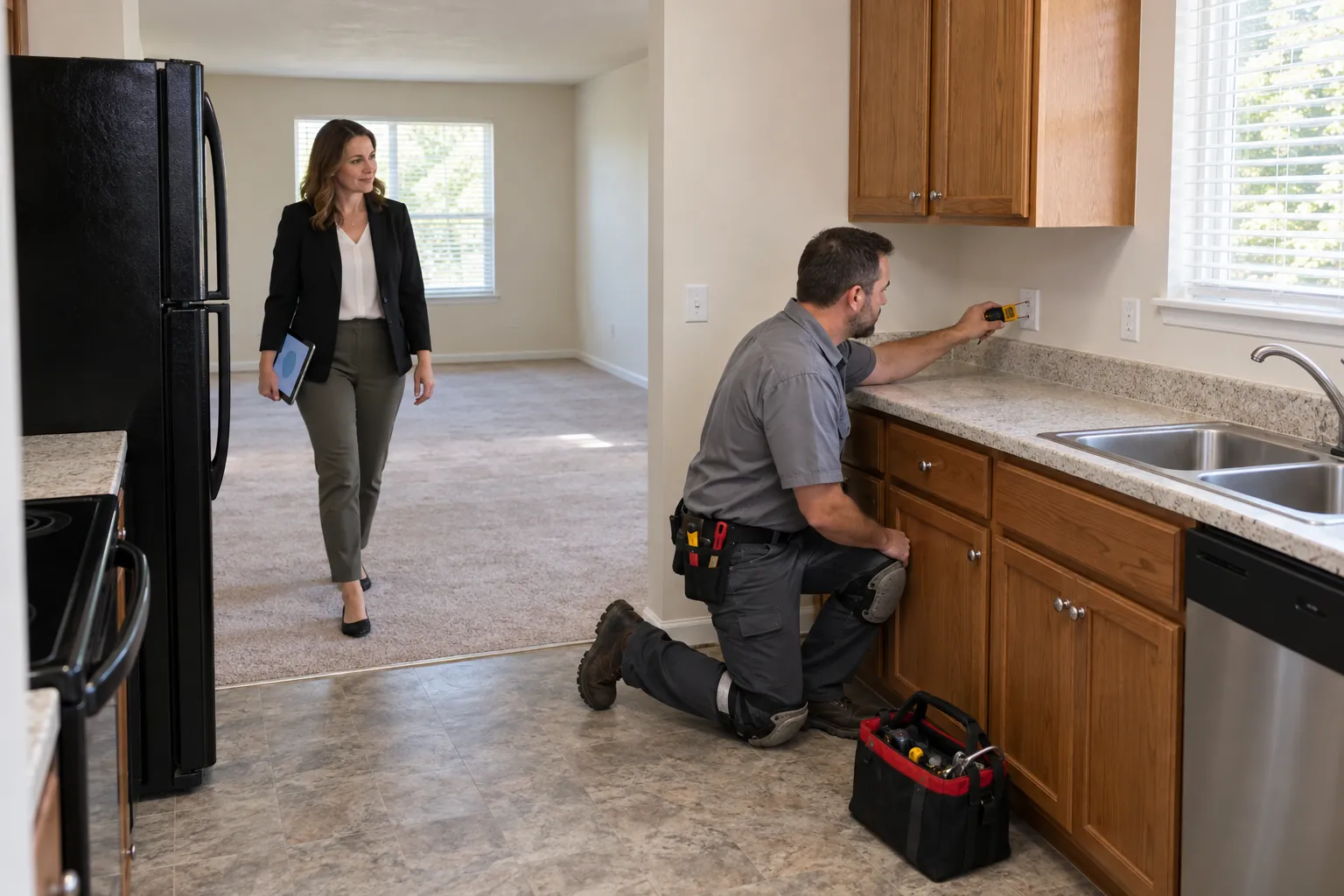 Premises and facilities managementThe apartment make-ready checklist: how to turn a unit properly, and prove itAn apartment make-ready checklist room by room: the order of work, the safety items HUD, EPA and state law require, and the photos and sign-off that prove it.