Premises and facilities management
Property inspection report: how to walk the property, and what the report should show
A property inspection report is a written record of a property's condition on the day it was inspected: what was checked, what needs fixing, who owns each item and when it will be done.
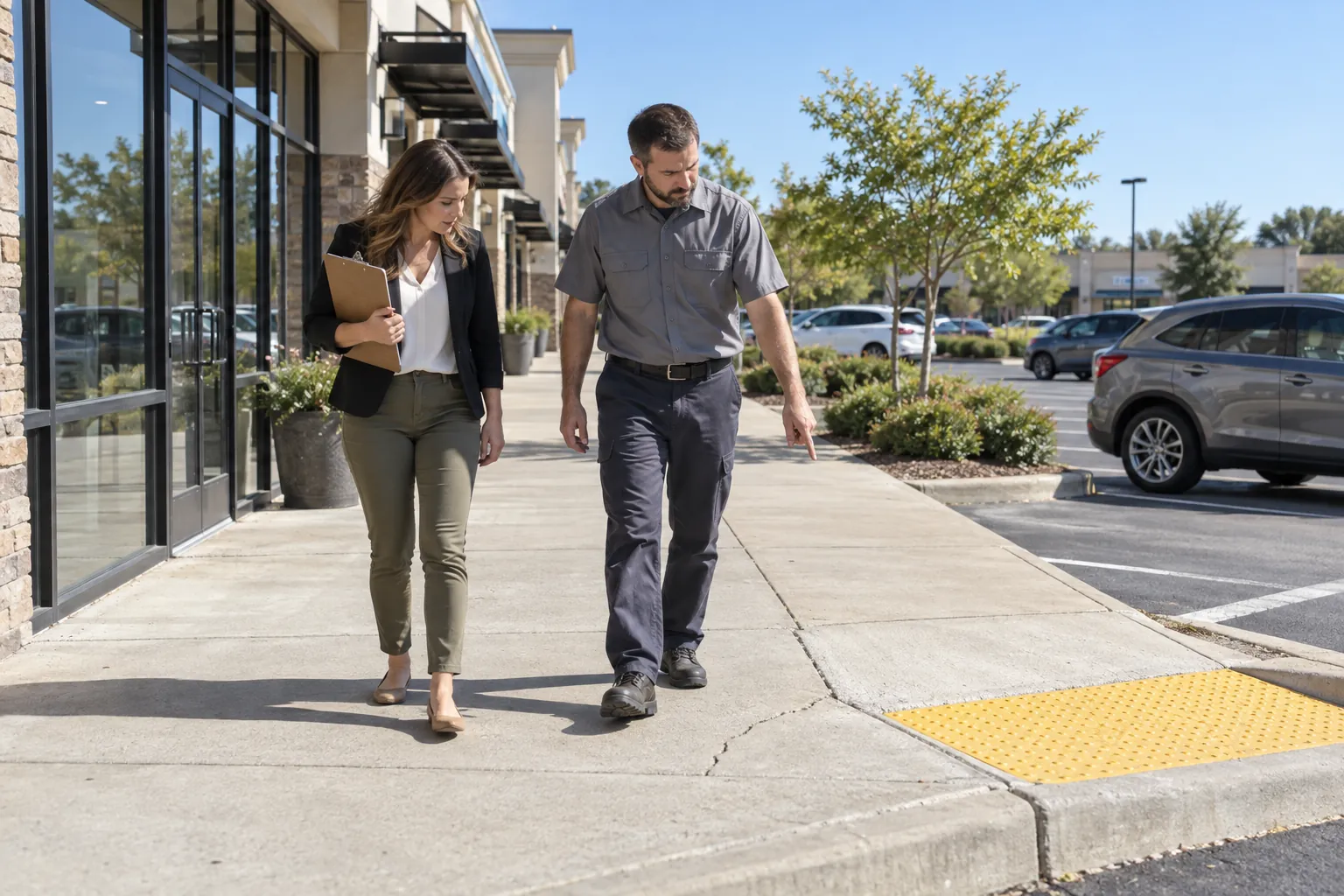
It is what a property manager brings back from a site visit. Done well, it is the owner's clearest view of the asset and the manager's proof that the property was looked after. Done badly, it is a page of photos nobody acts on. This guide covers the duties behind the visit, what to walk, how often, what the report should show and how findings get closed.
01
What a property inspection report is, and the duties behind it
A property inspection report records a planned site visit to a property the manager is responsible for: an office building, a retail center, an industrial park, a medical office building, or the common areas of an apartment community or condo association. The property manager, an assistant property manager or the building engineer walks the property on a set route, notes its condition, photographs what needs attention and turns the findings into work orders, vendor instructions, tenant notices and a summary for the owner.
It is worth being clear about what it is not. A home inspection is a buyer's report on a house, written by a home inspector. A property condition assessment is a due diligence report, usually commissioned when a commercial property is bought, sold or refinanced; ASTM E2018-24, Standard Guide for Property Condition Assessments: Baseline Property Condition Assessment Process, describes it as a walk-through survey and research to identify and communicate material physical deficiencies, carried out by a consultant. A code enforcement inspection is the city's, and an NSPIRE inspection is HUD's for assisted housing. The routine site visit is the manager's own, and it is the one that finds the problem early.
No single federal law requires a routine property inspection report. The visit exists because several duties need someone to go and look:
- Walking-working surfaces. Under OSHA 29 CFR 1910.22, walking-working surfaces must be "inspected, regularly and as necessary, and maintained in a safe condition", and hazardous conditions must be "corrected or repaired before an employee uses the walking-working surface again." The standard also lists the hazards to look for: "sharp or protruding objects, loose boards, corrosion, leaks, spills, snow, and ice."
- Exit routes. OSHA 29 CFR 1910.37 requires that exit routes "be free and unobstructed", adequately lighted, and marked, with each exit sign illuminated to at least five foot-candles.
- The general duty. Section 5(a)(1) of the Occupational Safety and Health Act requires each employer to furnish a place of employment "free from recognized hazards that are causing or are likely to cause death or serious physical harm" to its employees.
- Accessible features. Under the ADA Title III regulation, 28 CFR 36.211, a public accommodation "shall maintain in operable working condition" the features that must be accessible to people with disabilities. The Department of Justice's guidance on the section gives the examples a site visit should catch: "Inoperable elevators, locked accessible doors, or 'accessible' routes that are obstructed by furniture, filing cabinets, or potted plants". Isolated or temporary interruptions for maintenance or repairs are permitted.
The OSHA rules protect employees, so they bite on the employer: the management company for its own engineers, porters and custodians, and each tenant for its staff. Check the state first. According to OSHA's State Plans page, 22 State Plans cover private sector and state and local government workers and seven cover only state and local government workers, so in a State Plan state, such as California with Cal/OSHA, the state's own rules apply in place of federal OSHA for those workers. On top of these sit the local property maintenance and fire codes, which each city or county adopts with its own amendments and enforces through the authority having jurisdiction (AHJ), and the two documents that usually say how often the manager must visit and report: the management agreement with the owner and the leases, which divide repair and maintenance duties between landlord and tenant.
02
What a property site visit covers
Walk the property the way a tenant, a visitor and a firefighter would meet it: arriving from the street, through the front door, up through the building and out through the back. A fixed route, the same every time, is what makes one report comparable with the last. A typical commercial or multifamily visit covers these areas:
- Exterior and grounds: the parking lot and garage, striping, curbs, sidewalks and trip hazards, drainage and standing water, landscaping and irrigation, site lighting, fences and gates, monument and wayfinding signs, trash enclosures and dumpster pads.
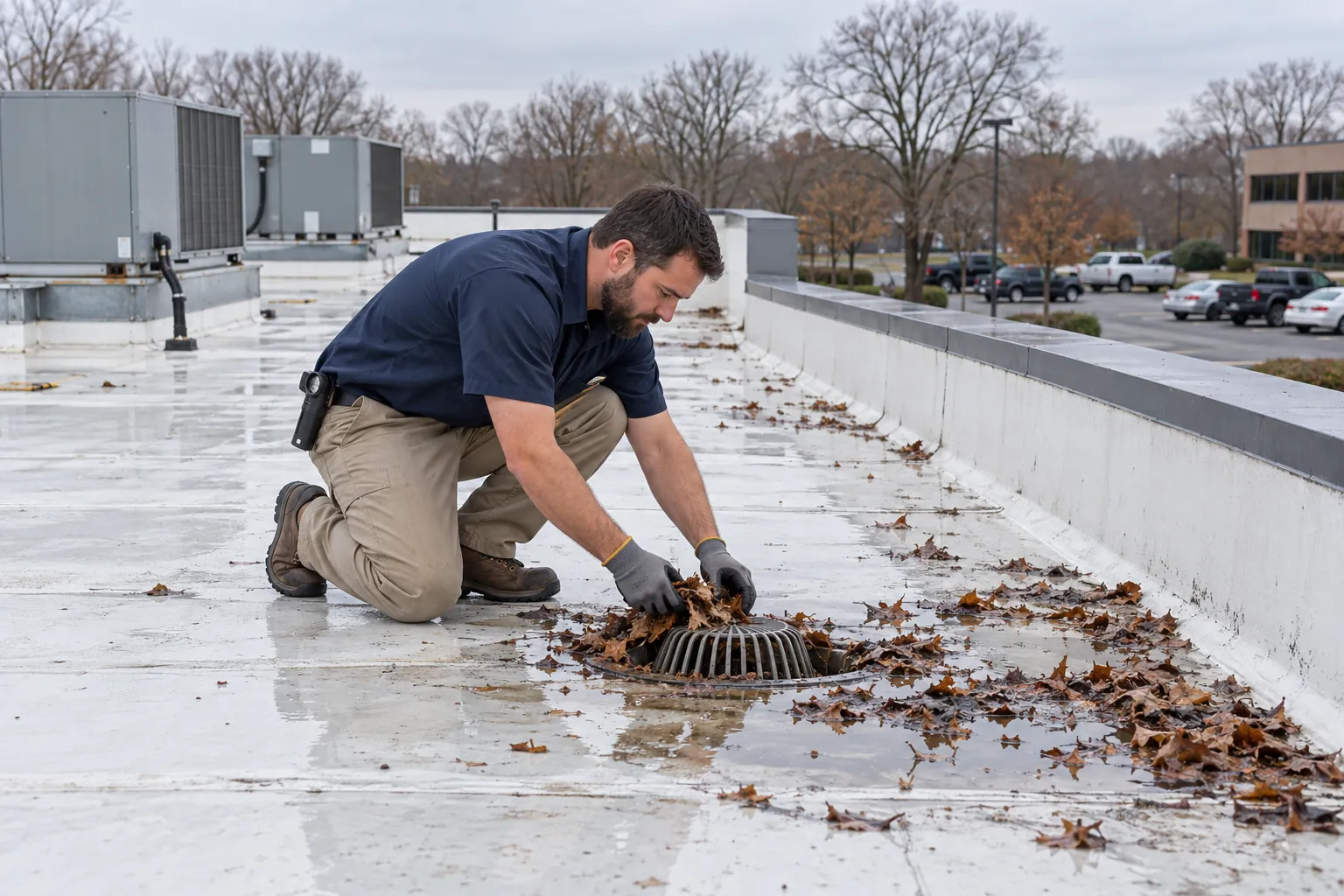
- Building envelope: facades, sealant, windows and storefronts, doors and closers, canopies, gutters and downspouts, and the roof where it can be reached safely by someone authorized to go up.
- Entrances and lobby: doors, mats, floors, lighting, directories, elevators, with a current inspection certificate posted where the jurisdiction requires one, and the general impression a visitor gets.
- Common areas: corridors, restrooms, break rooms, amenity spaces, mail rooms and loading docks, including how well the janitorial contractor is keeping them; see the common area inspection guide for the longer list.
- Stairwells and exit routes: clear of storage, lit, exit signs illuminated, doors that close and latch, and exit discharges that are not blocked outside.
- Life safety equipment, visually: fire extinguishers present, charged and tagged; sprinkler heads unobstructed; fire alarm panel normal; emergency lights working. The visit looks; the licensed contractor tests.
- Mechanical, electrical and utility rooms: locked, clean, no storage in front of panels, no leaks, no alarms, logs up to date.
- Accessible features: accessible parking and signs, curb ramps, accessible routes clear of furniture and deliveries, door hardware and automatic openers, accessible restrooms.
- Vacant suites and units: secure, dry, heated or cooled as needed, no signs of entry; see the vacant property inspection guide for the longer list.
- Work in progress: contractors on site, permits posted where required, barriers and floor protection in place.
Write the property's own list once, in route order, and use it on every visit.
03
How often to visit, and who walks the property
Frequency comes from the management agreement first, then from risk. There is no national rule, but a pattern is common:
- Daily at a staffed property: the building engineer, day porter or security officer walks the building on opening and again later in the day, and reports what they find.
- Weekly or monthly by the property manager at a multi-tenant office building, retail center or apartment community, with a written report each time.
- Quarterly at smaller or remote properties with no staff on site, often combined with a vendor meeting or a tenant visit.
- Annually, a fuller inspection that includes the roof, the envelope and a review of every service contract, feeding the next year's budget and capital plan.
Some visits are triggered rather than scheduled: after a storm, a freeze, a flood or a power outage; before and after a tenant moves in or out; before a lease renewal or an owner's visit; and after a complaint or an incident. Add a night visit at least a few times a year, because parking lot lighting, exit signs and door security look different after dark.
The person who walks the property matters less than the route and the record, but some combinations work better than others:
- Property manager or assistant property manager: owns the report and the follow-up, and sees the property as the owner will.
- Building engineer or chief engineer: sees the mechanical and envelope issues a manager would miss; see the building maintenance checklist for the engineering side.
- Janitorial supervisor and security supervisor: walking part of the route with the manager turns a report into an agreed list, and ends arguments about whether something was already reported.
Whoever walks it needs the authority to stop a hazard on the spot. If a handrail is loose or a spill sits at the top of a stair, the report is the second step; closing or cordoning off the area comes first, as 1910.22 expects for employees.
04
What a good property inspection report shows
A property inspection report template, whether a paper form, a spreadsheet or an online form, is less important than what goes into each line. The test is simple: could someone who was not there read the report and know where the problem is, how bad it is, who will fix it and by when? A good report carries:
- The header: property name and address, date, start and finish time, who walked it, who else was present, and the weather, which matters for drainage, roofs and parking lots.
- The route covered, area by area, including the areas checked and found in order. A report that lists only problems cannot show that the stairwell was looked at and was fine.
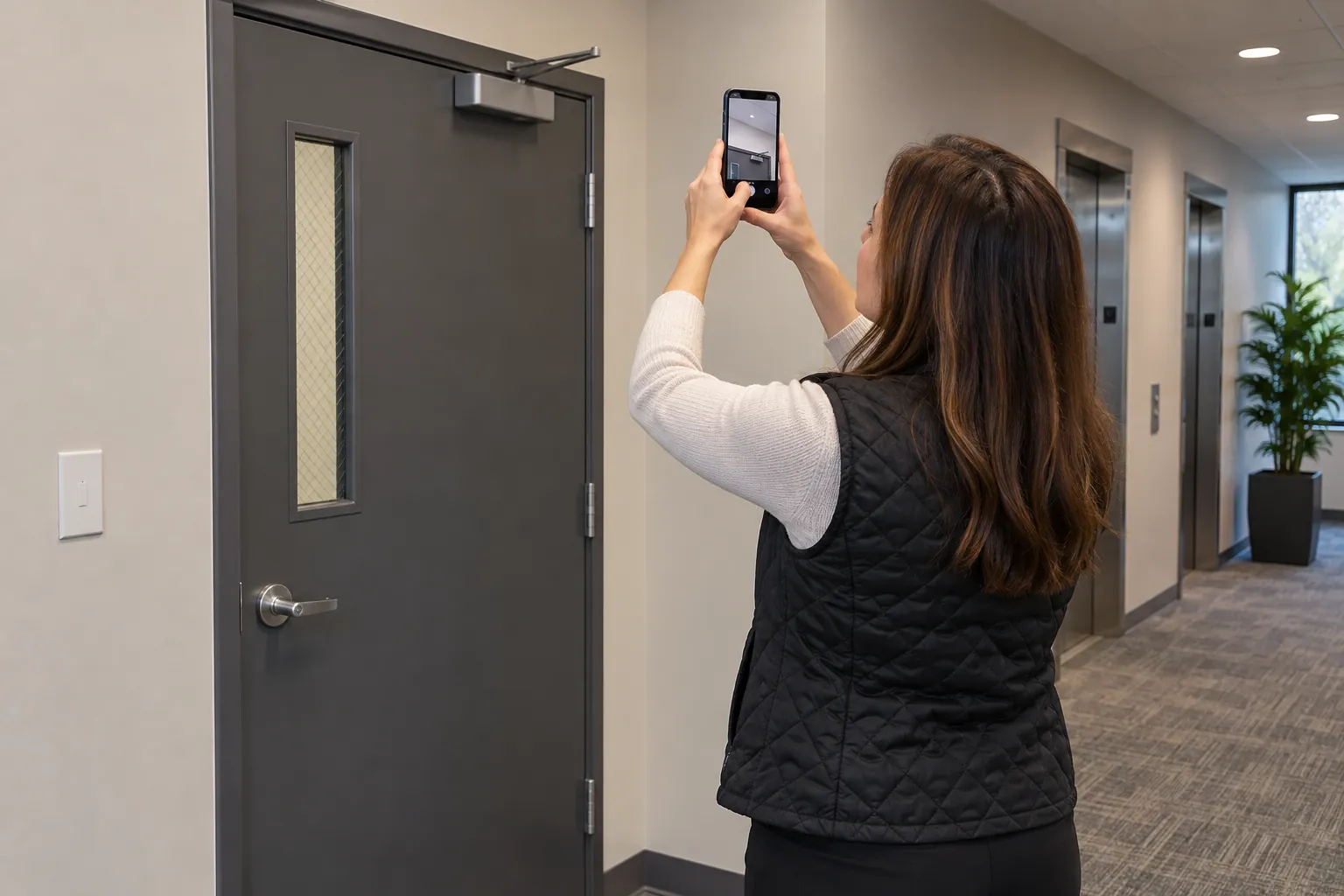
- Each finding, precisely located: not "light out in garage" but "Level 2 garage, row C, fixture above space 214". Location is what lets a technician go straight to it.
- A photo of each finding, one wide enough to find the spot and one close enough to see the defect, with the date and time.
- A priority: immediate hazard (made safe on the day), repair soon, monitor, or cosmetic. Keep the scale short so it is used the same way every time.
- An owner for each item: the landlord, a tenant under its lease, the janitorial or landscaping vendor, or a contractor under warranty.
- The next action: work order number, vendor notified, tenant letter sent, or bid requested, with a target date.
- Open items from the last report, carried forward with their age until they are closed, and a line for each one closed since, with a photo of the fix.
05
After the visit: from findings to fixes
The report is only worth the work orders it produces. Within a day or two of the visit, each finding should have gone somewhere:
- Work orders for the in-house maintenance team or engineer, with the photo and location from the report.
- Vendor notices to the janitorial, landscaping, snow removal, parking or security contractor, tied to the scope of work so the vendor can see what was missed.
- Tenant notices for items the lease makes the tenant's responsibility, sent the way the lease requires.
- Bids or proposals for larger repairs, and a note in the capital plan for items that belong in next year's budget.
- The owner's report: a short summary in the monthly management report, with the photos that matter and the open items by age.
Close the loop on the next visit. Go back to each item, check it is fixed, photograph the result and mark it closed with the date. A property whose reports show findings raised and closed in a steady rhythm is being managed; one whose open items only ever grow is not, however many photos are attached.
Keep the reports with the property's records: they are the history of the asset. After a slip and fall or a property damage claim, one of the first questions is usually when the area was last inspected, what was found and what was done about it, and a dated, located, photographed record answers it far better than memory.
Look across visits too: the same restroom flagged every month points to a janitorial scope or staffing problem, and repeated standing water in one corner of the lot is a drainage project, not a cleaning task.
06
Where the report fails, and what SiteClara does about it
The monthly walk usually has a decent record, because the manager writes it up. It is the days in between that fail. The engineer's morning walk, the porter's restroom and lobby checks and the security officer's rounds are initialed on a clipboard sheet, sometimes for the whole week on Friday, or not recorded at all. A problem spotted on Tuesday is mentioned to whoever was passing and forgotten. When the manager arrives for the next visit, or when a claim arrives months later, nobody can say when an area was last checked, or by whom.
SiteClara records those routine checks where they happen. A printed QR poster goes at each location, such as a lobby, a restroom, a stairwell, a loading dock, a mechanical room or a parking level, with an NFC tag behind it if staff would rather tap. Staff scan the code or tap the tag on their own phone, with no app to install, see the checks due there and mark each one done or say what stopped them. A problem is reported on the spot with a photo and goes onto the team's list of jobs until someone closes it, so the broken door closer or the water under a sink has a date, a place, a photo and a name from the first day, and is still on the list at the next site visit if it has not been fixed.
The supervisor sees what was due, what was done and what was missed, and can record why a check was missed. Each day the supervisor reviews and approves a report that goes to nominated management, owner or client contacts at 8 a.m. the next morning, showing how the scheduled checks went.
07
Questions people ask
What does a property inspection consist of?
For a routine site visit, a walk of the property on a fixed route and a written report of what was found. For a commercial property changing hands, the fuller version is a property condition assessment: ASTM E2018-24, Standard Guide for Property Condition Assessments, sets out a walk-through survey to identify physical deficiencies, document reviews, research and interviews to augment it, and a property condition report as the work product.
Where can I find a free template for a home inspection report?
In Texas, the Texas Real Estate Commission publishes its Property Inspection Report form (REI 7-6) as a free fillable PDF, and inspectors it licenses must use it when they inspect a one to four family home for a real estate transaction. The same page says a licensed TREC inspector "is not required to use the promulgated form or the Standards of Practice when inspecting property other than one to four family residential", so for a commercial or larger multifamily property the report is the manager's own, built from the lines in the section above.
08
Further reading, and a list to take away
The federal sources behind a property site visit, each on its owner's site:
- OSHA 29 CFR 1910.22, General requirements for walking-working surfaces: housekeeping, hazards, and regular inspection and repair.
- OSHA 29 CFR 1910.37, Maintenance, safeguards, and operational features for exit routes: clear, lit and marked exit routes.
- OSH Act Section 5, Duties: the general duty clause.
- OSHA State Plans: which states run their own programs.
- ADA Title III regulations, 28 CFR part 36: section 36.211 on maintaining accessible features, and the Department of Justice's guidance on it.
- ASTM E2018-24: the property condition assessment standard, for when a transaction needs more than a site visit.
- Your city or county's adopted property maintenance and fire codes, from the building or fire department that enforces them.
Before the next site visit:
- Check the management agreement for how often the owner expects a visit and a report.
- Write the property's route once, area by area, and use it every time.
- Take the last report and walk its open items first.
- Record every area checked, not only the problems.
- Locate each finding precisely and photograph it, wide and close.
- Give each finding a priority, an owner and a next action with a date.
- Make an immediate hazard safe on the day, before writing it up.
- Send work orders, vendor notices and tenant letters within a day or two.
- Photograph each fix and close the item on the next visit.
- Look for the findings that keep coming back, and take them to the owner as projects.
Sources
Every document this guide quotes or links to, in the order it first cites them.
- ASTM E2018-24, Standard Guide for Property Condition Assessments: Baseline Property Condition Assessment Process store.astm.org
- OSHA 29 CFR 1910.22 osha.gov
- OSHA 29 CFR 1910.37 osha.gov
- Section 5(a)(1) of the Occupational Safety and Health Act osha.gov
- 28 CFR 36.211 ada.gov
- OSHA's State Plans page osha.gov
- Property Inspection Report form (REI 7-6) trec.texas.gov
Related guides
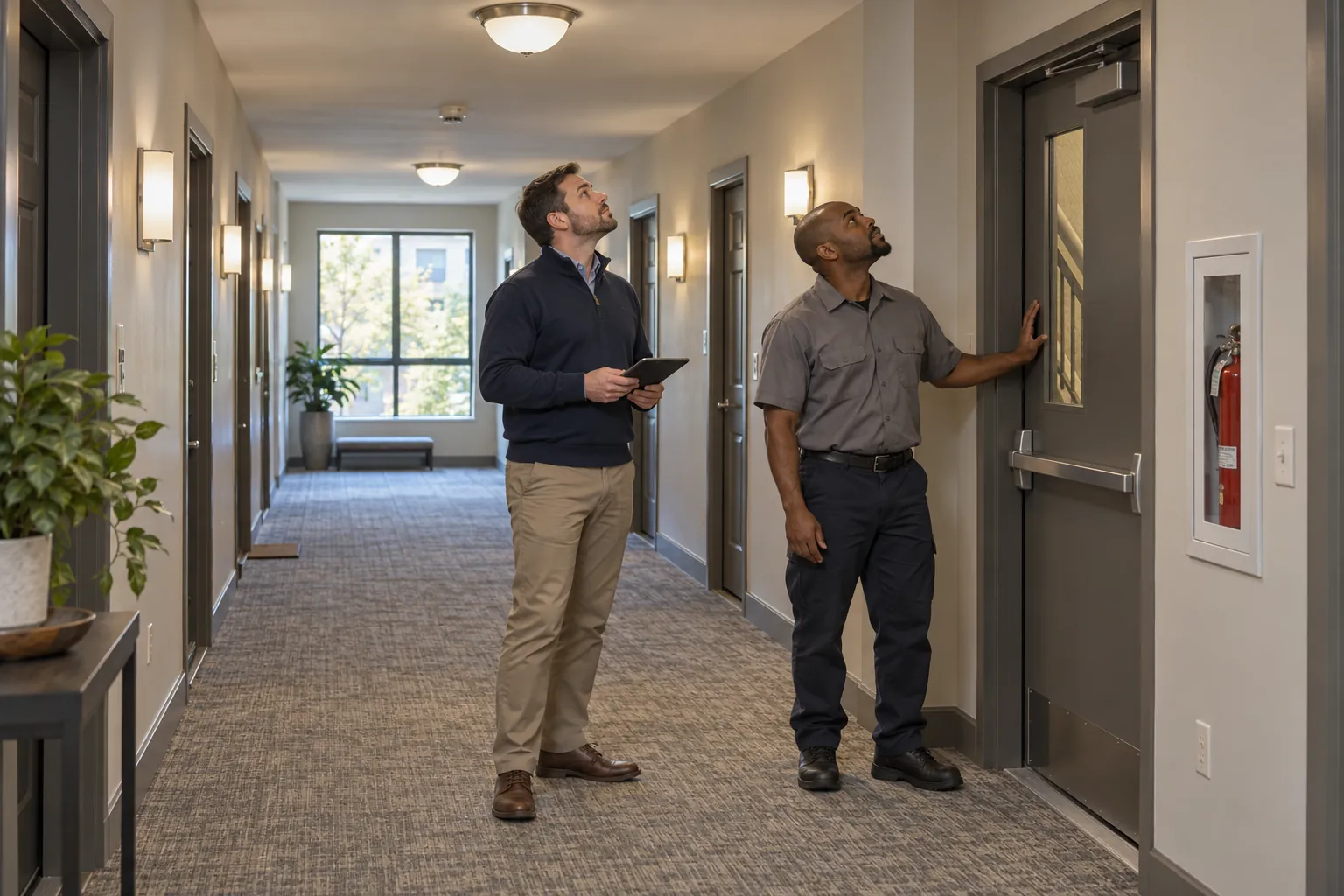 Premises and facilities managementCommon area inspection checklist: what to check, how often, and the record to keepA common area inspection checklist for apartment, condo and commercial buildings: what to check, how often, the codes and case law behind it, and the record to keep.
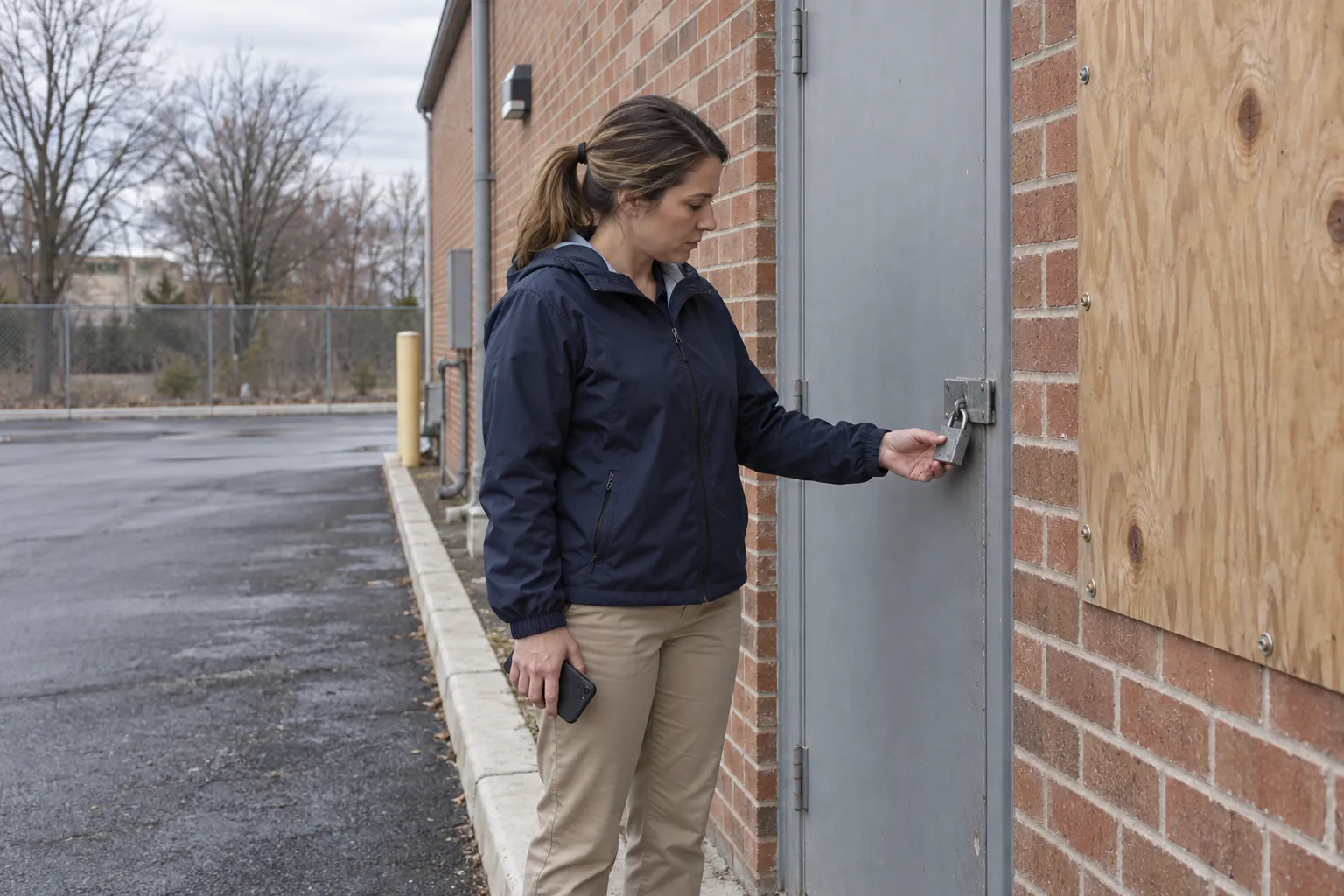 Premises and facilities managementVacant property inspection: what to check, how often, and what to recordHow to inspect a vacant commercial building in the US: the fire and property maintenance codes, security, water, sprinklers, the insurer's terms and the record.
 Premises and facilities managementBuilding maintenance checklist: what the code expects, how often to check, and who does itA building maintenance checklist for US commercial buildings, built on the International Property Maintenance Code: daily to annual tasks, who does each, the record.
 Premises and facilities managementSafety walkthroughs: how to walk a building, talk to the crew and fix what you findWhat a safety walk is under OSHA's Recommended Practices, what to look at in a commercial building, how often to walk, how to record findings and close them out.