Premises and facilities management
Retail store maintenance checklist: what to check, how often, and who owns it
A retail store maintenance checklist is a schedule of checks, from the daily opening walk to the annual contractor visits, that keeps a store's doors, lighting, exits, fire extinguishers, accessible features, HVAC and parking lot safe and working, with an owner named for each item.
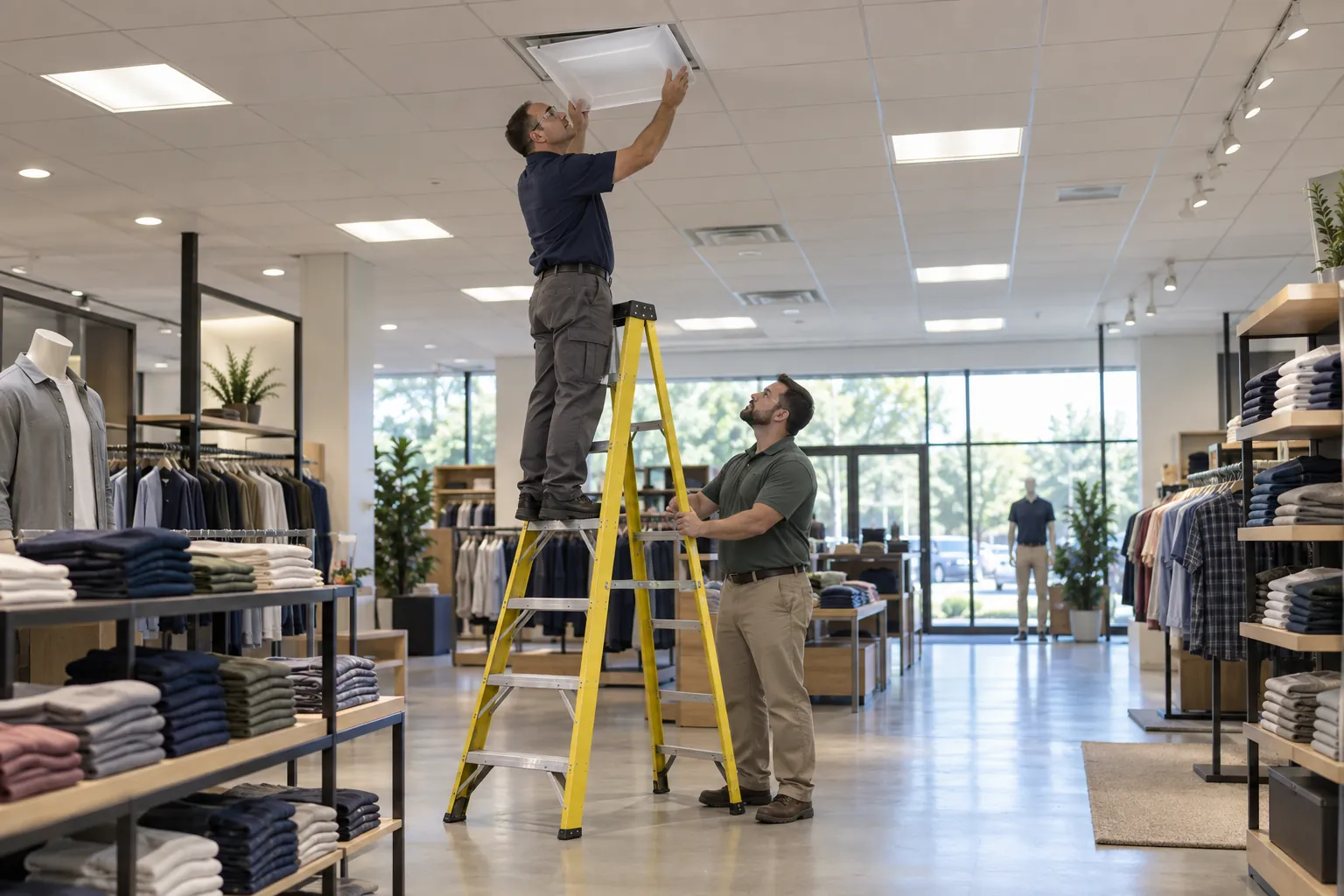
A store is a building that has to work every hour it is open. The automatic door has to open, the lights have to be on, the exits have to be clear, and the accessible route a customer in a wheelchair uses has to be there on a busy Saturday as well as on the day the district manager visits. This guide sets out a retail store maintenance checklist from the opening walk to the annual service visits, the OSHA and ADA rules behind it, and how to split the work between the store team, the landlord and the contractors.
01
The rules behind a retail store maintenance checklist
No federal rule hands a store a maintenance checklist. What the law sets are outcomes, and two federal sources shape almost every item on a retail store maintenance checklist: OSHA for the people who work in the store, and the Americans with Disabilities Act for the customers who shop in it.
For employees, the starting point is OSHA's walking-working surfaces standard. 29 CFR 1910.22 requires walking-working surfaces to be "inspected, regularly and as necessary, and maintained in a safe condition", and it requires a hazardous condition to be corrected or repaired before an employee uses the surface again. If the repair cannot be made at once, the hazard "must be guarded to prevent employees from using the walking-working surface until the hazard is corrected or repaired." Where the repair involves the structural integrity of the surface, a qualified person must perform or supervise it. A lifted floor tile in the stockroom, a roof leak dripping onto the sales floor or a broken dock plate all fall under that sentence.
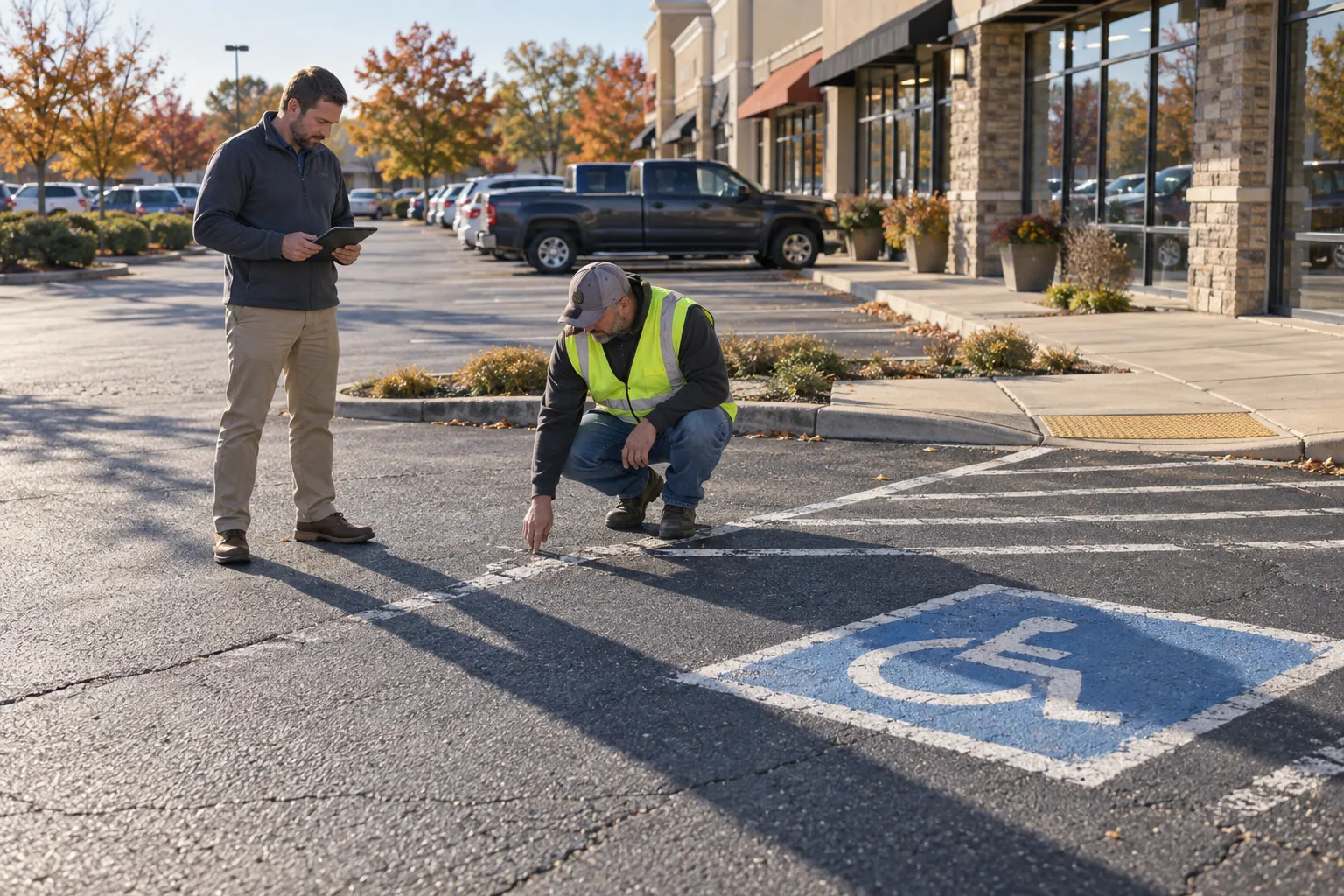
For customers, a store is a public accommodation under Title III of the ADA, and the Department of Justice regulation adds a maintenance duty of its own. 28 CFR 36.211 says a public accommodation "shall maintain in operable working condition those features of facilities and equipment that are required to be readily accessible to and usable by persons with disabilities". It also says the section "does not prohibit isolated or temporary interruptions in service or access due to maintenance or repairs." An accessible feature that is out of order for an afternoon while it is fixed is allowed; one that stays broken, or is routinely blocked, is not.
The Department of Justice's guide ADA Update: A Primer for Small Business puts that in retail terms. Temporary interruptions "must be remedied as soon as possible and may not extend beyond a reasonable period of time"; if an aisle is blocked while shelves are restocked, staff must be available to help a customer who cannot get through; if an elevator breaks down, the business must make sure "repairs are made promptly and that improper or inadequate maintenance does not cause repeated failures"; and "routinely storing a garbage bin or piling snow in accessible parking spaces makes them unusable". Separately, under 28 CFR 36.304, a store in an existing building must remove architectural barriers where that is readily achievable, and the primer calls that obligation a continuing one.
Three traps. First, OSHA's State Plans page lists 22 State Plans covering private-sector workers, including California, Washington and Michigan; they "must be at least as effective as OSHA" and can go further, so check the state. Second, fire codes are local: extinguishers, emergency lighting, sprinklers and alarms are also set by the code your jurisdiction has adopted, usually the International Fire Code or NFPA 1 with local amendments, and the authority having jurisdiction (AHJ), normally the fire marshal, decides. Third, the lease decides who repairs what, often giving the landlord the roof and the lot, but the legal duties above stay with the employer and the public accommodation, so the checklist covers items the store does not fix itself.
02
What a retail store maintenance checklist covers
A retail cleaning checklist is about the cleanliness of the floor and the fixtures today. A maintenance checklist is about whether the building and its equipment still work, and whether anything is wearing out before it fails. Split it by area, so a manager walking the store can follow it in order:
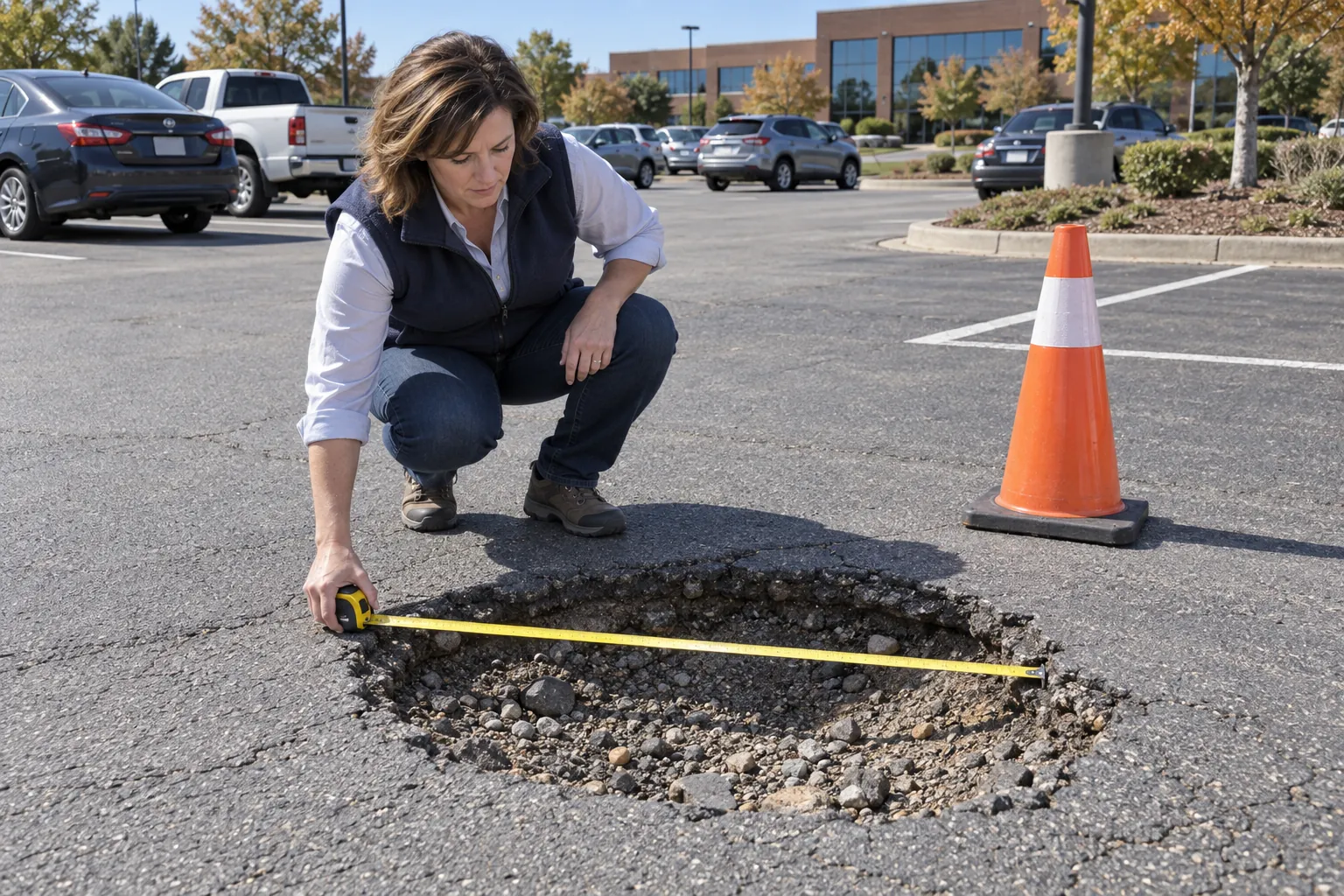
- Parking lot and exterior: lot lighting, potholes, curb ramps, accessible parking spaces with their signs and access aisles, cart corrals, storefront glass and sign lighting.
- Entrance and doors: automatic doors, door closers, thresholds, mats that lie flat, and the security grille of a mall store.
- Sales floor: lighting, ceiling tiles (a stain is often the first sign of a leak), flooring, fixtures and shelving, aisle widths, display cases and checkout counters.
- Fitting rooms and customer restrooms: locks, hooks and benches; faucets, flush valves, dryers, dispensers, grab bars and the accessible stall.
- Stockroom and receiving: dock doors and levelers, the receiving door, the shelving that holds stock and inventory, ladders, and the baler or compactor.
- Life safety: exit routes and doors, exit signs and emergency lights, fire extinguishers, and clearance below sprinkler heads.
- Building systems and roof: HVAC filters and thermostats, electrical panels, plumbing and water heaters, refrigeration where the store has it, and roof drains and rooftop units, often the landlord's.
A mall boutique may own little more than its lighting, fixtures and fitting rooms; a stand-alone grocery store owns the lot, the roof and a machine room of refrigeration. Start from what the lease and the law make the store responsible for, and for the rest, note who to call.
03
The retail store maintenance checklist: daily, weekly, monthly and annual
Frequencies depend on the store, the equipment and the manufacturer's instructions, but most retail store maintenance falls into five rhythms.
Daily, at opening:
- Walk the lot and the entrance: lights that were out overnight, damage, anything left in the accessible parking spaces or their access aisles.
- Test each automatic door. The door industry's association, AAADM, publishes a daily safety check that starts with walking toward the door to check the sensor, then checks that the door opens and closes smoothly and that its safety zones work. Its advice to door owners is that someone should be responsible for the daily check on each automatic door. AAADM's paper How to Properly Select and Maintain Automatic Doors in Retail Environments says that if even the slightest problem is found, the door should be shut down and kept out of operation until a certified technician has diagnosed and fixed it.
- Check that every exit door opens from the inside. 29 CFR 1910.36 says employees must be able to open an exit route door "from the inside at all times without keys, tools, or special knowledge." Chains and padlocks on a back door, even for an hour, are a finding.
- Walk the exit routes, including the stockroom and the back corridor. 29 CFR 1910.37 requires exit routes to be "free and unobstructed", with no materials or equipment placed in them "either permanently or temporarily", and 1910.36 sets an exit access at least 28 inches wide at all points. Freight, flattened cardboard and U-boats are the usual problem on truck day.
- Look over the sales floor, restrooms and fitting rooms for lights out, stained ceiling tiles, loose shelving, leaks, broken locks and anything that stops the accessible stall being used.
- Read cooler and freezer temperatures if the store has them, and note any case running warm or icing up.
Weekly:
- Check the accessible route through the store. Under the 2010 ADA Standards for Accessible Design, walking surfaces on an accessible route have a clear width of 36 inches minimum, and the DOJ primer names display racks, vending machines and potted plants among the things that must not block it. Seasonal displays and endcaps drift into aisles week by week.
- Check the accessible features themselves: grab bars tight, the accessible fitting room clear of stock and returns, door hardware working, the lowered section of the checkout counter clear of merchandise.
- Check emergency lights and exit signs for lamps out or damage, and exit signs visible from the route. 1910.37 requires each exit to be clearly visible and marked by a sign reading "Exit".
- Check stockroom shelving, ladders, dock doors and levelers.
Monthly:
- Visually inspect every portable fire extinguisher. 29 CFR 1910.157 says portable extinguishers "shall be visually inspected monthly" and kept "in a fully charged and operable condition" and in their designated places at all times.
- Check the space in front of electrical panels. 29 CFR 1910.303(g) says working space about electric equipment "may not be used for storage", and its table sets a depth of 3 feet for equipment up to 150 volts to ground. In a small stockroom, panels disappear behind boxes quickly.
- Change or check HVAC filters on the schedule the HVAC contractor or manufacturer sets, and check thermostats and schedules.
- Test the emergency lights by the method and interval the fire code in force sets; ask the fire marshal or the fire protection contractor which applies.
- Check storage below sprinkler heads, and the clearance in front of fire department connections and risers if they are in the store.
Quarterly and seasonal: preventive maintenance on rooftop units and refrigeration, roof drains before the wet season, the snow plan before winter, and the lot surface and striping after the freeze-thaw season.
Annually: the service visits by outside contractors. OSHA's 1910.157 requires an annual maintenance check on each portable extinguisher, with the date recorded and the record kept for one year after the last entry or the life of the shell, whichever is less. AAADM's frequently asked questions say automatic door systems "should be checked annually by an inspector who has been certified by the American Association of Automatic Door Manufacturers." The fire alarm, sprinkler system and kitchen hood if there is one are tested on the schedules the adopted fire code sets. Add a yearly walk of the whole store against the 2010 ADA Standards, and a review of the lease responsibilities.
04
Who does what: store team, facility manager, landlord and contractors
Retail maintenance usually has four owners, and most failures sit in the gaps between them.
- The store team does the daily and weekly walks, the extinguisher monthly visual inspection, the door check and the housekeeping that keeps exits, panels and accessible routes clear. They find problems; they rarely fix them.
- The facility manager or facilities team, often shared across a district or region, sets the schedule, receives the work orders, chooses the contractor and approves the spend. In a chain, a central help desk may take the calls and dispatch vendors.
- The landlord or property manager maintains what the lease gives them, often the roof, the structure, the lot and the common areas of a center, and recovers the cost through common area maintenance (CAM) charges.
- Service contractors do the work that needs a licensed or certified person: HVAC and refrigeration technicians, the fire protection company, the automatic door company, electricians and plumbers. For refrigeration, EPA has two leak repair programs. Under Section 608, its page on stationary refrigeration leak repair requirements says owners or operators must take corrective action when an appliance with a full charge of 50 or more pounds is found leaking ozone-depleting refrigerant above the trigger rate, which is 20% over 12 months for commercial refrigeration. Since January 1, 2026, the AIM Act rule at 40 CFR part 84, subpart C applies the same 20% commercial refrigeration rate to appliances with a charge of 15 pounds or more of a refrigerant that contains an HFC; EPA's fact sheet Leak Repair Requirements for Appliances Containing Hydrofluorocarbons and Certain Substitutes notes that Section 608 leak repair does not apply to appliances containing only HFCs. Under either program, leaks must be repaired within 30 days or a plan made to retrofit or retire the appliance.
Write down who owns each item: a one-page matrix of each area and system with its owner, contractor and phone number saves an argument every time something breaks on a Sunday, and tells the store team what to do with a problem: guard it, report it to the right place, and record that they did.
Set priorities for reported faults, and make them part of the work order process. A useful split is: emergency (anything that makes the store unsafe or cannot be guarded, such as a locked exit door, a flood, a failed automatic door that will not close, loss of power or refrigeration), urgent (an accessible feature out of order, a restroom out of service, lights out on a route), and routine (cosmetic damage, a scuffed fixture). The ADA primer's point about repeated failures is worth taking literally: the same door or restroom fault reported three times in a month is a maintenance problem, not three separate jobs.
05
What good evidence looks like, and how the checklist is checked
When something goes wrong, the questions are always the same: when was it last checked, by whom, what did they find, when was it reported, and when was it fixed. A good record answers all five without anyone having to remember.
- Checks recorded when they are done, with the time and the person, not initialed in a column at the end of the week.
- Findings recorded with the check, and a photo where one helps: a cracked threshold, a stained ceiling tile, a blocked panel.
- Every fault reported through one route, with a reference, a priority and a status, so a store can see what is still open and a facility manager can see which stores are waiting.
- Closure recorded, with who fixed it and when, and a check afterward that it works.
- Contractor records kept: the annual extinguisher maintenance, the door inspection, the fire protection reports, refrigeration service and leak records. These are the contractor's documents; the store should hold a copy or know where to find it.
How is the checklist itself checked? The store manager walks the store against it every so often rather than signing what the team hands in; district managers see stores on visits, which shows the store on that day only; an insurer, the fire marshal or an OSHA compliance officer will look at the conditions they find and the records you can show. After an incident, such as a customer tripping on a lifted threshold or an ADA complaint about a restroom out of order for weeks, everything turns on what the store knew and when. A record made at the time is far stronger than a clean-looking sheet completed afterward.
06
Where the maintenance record fails, and what SiteClara does about it
Most stores have a maintenance checklist. Far fewer can show that the opening walk happened, that the automatic door was tested before the doors opened, or that someone looked at the extinguishers this month rather than initialing a tag. The paper sheet in the back office is filled in at the end of the week, faults are called in to whoever answers the phone, and the district manager hears about the broken restroom from a customer complaint.
SiteClara puts a printed QR poster at each place a check is scheduled, such as the entrance, the back door, the stockroom, the electrical room or the customer restrooms, with an optional NFC tag behind it. Staff scan the code or tap the tag with their own phone, with no app to install, see the checks due there, and mark each one done or explain what stopped them, with a photo when one is asked for. The time and the named person are recorded as it happens. A fault found on the walk, such as a door that will not close or a leak above a ceiling tile, is reported with a photo and stays on the team's list of jobs until someone closes it.
The supervisor or store manager sees what was due, done and missed, and records the reason a check was missed. Each day they review it and approve a report that goes to nominated management or client contacts at 8 a.m. the next morning: what was reported, what was completed, what is still open, and how the scheduled checks went. A store and its maintenance or janitorial contractor can work from the same site.
07
Questions people ask
What is included in a maintenance checklist?
Every area and system the store is responsible for, each with a frequency and an owner: the lot and entrance, doors, the sales floor, restrooms and fitting rooms, the stockroom, life safety equipment and building systems. For the people who work there, OSHA's 29 CFR 1910.22, walking-working surfaces sets the baseline: places of employment, passageways, storerooms and service rooms kept "in a clean, orderly, and sanitary condition", surfaces kept free of hazards such as leaks, spills, snow and ice, and surfaces "inspected, regularly and as necessary, and maintained in a safe condition."
What is a good daily tasks checklist?
In a store, one short enough to finish before the doors open: the lot and entrance, each automatic door, the exit doors and exit routes, and a walk of the sales floor, restrooms and fitting rooms. For the doors, the AAADM Daily Safety Check says to walk toward the door at a moderate speed at various angles, check that it opens smoothly and stops without impact, repeat from the other side where the door takes two-way traffic, and step out of the sensor zone to check that the door closes after a brief delay.
What is a 5S checklist?
A list of questions someone can answer by looking at a space, one group for each of the five S's, used to check that an orderly workplace stays that way. The EPA's Lean Thinking and Methods – 5S page describes 5S as a system to reduce waste and optimize productivity through an orderly workplace and visual cues, and names check lists among the tools used in standardizing the 5S procedures.
What are the 5 S's of retail operations?
Sort, Set in order, Shine, Standardize and Sustain. The EPA's Lean Thinking and Methods – 5S page describes them as removing items that are not needed, arranging what is left so it is easy to use, thoroughly cleaning the work area, standardizing the best practices, and making a habit of maintaining them, which it calls often the most difficult S. The page is written for production, but in a store the same steps suit the stockroom, the receiving area and the back office.
How do you prepare a checklist?
Walk the store in the order the check will be done, list what to look for in each area, and add the conditions the rules require, such as clear exit routes and the space in front of electrical panels. OSHA's Hazard Identification and Assessment guidance says to use checklists that highlight things to look for, to have workers take part in inspections, to take photos or video of problem areas, and to document inspections so you can later verify that hazardous conditions are corrected.
08
Further reading, and a list to take away
Read the rules at their source: OSHA's standards in 29 CFR 1910 cited above, and your state's program if it runs a State Plan; 28 CFR 36.211 and the DOJ's ADA Update: A Primer for Small Business; and, before any work on the lot, the DOJ's compliance brief on restriping parking spaces. For emergency lighting, sprinklers and alarms, ask the local fire marshal which code and edition apply.
Before the next season, check that your retail store maintenance checklist:
- is split by area, in the order a manager walks the store, from the lot to the stockroom;
- has daily, weekly, monthly, seasonal and annual items, each with an owner;
- tests every automatic door daily and has it inspected annually by a certified inspector;
- checks that exit doors open from the inside and exit routes are clear, including on truck day;
- includes the monthly visual inspection of every fire extinguisher and the space in front of electrical panels;
- checks the accessible route, accessible parking and accessible restroom as working features, not only as fixtures;
- matches the lease, with a note of who to call for what the store does not maintain;
- sends every fault through one route, with a priority, and records when it was closed;
- keeps the contractor's inspection and service records, or knows where they are;
- is walked by someone other than the person who completes it.
Sources
Every document this guide quotes or links to, in the order it first cites them.
- 29 CFR 1910.22 osha.gov
- 28 CFR 36.211 ecfr.gov
- ADA Update: A Primer for Small Business ada.gov
- 28 CFR 36.304 ecfr.gov
- State Plans page osha.gov
- Daily safety check aaadm.com
- Advice to door owners aaadm.com
- How to Properly Select and Maintain Automatic Doors in Retail Environments aaadm.com
- 29 CFR 1910.36 osha.gov
- 29 CFR 1910.37 osha.gov
- 2010 ADA Standards for Accessible Design ada.gov
- 29 CFR 1910.157 osha.gov
- 29 CFR 1910.303(g) osha.gov
- Frequently asked questions aaadm.com
- Stationary refrigeration leak repair requirements epa.gov
- Leak Repair Requirements for Appliances Containing Hydrofluorocarbons and Certain Substitutes epa.gov
- Lean Thinking and Methods – 5S epa.gov
- Hazard Identification and Assessment osha.gov
- Restriping parking spaces ada.gov
Related guides
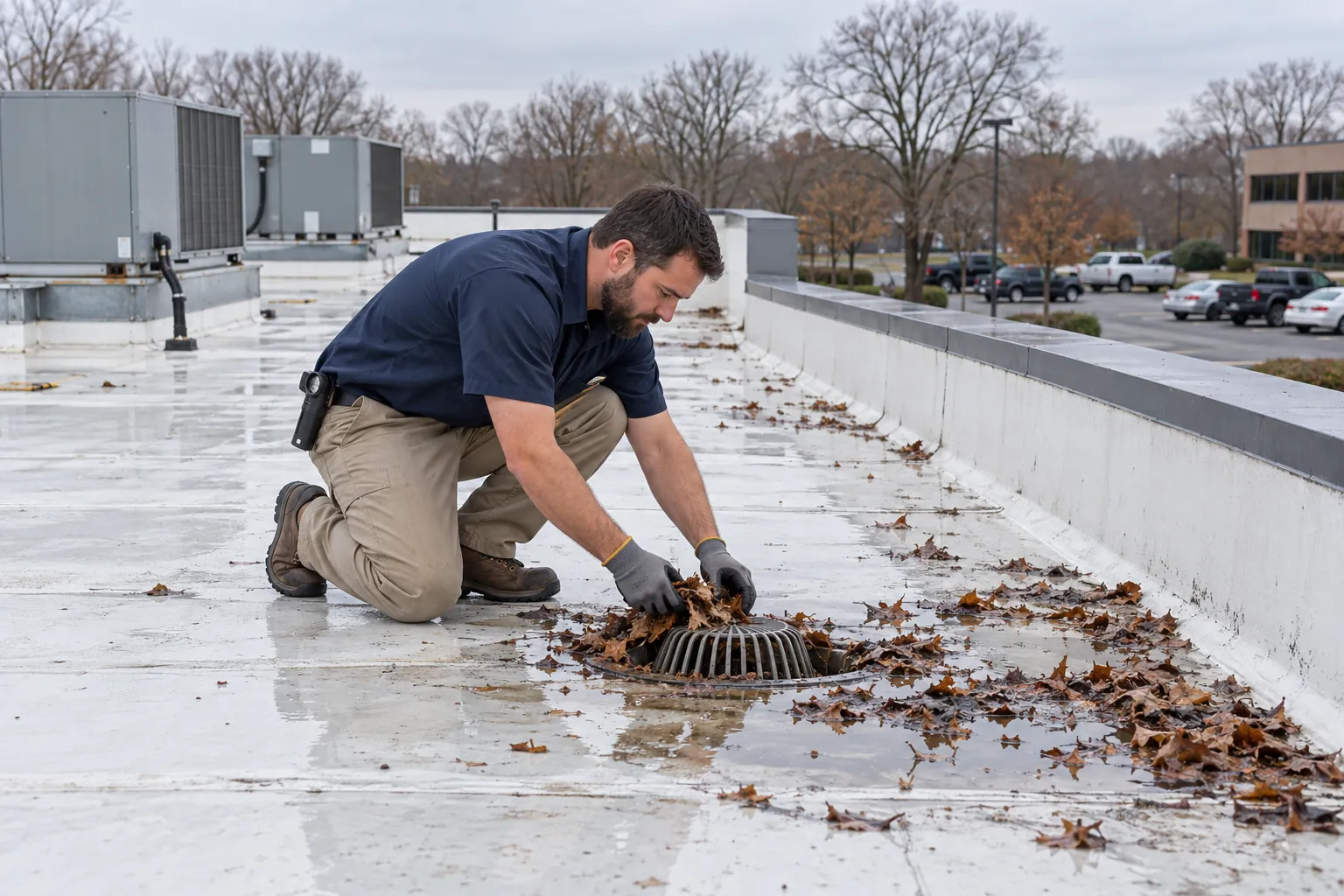 Premises and facilities managementBuilding maintenance checklist: what the code expects, how often to check, and who does itA building maintenance checklist for US commercial buildings, built on the International Property Maintenance Code: daily to annual tasks, who does each, the record.
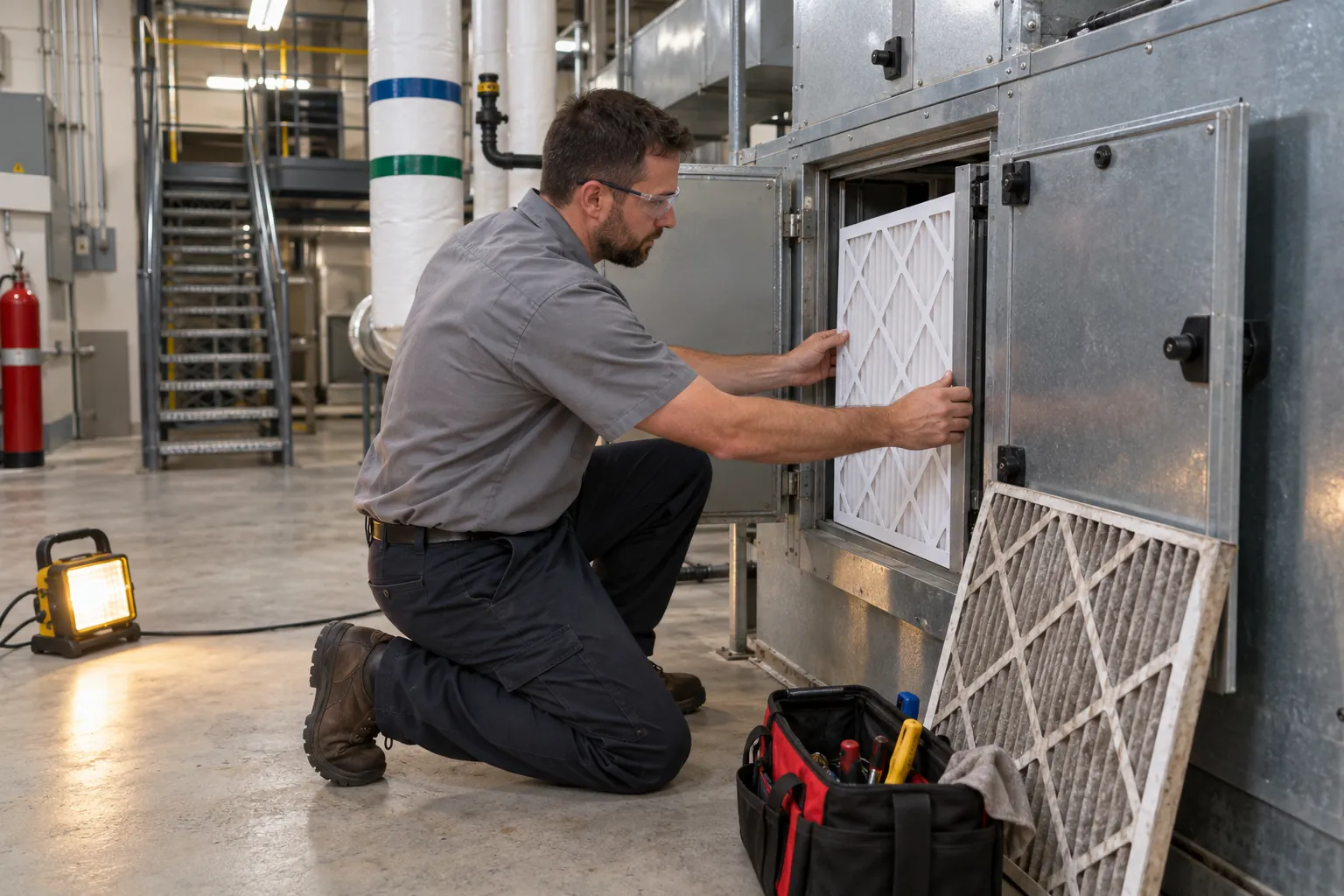 Premises and facilities managementPreventive maintenance checklist: what to check in a commercial building, how often, and how to prove itA preventive maintenance checklist for commercial buildings: HVAC, electrical, fire and life safety, plumbing, how often, and what the record should show.
 Premises and facilities managementParking lot inspection checklist: what to check, how often, and what to recordA parking lot inspection checklist for commercial property: pavement, striping, ADA spaces, lighting and drainage, how often to check, and a record that holds up.
 CleaningRetail cleaning checklist: sales floor, fitting rooms, restrooms and spillsA retail cleaning checklist for US stores: entrances, sales floor, fitting rooms, restrooms and the back room, with OSHA floor rules, spills and who checks it.