Security patrols
Electric fence COC: what the law requires, and the daily fence and energiser checks on site
An electric fence COC, properly the electric fence system certificate, is the certificate that regulation 12(4) of the Electrical Machinery Regulations, 2011 requires every user or lessor of an electric fence system in South Africa to have, and only an electric fence system installer registered with the Department of Employment and Labour's chief inspector may issue it (apart from pet-shock and strip-grazing systems), after inspecting and testing the fence.

The certificate is the installer's to issue, never the security company's or the owner's. What the owner, the managing agent and the security officers on site can do is keep the fence in the state the installer certified and notice quickly when it is not. This guide sets out the law behind the COC, when a new certificate is needed, and the daily fence and energiser checks an officer can make without touching a wire.
01
What the law requires: the electric fence system certificate
Electric fences are regulated as electrical machinery under the Occupational Health and Safety Act 85 of 1993. The Minister of Labour made the Electrical Machinery Regulations, 2011 under section 43 of the Act, in Government Notice R. 250 of 25 March 2011. They commenced on 1 July 2011, except regulation 12(4), the certificate itself, which commenced on 1 October 2012.
The Regulations define an electric fence as "an electrified barrier consisting of one or more bare conductors erected against the trespass of persons or animals", an electric fence energiser as the machinery that delivers "a periodic non-lethal amount of electrical energy" to the fence, and an electric fence system as the two together. Regulation 12 then sets four rules:
- Built to the standard. Regulation 12(1): no person may "design, manufacture, sell, install or use an electric fence or electric fence energiser" other than in accordance with the health and safety standard incorporated into the Regulations. Fences installed under the 1988 Regulations before the 2011 ones came into force are deemed to comply.
- A certified energiser. Regulation 12(2): the seller, importer and manufacturer of an energiser must prove compliance with SANS 60335-2-76 with a certificate from an accredited test laboratory.
- A safe charger. Regulation 12(3): where the energiser runs from a battery charged from the mains, the user or lessor must ensure the charging apparatus is of double-wound isolation construction.
- A certificate. Regulation 12(4): "every user or lessor of an electric fence system shall have an electric fence system certificate in the form of Annexure 1", and "such certificate shall be transferable".
The standards were incorporated by a separate notice, Incorporation of Health and Safety Standards into the Electrical Machinery Regulations, 2011 (Government Notice R. 251, the same day), under section 44 of the Act. For fences it names SANS 10222-3, Electrical security installations, Part 3: Electric security fences (non-lethal), and SANS 60335-2-76, the particular requirements for electric fence energisers. The SABS store lists the current edition as SANS 10222-3:2023 (Ed. 5.01), approved on 29 June 2023 and replacing the 2016 edition. SANS standards are sold, not published free, so ask the installer which edition they certified against.
The certificate is not the only duty. Section 8(2)(a) of the Act requires every employer to provide and maintain "systems of work, plant and machinery that, as far as is reasonably practicable, are safe and without risks to health", and section 9 requires every employer to ensure, as far as is reasonably practicable, that people other than its employees who may be directly affected by its activities, such as visitors, neighbours and passers-by, are not exposed to hazards to their health or safety. The Annexure 1 certificate itself asks the user or lessor to sign that they are "aware of my responsibilities in terms of regulation 12" and "undertake to operate and maintain the electric fence system in a safe manner". That signature is where the daily checks begin.
Regulation 24 makes a breach of regulation 12 or 13 an offence, with a fine or up to 12 months' imprisonment and, for a continuing offence, a further R200 or one day for each day it continues, the extra imprisonment capped at 90 days.
02
Who issues the COC, and when a new one is needed
Regulation 13(1) says "Only a registered person may issue an electric fence system certificate", and only "after having satisfied himself or herself by means of an inspection and test" that the fence complies. For a fence that predates the standard, the test is against the standard's general safety principles. The only exception is a pet-shock or strip-grazing system, which a user competent to install it may certify. A registered person is an electric fence system installer registered by the chief inspector under regulation 14, who must show that certificate of registration on request to an inspector, a supplier or anyone they are about to install for and certify. The security company is not the issuer, the managing agent is not, and neither is a general electrician unless they are registered as an electric fence system installer.
The certificate is a separate document from the electrical certificate of compliance for the building's wiring, which is issued under the Electrical Installation Regulations, 2009. The two-year rule people quote for a sale, regulation 7(5) of those Regulations, applies to the electrical certificate of compliance. The Electrical Machinery Regulations give the fence certificate no expiry date and say it is transferable.
A new certificate, or a supplementary one, is needed when:
- A fence is installed. Regulation 13(3): "Any person who undertakes to install, alter or extend an electric fence system shall ensure that an electric fence system certificate is issued for that work."
- An existing fence is added to or altered, such as a new section or a new zone. Whether other work, such as replacing the energiser, counts as an alteration is for the registered installer to decide; Annexure 1 has an initial certificate and a supplementary certificate for this.
- A fence that predates the Regulations has an addition or alteration, or the premises change owner after 1 October 2012. Regulation 12(5) exempts older systems only until one of those happens.
- The certificate cannot be found. Regulation 12(4) requires the user or lessor to have one, so an owner without it asks a registered installer to inspect, test and certify the fence.
If the installer finds a fault before issuing the certificate, regulation 13(2) says they "shall refuse to issue such certificate", and where the fault is an immediate danger they must tell the user or lessor in writing straight away. Regulation 13(4) says no person may amend a certificate a registered person has issued. Anyone who changes the fence, even with good intent, is changing a certified system.
03
The daily fence and energiser checks a security officer can make
The certificate proves the fence was right on the day it was tested. After that, vegetation grows, wind brings down branches, load shedding drains batteries and people cut wires. None of the checks below needs a tool or involves touching the fence. They are good practice, not a list any regulation prescribes; the site instructions should say which apply.
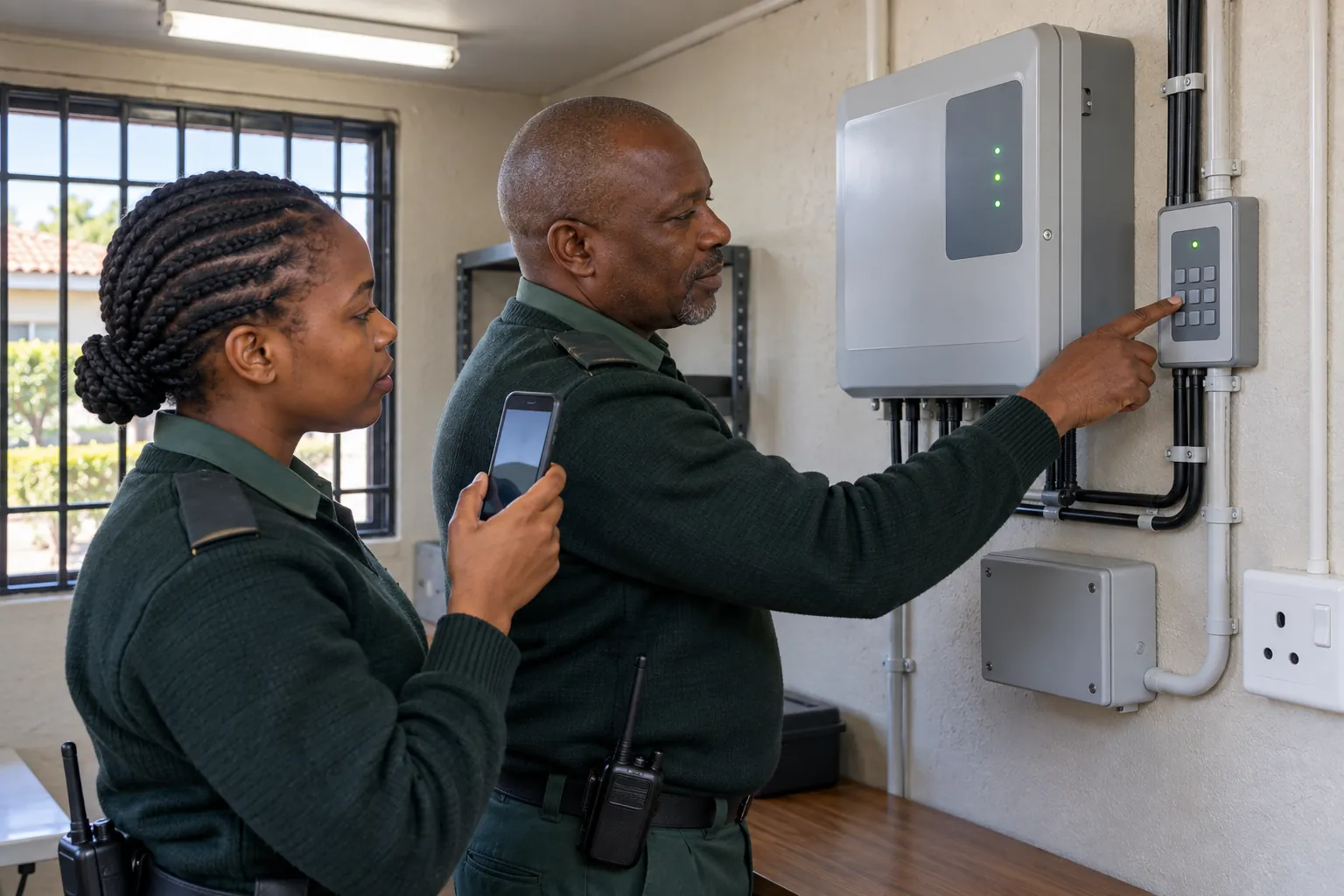
- The energiser and keypad: armed or disarmed as it should be for the time of day, no fault, tamper or low-battery indication, and the siren or strobe silent. Note any zone showing a fault.
- Power and battery: after load shedding or an outage, check the energiser has come back on and is not reporting a flat or failing battery.
- The fence line: walked on the inside, looking for grass, creepers or branches touching the live wires, and for broken, slack or displaced wires.
- Insulators and brackets: cracked, missing or scorched insulators, bent brackets and leaning posts, especially after storms.
- Gates and joins: gate contacts and the wire at driveway and pedestrian gates, where vehicles and people knock it.
- Warning signs: still in place along the fence and at gates, facing out and readable, not painted over or hidden by growth.
- Signs of tampering: cut or bridged wires, objects thrown over or leaning against the fence, digging below it, and damage to the neighbour's side where it can be seen.
Alarm activations are part of the same record. When a zone alarms, the officer's response, what they found and when the zone was reset belong in the occurrence book or the site's electronic log, and repeated false alarms on one zone are a maintenance fault, not a nuisance to be silenced.
04
Who does what: owner, security company, supervisor and installer
The Regulations place the certificate on the user or lessor. The Act defines the user of machinery as "the person who uses plant or machinery for his own benefit or who has the right of control over the use of plant or machinery", which is usually the owner, the tenant who controls the premises or, on a sectional title scheme or estate, the body corporate or HOA for a fence on common property. Around them, the work usually falls like this:
- The owner, body corporate or managing agent holds the certificate (and any supplementary ones), keeps a copy on site, appoints a registered installer for maintenance, and makes sure alterations are certified.
- The security company writes the fence checks into the site instructions, trains officers on the energiser's keypad and what each indicator means, and passes faults to the client promptly.
- The security officer makes the start-of-shift check at the energiser, looks at the fence on each patrol (see guard patrol system), responds to alarms, and records what was found.
- The security supervisor checks that the fence checks were actually made, walks the full line on their visits, and follows faults through to the installer.
- The registered installer inspects, tests, repairs and certifies, under a maintenance contract or on call.
A workable rhythm is a panel check at every shift change, a look at the fence on each patrol, a full walk of the line weekly and after storms, and the installer's service as the maintenance contract sets. Write it into the site instructions so a relief officer does the same.
05
What a good fence record looks like
When the fence fails on the night a vehicle is stolen, or a neighbour complains of a shock, the questions are the same: was the fence checked, when, by whom, and what happened to the faults already known? A record that answers them has four parts.
- The certificate file: the initial certificate, every supplementary certificate, the installer's name and registration number from the certificate, and the maintenance contract. The certificate cannot be amended after issue, so file it as it is.
- The check record: each panel check and fence walk with the date, time, name of the officer and the section checked, and what was found, including "nothing found". A photo of a problem, taken from a safe distance, is worth a paragraph.
- The fault trail: each fault reported with the time, the location on the fence, who was told and when, when the installer attended, and when it was fixed. An open fault should stay visibly open until it is closed.
- The alarm record: activations, responses and resets in the occurrence book, since the report on any incident will draw on them (see security report writing).
06
Where the record fails, and where SiteClara fits
Fence checks are easy to write up and hard to prove. "Energiser armed, fence OK" goes into the occurrence book at 18:00 whether or not anyone walked to the far corner where the creeper has reached the top wire. A fault noted on the night shift stays in the book until someone reads it, and the installer hears about it when the zone will not arm at all.
SiteClara records the checks where they are done. A printed QR poster, with an optional NFC tag behind it, goes at each checkpoint: the energiser room, each fence corner or zone, the main gate. The officer scans the code or taps the tag on their own phone, with no app to install, and marks the scheduled check done or says what stopped them. The time and the named officer are recorded as it happens, with a photo when one is asked for. A fault found on the fence is reported there, with a photo, and goes onto the team's list of open jobs until someone closes it.
The supervisor sees which fence checks were due, done and missed, and records why one was missed. Each day they review the totals and photos, add a note and approve a report that goes to nominated client or management contacts at 08:00 the next morning, so the managing agent sees an open fence fault before the weekend rather than after it.
07
Questions people ask
Is an electric fence COC compulsory in South Africa?
Yes, for most electric fencing. Regulation 12(4) of the Electrical Machinery Regulations, 2011 requires every user or lessor of an electric fence system to have an electric fence system certificate, and that requirement has applied since 1 October 2012. A fence that existed before the Regulations came into force is exempt only until it is added to or altered, or the property changes owner after 1 October 2012, when the user or lessor must obtain a certificate.
Who can issue an electric fence certificate?
Only a registered person, which the Electrical Machinery Regulations, 2011 define as a person registered under regulation 14 as an electric fence system installer, and only after an inspection and test. The one exception in regulation 13(1) is a pet-shock or strip-grazing system, for which a user competent to install it may issue the certificate.
Does an electric fence COC expire?
The Electrical Machinery Regulations, 2011 give the certificate no expiry date, and regulation 12(4) says it is transferable, so a valid certificate can pass to the new owner when the property is sold. Regulation 13(3) requires a new certificate for any work that installs, alters or extends the fence, and regulation 13(4) says no person may amend one a registered person has issued.
Is the electric fence certificate the same as the electrical compliance certificate?
No. The electrical certificate of compliance covers the building's electrical installation under the Electrical Installation Regulations, 2009, whose regulation 7(5) says the user or lessor may not allow a change of ownership if that certificate is older than two years. The electric fence system certificate is a separate legal document under the Electrical Machinery Regulations, 2011, issued only by a registered electric fence system installer, so a property sale can call for both.
08
Further reading, and a list to take away
The Electrical Machinery Regulations, 2011 are on Acts Online, including Annexure 1, the certificate itself, and the Department of Employment and Labour publishes the Incorporation of Health and Safety Standards into the Electrical Machinery Regulations, 2011, the Occupational Health and Safety Act 85 of 1993 and the Electrical Installation Regulations, 2009. SANS 10222-3 is sold by the SABS.
For a site with an electric fence, check that:
- the electric fence system certificate, and every supplementary one, is on file with a copy on site;
- the installer's registration was seen, and any alteration since has its own certificate;
- the site instructions say who checks the energiser, the fence line and the gates, and how often;
- officers know what each light and sound on the energiser keypad means;
- officers report faults and never repair, clear or bypass the fence themselves;
- the energiser is checked after every load shedding slot or outage;
- every fault has a time, a finder, a person told and a date fixed;
- alarm activations and disarmed zones are written in the occurrence book.
Sources
Every document this guide quotes or links to, in the order it first cites them.
- Occupational Health and Safety Act 85 of 1993 labour.gov.za
- Electrical Machinery Regulations, 2011 acts.co.za
- Incorporation of Health and Safety Standards into the Electrical Machinery Regulations, 2011 labour.gov.za
- SANS 10222-3:2023 (Ed. 5.01) store.sabs.co.za
- Electrical Installation Regulations, 2009 labour.gov.za
Related guides
 Security patrolsGuard patrol systems: how they work, what they prove, and how to choose oneHow a guard patrol system records security patrols in South Africa: wands, RFID, NFC, QR and GPS, what PSIRA and POPIA mean for the data, and what to ask.
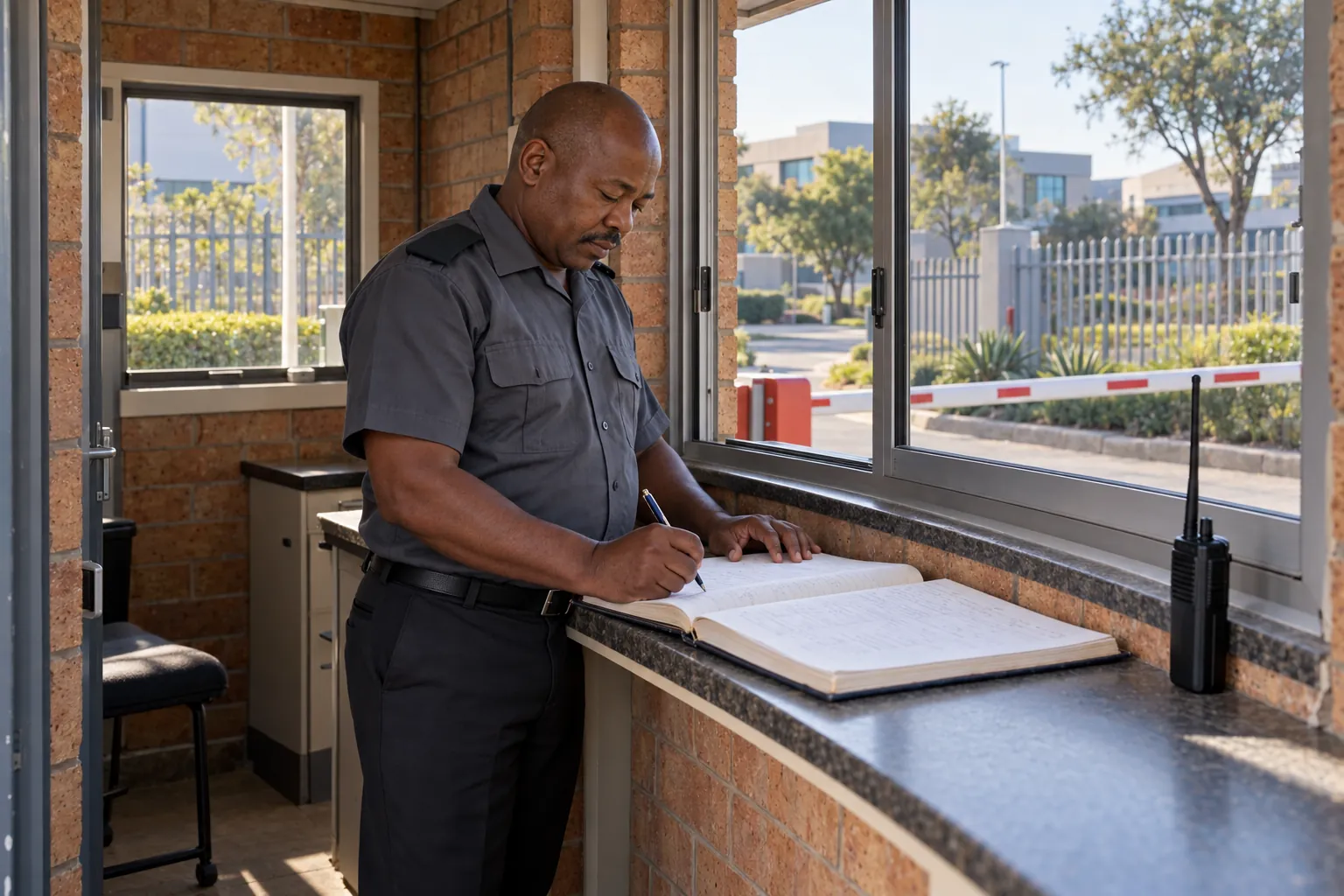 Security patrolsOccurrence book: what goes in the OB, and how to keep one that stands upThe security occurrence book (OB) in South Africa: what to record each shift, how to write entries, what PSIRA and the OHS Act require, and paper or electronic.
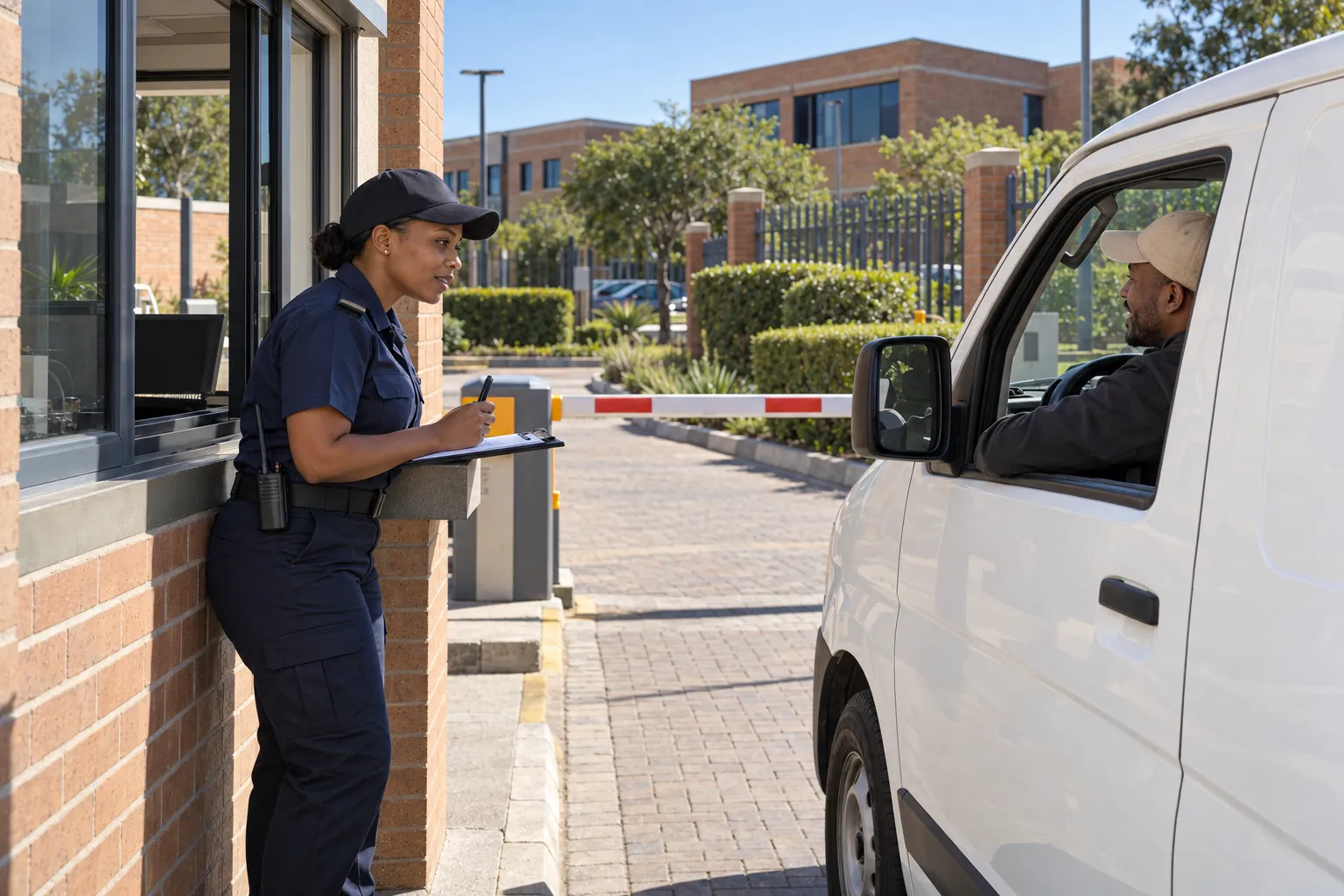 Security patrolsSecurity officer duties and responsibilities: what the post involves, and how it is checkedSecurity officer duties in South Africa: PSIRA registration, patrols, access control, the OB, incidents, what officers may not do, and how duties are checked.
 Security patrolsSecurity report writing: what to record, with examples that stand upHow South African security officers write incident, patrol and shift reports: what each must record, worked examples, and what PSIRA's rules expect.