Premises and facilities management
Working alone: what each province requires, and what to put in a policy
Working alone is legal in Canada, but the employer must deal with its risks first: British Columbia, Alberta, Saskatchewan and Manitoba have working alone rules that require the hazards to be identified and an effective way to keep in contact with the worker, and in Ontario the general duty to take every precaution reasonable in the circumstances does the same job.
Also written for United Kingdom · United States · New Zealand
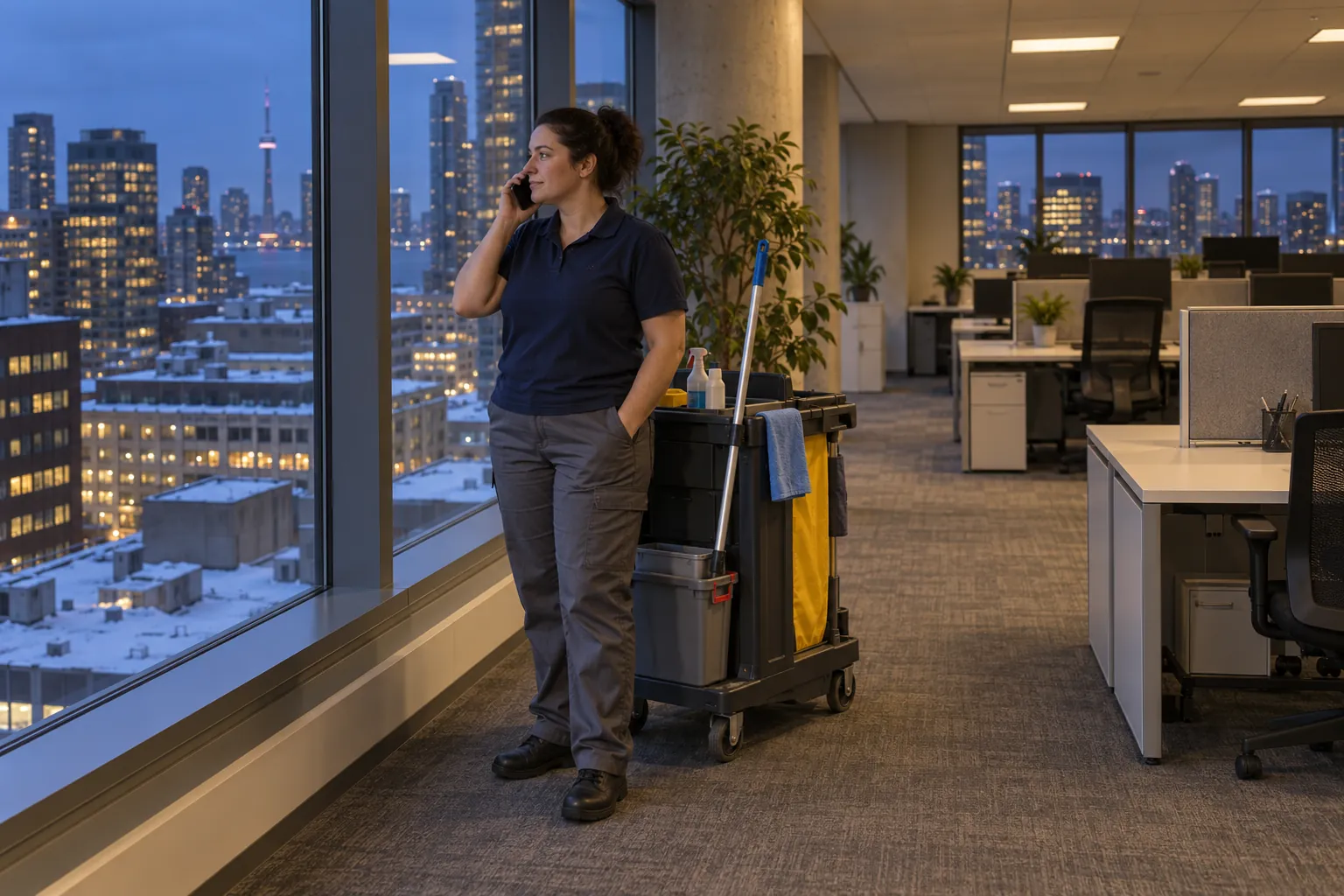
British Columbia goes furthest, with a written check-in procedure, a designated person who records each check, and a check at the end of the shift. This guide covers the rules province by province, who counts as working alone in a building, the hazard assessment, the check-in procedure, and an outline for a working alone policy you can adapt.
01
Working alone: what the law requires in each province
The Canadian Centre for Occupational Health and Safety (CCOHS), in its OSH Answers page Working Alone – General, says a person is alone at work "when they are on their own; when they cannot be seen or heard by another person." The working alone legislation that applies depends on where the work is done: occupational health and safety is mostly provincial and territorial law, and federal law covers only federally regulated work, such as banks, airports and interprovincial transport.
- British Columbia. Sections 4.20.1 to 4.23 of the Occupational Health and Safety Regulation, in WorkSafeBC's OHS Regulation, Part 4: General Conditions, define "to work alone or in isolation" as working "in circumstances where assistance would not be readily available to the worker (a) in case of an emergency, or (b) in case the worker is injured or in ill health." The employer must identify hazards before assigning the work (section 4.20.2), and "must develop and implement a written procedure for checking the well-being of a worker assigned to work alone or in isolation" (section 4.21(1)).
- Alberta. Part 28 of the Occupational Health and Safety Code, Part 28: Working Alone (Alta. Reg. 191/2021) applies where "a worker is working alone at a work site" and "assistance is not readily available if there is an emergency or the worker is injured or ill" (section 393(1)). Section 393(2) says "Working alone is considered a hazard for the purposes of Part 2", the Code's hazard assessment part.
- Saskatchewan. Section 3-24 of The Occupational Health and Safety Regulations, 2020 (RRS c S-15.1 Reg 10) defines "to work alone" as working "at a worksite as the only worker of the employer or contractor at that worksite, in circumstances where assistance is not readily available to the worker in the event of injury, ill health or emergency." The employer must identify the risks and take "all reasonably practicable steps to eliminate or reduce" them.
- Manitoba. Part 9 of the Workplace Safety and Health Regulation, M.R. 217/2006 "applies to every workplace where a worker works alone or works in isolation" (section 9.1). The employer must identify the risks (section 9.2) and develop safe work procedures (section 9.3).
- Ontario. There is no working alone section in the Occupational Health and Safety Act, R.S.O. 1990, c. O.1, and the Act does not ban working alone. The general duty applies: section 25(2)(h) requires an employer to "take every precaution reasonable in the circumstances for the protection of a worker", and section 25(2)(a) to "provide information, instruction and supervision to a worker". Part III.0.1 adds the workplace violence assessment and program.
- Federally regulated work. Section 124 of the Canada Labour Code, Part II (section 124) says "Every employer shall ensure that the health and safety at work of every person employed by the employer is protected."
Several other provinces and territories also have working alone provisions; check yours. Everywhere, the duty sits with the employer.
02
Who works alone in a building
CCOHS lists, among others, "security guards", "cleaners, or custodians" as people who may work alone. In the buildings that facility managers and janitorial and security contractors look after, they are usually:
- Night janitorial staff cleaning an office tower, school or clinic after it has emptied, or before it opens.
- Security guards on a static post overnight or at weekends, and mobile patrol officers visiting several sites alone, including alarm responses.
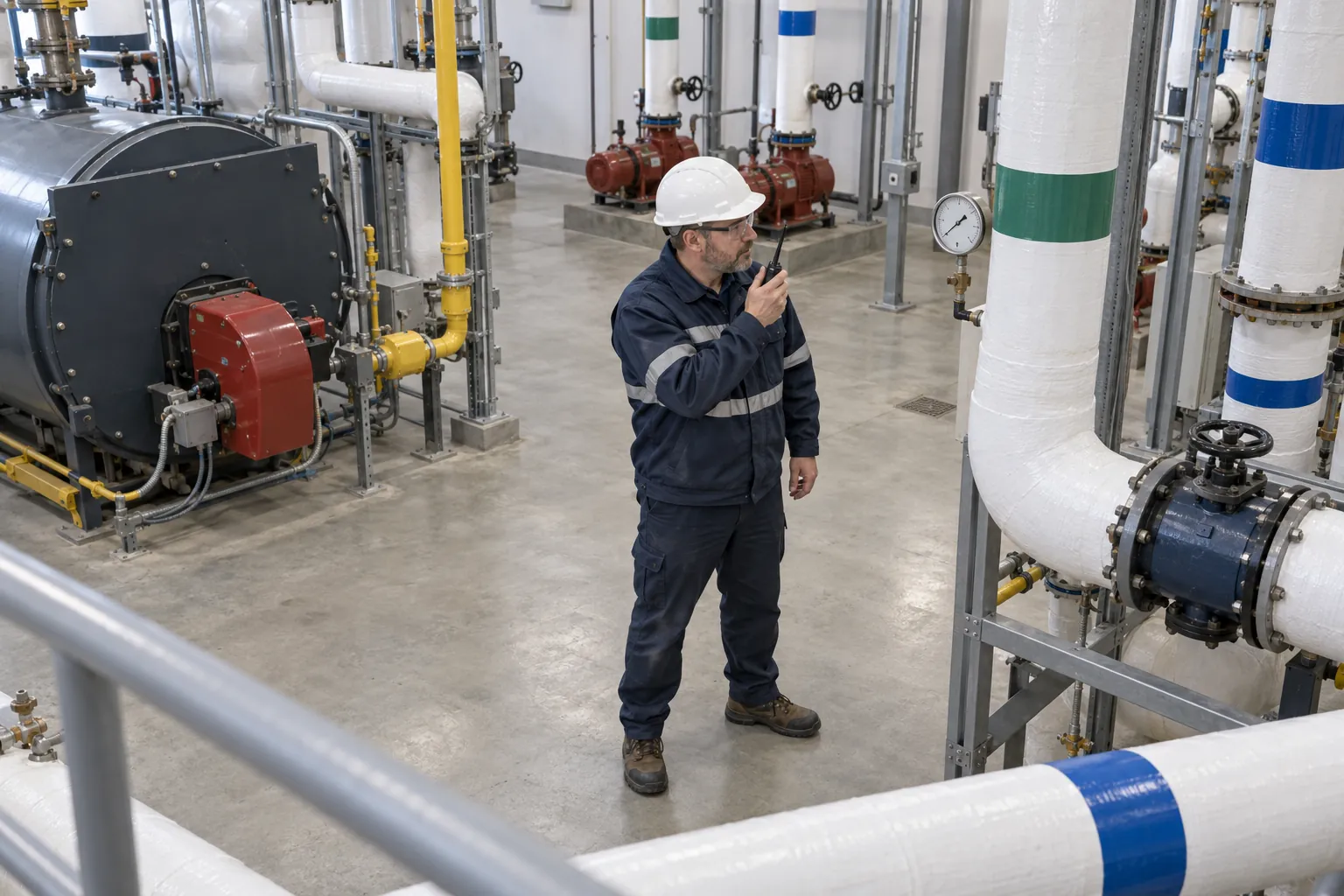
- Building operators and superintendents doing a plant room round, answering a call at night, or checking a vacant floor.
- Maintenance staff and contractors in mechanical rooms, roof spaces, parking garages and service corridors that nobody else visits.
- Concierge staff covering a lobby alone overnight.
The definitions do not all draw the line in the same place. British Columbia and Alberta ask whether assistance is readily available. Manitoba's regulation defines "working alone" as work by a worker who "is the only worker for that employer at that workplace at any time" and "is not directly supervised by the employer", so a contract cleaner can be working alone in a building full of the client's staff. A person can also be working alone for part of a shift, such as the guard whose partner goes off at 23:00. Describe working alone by the situation, not only by the job title.
Contracted work involves two employers: the client knows the building and who else may be there at night, and the contractor carries the duty to its own people. Agree in writing who checks on whom, in the post orders or the janitorial scope of work.
03
The hazard assessment comes first
Every regime starts with the hazards. In British Columbia, "Before a worker is assigned to work alone or in isolation, the employer must identify any hazards to that worker" (section 4.20.2(1)), then eliminate the hazard or, where that is not practicable, minimize the risk (section 4.20.2(2)). In Alberta, because working alone is itself a hazard under Part 2 of the Code, it goes into the employer's hazard assessment. Saskatchewan and Manitoba require the risks to be identified in consultation with the joint committee, the representative or, where there is neither, the workers.
CCOHS names the high-risk activities that make working alone more dangerous: work at heights, in confined spaces, with electricity or other forms of hazardous energy, with hazardous products, with hazardous equipment, and with the public, where there is a potential for violence. Its advice: "Avoid having a lone worker whenever possible, especially for jobs with a recognized risk."
In Ontario, the workplace violence assessment does much of this work. Section 32.0.3(1) of the Act requires the employer to "assess the risks of workplace violence that may arise from the nature of the workplace, the type of work or the conditions of work". The Ministry's guide Understand the law on workplace violence and harassment says the conditions of work include whether workers "work alone or in isolation", and lists "working alone or with just a few people" and "working late nights or very early mornings" among the circumstances that may increase the risk of workplace violence.
Look too at how long the lone work lasts and how the worker gets there: CCOHS asks "What is a reasonable length of time for the person to be alone?" and whether transportation is needed, and a worker travelling between sites or dealing with the public faces different risks from one who stays in a locked building.
Decide in the assessment which tasks must never be done alone, such as entry into a confined space or work during lock-out and tag-out, which CCOHS notes some jurisdictions restrict, and schedule a second person for them.
04
The working alone check-in procedure
British Columbia sets out the check-in procedure in most detail. Under section 4.21 of the Regulation:
- the procedure "must include the time interval between checks and the procedure to follow in case the worker cannot be contacted, including provisions for emergency rescue" (4.21(2));
- "A person must be designated to establish contact with the worker at predetermined intervals and the results must be recorded by the person" (4.21(3));
- "In addition to checks at regular intervals, a check at the end of the work shift must be done" (4.21(4));
- the procedure and its intervals are developed in consultation with the joint committee or the worker health and safety representative (4.21(5)), and the intervals "in consultation with the worker assigned to work alone or in isolation" (4.21(6)).
The note to section 4.21 says "High risk activities require shorter time intervals between checks", and that the preferred method is "visual or two-way voice contact"; a one-way device that lets the worker call for help, and sends a call for help if the worker does not reset it, is acceptable where two-way contact is not practicable. Section 4.22 requires both the worker and "any person assigned to check on the worker" to be trained in the procedure.
Alberta's section 394(1) requires "an effective communication system" of radio, landline or cellular telephone, or another effective electronic means, "that includes regular contact by the employer or designate at intervals appropriate to the nature of the hazard". Where electronic communication is not practicable, the employer or designate visits the worker, or the worker contacts them, at such intervals (section 394(1.1)). Manitoba (section 9.3(2)) and Saskatchewan (section 3-24(4)) require an effective communication system, with regular contact as one of the measures that may be added.
CCOHS suggests a daily work plan "so it is known where the lone worker will be and when", a main and a backup contact, a written log of contacts, and a code word for help. A workable procedure has five steps:
- Start of shift. The worker tells the designated person when they start, which building they are in and when they expect to finish.
- Intervals. Set by the hazard assessment, agreed with the worker and written down, shorter for higher-risk work.
- A missed check. State exactly what happens and how fast: call the worker, call again, send someone, then call 911.
- End of shift. The designated person confirms the worker has left safely, and follows up any shift that does not close.
- The record. Required in British Columbia, and elsewhere the only way to show the procedure was followed.
05
Writing a working alone policy: an outline to adapt
A working alone policy template is useful only as a list of headings; the answers come from your own hazard assessment. A workable policy covers:
- Purpose and scope: how the policy will protect lone workers, who it applies to, including contractors and temporary staff, and which province's rules apply.
- Responsibilities: the owner, supervisors, managers, designated contacts and workers.
- Hazard assessment: how working alone is assessed, with the committee or representative, and when it is reviewed.
- Work that must not be done alone.
- Check-in procedure: start and end of shift, intervals, the means of communication, and the steps for a missed check, with names and times.
- Emergencies: injury, illness, fire, violence and emergency rescue.
- Training: for the worker and for the person who checks on them.
- Records: what is recorded for each check, by whom, and how long it is kept.
- Reporting: incidents, near misses and concerns.
- Review: the review date, the version in force, and what triggers an earlier review.
The review dates are set by law. British Columbia requires the check-in procedure to be reviewed "at least annually", or sooner if things change (section 4.23). Manitoba requires its working alone procedures to be reviewed and revised "not less than every three years", or sooner if circumstances change, and posted "in a conspicuous place at the workplace" (section 9.3(3) and (4)). In Ontario, section 25(2)(j) requires a written occupational health and safety policy reviewed at least annually where more than five workers are regularly employed, and section 32.0.1 requires the workplace violence policy to be reviewed "as often as is necessary, but at least annually".
Ontario's violence program must also "include measures and procedures for summoning immediate assistance when workplace violence occurs or is likely to occur" (section 32.0.2(2)(b)). For a guard or janitorial worker alone at night, the check-in procedure is a large part of that.
06
Where the record fails, and what SiteClara does about it
Most working alone policies read well. The weak point is the record of the night: check-in calls noted on the back of a schedule, an end-of-shift call nobody logged, a patrol walked with nothing to show for it. After an incident, the employer often cannot say when the worker was last in touch, or where.
SiteClara is a record of visits and checks, not a working alone system. A printed QR poster, with an optional NFC tag behind it, sits at each place where work is checked: an entrance, a mechanical room, a washroom, an exit stair, a patrol point. The janitorial worker, guard or building operator scans the code or taps the tag on their own phone, with no app to install, sees the checks due there, and marks each one done or explains what stopped them, with a photo when one is asked for. Each confirmation is recorded with the named person and the time, at the location.
The supervisor sees what is due, done and missed, records the reason a check was missed, and approves a daily report for the client or property manager the next morning. For a working alone policy, that is a timed trail of where each person confirmed work during the shift, useful when reviewing an incident or the check-in intervals. Where a regulation requires the designated person to record each check, as British Columbia's does, SiteClara can be the working record a supervisor reads alongside it, not the statutory record itself.
07
Questions people ask
Is it legal to work alone in Ontario?
Yes. Ontario's Occupational Health and Safety Act, R.S.O. 1990, c. O.1 has no working alone section and does not ban working alone, but section 25(2)(h) requires the employer to "take every precaution reasonable in the circumstances for the protection of a worker". The employer must also assess the risks of workplace violence, and the Ministry's guide Understand the law on workplace violence and harassment lists "working alone or with just a few people" among the circumstances that may increase that risk.
Is it legal to work alone in BC?
Yes, provided the employer meets sections 4.20.1 to 4.23 of WorkSafeBC's OHS Regulation, Part 4: General Conditions: the hazards identified and eliminated or minimized before the work is assigned, a written procedure for checking the worker's well-being with a designated person who records each check, a check at the end of the shift, training for the worker and the person checking, and a review at least annually.
What is the Alberta OHS Code for working alone?
Part 28 of Alberta's Occupational Health and Safety Code, Part 28: Working Alone, sections 393 and 394. Section 393(2) says "Working alone is considered a hazard for the purposes of Part 2", so it goes into the hazard assessment, and section 394(1) requires an effective communication system with regular contact by the employer or designate at intervals appropriate to the nature of the hazard.
What are the risks of working alone?
The main risk is that nobody is there to help if the worker is injured, falls ill or meets violence. The CCOHS OSH Answers page Working Alone – General names the work that raises it: work at heights, in confined spaces, with electricity or other forms of hazardous energy, with hazardous products, with hazardous equipment, and with the public, where there is a potential for violence.
08
Further reading, and a list to take away
CCOHS publishes Working Alone – General in its OSH Answers. WorkSafeBC's page on working alone or in isolation links its handbook for small business. Alberta, Saskatchewan, Manitoba and Ontario publish their rules on their own legislation sites, linked above.
Before you sign off a working alone policy, check that:
- working alone is in the hazard assessment, by situation as well as job title, and the committee or representative was consulted;
- the tasks that must never be done alone are listed;
- every worker knows how to check in, how often, and what happens if they do not;
- the steps for a missed check name a person and a time, and have been tested;
- each check and each end of shift is recorded;
- workers and their contacts are trained;
- the policy has an owner, a version and a review date that meets your province's rule.
Sources
Every document this guide quotes or links to, in the order it first cites them.
- Working Alone – General ccohs.ca
- WorkSafeBC's OHS Regulation, Part 4: General Conditions worksafebc.com
- Occupational Health and Safety Code, Part 28: Working Alone search-ohs-laws.alberta.ca
- The Occupational Health and Safety Regulations, 2020 publications.saskatchewan.ca
- Workplace Safety and Health Regulation, M.R. 217/2006 web2.gov.mb.ca
- Occupational Health and Safety Act, R.S.O. 1990, c. O.1 ontario.ca
- Canada Labour Code, Part II (section 124) laws-lois.justice.gc.ca
- Understand the law on workplace violence and harassment ontario.ca
- Working alone or in isolation worksafebc.com
Related guides
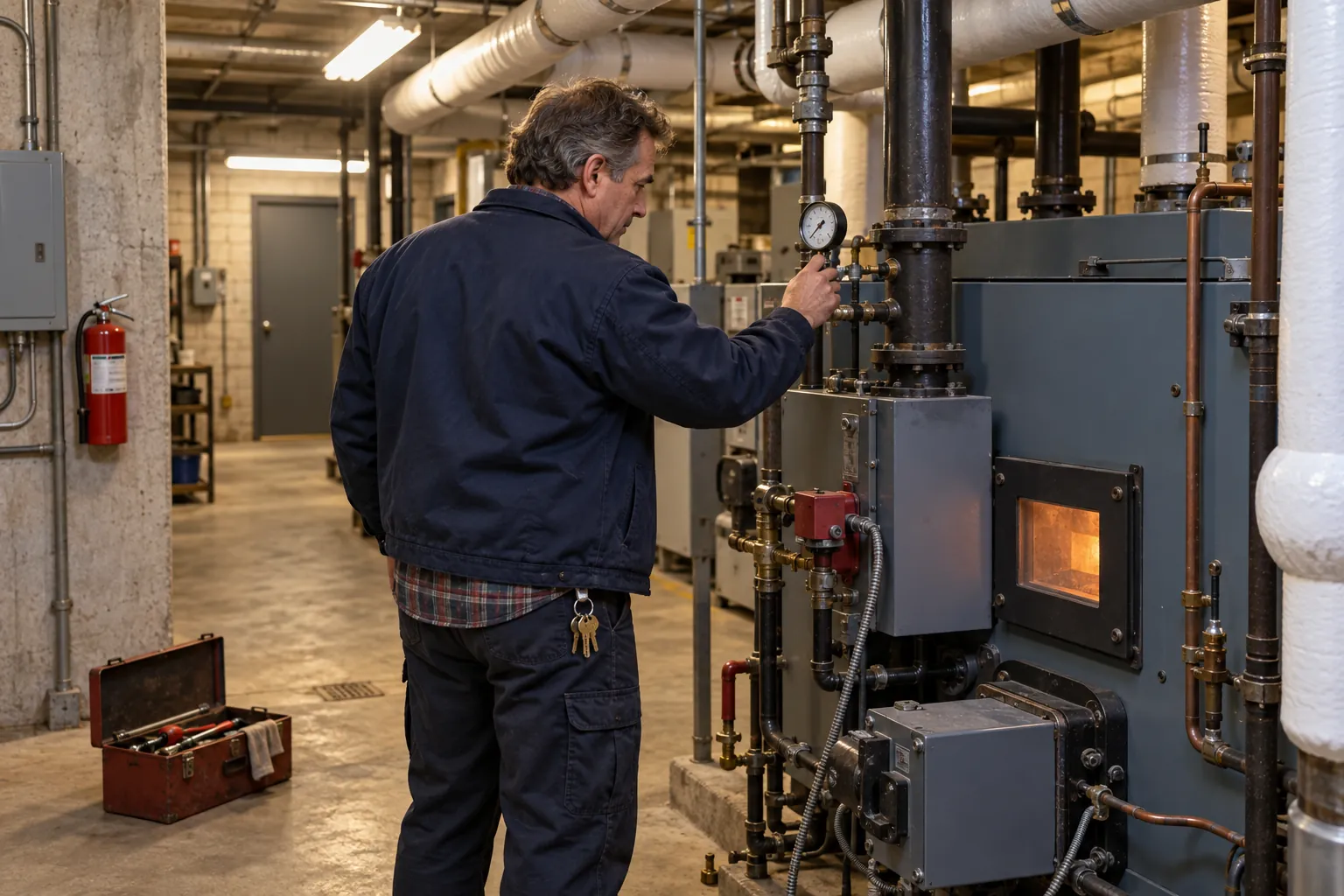 Premises and facilities managementBuilding superintendent duties: what the super does, and how to show it was doneWhat a building superintendent does in Canada: the landlord's duties a super carries out, heat and vital services, fire safety, working alone and the daily record.
 Security patrolsSecurity guard duties and responsibilities: what the role involves in Canada, and how it is checkedSecurity guard duties in Canada: provincial licences, patrols, access control, incidents and the notebook, the limits of the role, and how the work is checked.
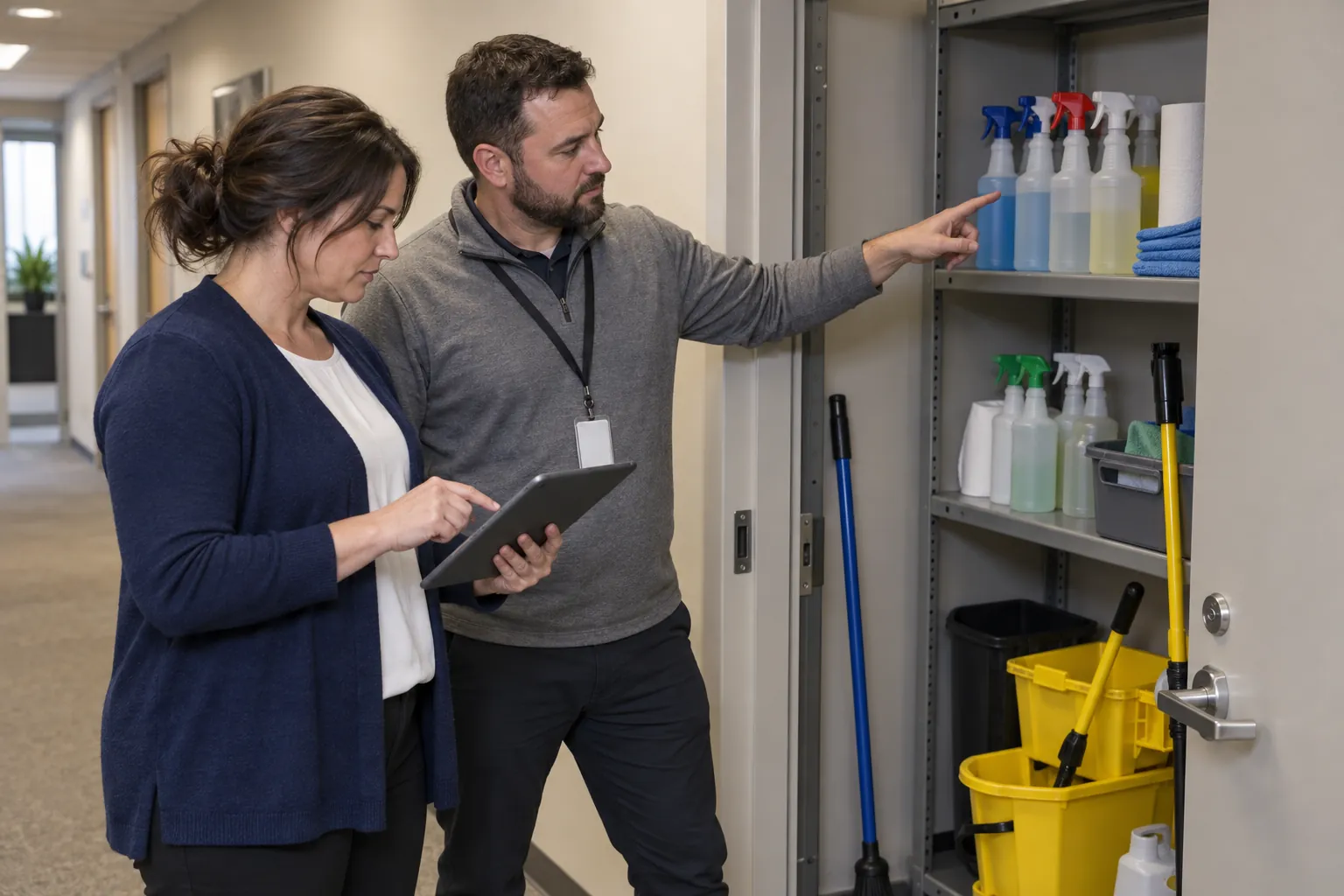 Premises and facilities managementWorkplace inspection checklist: how a JHSC inspection should workA workplace inspection checklist for Canadian JHSCs and representatives: Ontario, BC, Alberta and federal rules, what to walk, how often and what to record.
 Premises and facilities managementIncident report template: what to record, and when the law says to report itThe fields a workplace incident report needs, how to write one and take witness statements, and when Ontario, BC, Alberta or federal law says it must be reported.