Premises and facilities management
Lone worker policy: what New Zealand law asks for, and what to put in it
A lone worker policy is a PCBU's written arrangements for keeping people safe when they work alone or out of reach of help: who works alone, which tasks must never be done alone, how lone workers keep in touch, and what happens when someone does not check in.
Also written for United Kingdom · United States · Canada
No New Zealand law requires a document with that name, but regulation 21 of the Health and Safety at Work (General Risk and Workplace Management) Regulations 2016 requires every PCBU to manage the risks of remote or isolated work through a prescribed risk management process, and to provide a system of work that includes effective communication with the worker. This guide covers the law, who counts as a lone worker in a building, the risk assessment, the check-in procedures that make a policy work at night and at weekends, the changes due on 1 April 2027, and an outline you can adapt.
01
What the law requires, and where a lone worker policy fits
Lone work in New Zealand falls under the Health and Safety at Work Act 2015 (HSWA) and the regulations made under it. The duty holder is the PCBU, the person conducting a business or undertaking: the cleaning company, the security firm, the school board or the building owner whose staff work alone. Three layers apply:
- The primary duty of care in section 36 of HSWA. WorkSafe's page What is the primary duty of care? says a business must, so far as is reasonably practicable, provide and maintain safe systems of work, and the information, training, instruction or supervision needed to protect people from the risks of its work.
- Regulation 21 of the Health and Safety at Work (General Risk and Workplace Management) Regulations 2016, Managing risks associated with remote or isolated work. WorkSafe's interpretive guidelines General risk and workplace management – part 2 explain that a PCBU must manage these risks using the prescribed process in regulations 5 to 8, and that "the PCBU must provide a system of work that includes effective communication with workers".
- The worker's own duty. WorkSafe's page Your rights and obligations says workers must take reasonable care of their own health and safety, make sure their actions do not harm others, and "comply with any reasonable instructions, policies or procedures on how to work in a safe and healthy way".
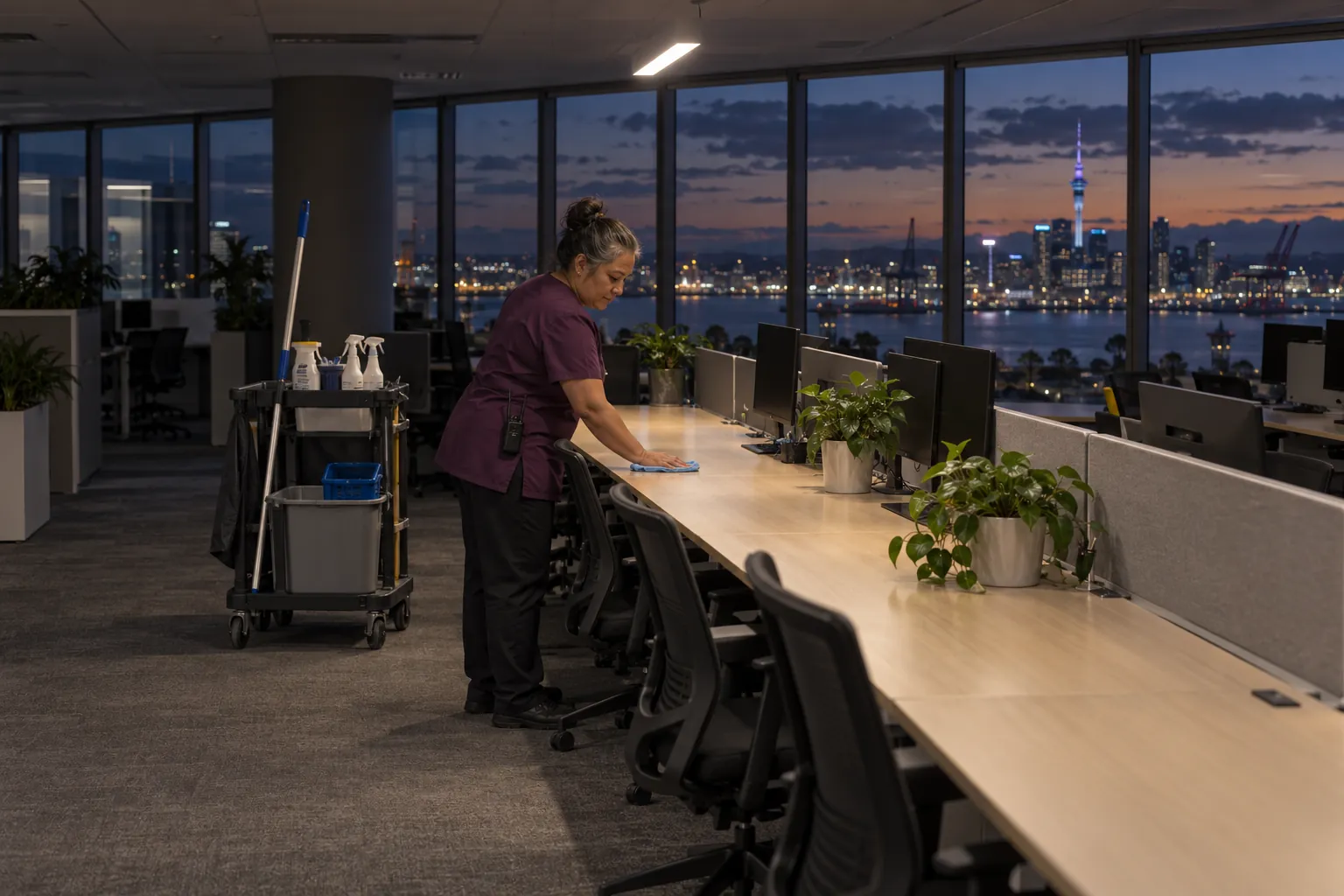
WorkSafe's guidelines define the subject broadly: "Work can be remote or isolated from the assistance of other persons because of location, time, or the nature of the work. Work can be isolated without being remote, and be remote without being isolated." It includes working alone or separated from colleagues and "working outside normal business hours or shift/night work". A cleaner alone on the eighth floor of a city office at 10 pm is isolated without being remote.
The prescribed process is the backbone of a policy: identify the hazards that could give rise to reasonably foreseeable risks (regulation 5); eliminate the risk if reasonably practicable, otherwise minimise it using the hierarchy of control measures (regulation 6); keep the controls effective (regulation 7); and review them when specified things happen (regulation 8).
No particular document is required. WorkSafe's quick guide Identifying, assessing and managing work risks (July 2017) says "It is good practice to keep written records of how you are managing your risks", and "More risky work will require more complex records." A lone worker policy is that record for people who work on their own, with the risk assessment behind it.
02
Who counts as a lone worker in a building
WorkSafe's examples of remote or isolated work include "Ken and his team working in the basement of a large office building" where occupants have no access, and "Petrol station attendants on night shift". Its Remote and isolated work safety alert (August 2026) adds "Maintenance staff carrying out urgent repairs when premises are closed". In the buildings that cleaning, security and facilities companies look after, the lone workers are usually:
- After-hours cleaners in an office, school, medical centre or shop once it has emptied, or before it opens.
- Security officers on a static site overnight, and mobile patrol officers doing lock-ups and alarm responses alone.
- Caretakers opening up early, locking up after an evening hire, or checking a school over the holidays.
- Maintenance technicians and contractors in plant rooms, risers, roof spaces and car parks that nobody else visits.
- Concierge and reception staff covering a desk alone at the start or end of the day.
A person can be a lone worker for part of a shift: the officer whose colleague signs off at 10 pm is alone just when help is furthest away. Describe lone working by the situations people work in as well as by their job titles.
Contracted work involves more than one PCBU. WorkSafe's Overlapping duties – quick guide says businesses must "so far as is reasonably practicable consult, cooperate and coordinate activities with all other businesses they share overlapping duties with", and "The more influence and control a business has over a health and safety matter, the more responsibility it is likely to have." The owner or tenant controls the building, its lighting, alarms and access; the contractor controls its own people. Establish who provides what at each site.
03
The lone worker risk assessment
The lone worker risk assessment decides what the policy says, so it is essential to do it before anyone works alone. WorkSafe's guidelines say "PCBUs should first consider whether the remote or isolated work is necessary", and the safety alert asks "Can the work be avoided or completed another way?" and "Is the worker competent, trained, and authorised to work unsupervised?" If lone work goes ahead, WorkSafe's page Lone working – what's the problem? lists questions to ask, among them:
- Is there a safe way in and out, for example for a lone person working out of regular business hours where the workplace could be locked up?
- What is the risk of confrontation?
- Is the person more vulnerable working alone, for example because they are young, pregnant, have a medical condition, are disabled, or are a trainee?
- Does the work involve equipment, such as portable ladders or trestles, that one person could have difficulty handling, or lifting objects too large for one person?
- If the worker's first language is not English, are there arrangements for clear communication in an emergency?
Once each task has been considered, some answers may be that it is not to be done alone at all: a ladder or trestle one person could have difficulty handling, an object too large for one person to lift, or entering a building where the intruder alarm has activated.
The quick guide says "For low risk work, records can be simple." WorkSafe's lone working page says to ask workers for input on identifying risks and how to eliminate or minimise them; they are "the eyes and ears of your business".
Regulation 8 sets when controls must be reviewed. The part 2 guidelines list, among others, a control that does not work (an incident occurs, or monitoring shows it), a change such as "the temporary introduction of a night shift, increased workload or extended working hours", a new hazard, and a request from a health and safety representative.
04
Keeping in touch: check-ins, alarms and a missed call
Lone worker safety depends on procedures that work at 2 am with nobody to ask. Regulation 21 is the one place the law is specific: the system of work must include effective communication with the worker. The part 2 guidelines say this "may need to include panic systems", and that "A communication system that has gaps in coverage or cannot be used in an emergency is unlikely to be effective." A mobile phone with no signal in the basement plant room fails that test there.
WorkSafe's examples of control measures include a buddy system, communication devices that work at the location "and another means to raise the alarm", and to "contact home to check-in at specified times (or are contacted by another worker at specific times) with failure to check-in triggering the emergency response plan". Turn that into steps:
- Signing in. The worker tells a named person, or the system, when they start, which building they are in and when they expect to finish.
- Check-in times. Set by the risk assessment and written down: for example, hourly for an officer on a quiet site overnight, and more often where the level of risk is higher.
- A missed check-in. Say exactly what happens and how quickly: call the worker, call again, then send someone or call 111. Name who acts at every hour the policy covers.
- A second way to raise the alarm, such as a radio or a personal alarm, for when the phone cannot be used.
- Signing out. Someone confirms the worker has left safely, and an unclosed shift is followed up that night.
WorkSafe's First aid at work guidance says that for remote or isolated workers "you must provide a plan for how they will get help if injured or ill", and asks PCBUs to ensure "all workers including those working outside daylight hours can access first aid kits, facilities and other equipment". A kit locked in a manager's office is no use to the night cleaner.
The emergency plan required by regulation 14 covers the response, evacuation and notifying the emergency services, and WorkSafe's General risk and workplace management – part 1 says "Emergency plans should be tested at least yearly." Check that it works for one person in an empty building.
WorkSafe says "Lone workers – particularly those working late night shifts – may be at increased risk of confrontation or even injury". Personal safety training, a rule that nobody tackles an intruder, and support after an incident belong in the policy. Workers also have the right "to stop work or refuse to carry out work" that would expose them or anyone else to a serious risk from an immediate or upcoming hazard.
05
Writing the policy: an outline to adapt
A lone worker policy template is useful only as a list of headings; the answers come from your own risk assessment. A workable policy covers:
- Purpose and scope: who it applies to. A worker under HSWA includes employees, contractors, labour-hire workers, apprentices, trainees and volunteer workers, so say which of them it reaches.
- Responsibilities: officers, managers and supervisors, and the lone workers themselves, including the procedures each must follow.
- Risk assessments: how lone work is assessed, where the risk assessments are kept, and what triggers a review.
- Work that must not be done alone.
- Keeping in touch: signing in and out, check-in times, devices, the second alarm, and the escalation for a missed check-in, with names and times.
- Emergency procedures and first aid: illness, injury, fire, earthquake, intruders and violence.
- Training and supervision: induction, personal safety, and accompanying new staff before they work alone.
- Shared sites: what has been agreed with the building owner or tenant at each site.
- Reporting and engagement: incidents, near misses and concerns, and how lone workers are involved in reviewing the arrangements.
- Review: tests of the procedures, the review date and the version in force.
Lone worker devices and apps collect personal information about where people are. Say what any device records, who sees it and how long it is kept, and tell workers.
06
Where the record fails, and what SiteClara does about it
Most lone worker policies read well. The weak point is the record of the night itself: a check-in that lives only in a supervisor's call history, a sign-in sheet nobody reads, a lock-up round walked with nothing to show for it. After an incident, the PCBU often cannot say where the worker was last seen, or when.
SiteClara is a record of visits and checks, not a lone worker system. A printed QR poster, with an optional NFC tag behind it, sits at each checkpoint: an entrance, a plant room, a toilet block, a patrol point. The cleaner, security officer or caretaker scans the code or taps the tag on their own phone, with no app to install, sees the checks due there, and marks each one done or explains what stopped them, with a photo when one is asked for. Each confirmation is recorded with the named person and the time, at the location. A problem reported there goes onto the team's list of jobs until someone closes it.
The supervisor sees what is due, done and missed, records the reason a check was missed, and approves a daily report for the client or building manager the next morning. For a lone worker policy, that is a timed trail of where each person confirmed work during the shift, useful when reviewing an incident or the risk assessment: a working record beside the policy, not part of it.
07
Questions people ask
What does it mean to be a lone worker?
WorkSafe's interpretive guidelines General risk and workplace management – part 2 treat lone working as remote or isolated work: "Work can be remote or isolated from the assistance of other persons because of location, time, or the nature of the work." That includes working alone or separated from colleagues, and working outside normal business hours or on night shifts.
Is it legal to work alone in New Zealand?
Yes. No general law bans working alone, but under regulation 21 the PCBU must manage the risks of remote or isolated work using the prescribed risk management process, and WorkSafe's General risk and workplace management – part 2 says "The PCBU must provide a system of work that includes effective communication with workers."
What should you have by law as a lone worker?
A way to communicate that works where you are: WorkSafe's General risk and workplace management – part 2 says "A communication system that has gaps in coverage or cannot be used in an emergency is unlikely to be effective." WorkSafe's First aid at work guidance adds a basic first aid kit, with extra first aid equipment if required, and for remote or isolated workers "a plan for how they will get help if injured or ill".
What is an employee responsible for with health and safety at work?
WorkSafe's page Your rights and obligations says workers must take reasonable care of their own health and safety, make sure their actions do not harm themselves or others, and "comply with any reasonable instructions, policies or procedures on how to work in a safe and healthy way", which includes the check-in arrangements in a lone worker policy. Workers also have the right to stop or refuse work that would expose them, or anyone else, to a serious risk from an immediate or upcoming hazard.
08
Further reading, and a list to take away
WorkSafe publishes the interpretive guidelines General risk and workplace management – part 2 (section 3.1 is remote or isolated work), the page Lone working – what's the problem? and the August 2026 safety alert. The Act and regulations are on legislation.govt.nz.
Before you sign off a lone worker policy, check that:
- lone work is in the risk assessment, by situation as well as job title, and each task has been asked whether it needs doing alone;
- the tasks that must never be done alone are listed;
- every lone worker can communicate from every part of the building, with a second way to raise the alarm;
- the escalation for a missed check-in names a person and a time, and has been tested;
- first aid can be reached after hours, and the emergency plan works for one person;
- the client and each contractor have agreed who does what at each site;
- new staff are trained and accompanied before working alone;
- the policy has an owner, a version and a review date.
Sources
Every document this guide quotes or links to, in the order it first cites them.
- Health and Safety at Work Act 2015 legislation.govt.nz
- Section 36 of HSWA legislation.govt.nz
- What is the primary duty of care? worksafe.govt.nz
- Managing risks associated with remote or isolated work legislation.govt.nz
- General risk and workplace management – part 2 worksafe.govt.nz
- Your rights and obligations worksafe.govt.nz
- Identifying, assessing and managing work risks worksafe.govt.nz
- Remote and isolated work worksafe.govt.nz
- Overlapping duties – quick guide worksafe.govt.nz
- Lone working – what's the problem? worksafe.govt.nz
- First aid at work worksafe.govt.nz
- General risk and workplace management – part 1 worksafe.govt.nz
- Understanding the changes to the health and safety law worksafe.govt.nz
- What is a critical risk? worksafe.govt.nz
Related guides
 Security patrolsSecurity guard duties: what the role involves in New Zealand, and how it is checkedSecurity guard duties in New Zealand: the PSPLA certificate of approval, patrols, access, trespass, citizen's arrest, and how the work is set and checked.
 Security patrolsLock-up patrols: securing a building at close, and showing it was doneWhat a lock-up service covers in New Zealand: the PSPLA licence, the order of a lock-up, fire exits, trespassers, break-ins and what each visit should record.
 Premises and facilities managementCaretaker duties: what the job involves in New Zealand, and how to show it was doneCaretaker duties in New Zealand schools, apartment blocks, offices and halls: lock-ups, routine checks, basic repairs, working alone and the record of what was done.
 Premises and facilities managementHazard register: what HSWA expects, and how to keep one that is usedWhat a hazard register is under New Zealand's HSWA, what goes in it, how to assess and control risks, when to review it, and what changes on 1 April 2027.