Premises and facilities management
Void property inspection: what to check, how often, and what to record
A void property inspection is a regular, recorded visit to an empty building to check that it is secure, weathertight and safe, and to meet any inspection conditions in its property insurance.
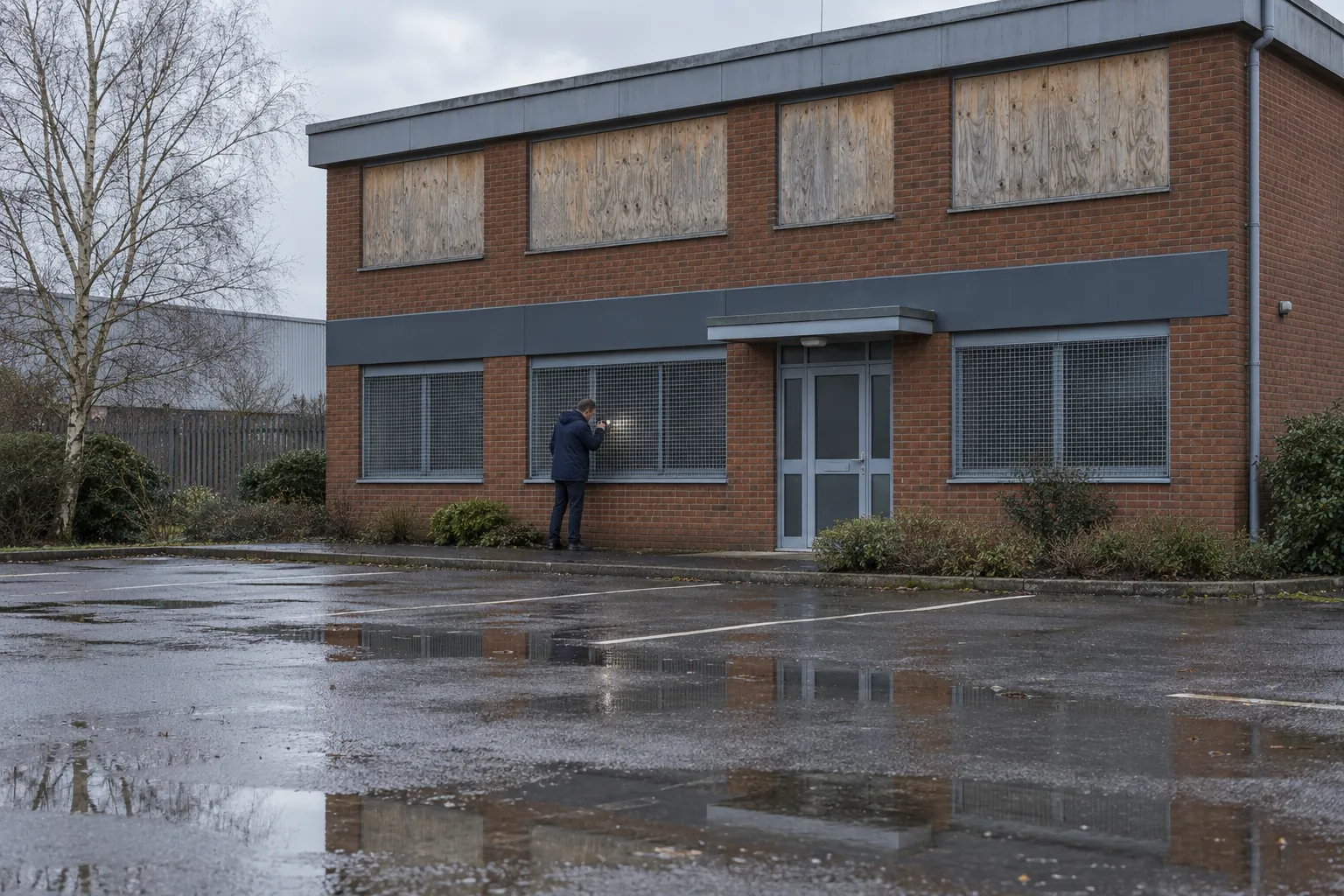
An empty building deteriorates faster than an occupied one, and nobody notices. A pipe freezes, a window is forced, rubbish is dumped in the yard, and the first anyone knows is the claim. The inspection catches those things early, and its record shows the insurer the building was looked after. This guide covers what to check, how often, and what to write down.
01
What a void property inspection is, and the duties behind it
A void property, whether you call it void or vacant, is one that is empty: an office between tenants, a shop that has closed, a school building awaiting demolition, a flat between one tenancy and the next. A void property inspection is a regular visit by an inspector, whether a member of the property owner's staff, a managing agent a security service or a specialist vacant property inspection service, to check that the building is secure, weathertight and safe, and to record what was found.
No single law requires it. The duties that make it necessary come from several places:
- Insurance. Property insurance policies usually treat a building left vacant or unoccupied beyond a set period differently, with unoccupancy conditions that commonly include regular inspections. Breaking the conditions can reduce cover or give the insurer grounds to refuse a claim.
- Occupiers' liability. In England and Wales the owner or occupier of premises owes a duty of care to visitors under the Occupiers' Liability Act 1957, and in some circumstances to trespassers under the Occupiers' Liability Act 1984. Scotland has its own Occupiers' Liability (Scotland) Act 1960. An empty building with a broken fence and an open door can attract people, including children.
- Health and safety. Contractors, agents and inspectors still work in empty buildings, and the duties under the Health and Safety at Work etc. Act 1974 and the fire safety legislation continue for them. Water systems left standing need managing under the legionella duties in HSE's ACOP L8.
- Landlord duties. For housing, the void period is when landlords and housing associations carry out repairs and safety checks, such as the gas safety check, before the next tenancy begins.
Vacant properties also attract criminal activity, from metal theft to arson, and carry a squatting risk. In England and Wales squatting in a residential building is a criminal offence, but occupying an empty commercial property is generally a civil matter, which makes empty commercial property a target and the owner's remedy slower.
02
What to check on each visit
A vacant property inspection follows the same route on every visit, outside first and then inside, so that changes stand out. A typical checklist covers:
- The perimeter: fences, gates and hoardings intact; no fly-tipping, rubbish or combustible material piled against the building; no signs of people sleeping rough or of unauthorised vehicles.
- Entry points: every door, window, roller shutter and roof hatch secure; locks, boards and steel screens undamaged; no signs of forced entry or a break-in.
- Letterboxes: sealed, or post and free newspapers cleared, since a pile of post tells anyone passing the building is empty and is fuel for an arsonist.
- Roof and gutters, as far as can be seen safely from the ground: missing slates, blocked gutters, water running down walls.
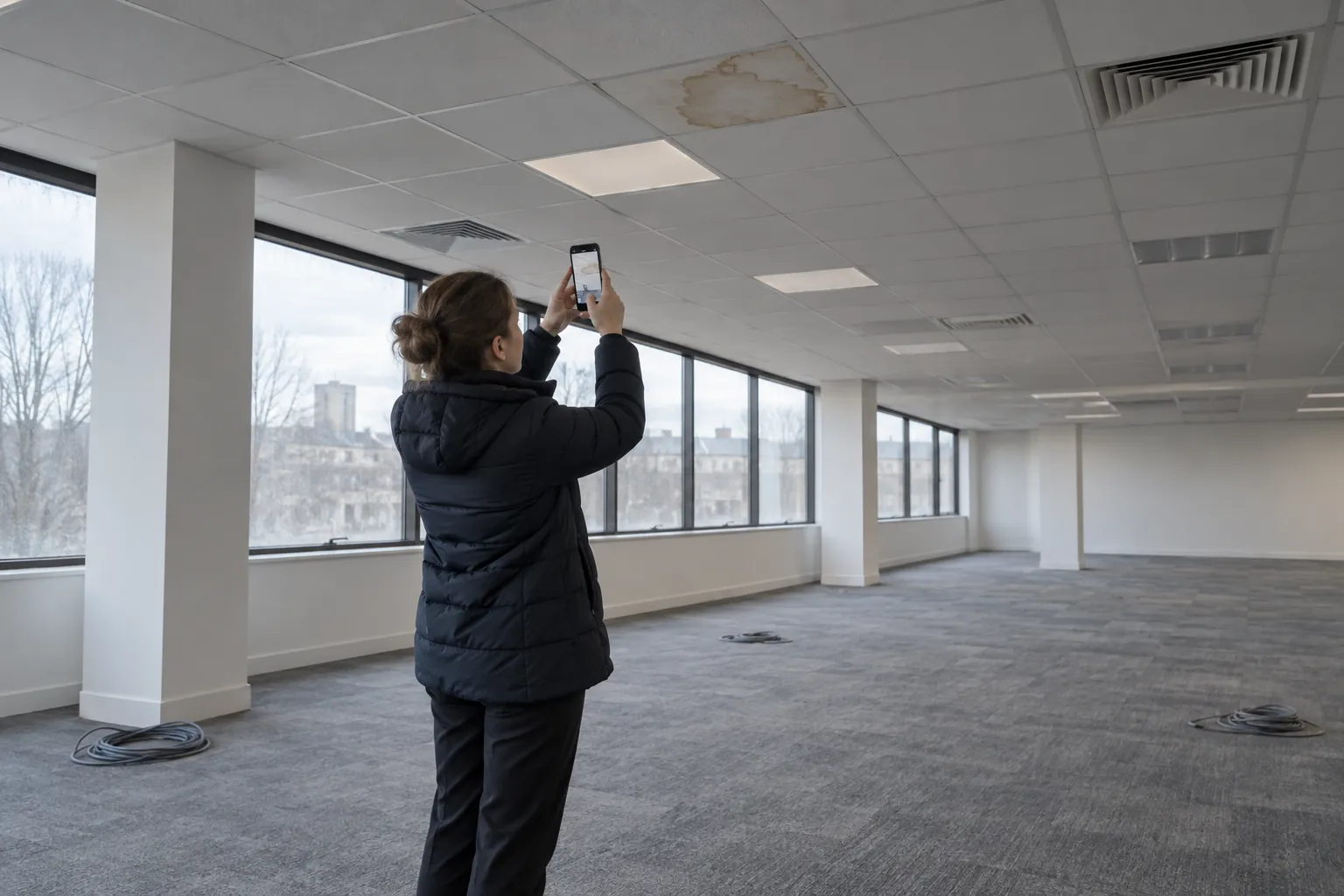
- Inside: signs of intruders, water leaks, damp and mould, pests or infestation, damage to fittings, and any smell of gas or burning.
- Services: water off at the mains and the system drained down where that is the plan; gas and electricity isolated except for circuits needed for alarms, fire systems and lighting; heating set to frost protection where it is left on.
- Alarms and CCTV: intruder alarm set and working, fire detection working where it is kept live, cameras in position and recording.
- Meters: electric meter readings and gas and water readings at the start of the void period, and on later visits where a sudden change would show a leak or an unauthorised connection.
- Fire risks: no stored waste or combustibles inside, escape routes clear for anyone who has to work in the building.
Tailor the list to the building: a warehouse with a yard needs different property checks from a flat. For a residential void, the inspection also records the condition of the property for the next tenancy: what needs repairing, cleaning or replacing, and which safety checks are due before anyone moves in.
03
How often to inspect an empty building
For an insured building, the inspection frequency is usually set by the insurer, in the policy's unoccupancy conditions, and that is the first place to look. Weekly visits are common when a property is left vacant, but policies differ, and some ask for more frequent visits, visits by a particular type of person, or a written log of each one. Read the wording, not a general rule, and if the policy is silent, ask the broker or the insurer in writing.
Insurance companies set a minimum; beyond it, the risk decides, and regular vacant property inspections are how you minimise and mitigate it:
- Higher risk, calling for more frequent inspections: buildings in town centres or on busy routes, a history of break-ins or vandalism, visible signs the building is empty, an attractive target for metal theft, a large site, or winter weather.
- Lower risk: a building inside a managed estate with its own security, a short void between tenants, monitored alarms and CCTV that act as a deterrent and raise the alarm if an intruder gets in.
- After an event: a storm, a cold snap, a reported break-in or a neighbour's complaint all justify an extra visit, recorded like any other.
Some owners use a fortnightly or monthly pattern for low-risk buildings when the insurer allows it; others add a nightly drive-by from a mobile patrol on top of a weekly internal inspection. Whatever the pattern, it should be written down, agreed with the insurer where it matters, and followed. A missed visit that is not recorded is indistinguishable from a visit that never happened.
04
Insurance conditions, and why water matters most
Unoccupied property insurance is priced for a higher risk, with a higher premium, and some policies reduce cover after a long vacancy, sometimes to fire, lightning, explosion and aircraft only. Common insurance requirements for an unoccupied building include:
- regular documented inspections, internal and external, at the frequency the policy sets;
- the water supply turned off at the mains and the system drained, unless it serves a sprinkler system;
- gas and electricity isolated, other than for alarms, fire systems and essential lighting;
- all doors and windows secured, and letterboxes sealed;
- combustible waste removed from inside and around the building;
- the intruder alarm kept in working order and set;
- defects found on an inspection put right promptly.
Water is the one that catches people out. A burst pipe in an empty building can run for days before anyone sees it, and the damage from an escape of water in a multi-storey building can be far larger than a break-in. Draining down, or keeping heating on frost protection where a sprinkler system needs the water left on, is usually the single most important step at the start of a void.
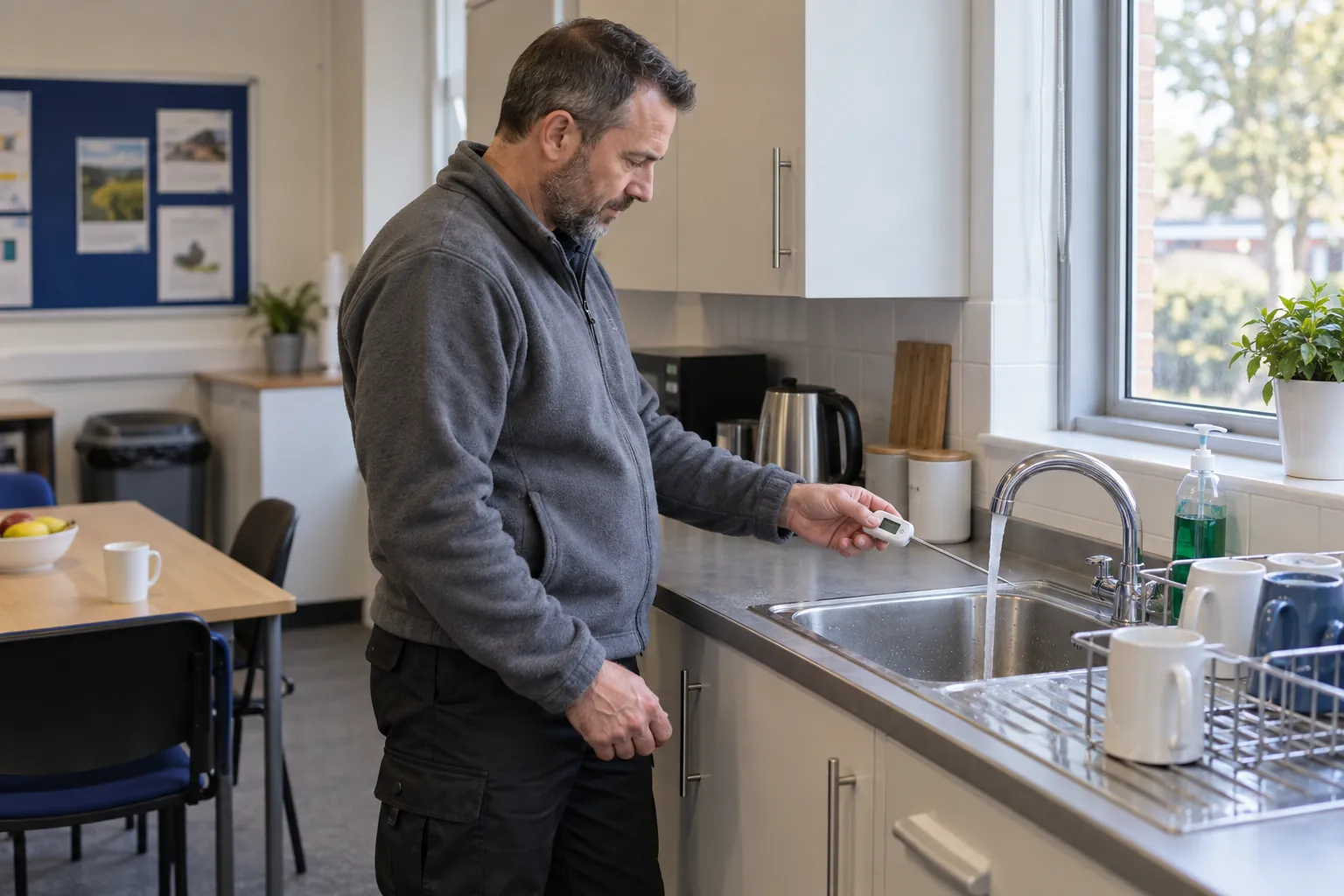
Where water is left on, the legionella risk rises, because nothing is being used. The legionella risk assessment should cover the empty period, whether by draining down, regular flushing or treatment, and the building should be flushed and checked before it is reoccupied. Take advice from the competent person who wrote the risk assessment rather than simply turning everything back on.
05
What a good inspection record shows
After a claim, the question is simple: when was the building last inspected, by whom, and what did they find? A fully documented inspection answers it, and is the documented proof of compliance with insurance requirements. A useful record carries:
- The property and the date and time of the visit, recorded at the time.
- The name of the inspector, identifying one person.
- Each item on the checklist, with what was found, not just a tick.
- Photographic evidence: the boarded door, the drained tank, the meter, the gutter, so that a change is visible from one visit to the next.
- Defects and actions: what was found, who it was reported to, and when it was put right, such as a lock change after a break-in or a contractor called to clear rubbish.
- Missed or delayed visits, with the reason.
Keep the records for the whole void period and beyond, since a claim or a dispute with a tenant can come months later. Documented inspections are also part of good property management: they are how property managers report to an owner with a portfolio of empty buildings, and how an owner shows an insurer that the building was kept compliant with the policy.
Inspectors often work alone in empty buildings, and their own health and safety matters: a lone working procedure, a way to call for help, and a rule not to enter a building where there are signs someone is inside. Call the police rather than confront a squatter or intruder.
06
Where the record fails, and what SiteClara does about it
Void inspections are easy to miss and hard to prove. The inspector visits a building nobody else goes into; the paper log stays in a van or on a clipboard, or is written up at the end of the week; and the owner hears about a missed visit only when something has gone wrong. A photo on the inspector's phone shows the building but not where it was taken or by whom.
SiteClara puts a printed QR poster, with an NFC tag behind it if you prefer staff to tap, at points inside and outside the building: the main entrance, the plant room, each floor. The inspector scans or taps with their own phone, with no app to install, sees the checks due at that point and marks each one done, or explains what stopped them, with a photo on any visit. The time and the person are recorded as it happens.
A problem found on the visit, such as a forced window or a leak, is reported there and goes onto the team's list of jobs until someone closes it, and can be escalated to the building manager. The supervisor sees which inspections are due, done and missed, and can record why one was missed. Each day the supervisor approves a report that goes to nominated management or client contacts the next morning, with the photos, what was completed and what is still open.
07
Questions people ask
Do I have to pay council tax on an empty home?
Usually, yes: GOV.UK's council tax guidance on second homes and empty properties says you will usually have to pay council tax on an empty home, though your council can decide to give a discount. In England, since April 2024, a council can also charge an empty home premium once a home has been unoccupied and substantially unfurnished for at least one year, of up to 100 per cent, rising to 200 per cent after 5 years and 300 per cent after 10 years, so up to 4 times the normal bill, under section 11B of the Local Government Finance Act 1992. Councils in Wales can add up to 300 per cent for a home empty for at least one year, under section 12A, and the rules are different in Scotland.
How long can a house be left empty?
In England, once a home has been wholly unoccupied for at least 2 years, the council can apply to a tribunal for an interim empty dwelling management order, which lets it take steps, with the owner's consent, to get the home occupied again; the 2-year period is set by the Housing (Empty Dwelling Management Orders) (Prescribed Period of Time and Additional Prescribed Requirements) (England) (Amendment) Order 2012, in place of the 6 months in section 134 of the Housing Act 2004. The tribunal must also be satisfied that there is no reasonable prospect of the home being occupied in the near future. Other rules start earlier: the council tax empty home premium can apply after one year in England and Wales, and the insurance policy's unoccupancy conditions from whatever point the policy sets.
08
Further reading, and a list to take away
Start with the policy wording and your broker: the unoccupancy conditions are the rules that matter most for an insured building. The Health and Safety Executive publishes ACOP L8 and HSG274 on legionella, including managing water systems in buildings that are empty or reopening. The government publishes fire safety guidance for the responsible person on GOV.UK, and the Chartered Institute of Housing publishes guidance for social landlords on managing voids.
When an empty property comes onto your books, make sure that:
- the insurer or broker has been told, and you have read the unoccupancy conditions;
- the inspection frequency is written down and meets the policy;
- water is drained down or managed under the legionella risk assessment, and services are isolated where the plan says;
- letterboxes are sealed, rubbish removed and every entry point secured;
- meter readings and photographs are taken at the start of the void period;
- every visit is recorded with the time, the inspector's name, what was found and photographs;
- defects are reported to someone who will fix them, and the fix is recorded;
- inspectors have a lone working procedure and know not to confront intruders.
Sources
Every document this guide quotes or links to, in the order it first cites them.
- Occupiers' Liability Act 1957 legislation.gov.uk
- Occupiers' Liability Act 1984 legislation.gov.uk
- Occupiers' Liability (Scotland) Act 1960 legislation.gov.uk
- Health and Safety at Work etc. Act 1974 legislation.gov.uk
- GOV.UK's council tax guidance on second homes and empty properties gov.uk
- Section 11B of the Local Government Finance Act 1992 legislation.gov.uk
- Section 12A legislation.gov.uk
- The Housing (Empty Dwelling Management Orders) (Prescribed Period of Time and Additional Prescribed Requirements) (England) (Amendment) Order 2012 legislation.gov.uk
- Section 134 of the Housing Act 2004 legislation.gov.uk
- ACOP L8 hse.gov.uk
Related guides
 Security patrolsSite security checklist: what to check, how often, and how to show it was doneSite security checklist for UK construction sites and business premises: perimeter, access, lighting, CCTV, alarms, keys, and how to record the checks.
 Premises and facilities managementManaging agent responsibilities in residential block managementWhat a managing agent does for a block of flats in England and Wales: service charges, the RICS code, repairs, fire safety in common parts, and records.
 Fire and water checksLegionella checks: the routine monitoring, and the record that shows it was doneThe routine legionella checks in hot and cold water systems under HSE's L8 and HSG274: flushing, temperatures, who does them and what the record should show.
 Security patrolsSecurity officer report: what to write, and how to make it stand upThe reports a UK security officer writes on shift – incident, patrol, handover – what each should record, and how to write one that stands up later.