Premises and facilities management
Vacant property inspection: what to check, how often, and what to record
A vacant property inspection is a regular, recorded visit to an empty building to check that it is secure, weatherproof and safe, and to find damage, leaks, hazards and other problems before they become repairs or claims.
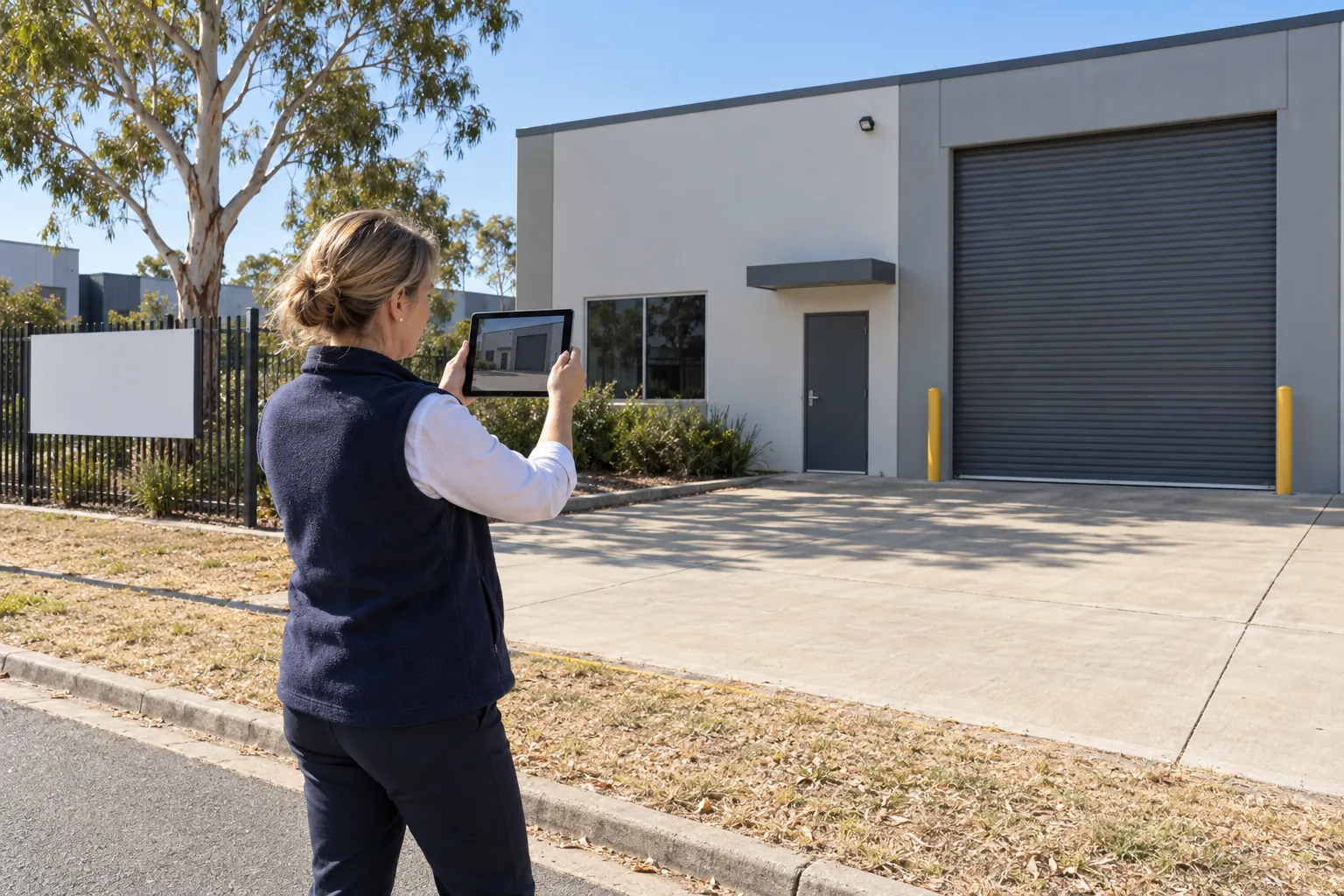
An empty building goes downhill quietly. A storm lifts a sheet of roofing, a tap drips for a month, someone forces the back roller door, junk mail piles up at the entrance, and the first anyone hears of it is a neighbour's call or a claim. Regular inspections catch those things early, and the record of each one shows the owner, the insurer and the next tenant that the building was looked after. This guide covers what to check, how often, and what to write down, for offices, shops, warehouses and other commercial property in Australia.
01
What a vacant property inspection is, and the duties behind it
A vacant property is one with nobody in it: an office floor between leases, a shop that has closed, a warehouse after the tenant has made good and handed back the keys. A vacant property inspection is a regular visit, by the property manager, the facilities manager, a security provider or a professional inspection service, to check that the building is secure, weatherproof and safe, to pick up maintenance and repair needs, and to record what was found.
No single Australian law requires it. The reasons come from several places:
- The insurance policy. Property policies commonly treat a building left unoccupied beyond a stated number of days differently, and the unoccupancy conditions often require regular inspections, services isolated and the building kept secure. The Insurance Contracts Act 1984 (Cth) limits what an insurer can do when a condition is broken, but does not make the condition go away.
- Work health and safety. An empty building is still a workplace whenever someone goes there to work. Under section 8 of the Commonwealth Work Health and Safety Act 2011, which mirrors the model Act the state and territory laws follow, a workplace is "a place where work is carried out for a business or undertaking and includes any place where a worker goes, or is likely to be, while at work". Section 20 then requires the person with management or control of a workplace to ensure, so far as is reasonably practicable, that the workplace, the means of entering and exiting it and anything arising from it "are without risks to the health and safety of any person". Every state and territory except Victoria has a law based on the same model; Victoria has its own Occupational Health and Safety Act 2004, which WorkSafe Victoria describes as the main workplace health and safety law in the state.
- Fire safety maintenance. The state regimes for maintaining fire safety measures, such as essential safety measures in Victoria and the annual fire safety statement in New South Wales, generally make the owner responsible for keeping those measures in working order, and they apply to the building, not to whether anyone is in it.
- Liability to people who come onto the property. An empty building with a broken fence and an open door attracts people, including children, and an owner can be liable in negligence for injuries there. Take legal advice on the position in your state.
Vacant properties also attract vandalism, illegal dumping, graffiti, theft of copper and fittings, and deliberate fires. Regular visits, and a building kept visibly tidy, reduce the risk of all of them.
02
What to check on each visit
Follow the same route every time, outside first and then inside, so that changes stand out. A typical checklist covers:
- The perimeter: fences, gates and hoardings intact and locked; no dumped rubbish; no signs of people camping; grass and overhanging branches kept down, especially in bushfire-prone areas.
- Entry points: every door, window, roller door, shopfront and roof hatch secure; locks, boarding and security screens undamaged; no signs of forced entry.
- Mail and junk mail: the mailbox emptied or a "no junk mail" arrangement in place, since a pile of catalogues at the door says the building is empty and is fuel for a fire.
- Roof, gutters and downpipes, as far as can be seen safely: lifted sheeting, blocked or leaf-filled gutters and box gutters, water stains on walls.
- Inside: signs of entry or occupation, water leaks, damp and mould, termite or rodent activity, possums in the ceiling, damage to fittings, and any smell of gas or burning.
- Services: water turned off at the meter where that is the plan, or kept running under a flushing routine where it is not; gas turned off at the meter; electricity isolated except for the circuits that serve alarms, fire systems, lighting and any pumps.
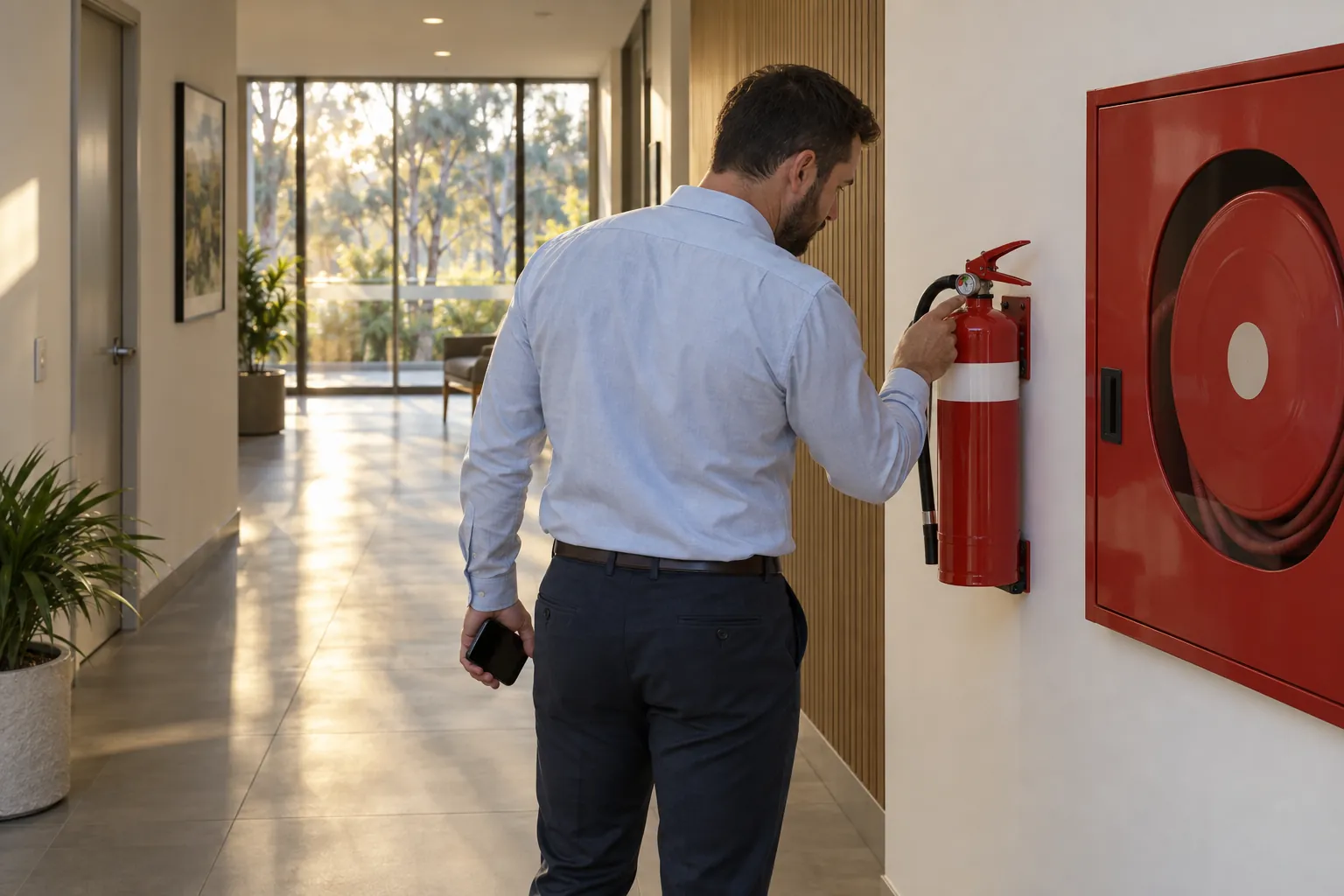
- Fire safety measures: exits clear, fire doors closed, extinguishers and hose reels in place, the fire indicator panel showing normal.
- Alarms and CCTV: the intruder alarm set and monitored, cameras in position and recording, the monitoring company holding current keyholder contacts, and a list of everyone who holds keys or access codes.
- Meters: readings at the start of the vacancy and on later visits, since an unexpected rise points to a leak.
Tailor the list to the building: a warehouse with a truck gate needs different checks from a suite in an office tower, where the building manager carries much of the load. For a strata lot or a leased tenancy, the inspection at the start of the vacancy also records its condition, much as a dilapidation report does at the start and end of a lease: what needs repairing, cleaning or replacing before the next occupant moves in.
03
How often to inspect an empty building
For an insured building, the policy is the first place to look. The unoccupancy conditions usually say when a building counts as unoccupied, what has to happen once it does, and sometimes how often it must be inspected, by whom and whether a written log is required. Read the wording, and if it is silent or unclear, ask the broker or the insurer in writing and keep the answer. Compliance with those requirements is what the inspection record will later have to show.
The policy sets a floor. Above it, the risk decides:
- Higher risk, calling for more frequent visits: a street-front shop or a building on a busy road, a history of break-ins, graffiti or dumping, obvious signs of vacancy such as a "for lease" board and papered windows, copper and fittings worth stealing, a large site, and the storm, cyclone or bushfire season.
- Lower risk: a tenancy inside a managed building or business park with its own security and building manager, a short gap between leases, monitored alarms and CCTV that raise the alarm when someone gets in.
- After an event: a severe storm, a cyclone warning, a heatwave, a reported break-in or a neighbour's complaint all justify an extra visit, recorded like any other. The cyclone preparation checklist applies to empty buildings in the north as much as to occupied ones.
A common pattern is a weekly internal inspection, with a security provider's lock-up patrol or a mobile patrol driving past on the nights between. Low-risk buildings may be visited fortnightly or monthly where the insurer allows it. Whatever the pattern, write it down, agree it with the insurer where the policy asks for inspections, and follow it. A visit that is missed and not recorded looks exactly like a visit that never happened.
If a security company does the visits, check its licensing. In Victoria, for example, Victoria Police's private security licensing page describes a security guard as a person "employed or retained to protect, watch or guard any property by any means", including by patrolling. Each state has its own security licensing law.
04
Insurance conditions, and why water matters most
Unoccupied buildings are a higher risk and are priced and written accordingly. Some policies narrow the cover once a building has been empty for a stated period. Conditions that often appear for an unoccupied commercial building include:
- regular inspections, internal and external, at the frequency the policy sets, with a record of each;
- the water supply turned off, unless it serves a sprinkler system or a fire hydrant or hose reel system that must stay live;
- gas and electricity isolated, other than for alarms, fire systems and essential lighting;
- all doors and windows secured and the alarm kept set;
- rubbish and combustible material removed.
What happens if a condition is broken is shaped by section 54 of the Insurance Contracts Act 1984 (Cth). Where an insurer could otherwise refuse a claim because of something the insured did or failed to do after the policy started, it may not refuse "by reason only of that act", but its liability is "reduced by the amount that fairly represents the extent to which the insurer's interests were prejudiced". Where, though, the act "could reasonably be regarded as being capable of causing or contributing to a loss", the insurer may refuse to pay, unless the insured proves the act caused none or only part of the loss, and an omission counts as an act. A missed inspection that let a leak run for a month is the kind of omission that can cost a claim; the inspections, and the proof of them, keep a claim straightforward.
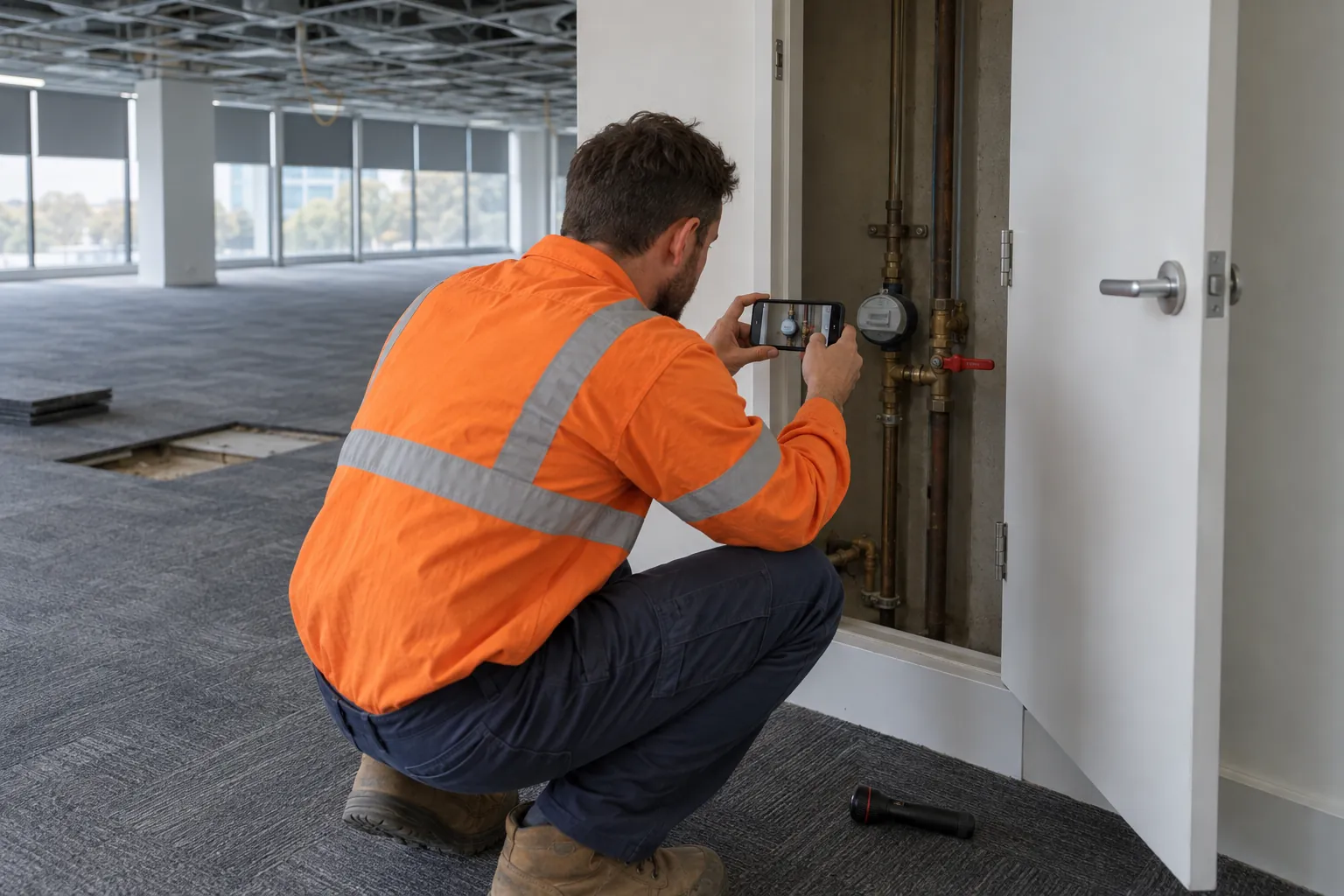
Water is the one that catches people out. A split flexi hose in an empty building can run for days before anyone sees it. Turning it off at the meter, or flushing where it must stay on, is usually the most important step at the start of a vacancy.
Stagnant water also carries a health risk. The Victorian Department of Health's guidance on Legionella and water delivery systems notes that "stagnant (warm) water in unused systems may provide conditions that contribute to Legionella growth", and recommends flushing showers unused for seven days or more before use. Where the building has a cooling tower or thermostatic mixing valves, keep them under the building's risk management plan while it is empty, and take advice from whoever is responsible for the water systems before reoccupying, rather than simply turning everything back on.
05
What a good inspection record shows
After a claim or a dispute, the questions are the same: when was the building last inspected, by whom, and what did they find? A useful record answers them for every visit:
- The property, the date and the time of the visit, recorded at the time, not written up at the end of the week.
- The inspector's name, identifying one person, not "security" or "the agent".
- Each item on the checklist, with what was found, not just a tick.
- Photographs of the points that matter, such as the water meter, the fire panel and the back gate, so that a change shows between visits.
- Defects and actions: what was found, who it was reported to and when it was fixed.
- Missed or delayed visits, and the reason.
Keep the records for the whole vacancy and well after it, since a claim or a make-good dispute over repair costs can surface months later. In property management, the same records are the basis of reporting to an owner with several empty tenancies.
Inspectors usually work alone in an empty building, often out of hours, and that is what the regulations call remote or isolated work: work "isolated from the assistance of other persons because of location, time or the nature of the work". Regulation 48 of the Work Health and Safety Regulations 2011 requires the business to manage those risks and to provide "a system of work that includes effective communication with the worker". In practice: someone knows where the inspector is and when they should be finished, and if there are signs someone is inside, the inspector does not go in and calls the police.
06
Where the record fails, and what SiteClara does about it
Vacant property inspections are easy to skip and hard to prove. Nobody else goes into the building, the paper log stays in the car or is filled in from memory at the end of the week, and the owner learns a visit was missed only when something has gone wrong.
SiteClara puts a printed QR poster, with an NFC tag behind it if you prefer staff to tap, at points inside and outside the building: the front entrance, the loading dock, the plant room, each floor. The inspector scans or taps with their own phone, with no app to install, sees the checks due at that point and marks each one done, or says what stopped them, with a photo when the check asks for one. The time and the person are recorded as it happens.
A problem found on the visit, such as a forced window or a leak, is reported on the spot and goes onto the team's list of jobs until someone closes it, and a supervisor can escalate it to the building manager. The supervisor sees which inspections were due, done and missed, and can record why one was missed. Each day the supervisor approves a report that goes by email to nominated management or client contacts at 8 am the next morning, with the photos, what was completed and what is still open.
07
Questions people ask
How to avoid empty house tax in Victoria?
Victoria's vacant residential land tax applies to homes, not to shops, offices or warehouses. The State Revenue Office's page Understanding vacant residential land tax says it "applies to all residential land in Victoria", and that a property is vacant "if it has not been lived in, for 6 months of the previous year, by the owner or their permitted occupant as their home, or a person under a genuine lease or short-term letting arrangement". A building with a shop and a residence counts as residential if it is "capable of being used primarily for residential purposes", and an owner of vacant residential land "must notify us by 15 February". The SRO's Exemptions from vacant residential land tax lists the exemptions, among them a holiday home used for "at least 4 weeks in the calendar year", a home used to attend a workplace in Victoria for "at least 140 days", a change of ownership and a home under construction or renovation. Inspecting an empty home does not make it occupied.
Can I refuse a house inspection?
For a rented home in Victoria, only in limited cases. Consumer Affairs Victoria's page When a rental provider can enter a property says a general inspection can happen "every 6 months at the most", with 7 days' written notice, "between 8 am and 6 pm on any day except a public holiday", and not in the first three months of the tenancy. A renter can refuse if one has already been done in the last 6 months or proper notice was not given, and can apply to VCAT if they believe the rental provider is acting unreasonably. Other states have their own rules.
08
Further reading, and a list to take away
Start with the policy wording and your broker: the unoccupancy conditions are the rules that matter most for an insured building, and section 54 of the Insurance Contracts Act 1984 explains what happens when one is broken. For the people who visit, read the Work Health and Safety Regulations 2011 as adopted in your state or territory (Victoria has its own OHS law) and your regulator's guidance on remote work and asbestos. For water, read your state health department's Legionella guidance; for fire safety measures, your state regime and fire authority.
When a building or tenancy becomes vacant, make sure that:
- the insurer or broker has been told, and you have read the unoccupancy conditions;
- the inspection frequency is written down and meets the policy;
- water is turned off or kept under a flushing routine agreed with whoever manages the water systems, and gas and electricity are isolated where the plan says;
- the fire services contractor has confirmed which systems stay live and that their routine servicing continues;
- the mailbox is cleared, rubbish removed and every entry point secured;
- meter readings and photographs are taken on the first visit;
- every visit is recorded with the time, the inspector's name, what was found and photographs;
- defects are reported to someone who will fix them, and the fix is recorded;
- inspectors know where the asbestos is, have a way to call for help, and know not to go in if someone may be inside.
Sources
Every document this guide quotes or links to, in the order it first cites them.
- Insurance Contracts Act 1984 (Cth) legislation.gov.au
- Work Health and Safety Act 2011 legislation.gov.au
- Occupational Health and Safety Act 2004 legislation.vic.gov.au
- WorkSafe Victoria describes worksafe.vic.gov.au
- Work Health and Safety Regulations 2011 legislation.gov.au
- Victoria Police's private security licensing page police.vic.gov.au
- Legionella and water delivery systems health.vic.gov.au
- CFA's guidance on essential safety measures cfa.vic.gov.au
- Understanding vacant residential land tax sro.vic.gov.au
- Exemptions from vacant residential land tax sro.vic.gov.au
- When a rental provider can enter a property consumer.vic.gov.au
Related guides
 Security patrolsSite security checklist: what to check, how often, and how to show it was doneSite security checklist for Australian buildings: the WHS duty, the Crowded Places Security Audit, what to check at opening, closing and after hours, and the record.
 Security patrolsLock-up patrols: what a lock up service covers, and how to know it happenedWhat a lock-up patrol covers in Australia: the licence behind it, the lock-up and unlock routine, keys and alarm codes, working alone, and a record that holds up.
 Premises and facilities managementBuilding maintenance checklist: what to check, how often, and who byA building maintenance checklist for Australian commercial and strata buildings: daily to annual tasks, the WHS and fire safety law behind them, and who does each.
 Premises and facilities managementStrata maintenance: keeping common property in repair, and showing that you haveStrata maintenance in Australia: the duty to repair common property in NSW, Victoria and Queensland, the plans a scheme needs, who does what and the records to keep.