Cleaning
Gym cleaning checklist: equipment, changing rooms and wet areas
A gym cleaning checklist sets out what is cleaned in each area of a gym – equipment, studios, changing rooms and wet areas – and how often, split into tasks done through the day, daily, weekly and monthly.
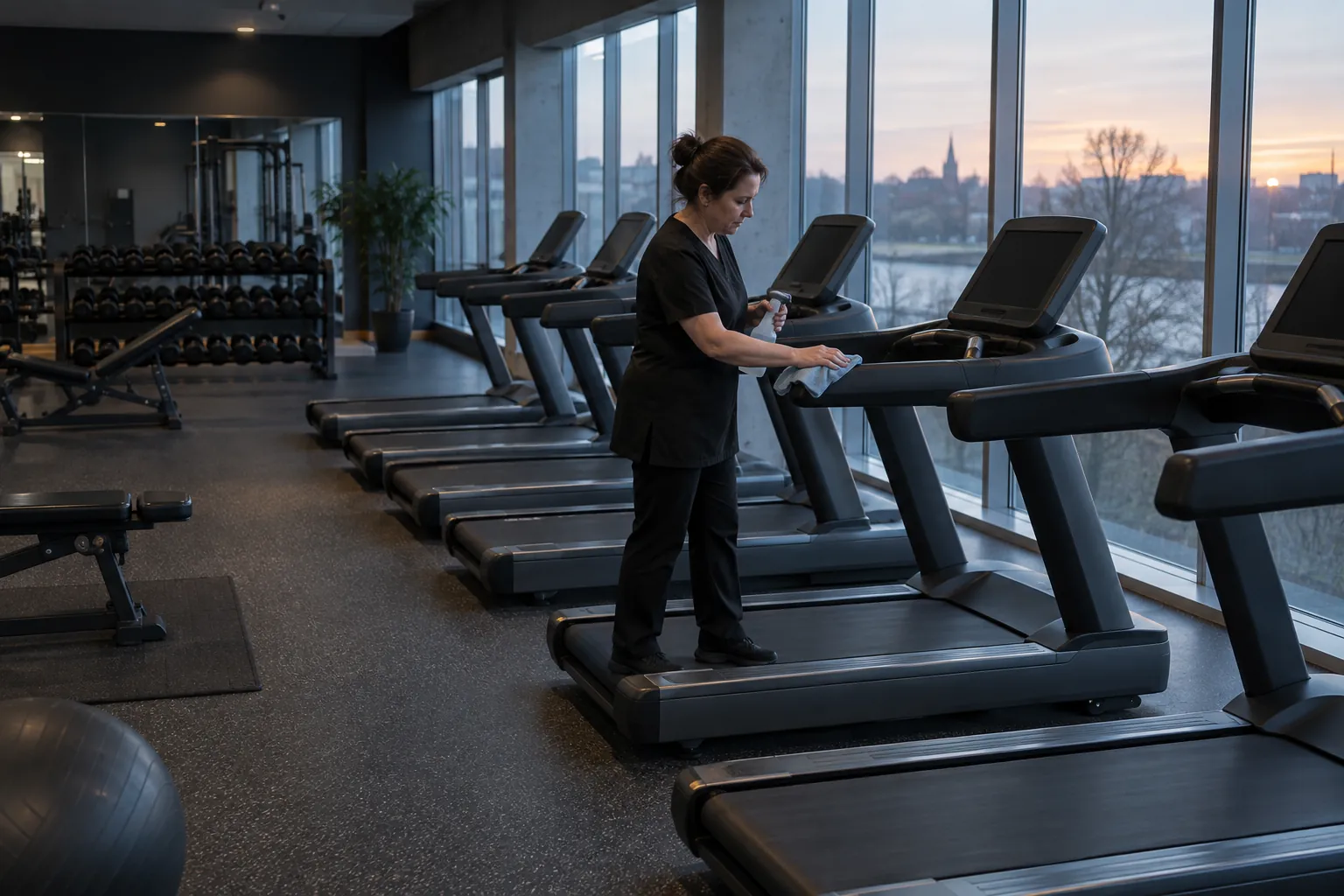
A gym is harder to keep clean than an office: it is busy from early morning to late evening, people sweat on the equipment, and the changing rooms and pool surrounds are warm, wet and barefoot. This guide sets out a gym cleaning checklist area by area, how often each part needs attention, and who does what between members, staff and the cleaning team.
01
The duty behind a gym cleaning checklist
A gym or leisure centre owes cleaning duties to two groups: the staff who work there and the gym members and visitors who use it. Gym owners and operators of larger fitness facilities carry the same duties, whether they employ cleaners or use a gym cleaning company. The Health and Safety at Work etc. Act 1974 covers both, requiring an employer to protect employees and, so far as is reasonably practicable, people who are not employees but are affected by the business. In Great Britain the Workplace (Health, Safety and Welfare) Regulations 1992 add the specific duties: the premises, furniture and fittings kept sufficiently clean, floors kept free of anything likely to cause a slip, and toilets and washing facilities kept clean.
Three further sets of rules matter in a gym:
- COSHH. The Control of Substances Hazardous to Health Regulations 2002 apply to the disinfectant, detergents and descalers the cleaning team uses, and to any biological hazard such as blood or other bodily fluids on equipment.
- Legionella. Showers and other water outlets in changing rooms are within the scope of the Health and Safety Executive's Approved Code of Practice L8 and its technical guidance HSG274, which cover how water systems are managed, including little-used outlets. See the legionella checks guide.
- Pools and spa pools. HSE guidance Health and safety in swimming pools (HSG179) covers the management of pools, and HSG282 covers spa pools. The Pool Water Treatment Advisory Group (PWTAG) publishes the industry's technical standards for pool water.
None of these requires a checklist in a particular format. What they require is a clean, safe gym facility, with hygiene standards set and a way to show that they are met. The gym cleaning checklist is the day-to-day part of that, and it sits alongside the risk assessments, the COSHH assessments and, where there is a pool, the pool safety operating procedures.
02
What a gym cleaning checklist covers
Divide the checklist by area, because each has different risks, different equipment and a different pattern of use:
- Gym floor, cardio: exercise machines such as treadmills, bikes, cross-trainers and rowers, especially handles, consoles and touchscreens.
- Resistance machines: seats, back pads, grips, pins and adjustment handles.
- Free weights: dumbbells, barbells, plates, collars, racks and benches.
- Functional and stretching areas: gym mats, kettlebells, medicine balls, ropes and boxes.
- Studios: studio floors, mats, steps, bikes in a cycling studio, mirrors and sound equipment controls.
- Changing rooms: floors, benches, lockers, showers, toilets, basins, hairdryers and vanity areas.
- Wet areas: poolside, pool hall surrounds, sauna, steam room and spa areas, and the routes between them and the changing rooms.
- Reception and social areas: the front desk, entry gates, café tables and seating.
- High-touch points, or touchpoints, across the building: door handles, push plates, locker keypads, water fountains and bottle fillers, light switches and lift buttons.
- Waste: bins on the gym floor, sanitary bins in changing rooms, and the central waste area.
Leave out work done by others. Pool water treatment is the job of trained plant staff, and equipment servicing belongs to the equipment supplier or maintenance contractor and their maintenance checklist; the checklist should say where a cleaner reports a fault to them, not ask the cleaner to do their work.
03
The gym cleaning checklist, by frequency
Frequencies depend on opening hours and footfall: high-traffic areas and workout equipment need attention through the day, while other cleaning tasks can be done less frequently; the weekly and monthly tasks are where a gym is kept in good order. A 24-hour gym and a small community gym open four hours a day need different lists. The pattern below suits a typical commercial gym or leisure centre; adjust it to your own peaks.
Several times a day, and after peak periods
- Wipe handles, consoles and touchscreens on cardio machines; touchscreens should be wiped multiple times a day with a product the manufacturer approves.
- Disinfect benches, seat pads, grips and pins on resistance equipment and free weights.
- Wipe gym mats and return equipment to racks, which also clears trip hazards.
- Restock wipe stations and hand sanitiser, and check spray bottles are labelled and correctly diluted.
- Check changing rooms: floors, litter, hair, toilets and supplies; squeegee standing water.
- Wipe door handles, locker keypads and water fountains; empty gym floor bins.
Daily cleaning
- Full clean of changing rooms, showers, toilets and basins, including lockers and benches.
- Vacuum and mop the gym floor and studios, moving portable equipment to reach under it.
- Give all gym equipment a thorough cleaning, not only the touch points, and note wear and tear such as split upholstery or worn grips.
- Clean poolside surrounds, sauna benches and steam room surfaces as the operating procedures specify.
- Clean mirrors, glass and reception; empty all bins and sanitary bins as needed.
Weekly
- Deep clean the shower areas, including grout, drains and shower heads.
- Clean under and behind heavy equipment and racks.
- Wash studio mats and clean studio bikes in full.
- Flush little-used showers and outlets if the water management plan assigns it to cleaning.
Monthly and periodic deep cleaning tasks
- Deep cleaning of changing room floors with a machine, and of lockers inside.
- Dust high-level ledges, vents and ducts, and arrange HVAC filter changes with maintenance.
- Clean or replace upholstery covers, shampoo carpeted areas and descale where needed.
- Check signage, dispensers and wipe stations are in the right places and working.
How often should a gym be cleaned?
Health and safety law does not fix how often a gym is cleaned: in Great Britain, regulation 9 of the Workplace (Health, Safety and Welfare) Regulations 1992 requires every workplace and its furniture, furnishings and fittings to be kept sufficiently clean, and the Health and Safety Executive's guidance in L24 says the frequency and standard of cleaning depend on the nature of the business. For a busy gym, the checklist above suggests touch points and changing rooms several times a day, a full clean every day, and deep cleaning weekly and monthly.
04
Who does what: members, staff and the cleaning team
Gym cleanliness depends on more people than the cleaning team, and the checklist works best when each group knows its part.
- Members wipe down equipment after use, which helps prevent the spread of germs between users. That only works if wipe stations or spray and paper are within a few steps of every piece of equipment, and signage asks for it clearly. A member wipe-down supplements the cleaning schedule; it does not replace it, and it matters to member health and to whether people keep coming to a clean gym.
- Gym instructors and floor staff walk the floor, rack weights, deal with spills and prompt members, and they are often first to see a fault or a mess. Put their part on the checklist too, or it will be squeezed out on a busy evening.
- The cleaning team, in-house or contracted, does the scheduled cleans through the day and the full clean overnight or in the quietest hours.
- Maintenance and specialist contractors handle equipment servicing, pool plant, HVAC, legionella risk management and periodic deep cleans.
Cleaning products and cleaning tools. Use disinfectant products that the COSHH assessment covers and that the equipment manufacturers allow. Some upholstery and touchscreens are damaged by strong or alcohol-based products, and a cracked seat pad cannot be cleaned properly. Proper cleaning removes sweat and dirt first, because disinfecting all equipment over a dirty surface achieves little. Follow the contact time on the label, because a disinfectant wiped off immediately may do little more than a detergent. Sanitisation of surfaces depends on consistent cleaning as much as on the product. Keep colour-coded cloths separate for changing rooms and toilets, for the gym floor, and for any café or kitchen.
Bodily fluids. Blood, vomit and other bodily fluids need a spill kit, disposable gloves and a written procedure under the COSHH assessment, with the area and the surrounding area closed off until it has been dealt with and is hygienic again. Train floor staff as well as cleaners, because they are usually nearest.
Checking. A duty manager's walk-round a few times a day, a regular audit against the cleaning specification and a clear route for member feedback are the usual ways to ensure cleanliness and confirm the checklist is being followed. Complaints about smell, hair in changing rooms or dirty equipment are rarely random: note where and when they arise, and adjust the timing of checks to match.
05
Changing rooms, showers and the areas round the pool
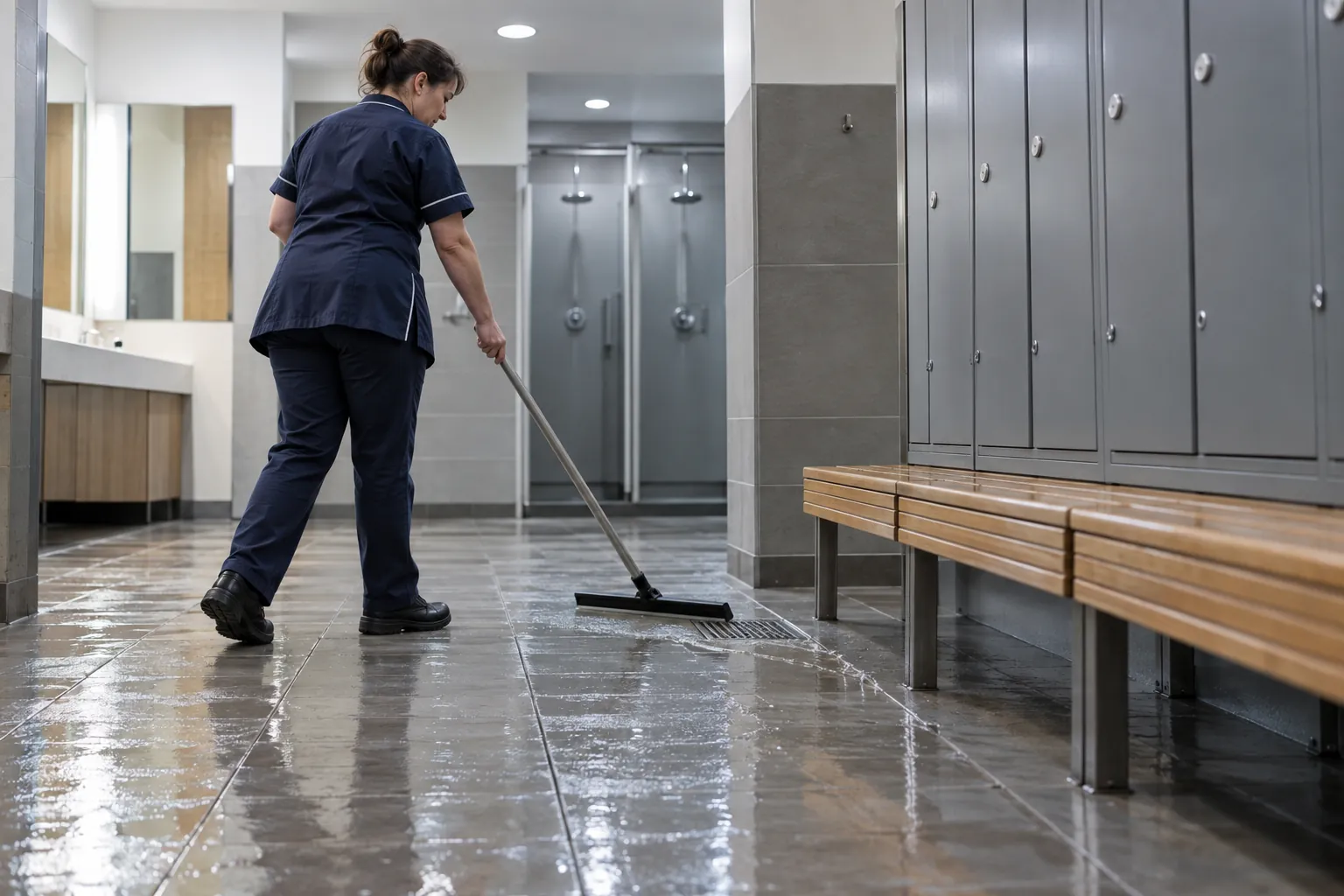
Changing rooms and wet areas carry the highest risks to cleanliness and hygiene in a gym and the most complaints. They are warm, wet and walked barefoot, which suits the organisms that cause athlete's foot and verrucas, and the floors are slippery.
- Slips. Standing water on changing room floors and poolside is the main hazard. Squeegee it towards drains frequently at busy times, keep drains clear of hair, and use signs only while a floor is wet. A permanent wet floor sign is soon ignored.
- Floors. Barefoot areas need regular cleaning and disinfecting with a product suited to wet areas, and periodic machine scrubbing, done weekly or monthly, to lift the residue that makes anti-slip floors lose their grip.
- Showers. Remove hair and soap residue, clean shower heads and descale as needed. Little-used showers are a legionella concern; if the water management plan asks for them to be flushed, record it where the responsible person will see it.
- Mould and odour. Black mould on grout, sealant and ceilings usually means ventilation is not coping. Clean it, and report the ventilation to maintenance rather than cleaning the same patch every week.
- Saunas and steam rooms. Clean benches, floors and walls with products approved for the surfaces and temperatures involved, and only when the room is safe to enter for cleaning.
- Poolside. Clean surrounds, benches and poolside equipment on the schedule and to the safety standards set by the pool operating procedures. Nothing used on toilets should be used on poolside, and chemicals should never be mixed or stored near pool plant chemicals.
06
Where the gym cleaning record fails, and what SiteClara does about it
Gyms often have a cleaning chart on the back of the changing room door and a folder at reception. By the evening the chart has gaps from the busy lunchtime, the night clean is recorded as a single tick, and when a member complains about the showers the duty manager cannot say when they were last checked or by whom. For a provider cleaning several clubs, the first sign that one site is slipping is usually a complaint rather than a report.
SiteClara puts a printed QR poster at each area – each changing room, the gym floor, each studio, poolside – with an optional NFC tag behind it. Cleaners and floor staff scan the code or tap the tag on their own phone, with no app to install, see the scheduled checks due at that location, and mark them done or explain what stopped them. Their name and the time are recorded as it happens, and they can add a photo. A fault, such as a broken shower or a torn seat pad, can be reported there and goes onto the team's list of jobs until someone closes it.
The supervisor or duty manager sees what is due, done and missed, can record the reason a check was missed and can escalate a job to the building manager. At the end of the day they review the totals and photos, add a note and approve the report, which goes to nominated management or client contacts at 8am the next morning, showing what was reported, completed and still open, and how scheduled checks went.
07
Further reading, and a list to take away
The Health and Safety Executive publishes Health and safety in swimming pools (HSG179), the spa pool guidance HSG282, the legionella Approved Code of Practice L8 with its technical guidance HSG274, and guidance on COSHH and on preventing slips and trips. The Pool Water Treatment Advisory Group publishes technical guidance on pool water. The British Institute of Cleaning Science (BICSc) publishes training and standards for cleaning operatives.
Before the next busy season, check that your gym cleaning checklist:
- is divided by area, with changing rooms and wet areas treated separately;
- sets frequencies by footfall, with extra checks after the morning, lunchtime and evening peaks;
- names disinfectant products the COSHH assessment covers and the equipment manufacturers allow;
- gives floor staff and members a clear part, with wipe stations close to the equipment;
- has a procedure and spill kit for bodily fluids;
- records shower flushing where the water management plan assigns it to cleaning;
- routes faults to maintenance rather than recording them and moving on;
- is checked by a duty manager on a walk-round, not only signed by the cleaner.
Sources
Every document this guide quotes or links to, in the order it first cites them.
- Workplace (Health, Safety and Welfare) Regulations 1992 legislation.gov.uk
- Control of Substances Hazardous to Health Regulations 2002 legislation.gov.uk
- Approved Code of Practice L8 hse.gov.uk
- Health and safety in swimming pools hse.gov.uk
- HSG282 hse.gov.uk
- Regulation 9 of the Workplace (Health, Safety and Welfare) Regulations 1992 legislation.gov.uk
- L24 hse.gov.uk
Related guides
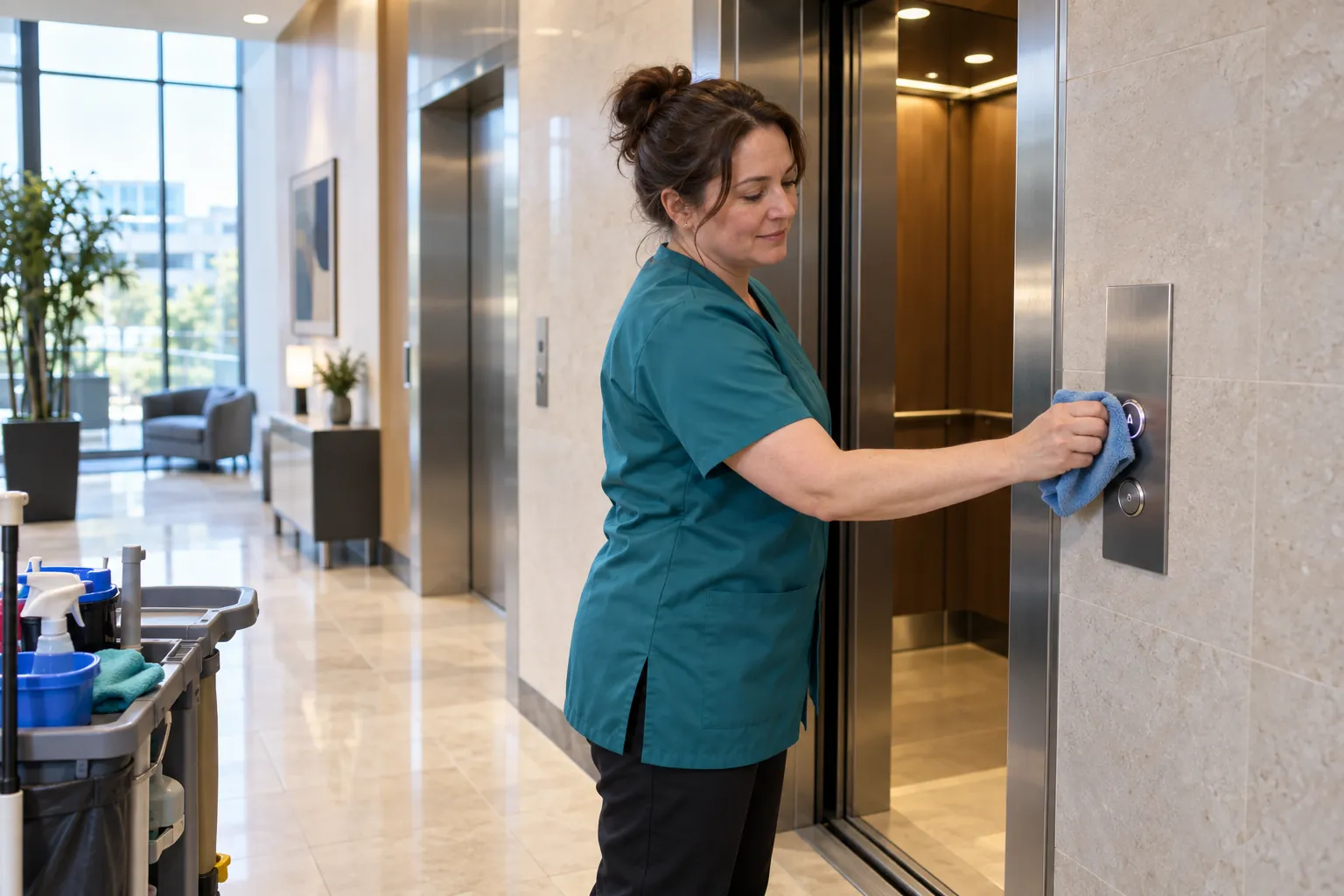 CleaningCommercial cleaning checklist: area by area, and how to use itA commercial cleaning checklist for offices and shared premises, area by area, with how to use it on shift, what to record and how a supervisor checks it.
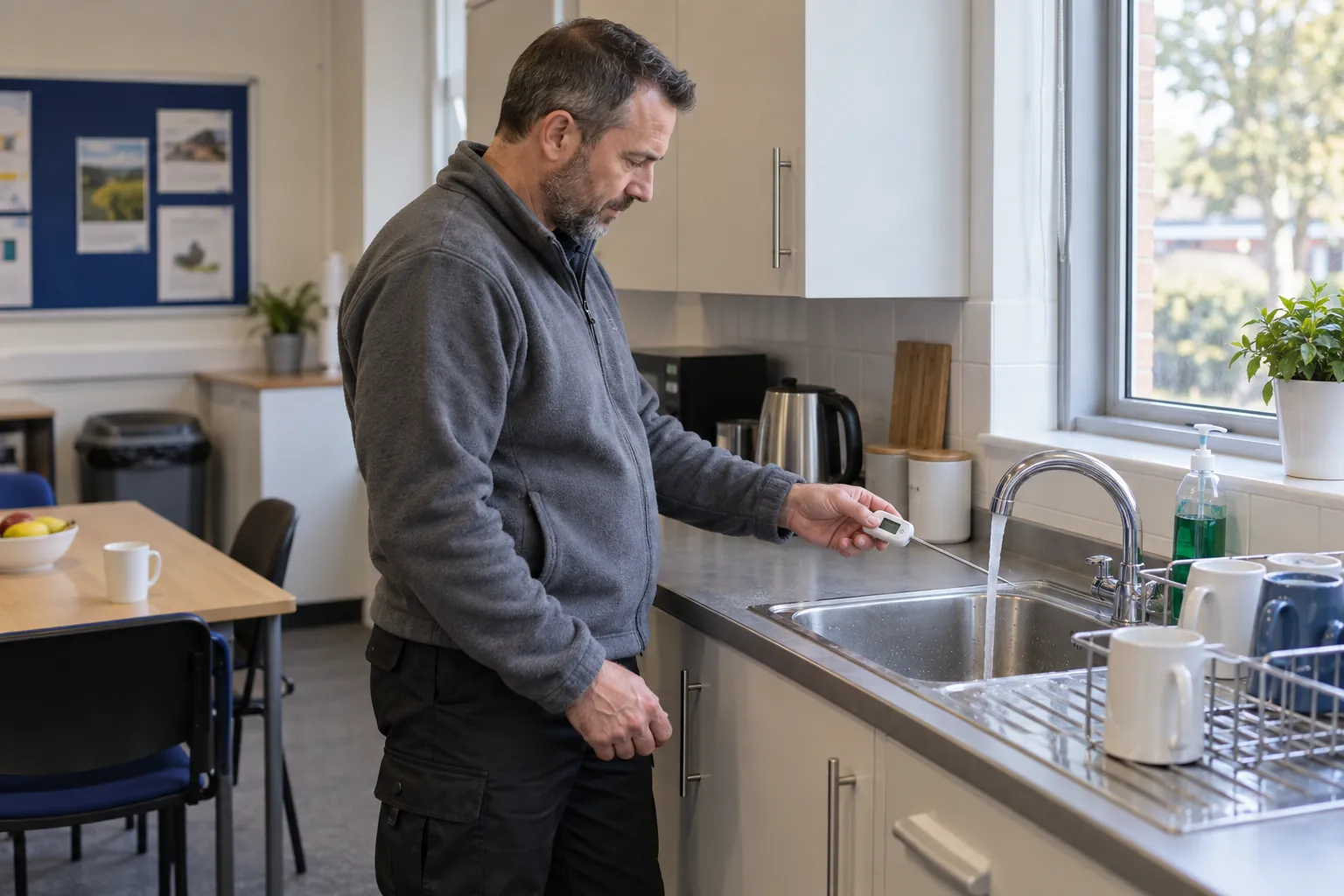 Fire and water checksLegionella checks: the routine monitoring, and the record that shows it was doneThe routine legionella checks in hot and cold water systems under HSE's L8 and HSG274: flushing, temperatures, who does them and what the record should show.
 CleaningToilet check sheet: what to record and how to make it credibleWhat a washroom check sheet should record, how often to check, the legal duty behind it, and how to keep a record a client or inspector will believe.
 CleaningCleaning quality control: how to inspect, correct and prove the standardHow quality control works in commercial cleaning: QA versus QC, setting standards, running inspections, corrective action and a record that holds up.