Cleaning
Gym cleaning checklist: equipment, change rooms and wet areas
A gym cleaning checklist lists the cleaning tasks for each area of a fitness facility – gym equipment, high-touch surfaces, change rooms and wet areas – and says how often each is done, daily, weekly or monthly, and by whom.
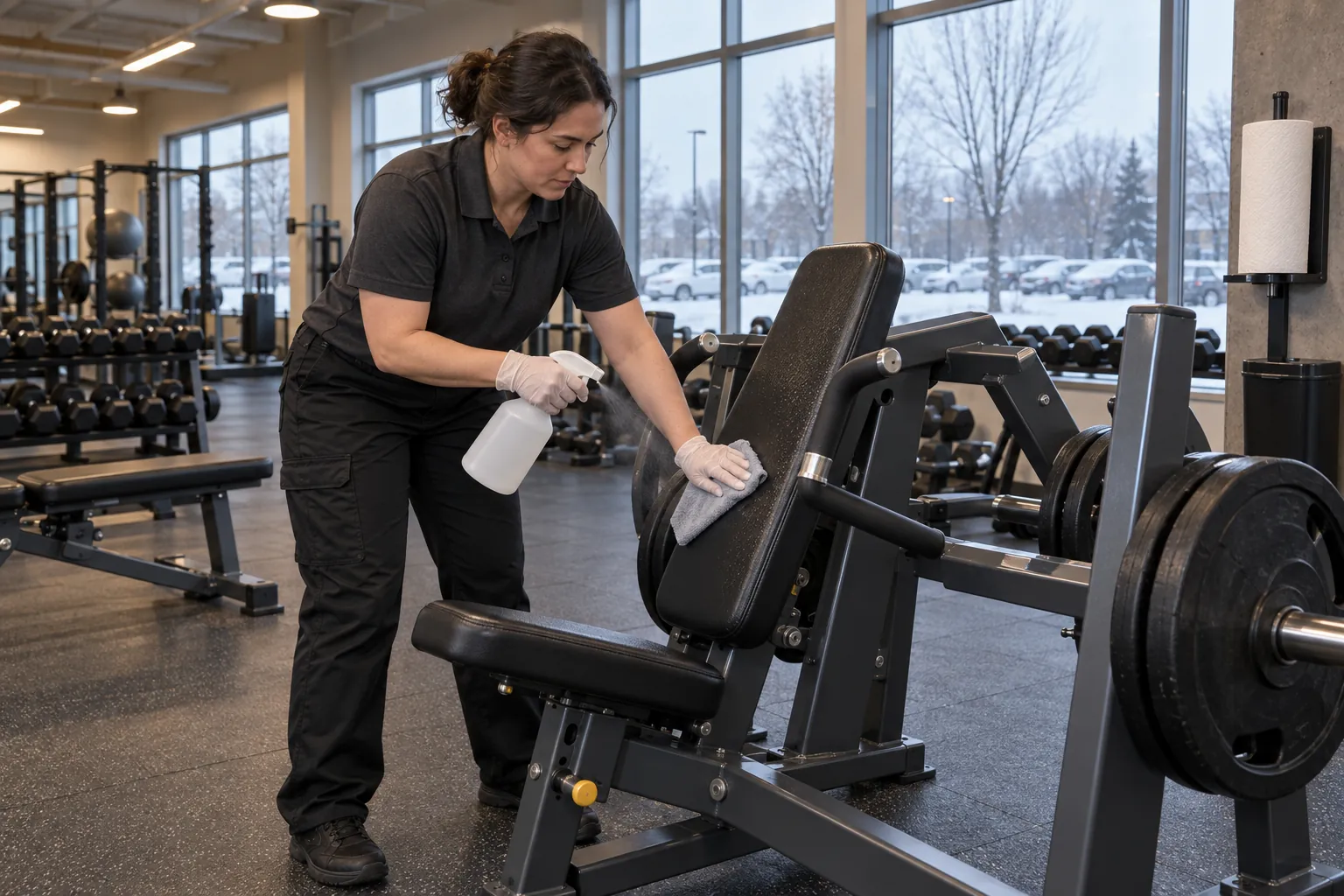
A gym is harder to keep clean than an office. It is busy from 5 a.m. to late evening, people sweat on the equipment, winter boots track salt and slush across the floor, and the change rooms, showers and pool deck are warm, wet and walked barefoot. This guide sets out a gym cleaning checklist area by area for a Canadian fitness centre, community recreation centre or condo gym, how often each part needs attention, what the provincial rules and public health guidance ask for, and who does what between members, floor staff and the janitorial team.
01
The rules behind a gym cleaning checklist in Canada
No Canadian law sets out a gym cleaning checklist. What the law sets is a duty to keep the workplace safe and sanitary, and for a gym that duty is provincial: the federal Canada Labour Code reaches only federally regulated work, which a gym almost never is. The checklist is how a gym owner, recreation manager or janitorial contractor shows that the duty is met, day by day, for staff and members alike.
Three kinds of rule matter most:
- The province's general duty. In Ontario, the Guide to the Occupational Health and Safety Act, Part III explains that section 25(1)(b) requires an employer to ensure that the equipment, materials and protective devices it provides are "maintained in good condition", and that section 25(2)(h) requires an employer to "take every precaution reasonable in the circumstances for the protection of a worker." In British Columbia, section 4.39 of the WorkSafeBC Occupational Health and Safety Regulation, Part 4 requires floors, stairs and walkways used by workers to be "kept free of slipping and tripping hazards." Other provinces have equivalent duties in their own acts and regulations.
- Washrooms. Every province has its own sanitation rule, and the Canadian Centre for Occupational Health and Safety (CCOHS) lists them by jurisdiction in Health and Safety Legislation – Sanitation and Toilet Facilities in the Workplace. Ontario goes furthest: sections 23.1 and 25.3 of the Occupational Health and Safety Act require washroom facilities provided for workers to be "maintained in a clean and sanitary condition", and Ontario Regulation 480/24 requires a record of "the date and time of the two most recent cleanings", posted "in a conspicuous place in or near the washroom facility" or made available electronically where workers can access it. The province explains both in Maintaining clean washroom facilities for workers.
- Pools and hot tubs. A gym with a pool, hot tub or whirlpool is also under the province's public health rules for pools. In British Columbia, section 9 of the Pool Regulation (B.C. Reg. 296/2010) requires the operator to ensure that "the pool is kept clean and clear of obstructions" and that soap and hand drying are supplied near the hand basins, and section 19 requires a daily record of injuries, contamination by feces or vomit, chemicals added and water test results. Its definition of "pool" includes hot tubs. Other provinces have their own rules.
None of these rules prescribes a format. They ask for a clean, safe gym and a way to show it is kept that way. The checklist is the daily part of that, alongside WHMIS training, the procedure for bodily fluid spills and, where there is a pool, the pool operator's own records.
02
What a gym cleaning checklist covers
Divide the checklist by area, because each area has different risks, different equipment and a different pattern of use:
- Cardio area: treadmills, bikes, ellipticals, rowers and stair climbers, especially handles, consoles, touch screens and heart-rate grips.
- Strength machines: seats, back pads, grips, selector pins and adjustment handles.
- Free weights: dumbbells, barbells, plates, collars, racks, benches and cable attachments.
- Functional and stretching areas: mats, kettlebells, medicine balls, resistance bands, battle ropes and plyo boxes.
- Studios: studio floors, yoga and exercise mats, steps, spin bikes, mirrors, barres and the sound system controls.
- Change rooms: floors, benches, lockers, showers, toilets, sinks, hair dryers and vanity counters.
- Wet areas: pool deck, sauna, steam room, hot tub surrounds and the routes between them and the change rooms.
- Front desk and lounge: the counter, key-fob readers and turnstiles, the smoothie bar or café tables, and seating.
- Entrances in winter: vestibules and walk-off mats, where salt, sand and meltwater come in on boots.
- High-touch surfaces across the building: door handles, push plates, locker keypads, water fountains and bottle fillers, light switches and elevator buttons.
- Garbage and recycling: bins on the gym floor, feminine hygiene bins in change rooms, and the central garbage room.
Leave out the work of other trades. Pool water treatment belongs to trained pool operators, and equipment servicing to the supplier or maintenance contractor; the checklist says how a cleaner reports a fault to them. Walk the floor at a busy hour and watch what people actually touch before you settle the list.
03
The gym cleaning checklist, by frequency
Frequencies depend on hours and traffic: a 24-hour gym, a condo fitness room and a busy community recreation centre need different lists. The pattern below suits a typical commercial gym; adjust it to your own peaks, which in most Canadian gyms are early morning, lunch hour and after work, with a surge in January.
Several times a day, and after each peak
- Wipe handles, consoles and touch screens on cardio machines, with a product the manufacturer approves for the screen.
- Clean and disinfect benches, seat pads, grips and pins on strength equipment and free weights.
- Wipe mats, return equipment to racks and clear anything left on the floor, which also removes trip hazards.
- Restock wipe stations, spray bottles, paper towel and hand sanitizer, and check that spray bottles are labelled and correctly diluted.
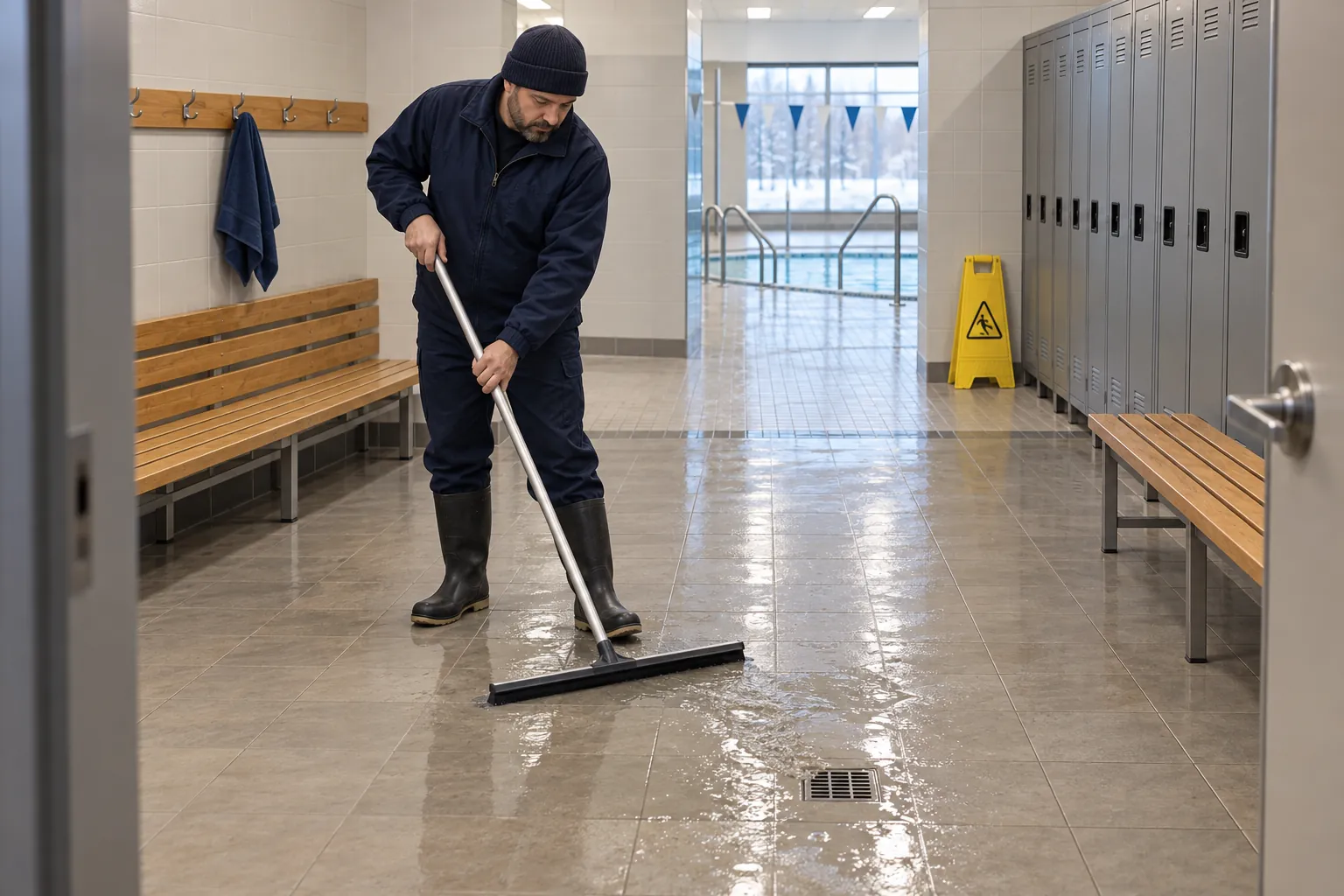
- Walk the change rooms: floors, hair, litter, toilets, soap and paper; squeegee standing water towards the drains.
- Wipe door handles, locker keypads and water fountains; empty gym floor bins.
- In winter, check entrance mats and vestibules for salt and meltwater, and change saturated mats.
Daily
- A full clean of the change rooms, showers, toilets and sinks, including benches and locker fronts.
- Vacuum or dust-mop and then damp-mop the gym floor and studios, moving portable equipment to reach under it.
- Clean every piece of equipment in full, not only the touch points, and note wear such as split upholstery, torn grips or frayed cables.
- Clean the pool deck, sauna benches and steam room as the pool operator's procedures say.
- Clean mirrors, glass and the front desk; empty all garbage, recycling and feminine hygiene bins.
Weekly
- Deep clean the showers, including grout, drains, shower heads and curtains or doors.
- Clean under and behind heavy equipment and racks, where dust and hair collect.
- Wash studio mats and clean spin bikes in full.
Monthly and seasonal deep cleaning
- Machine-scrub change room floors and pool deck surfaces to lift the soap and body-oil film that makes them slippery.
- Dust high ledges, vents and diffusers, and ask maintenance about the HVAC filters.
- Clean or replace upholstery covers, shampoo any carpet, and descale shower heads and faucets where the water is hard.
- After the winter, strip and refinish or deep clean floors that salt has dulled, and replace worn walk-off mats.
- Check that signs, dispensers and wipe stations are where people need them and are working.
04
Who does what: members, floor staff and the janitorial team
A clean gym depends on more people than the janitorial team, and the checklist works best when each group knows its part.
- Members wipe down equipment after use. That only happens if a wipe station or a spray bottle and paper towel is within a few steps of every machine, and if the signs ask for it plainly. A member's wipe-down adds to the cleaning schedule; it never replaces it.
- Trainers and floor staff walk the floor, rack weights, deal with spills and are often first to see a fault. Put their tasks on the checklist, or they will be squeezed out on a busy January evening.
- The janitorial team, in-house or contracted, does the scheduled cleans through the day and the full clean overnight or in the quietest hours, and keeps the standard of cleanliness the owner or client has set.
- Maintenance and specialist contractors look after equipment servicing, pool plant, HVAC and periodic deep cleans such as floor refinishing.
Products. Health Canada approves surface disinfectants for sale in Canada as drug products. Its page on Surface disinfectants for emerging viral pathogens says that disinfectant products approved for sale in Canada have a drug identification number (DIN) on the label, and that "it is important that these products are used following the directions for use on the product label." The Public Health Agency of Canada, in COVID-19: Cleaning and disinfecting, adds that cleaning with soap or detergent and water "reduces the amount of germs by physically removing them", and that you should "allow enough contact time for the disinfectant" to work. In a gym that means removing sweat and dirt first, then disinfecting, then leaving the surface wet for the time on the label. A disinfectant sprayed and wiped straight off may do little more than a detergent. Check too that the product suits the equipment: some upholstery and touch screens are damaged by strong or alcohol-based products, and a cracked seat pad can no longer be cleaned properly.
Safe use. CCOHS, in Cleaning Products – Working Safely, warns that "products containing bleach and ammonia must never be mixed", and says a diluted solution in a spray bottle must be labelled. The team needs WHMIS training for the products they use, with the safety data sheets where they can find them.
Cloths and gloves. CCOHS's Sanitation and Infection Control for Cleaning Staff advises cleaning visibly soiled surfaces "before disinfecting", using "a dedicated cloth for cleaning", and changing gloves after each task. Colour-code cloths so those for change rooms and toilets never reach the gym floor or the café.
Bodily fluids. Blood, vomit and other bodily fluids need a spill kit, disposable gloves and a written procedure, with the area closed off until it has been cleaned and disinfected. Train floor staff as well as cleaners, because they are usually nearest.
05
Change rooms, showers and the pool deck
Change rooms and wet areas need the closest attention in a gym. They are warm, damp and walked barefoot, conditions that suit bacteria and mould, and the floors are often wet and slippery.
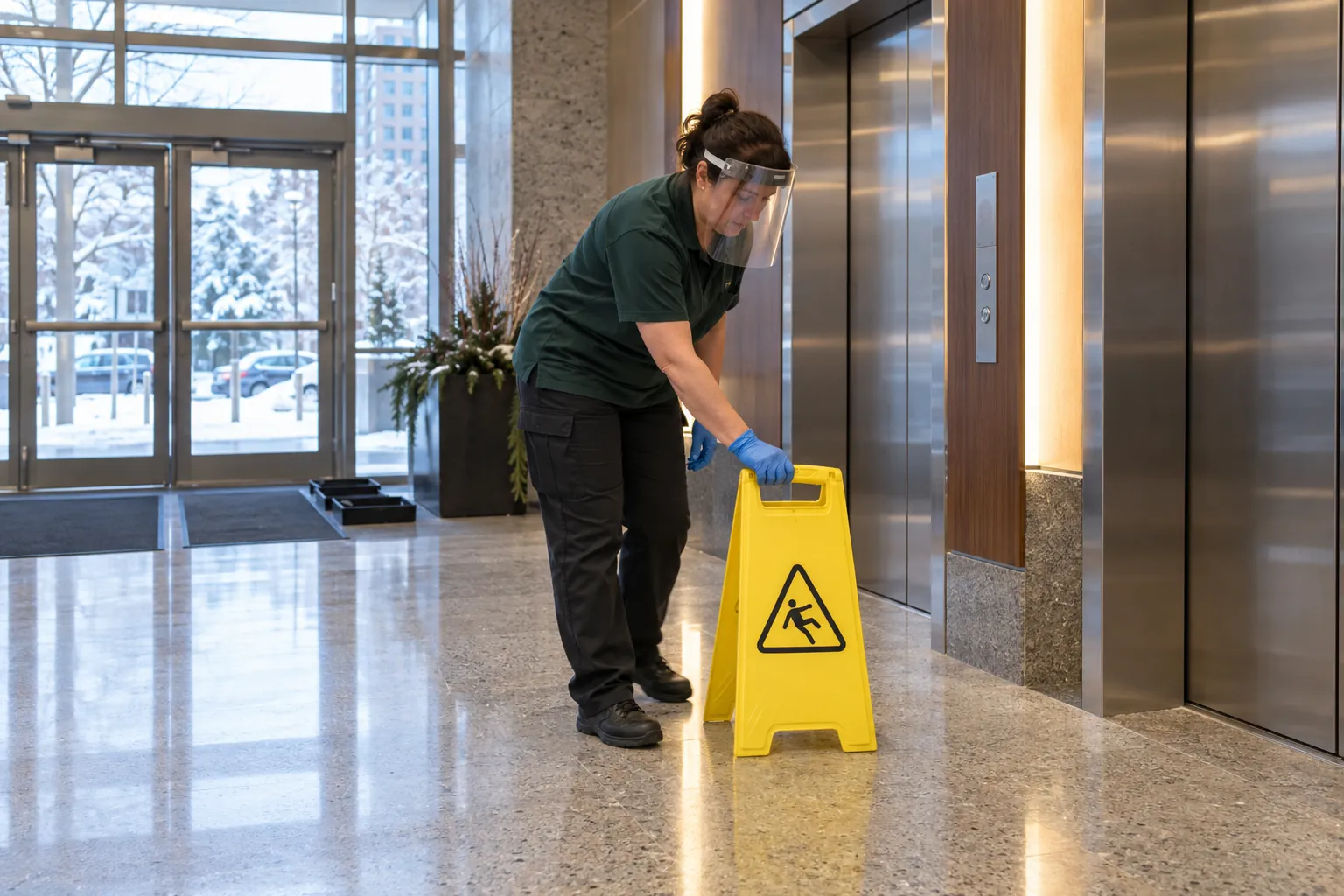
- Slips. Standing water on change room floors and the pool deck is the main hazard. CCOHS's Prevention of Slips, Trips and Falls lists "cleaning all spills immediately" and "marking spills and wet areas" among the basics, and notes that without good housekeeping other measures, such as better flooring or footwear, "will never be fully effective." Squeegee water towards the drains often at busy times, keep drains clear of hair, and put wet floor signs out only while a floor is wet. A sign that never moves is soon ignored.
- Floors. Barefoot areas need regular cleaning and disinfecting with a product made for wet areas, and periodic machine scrubbing to lift the film that makes anti-slip floors lose their grip.
- Showers. Remove hair and soap scum, clean shower heads and descale them where needed. Showers that are rarely used let water sit in the pipes; if the building's water management plan asks for them to be run, record it where the person responsible will see it.
- Mould and odour. Black mould on grout, caulking and ceilings usually means the ventilation is not coping. Clean it, and report the ventilation to maintenance.
- Saunas and steam rooms. Clean benches, floors and walls with products approved for the surfaces and the heat, once the room is safe to enter.
- Pool deck and hot tub surrounds. Clean them on the schedule and to the standard the pool operator sets. Keep cleaning products away from the pool chemical room, never mix them with pool chemicals, and never use a toilet cloth on the deck.
06
Where the gym cleaning record fails, and what SiteClara does about it
Many gyms have a cleaning sheet taped inside the change room door and a binder at the front desk. By evening the sheet has gaps from the lunch rush, the overnight clean is one set of initials, and when a member complains about the showers nobody can say when they were last checked or by whom. In Ontario that sheet may be the only washroom cleaning record, and it rarely shows the times O. Reg. 480/24 asks for.
SiteClara puts a printed QR poster at each area, such as each change room, the gym floor, each studio and the pool deck, with an optional NFC tag behind it. Cleaners and floor staff scan the code or tap the tag on their own phone, with no app to install, see the scheduled checks due at that location, and mark them done or say what stopped them. Their name and the time are recorded as it happens, and they can add a photo. A fault, such as a broken shower, an empty soap dispenser or a torn seat pad, can be reported there and goes onto the team's list of open jobs until someone closes it.
The supervisor sees what is due, done and missed, can record why a check was missed, and can escalate a job to the building manager. At the end of the day they review the checks and photos, add a note and approve the report, which goes to the nominated managers or client contacts at 8 a.m. the next morning.
07
Questions people ask
How often should a gym be cleaned?
At least once a day, with more frequent rounds where use is heavy. CCOHS's Sanitation and Infection Control for Cleaning Staff says to set the frequency of cleaning and disinfection by the workplace's needs, to "clean at least once per day", and that "more frequent cleaning (every 2 to 3 hours) may be necessary." In a busy gym that means rounds on the equipment and change rooms after each peak, a full clean every day and deep cleaning weekly and monthly.
What should gym equipment be cleaned with?
Soap and water or a cleaning product first, then a disinfectant approved in Canada that the equipment manufacturer allows. CCOHS says to "clean visibly dirty or soiled surfaces with soap and water or a cleaning product before disinfecting." Health Canada's Surface disinfectants for emerging viral pathogens tells you to locate the drug identification number (DIN) on the label and says "it is important that these products are used following the directions for use on the product label."
What should I include on my gym cleaning list?
Every surface that has to be cleaned, area by area, with how often and who does it. CCOHS's Sanitation and Infection Control for Cleaning Staff advises creating "a checklist of all surfaces that must be cleaned, especially touch points", such as door knobs, handles, water faucets and shared touch screens. In a gym, add the cardio and strength equipment, free weights, mats, change rooms, showers, wet areas and winter entrances.
08
Further reading, and a list to take away
Start with your own province: CCOHS lists where each jurisdiction's sanitation rules sit, and its guides on cleaning staff, cleaning products and slips, trips and falls are short enough to read in a break. In Ontario, read Maintaining clean washroom facilities for workers; in British Columbia, Part 4 of the OHS Regulation and, where there is a pool, the Pool Regulation. For a pool or hot tub, ask your local public health unit or health authority.
Before the next January rush, check that your gym cleaning checklist:
- is divided by area, with change rooms, showers and the pool deck treated on their own;
- sets frequencies by traffic, with extra rounds after the early morning, lunch hour and after-work peaks;
- names disinfectants with a DIN that the equipment manufacturers allow, used for the contact time on the label;
- gives members and floor staff a clear part, with wipe stations close to the equipment;
- covers winter entrances, salt and meltwater;
- has a written procedure and a spill kit for bodily fluids;
- meets your province's washroom rules, including Ontario's two most recent cleanings where they apply;
- sends faults to maintenance rather than noting them and moving on;
- is checked by a supervisor on a walk-through, not only initialled by the cleaner.
Sources
Every document this guide quotes or links to, in the order it first cites them.
- Guide to the Occupational Health and Safety Act, Part III ontario.ca
- WorkSafeBC Occupational Health and Safety Regulation, Part 4 worksafebc.com
- Health and Safety Legislation – Sanitation and Toilet Facilities in the Workplace ccohs.ca
- Occupational Health and Safety Act ontario.ca
- Ontario Regulation 480/24 ontario.ca
- Maintaining clean washroom facilities for workers ontario.ca
- Pool Regulation (B.C. Reg. 296/2010) bclaws.gov.bc.ca
- Surface disinfectants for emerging viral pathogens canada.ca
- COVID-19: Cleaning and disinfecting canada.ca
- Cleaning Products – Working Safely ccohs.ca
- Sanitation and Infection Control for Cleaning Staff ccohs.ca
- Prevention of Slips, Trips and Falls ccohs.ca
Related guides
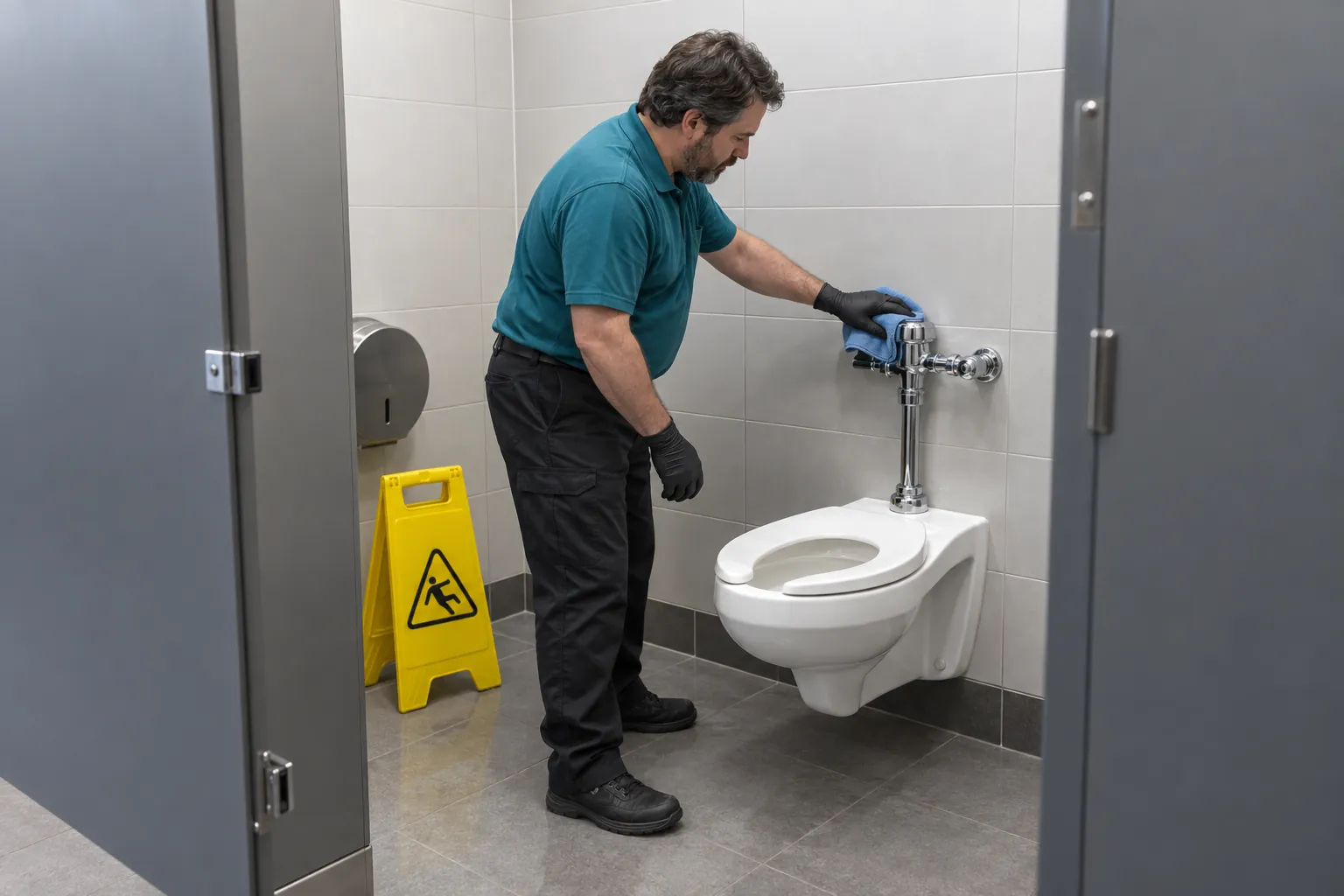 CleaningWashroom cleaning checklist: what to check, how often, and Ontario's new cleaning recordsWhat a workplace washroom cleaning checklist should cover, how often to clean, and Ontario's posted cleaning records required since January 1, 2026.
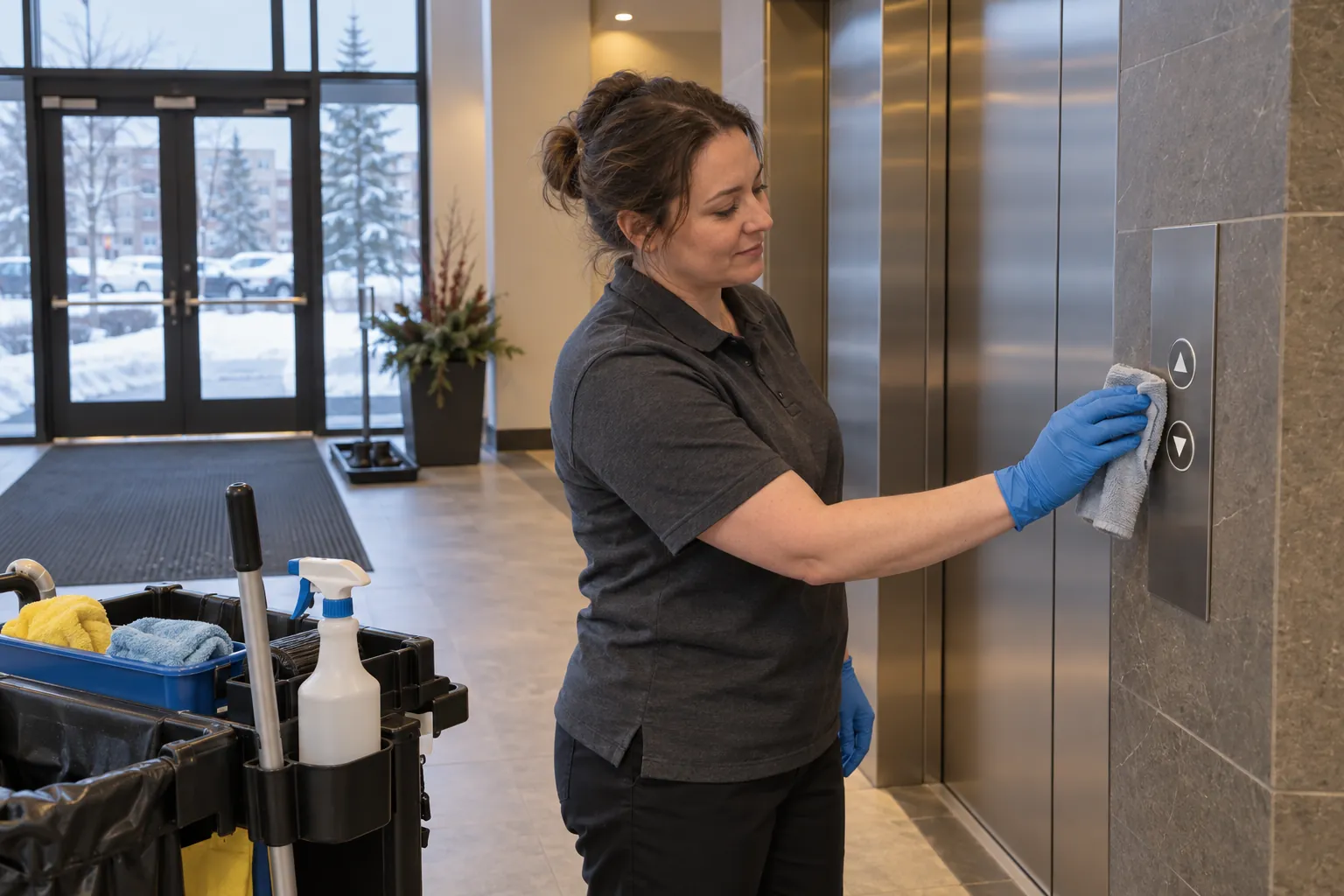 CleaningHigh-touch surfaces: what counts, how often to clean them, and how to prove itHigh-touch surfaces in Canadian workplaces: what counts, how often to clean and disinfect them, how to do it properly, and how to check it was really done.
 CleaningVomit cleanup and norovirus cleaning: a workplace procedureHow to clean up vomit safely at work in Canada: the spill kit, step-by-step procedure, disinfectant choice for norovirus, outbreak cleaning and the record to keep.
 CleaningJanitorial quality control: how to inspect, correct and show the standard heldHow janitorial quality control works in Canada: QA versus QC, inspections, sampling, corrective action, CIMS, the PIDAC audit model and records that hold up.