Cleaning
Gym cleaning checklist: equipment, changing rooms and wet areas
A gym cleaning checklist sets out, area by area, what is cleaned in a gym or leisure centre, how often and by whom: the equipment and touch points after each peak, the changing rooms and showers daily, and the wet areas to their own routine.
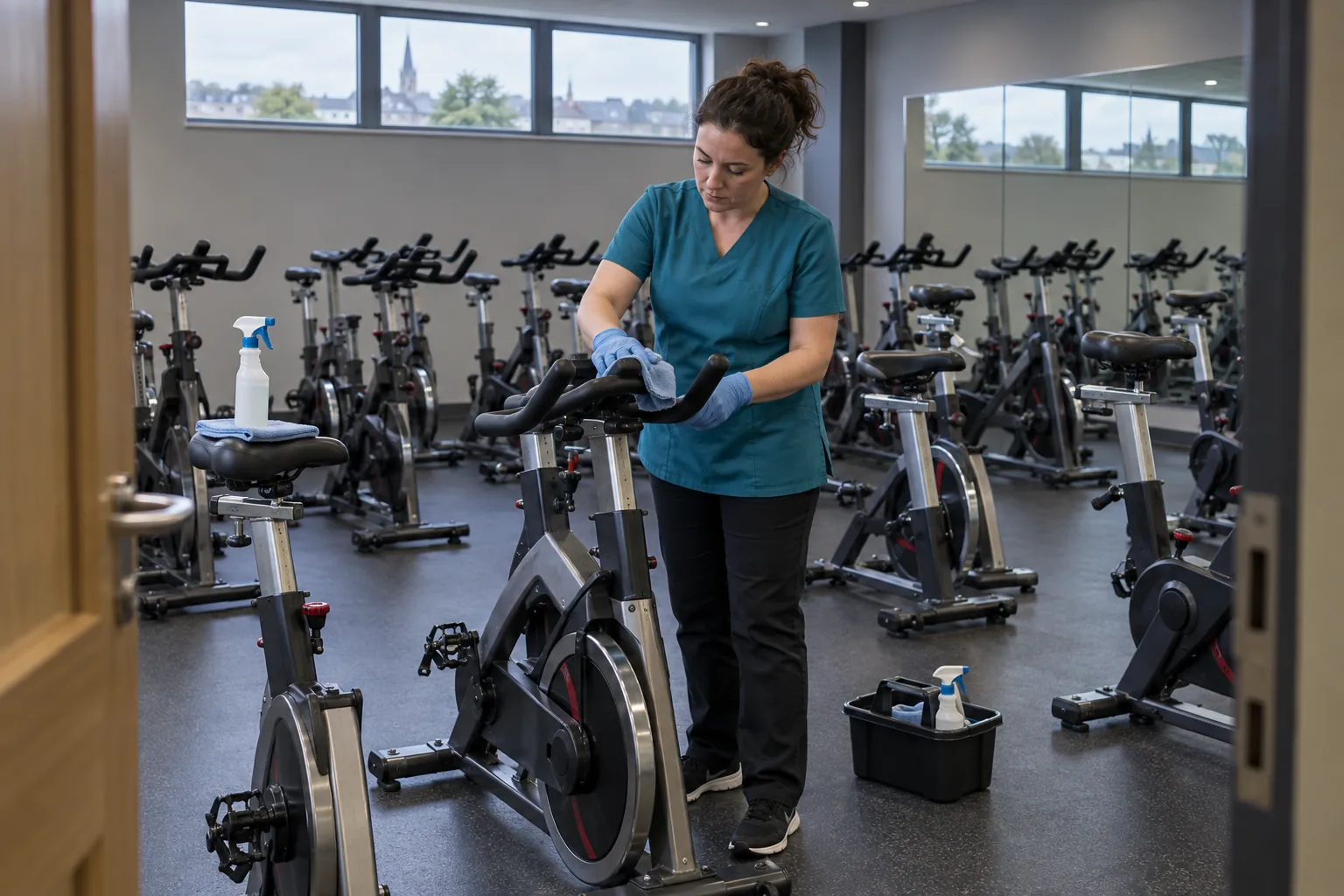
A gym is harder to keep clean than an office. It opens early and closes late, people sweat on the equipment, and the changing rooms, showers, saunas and pool surrounds are warm, wet and walked barefoot. This guide sets out a gym cleaning checklist for a gym or leisure centre in Ireland, area by area: the duties behind it in the 2005 Act and the General Application Regulations, how often each part needs attention, who does what between members, floor staff and the cleaning team, and how the showers tie into the legionella control programme.
01
The duty behind a gym cleaning checklist
No Irish law says a gym must keep a cleaning checklist in a particular format. What the law requires is a clean, safe place of work, owed both to the staff and to the members and visitors who use it.
The starting point is the Safety, Health and Welfare at Work Act 2005, section 8. Every employer must ensure, so far as is reasonably practicable, the safety, health and welfare at work of their employees. Section 8(2) spells out what that includes, among it the maintenance of the place of work "in a condition that is safe and without risk to health", safe systems of work, and "providing and maintaining facilities and arrangements for the welfare of his or her employees at work".
Members are covered by section 12 of the 2005 Act: every employer must manage and conduct the undertaking so as to ensure, so far as is reasonably practicable, that individuals at the place of work who are not its employees "are not exposed to risks to their safety, health or welfare". A wet changing room floor or a spa pool left untreated is a risk to members first.
The specific rules are in Chapter 1 of Part 2 of the Safety, Health and Welfare at Work (General Application) Regulations 2007 (S.I. No. 299 of 2007), which covers the workplace itself:
- Regulation 18: every place of work is "kept in a clean state", with accumulations of dirt, refuse and waste removed "by a suitable method as frequently as necessary to maintain an appropriate level of safety and health", and the floor of every workroom cleaned in the same way.
- Regulation 9: floors have no dangerous bumps, holes or slopes and are fixed, stable and, so far as is reasonably practicable, not slippery, and the surfaces of floors, walls and ceilings can be "cleaned or refurbished to an appropriate standard of hygiene".
- Regulation 20: the employer must "provide and maintain and keep in a clean state" adequate sanitary and washing facilities, including showers where they are required.
- Regulation 6: in enclosed places of work, any deposit or dirt likely to create an immediate danger by polluting the atmosphere is removed without delay, and a forced ventilation system is maintained in working order.
Two further sets of rules matter in a gym. The Safety, Health and Welfare at Work (Chemical Agents) Regulations 2001 require the employer to identify the hazardous chemical agents at the workplace, including disinfectants, descalers and pool chemicals, and to assess the risk, and regulation 4(3) says that assessment "shall be recorded in writing". And the showers, spa pools, saunas and steam rooms bring in the control of legionella, covered in section 05 below.
The Regulations set no cleaning frequency and ask for no particular record. The operator decides how often is often enough, records the risk assessment in the safety statement, and the checklist is the daily working part of that decision.
02
What a gym cleaning checklist covers
Divide the checklist by area, because each area has its own risks, its own equipment and its own pattern of use:
- Cardio: treadmills, bikes, cross-trainers, rowers and stair climbers, especially handles, consoles and touchscreens.
- Resistance machines: seats, back pads, grips, pins, cables and adjustment handles.
- Free weights: dumbbells, barbells, plates, collars, racks and benches.
- Functional, stretching and personal training areas: the workout mats, kettlebells, medicine balls, ropes, plyo boxes and the turf or rubber floor.
- Studios: studio floors, mats, steps, bikes in a spin studio, mirrors and the instructor's controls.
- Changing rooms: floors, benches, lockers, showers, toilets, basins, hairdryers and vanity areas, including the accessible and family changing rooms.
- Wet areas: poolside, the pool hall surrounds, sauna, steam room, spa pool surround and the routes between them and the changing rooms.
- Reception and social areas: the front desk, entry turnstiles, café tables and seating, and any crèche the centre runs.
- Touch points across the building: door handles, push plates, locker keypads, water fountains and bottle fillers, light switches and lift buttons.
- Towels: used towels on the gym floor, in the studios and in the changing rooms, and the towel bins, where the gym provides towels.
- Waste: bins on the gym floor, sanitary bins in the changing rooms, and the central bin store.
Leave out work that belongs to someone else. Pool and spa water treatment is the job of trained plant staff, equipment servicing belongs to the supplier or maintenance contractor, and the legionella control programme has its own responsible person. The checklist should say where a cleaner reports a fault to them, not ask the cleaner to do their work.
03
The gym cleaning checklist, by frequency
Frequencies depend on opening hours and footfall: a 24-hour gym in a Dublin business park and a local authority leisure centre in a county town need different lists. The pattern below suits a typical gym or leisure centre, with checks timed just after the morning, lunchtime and after-work peaks rather than at even intervals.
Several times a day, and after each peak
- Wipe handles, consoles and touchscreens on cardio machines with a product the manufacturer allows.
- Clean and disinfect benches, seat pads, grips and pins on resistance equipment and free weights.
- Wipe mats, return equipment to its racks and clear kit left on the floor, which also clears trip hazards.
- Restock wipe stations, spray bottles and hand sanitiser, and check spray bottles are labelled and correctly diluted.
- Walk the changing rooms: floors, hair, litter, toilets and supplies; squeegee standing water towards the drains.
- Wipe door handles, locker keypads and water fountains; empty gym floor bins and collect used towels.
Daily
- Full clean of the changing rooms, showers, toilets and basins, including benches and locker fronts.
- Vacuum and mop the gym floor and studios, moving portable equipment to reach under it.
- A thorough clean of all equipment, not only the touch points, inspecting it for damage such as split upholstery, frayed cables or worn grips and reporting it to maintenance.
- Clean poolside surrounds, sauna benches and steam room surfaces as the operating procedures specify, and only when the room is safe to enter.
- Clean mirrors, glass, reception and the café; empty all bins and sanitary bins.
Weekly
- Deep clean the showers, including grout, drains and shower heads.
- Clean under and behind heavy equipment and racks.
- Wash studio mats and clean spin bikes in full.
- Run little-used showers and outlets if the legionella control plan assigns that task to the cleaning team, and record it where the responsible person will see it.
Monthly and periodic
- Machine scrub the changing room and wet area floors, and clean the inside of lockers.
- Dust high ledges, vents and grilles, and arrange ventilation filter changes with maintenance.
- Clean or replace upholstery covers, shampoo any carpet and descale where needed.
- Check that signs, dispensers and wipe stations are in the right places and working.
04
Who does what: members, floor staff and the cleaning team
Gym cleanliness depends on more people than the cleaning team, and the checklist works best when each group knows its part.
- Members wipe down equipment after use, which works only if wipes are within a few steps of every machine. It supplements the cleaning schedule; it never replaces it.
- Fitness instructors and floor staff walk the floor, rack weights, deal with spills and prompt members, and they are usually first to see a mess or a fault. Put their part on the checklist too, or it will be squeezed out on a busy evening.
- The cleaning team, in-house or contracted, does the scheduled cleans through the day and the full clean overnight or in the quietest hours.
- The duty manager checks the checklist is followed and sends problems to maintenance and specialist contractors.
Where the gym is one tenant among several, in a shopping centre, a hotel or an office campus, the landlord or management company may clean the common areas and run the hot and cold water system. Section 21 of the 2005 Act requires employers who share a place of work to co-operate and to keep each other informed about the risks, as the HSA explains on its page on the law on slips, trips and falls. Document who cleans what, where the boundary runs, and who is told when something goes wrong.
Products and cloths. Use disinfectants that the chemical agents risk assessment covers and the equipment manufacturers allow; some upholstery and touchscreens are damaged by strong products. Clean off sweat and dirt first, then leave the disinfectant for the contact time on its label. Keep colour-coded cloths separate for toilets and changing rooms, the gym floor, and the café.
Spills and bodily fluids. The HSA's guidance on removing spills says spills should be "thoroughly cleaned and dried", warns that "mop-dry" floors can be very slippery, and says that spill kits "must be kept fully stocked". Blood, vomit and other bodily fluids need a spill kit, disposable gloves and other personal protective equipment, and a written procedure, with the area closed off until it has been dealt with. Train floor staff as well as cleaners, because they are usually nearest.
Checking. A duty manager's walk-round, a regular audit against the cleaning specification and member feedback show whether the checklist is followed. Complaints about smell or hair in the showers are rarely random: note where and when they arise, and move the checks to match.
05
Changing rooms, showers, spa pools and the pool surround
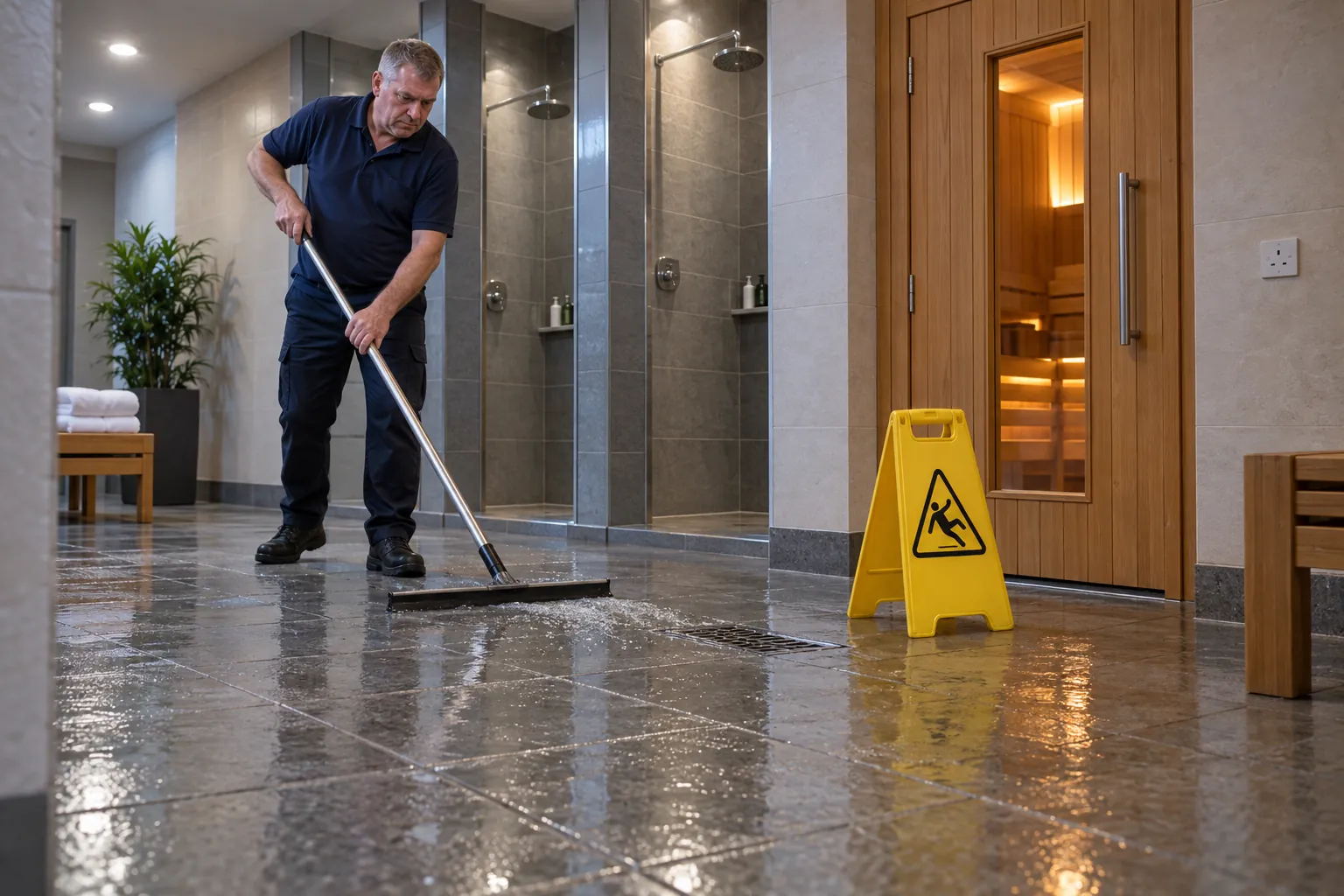
Changing rooms and wet areas carry the highest hygiene risks in a gym and draw the most complaints. They are warm, wet and walked barefoot, and the floors are slippery.
- Slips. Standing water on changing room floors and poolside is the main hazard. Squeegee it towards the drains often at busy times and keep the drains clear of hair. The HSA's page on over-used temporary signs says signs should be used only where hazards cannot be avoided or reduced, and removed when they no longer apply. A wet floor sign left out all day is soon ignored.
- Floors. Barefoot areas need regular cleaning and disinfecting with a product suited to wet areas, and periodic machine scrubbing to lift the residue that makes slip-resistant floors lose their grip.
- Showers. Remove hair and soap residue and keep shower heads clean and free from scale. Little-used showers are a legionella concern; see below.
- Mould and odour. Black mould on grout and ceilings usually means the ventilation is not coping: clean it, and report the ventilation to maintenance.
- Saunas and steam rooms. Clean benches, floors and walls with products approved for the surfaces and temperatures involved, only when the room has been switched off or is safe to enter.
- Poolside. Clean to the pool operating procedures, and never mix cleaning chemicals with pool plant chemicals or store them together.
Legionella. The HSA's page on legionellosis says that under general health and safety law an employer or person in control of a place of work must identify and assess sources of risk, prepare a legionella control plan, appoint a responsible person to manage it, and "keep records and check that what has been done is effective". It adds that where a workplace is shared, the plan should record who is responsible for checks such as "the flushing of showers or temperature checks".
The Health Protection Surveillance Centre's Checklist for the Prevention of Legionnaires' Disease in Leisure Centres (May 2017) lists showers, spa baths, saunas and steam rooms among the risk areas, and pipes with little or no water flow among the places the bacteria multiply. Its control programme includes one named person responsible, staff trained in their part, and keeping "showerheads and taps clean and free from scale". For a spa pool it asks for daily records of water treatment readings, checked by the manager.
06
Where the gym cleaning record fails, and what SiteClara does about it
Most gyms have a cleaning chart on the back of the changing room door and a folder at reception. By the evening the chart has gaps from the lunchtime rush, the night clean is a single tick, and when a member complains about the showers the duty manager cannot say when they were last checked or by whom. A contractor cleaning several clubs usually hears that one of them is slipping from a complaint, not from a report.
SiteClara puts a printed QR poster at each area – each changing room, the gym floor, each studio, poolside – with an optional NFC tag behind it. Cleaners and floor staff scan the code or tap the tag on their own phone, with no app to install, see the scheduled checks due at that location, and mark them done or explain what stopped them. Their name and the time are recorded as it happens, and they can add a photo. A fault, such as a broken shower or a torn seat pad, can be reported there and goes onto the team's list of jobs until someone closes it.
The supervisor or duty manager sees what is due, done and missed, records the reason a check was missed, and can escalate a job to the building manager. At the end of the day they review the checks and photos, add a note and approve the report, which goes to nominated management or client contacts the next morning, showing what was reported, what was completed, what is still open and how the scheduled checks went.
07
Questions people ask
How often should a gym be cleaned?
As often as its use demands: Irish law sets no fixed frequency. Regulation 18 of the Safety, Health and Welfare at Work (General Application) Regulations 2007 requires every place of work to be "kept in a clean state", with dirt, refuse and waste removed, and every workroom floor cleaned, "by a suitable method as frequently as necessary to maintain an appropriate level of safety and health". In a busy gym that means the equipment and changing rooms several times a day. The HPSC's Checklist for the Prevention of Legionnaires' Disease in Leisure Centres is more specific about the water: keep "showerheads and taps clean and free from scale", and for a spa pool, "Clean and disinfect the whole system including the balance tank weekly".
How to properly clean a gym?
Area by area, with products that have been risk assessed, and with spills dealt with at once. Most disinfectants and descalers are hazardous chemical agents, and regulation 4(3) of the Safety, Health and Welfare at Work (Chemical Agents) Regulations 2001 says the risk assessment of them "shall be recorded in writing". The HSA's guidance on removing spills to control slips says spills "should be thoroughly cleaned and dried", warns that "a superficial effort that does not clean or dry the surface may create a greater risk than the original spill", and says spill kits "must be kept fully stocked".
What is a standard cleaning checklist?
There is no standard form in Irish law. The General Application Regulations 2007 set the standard, not the format: regulation 18 requires the place of work to be "kept in a clean state" and each workroom floor cleaned "as frequently as necessary". A checklist is how a gym shows it meets that standard, listing each area, the tasks done there, how often and who does them.
08
Further reading, and a list to take away
The Health and Safety Authority publishes guidance on slips, chemicals and legionellosis at hsa.ie. The Health Protection Surveillance Centre publishes the National Guidelines for the Control of Legionellosis in Ireland, 2009; its leisure centre checklist points to Chapter 8, section 8.5. See also the toilet cleaning checklist and the slips, trips and falls guide.
Before the January rush, check that your gym cleaning checklist:
- is divided by area, with changing rooms and wet areas treated separately;
- sets frequencies by footfall, with checks straight after the morning, lunchtime and evening peaks;
- names disinfectants that the chemical agents risk assessment covers and the equipment manufacturers allow;
- gives floor staff and members a clear part, with wipe stations close to the equipment;
- has a stocked spill kit and a written procedure for bodily fluids;
- records shower flushing where the legionella control plan gives it to the cleaning team;
- says who cleans what where the building is shared;
- is checked by a duty manager on a walk-round, not only signed by the cleaner.
Sources
Every document this guide quotes or links to, in the order it first cites them.
- Safety, Health and Welfare at Work Act 2005, section 8 irishstatutebook.ie
- Section 12 of the 2005 Act irishstatutebook.ie
- Safety, Health and Welfare at Work (General Application) Regulations 2007 irishstatutebook.ie
- Safety, Health and Welfare at Work (Chemical Agents) Regulations 2001 irishstatutebook.ie
- The law on slips, trips and falls hsa.ie
- Removing spills hsa.ie
- Over-used temporary signs hsa.ie
- Legionellosis hsa.ie
- Checklist for the Prevention of Legionnaires' Disease in Leisure Centres file.hpsc.ie
- National Guidelines for the Control of Legionellosis in Ireland, 2009 hpsc.ie
Related guides
 CleaningCommercial cleaning checklist: area by area, for Irish workplacesA commercial cleaning checklist for Irish offices and shared premises, area by area: the 2007 Regulations behind it, using it on shift and checking it is followed.
 CleaningToilet cleaning checklist: what to check, how often, and a record that stands upWhat a toilet cleaning checklist should cover in an Irish workplace, how often to check, the duty in Regulation 20 of the 2007 Regulations, and a credible record.
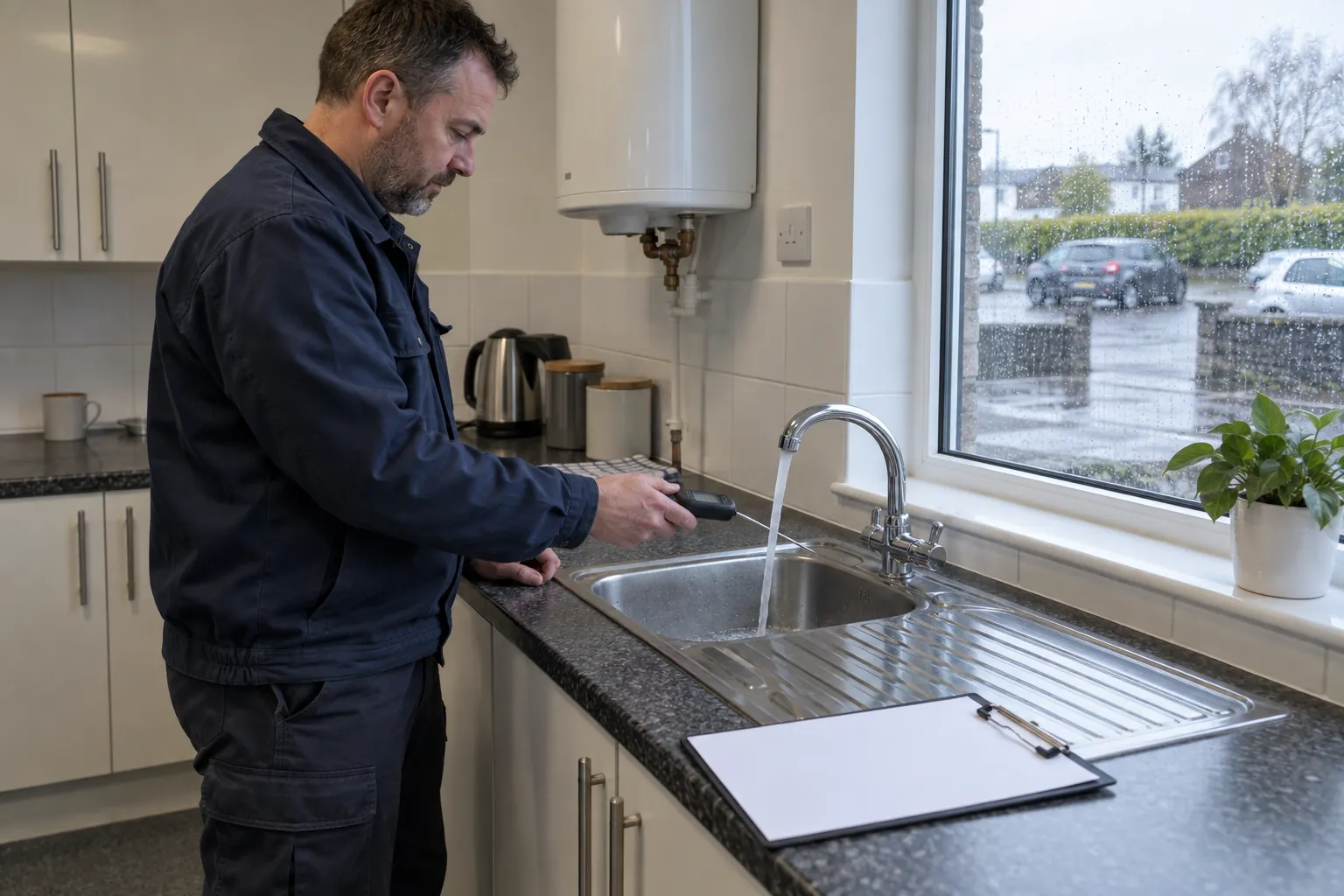 Fire and water checksLegionella checks in Ireland: the routine that keeps the water safe, and the record that shows itRoutine legionella checks in Irish buildings under the HPSC guidelines and HSA guidance: weekly flushing, monthly temperatures, who does them and what to record.
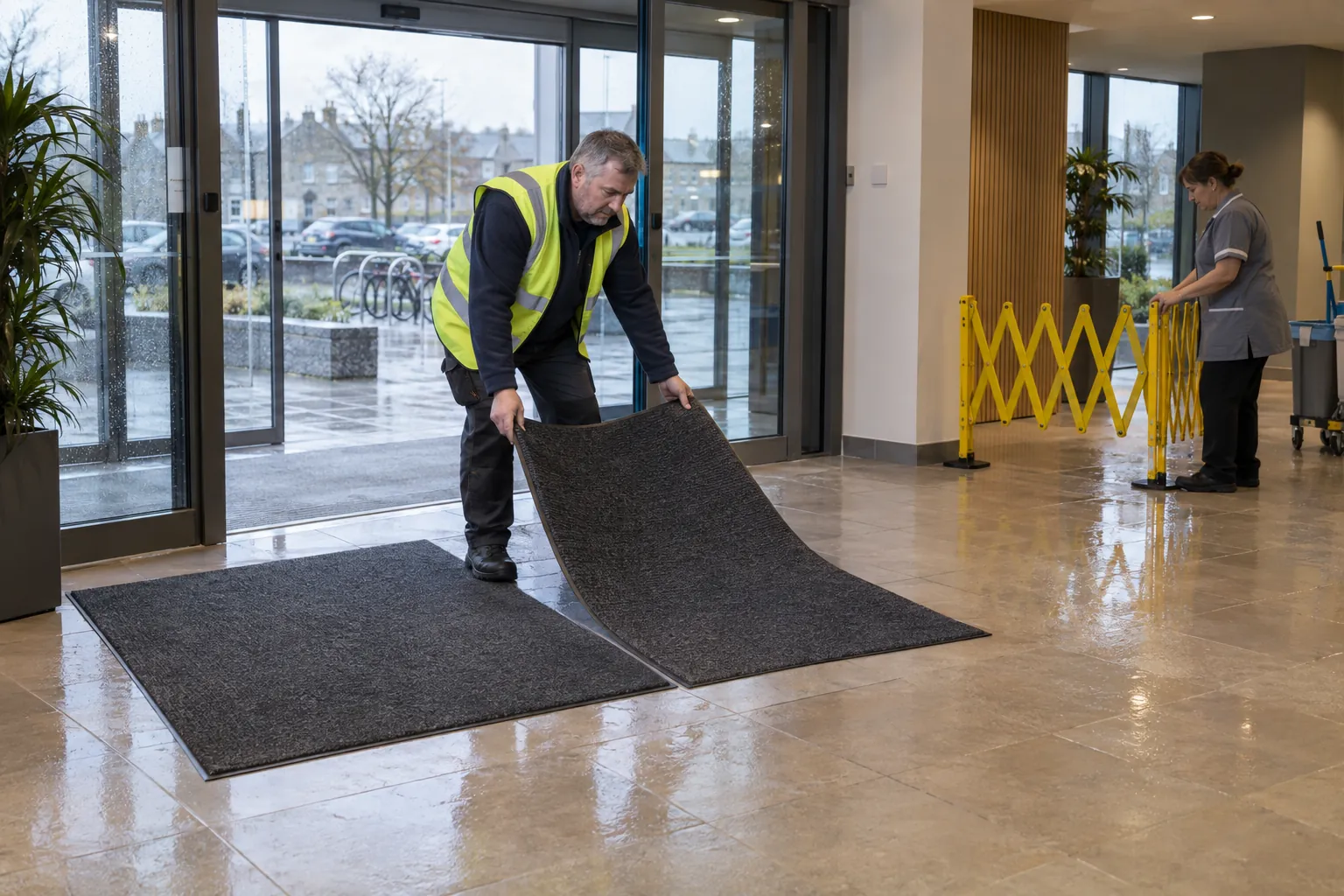 Premises and facilities managementSlips, trips and falls: what Irish law requires, and how to prevent them day to dayPreventing slips, trips and falls in Irish workplaces: the 2005 Act and 2007 Regulations, spills, floor cleaning, entrances, stairs and the checks that show it.