Security patrols
Mobile security patrols: what you are buying, and how to know you got it
A mobile security patrol is an SIA-licensed security officer in a vehicle who visits a round of client sites at agreed times, often several times a night, to check they are secure, rather than staying at one site as a static guard does.
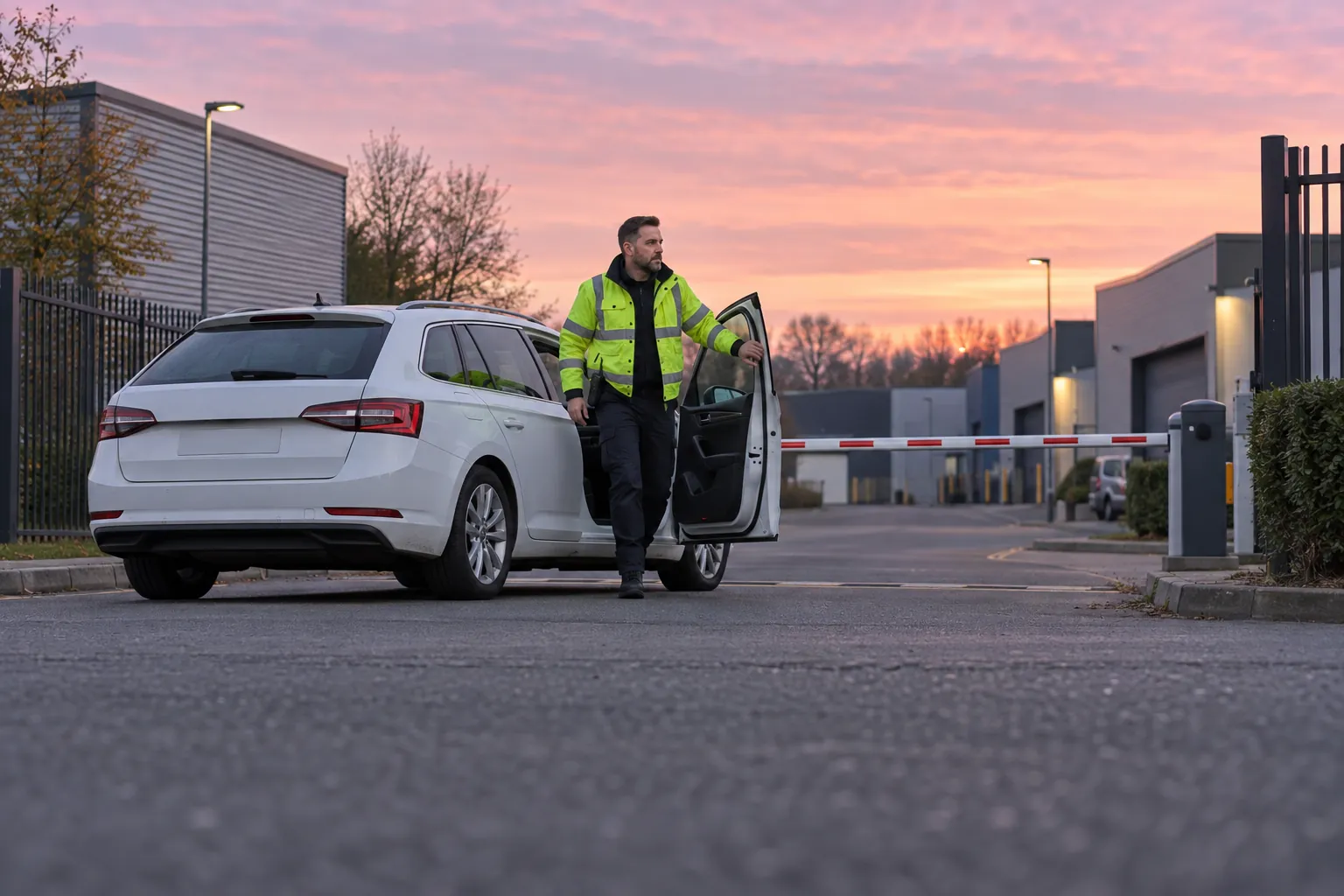
Mobile patrol security costs far less than a guard on site and covers far less time. This guide explains what the service includes, when it makes sense, what to agree in the contract, and how a client can tell that each visit happened.
01
What a mobile security patrol service is
A mobile security patrol service sends a licensed security officer in a patrol vehicle to a client's premises at agreed times, usually out of hours. The officer carries out the checks set for that site, deals with or reports what they find, and moves on to the next site on the route. One mobile patrol unit may cover a dozen or more clients in a night, which is why it is a security service priced per visit or per month rather than per hour.
The difference from a static guard is time on site. A static security officer works from a fixed location for the whole shift and can patrol the site repeatedly, as our guide to security patrols describes. A mobile patrol officer is present for a few minutes at a time, a few times a night. Unlike static guards, a mobile patrol sells the client a visible presence at unpredictable moments, a check that the premises are secure, and someone who can attend when something goes wrong. What the client does not buy is continuous cover between visits.
Mobile patrol services are usually sold alongside related services that use the same officers and vehicles:
- Alarm response: an officer sent to respond to alarms when the site's intruder or fire alarm activates, often as the nominated keyholder, and sometimes sold as rapid response;
- Key holding: holding the client's keys securely so that an officer can get in, covered in our guide to key holding;
- Lock and unlock: opening the site for staff or contractors in the morning and securing it at night;
- Vacant property inspections: regular visits to empty buildings to check for break-in, squatting, water leaks and damage, often required by insurers;
- Construction site patrols: visits to building sites at night and weekends when plant, materials and fuel are left unattended.
02
When a mobile patrol suits a site, and when it does not
A mobile patrol suits sites where the risk is real but not high enough to justify an officer all night, or where a static guard is needed only some of the time. Typical clients include:
- business premises and warehouses closed overnight and at weekends;
- retail parks, trading estates and multiple locations owned by the same landlord;
- schools and colleges during the holidays;
- construction sites between shifts;
- empty offices, shops and residential and commercial buildings awaiting sale or redevelopment;
- car parks and yards with a history of vandalism or fly-tipping.
It suits less well where the site needs someone present to act at any moment: a building with valuable stock that could be taken in the gaps between visits, a site with a live threat, or one where the officer needs to control access through the night. Some sites combine the two, with a static guard at busy times and regular patrols in the quiet hours.
Mobile patrols reduce the risk of theft and damage mainly through deterrence and early discovery. A marked patrol vehicle and an officer in uniform, arriving at varying times, are a deterrent to anyone watching the site, and random patrols help deter criminal activity that relies on knowing when nobody is there. A break-in found at 01:00 rather than at 08:00 means earlier repairs and earlier notification of the police and the insurer. The honest limit is the gap between visits: the service reduces the time a problem goes unnoticed; it cannot remove it.
Business owners weighing the cost should compare patrols with other security measures, such as better lighting, an intruder alarm with remote monitoring, or CCTV, which may meet the site's security needs on their own or make each patrol visit more useful. The aim is a mix of measures that together discourage criminal activities, rather than the most visits the budget allows.
03
What to agree in the contract
Most disputes about mobile patrols come from a contract that did not say what a visit is. Before the service starts, the client and the security company should agree, in writing:
- The number of visits in each period, such as per night, per weekend day or per bank holiday, and any extra visits at higher-risk times.
- The time windows for the visits, such as one visit between 22:00 and 01:00 and another between 01:00 and 05:00. Randomised patrol routes and times are the point of the service, so the contract should fix windows rather than exact times.
- What a visit includes: an external check of the perimeter and doors only, or an internal patrol as well; the checkpoints to visit; and a minimum time on site.
- Specific tasks, such as checking the alarm panel, switching lights off, checking the freezer temperatures or securing a gate left open by a contractor.
- Alarm response: the target time for an officer to attend after an alarm activation, what the officer does on arrival, and whether attendance is included or charged per call.
- Escalation: who the officer calls about a break-in, a fault or a gate that will not lock, in what order, and at what hours.
- Reporting: what the client receives after each visit, and how quickly.
- Keys and codes: which keys the provider holds, how they are stored, and how codes are passed and changed.
The site-specific details belong in the assignment instructions for the patrol, which the officer should be able to consult on each visit. Security personnel covering the route for the first time need the same information as the regular officer.
04
SIA licensing and the standards behind the service
Under the Private Security Industry Act 2001, which applies across the UK, an officer carrying out mobile patrols under a contract for services must hold a front line licence from the Security Industry Authority (SIA), because guarding premises against unauthorised access or occupation, or against damage, is manned guarding, a licensable activity in the SIA's guidance Find out if you need an SIA licence. The licence that covers this is the security guard licence, or the door supervisor licence, which also allows security guarding. Holding the client's keys as part of a contract is a licensable activity too; the SIA's guidance explains which licences cover it. Most front line licences are a photocard the officer must wear while working, and a client can check any licence on the SIA's public register.
Beyond the individual licence, buyers can look for:
- SIA Approved Contractor Scheme status, a voluntary scheme that assesses how a security company is run, searchable on the SIA's register of approved contractors;
- working to BS 7984-3, the code of practice for mobile security services, and, for keyholding and alarm response, BS 7984-1;
- staff screened to BS 7858, the code of practice for screening individuals working in a secure environment;
- certification by an inspectorate body that audits security companies against those standards;
- evidence of how officers are trained and briefed for each site;
- insurance that covers the services provided, including public liability and the keys held.
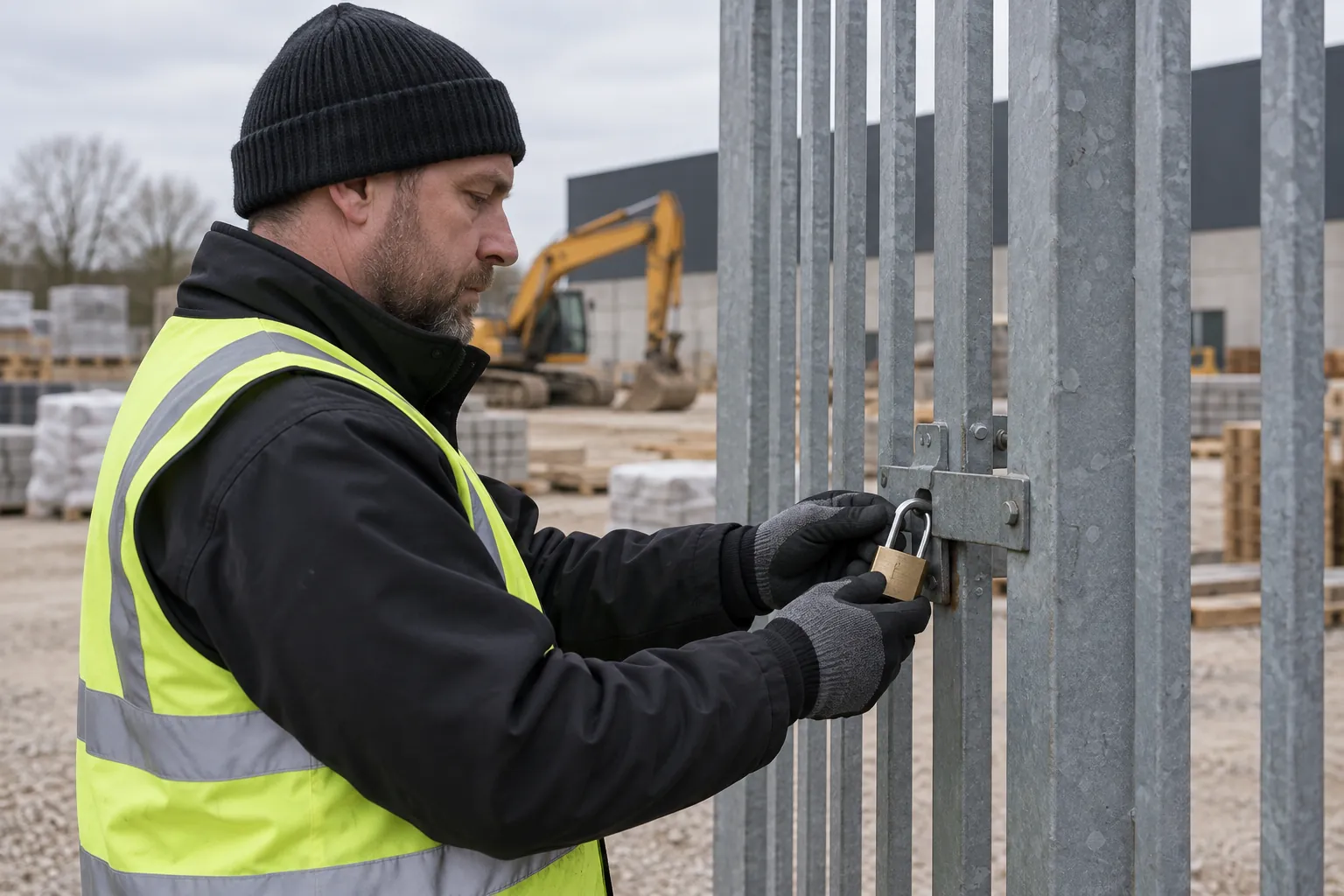
Mobile patrol officers usually work alone, at night, arriving at empty sites where an intruder may still be present. The provider, as employer, must assess and manage the risks of lone working, and the Health and Safety Executive's guidance Protecting lone workers sets out what that involves. On an alarm call the officer should assess the situation from outside before going in, and call the police or emergency services rather than enter where there are signs that someone is still inside. Clients can help by keeping lighting working, keeping the route to the alarm panel clear, and telling the provider about any known hazards on site.
05
How a client knows each visit happened
A mobile patrol happens when nobody from the client is there to see it. The client is paying for a number of visits they cannot count themselves, so the record of each visit is the service, more than any promise of peace of mind. A good provider will offer, and a client should ask for:
- a time-stamped record of each visit, showing arrival and departure and the named officer;
- proof of presence at each checkpoint, not only at the gate, usually from a tag or code scanned on site;
- what was found, including "all secure", any fault or security issue and any suspicious activities seen, with photos where they help;
- visits missed or late, with the reason, rather than silence;
- an incident report for anything that needed more than a line, such as a break-in or an alarm call, like the security officer reports a static guard would write.
Providers use a range of systems to produce this, from guard tour systems with tags at checkpoints to vehicle tracking that records where the patrol vehicle went. Vehicle tracking shows the car reached the site; it does not show the officer walked round it. A checkpoint record inside the perimeter and at the back of the building says more.
Read the records occasionally against the contract. Count the visits in a month against those agreed, look at whether the times really vary or have settled into a routine, and check that faults reported on patrols were fixed. A visit recorded at the same minute every night is a routine an intruder can learn too.
06
Where visit records fail, and where SiteClara fits
The weak point of a mobile patrol is the handover of information from the officer to the client. The officer's notes sit in the provider's system, the client receives a monthly invoice with a count of visits, and a gate found open at 02:00 reaches the site manager only if someone remembers to ring. When the client asks what happened last Tuesday, the answer takes days.
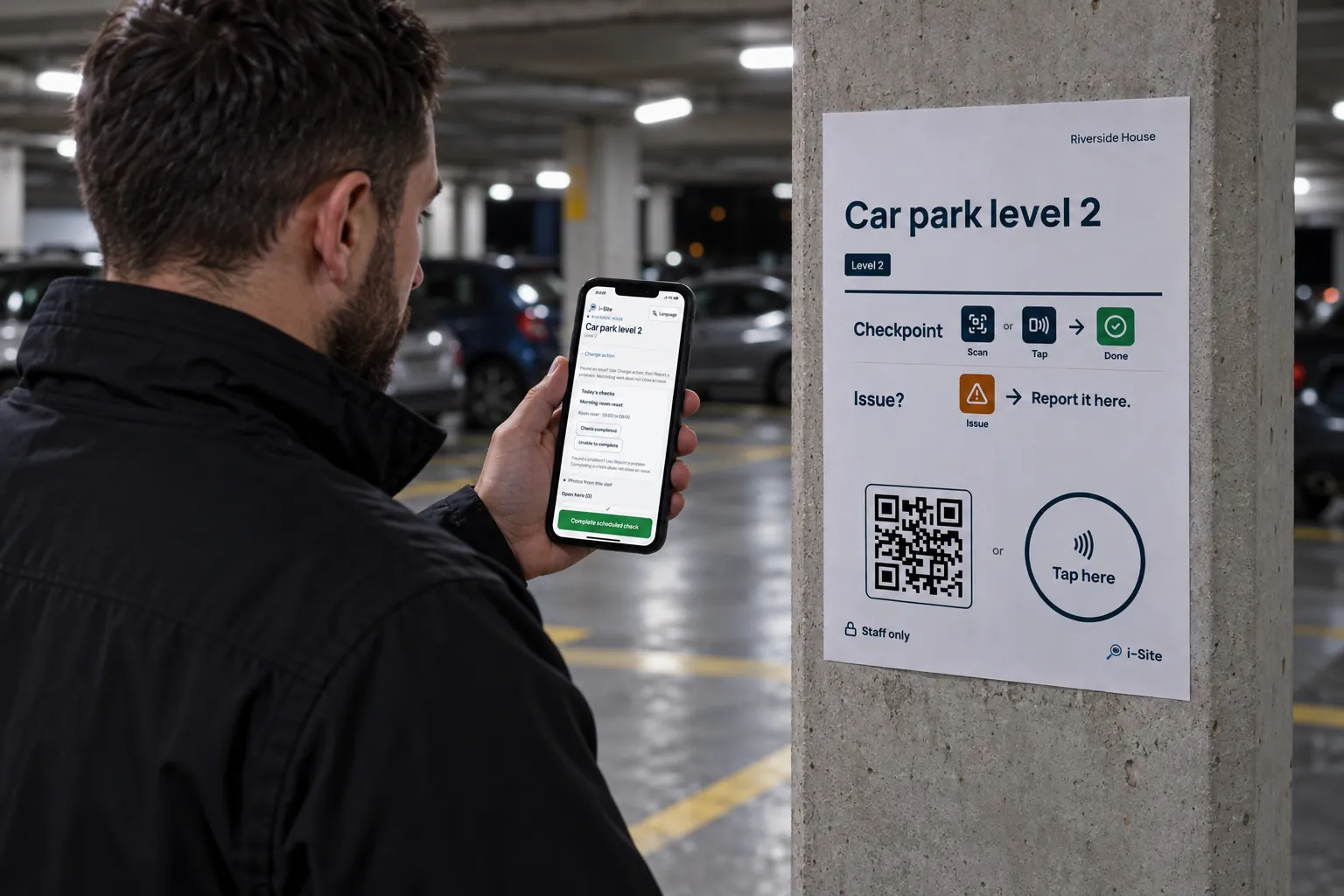
SiteClara gives the client's own site a record of each visit. A printed QR poster, with an optional NFC tag behind it, goes at each checkpoint: the gate, the rear doors, the yard, the alarm panel. The patrol officer scans the code or taps the tag on their own phone, with no app to install; officers are enrolled by text and sign in with a link. At each checkpoint they see the checks due there and mark them done, or explain what stopped them, and they can report an issue or incident with a photo. A reported issue goes onto the team's list of jobs until someone closes it, and a supervisor can escalate a job to the building manager, who can answer it.
The supervisor sees what was due, done and missed, and can record the reason a visit was missed. Each day the supervisor reviews and approves a report that goes to nominated management or client contacts at 8am the next morning, showing what was reported, completed and still open, and how the scheduled checks went, for example 12 of 12 completed. It is priced per building, with no per-person fees, so a patrol company can use it at each client's site without paying for every officer on the route.
07
Further reading, and a list to take away
The Security Industry Authority publishes the licence types, the public register of licence holders and the register of approved contractors. BS 7984-3 (mobile patrol services), BS 7984-1 (keyholding and response), BS 7499 (static guarding) and BS 7858 are available from the British Standards Institution. The Health and Safety Executive publishes Protecting lone workers. Your insurer may have its own requirements for vacant or unattended premises, which the patrol contract should meet.
Before signing a mobile patrol contract, check that:
- the number of visits and the time windows are written down for each day of the week;
- a visit is defined: external, internal, checkpoints and minimum time on site;
- alarm response times, and what the officer does on arrival, are agreed;
- escalation contacts are listed, with who to call at which hours;
- officers hold the right SIA licence and the company can show how it screens and supports them;
- each visit is recorded at checkpoints on site, with the officer's name and the time;
- missed visits are reported, not left out;
- someone at the client reads the records against the contract each month.
Sources
Every document this guide quotes or links to, in the order it first cites them.
- Private Security Industry Act 2001 legislation.gov.uk
- Find out if you need an SIA licence gov.uk
- SIA Approved Contractor Scheme gov.uk
- BS 7858 knowledge.bsigroup.com
- Protecting lone workers hse.gov.uk
- BS 7984-3 knowledge.bsigroup.com
- BS 7984-1 knowledge.bsigroup.com
Related guides
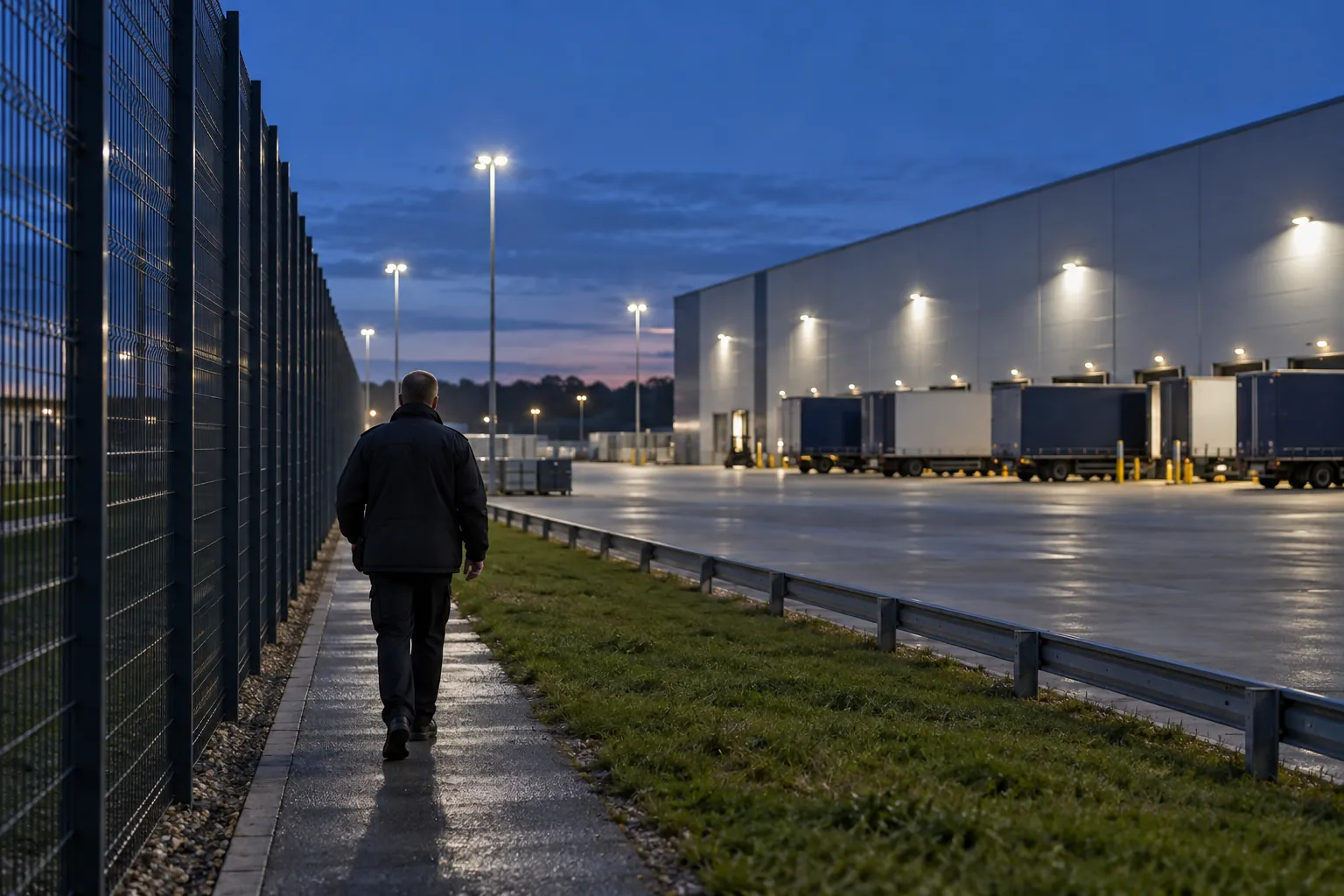 Security patrolsSecurity patrols: how to plan them, run them and show they happenedHow to plan and run security patrols on a site: routes and checkpoints, how often and when, what officers look for, how to record each patrol and hand over.
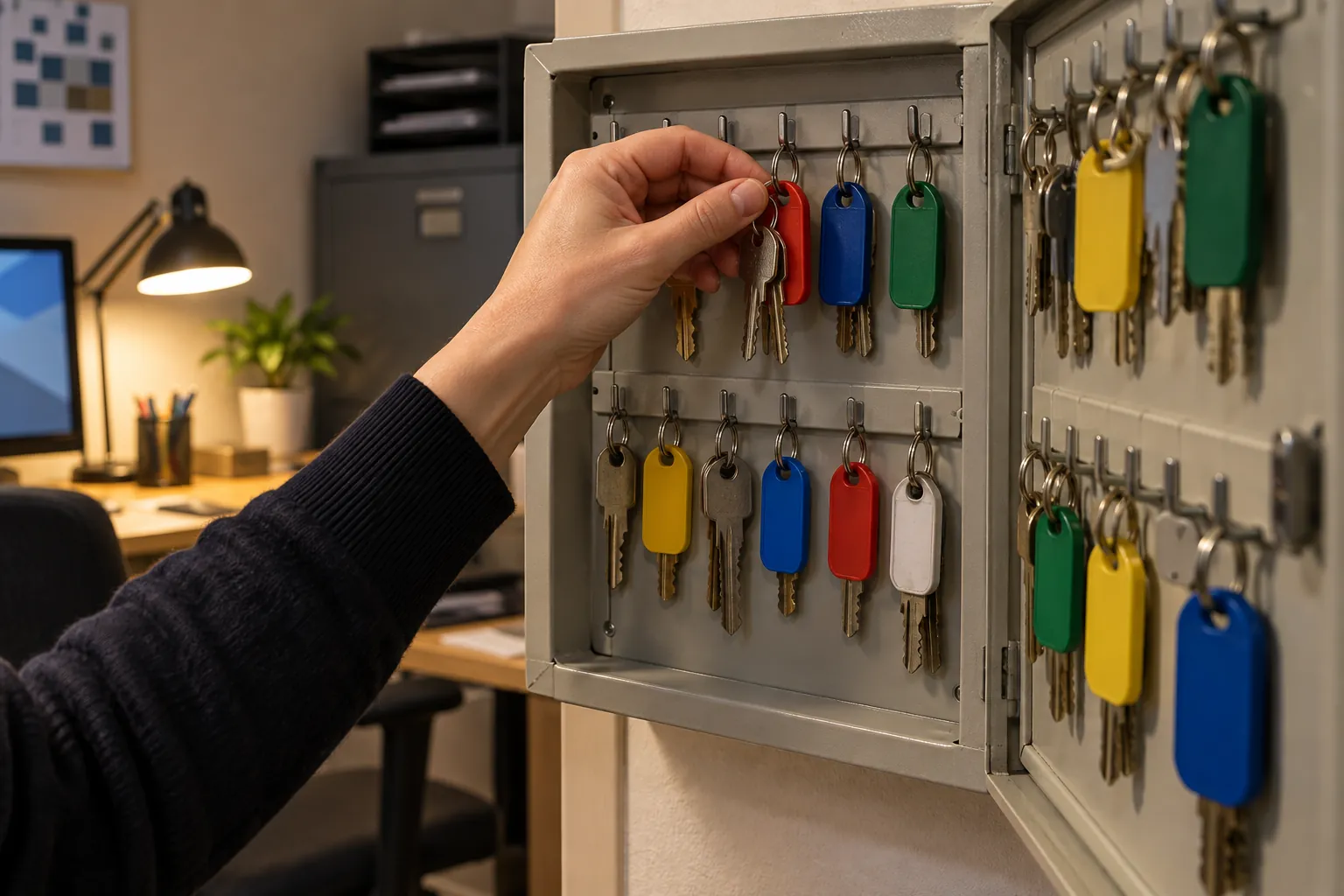 Security patrolsKey holding: nominated keyholders, alarm response and keeping control of keysKey holding explained: nominated keyholders for alarms, contract keyholding and alarm response, SIA licensing, and keeping control of keys with an audit trail.
 Security patrolsGuard tour systems: how they work, what they prove, and how to choose oneHow guard tour systems record security patrols – wands, RFID, NFC, QR codes, GPS apps – what the data shows and does not, and what to ask before choosing one.
 Security patrolsSecurity officer report: what to write, and how to make it stand upThe reports a UK security officer writes on shift – incident, patrol, handover – what each should record, and how to write one that stands up later.