Premises and facilities management
HOA maintenance checklist: what the association maintains, how often to check it, and what to record
HOA maintenance is the upkeep, repair and replacement of the common areas and shared components that a homeowners association is responsible for under its governing documents and state law, paid for from the assessments homeowners pay.
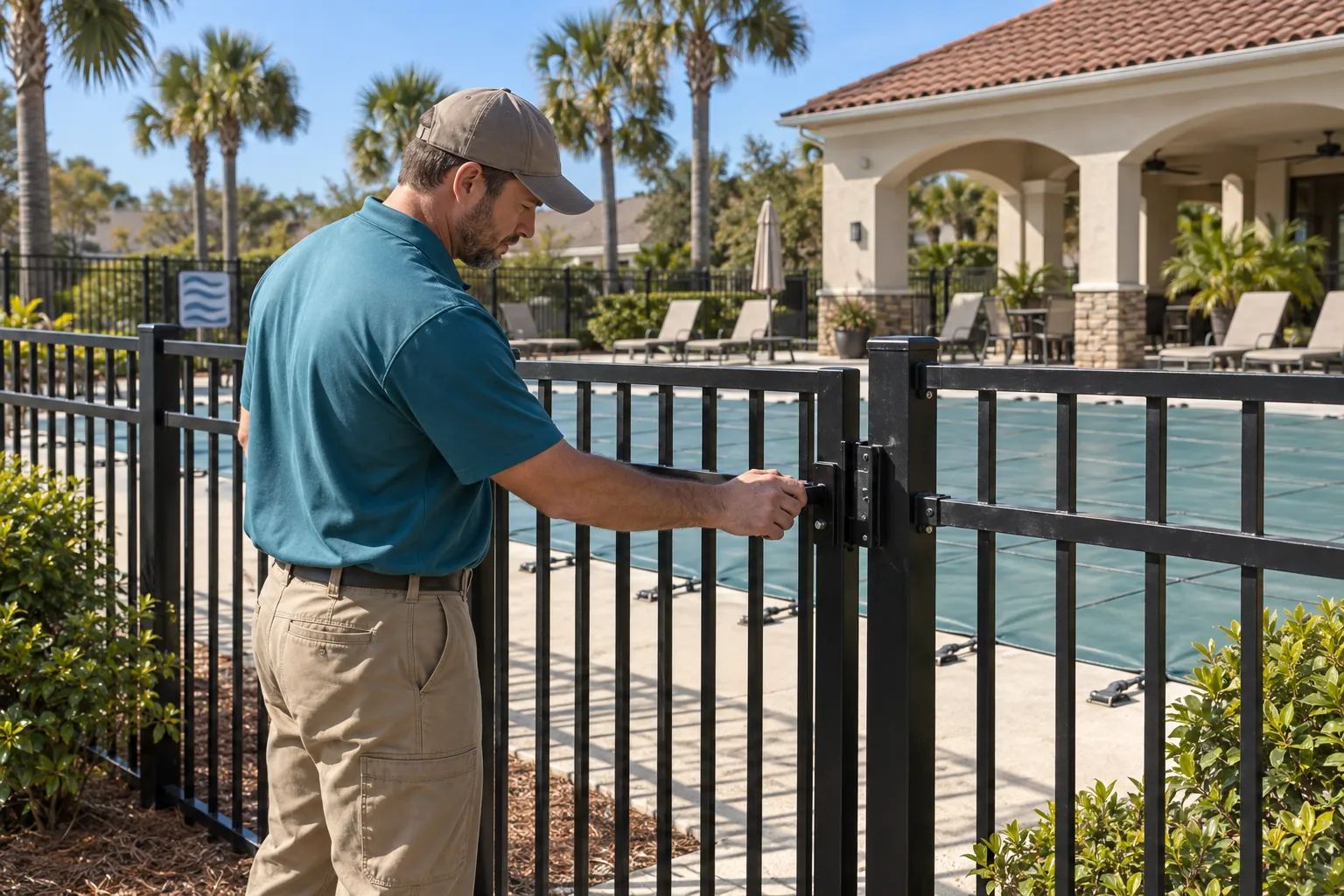
An HOA maintenance checklist turns that duty into the walks, checks and repairs that someone actually does. This guide is for community association managers, boards, on-site maintenance staff and the contractors who serve homeowners associations and condominium associations in the United States. It covers who is responsible for what under the governing documents and state law, what the checklist should include, how often each part is checked, the inspections some states now require, and what a useful record looks like.
01
Who maintains what: the governing documents and state law
HOA maintenance starts with a question that has to be answered before any checklist is written: which parts of the community does the association maintain, and which are each owner's own? The answer is in two places. The first is the community's governing documents: the declaration (often called the CC&Rs, the covenants, conditions and restrictions), the plat or condominium map, and the bylaws. The second is the state's common interest community law, which sets default rules and, in some states, specific inspection duties the documents cannot remove.
State law differs, so name the state before relying on any rule. California is a clear example. Under the Davis-Stirling Common Interest Development Act, California Civil Code section 4775 provides that, unless the declaration says otherwise, "the association is responsible for repairing, replacing, and maintaining the common area", while each owner is responsible for their own separate interest. For exclusive use common area, such as a balcony or patio assigned to one unit, the default splits the work: the owner maintains it, and the association repairs and replaces it. Since January 1, 2025, the same section also requires the board to commence the process of restoring interrupted gas, heat, water or electrical services within 14 days of the interruption, where the association is responsible for the repair.
Other states follow the same pattern in their own words. Florida, for example, separates condominiums (Chapter 718 of the Florida Statutes) from homeowners associations for single-family communities (Chapter 720), and the inspection rules described below apply to condominiums and cooperatives, not to a single-family HOA. Before building a checklist, get a maintenance responsibility chart: a table that sets out the maintenance responsibilities item by item, saying whether the association or the homeowner maintains, repairs and replaces each component. If the association has none, it is the first thing to write.
Where the association employs its own maintenance staff, it is also an employer. Section 5(a)(1) of the Occupational Safety and Health Act requires every employer to furnish a place of employment "free from recognized hazards that are causing or are likely to cause death or serious physical harm", and 29 CFR 1910.22, walking-working surfaces, requires surfaces to be "inspected, regularly and as necessary, and maintained in a safe condition". Some states run their own OSHA-approved plans, so check the state before citing federal rules. An HOA with no employees, relying entirely on a management company and vendors, still owes residents and visitors reasonable care under state premises liability law, and a regular, recorded maintenance walk is the plainest way to show it.
02
What an HOA maintenance checklist covers
The list depends on what the community owns. A townhome HOA may maintain roofs and exteriors; a single-family subdivision may maintain only landscaping, a pool and the entrance; a high-rise condominium association maintains a whole building. Take the responsibility chart and walk the property with it. A typical checklist groups the tasks like this, so that each walk follows the same order:
- Grounds and landscaping: turf, shrub beds, trees near walkways, roofs and power lines, irrigation controllers and heads, drainage swales, retention and detention ponds. The grounds maintenance checklist goes into more detail.
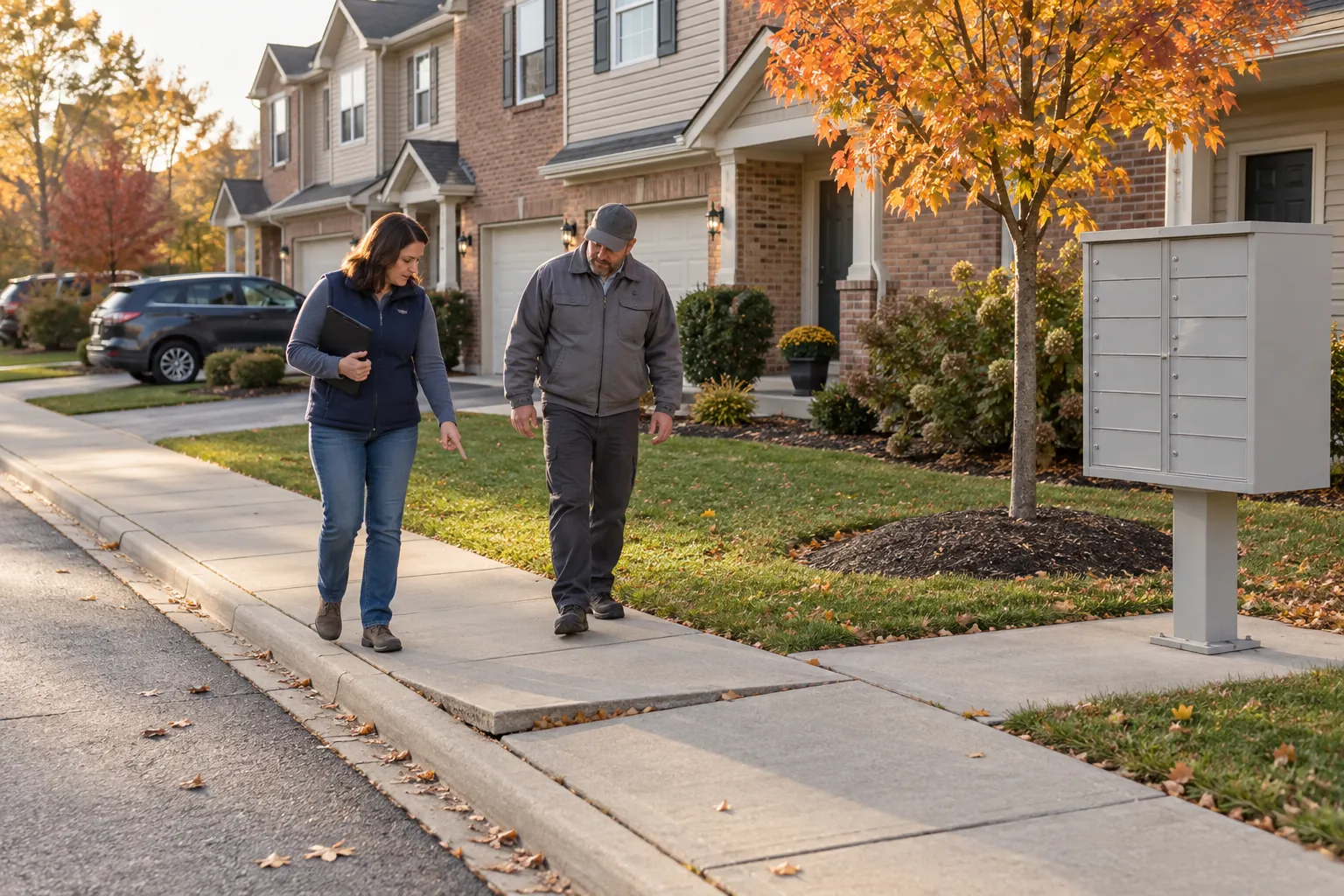
- Paving and walkways: private streets, parking areas, curbs, sidewalks and paths the association owns, with trip edges, potholes, standing water, faded striping and wheel stops noted.
- Lighting: streetlights, pathway, parking, entrance and clubhouse lighting, photocells and timers.
- Building exteriors, where the association maintains them: roofs, gutters and downspouts, siding, trim and paint, sealants, windows and exterior doors in common areas, and exterior elevated elements such as balconies, decks, walkways and exterior stairs.
- Amenities: pool and spa, clubhouse, fitness room, tennis and pickleball courts, dog parks, playgrounds (see the playground inspection guide), picnic and grill areas, restrooms and changing rooms.
- Access and security: entry gates and gate operators, fences and walls, pedestrian gates and closers (particularly pool gates), key and fob systems, cameras where the association has them.
- Shared utilities and services: mailbox clusters, trash and recycling enclosures, common water and irrigation meters, backflow assemblies, lift stations or pumps on private systems, and stormwater structures.
- Signage: street, speed and parking signs on private roads, and pool rules, checked for damage.
- Common interiors in condominiums: lobbies, corridors, stairwells, elevators, trash chutes, garages, mechanical and electrical rooms, and the life safety systems, most of which have their own code-required testing by licensed contractors.
03
How often: daily, weekly, monthly and seasonal checks
No statute sets a general walk frequency for an HOA. The frequency typically comes from the governing documents, the management agreement, the vendors' contracts, manufacturer instructions, local health and building rules for pools and elevators, and the association's own judgment of risk. A practical pattern for a community with amenities and some on-site staff looks like this:
- Daily, or each day the amenity is open: pool and spa water chemistry and the pool enclosure (gate self-closing and latching, drain covers in place, rescue equipment present), clubhouse and restroom cleanliness, trash enclosures, visible hazards on main walkways, gate operation at the entrance.
- Weekly: a walk of the common area with the checklist, covering paving, lighting fixtures by day, fences, signage, playground surfacing and equipment, mailbox clusters, landscaping work completed as scheduled, and any open repair from the week before.
- Monthly: a night lighting check, irrigation run-through by zone, gutters and drains around association-maintained buildings, fitness equipment, pond edges and outfalls, and a review of open work orders with the manager.
- Seasonal: spring and fall roof, gutter and drainage checks; pool opening and closing where the pool is seasonal; irrigation start-up and winterization; tree inspection before storm season; snow and ice preparations in cold climates, with a record of each plowing and salting run.
- Annual and multi-year: licensed and contracted inspections (elevators, fire alarm and sprinkler systems in condominium buildings, backflow testing, playground audits), the reserve study update, and any state-required structural inspection.
Pool rules deserve a note of their own because they are set by state and local health departments, not by the association. CDC's Model Aquatic Health Code is guidance for public aquatic venues; as CDC says, it "is not a federal law" and becomes law only where a state or local jurisdiction adopts it. Whether a community pool counts as public, and what testing and logging the health department expects, depends on the state and county. Ask the local environmental health office, and keep the pool log in the form it requires. The pool chemical log guide covers that record. Beyond that, let the reports set the schedule: a walkway that floods every heavy rain needs a check after every heavy rain, not a monthly one.
04
Who does what: the board, the manager, staff and vendors
Maintenance in an HOA fails most often in the gaps between people: a volunteer board, a community association manager on site or visiting from a management company, perhaps some maintenance staff, several vendors, and residents who see problems first. A working checklist makes each role explicit:
- The board adopts the maintenance plan and the budget, approves the vendors and the reserve spending, and reviews a short report on the property's condition at each meeting.
- The manager keeps the responsibility chart and the checklist up to date, schedules the walks and inspections, issues work orders, follows each one to completion, and reports to the board.
- On-site staff carry out the daily and weekly checks, fix what they are able and permitted to fix, and report the rest with a location and a photo.
- Vendors deliver the work their contract describes, on its schedule, and say what they found.
- Licensed professionals carry out the work the law reserves for them: electrical, elevator, fire protection, structural inspections and the reserve study.
Resident reports are part of the program. Give owners one clear way to report a common area problem, and tell them when it is fixed or why it is their own responsibility. A report made to a board member's personal phone is the one that is lost.
Every problem found should become a work order with a location, a photo, a priority, an owner and a date. An immediate hazard is made safe the same day (coned, taped off or closed); routine items go into the next vendor visit; larger items go to the board as a proposal. An item that sits for months without a decision is how routine maintenance becomes deferred maintenance.
05
Reserve studies and state-required inspections
The maintenance checklist and the reserve study should describe the same property. The reserve study lists the major components the association must eventually repair or replace, with their remaining life, cost and a funding plan; the walks show whether those estimates are still true, such as a roof leaking early or paving failing ahead of schedule. Regular inspections between reserve study updates are the proactive part of HOA maintenance: they find a failing component while a repair still costs less than a replacement.
Some states require the reserve study, or a structural inspection, by law. Three examples, each limited to its own state and building type:
- California, reserve study: under California Civil Code section 5550, "at least once every three years, the board shall cause to be conducted a reasonably competent and diligent visual inspection of the accessible areas of the major components" the association must repair, replace, restore or maintain, where the replacement value of those components is at least half of the association's gross budget (excluding reserves), as part of a reserve study reviewed annually.
- California, exterior elevated elements: California Civil Code section 5551, as amended by SB 410 effective January 1, 2026, applies to buildings with three or more attached multifamily dwelling units. It requires a visual inspection of a statistically significant sample of exterior elevated elements (load-bearing balconies, decks, stairways and walkways more than six feet above the ground and supported substantially by wood or wood-based products, with their waterproofing) by a licensed structural or civil engineer or an architect. The first inspection was due by January 1, 2025, and then every nine years in coordination with the reserve study inspection. Where an element poses an immediate threat to safety, the association must take preventive measures immediately, including preventing occupant access until repairs are inspected and approved, and the reports are kept for two inspection cycles.
- Florida, condominiums and cooperatives: Florida Statutes section 553.899, milestone inspections, requires a milestone inspection by a licensed architect or engineer of buildings three habitable stories or more that are wholly or partly in condominium or cooperative ownership, generally 30 years after the certificate of occupancy and every 10 years after that, with an earlier 25-year trigger where the local enforcement agency requires it. Phase one is a visual examination; phase two follows only if phase one finds substantial structural deterioration. Separately, Florida Statutes section 718.112, condominium bylaws, requires a residential condominium association to have a structural integrity reserve study at least every 10 years for each building three habitable stories or higher, covering the roof, structure, fireproofing and fire protection systems, plumbing, electrical systems, waterproofing and exterior painting, and windows and exterior doors; Florida Statutes section 719.106 sets a parallel rule for residential cooperatives.
These inspections are done by licensed professionals, and their reports are the official record; the association's checklist does not replace them. It fills the years between: staff who walk the balconies and exterior stairs each quarter and report a soft board, rust staining or a loose rail give the board early warning before the next statutory inspection finds the problem.
06
Where the HOA maintenance record fails, and what SiteClara does about it
The licensed inspections usually leave a good record, because the engineer or contractor issues a report. It is the routine walks that fail. The pool check sheet is initialed for the whole week on a Sunday evening. A resident emails a board member about a broken light, and it stays out for a month. When someone trips on a raised sidewalk panel, nobody can say when the area was last checked, by whom, or whether the problem had already been reported.
SiteClara records those routine checks where they happen. A printed QR poster goes at each location, such as the pool gate, the clubhouse, a mailbox cluster, a trash enclosure, the playground or a parking area, with an NFC tag behind it if staff would rather tap. Maintenance staff, the porter or a vendor's crew scan the code or tap the tag on their own phone, with no app to install, see the checks due there, and mark each one done or say what stopped them. A problem is reported on the spot with a photo and goes onto the team's list of jobs until someone closes it, so the broken light or the lifted paver has a date, a place, a photo and a name from the first day.
The supervisor or manager sees what was due, done and missed, and can record why a check was missed, for example a pool closed for weather. Each day the supervisor reviews and approves a report that goes to nominated contacts, such as the manager or the board's maintenance chair, at 8 a.m. the next morning, showing how the scheduled checks went, for example 14 of 15 completed.
07
Questions people ask
Do HOAs pay for maintenance?
For the common area, usually yes, from the assessments owners pay. In California, California Civil Code section 4775 makes the association "responsible for repairing, replacing, and maintaining the common area" unless the declaration provides otherwise, while each owner maintains their own separate interest, and California Civil Code section 5600 requires the association to "levy regular and special assessments sufficient to perform its obligations under the governing documents and this act". Other states set their own rules, and the declaration decides the details.
What grounds does an HOA maintain?
The common area, as the governing documents define it. In California, California Civil Code section 4095 defines the common area as "the entire common interest development except the separate interests therein", so by default everything that is not an owner's own lot or unit falls to the association, unless the declaration assigns it to owners. In a single-family subdivision that is often only the landscaping, private streets and amenities; in a condominium it can be the whole building outside the units.
08
Further reading, and an HOA maintenance checklist to take away
Start with your own declaration and bylaws, then your state's common interest community statute; the California and Florida sections linked above show what such a statute can require. Your county health department says which pool rules apply, and the common area inspection guide goes further on the walk itself.
Before you adopt an HOA maintenance checklist, check that:
- it follows a written responsibility chart that says, item by item, whether the association or the owner maintains, repairs and replaces;
- it covers every area the association owns: grounds, paving, lighting, exteriors it maintains, amenities, gates and fences, shared utilities and signage;
- each item has a frequency, and the frequency comes from the documents, a contract, a manufacturer, the health department or the association's own judgment of risk;
- each check names who does it: staff, a vendor or a licensed professional;
- residents have one clear way to report a common area problem, and each report is answered;
- every problem found becomes a work order with a location, a photo, an owner and a date, and hazards are made safe the same day;
- state-required inspections and the reserve study are on the calendar, with their reports kept;
- the board sees a short, regular report of what was checked, what was found and what is still open.
Sources
Every document this guide quotes or links to, in the order it first cites them.
- California Civil Code section 4775 leginfo.legislature.ca.gov
- Occupational Safety and Health Act osha.gov
- 29 CFR 1910.22, walking-working surfaces osha.gov
- Model Aquatic Health Code cdc.gov
- California Civil Code section 5550 leginfo.legislature.ca.gov
- California Civil Code section 5551 leginfo.legislature.ca.gov
- Florida Statutes section 553.899, milestone inspections leg.state.fl.us
- Florida Statutes section 718.112, condominium bylaws leg.state.fl.us
- Florida Statutes section 719.106 leg.state.fl.us
- California Civil Code section 5600 leginfo.legislature.ca.gov
- California Civil Code section 4095 leginfo.legislature.ca.gov
Related guides
 Premises and facilities managementCommon area inspection checklist: what to check, how often, and the record to keepA common area inspection checklist for apartment, condo and commercial buildings: what to check, how often, the codes and case law behind it, and the record to keep.
 Premises and facilities managementGrounds maintenance checklist: what to check outside the building, how often, and what to recordA grounds and landscape maintenance checklist for US commercial properties: walkways, turf, trees, irrigation and play areas, by season, with OSHA and ADA duties.
 Premises and facilities managementDeferred maintenance: what it is, how to measure the backlog, and what cannot waitWhat deferred maintenance means under FASAB, GASB and APPA, how a backlog and FCI are measured, what OSHA says cannot wait, and how to keep the backlog honest.
 Premises and facilities managementBuilding maintenance checklist: what the code expects, how often to check, and who does itA building maintenance checklist for US commercial buildings, built on the International Property Maintenance Code: daily to annual tasks, who does each, the record.