Premises and facilities management
Grounds maintenance checklist: what to check outside the building, how often, and what to record
A landscape maintenance checklist lists the outdoor work a property needs, from mowing, pruning, watering and seasonal cleanup to checking walkways, trees, irrigation and drainage, with how often each task is done and who does it.
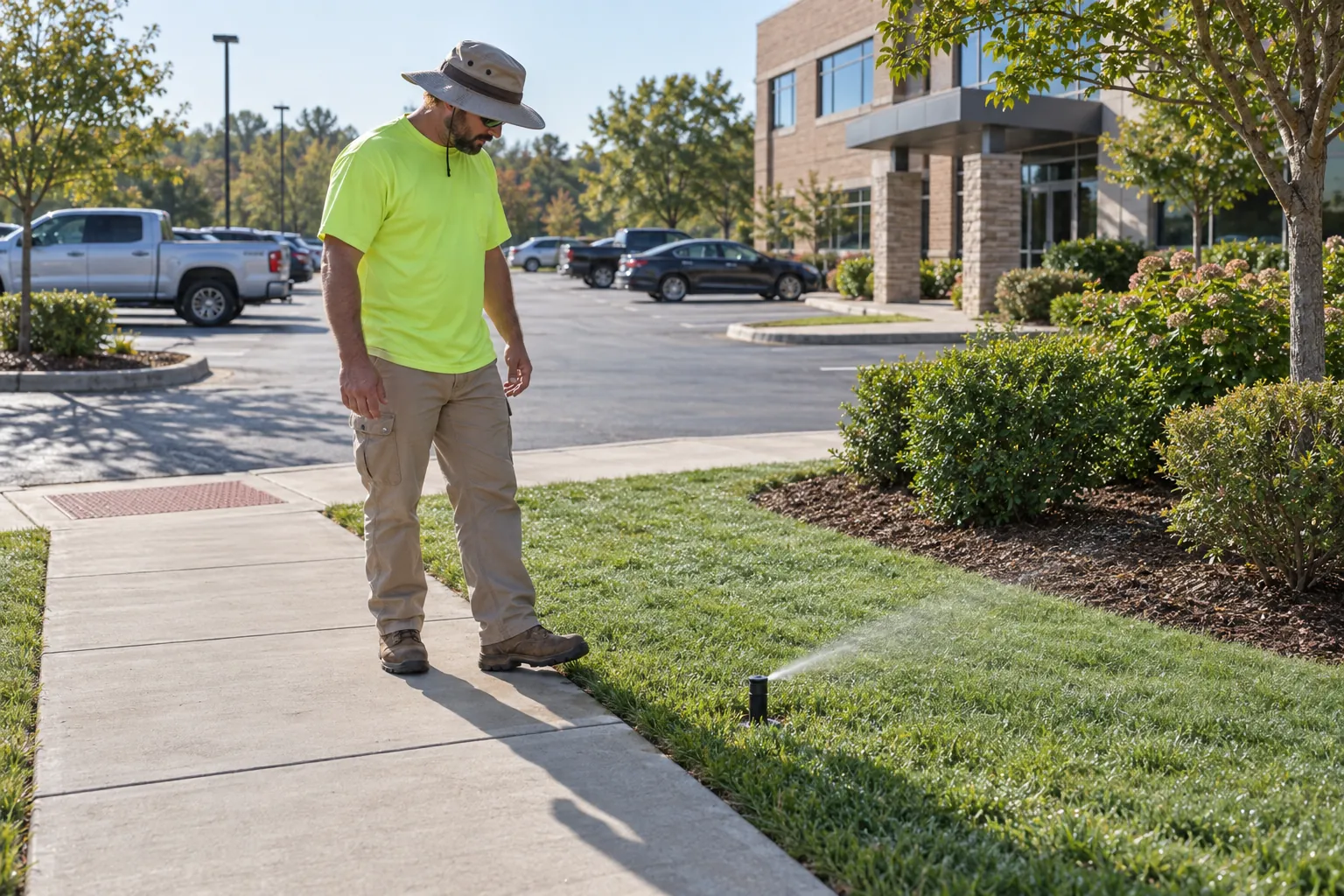
The grounds are the first part of a property anyone sees and the part most often left to a crew that arrives, mows and leaves. A good grounds maintenance checklist covers more than the lawn: the walkways people trip on, the sprinkler head soaking the sidewalk, the branch over the parking lot, the curb ramp blocked by a planter. This guide covers the duties behind the checklist in the United States, what a commercial landscape maintenance checklist should include, how the tasks fall across the seasons, who does what, and what the record should show.
01
The duty behind a grounds maintenance checklist
No federal rule says how often to mow or prune. The duties that matter concern the people on the grounds.
For employees, the starting point is OSHA's general industry rule on walking-working surfaces, 29 CFR 1910.22, General requirements. It requires that "all places of employment, passageways, storerooms, service rooms, and walking-working surfaces are kept in a clean, orderly, and sanitary condition", and that walking-working surfaces are "maintained free of hazards such as sharp or protruding objects, loose boards, corrosion, leaks, spills, snow, and ice." Paragraph (d) adds the two sentences a grounds checklist exists to satisfy: surfaces must be "inspected, regularly and as necessary, and maintained in a safe condition", and hazardous conditions must be "corrected or repaired before an employee uses the walking-working surface again." A walkway from the staff parking lot, a loading area or a path to a trash enclosure is a walking-working surface for the people who use it at work. Federal OSHA covers most private employers; in a state that runs its own OSHA-approved plan, such as California, the state's rule applies instead and can be stricter, so check yours.
For visitors with disabilities, a public accommodation under Title III of the Americans with Disabilities Act has a maintenance duty too. The Department of Justice's ADA Title III Technical Assistance Manual (section III-3.7000) says that public accommodations "must maintain in working order equipment and features of facilities that are required to provide ready access to individuals with disabilities." Among its examples of what is not allowed are a vending machine that obstructs an accessible route, ornamental plants that block the approach to elevator call buttons, and storing supplies on an accessible route. Outside, that means routes, curb ramps and accessible parking kept clear of planters, overgrowth and equipment.
For everyone else, the owner's duty is set by state premises liability law, which varies by state but usually asks whether a hazard was known, or should have been, and was dealt with in reasonable time. A dated check showing a walkway found clear, or a defect reported and coned off, is the evidence that the property was looked after.
Two more sets of rules reach the grounds. For pesticides and herbicides, the EPA's Introduction to Pesticide Labels says "the label is the law": "It is a violation of Federal law to use this product in a manner inconsistent with its labeling." For a public playground, the reference is the U.S. Consumer Product Safety Commission's Public Playground Safety Handbook.
02
What a commercial landscape maintenance checklist covers
A contractor's landscape maintenance checklist tends to list horticultural tasks. The facility manager's should also cover what the grounds do for the people using them. By area:
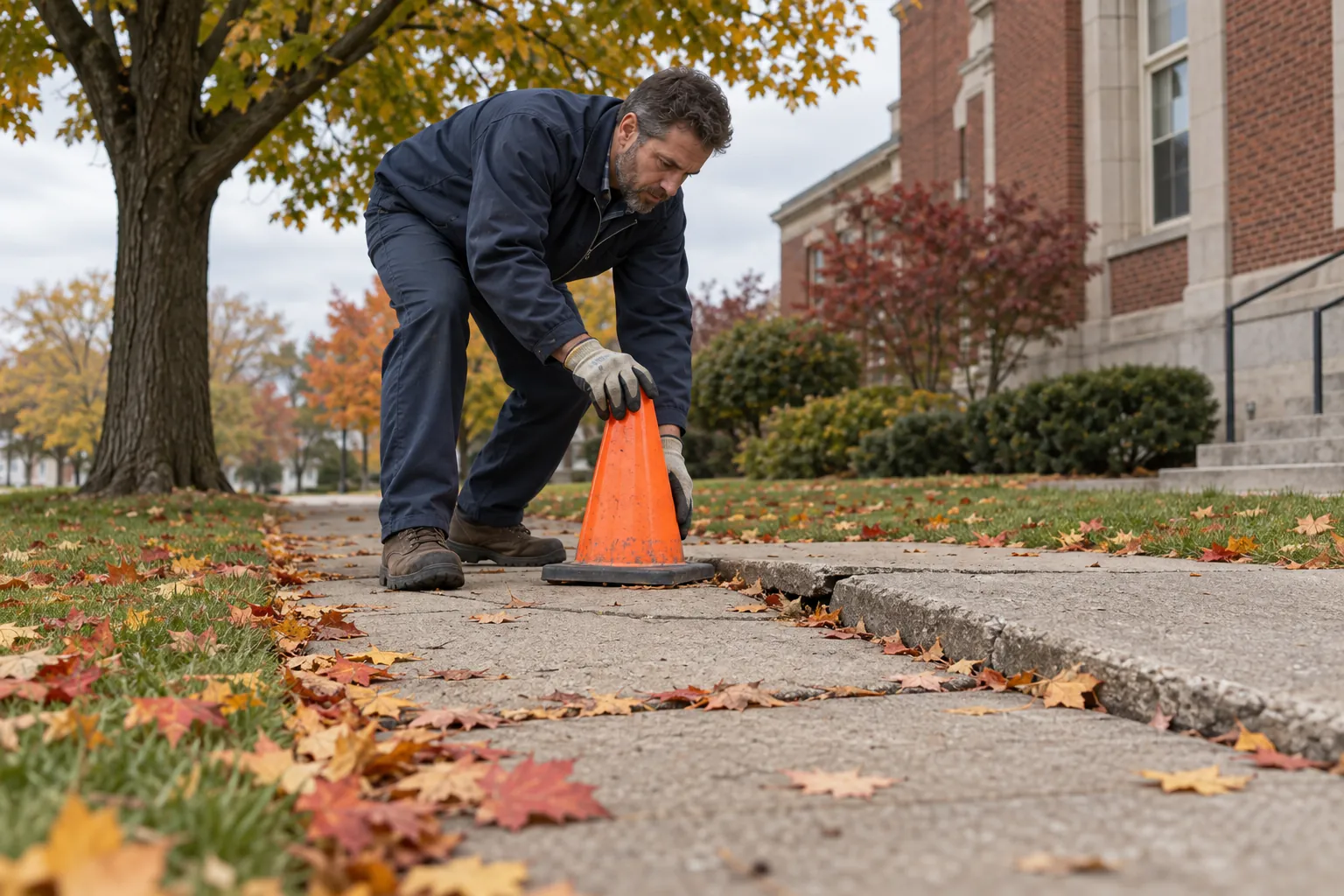
- Walkways, steps and hardscape: raised or cracked sidewalk panels, loose pavers, trip edges where mulch or soil has washed away, handrails on exterior steps secure, moss or algae on shaded paving, and no hoses, cords or equipment left across a route.
- Accessible routes and parking: curb ramps, accessible spaces and access aisles clear; nothing growing into or parked on the route to the entrance.
- Turf: grass mown at the proper height and frequency, edging along walks and curbs, bare or worn patches, weeds, and clippings blown off hard surfaces rather than into storm drains.
- Beds, shrubs and groundcover: weeding, mulch depth and edges, pruning shrubs back from walks, windows, signs and light fixtures, and sight lines at driveway exits and building entrances.
- Trees: dead, broken or hanging branches, especially over walkways, parking and play areas; low limbs over sidewalks and drive lanes; lean, root heave and storm damage; branches near power lines, which are for a qualified line-clearance crew, not the grounds team.
- Irrigation: broken or misaligned heads, overspray onto walks and buildings, leaks and wet spots, soil moisture in each zone, controller schedules and rain sensors, and the backflow preventer, which in most jurisdictions needs a periodic test by a certified tester.
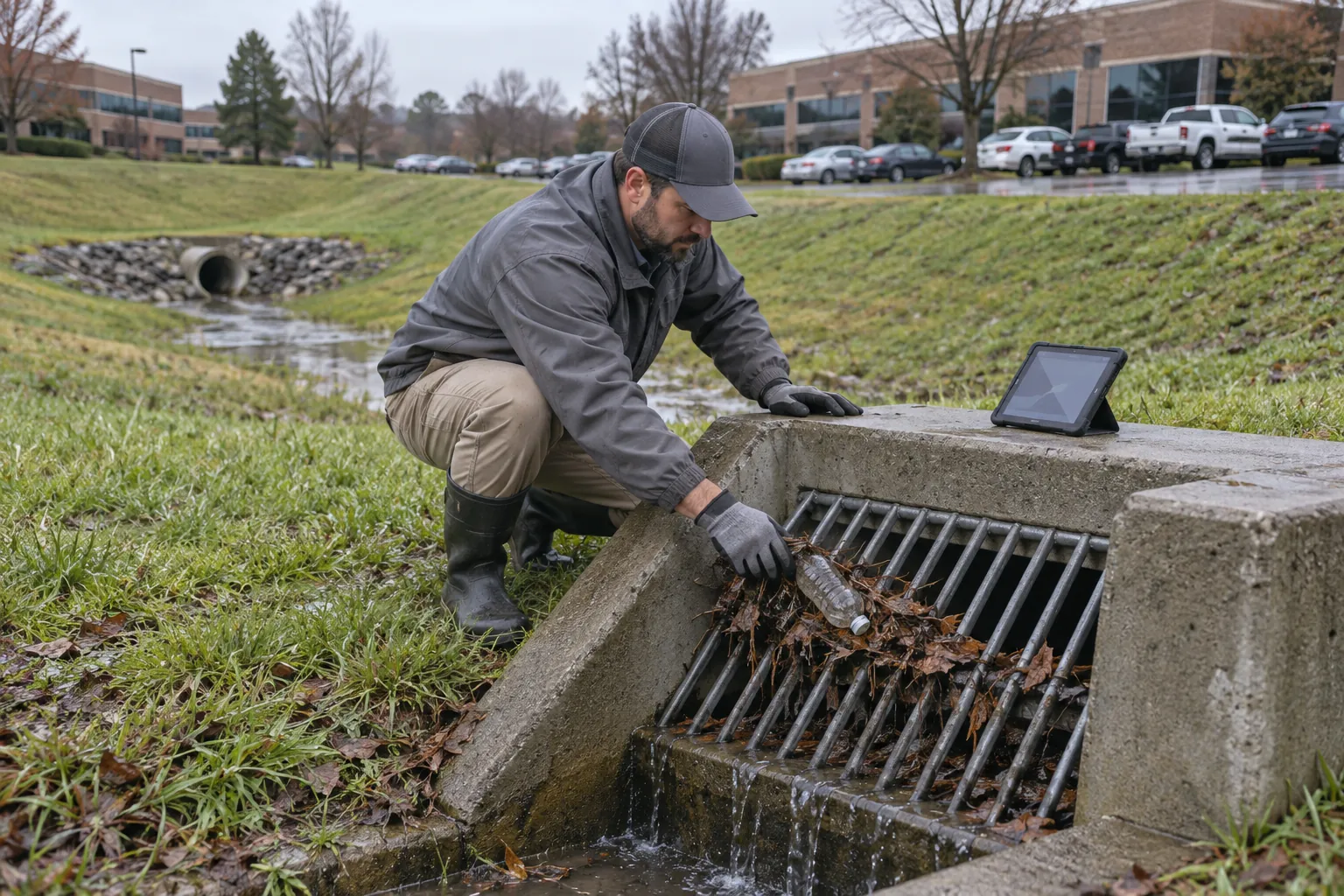
- Drainage and stormwater: gutters, downspouts and splash blocks discharging away from the building, catch basins and inlets clear of leaves and litter, and any stormwater controls your permit or maintenance agreement names (see the stormwater inspection guide).
- Litter and trash areas: litter picked from beds, lawns and fence lines, trash receptacles emptied, and dumpster enclosures closed and clean.
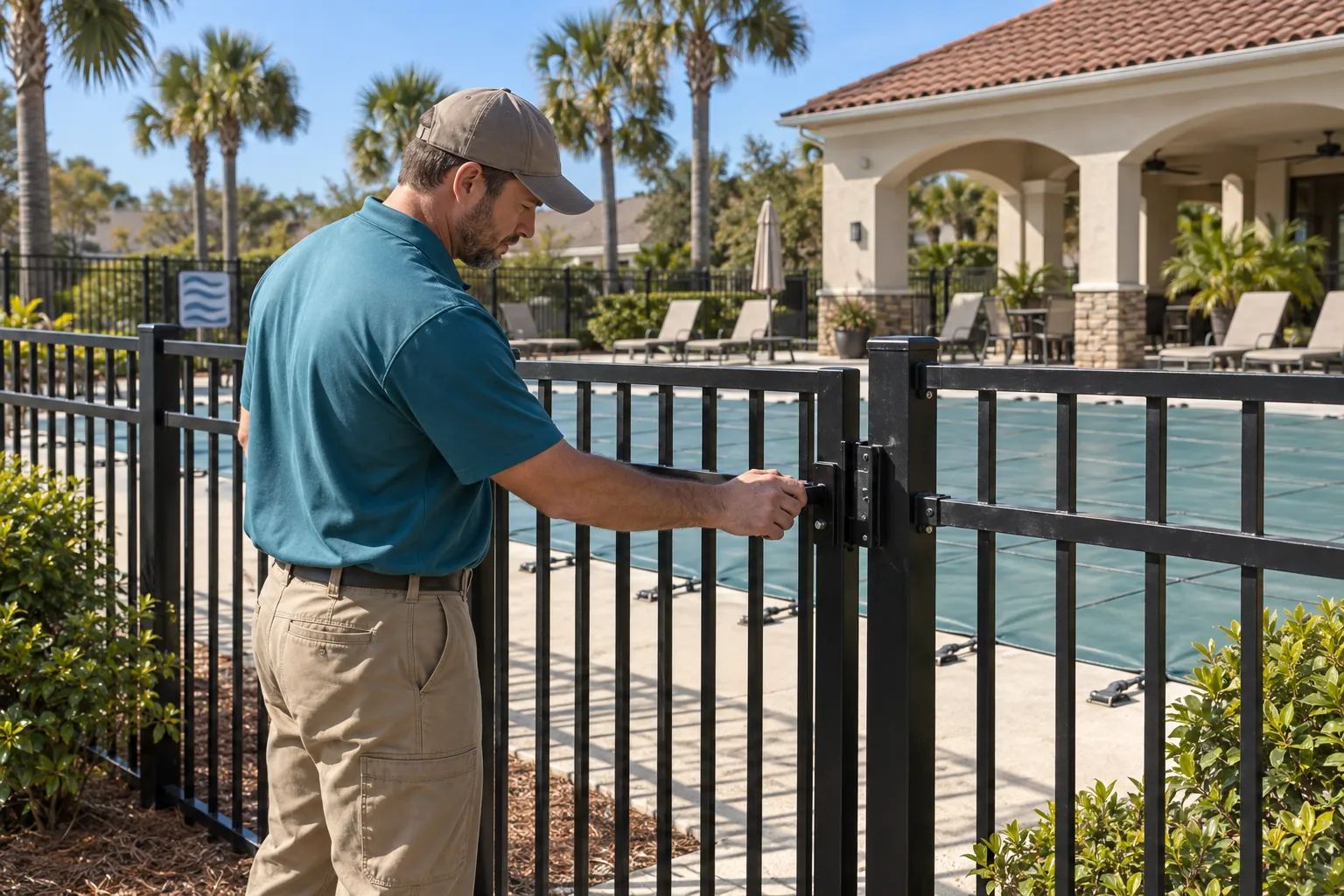
- Furnishings, lighting and signs: benches, bike racks, fences and gates sound; exterior lights working and not hidden by trees; parking and fire lane signs not obscured by planting.
- Play areas, where there are any: surfacing, equipment and hazards, as in the playground inspection checklist.
- Snow and ice, in climates that get them: walks and entrances cleared and treated, and the snow removal log kept.
Add what is particular to the property, such as a retention pond or a school's athletic fields, and take out what it does not have: lines that never apply train people to check boxes without looking.
03
How often: daily, weekly, monthly and by season
Frequency depends on climate, use and what the landscape contract pays for. Arizona or Florida has a year-round growing season; Minnesota spends months on snow. Adjusted for that, the pattern is:
Daily or every service day. A walk of the entrances, main walkways and parking lot for litter, spills, trip hazards, fallen branches and anything left overnight, often the day porter's or custodian's first round.
Weekly, in the growing season. Mowing, trimming and edging; clippings blown off hard surfaces; litter in beds and fence lines; irrigation wet spots; walks, ramps and signs not overgrown.
Monthly. Bed maintenance, weeding and pruning, each irrigation zone run and each head seen working, the tree canopy walked for dead or broken limbs, drains checked, and exterior lighting checked after dark.
Seasonally.
- Spring: clear winter debris; repair plow and salt damage; start up irrigation, check for freeze damage and test the backflow preventer where required; mulch beds; take a soil test before fertilization; check walks for frost heave.
- Summer: adjust watering to heat and drought restrictions; prune growth back from walks and sight lines; schedule the crew's heavy work away from the hottest hours.
- Fall: leaves off walks, drains and parking; aeration and overseeding; blow out irrigation in freezing climates; mark curbs and hydrants before snow (see the winterization checklist).
- Winter: snow and ice control where it applies; a walk after each storm; in warm climates, dormant-season pruning.
Two things do not follow the calendar. A storm calls for a walk of trees, drainage and walkways before the property opens again, and a reported hazard calls for a check when it is reported, not at the next visit. The CPSC's advice for playgrounds holds generally: set a schedule "based on actual or anticipated" use, because "frequently used playgrounds will require more frequent inspections and maintenance."
04
Who does what: in-house staff, the landscape contractor and specialists
On most commercial properties the grounds are split three ways, and the checklist should say who owns each line.
The facility manager or property manager owns the checklist, the contract and the record, walks the property at intervals and follows up on what is reported.
In-house staff, a maintenance technician, custodians or a day porter, carry the daily walk, litter, trash areas and the first response to a hazard: cone it off, clear it, report it.
The landscape contractor does the scheduled work. The scope of work should say what each visit includes, the number of visits by month, what is extra (seasonal color, mulch, irrigation repairs, tree work), and what the crew must report when they see it, such as a broken sprinkler head or a raised sidewalk panel.
Specialists do what needs a license or a qualification: a certified backflow tester, a tree care company for large pruning and removals, a line-clearance crew near power lines, and a licensed applicator for restricted pesticides. The EPA explains that restricted use pesticides "may be bought and applied only by a certified applicator or someone working under his or her direct supervision", and that state pesticide regulatory agencies issue the certifications. Many states also license commercial application of general use products on property you do not own, so ask your contractor which license covers the work and check the rules with your state's pesticide agency.
The work carries real hazards for the crew, which the checklist does not manage but the facility manager should know. OSHA's landscaping hazards and solutions page lists cuts and amputations, electrocution near power lines, heat and cold stress, lifting, pesticides and noise. Among its solutions: "call for utility locates" before trenching, and "comply with the 10-foot power line clearance rule" for tree work. The Common Ground Alliance's 811 Before You Dig program says to contact 811 "a few business days before you begin any digging, including common projects like planting trees and shrubs or installing fences and mailboxes." OSHA's heat exposure page names landscaping among the outdoor sectors at risk and "encourages water, rest, and shade"; several states have their own rules (see heat illness prevention).
05
What good evidence looks like, and how the checklist is checked
A grounds record shows that the scheduled work was done, which the invoice is paid against, and that hazards were found and dealt with, which is what matters after someone falls.
For each check, a useful record shows:
- Where: the area, such as the east parking lot, the main entrance walk or the courtyard, not "grounds".
- When: the date and time the check was actually done, not the week it covers.
- Who: the person who walked it, by name, and the company if a contractor.
- What was found: "no issues", or the defect, with a photo showing where it is.
- What was done: fixed on the spot, coned off, or reported to whom, with a work order or job reference.
- When it was closed: the date the defect was put right, and by whom.
The CPSC Handbook's Recordkeeping section puts the principle simply for playgrounds, and it transfers to the rest of the grounds: "Records of all maintenance inspections and repairs should be retained, including the manufacturer's maintenance instructions and any checklists used. When any inspection is performed, the person performing it should sign and date the form used." It adds that a record of any accident and injury reported there should also be kept, because it "will help identify potential hazards or dangerous design features that should be corrected."
Irrigation needs its own lines: zones checked, heads replaced, leaks repaired. A head spraying a walkway is a slip hazard as well as waste. The EPA's WaterSense program describes weather-based irrigation controllers that "use local weather and landscape conditions to tailor watering schedules", but a controller cannot see a broken head; someone still has to look.
For pesticide applications, keep what the applicator gives you: product, place, date and license. Your state pesticide agency sets what the applicator must record.
Then check the checklist. Walk the grounds with the record in hand at least monthly and after any complaint: is the sprinkler head that was "fixed" working, is the raised panel still coned off? Look for the same defect reported three times, an area never mentioned, a crew that never reports anything.
06
Where the grounds record fails, and what SiteClara does about it
The landscape invoice says the visit happened, rarely what the crew saw. The daily walk goes unrecorded, or the sheet is initialed for the week on Friday. A tenant emails about a hanging branch and the email sits in an inbox. When someone trips on a raised slab by the side door, nobody can say when that walk was last checked, by whom, or whether the slab had already been reported.
SiteClara records those routine checks where they happen. A printed QR poster goes at each area to be checked, such as the main entrance, a parking lot, the courtyard, the trash enclosure or the playground gate, with an NFC tag behind it if staff would rather tap. The custodian, the day porter, the maintenance technician or the landscape crew scan the code or tap the tag on their own phone, with no app to install, see the checks due there, and mark each one done or say what stopped them, for example a lot closed for sealcoating. A problem is reported on the spot with a photo and goes onto the team's list of jobs until someone closes it, so the broken sprinkler head or the hanging limb has a date, a place, a photo and a name from the moment it is seen.
The supervisor or facility manager sees what was due, done and missed, and can record why a check was missed. Each day the supervisor reviews and approves a report that goes to nominated contacts, such as the property manager or the owner's representative, at 8 a.m. the next morning, showing how the scheduled checks went, for example 11 of 12 completed, and what was reported.
07
Questions people ask
What is included in landscaping maintenance?
Routine landscaping maintenance covers mowing, trimming and edging, watering, fertilization, weeding, mulching, pruning shrubs and trees, and seasonal cleanup, and on a commercial property also the walkways, irrigation, drainage and litter around the plants. The University of Maryland Extension's Maintaining an Established Lawn gives the lawn basics: "Remove no more than one-third of the grass blade each time you mow"; grass in active growth "does best with about 1 inch of water per week, either from rain or irrigation"; and "Do not guess what nutrients the lawn needs: measure them with a laboratory soil test." Timing depends on the grass: cool-season lawns "are best fertilized late summer into autumn" and warm-season lawns "are fertilized late spring into summer", so ask your state's cooperative extension service for the calendar that fits your region.
What should be included in a landscaping safety checklist?
OSHA's Landscape and Horticultural Services Hazards and Solutions page names the hazards a crew's safety checklist should cover: cuts and amputations, electrical, ergonomics, heat and cold stress, lifting and awkward postures, motor vehicles, noise, pesticides and chemicals, and slips, trips and falls. Its solutions include "Ensure equipment safeguards are in place and functional", "Wear ear protection when using power equipment", "Call for utility locates" before digging, and "Comply with the 10-foot power line clearance rule (10 feet + 4 inches for every 10kV over 50 kV)."
How do I create a maintenance checklist?
Start from the manufacturer's or installer's instructions where there are any, set the frequency by how heavily each area is used, and have people who know the property work through it in the same order each time. The CPSC's Public Playground Safety Handbook sets out that approach for play areas, and it works for the rest of the grounds: where no manufacturer schedule exists, "a maintenance schedule should be developed based on actual or anticipated playground use", inspections "should be carried out in a systematic manner by personnel familiar with the playground", and its Appendix A gives a suggested general maintenance checklist to adapt. It also warns that "Inspections alone do not constitute a comprehensive maintenance program. Any problems found during the inspection should be noted and fixed as soon as possible."
08
Where to read the official guidance, and a checklist to take away
The primary sources behind a grounds maintenance program:
- OSHA 29 CFR 1910.22, General requirements for walking-working surfaces, or your state plan's equivalent.
- OSHA, Landscape and Horticultural Services, with its hazards and solutions pages.
- ADA Title III Technical Assistance Manual, section III-3.7000 on maintaining accessible features.
- EPA, Introduction to Pesticide Labels, and your state pesticide regulatory agency for applicator licensing and records.
- CPSC Public Playground Safety Handbook, for any play area on the property.
- Your landscape contract and scope of work, your stormwater permit or maintenance agreement if you have one, and your insurer's loss control recommendations.
A grounds maintenance checklist to take away:
- Map the grounds into named areas, each with who checks it and how often.
- Walk entrances, walkways and parking every service day.
- Keep accessible routes, curb ramps and accessible parking clear.
- Write the landscape scope by visit, with a duty to report hazards.
- Check irrigation monthly in season and test the backflow preventer where required.
- Walk the tree canopy monthly and after every storm.
- Contact 811 before any digging.
- Record each check and each defect with where, when, who, a photo and the date closed.
- Walk the grounds with the record in hand at least monthly.
Sources
Every document this guide quotes or links to, in the order it first cites them.
- 29 CFR 1910.22, General requirements osha.gov
- ADA Title III Technical Assistance Manual ada.gov
- Introduction to Pesticide Labels epa.gov
- Public Playground Safety Handbook cpsc.gov
- State pesticide regulatory agencies issue the certifications epa.gov
- Landscaping hazards and solutions page osha.gov
- 811 Before You Dig 811beforeyoudig.com
- Heat exposure page osha.gov
- Weather-based irrigation controllers epa.gov
- Maintaining an Established Lawn extension.umd.edu
- OSHA, Landscape and Horticultural Services osha.gov
Related guides
 Premises and facilities managementParking lot inspection checklist: what to check, how often, and what to recordA parking lot inspection checklist for commercial property: pavement, striping, ADA spaces, lighting and drainage, how often to check, and a record that holds up.
 Premises and facilities managementPlayground inspection checklist: keeping public play equipment safe between the big inspectionsA playground inspection checklist for US schools, parks, child care centers and HOAs: the CPSC Handbook, ASTM F1487, surfacing, hazards, frequency and records.
 Premises and facilities managementStormwater inspection: what the permits and your city expect, and how to keep the recordWhich stormwater inspections a US property needs: industrial permit checks, construction site inspections and post-construction BMP maintenance, and the records.
 Premises and facilities managementHOA maintenance checklist: what the association maintains, how often to check it, and what to recordAn HOA maintenance checklist for community associations: who maintains what, what to walk and how often, state-required inspections, and the record to keep.