Cleaning
Locker room cleaning: a schedule that holds up, and a record that shows it
Locker room cleaning is the regular cleaning and then disinfecting of a locker room's benches, lockers, showers, restrooms and shared equipment, timed to how the room is used, so that its warm, wet environment does not spread bacteria, fungi and skin infections such as MRSA.
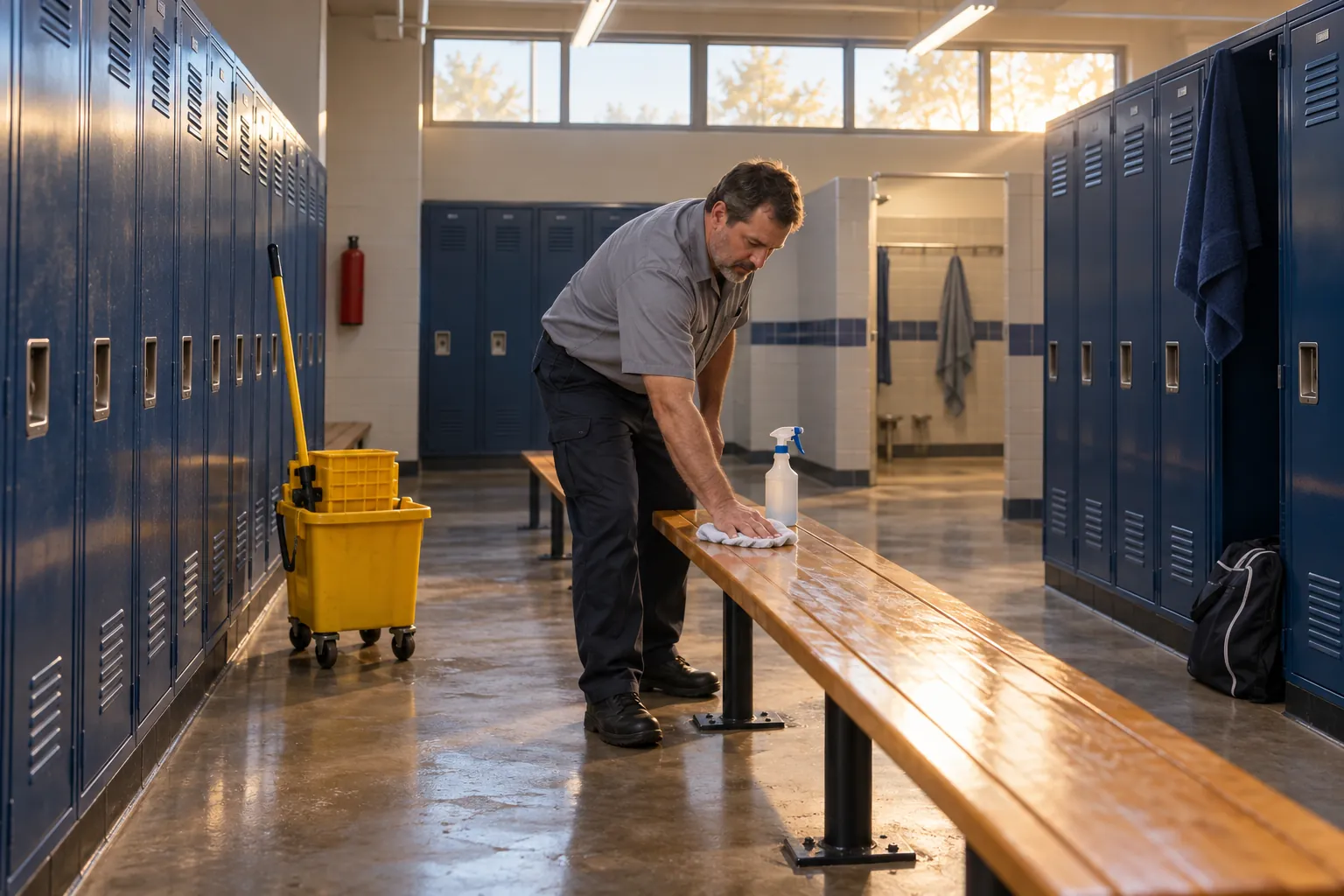
A locker room is shared and walked barefoot, and it is used hardest at the hours when the custodial crew is thinnest. Keeping one clean is less about stronger chemicals than about timing: the right surfaces, cleaned and disinfected at the right moments, by people who know whose job each part is. This guide covers the federal rules and CDC guidance behind locker room cleaning in schools, colleges, fitness centers and workplaces, a schedule by frequency, how to handle MRSA and other skin infections, and what a record worth trusting looks like.
01
The rules behind locker room cleaning
No federal regulation is written for locker rooms as such. What applies depends on who uses the room and who cleans it, and it comes from several places at once.
For employers, the starting point is OSHA's sanitation standard, 29 CFR 1910.141, Sanitation. It says that "all places of employment shall be kept clean to the extent that the nature of the work allows", that "washing facilities shall be maintained in a sanitary condition", and, where a particular standard requires showers, that "employees who use showers shall be provided with individual clean towels." Where employees must wear protective clothing because of possible contamination with toxic materials, the same section requires change rooms with separate storage for street clothes and for the protective clothing. The walking-working surfaces standard, 29 CFR 1910.22, adds that the floor of each workroom is to be kept "in a clean and, to the extent feasible, in a dry condition", and that surfaces are kept free of hazards including "leaks, spills". A shower floor is where that duty is tested every day.
The people cleaning the room are covered too. Custodians handle concentrated disinfectants, so the Hazard Communication standard, 29 CFR 1910.1200 requires training on the hazardous chemicals in their work area and safety data sheets "readily accessible during each work shift". Where cleaning up blood is part of someone's job, the Bloodborne Pathogens standard, 29 CFR 1910.1030 applies to that occupational exposure, and it requires the employer to "determine and implement an appropriate written schedule for cleaning and method of decontamination".
Check the state before relying on federal OSHA. According to OSHA's State Plans page, 22 State Plans cover both private sector and state and local government workers, and seven cover only state and local government workers. A public school district's custodians in a state without a plan are outside OSHA altogether, and in a state plan state the state's own rules apply, which may go further.
For the people changing in the room, the most useful guidance is the CDC's. Its page for athletic facilities, MRSA prevention and control tells athletic directors and coaches to "always keep athletic facilities and shared equipment clean whether or not MRSA infections have occurred", and to "clean shared equipment after each use and allow to dry before use." Pools, spas and hot tubs next to a locker room are usually regulated by the state or county health department, and their codes set their own cleaning and inspection duties.
02
What locker room cleaning covers
A locker room is several rooms in one, each with its own soil and its own risk. A cleaning plan that treats it as one space usually gets the lockers right and the shower drains wrong. List the areas separately:
- The changing area: benches, locker fronts and handles, locker interiors when they are emptied, hooks, mirrors, hair dryers, scales and the floor under the benches, where towels, tape and hair collect.
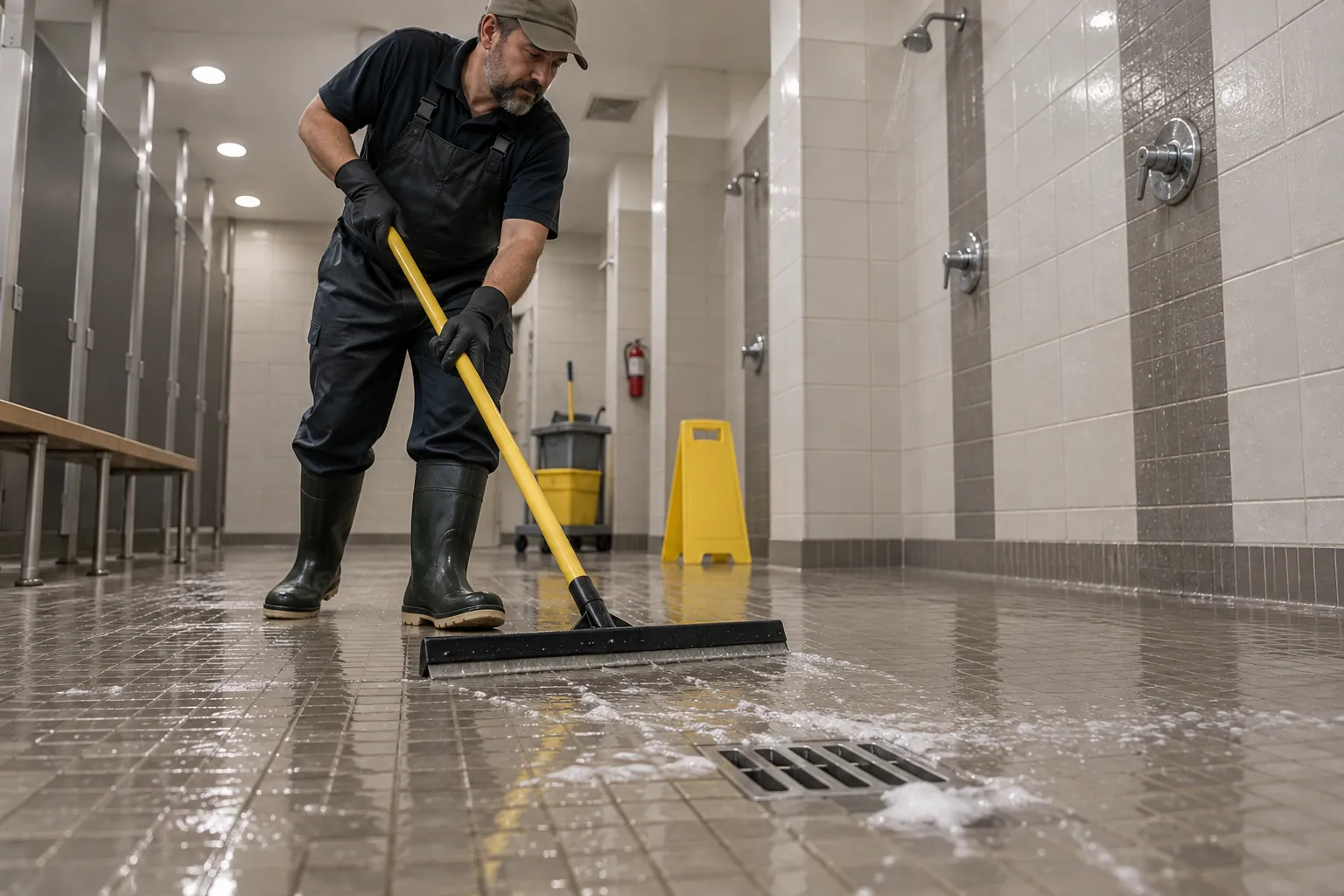
- Showers: walls, floors, grout and caulk, shower heads and valves, soap and shampoo dispensers, curtains or partitions, and the floor drains.
- Restrooms and sinks: toilets, urinals, partitions, sinks, faucets, paper towel and soap dispensers, and trash. The public restroom cleaning guide covers these in detail.
- High-touch points: door push plates and handles, light switches, locker combination dials and keypads, dispenser levers and water fountains.
- Towel and laundry points: clean towel shelves, soiled towel bins and carts, and anywhere uniforms are left to dry.
- Wet adjoining rooms: saunas, steam rooms, whirlpools and cold tubs in an athletic training room, and the path to the pool deck.
- Shared equipment kept in the room: foam rollers, stretching mats, training tables and the wrestling or exercise mats some schools store and use next door.
- The things that decide whether cleaning lasts: exhaust fans, floor drains that run freely, dispensers that are full, and lighting good enough to see what is clean.
Two of those lines are not cleaning at all. A shower that drains slowly or an exhaust fan that has stopped will undo the best custodial work, and the job for the custodian is to report it as a work order, not to mop the same pool of water every hour.
03
The locker room cleaning schedule, by frequency
Set frequencies by use, not by the calendar. A high school locker room used by four teams after classes needs a very different day from an office shower used by a few cyclists. The pattern of regular cleaning that works in most buildings is this.
During use, at peak times such as after practices, after early morning classes or between shifts:
- squeegee standing water toward the drains and pick up hair and tape;
- check and refill soap, paper towels and toilet paper;
- empty trash and soiled towel bins before they overflow;
- put out a wet floor sign while the floor is wet, and take it in when it is dry and safe to walk on;
- spot clean anything visibly soiled, and deal with blood at once under your bloodborne pathogens procedure (see the blood spill cleanup guide).
Daily, once the room is closed or quiet:
- clean and then disinfect benches, locker handles, dials and the outside of lockers, door hardware, light switches and dispenser levers;
- clean and disinfect toilets, urinals, sinks and faucets;
- clean shower walls and floors, remove hair from drains, and wipe down valves and dispensers;
- sweep and then wet mop or auto-scrub the changing area floor with a product suited to the floor finish;
- clean and disinfect shared equipment kept in the room, and leave it to dry before it is used again;
- check exhaust fans are running and drains are draining, and raise a work order when they are not.
Weekly: scrub grout and shower floors with a deck brush or machine to lift the soap and body oil film that builds up and makes slip-resistant tile slippery; clean mirrors, partitions and the tops of lockers; descale shower heads and faucets where the water is hard; clean the drain covers and flush the traps; and check for mold on grout, caulk and ceilings.
Periodically, often at the end of each sports season or school term: empty and clean every locker interior, strip and refinish floors where the finish allows, regrout or recaulk failing joints, and clean vents and fan grilles. Give seasonal deep cleans a date, or they drift.
04
Disinfecting for MRSA and other skin infections
Methicillin-resistant Staphylococcus aureus (MRSA) is the infection most coaches and parents ask about. The CDC says in its guidance on preventing MRSA that it can survive on some surfaces, like towels, razors and furniture, "for hours, days or even weeks", and it names surfaces that touch people's bare skin, including benches, gym equipment and lockers, among those to clean. That is most of a locker room.
The CDC's advice to facility operators comes down to a few points that are easy to agree and hard to keep up:
- Clean before you disinfect. The CDC's page When and How to Clean and Disinfect a Facility explains that dirt may make it harder for disinfecting chemicals to kill germs. A disinfectant sprayed over soap film and body oil does less than the label promises.
- Use a product registered for the job. The EPA's List H, registered antimicrobial products effective against MRSA and VRE, lets you check a product by the EPA registration number on its label ("EPA Reg. No.") and confirm it carries directions for MRSA.
- Keep the surface wet for the contact time. The EPA's List H page defines contact time as the time the product must be applied to the surface for it to be effective, and notes that different organisms on the same label may need different times. A quick spray and wipe on a bench usually falls short of it.
- Target the surfaces, rather than fogging the room. The CDC's MRSA prevention page says there is "little evidence that spraying or fogging rooms or surfaces with disinfectants will prevent MRSA infections better than a targeted approach of cleaning surfaces."
- Protect the custodian. The CDC's athletic facilities page tells staff to wear gloves and eye protection, to follow the instruction labels on all cleaners and disinfectants, and never to put cleaners and disinfectants onto skin or wounds.
When an athlete or member has a MRSA infection, the reflex is a special deep clean or even closing the facility. The CDC's page for schools and daycares says that generally you do not need to close schools to disinfect them when MRSA infections occur, and that routine cleaning practices are enough in most cases. The better response is to confirm the routine is actually being done, and to follow any specific direction from your local health department.
Much of the protection is personal hygiene, and it sits with the people using the room, not the custodial crew. The CDC's page for athletes tells them to shower immediately after exercise, not to share bar soap or towels, to use a barrier such as clothing or a towel between their skin and shared weight-training equipment, to wash and completely dry uniforms and towels after each use, and to report any suspected skin infection to a coach, athletic trainer or healthcare provider. Soap in the showers and at the sinks, full dispensers and a working dryer in the laundry are the facility's part in making that possible.
05
Who does what, and how the work is checked
Locker rooms go wrong at the handover between people: the custodian assumes the coach wipes down the mats, and the coach assumes the evening crew does. Write it down, by area and by time:
- Custodians or the janitorial contractor: the daily, weekly and periodic schedule, restocking, and reporting drains, fans, leaks and broken fixtures.
- Coaches, instructors or fitness floor staff: shared equipment after each use during their sessions, keeping the room in order, and reporting anything spilled or broken straight away.
- Athletic trainers: training tables, whirlpools and therapy tubs, wound care supplies, and deciding with the team physician when an athlete should sit out or stay out of the water.
- Laundry staff or the equipment manager: towels and uniforms, kept separate between clean and soiled.
- The facility manager or building engineer: ventilation, drainage, hot water, fixtures and the repairs that keep cleaning effective.
Checking should be done at the times the room is used, not only first thing in the morning when it looks its best. A supervisor walking the room at 4:30 p.m. on a game day sees what the members see. Useful checks look at:
- whether the scheduled rounds happened at the times in the plan, and who did them;
- whether floors are dry and drains clear during peak use;
- whether dispensers are full, and how often they ran out;
- the state of grout, caulk and ceilings, and whether mold is coming back;
- whether the disinfectant in use is the one on the plan, diluted as the label says, and whether staff know its contact time;
- whether faults reported last week have been fixed, or only reported again.
Odors are a useful check. A musty smell in the morning usually points to damp from poor ventilation, a slow drain or hidden mold; a room that smells of disinfectant all day can mean too much product and too little cleaning.
06
Where the locker room record fails, and what SiteClara does about it
Most locker rooms have a cleaning log taped inside the door or to the janitor's closet. It tends to fail in the same ways: a column of initials filled in at the end of the shift, or before it; a missed evening round that is simply not written down; a fault noted on the sheet that nobody responsible ever reads; and, after a skin infection on a team, nothing that shows what was cleaned, when and by whom in the weeks before. The coach's wipe-downs and the trainer's whirlpool cleans are often not recorded anywhere.
SiteClara records the checks where they happen. A printed QR poster, with an optional NFC tag behind it, goes up at each place a check is scheduled, such as the changing area, the showers and the training room. Staff scan or tap it on their own phone, with no app to install, see the checks due there, and mark each one done or say what stopped them. The time and the named person are recorded as it happens, with a photo when one is asked for, and a reported problem such as a blocked drain or a broken dispenser goes onto the team's list of jobs until someone closes it.
The supervisor sees what is due, done and missed, and records the reason a check was missed. Each day they review the checks and photos, add a note and approve a report that goes to nominated contacts, such as the athletic director or the client's facility manager, at 8 a.m. the next morning, showing what was completed, what was reported and what is still open. When someone asks what was done in the locker room last Tuesday, there is an answer that was recorded at the time.
07
Questions people ask
What are the proper cleaning procedures for locker rooms?
Clean first, then disinfect, surface by surface rather than by fogging the room. The CDC's page When and How to Clean and Disinfect a Facility says to clean surfaces before disinfecting them, because dirt may make it harder for the chemicals to kill germs, and to leave the disinfectant on long enough that the surface stays wet for the whole contact time. Its page Athletic Facilities: MRSA Prevention and Control adds that staff should focus on surfaces that touch people's bare skin each day, clean shared equipment after each use and let it dry, wear gloves and eye protection, and follow the instruction labels on all cleaners and disinfectants. The schedule above sets out how often each area needs it.
How do you remove bad odor from a locker?
Deal with the damp, not only the smell. The EPA's A Brief Guide to Mold, Moisture and Your Home says that "the key to mold control is moisture control", that water-damaged areas and items should be dried within 24 to 48 hours to prevent mold growth, and that running a fan and cleaning more often will usually stop mold from coming back; it also says a building that smells moldy may have hidden mold. In practice that means emptying the locker, cleaning and drying the inside, not leaving wet towels or uniforms in it, and reporting an exhaust fan that has stopped as a work order.
08
Further reading, and a list to take away
Start with the CDC's MRSA page for athletic facilities and the EPA's List H. OSHA's standards cited above set the employer's duties, subject to your state plan. For a pool, spa or whirlpool, start with your state or county health department's code.
Before the next season or contract year, check that:
- the locker room is split into areas, each with its own tasks and frequencies;
- rounds are timed to peak use, not only to the start of the custodial shift;
- shared equipment is cleaned after each use, and it is written down whose job that is;
- the disinfectant is EPA-registered with MRSA on its label, and staff know its contact time;
- surfaces are cleaned before they are disinfected, and nobody relies on fogging;
- whirlpools and therapy tubs have a cleaning schedule and a record;
- safety data sheets are at hand and custodians are trained on the chemicals they use;
- drains, fans and leaks go to maintenance as work orders, and someone checks they were fixed;
- missed rounds are recorded as missed, with the reason;
- the plan is reviewed after any cluster of skin infections, with your local health department's advice.
Sources
Every document this guide quotes or links to, in the order it first cites them.
- 29 CFR 1910.141, Sanitation osha.gov
- 29 CFR 1910.22 osha.gov
- Hazard Communication standard, 29 CFR 1910.1200 osha.gov
- Bloodborne Pathogens standard, 29 CFR 1910.1030 osha.gov
- State Plans osha.gov
- Athletic facilities, MRSA prevention and control cdc.gov
- Guidance on preventing MRSA cdc.gov
- When and How to Clean and Disinfect a Facility cdc.gov
- List H, registered antimicrobial products effective against MRSA and VRE epa.gov
- Schools and daycares cdc.gov
- Athletes cdc.gov
- A Brief Guide to Mold, Moisture and Your Home epa.gov
Related guides
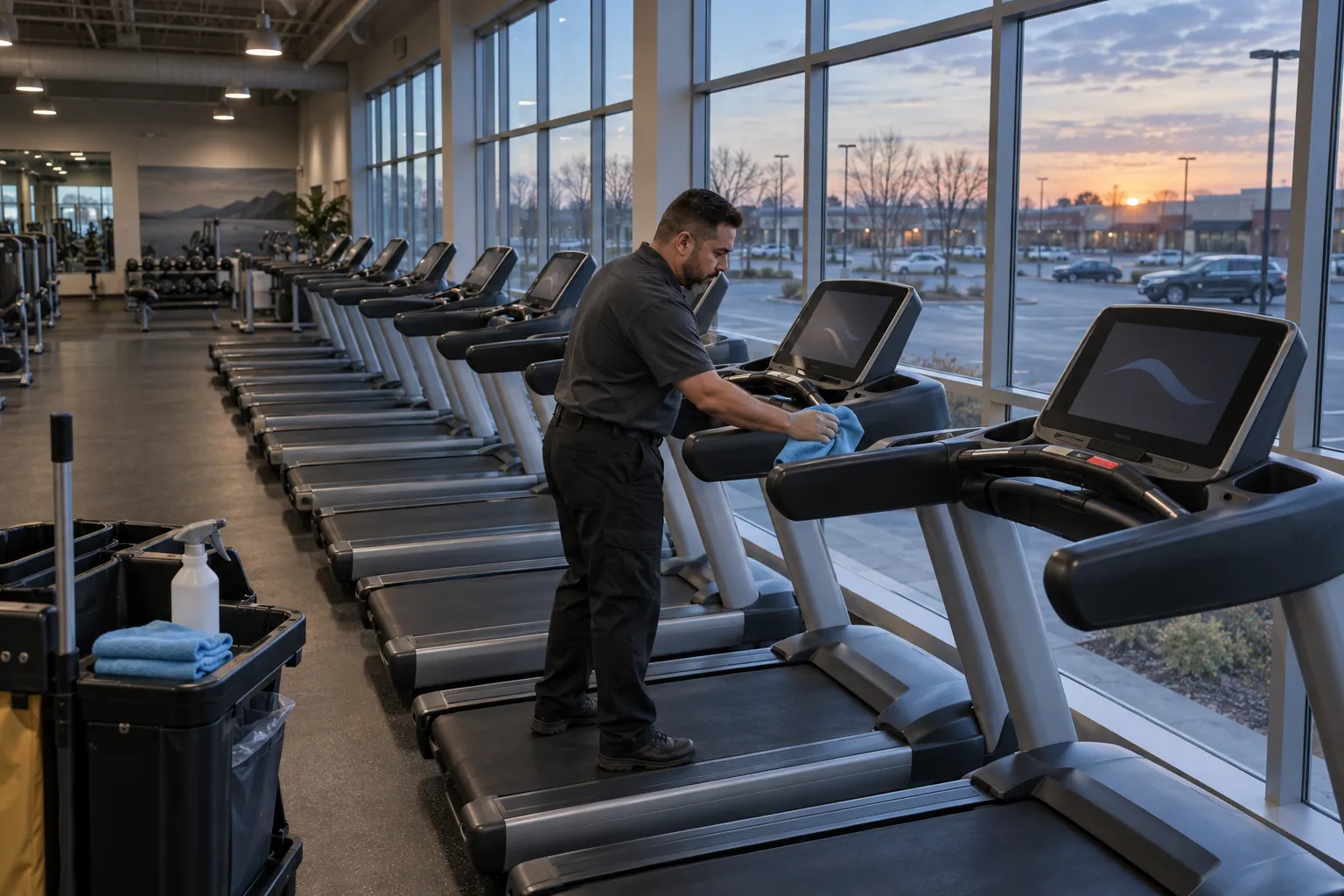 CleaningGym cleaning checklist: equipment, locker rooms and the pool deckA gym cleaning checklist for fitness centers: equipment, studios, touch points, locker rooms and the pool deck, with frequencies, the rules and who does what.
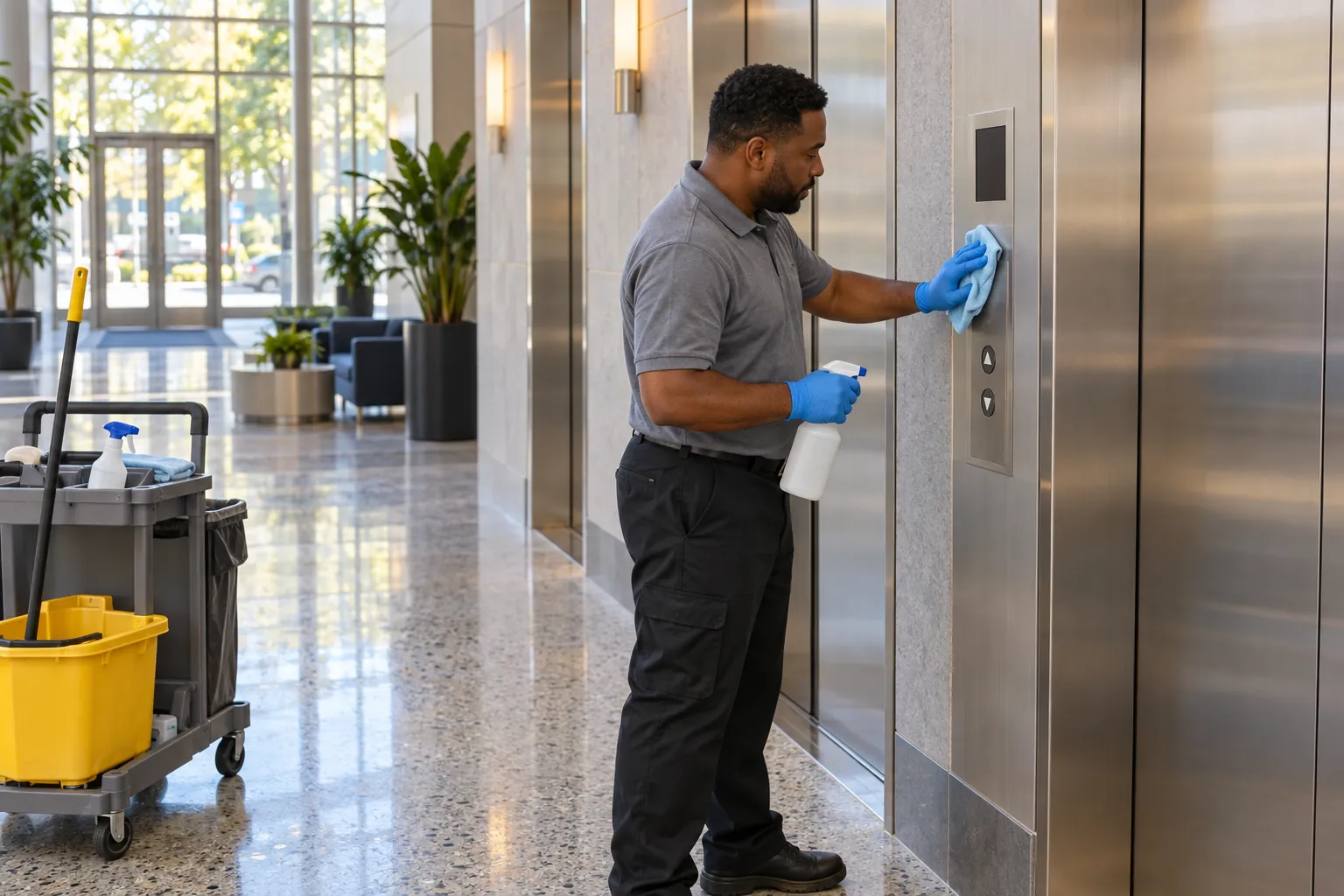 CleaningHigh-touch surfaces: a cleaning routine you can show was doneHigh-touch surfaces as the CDC describes them: which ones to list area by area, how often to clean and disinfect them, the right method, and a record that holds up.
 CleaningBlood spill cleanup: doing it safely, and showing it was doneHow to clean up a blood spill at work under OSHA's bloodborne pathogens standard: PPE, sharps, disinfectants, waste, training and the record to keep.
 CleaningSchool cleaning checklist: what custodians clean, how often, and how to show it was doneA school cleaning checklist for classrooms, restrooms, hallways, the cafeteria, gym and nurse's office: daily, weekly and summer tasks, the rules and the record.