Premises and facilities management
Snow removal log: what to record, and how to make it stand up
A snow removal log is the written record of what was done about snow and ice at a property: when the storm started and stopped, when the parking lots and sidewalks were plowed, shoveled and treated, who did it, and when someone went back to check.
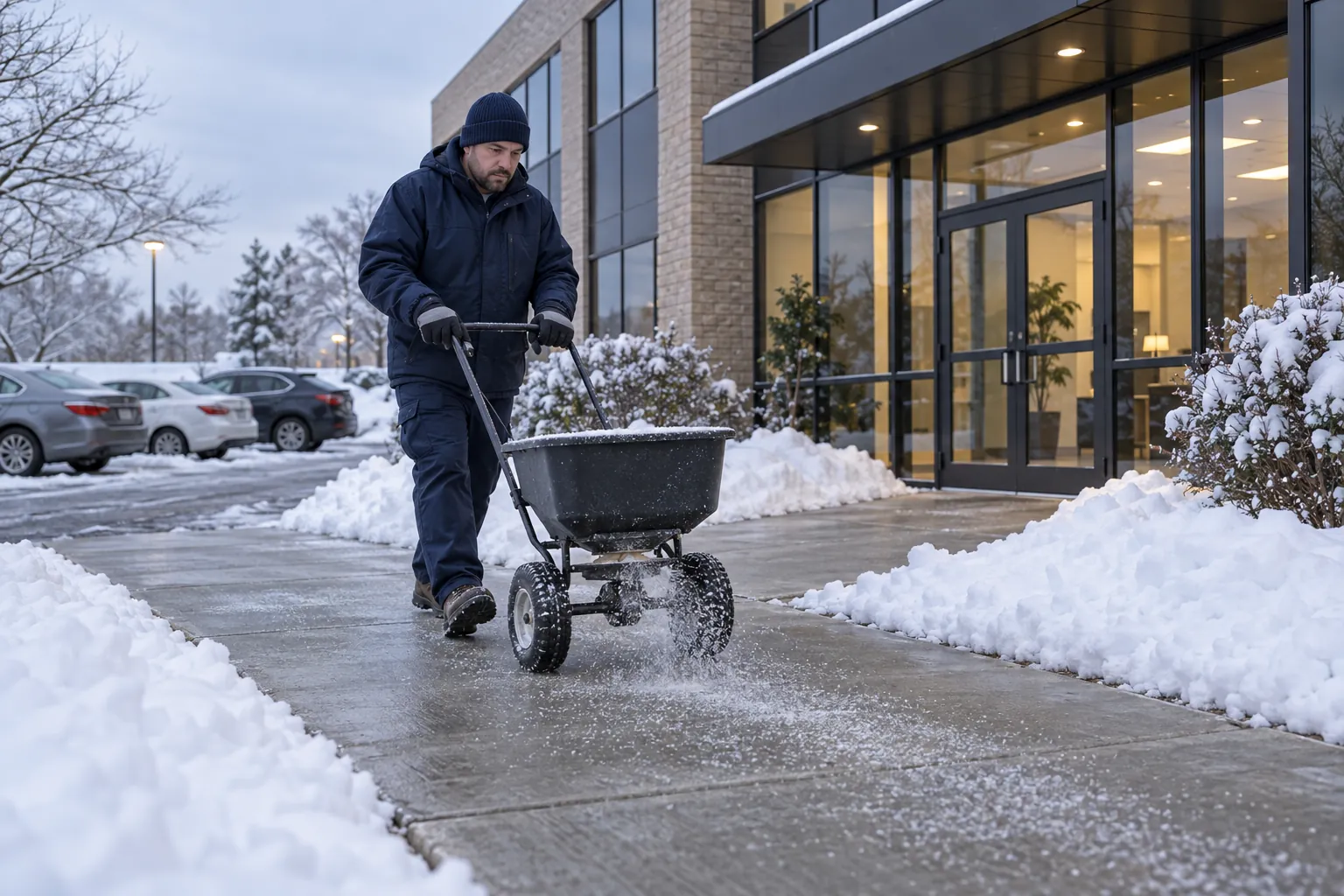
For a facility manager it is how you show the walkways were looked after. After a slip on ice it may be the first thing anyone asks for. This guide covers the rules behind it, what the log should record, how often to check, and how to make the record one you can rely on.
01
What a snow removal log is, and the duties behind it
No federal rule says "keep a snow removal log". The log exists because several duties meet at the front door of a commercial building in winter, and each is easier to show you met with a dated record.
The first is the employer's. Under the OSHA general industry standard for walking-working surfaces, 29 CFR 1910.22, "walking-working surfaces are maintained free of hazards such as sharp or protruding objects, loose boards, corrosion, leaks, spills, snow, and ice" (1910.22(a)(3)). The same section requires that surfaces are "inspected, regularly and as necessary, and maintained in a safe condition" (1910.22(d)(1)), and that "hazardous conditions on walking-working surfaces are corrected or repaired before an employee uses the surface again" (1910.22(d)(2)). Snow and ice are named in the rule itself. The standard covers private employers under federal OSHA; in a state with an approved state plan, such as Cal/OSHA or Michigan's MIOSHA, the state's own standard applies, and it must be at least as effective as the federal one.
The second is about getting out. The OSHA exit routes standard, 29 CFR 1910.37, says "exit routes must be free and unobstructed" (1910.37(a)(3)). An emergency exit door that opens onto a drift, or a discharge path buried by a plow, is an obstructed exit route. The local fire code adds its own rules for exits, fire lanes, hydrants and fire department connections, and the authority having jurisdiction (AHJ) decides how those apply to your building.
The third is access. Under the ADA Title III regulations, a public accommodation "shall maintain in operable working condition those features of facilities and equipment that are required to be readily accessible to and usable by persons with disabilities" (28 CFR 36.211), allowing only "isolated or temporary interruptions". An accessible parking space used as a snow pile for a week is not one.
The fourth is the city's. Many municipalities make the abutting owner clear the public sidewalk by a deadline. Minneapolis, for example, requires sidewalk snow clearing within 24 hours after it stops snowing for houses and duplexes, and within "4 daytime hours (8 a.m. to 5 p.m.)" for all other properties, the entire width down to bare pavement; if it is still uncleared at a follow-up inspection, city crews clear it and bill the owner. Check the municipal code for every property you manage.
The last is liability. Whether an owner, a tenant or a snow contractor is responsible for a fall on snow or ice is a matter of state law, the lease and the snow contract, and the rules differ widely from state to state. Whatever the rules, the questions after a fall tend to be the same: what was the weather, what did you know, what did you do about it, and when. A snow removal log is where those answers are written down at the time, rather than pieced together months later from memory and invoices.
02
What a snow removal log should record
A useful log is short enough to fill in with cold hands and complete enough to answer the questions above. For each event, and for each visit or check within it, record:
- The weather: when snow, sleet or freezing rain started and stopped, roughly how much fell, the temperature, and any National Weather Service watch, warning or advisory in force.
- The area: the property's address if you manage more than one, and the area named on a site map, not "the lot". Main entrance, north sidewalk, accessible spaces, loading dock, fire exit 3, the dumpster enclosure, the stairs to the lower lot.
- What was done: plowed, shoveled, snow blown, treated with deicer or sand, snow relocated or hauled off site, or checked and nothing needed.
- The material and amount: which deicer or sand, and roughly how much, by area if you can.
- The time: arrival and finish for each visit, and the time of each check, recorded as it happens.
- Who: the named person, and the business name if it is a snow removal contractor, not just "crew 2".
- The condition left: bare pavement, thin cover treated, or compacted snow sanded, and anything that could not be done, such as a car parked on a space that needed plowing.
- Problems found: a downspout draining across a sidewalk, a pothole under the snow, a broken light over the entrance, a mat that has curled, a drift against an exit door.
- Follow-up checks: when someone came back for melt and refreeze, drifting or a fresh fall, and what they found.
- Photos, where they help: the entrance after treatment, the exit door open and clear.
Indoors, the log often carries the entrance routine too: walk-off mats down, wet floor signs out, lobby floors mopped dry at set times. See slip, trip, and fall prevention for the indoor side.
03
Before the first storm: the snow plan the log follows
A log records what happened against a plan. Without the plan, nobody can say whether an entry shows good work or a missed one. Settle these before the fall is out, alongside the rest of your winterization checklist:
- A site map with priorities. Mark each area, give it a name the log will use, and rank it. Main entrances, accessible routes and parking, emergency exits and their discharge paths, fire lanes and hydrants usually come first; overflow lots last. Mark where snow may be piled and where it must never go: not on accessible spaces, curb ramps, drains, hydrants, sight lines at exits, or against a building where it will melt onto a walkway and refreeze.
- Who does what. The snow contractor plows and treats the lots and drives; custodians or the building engineer handle entrances, steps and exit doors; security may do overnight checks. Write it down, because the gap between "the contractor does the lot" and "we do the doors" is usually the sidewalk nobody treated.
- Triggers. The snow contract should say at what depth or condition the contractor comes out, how soon, how often it returns in a long storm, and what counts as finished. The site plan should say when in-house staff start.
- Checks and their frequency. How often each priority area is checked during a storm and for how long afterwards, including a check before opening every day while there is snow or ice about.
- Materials and equipment. Deicer, sand, shovels, spreaders and snow blowers in place and working, with ice melt stored near the doors that need it.
- Contacts. The contractor's dispatch number, who can call them out, and who decides to close or delay opening.
- The roof. Whether any roof may hold heavy snow or drifts, who assesses it, and how snow would be removed without putting anyone on it.
Think about salt as well as safety. Chloride from deicers ends up in lakes, streams and groundwater. The Minnesota Pollution Control Agency's Smart Salting training, aimed at private winter maintenance contractors and property managers among others, describes "a suite of techniques that minimize the environmental and economic impacts of chloride while still meeting public needs". Recording the material and the amount in the log is the first step to using less of it without making the walkways less safe.
04
During and after a storm: frequency, order of work and people
OSHA's winter weather hazards and precautions guidance tells employers to "clear walking surfaces of snow and ice, and spread deicer, as quickly as possible after a winter storm". In practice the work runs in rounds, and the log should show each one:
- Before the storm, where the plan uses it: pre-treat entrances and walkways, lay mats, put out wet floor signs.
- During the storm: keep entrances, accessible routes and exits usable at the interval the plan sets, and log each pass.
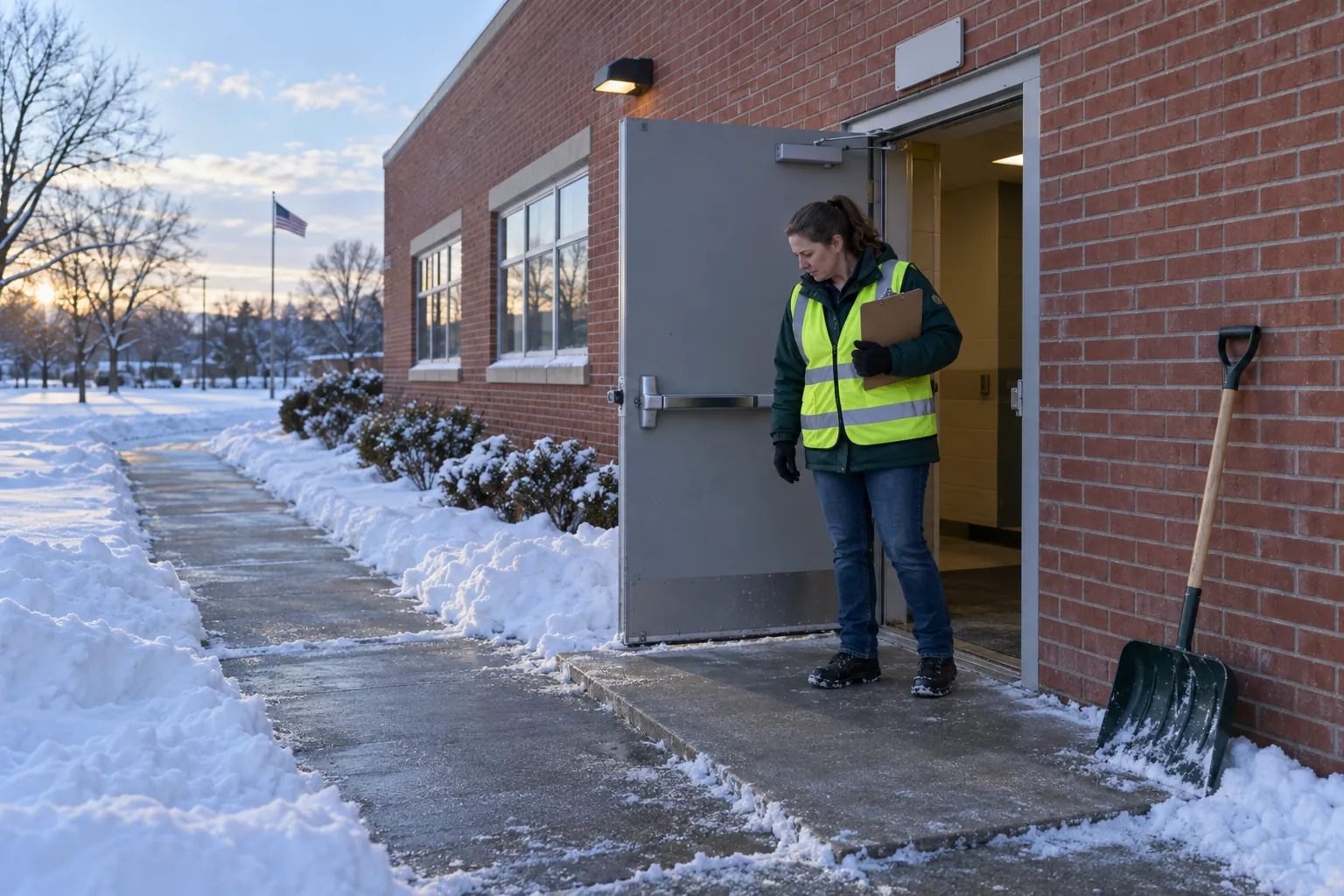
- Once it stops: plow, shovel and treat everything in priority order, relocate snow away from the places it must not go, and clear exit doors, fire lanes and hydrants.
- Before opening: a walk of every priority area by someone who records what they found, not just that they went.
- After the storm: checks for melt and refreeze, especially in the evening and early morning, below downspouts and on the shaded side of the building, and for drifting on windy days. Ice that forms two days after the storm is still ice under 1910.22(a)(3).
Clearing snow is hard, risky work. OSHA notes that "shoveling snow can be a strenuous activity, particularly because cold weather can be taxing on the body", and that "snow blowers commonly cause lacerations or amputations when operators attempt to clear jams with the equipment turned on", and says to "turn the snow blower off and wait for all moving parts to stop, and then use a long stick to clear wet snow or debris". On roofs, its winter weather page tells employers to consider ways to avoid roof work altogether, and says they must provide required fall protection and training, use ladders safely and take care near power lines. Its hazards page adds that "a surface that is weighed down by snow must be inspected by a competent person to determine if it is structurally safe for workers to access it".
OSHA's winter weather preparedness guidance also asks employers to train workers on cold stress, provide warm areas for breaks, and have "a reliable means of communicating with workers and being able to stop work or evacuate when necessary".
05
What good evidence looks like, and when someone falls
A snow removal log earns its keep the Monday after a storm, when someone asks whether the contract was delivered, and on the day a letter arrives about a fall. In both, what matters is whether the record was made at the time by the person who did the work. Good evidence has these marks:
- Entries made as the work happens, with a real time, not a block of identical times filled in at the end of the shift.
- A named person for each entry, so the right person can be asked what they saw.
- Every area on the plan accounted for, including the ones checked and found clear. A gap in the log reads as a gap in the work.
- Checks that were missed, and why: "north stairs not treated at 6 a.m., blocked by delivery truck, treated 6:40 a.m." is far better evidence than silence.
- Problems reported and closed: the downspout draining onto the sidewalk recorded, fixed or rerouted, and the date it was done.
- Photos with a time on them where they help, such as the entrance after treatment or the exit door open and clear.
- The weather beside the work, so a reader sees what the conditions demanded.
When there is a fall, record it on your workplace incident report the same day, keep the log entries for that area and date with it, photograph the spot, and never edit the log afterwards. Notify your insurer and, where involved, the snow contractor. Keep logs for as long as your insurer or counsel advises; claims can arrive long after the snow has gone.
A supervisor or facility manager should read the log, not just file it, and walk the site after a storm to compare. Where the two disagree, you have found the real problem before a claim does.
06
Where the record fails, and what SiteClara does about it
Snow logs fail in familiar ways. The clipboard stays in the custodian's closet and the entries are written up at noon from memory. The 5 a.m. and 7 a.m. checks carry the same handwriting and pen. The contractor's invoice arrives three weeks later and becomes the log by default. The far fire exit is never mentioned, so nobody can say whether it was checked. Refreeze under a downspout is mentioned to whoever was passing and written down only after someone falls.
SiteClara records the checks at the location. A printed QR poster, with an optional NFC tag behind it, sits at each place a check is scheduled, such as inside the main entrance, at the loading dock door or beside fire exit 3. Staff scan the code or tap the tag on their own phone, with no app to install, see the checks due there, and mark each one done or say what stopped them, such as a car parked across the ramp. The time and the named person are recorded as it happens, with a photo when one is asked for, for example of the treated entrance. A problem, such as ice under a downspout or a drift against a door, is reported there with a photo and goes onto the team's list of jobs until someone closes it.
The supervisor sees what is due, done and missed, and can record the reason a check was missed. A job that needs the building manager can be escalated to them to answer. Each day the supervisor reviews and approves a report that goes to nominated management or client contacts at 8 a.m. the next morning, showing what was reported, completed and still open, and how the scheduled checks went, for example 5 of 6 entrance checks completed, with the reason for the one that was not.
07
Questions people ask
Who is responsible for snow removal on roads?
Public roads are cleared by state and local agencies: the Federal Highway Administration's Snow and Ice road weather page says they "spend more than 2.3 billion dollars on snow and ice control operations annually", and that winter road maintenance is roughly 20 percent of state DOT maintenance budgets. The sidewalk beside the road is often a different matter. Minneapolis, for example, says in its sidewalk snow clearing rules that "property owners are required to clear sidewalks of snow and ice", and that "it's against the law to shovel snow into streets or alleys". The parking lots, drives and walkways on a commercial property are the owner's to arrange, through the lease and the snow contract.
What is the best way to remove snow from a driveway or sidewalk?
For safety, OSHA's winter weather hazards and precautions page says workers "should warm-up before the activity, scoop small amounts of snow at a time and where possible, push the snow instead of lifting it", and should "keep the back straight, lift with the legs and do not turn or twist the body". It tells employers to clear walking surfaces and spread deicer as quickly as possible after a winter storm. With a snow blower, it says to turn the machine off and wait for all moving parts to stop before using a long stick to clear a jam, never a hand.
08
Where to read more, and a list to take away
Read OSHA's 29 CFR 1910.22 and 29 CFR 1910.37, or your state plan's equivalents, and OSHA's winter weather pages on cold stress, shoveling, snow blowers and roof snow. Check your city's sidewalk ordinance, your local fire code with the AHJ, your lease and your snow contract, and ask your insurer what records it expects.
Before the first storm, check that:
- there is a site map with every area named and ranked, and places snow must never be piled;
- it is written down who clears what: contractor, custodians, building engineer, security;
- the snow contract states triggers, response times, return visits and what finished means;
- the log names the area, the work, the material, the time and the person for every entry;
- there are checks before opening and for refreeze after the storm, not only during it;
- a missed check is recorded with its reason, not left blank;
- problems found go onto a list and are closed, not just mentioned;
- someone reads the log after each storm and walks the site to compare;
- logs are kept for as long as your insurer or counsel advises.
Sources
Every document this guide quotes or links to, in the order it first cites them.
- 29 CFR 1910.22 osha.gov
- 29 CFR 1910.37 osha.gov
- 28 CFR 36.211 govinfo.gov
- Sidewalk snow clearing minneapolismn.gov
- Smart Salting training pca.state.mn.us
- Winter weather hazards and precautions osha.gov
- Winter weather osha.gov
- Winter weather preparedness osha.gov
- Snow and Ice road weather page ops.fhwa.dot.gov
Related guides
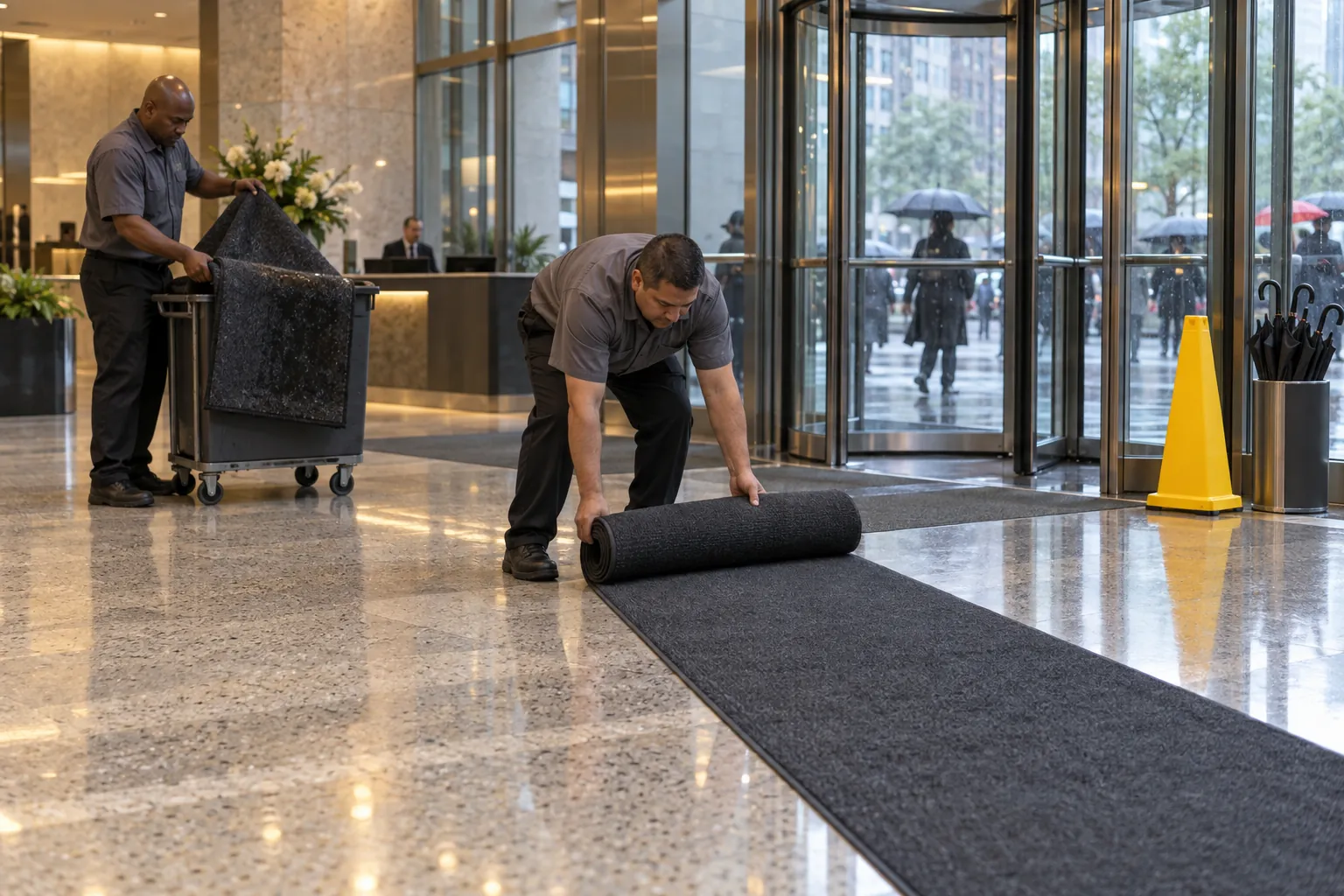 Premises and facilities managementSlip, trip, and fall prevention: keeping floors, stairs, and walkways safe every daySlip, trip, and fall prevention in a commercial building: what OSHA 1910.22 requires, where people fall, the controls that work, and how to check and record them.
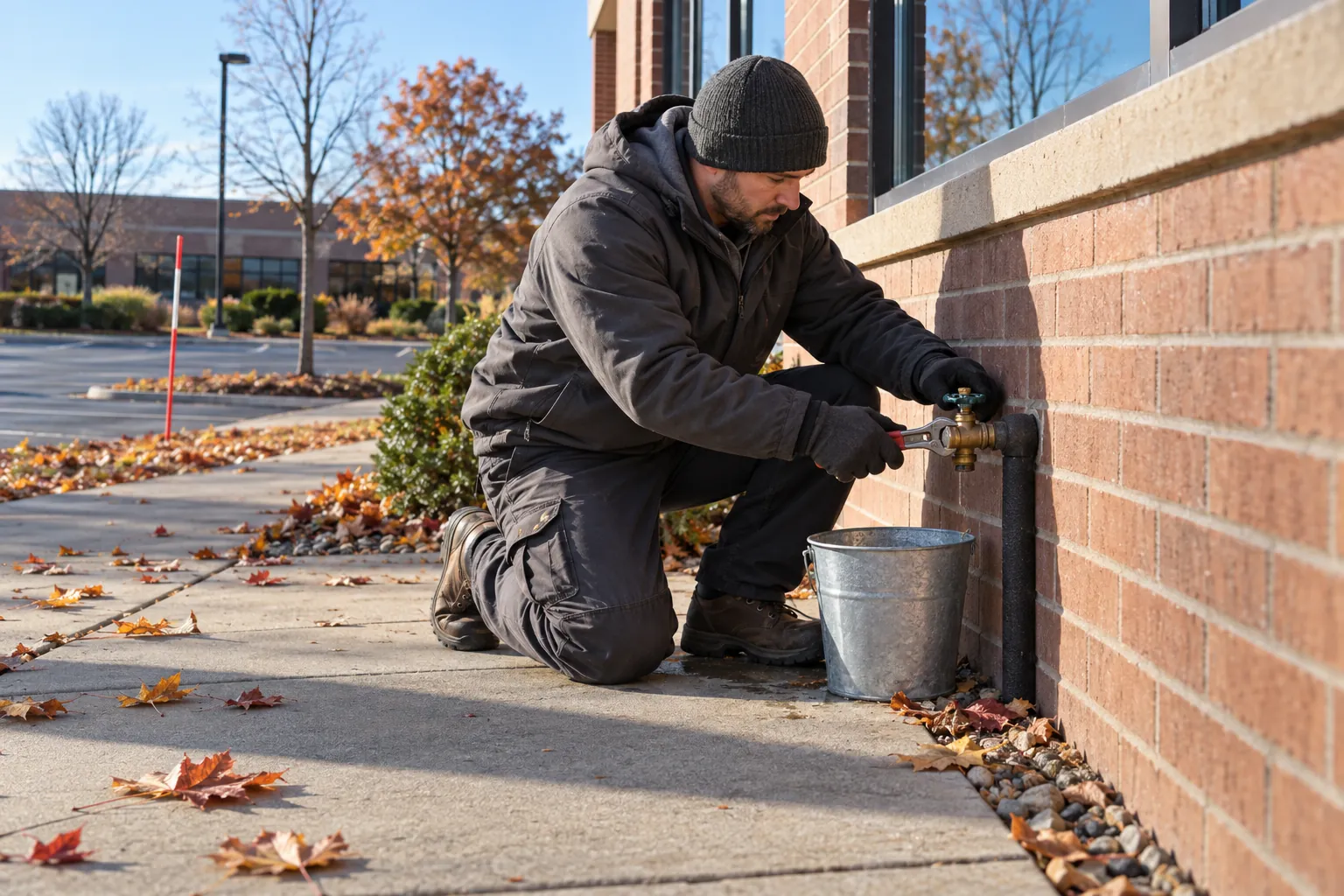 Premises and facilities managementWinterization checklist: getting a commercial building ready for freezing weatherA winterization checklist for commercial buildings: freeze protection, sprinklers, heating, roofs, snow and ice, when to check, who does it, and what to record.
 Premises and facilities managementGrounds maintenance checklist: what to check outside the building, how often, and what to recordA grounds and landscape maintenance checklist for US commercial properties: walkways, turf, trees, irrigation and play areas, by season, with OSHA and ADA duties.
 Premises and facilities managementParking lot inspection checklist: what to check, how often, and what to recordA parking lot inspection checklist for commercial property: pavement, striping, ADA spaces, lighting and drainage, how often to check, and a record that holds up.
 Premises and facilities managementThe workplace incident report: what to write, when, and who needs to see itHow to write a workplace incident report: what to include, the OSHA 301 and its seven-day rule, the 8- and 24-hour calls to OSHA, and what happens next.